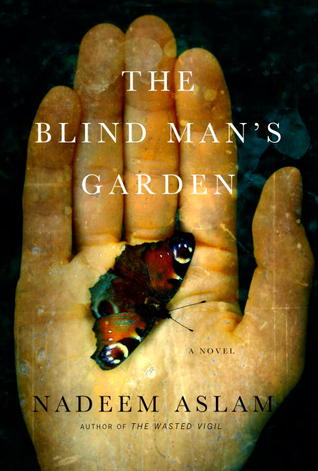
Life During Wartime, On the Other Side: Nadeem Aslam’s The Blind Man’s Garden

Blind Man's GardenEx-Marine Elliott Ackerman’s novel Green on Blue is out this week and I’m eager to read it. Green on Blue’s point-of-view—it’s told through the eyes of an Afghan young man who serves in a native militia attached to US forces in an eastern Afghanistan province—and Ackerman’s sympathy for the Afghans with whom he served jibes with my own experience. As an advisor in eastern Afghanistan, I dealt not just with official Afghan National Security Forces such as the Army, the National Police, and Border Police, but with various arbaki: quasi-official tribal fighting forces raised from local ranks of military-aged-males. Arbakis ranged from functionary gate-and-tower guards on US FOBs to kick-ass killers affiliated with Other Government Agencies such as the CIA. Generally they were considered more reliable and competent than ANSF units, within the scope of their missions. Their hatred of the Taliban and war-mongering bandits (or, “dooshmen”) seemingly sincere and battle-tested, the fact remained that an arbaki’s real loyalty was not to Americans but to the regional overseers–let us say “warlords”–who organized them and sold their services to US occupiers.

Green on Blue awaits, but by chance this winter I came across British-Pakistani author Nadeem Aslam’s novel The Blind Man’s Garden, which treats similar subjects. Published in 2013 to acclaim in England but little notice in the United States, The Blind Man’s Garden is actually Aslam’s second novel portraying conflict in contemporary Afghanistan through the eyes of natives; an earlier work, The Wasted Vigil, appeared in 2008. The protagonists of The Blind Man’s Garden are Mikal and Jeo, Pakistani brothers-by-adoption who cross into Afghanistan to render aid to civilians injured by American invaders after 9/11. Mikal and Jeo are not Taliban, but thoughtful young men eager to defend the integrity of a neighboring country bound by culture and religion. Their first night in Afghanistan, however, is a disaster: they are seized by mercenary arbaki fighters and then caught in conflict between competing arbaki, one of which is aligned with US Special Forces. Jeo is killed and Mikal is captured, has his trigger fingers amputated to prevent further resistance, and then ransomed to Americans by a profiteering warlord.

Scenes illustrating Mikal’s treatment by interrogators at Bagram Air Force Base are unstinting in their portrait of American brutality. If you don’t think Americans physically tortured suspected opponents in the early days of the war on terror, well, Aslam does. American propensity for sadistic violence, to say nothing of their inclination to wage their own version of jihadist war on Islamic nations, is a given in the minds of Aslam’s Pakistani characters. Aslam-the-author’s take is more complicated. His portrait of the Koran-saturated belief systems and ways of life of contemporary Pakistanis is a badly-needed detailed representation of a world Americans basically spent a decade fighting without knowing much about. For those interested, The Blind Man’s Garden offers a nuanced portrait of the conflicting attitudes toward the West held by those who waged war against us and those whom the wars affected. Many scenes and passages in The Blind Man’s Garden portray a rich, venerable culture, wise and deeply connected to nature, education, faith, family, and history. The Pakistani folkways and circuitries of thought that Aslam holds up for admiration make American culture typified by Burger King and TMZ appear as superficial as it is often accused of being.

But Aslam also suggests that Pakistan is trapped, to the point of poison and doom, by its deep entanglement with a religion that drives devout believers not just to jihad against the West but to conflict with each other. A passage seen from the perspective of Kyra, a Pakistani military officer who resigns his commission rather than be a part of an organization tainted by its support of the West, illustrates. Here Kyra is gazing at a traditional non-militant religious academy he intends to turn into a madrassa he will use to transform young men into jihadists:

Nine-Eleven. Everything about it is a lie, he is beginning to believe. A conspiracy. Flying large aircraft at low altitudes in an urban sky is not a simple thing. There had to be something manipulating air traffic control. There had to be somebody who switched off the warning system for the Pentagon. From what he has read and heard it seems that the air force did not scramble for more than an hour. Kyra is a military man so he knows about such basic things. It was all staged, to invent an excuse to begin invading Muslim lands one by one.

He looks toward the arch above Ardent Spirit’s front gate. It was removed from the entrance of the original building and brought here when the school changed premises. When Rohan [the school’s founder and Mikal and Jeo’s father] and his wife founded it, the arch had read “Education is the basis of law and order.” Soon the word “Islamic” was added before “Education” by Rohan himself, apparently against his wife’s wishes. Over the years it has been amended further, going from “Islamic education is the basis of law and order” to “Islam is the basis of law” and then to “Islam is the purpose of life,” while these days it says “Islam is the purpose of life and death.”

Under Ahmed the Moth [another school supervisor], Ardent Spirit had developed links with Pakistan’s intelligence agency, the ISI. Pupils were selected to be trained in combat at jihadi camps run by the ISI, and ultimately sent to carry out covert operations in Kashmir…. Kyra could have maintained the connection but he feels nothing but revulsion at the army and the ISI for abandoning Afghanistan. The Arden Spirit pupils now belong to him alone and through them he’ll set his plans in motion, molding them to be warrior saints, brilliant in deceit against the West and its sympathizers here at home.

The business about the changing sign hints at humor, and in another passage a character cracks that the easiest way to break up an anti-US protest in Pakistan is to announce that US visas are being handed out around the corner. But levity is in serious short supply elsewhere in The Blind Man’s Garden; Aslam calls contemporary Pakistan a “heartbroken and sorrowful land.” An austere dignity is the most any Pakistani can hope for in the face of Islamic extremism inspired by a hatred, fear, and envy of the West that tears apart families, divides generations, and inflicts grievous harm on good people. But even moderate Islamic belief in the novel’s view makes many adherents—particularly women and anyone who has gotten a sniff of the West’s cultural diversity and opportunities—miserable. Mikal’s chief Bagram torturer is hardly the most heinous character in The Blind Man’s Garden, and neither is a Special Forces captain who, late in the novel, crosses into Pakistan on a one-man solo mission to find and kill Mikal after his release from American custody. The Americans in The Blind Man’s Garden aren’t drawn in enough detail to be more than minor characters, but that’s OK. The novel’s excellence lies in its depiction of a Pakistani society that appears, from the outside-looking-in, to despise itself and to be making its members terribly unhappy. The title refers to a garden dear to Rohan, the original peace-loving patriarch of the Ardent Spirit school. Rohan is blinded midway through the novel, and his disability accelerates his marginalization from contemporary mainstream Pakistani life and thought. Rohan once dreamed of recouping the glorious years of Islamic ascendency, when Islam, dominant from India to Spain, made other belief systems look weak and tawdry in comparison to the majesty of its purpose and achievement. The garden now grows neglected and Rohan is helpless to prevent its decline or enjoy what beauty it still possesses.

The novel goes slightly awry in its last third when Mikal joins with the Special Forces officer in a desperate effort to save the officer’s life, played out in barren desert and mountain landscapes. The saga is a little too contrived and dependent on coincidence, and reads like something out of Cormac McCarthy–not a bad thing sometimes but here less interesting than The Blind Man’s Garden‘s deeply-textured portraits of Pakistan social life. The saga’s not really even needed, frankly,  because by the point it begins in the novel Aslam’s work–humanizing America’s enemies–has already long been done and done well.
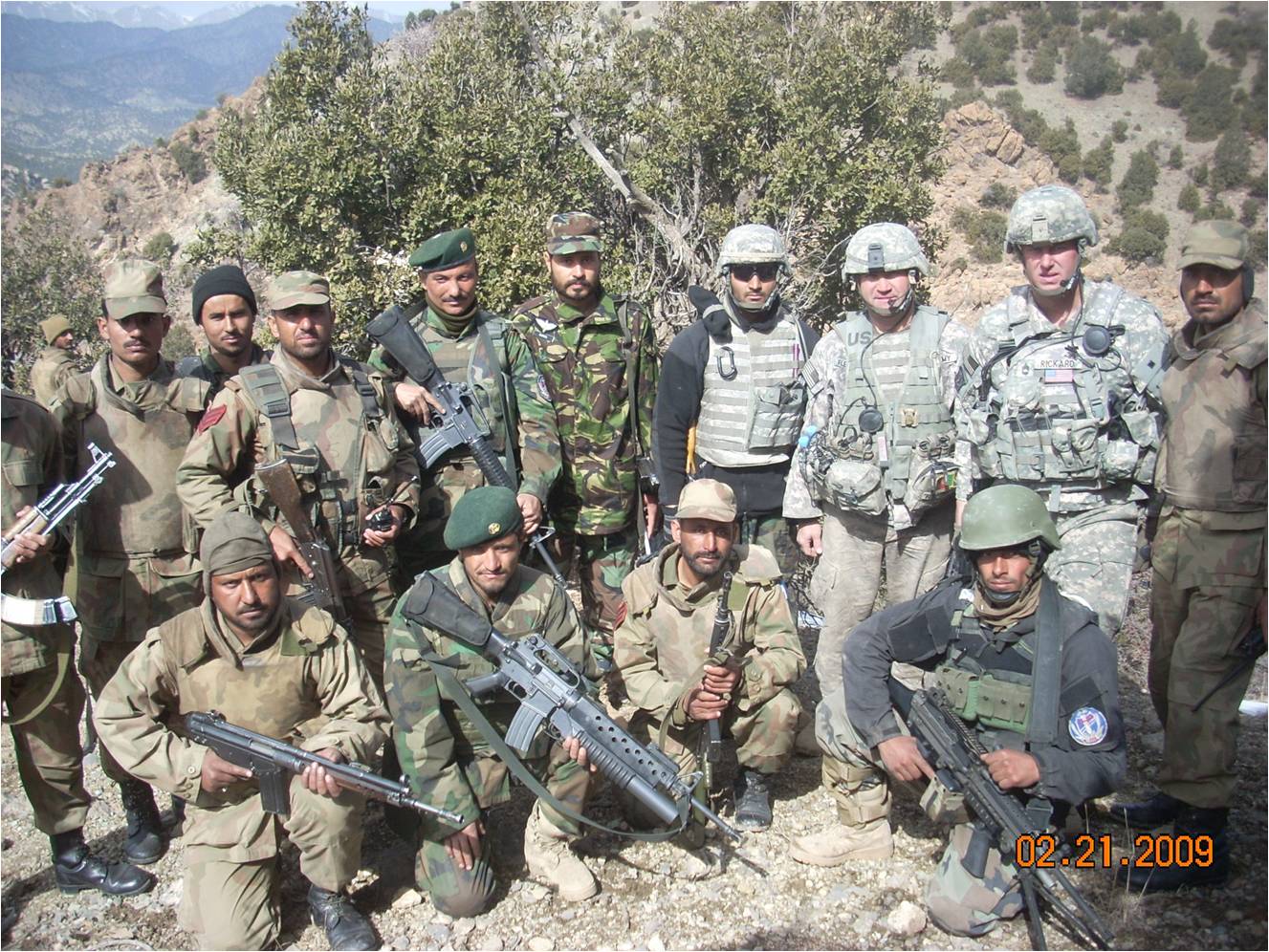
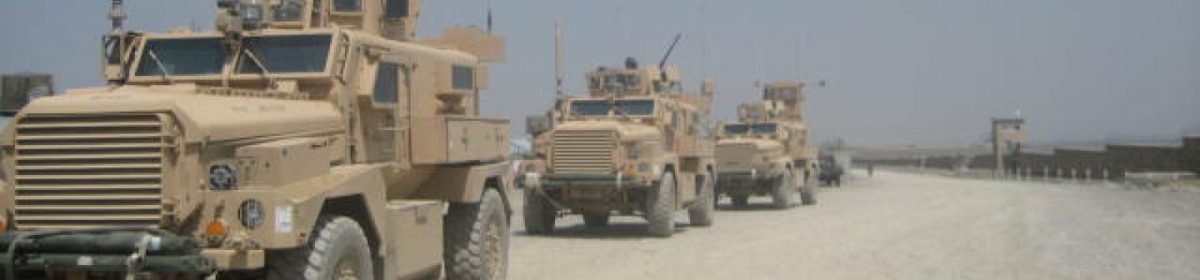
US, Afghan, and Pakistan forces on the Afghanistan-Pakistan border, Khost Province, 2009

A Los Angeles Review of Books review of The Blind Man’s Garden here.

Nadeem Aslam, The Blind Man’s Garden. Knopf, 2013.
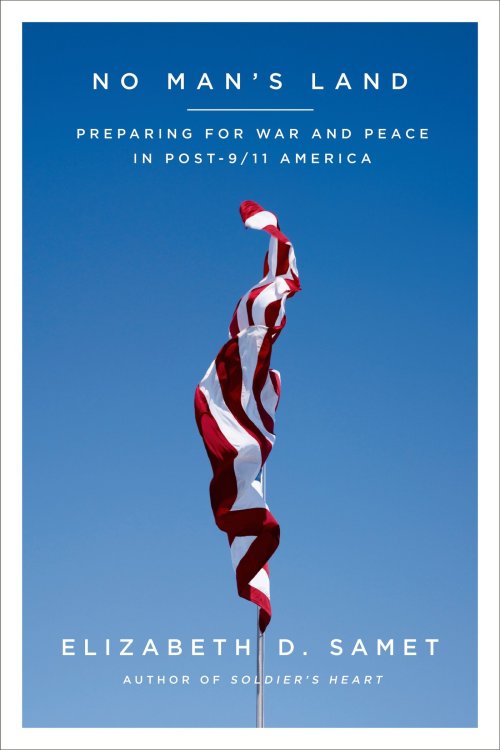
Never Trust an Officer Over 30? Elizabeth Samet’s No Man’s Land

No-Mans-Land-cover-500x750In No Man’s Land, Elizabeth Samet attempts to construct, or re-construct, a personal narrative that makes sense of the Iraq and Afghanistan wars, particularly as they have colored her relationship with the cadets she teaches at the United States Military Academy. Samet, a full professor in the Department of English and Philosophy at West Point, is the author of an earlier work titled Soldiers’ Heart: Reading Literature Through Peace and War at West Point. Published in 2007, Soldier’s Heart was well-received by both critics and popular reading audiences and in my mind deservedly so. Samet’s meditation about her own relation to, not to say complicity with, the post-9/11 wars represented an early, important statement about how the wars were going to be processed by the nation’s intelligentsia. Along with Brian Turner’s Here, Bullet and Colby Buzzell’s My War, Soldier’s Heart staked out forms and manners that were both highly literary and very responsive to new imperatives—two strains that still characterize fiction, poetry, and memoir written by vets and non-vets alike. Though not above criticism, Soldier’s Heart possessed the extreme virtue of being first–pioneering in terms of asking questions and proposing answers that others have since built on.

In No Man’s Land, Samet argues that combatants and the civilian populace alike contemplate the Iraq and Afghanistan wars using modes of thought and frames of reference inadequate to the realities and complexities of contemporary conflict, a charge she doesn’t withhold from herself as the book opens. She claims that much of the problem has been an inability to think imaginatively enough about what modern war entails—a problem for political and military planners charged with successfully conducting the wars in Iraq and Afghanistan, but also for her and an even bigger one for soldiers—particularly cadets and young officers—who must live through war and after. Befitting an English professor, Samet draws on a vast array of memoirs, classical texts, film, and fiction and poetry to find similar points of dislocation in canonical and popular imaginative works. For Samet, literary touchstones help explain contemporary anxiety and their close study is one means by which confused young soldiers, a hidebound institutional military, and an oblivious, naïve citizenry might resolve seemingly intractable paradoxes and contradictions that have thwarted successful execution of the war and thinking well about it.

Samet’s title refers obviously to the ravaged battlefields of World War I, but Samet uses the phrase to describe a more pervasive, almost metaphysical sense of “war vertigo” experienced nationally today by a country befuddled and ultimately let down by simplistic narrative understandings. The solution for Samet is rejecting easy answers, dwelling within ambiguity, and cultivating an opportunistic, imaginative flexibility that recognizes unfruitful paradigms and moves beyond them. Chapter by chapter in No Man’s Land, Samet leads by example, exposing shibboleths of thought and expression (which might include the phrase “lead by example,” though Samet doesn’t take that particular one to task) dear to cadets, her military colleagues, the nation at large, and the nation’s political overseers. It is the first two entities that Samet knows best and cares about most. More than sociological survey, more than literary analysis, No Man’s Land is a work of cultural critique, with the culture subjected to the most scrutiny a military that doesn’t understand how badly it is underserving its members or its nation.

Infusing No Man’s Land’s sense of urgency is Samet’s apprehension that she herself might be instantiated within a military apparatus she suspects might be structured on outworn underpinnings. As a full professor at West Point, with enough stature to be asked to speak to the Ranger Regiment, Training and Doctrine Command general officers, and Pentagon senior staff, Samet mounts her critique-from-within subtly. Aware that the military possesses a sublime ability to ignore provocateurs, especially those who never served in uniform, Samet holds up her EN102 Literature course, a mandatory class taken by all freshman, or “plebes” at West Point, as an effort to cultivate the highly individualistic perceptiveness and creativity she feels the Army needs to break the binds of group thought and outmoded traditions. Samet may be a confidant of upper-echelon military maestros, but her heart is with the still malleable and enthusiastic 18-year-old plebes possessed by inchoate desire to be part of a military that is commensurate with their own intelligence and capacity to dream (to borrow from Fitzgerald).

As a recently retired faculty member at West Point who taught EN102 under Samet’s direction several times, I can attest to her commitment to using the course as a laboratory for change on behalf of an Army otherwise capable of only clunky efforts at self-critique and transformation. I can also testify to the reciprocal affection held by many of Samet’s students in her EN102 and English major classes, an affection shown by their desire to stay in touch with Samet after graduation and commissioning. Much of No Man’s Land recounts email conversations with former students serving in Iraq and Afghanistan, or meet-ups with them in New York City, Alaska, or back at West Point upon their return from war. Samet’s intimacy with her former students clearly inflects her point of view; much of her diagnosis of what ails the Army is generational. Never trust an officer over the age of 30 could be the abiding mantra of passages such as the following:

In today’s army there seems to be a substantial divide between senior and junior officers. As a result of the last decade’s wars, young officers have been promoted more quickly than their predecessors at the end of the last century and have had less time to learn and practice some of the administrative procedures that dominate life in garrison. In the fact of this, some senior officers—the same ones who wax lyrical about the hardships that lieutenants and captains have endured in combat—display considerable impatience with them….

Junior officers, for their part, entrusted with significant responsibility in combat, often in remote locations where decisions must be made quickly and independently, return frustrated and impatient to garrison life’s cult of preparation, attendant inflexibility, and atmosphere of fear that innovation might open the door to disaster. Used to operating beyond the reach of routine, these officers return to find their lives scripted down to the last detail, mired in layers of bureaucracy.

But No Man’s Land is rarely so vituperative, most of it is delightful and fresh. Samet ranges far-and-wide to excavate heretofore unacknowledged literary antecedents—Edith Wharton and French detective novelist Georges Simenon, for examples—who offer new perspectives on war. Samet is the first critic I know of to examine the impact of Harry Potter on a generation of erstwhile warriors (though I’ll claim credit as the first to consider J.K. Rowling as a war author here). Passages describing veterans’ fascination with motorcycles and the open road, an analysis grounded in Hunter Thompson’s classic Fear and Loathing with the Hell’s Angels no less, describing her stint as an officer representative to West Point’s baseball team, and a surveying the military’s World War II theatrical entertainment unit dazzle with unexpected insights and connections.

No Man’s Land best passages dig into the belief and value systems the Army lives by and attempts to inculcate in its newest members. Samet’s English professor roots show once more as she exposes the rhetorical limitations of Army discourse as they underwrite practice. “Preparation” “service,” “ambition” “boots on the ground,” “professionalism,” the Army’s preoccupation with small-unit leadership and its cult of command, and civilian rituals of thanking soldiers for their service are a few of the concepts and practices Samet targets for takedown. Discussing the stated Army value of “selfless service,” for example, she compares it to “ambition,” a word upon which the military frowns so severely that it rarely permits its mention in doctrinal literature. Samet, invoking English philosopher-statesman Francis Bacon, writes: “Yet given sufficient (and sufficiently capacious) avenues for exercise, personal ambition might still be harnessed for good. A commander without ambition, Bacon reminds us, is about as useful as a cavalryman stripped of his spurs. Don’t expect to win a war, he admonishes, with a general like that.” To see elitism in such a statement is possible, but a squarer way of addressing the issue would be to admit that any soldier—from private to general–’s desire to do well and dream boldly might be categorized usefully as “ambition.” What are your big ideas? What do you want to accomplish? A tragedy for Samet, more implied in No Man’s Land than stated, is that her beloved students by training or choice eventually embrace military platitudes and conventions either at the level of ideology or as practical career success strategies. But Samet suggests that it is also a nagging, ill-defined understanding of their inadequacy that drives talented young officers not into conformity, but right out of the military.

Wrangles with No Man’s Land exist at the level of neglected subjects that I wish Samet had discussed more thoroughly, such as reflection on the actual act of killing and being responsible for lives and lives lost in combat. It would take another book to tie Samet’s charges to actual operational failures in Iraq and Afghanistan and policy decisions in Washington, and even on Samet’s own grounds—that the military is inhospitable to talented young people—she might have given voice to military leadership who have also perceived and tried to address the issues. Somewhat surprisingly, Samet seems not too interested in the experience of women in the military or the broader subject of a military coming to terms with changing gender norms. Early passages in the book that make connections between The Odyssey and our modern interest in post-war experience have, frankly, been done already and thankfully Samet quickly moves on to other, more interesting things.

My final criticism is also my biggest fear. Samet’s sympathy for the views of what might be said to be a pretty select group of highly literate young officers suggests that the Army needs to be especially good for officers who, say, love Edith Wharton as much as she does. I don’t think that way, let me be clear, but a counterargument might be that sensitive interpreters of literature are exactly what the Army doesn’t need at this point in time—it needs hard, fast, decisive thinkers who don’t get lost in thought.* Further, Samet’s sentiment belies the fact that young officers in every generation, to include a huge proportion of the best, have always exited the military in droves once their initial term of service is up. That’s not an apology for the way things are, but to suggest that military service never was and will probably never be as good as Samet—and I—want it to be. The Army cake has been baked for a long time now, by which I mean its structure, its relationship with the nation it serves, and its capacity for growth are deeply rooted in 200 years of practice, and plenty of people think it is doing pretty darn well, or at least reasonably OK, all things considered, and don’t see much need for improvement, whatever happened in Iraq and Afghanistan aside.

*Now, if Samet had referenced Willa Cather, another early 20th-century American author, I wouldn’t carp like this. I’ve taught Cather’s O Pioneers many times to cadets and was gladdened the other day to read that Colin Powell’s favorite book in high school had been Cather’s My Antonia. Growing up in the Bronx, Powell reports, Cather’s story of young people transitioning from youth into adulthood in Nebraska had done exactly what we think literature should do: It filled him with wonder at both the similarity and difference of people whose circumstances were far different than his own.

Elizabeth Samet, No Man’s Land: Preparing for War and Peace in Post-9/11 America. Farrar, Straus and Giroux, 2014.

Where Have All The War Songs Gone?

Literary historians tell us that during the Civil War, World War I, and World War II odes, ballads, and other popular and folk forms of expression related to the wars often appeared in newspapers, magazines, and other venues of wide-spread public dissemination. Though the offerings did not shy from describing battlefield death and destruction, they also paid homage to fallen heroes and attempted to galvanize patriotism and a spirit of sacrifice on the part of the nation’s citizenry. It was against such popular effusions, the historians claim, that more complex and brooding artists, such as Walt Whitman and Wilfred Owen, wrought artful takes on war that eventually made the popular war literature of their time appear simplistic, naïve, and old-fashioned.

By Vietnam, so goes this line of historical retrospective, the elevated literary tone and anti-war politics had practically driven popular styles and themes out of existence. Today, even a Hollywood commercial blockbuster such as American Sniper gussies itself up in the mannerisms of critique, rather than celebration, even if celebrating American war prowess is its (unstated) intent. One exception could be the realm of music, because music unabashedly makes plays on the hearts of listeners and thus might seek to channel the intense emotions generated by war in search of popularity. But even there the record is scant. As far as I can tell, popular hit radio has left the wars untouched. So too have modern or contemporary rock and the club, urban, and dance scene. Metal and punk I don’t know too much about, but country has more to show for itself, though flag-wavers such as Toby Keith’s “Courtesy of the Red, White, and Blue” seem to be isolated cases that prove the rule rather than common fare.

All of which is funny, because music remains vitally important in the lived lives of soldiers at war. Every soldier since 2001 I’m thinking has gone to war with a playback device full of songs and their heads full of many more. I’ll bet there’s few, for example, who haven’t sung along to the Killers as they chant “I’ve got soul, but I’m not a soldier” and not thought about the implications for their own identities as fighting men and women. But as much as music shapes their actual lives, men and women in the military might listen long and hard for representations of war and soldiers.

And yet I have come today to praise war music, not bury it. Below is a sampler of songs from the popular idiom that illustrate that at least once-in-a-while our nation’s musicians have referenced Iraq and Afghanistan in ways old and sometimes new.

1.  Old Crow Medicine Show, “Levi.” Written in honor of Lieutenant Leevi Barnard, US Army, KIA in Iraq in 2009. OCMS can do no wrong, in my opinion, and the sight of these young Virginia men singing and playing their hearts out live makes me go mushy inside.

2.  Jason Isbell, “Dress Blues.” Written in honor of Corporal Matthew Conley, USMC, KIA in Iraq in 2006. Country-rock megastars Zac Brown Band have taken to covering this song, which is cool.

3.  The Offspring, “Hammerhead.” Nothing subtle about this, but if you think songs about post-war rage should be as aggressively loud as post-war rage itself, or if you just love punk-rock power-chording like I do, then the Offspring have you covered.

4.  Josh Ritter, “Girl in the War.” The lyrics are enigmatic and might be interpreted as other than a commentary on women on the battlefield, but why make it hard? The title alone suggests how the times-have-a-changed.

I’m sure there’s more out there, so if I’ve overlooked one of your favorites, send it to me, and if we ever meet, let’s listen to it together. Who knows how any of this works in the minds of impressionable young men and women? I’m old enough to have listened to both Bob Dylan’s “Blowing in the Wind” and Barry Sandler’s “The Ballad of the Green Berets” in the 1960s. I love Dylan way more than I do Sandler, but later I joined the Army and though I wasn’t Special Forces, I served alongside Green Berets in Afghanistan, so which artist ultimately had the most influence on me?

Roy Scranton, Phil Klay, and the American Trauma Hero

Roy Scranton set the war writer community abuzz this week when the Los Angeles Review of Books published his essay  “The Trauma Hero: From Wilfred Owen to “Redeployment” to American Sniper, a takedown of the ethos and practice of contemporary war narrative. As Scranton’s co-editor of the seminal Fire and Forget anthology, Matt Gallagher, put it on Twitter: “Well @RoyScranton goes full provocative here….” Those who know Scranton understand cantankerous is often the way he rolls. Fiercely proud of his iconoclast status, he is more than capable of biting hands that feed him and precipitating his dismissal from clubs that might let him join. The club, in this case, though, is one he helped form: the third cohort of contemporary war writers, with those who published prior to 2011 being the first, the bumper crop of circa-2012 fiction authors the second, and the third being the NYC-and-MFA crowd–Phil Klay, Andrew Slater, Mariette Kalinowski, and Brian Van Reet among them–selected by Scranton and Gallagher and offered to the public in Fire and Forget. Scranton, with Gallagher, conjured that third wave into being, but now he seems to want to be the agent of its dismantling. “First I’m going to make it, then I’m going to shake it ’til it falls apart,” as the lyrics to a great song go.

Some of us like Scranton all the more for who he is, but, skipping past inside-war-writer-circle dramatics, what about the charges Scranton levies against war narrative? Is the general import of war literature from the World War I onward to glamorize “trauma heroes”—young (almost always male) veterans who seem a little bit too satisfied with their status as brutalized survivors of war? Do such representations really distract us from profound consideration of the political and moral costs of war, not to forget the injuries and deaths we have inflicted on our enemies and noncombatants? Is that what American Sniper does? And is that what Phil Klay’s “Redeployment” does, too? Really? Phil Klay either no more aware or just as craven as the makers of American Sniper?

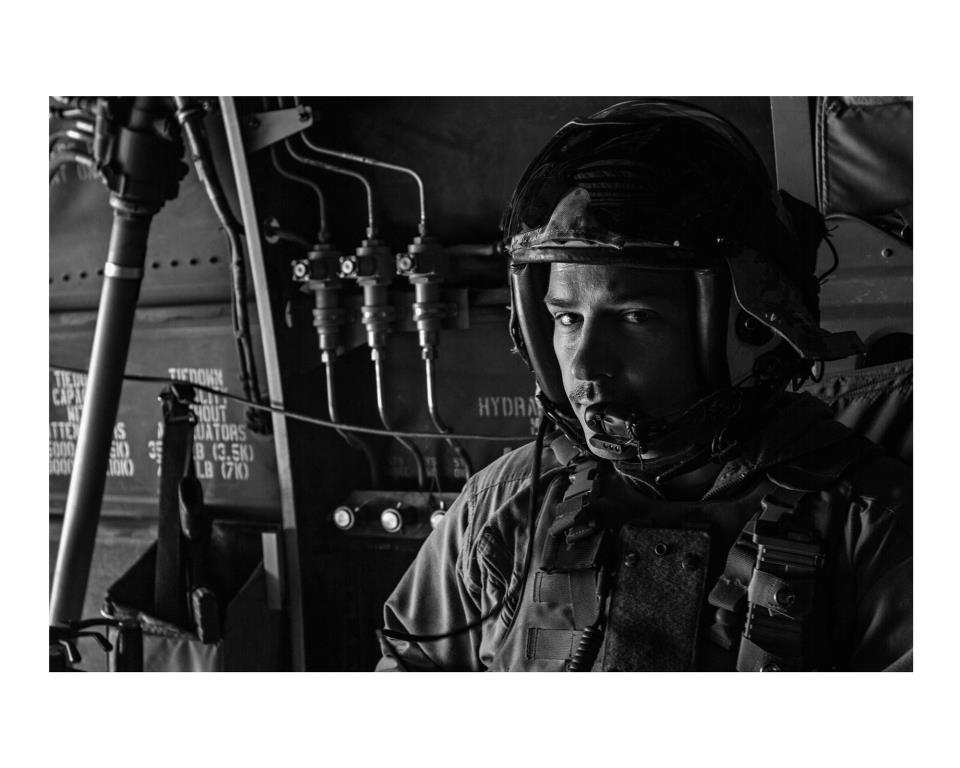
Is war lit all about the angst of young white males?  Photo of a helicopter crewman by Bill Putnam.
Is war lit all about the angst of young white males? Photo by Bill Putnam.

I haven’t seen American Sniper yet, so I’ll forego commenting on it and focus my comments on Redeployment, the National Book Award winner for 2014. Klay’s collection of short stories are not above criticism, a bit of which was brought forth in the Twitter book chat I participated in this past week. No stories in Redeployment are told through the eyes of Iraqis, and only “Money as a Weapons System” features Iraqi characters. But “Money”–my favorite story in the collection–is a funny satire of US war aims and execution, as well as the obliviousness of the American people and government, so Klay can’t be accused of totally ignoring “the bigger picture.” A certain male-veteran-voice perspective is privileged in Redeployment, and many of the tales revolve around vets who participated in killing whose brooding thoughts about the matter are now being aesthetically rendered for our perusal. We gape at the inner devastation wrought on Rodriguez, a hardened killer who hates Iraqis, in “Prayer in the Furnace” and we ache or are even amused by the narrator of “Ten Kliks South,” a naive artillerymen obsessed with measuring his culpability for the deaths inflicted by rounds he helps fire.

The beauty of the stories is their nuance in playing with the details of the “myth of the trauma-hero,” not their crushing conformity to a mold. And overall, I’ll suggest Klay interrogates the myth as much as he might unwittingly instantiate it. Or, more specifically, stories such as “After Action Report” and “War Stories” dramatize and problematize what it means to live in the midst of the myth’s creation during war and afterwards. In “After Action Report,” for example, the narrator claims credit for a unit’s first kill in Iraq as a favor to the actual killer who doesn’t want to live with the stigma. In recounting how the narrator is newly perceived by those who don’t know better, the story portrays ironically the processes and implications of being identified as a combat killer, a pressure so real that even the narrator begins to internalize it. In “War Stories,” it’s not that war-damaged veterans especially want to be seen as traumatized heroes, it’s that civilians push them into playing the role, a role that proves irresistible, especially when there’s a chance that doing so might persuade pretty young women to join them in bed–a dynamic that leaves Jessie, a war-wounded woman veteran in the tale, in an awkward limbo as she watches swirls of erotic energy shape the actions and attitudes of her male vet friends. In the title story, the one at which Scranton aims most of his ire, I see a complexity that Scranton does not. The narrator doesn’t facilely privilege the killing of his own dog, or an Iraqi dog, over the deaths of actual Iraqis. Instead, for me, the story recounts the first-person narrator’s growing apprehension that his moral balance is out-of-skew, with Klay the author asking readers to use their distance from the narrator to understand their own ethical imbalances and blind spots.

But Scranton’s a smart guy, and he wouldn’t say what he did without being on to something. His concern certainly has more to do with how Klay’s stories are conveniently understood by undiscriminating readers than with the tales themselves. And other writers have told me that they do struggle with writing stories that don’t feature stereotypical war-damaged vets. I’ve read a draft of Scranton’s novel War Porn and know how hard he has tried to avoid enveloping his war vet protagonist in sentimental shrouds of pity and dark romance. But the trauma hero myth is insidious, by its own internal logic—how dark would you have to paint a vet to make him or her beyond sympathy? Brian Van Reet couldn’t have made the protagonists of his Fire and Forget story “Big Two-Hearted Hunting Creek” any more despicable, and I love them to death, go figure. Same with Hassan Blasim’s most memorable characters. The only solution, I’m thinking, is to portray vets as stupid unlikeable jerks who were jack-asses while deployed and tedious pains to be around afterwards. Lauren, the traumatized protagonist of Cara Hoffman’s Be Safe I Love You is the fictional character I’ve seen who comes the closest to this “ideal,” though as I discuss in my Time Now review, I’m not sure if that is by Hoffman’s design or not. I’m also thinking that someone will soon write a book about Iraq and Afghanistan vets that portrays them as complete buffoons–perhaps the only way the excesses of self-seriousness might be exposed, ridiculed, and deflated to sensible, manageable proportions. I’m having  lunch with Scranton later this week and look forward to talking these things out. And I plan to watch American Sniper soon, too.

Phil Klay’s Redeployment Redux

RedeploymentOn Tuesday 27 January at 4pm EST, I’ll participate in a Twitter bookchat sponsored by US Studies Online, an offshoot of the British American Studies Association. Our subject will be Phil Klay’s Redeployment and joining me will be Aaron DeRosa, a professor at Cal Poly-Ponoma, and Patrick Deer, a professor at New York University. DeRosa is guest-editing (with Stacey Peebles) an upcoming issue of Modern Fiction Studies titled “Enduring Operations: The Wars in Afghanistan and Iraq.” Deer is the author of Culture in Camouflage: War, Empire, and Modern British Literature, a study of World War II British literature, and he has recently turned his attention to American and British contemporary war literature. I know both DeRosa and Deer and their work and am excited to enter the brave new world of Twitter scholarship with them. Our bios and other background material can be found here. Follow me on Twitter, if you aren’t already, @TimeNowBlog, while the US Studies Online tag is @BAASUSSO. Spicing things up, right on time, is Roy Scranton’s “The Trauma Hero: From Wilfred Owen to “Redeployment” to American Sniper,” published today in the Los Angeles Review of Books. Scranton’s an ex-Army Iraq vet, one of the editors (with Matt Gallagher) of the seminal Fire and Forget war literature anthology, and a Princeton graduate student. A passionate advocate for environmental awareness, he published in 2013 in the New York Times an essay called “Learning How to Die in the Anthropocene,” only partly about Iraq, that lit up the eco-criticism world. Now, in the LARB piece, Scranton delineates a twentieth-century way of writing about war that resolutely depicts male veterans of combat as psychologically shaken, but not so much that they don’t attract our sympathy and respect. Scranton hates this tradition, which he calls a myth, which is to suggest it is a fantasy. He doesn’t think it necessarily accords with either how war has to play out or has to be depicted in fiction and film. He considers it instead an obscene ploy that redirects attention from the real victims of war—the dead, to include dead enemy and civilians—to their killers, while nefariously allowing traumatized killer heroes to avoid culpability for the wars in which they fought. Klay’s “Redeployment” provides fuel for Scranton’s ire, though Scranton is also quick to praise Klay’s “literary sophistication and suspended judgment” and Redeployment in its entirety. For those who haven’t read “Redeployment” lately, it begins with the striking line, “We shot dogs”—the narrator being a home-from-war Marine who parses the ethical relativity of having had to shoot both dogs and people in Iraq and the requirement now to put down his pet Lab, named Vicar. Reread “Redeployment,” read the rest of Scranton’s argument for yourself, decide whether you like it or not, and let’s talk it out 140 characters at a time next Tuesday.

Don’t Kill the Messenger: Oren Moverman’s Ode to Casualty Notification Officers

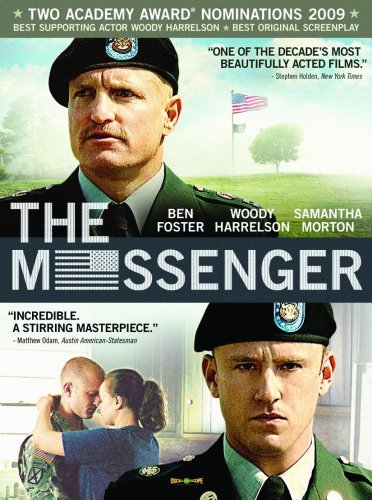
The MessengerThe Messenger, director Oren Moverman’s debut film after a successful screenwriting career, opened in 2009 to critical acclaim but limited popular success. It garnered two Academy Award nominations, made many year-end Top Ten lists, and earned a 90% critics approval rating on Rotten Tomatoes. On the other hand, Wikipedia tells us The Messenger never made back its paltry $6.3 million production cost at the box office. The reasons for both the esteem and the disregard are easy to see. Intelligent and alert to its characters’ emotional lives, The Messenger features striking performances by Ben Foster and Woody Harrelson as US Army casualty notification officers charged with delivering notice of a loved one’s death in Iraq or Afghanistan to the casualty’s next-of-kin, and Samantha Morton as the now-widowed recipient of one of the officers’ deathly missives. The film’s grim subject is matched by its languid art-house film pacing, unsympathetic characters, and struggle to find a compelling storyline. Foster, as Staff Sergeant Will Montgomery, an injured war hero, and Harrelson, as Captain Tony Stone, an embittered captain who never deployed, are cauldrons of pain, confusion, and loneliness. Alternately overly aggressive or defensive, the surly messengers of death treat each other miserably before reaching a rough rapprochement at the film’s end, though their self-hatred makes them proficient emissaries for the hateful news with which they punish their recipients. In terms of plot, Moverman has Staff Sergeant Montgomery fall for Olivia Pitterson, the character played by Morton—a huge violation of the rules the casualty notification officers work by. Pitterson is guarded in her grief and confusion, but ultimately sympathetic to Staff Sergeant Montgomery’s entreaties, which are clearly sexual in addition to emotional. The movie’s ending is bound to strike viewers as more sketchy than heart-warming.

Too harrowing for comfortable watching in the living room and hardly the stuff that would inspire a fun night out at the movies, The Messenger seems better suited for stage drama than cinematic entertainment. Plays invite intense explorations of human pain, with the darkened audience united in their experience of the tortured souls presented live for their contemplation. The roles played by the Foster, Harrelson, and Morton and the set-piece scenes where the soldiers notify parents and spouses that their loved one has died in combat would provide juicy fare for a generation of repertory actors. The notification scenes, six of them, for those not squeamish about watching human catastrophe as it unfolds, are wonderfully staged and performed. Probably no such mission proceeds entirely according to plan, but Moverman has engagingly brought to life idiosyncratic notifications and those that go drastically wrong. In one scene, for example, Captain Stone and Staff Sergeant Montgomery notify a young woman about her husband’s death in the presence of her father, who we learn didn’t even know she had married her beau before his deployment. In another, Stone and Montgomery must use a translator to deliver their scripted, recited message to a distraught Spanish-speaking father while his dead daughter’s infant plays in the background. In scenes such as these—undoubtedly based on reports from actual notification officers–The Messenger drives home the human cost of the wars in ways almost too grim to behold.

The Messenger interestingly dances with issues of military verisimilitude. I’m hardly the harshest critic in this regard, but couldn’t help noticing the goofiness with which the Foster and Harrelson characters wear their Army patrol caps—no soldier in for more than a week would fail to block his or her cap in convention with standard practice or wear it so sloppily. The younger, slighter Foster actually seems more like a junior officer than Harrelson, whose worn rigidness signals field grade officer or senior non-commissioned officer to me (though Captain Stone is said to be a prior-service enlisted soldier whose career as an officer is now topping out, a common enough occurrence in today’s military). But these quibbles don’t detract from the overall effectiveness of the movie. One scene, in addition to those mentioned above, really resonated with me. While drinking alone in a bar one evening, Staff Sergeant Montgomery overhears another vet, just returned, regaling his friends with stories from Iraq. Things go well initially, but the vet pushes his tale too far and soon crosses a line of experience and perspective his friends can’t fathom. As the laughter dies and silence descends upon the party, the vet’s epiphany that he is now far out of synch with his friends crushes him, and crushed me as I watched. Among all the other ways The Messenger is a beautiful downer, its representation of the broken circuits of communication connecting military and civilian is so far down as to be breathtaking.

Grillin’ Chillin’ and Killin’ with the Military 1%: Aaron Gwyn’s Wynne’s War

Lea Carpenter’s Eleven Days and Aaron Gwyn’s Wynne’s War are the first two contemporary novels to portray United States Special Operations forces at work in the post-9/11 wars. As it happens, both are set in Afghanistan: Carpenter’s featuring a Navy SEAL who goes missing-in-action on a mission that takes place the same night another SEAL team executes the raid that resulted in Osama Bin Laden’s death, and Gwyn’s describing a rogue Army Green Beret “Operational Detachment Alpha” (ODA) mission on horseback across the Afghanistan-Pakistan border. Carpenter’s novel is not without interest, but concerns primarily the angst of the missing SEAL’s mother while she waits to learn her son’s fate, while Gwyn offers extensive portraits of the ODA on its outpost in Nuristan province and outside-the-wire in search of a Taliban stronghold. Saving discussion of Eleven Days for another post, I’ll claim here that Wynne’s War effectively dramatizes many of the strengths, weaknesses, and persistent questions surrounding Special Operations in Afghanistan and Iraq, while also suggesting the possibilities of fiction for bringing these issues to light.

The role Special Operations played in Iraq and Afghanistan is, we know, “hotly debated,” to use a cliché of student writing. Never fully acknowledged while the wars were raging, a conglomeration of elite units—Green Berets, Army Rangers, SEALs, Delta Force, CIA (or as we were taught to call them “Other Government Agencies” (OGAs)) nightly executed countless raids to seize “High Value Targets” for detention and interrogation. Operating primarily on the basis of signal intercepts of insurgent telephone calls, the raids may well have broken the backs of terrorist organizations such as Al Qaeda, the Taliban, and the Haqqani network. In other words, they saved American and coalition lives on the ground in Iraq and Afghanistan and forestalled terrorist attacks in America and the West. I believe that, but it’s not exactly clear that it is the case, especially since the wars in Iraq and Afghanistan can hardly said to have been “won.” Well documented in books such as Jeremy Scahill’s The Dirty Wars (2013) are the negative aspects of darkside operations: Lack of coordination with conventional units. Incongruence with stated counterinsurgency and nation-building goals. Faulty execution that resulted in deaths of innocent noncombatants and seizure of individuals friendly to American forces and the legitimate governments of Iraq and Afghanistan. Divergence of important resources (particularly intelligence and helicopter assets) from mainline units. A general lack of accountability all-around. Speaking from my own experience in Khost province, Afghanistan, I frequently had to do damage control, with limited information, with my Afghan Army partners the morning after nighttime operators laid waste to a kalat, seized an important local official, or shot up Afghan security forces by mistake. These were not once-in-a-while occurrences, either; as Scahill explains, by fall of 2009, General Stanley McChrystal had ordered Joint Special Operations Command—the organization to which special operators of all services reported–to execute at least 90 raids a month in Afghanistan alone.

Whether effective or not, the mystique of Special Operations soldiers and missions dominates popular fascination with the war and, indeed, operates powerfully within the military imagination, too. Every soldier worth his or her salt wonders about the grueling selection procedures and the extensive training programs that turn work-a-day soldiers into Rambo-like purveyors of destruction. Within the range of military units, special forces operate most free of the petty rules and restrictions that make life in conventional units miserable—a freedom flaunted by special operators who appeared to some to spend most of their days pumping iron, firing exotic weapons, and growing beards while line dogs pulled tower guard and rode around in the back of armored vehicles waiting to hit IEDs. Or, as portrayed in Zero-Dark-Thirty, SEAL Team 6—the elite of the elite in the hierarchy of special units, according to their own publicity, at least—barbecued steaks and played horseshoes while waiting for the night’s mission to come down from higher. Grillin’ and chillin’, in other words, and then some killin’.

Gwyn gets a lot of these dynamics into Wynne’s War, even a Green Beret who cooks the best hamburger the protagonist, Elijah Russell, is said to have ever eaten. Russell is an Oklahoman cowboy who gains notoriety by saving a horse caught in a crossfire in Iraq between his Ranger unit and local bad guys. Now famous for his horsemanship under fire, Russell and his best friend Wheels are detached from the Rangers and assigned to an ODA in Afghanistan commanded by a charismatic and ferocious combat leader named Captain Carson Wynne. A two-time high school state champion football quarterback, a Princeton graduate, and a successful Wall Street hedge fund trader before giving it up to become a man-o-war (horse pun alert), Wynne has established what is in all respects an independent command on the Afghanistan-Pakistan border. Occupy that, brothers and sisters! Barely responsive to his Green Beret bosses, Wynne plans and executes missions as he sees fit, one of which now includes using horses to discover a Taliban lair rumored to house captured American soldiers, stolen Afghan lucre, or both. Snapping his fingers to obtain in a second what a conventional unit full-bird colonel couldn’t requisition in a million years, Captain Wynne has twenty American riding horses, four mules, and two soldier-horsemen—Russell and his battle buddy Wheels—serving in another theater flown in to help execute the mission. The rationale is that horses give Wynne’s ODA quieter, more dependable mobility in tough mountainous terrain than helicopters or vehicles—which is kinda sorta true, but just the kind of quixotic (second horse pun) approach that gives Special Forces a reputation, not for being the best-and-brightest warriors, but for being crackpot dreamers of enormously expensive and non-replicable ways of waging war.

Gwyn does very well by his material. Too savvy—he’s a college professor—to write pulp fiction, Gwyn instead pays homage to the real world mission in which Green Berets rode into battle on horses described in Doug Stanton’s Horse Soldiers and literary antecedents such as Cormac McCarthy’s All the Pretty Horses and Blood Meridian. No one could miss the parallels to Heart of Darkness and Apocalypse Now, either, with Captain Wynne playing the role of Kurtz and Russell that of the half-entranced/half-horrified witness to Wynne’s half-genius/half-madness. Russell, a junior enlisted soldier, is smart and self-assured, but still young and not privy to the insider culture of the older Green Berets, nor does he have access to all the mission information they possess, so he must make sense of things as they come. A scene in which the Green Beret outpost and its adjoining FOB come under rocket fire illustrates (and brings back memories):

It had taken a while, but the hostiles had finally found positions from which they could range in their mortars, their rockets, and Russell emerged from his bunker into a bedlam of scrambling soldiers and smoke. He followed three men down an earthen trench toward the command bunker, which he saw, once he came onto the packed ground at the center of camp, lay in a smoldering rubble of sandbags and concrete and aluminum sheeting. A young soldier sat in the snow with his rifle across his lap like a child’s toy, head shaved, eyes wet, saying “You got no idea. You got no idea. “ There were men already searching the debris for survivors, and Russell fell in and began to heft bits of broken rock toward a pile that was forming several yards from where the bunker had stood. They’d just uncovered the first body when a man in his observation post called “Incoming!” and they dove behind what cover they could find and waited for oblivion.

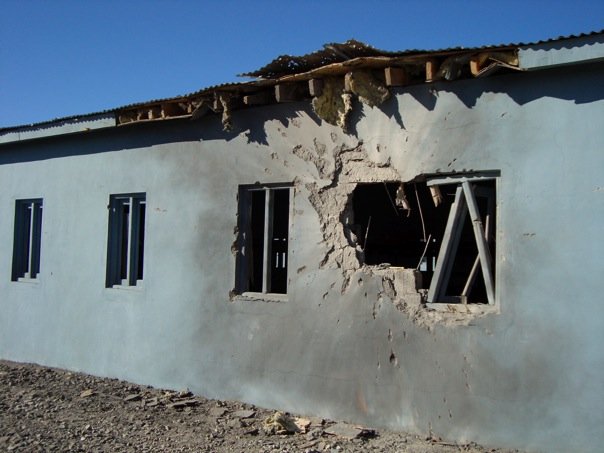
A Camp Clark "B-hut" after being hit by a 107mm rocket fired by insurgents in Khost province, Afghanistan, 2008.
A Camp Clark “B-hut” after being hit by a 107mm rocket fired by insurgents in Khost province, Afghanistan, 2008.

Scenes in which Russell observes friendly Afghans decapitate an informer and in which Russell first sees combat with the Green Berets are equally vivid and well-described. So too is a romance Russell sparks up with a pretty medic—that she would give herself to him and not one of the brawny older warriors on the COP stretches things a little, but their junior enlisted youthful chemistry seems right once Russell’s expert horsemanship is acknowledged. But Wynne’s War really accelerates and excels once Captain Wynne, Russell, and the other Green Berets leave their compound in search of the Taliban stronghold:

They rode out of camp in the blue light before dawn, thirteen riders, four mules, six riderless horses bringing up the rear in the remuda. It was the first week of March, and there was still snow in the shadows of the trees and in the stony draws on the northern slopes, but by noon the air was warm enough for shirtsleeves. The horses stepped briskly, vapor rising from their nostrils like steam from a grate….

From this point, about halfway through the novel, to the end, the narrative is a pure rush of story-telling bravado, energy, and skill. Wynne’s War is too recently published to give away plot details here, but nothing I’ve read in the contemporary war lit canon matches the last 120 pages of Gwyn’s novel in terms of harrowing escapades, mounting suspense, interesting developments, and tense human drama. The novel’s preoccupation with horses fades, and the real action becomes a series of running fire fights with wily Taliban foes, battles that generate conflict among the Green Berets and increasing moral uneasiness on the part of Russell. Gwyn’s story-telling snap, crackle, and pop supersedes niggling about military details—it’s inconceivable that the Green Berets wouldn’t have “TACSAT” radios and satellite phones to help them out of their jams, for example—and war story and cowboy movie clichés. As a reading experience Wynne’s War goes where no contemporary war novel has yet ventured: extended scenes of soldiers fighting for their lives, each scene placed in order of increasing intensity culminating in the novel’s climactic gun battle.

Wynne’s War may not be the greatest story ever told, but it is way beyond hokum and malarkey. It confounds literary representation of Iraq and Afghanistan in much the same way that Special Operators themselves confounded thinking about how we went about winning the real wars on the ground. Though Gwyn is ultimately skeptical of Captain Wynne’s mad mission, the author’s writing chops enroute to the novel’s denouement render his Green Beret and Ranger characters fascinating and their story enthralling. Gwyn has figured out that war fiction might, just might, contain exciting events compellingly described. More brooding and contemplative war literature will have to account for the energetic new arrival on the scene.

Wynne’s War by Aaron Gwyn. Houghton-Mifflin, 2014

The Iraq and Afghanistan Wars in Fiction, Poetry, Memoir, Film, and Photography: A Compendium

Intermediate Staging Base Headquarters, Alexandria/Fort Polk, LA. Photo by Bill Putnam, used by permission.

Below I’ve catalogued memoirs, imaginative literature, and big-budget films published or released through the end of 2014 that represent important and interesting takes on America’s twenty-first century wars in Iraq and Afghanistan. The lists are subjective and idiosyncratic, not complete or authoritative. Still, they might help all interested in the subject to more clearly and widely view the fields of contemporary war literature and film. I’ve arranged the lists chronologically and within each year alphabetically by author or director. If I’ve misspelled a name or title, gotten a date wrong, or omitted a work you think important, please let me know and we’ll make the list better.

If the author or director has served in the US military, or is the spouse of a veteran, I have annotated the branch of service in parentheses.

The lists of “Important Precursor” texts and films represent works that I think are well known and influential among today’s war artists.  A list of stage, dance, and performance war art is forthcoming.

Important Precursor Texts:

Michael Herr: Dispatches (1978)
Tim O’Brien (Army): The Things They Carried (1990)
Yusef Komunyakaa (Army): Neon Vernacular (1993)
Anthony Swofford (USMC): Jarhead (2003)

Important Precursor Films:

Oliver Stone (Army), director: Platoon (1986)
Stanley Kubrick, director: Full Metal Jacket (1987)
Ridley Scott, director: Blackhawk Down (2001)

Contemporary Fiction:

Siobhan Fallon (Army spouse): You Know When the Men Are Gone (2011)
Helen Benedict: Sand Queen (2011)
David Abrams (Army): Fobbit (2012)
Ben Fountain: Billy Lynn’s Long Halftime Walk (2012)
Kevin Powers (Army): The Yellow Birds (2012)
Joydeep Roy-Bhattacharya: The Watch (2012)
Nadeem Aslam: The Blind Man’s Garden (2013)
Lea Carpenter: Eleven Days (2013)
Masha Hamilton: What Changes Everything (2013)
Hilary Plum: They Dragged Them Through the Streets (2013)
Roxana Robinson: Sparta (2013)
J.K. Rowling (aka Robert Galbraith): The Cuckoo’s Calling (2013)
Katey Shultz: Flashes of War (2013)
Fire and Forget: Short Stories from the Long War, edited by Roy Scranton (Army) and Matt Gallagher (Army) (2013)
Greg Baxter: The Apartment (2014)
Hassan Blasim, The Corpse Exhibition (2014)
Aaron Gwyn: Wynne’s War (2014)
Kara Hoffman: Be Safe, I Love You (2014)
Atticus Lish (USMC): Preparation for the Next Life (2014)
Phil Klay (USMC): Redeployment (2014)
Michael Pitre (USMC): Fives and Twenty-Fives (2014)

Contemporary Poetry:

Juliana Spahr: This Connection of Everyone with Lungs (2005)
Brian Turner (Army): Here, Bullet (2005)
Walt Piatt (Army), Paktika (2006)
Jehanne Dubrow (Navy spouse): Stateside (2010)
Elyse Fenton (Army spouse): Clamor (2010)
Brian Turner (Army): Phantom Noise (2010)
Paul Wasserman (USAF): Say Again All (2012)
Colin Halloran (Army): Shortly Thereafter (2012)
Amalie Flynn (Navy spouse): Wife and War (2013)
Kevin Powers (Army): Letter Composed During a Lull in the Fighting (2014)

Contemporary Memoir, Blog-writing, and Reportage:

Colby Buzzell (Army): My War: Killing Time in Iraq (2005)
Kayla Williams (Army): Love My Rifle More Than I Love You: Young & Female in the U.S. Army (2006)
Nathaniel Fink (USMC): One Bullet Away (2006)
Marcus Luttrell (Navy) and Patrick Robinson: Lone Survivor (2007)
Peter Monsoor (Army): A Brigade Commander’s War in Iraq (2008)
Craig Mullaney (Army): The Unforgiving Minute (2009)
Matt Gallagher (Army): Kaboom: Embracing the Suck in a Savage Little War (2010)
Benjamin Tupper (Army): Greetings from Afghanistan: Send More Ammo (2011)
James Wilhite (Army): We Answered the Call: Building the Crown Jewel of Afghanistan (2010)
Benjamin Busch (USMC): Dust to Dust (2012)
Brian Castner (Air Force): The Long Walk: A Story of War and the Life that Follows (2012)
Sean Parnell (Army): Outlaw Platoon (2012)
Ron Capps (Army): Seriously Not All Right: Five Wars in Ten Years (2013)
Stanley McChrystal (Army): My Share of the Task (2013)
Adrian Bonenburger (Army): Afghan Post: One Soldier’s Correspondence from America’s Forgotten War (2014)
Jennifer Percy: Demon Camp (2014)
Brian Turner (Army): My Life as a Foreign Country (2014)

Photography:

Sebastian Junger: War (2010) and Tim Hetherington and Infidel (2010)
Benjamin Busch (USMC): The Art in War (2010)
Michael Kamber: Photojournalists on War: The Untold Stories from Iraq (2013)

Film:

Kathryn Bigelow, director: The Hurt Locker (2008)
Sebastian Junger, director: Restrepo (2009)
Oren Moverman, director: The Messenger (2009)
Kathryn Bigelow, director: Zero-Dark-Thirty (2012)
Peter Berg, director: Lone Survivor (2013)
Sebastian Junger, director: Korengal (2014)
Claudia Myers, director: Fort Bliss (2014)

Criticism:

Elizabeth Samet: Soldier’s Heart: Reading Literature Through Peace and War at West Point (2007)
Stacey Peebles: Welcome to the Suck: Narrating the American Soldier’s Experience in Iraq (2011)
Elizabeth Samet: No Man’s Land: Preparing for War and Peace in Post-9/11 America (2014)

A caveat up-front is that my lists do not reflect hundreds of stories, poems, and photographs published individually in anthologies, magazines, and on the web. Some of my favorite stories, by authors such as Mariette Kalinowski, Maurice Decaul, Will Mackin, and Brian Van Reet, and photographs, such as the one by Bill Putnam published here, thus do not appear above, though I hope to post more comprehensive lists in the future.

Another deficiency is the lack of works by international authors and filmmakers, particularly Iraqi and Afghan artists. Again, that project awaits completion.

My list of memoirs is probably the most subjective. The works I’ve listed are those I think important historically or interesting to me personally, with a small nod toward providing a variety of perspectives. The small number of photography texts I’ve listed combine evocative pictures taken at war and on the homefront with insightful commentary written by the photographers and collaborators themselves.