Studying Veterans

Where now?
Where now?

The title of an article about World War II caught my eye. It proposed that those affected by the war might be “heroes,” “victims,” or “survivors.” The answer, based on what I could tell from the abstract, resolved on “survivors.” Not that a “veteran-survivor” might not be a hero or a victim, too, or both, but the implication was that those who had seen war were chastened and humbled by the experience, toughened also, but mostly just glad to be alive and content to occupy a quiet place in worldly affairs afterwards. The idea made me think about veterans of our wars in Iraq and Afghanistan. It made me wonder if the definition of Iraq and Afghanistan veterans could be reduced to such clear-cut one-word options. In 100 years, when scholars look back at 2016, probably yes, but in our current moment the choices are more confusing.

We might discard “survivor” right off the bat, for the term doesn’t reflect a prevailing sentiment, as far as I can see, either in veterans’ own minds or in the nation’s collective consciousness. But there’s plenty of evidence that “hero” and “victim” demarcate an either/or range of possibility for how veterans perceive themselves and present themselves and also for how they are viewed by society-at-large. The celebration of the military prowess of Medal of Honor winners, super-snipers, and combat leaders such as General James Mattis, as well as the frequency with which ex-military members of both major political parties are elected to public office, point to the respect accorded veterans. But the presence of troubled vets and a large national conversation about Post-Traumatic Stress Disorder and the Department of Veterans Affairs signal the strength of the image at the other end of the spectrum: veterans in need of sympathy, pity, and help, veterans who place demands on the nation to explain exactly what it owes its fighting men and women and how much it shares responsibility for their pain.

The literature written by veterans and by civilians about veterans favors the latter image; in 2016 alone, novels such as Matthew Hefti’s A Hard and Heavy Thing, Maximilian Uriarte’s The White Donkey, Elizabeth Marro’s Casualties, and Matt Gallagher’s Youngblood portray modern veterans post-war either traumatized or rendered ambivalent and alienated by time in uniform and duty in Iraq. War fiction seems not yet to have figured out how to portray protagonists unproblematically as heroes or as more complex blends of the hero-victim binary. Even American Sniper, the most important, compelling, and popular life-story of an Iraq or Afghanistan veteran, pings between the two poles. In both the memoir and the biopic, Chris Kyle is a legendary fighter, but he also breaks down as a result of multiple deployments. Still, it’s not unfair to say that both book and movie tilt heavily toward celebrating Kyle’s heroic aspects. Only Aaron, the bad-seed veteran portrayed in Roy Scranton’s 2016 novel War Porn, seems to be a robust effort to break down the hero-victim binary or propose an alternative—the veteran-villain? But Aaron, deeply unsympathetic, might be the iconoclastic exception that proves the rule.

Literature is not real life, and veterans every day decide to what degree their military experience is important and how much of it they want the people they meet to consider. These decisions range from whether to wear a ball cap displaying a unit insignia to deciding to run for elected office as a distinguished warfighter. On the part of the non-veteran public, everyone that meets a vet is honored, intrigued, or made uneasy by the encounter; for veterans, the feeling of being given the judgmental once-over is palpable. In turns, veterans are uncomfortable about being honored, outraged by hostility, and try not to disappoint when met by curious interest. The individualized process of judgment plays out writ-large on the national scale. Even the fact that there are so few actual veterans of Iraq and Afghanistan becomes a major source of debate: is it a problem, and if so, what should we do about it?

Both reflecting the times and helping us understand such questions is the rise of the academic field of veterans studies. This summer, Virginia Tech hosted a three-week symposium titled American Veterans in Society. I was fortunate enough to attend for a day and learn something of the program’s goals and tenets. One of the co-directors, an old Army friend named James Dubinsky, whom I first met in graduate school many years ago, explained his belief that veterans have always exerted an important but understudied force in American public life, from the post-Revolutionary War era onwards. In other words, war is important, but also important are the social permutations wrought afterwards as returning veterans in numbers enter adult private and public life. The University of Missouri-Saint Louis is one of two colleges that to my knowledge have formally created a “Department of Military and Veterans Studies” (the other is Eastern Kentucky University). An outgrowth of the UMSL veteran services office (a feature on almost every college campus these days), the “MVS” initiative offers classes leading to a minor in which students obtain “a nuanced understanding of the military and veteran experience, the role veterans play in our society, and the obligations our society might hold towards this subset of our population” (from the UMSL MVS website). Concurrent with the Virginia Tech and UMSL programs, Mariana Grohowski, a professor at Indiana University-Southeast, has begun an online scholarly journal titled the Journal of Veterans Studies. Recently the JVS has acquired an official online home in the academy, courtesy of Colorado State University Open Press.  Here is a self-description of the JVS mandate:

We understand veterans studies as a multi-faceted, scholarly investigation of military veterans and their families. Topics within that investigation could include, but are not limited to, combat exposure, reintegration challenges, and the complex systems that shape the veteran experience. Veterans studies, by its very nature, may analyze experiences closely tied to military studies, but the emphasis of veterans studies is the “veteran experience,” i.e., what happens after the service member departs the armed forces.

Elsewhere, the JVS asks:

1. Who is “the veteran in society?”
2. How do power structures like race, class, gender, and sexuality affect the veteran from claiming his/her
“veteran-ness”?
3. Who “counts” as a veteran?

The second question is bound to be perceived by many white, male, politically-conservative veterans as finicky academic hair-splitting that emits the whiff of a liberal social agenda. That’s to their detriment, but even staunchly conservative veterans know in real terms the force of the first and third questions. In which branch did you serve and what was your job? How many times did you deploy? Did you see combat? The answers are the first and last things veterans want to know about each other and for better or worse order and underwrite a veteran’s credibility and right-to-speak. The simple questions and gut responses have deep historical, social, and psychological roots and long political and practical consequences that the academic veterans studies aims to investigate.

My particular interest—contemporary war literature, art, and film—is only one aspect of the new veterans studies field and hardly the most important one. Still, the world of imaginative representation is never too distant from the real world it tries to reflect and illuminate, and things are about to get very interesting in the realm of war art and narrative. Looking back at the portraits of modern veterans in fictional works such as the Fire and Forget anthology (2013), edited by Roy Scranton and Matt Gallagher, and Phil Klay’s collection of stories Redeployment (2014), one can’t help but notice how physically static are the depictions. In story after story in both works, veterans don’t do much but sit and talk, usually in bars, but also classrooms, dorm rooms, apartments, and any number of other private and public places typically occupied by young people who have not yet gotten started in life. That’s OK, because they are fresh from war, but the portraits offer little evidence by which we might judge how a veteran’s military service informs an adult life full of decisions, actions, commitments, and complicated human relationships.

But five years on from the drawdowns in Iraq and Afghanistan, ten years from the hard fighting in Fallujah, and some fifteen years from the beginnings of Operations Iraqi Freedom and Enduring Freedom, the adult lives of Global War on Terror veterans are now taking shape in unpredictable ways. Veterans have placed a lot of distance between themselves and their deployments, life-wise, but emotionally the import of their service, only half-sensed as young men and women, might now reside within them more coherently and consequentially and given firm expression through significant life choices and expressions of opinion. The election of President Trump certainly adds new dimensions to the dynamic. For every Iraq and Afghanistan veteran disheartened by Trump’s election and worried about his stated hostility toward the Department of Veteran Affairs, there’s probably three who welcome his ascendancy as correspondent with their own viewpoints, while others are ambivalent, thinking that it just doesn’t matter in terms of their personal lives who’s at the top. It will be very interesting to see how the new veteran sensibility plays out in the Age of Trump, both in life and in the stories and artworks that accompany life.
2016

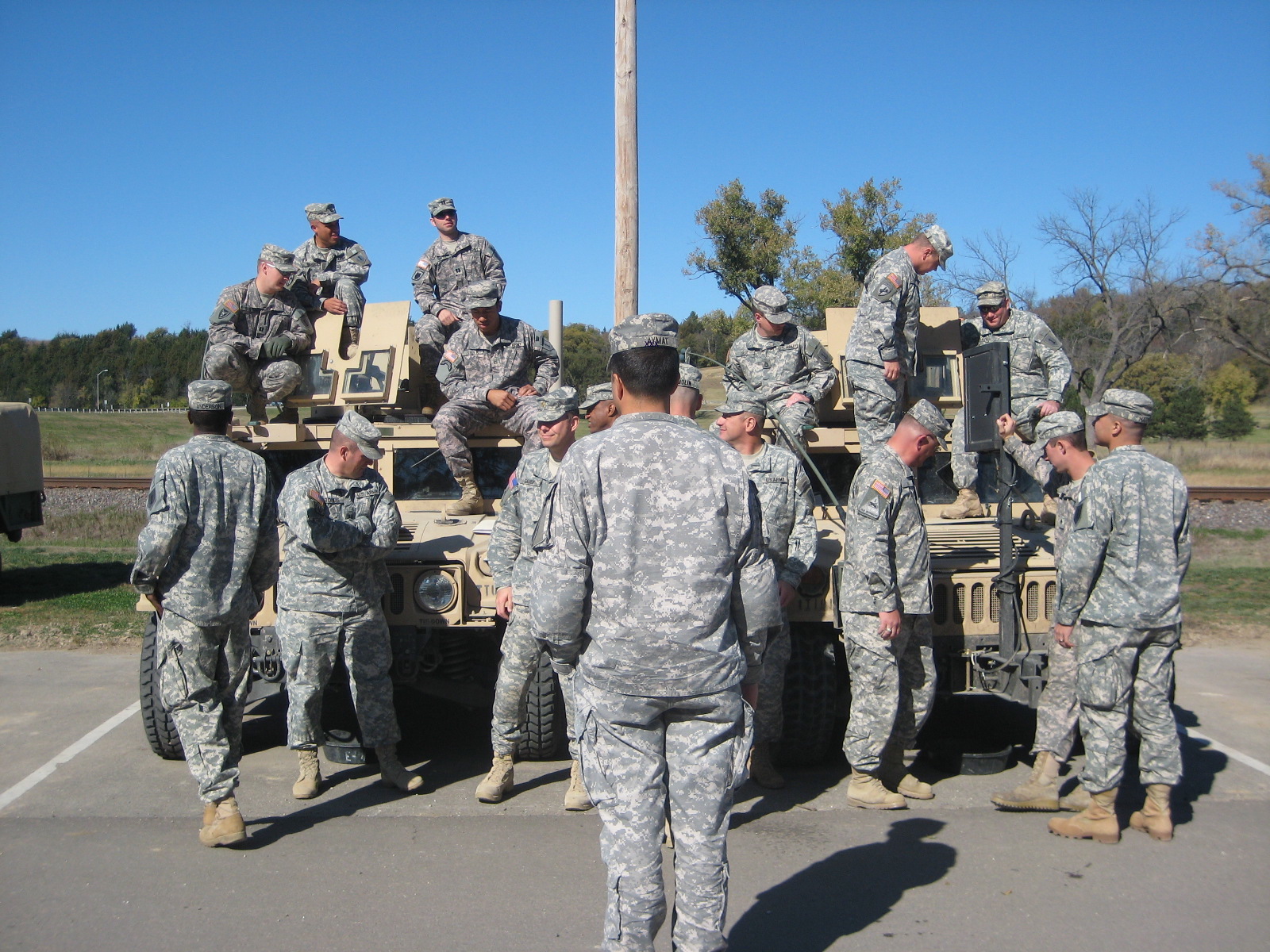
Photo by Bill Putnam, used by permission.
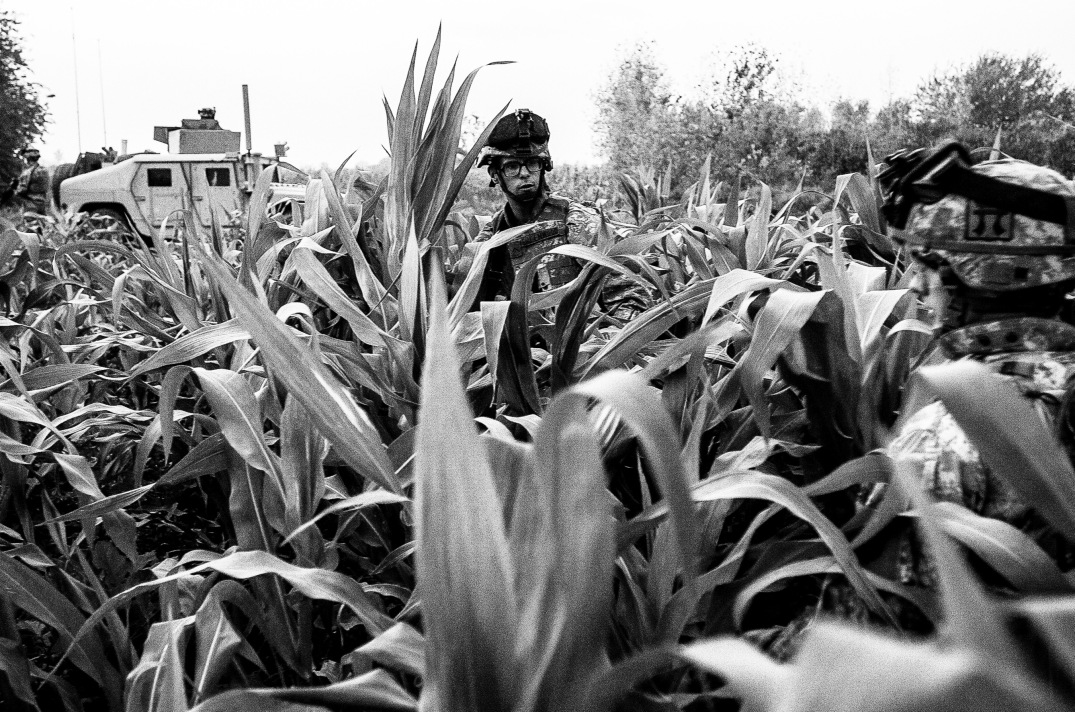
Photo by Bill Putnam, used with permission.

By my count, 2016 saw ten contemporary war fiction titles published, one more than in 2015. 2017 promises new novels by David Abrams, Siobhan Fallon, Elliot Ackerman, and Brian Van Reet, as well as a short-fiction anthology edited by Brian Castner and Adrian Bonenberger called The Road Ahead, so that’s a lot to anticipate. The only new poetry collection published in 2016 was a British anthology titled Home Front that reprints two great books authored by American military spouses—Elyse Fenton’s Clamor and Jehanne Dubow’s Stateside—alongside work by two British authors, Bryony Doran and Isabel Palmer. Happy to say, both Dubrow and Fenton will have new work appearing in 2017, titled Dots & Dashes and Sweet Insurgent, respectively. Hollywood released three Iraq or Afghanistan movies in 2016; 2017 will bring the movie adaptation of The Yellow Birds, but I’m not sure what else.

Below is my annual compendium of Iraq and Afghanistan war fiction, poetry, and movies. Works appearing in 2016 are in bold. If you think I’ve missed anything let me know. A separate list of romance, male adventure, and young adult fiction is in the works.

Iraq and Afghanistan War Fiction

Nadeem Aslam, The Wasted Vigil (2008)
Siobhan Fallon (Army spouse), You Know When the Men Are Gone (2011)
Helen Benedict, Sand Queen (2011)
David Abrams (Army), Fobbit (2012)
Ben Fountain, Billy Lynn’s Long Halftime Walk (2012)
Kevin Powers (Army), The Yellow Birds (2012)
Joydeep Roy-Bhattacharya, The Watch (2012)
Sinan Antoon, The Corpse Washer (2013)
Nadeem Aslam, The Blind Man’s Garden (2013)
Lea Carpenter, Eleven Days (2013)
Masha Hamilton, What Changes Everything (2013)
Hilary Plum, They Dragged Them Through the Streets (2013)
Roxana Robinson, Sparta (2013)
J.K. Rowling (aka Robert Galbraith), The Cuckoo’s Calling (2013)
Katey Shultz, Flashes of War (2013)
Fire and Forget: Short Stories from the Long War, edited by Roy Scranton (Army) and Matt Gallagher (Army) (2013)
Paul Avallone, Tattoo Zoo (2014)
Greg Baxter, The Apartment (2014)
Hassan Blasim, The Corpse Exhibition (2014)
Aaron Gwyn, Wynne’s War (2014)
Cara Hoffman, Be Safe, I Love You (2014)
Atticus Lish (USMC), Preparation for the Next Life (2014)
Phil Klay (USMC), Redeployment (2014)
Michael Pitre (USMC), Fives and Twenty-Fives (2014)
Eliot Ackerman (USMC), Green on Blue (2015)
Eric Bennett, A Big Enough Lie (2015)
Brandon Caro (Navy), Old Silk Road (2015)
Mary “M.L.” Doyle, The Bonding Spell (2015)
Jesse Goolsby (USAF), I’d Walk With My Friends If I Could Find Them (2015)
Carrie Morgan, The Road Back from Broken (2015)
John Renehan (Army), The Valley (2015)
Ross Ritchell (Army), The Knife (2015)
Christopher Robinson and Gavin Kovite (Army), War of the Encylopaedists (2015)
Matt Gallagher (Army), Youngblood (2016)
Matthew Hefti (Air Force), A Hard and Heavy Thing (2016)
Odie Lindsey (Army), We Come to Our Senses (2016)
Elizabeth Marro, Casualties (2016)
Luke Mogelson, These Heroic, Happy Dead (2016)
Harry Parker, Anatomy of a Soldier (2016)
Scott Pomfret, You Are the One (2016)
Roy Scranton (Army), War Porn (2016)
Whitney Terrell, The Good Lieutenant (2016)
Maximilian Uriarte (USMC), The White Donkey (2016)

Iraq and Afghanistan War Poetry

Juliana Spahr, This Connection of Everyone with Lungs (2005)
Brian Turner (Army), Here, Bullet (2005)
Walt Piatt (Army), Paktika (2006)
Sinan Antoon, The Baghdad Blues (2008)
Jehanne Dubrow (Navy spouse), Stateside (2010)
Elyse Fenton (Army spouse), Clamor (2010)
Brian Turner (Army), Phantom Noise (2010)
Paul Wasserman (USAF), Say Again All (2012)
Colin Halloran (Army), Shortly Thereafter (2012)
Amalie Flynn (Navy spouse), Wife and War (2013)
Hugh Martin, The Stick Soldiers (2013)
Kevin Powers (Army), Letter Composed During a Lull in the Fighting (2014)
Sylvia Bowersox (Army), Triggers (2015)
Randy Brown, aka “Charlie Sherpa” (Army), Welcome to FOB Haiku (2015)
Colin Halloran (Army), Icarian Flux (2015)
Philip Metres: Sand Opera (2015)
Washing the Dust from Our Hearts: Poetry and Prose from the Afghan Women Writing Project (2015)
Home Front: Jehanne Dubrow’s Stateside, Elyse Fenton’s Clamor, Bryony Doran’s Bulletproof, and Isabel Palmer’s Atmospherics (2016, UK only).

Iraq and Afghanistan War Film

In the Valley of Elah, Paul Haggis, director (2007)
Lions for Lambs, Robert Redford, director (2007)
The Hurt Locker, Kathryn Bigelow, director (2008)
Standard Operating Procedures, Errol Morris, director (2008)
Stop-Loss, Kimberly Pierce, director (2008)
Generation Kill, David Simon and Ed Burns, executive producers (2008)
Brothers, Jim Sheridan, director (2009)
Restrepo, Sebastian Junger, director (2009)
The Messenger, Oren Moverman, director (2009)
Green Zone, Paul Greengrass, director (2010)
Return, Liza Johnson, director (2011)
Zero-Dark-Thirty, Kathryn Bigelow, director (2012)
Lone Survivor, Peter Berg, director (2013)
American Sniper, Clint Eastwood, director (2014)
Korengal, Sebastian Junger, director (2014)
The Last Patrol, Sebastian Junger, director (2014)
Fort Bliss, Claudia Myers, director (2014)
Man Down, Dito Monteil, director (2015)
A War, Tobias Lindholm, director (2015)
Billy Lynn’s Long Halftime Walk, Ang Lee, director (2016)
War Dogs, Todd Phillips, director (2016)
Whiskey Tango Foxtrot, Glenn Ficarra and John Reque, directors (2016)

I’ve not listed the important theatrical and literary memoir titles that I’ve included in past years, because I haven’t tracked them as closely in the past twelve months as I have previously. To make up for that omission, I’ve compiled a list of interesting and substantial contemporary war non-fiction books published in 2016, which in my mind was a banner year for such works.

2016 Iraq and Afghanistan Non-fiction

Andrew Bacevich, America’s War for the Middle East (2016)
Rosa Brooks, How Everything Became War and the Military Became Everything: Tales from the Pentagon (2016)
Brian Castner, All the Ways We Kill and Die: An Elegy for a Fallen Comrade and the Hunt for His Killer (2016)
Eric Fair, Consequence: A Memoir (2016)
Sebastian Junger, Tribe: On Homecoming and Belonging (2016)
David J. Morris, The Evil Hours: A Biography of Post-Traumatic Stress Disorder (2016)
Mary Roach, Grunt: The Curious Science of Humans at War (2016)
J. Kael Weston, The Mirror Test: America at War in Iraq and Afghanistan (2016)

…and not to overlook two books that offer glimpses of the strategic thinking and worldviews of the leaders of newly-elected President Trump’s national security team:

Kori Schake and Jim Mattis, editors, Warriors and Citizens: American Views of the Military (2016)
Michael Flynn, The Field of Fight: How We Can Win the Global War Against Radical Islam and Its Allies (2016)

I haven’t yet read all the non-fiction named above, but one that impressed me greatly is Brian Castner’s All the Ways We Kill and Die. Castner, for my money, gets the nitty-gritty of Iraq and Afghanistan combat—complete with accounts of mIRC communication systems, combined ground-air ops, and insurgent IED tactics—better than any work I’ve seen previously. He combines attention to detail with eloquent expression of what it means to belong to close-knit organizations of fighting men and women. Castner, who served three tours in the Middle East as an Air Force Explosive Ordnance Disposal officer, knows of what he writes, and he uses his narrative to interrogate his decade-long obsession with war’s allure and consequences.

I read All the Ways We Kill and Die alongside a second work that does much the same, but from a very different angle: Hilary Plum’s memoir Watchfires (2016). The follow-up to Plum’s intriguing novel about domestic anti-war radicalism They Dragged Them Through the Streets (2013), Watchfires explores connections between Plum’s personal and familial experience of illness and dysfunction with national and global currents of war, terrorism, and aggression. “Moreover, I, on my side, require of every writer, first or last, a simple and sincere account of his own life,” wrote Thoreau, and though Plum’s account is not simple, she seems to have accomplished in Watchfires what Castner has also done, and what every thinking person might try, according to Thoreau: define honestly and precisely how one’s private life and thoughts relate to the violent spirit of the times.

Brian Castner, All the Ways We Kill and Die: An Elegy for a Fallen Comrade, and the Hunt for His Killer. Arcade, 2016.

Hilary Plum, Watchfires. Rescue Press, 2016.

War Poetry: Hugh Martin’s The Stick Soldiers

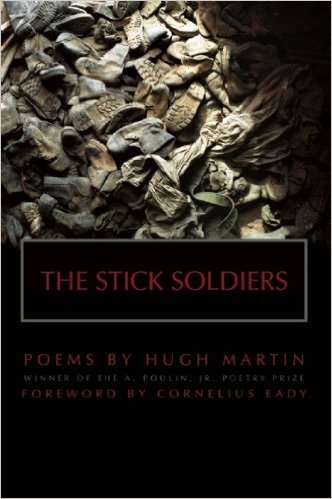
the-stick-soldiersSomehow I missed Hugh Martin’s excellent poetry volume The Stick Soldiers when it was released in 2013, so now let me make amends. Martin’s accessible and very affecting verse attempts to make sense of the author’s deployment to Iraq and the disorienting times afterwards in ways that to me seem valuable and fresh. Neither overwrought nor undernourished, the poems in The Stick Soldiers strike notes that allow clearly-rendered physical description to give way to higher, unanticipated orders of meaning. A fine example is “The Range”:

“The Range”

We shoot green silhouettes
of men. Their blank faces

are painted beige, their plastic
chests checkered with holes,

but still, they rise in the July sunlight
like a boy too stupid to know

when to stay down, when to quit.
Drill Sergeant Grant paces

the gravel walk. He stops
to lie beside me on the beaten grass.

Between shots in the deep hush
of some, he says breathe, breathe

as we watch the targets fall
flat to the earth. I never

speak, but only fire, study
the range for the next one—

hold my breath, tap
the trigger, take them down,

one by one, like it was all
the world needed done.

A second example is “The Rocket”:

“The Rocket”

Blue as the pale sky this rocket
lay beside a dry wadi
alone where there was nothing
for miles, as if a man too tired
to take it any further
had set it here years ago, this spot
on the sun-hardened ground.
There was no wind. There was no one
but us, our trucks parked
at the edge of the valley. Sergeant Sumey,
tired of staring, walked to the rocket.
We all knew better than to touch
a thing like this, but all of us, all our hands,
had done it many times before. Sumey grabbed
the rocket like a handle to the earth,
lifted it—no longer than his M-4—
above his shoulder, and leaned back,
widened his stance, as if about to throw it
to the barren hills in the east,
so we could watch its arc, its twirl,
as if doing the rocket the favor
of making sure it left the world in pieces.

While “The Range” and “The Rocket” have a set-piece feel describing events experienced by many soldiers, other poems render more sustained looks at Martin, or his narrator, in interaction with those close to him personally. A stanza from “Four-Letter Word,” for instance, places unwitting family members in juxtaposition with a soldier who can’t help but note the triteness of their conversational gambits. It also demonstrates what for me is Martin’s great ear and eye for the exact word and right line-length:

“Four-Letter Word”

5.

Home for Christmas leave.

This is our son, he’s going to Iraq.
He’s leaving for Iraq.
His unit is being mobilized for Iraq.

He has to go to Iraq.
I’ll get you a drink, you’re going to Iraq.
E-mail me when you get to Iraq.

Hopefully things will get better when you get to Iraq.
Are you scared about going to Iraq?
Did you know you would have to go to Iraq?

I can’t imagine going to Iraq.
Is there a chance you might not go to Iraq?
Where will you be in Iraq?

What will you be doing in Iraq?
How long will you be in Iraq?
Iraq? Really? Iraq?

The perspectival chasm dividing the narrator and his family in “Four-Letter Word” is amplified in the volume’s title poem, in which the soldier-narrator describes drawings sent to his unit by American schoolchildren:

“The Stick Soldiers”

We tape our favorites to the door.
In blue crayon, a stick-figure soldier poses
as he’s about to toss
a black ball,
fuse burning,
at three other stick figures,
red cloth wrapped over faces,
Iraki written
across stick chests […]

The narrator then places those pictures in contrast with the drawings by Iraqi schoolchildren on sides of buildings the soldiers drive by:

Further down the wall, a stick man holds
an RPG
aimed toward the Humvee,
the waving soldier’s head […]

A number of other poems describe Martin post-deployment and post-service. These too work in a quiet vein: not traumatized, the narrator just thinks a lot about what he lived through in Iraq, and he is discomfited more than he is alienated, outraged, or made dysfunctional. Though the volume’s subjects have been well-covered by other veteran-writers, Martin’s calmness about it all distinguishes his approach. Our current political and cultural moment is not one for understated emotional control and nuanced ambivalence, but if the nation ever settles down again enough to value thoughtfulness and eloquence, The Stick Soldiers’ wise view of a soldier’s experience of war awaits.

Hugh Martin, The Stick Soldiers, with a foreword by Cornelius Eady. BOA Editions, Ltd., 2013.