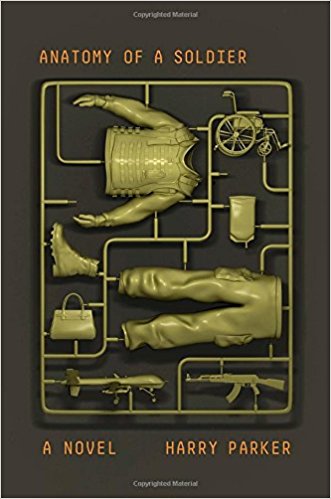
War Fiction: Harry Parker’s Anatomy of a Soldier

Despite noting the reviews of Harry Parker’s Anatomy of a Soldier upon its release last year, I somehow had missed a key piece of Parker’s biography when I began reading the novel itself this month. Over 200 pages in, while marveling at the acuity of Parker’s portrait of soldier disability following battlefield wounding, I rediscovered a review that reminded me that Anatomy of a Soldier is based on personal experience. Parker, it turns out, like his novel’s protagonist, Captain Tom Barnes, unfortunately lost both legs to an IED in Afghanistan while serving in the British army as an infantry officer. The realization immediately recast my reception of Anatomy of a Soldier. Rather than suggesting the exciting possibilities of a highly curious and empathic imagination, the novel now traversed somewhat less interesting terrain: the aesthetic borderland dividing reported experience and fictional dramatization.

Somewhat less interesting, though by no means entirely so. It’s mostly that I’ve read dozens of soldier memoirs and war novels, and am so used to peregrinations back-and-forth across the divide between fact and fiction, whether literary, naïve, or disingenuous, that you’d be hard-pressed to write a war memoir that impressed me as the truth, the whole truth, and nothing but the truth, or a war novel that I didn’t think drew on events you witnessed or participated in. Vietnam War veteran-author Larry Heinemann’s description of his first novel Close Quarters as “straight-up fictionalized memoir” seems to me a phrase that gets at the heart of the genre-anxiety of much war-writing, but my head begins to hurt and I grow tired when pondering the matter.

The point of all this me-centric musing is that Parker has also confronted these issues and has made a number of interesting authorial decisions to resolve them. The decision not to write a memoir is first and foremost, and almost every review of Anatomy of a Soldier considers Parker’s motivation for the choice and what he might have gained or lost. It’s not impossible to fathom why he did not write a memoir: fear of mawkish self-regard or promotion, hesitancy about naming names, suppression of uncomfortable truths, and so on. Given the stiff upper lip and occasional glimpses of black humor on display in Anatomy of a Soldier, I’m sure the last thing Parker would claim is that he wrote it as a therapeutic means of dealing with trauma, even if he did. In any case, a more interesting point to consider is the extremely exotic narrative technique Parker employs, I take it, to further sever the tale from the teller. Each chapter in Anatomy of a Soldier is related from the point-of-view, if that is the right word, of a material object that plays a role in Barnes’ wounding, recovery, and rehabilitation. For example, one chapter is narrated by the bomb that blows him up, another by his helmet, another by the catheter inserted in his penis, etc. Other chapters are related by material objects associated with the Afghans who Barnes tries to help and those he fights, such as a bicycle, a bag of fertilizer, and a wheelbarrow. Here’s an example, related by one of the bullets Barnes loads into a magazine before a mission:

I was spilt with twenty identical others from the cardboard box we were packaged in. I clinked against them as we rolled out across the green mattress.”

BA5799 lined us up into rows of ten and then thirty and pushed us one by one into a magazine.

BA5799—Barnes’ soldier identification number–is how the novel’s object-narrators refer to their owner, a rather obvious way of suggesting that Barnes himself is also just a cog in the big war machine and that the novel is not so much about psychology and emotion but techno-determinism. Giving voice to military equipment might be the logical culmination of the fetishizing of military gear begun by Tim O’Brien’s “The Things They Carried,” but on the whole the business is a little gimmicky—the stuff of a creative writing class or an experimental modernist novel. That it succeeds as well as it does is a huge testament to Barnes’ powers of observation and creativity. None of the objects brought to life channels an individualized speaking style or consciousness that inflects our understanding of Barnes or Afghans in some way appropriate to the physical functionality of the thing doing the describing—the bullet doesn’t express itself in bullet points, for example, or short, piercing prose stabs of death-dealing wisdom (which frankly would be dumb and tedious). Instead, they have a generic, objective, understated feel that only fitfully and shallowly probes the inner workings of the characters’ minds or suggests bigger implications of the story being told. That’s partly Parker’s intent, I assume, but it’s also a tactic that forfeits two of the novel genre’s great virtues. That said, Anatomy of a Soldier provides very interesting oblique glimpses of soldier and Afghan life and medical and rehabilitative process that suggest that Parker took very good notes while living through his truncated deployment, horrific wounding, and grueling recovery. The chapters describing Afghan family-and-community mores and farm-field and water-management systems are first-in-class among the war lit depictions I’ve read and those portraying disability and rehabilitation haven’t even been attempted to the degree that Anatomy of a Soldier does very well.

To further confound reader expectation and destabilize narrative conventions, Anatomy of a Soldier unfolds Barnes’ story in a decidedly non-linear fashion, so the chronological understanding of it all doesn’t come clear until very near the end. Once revealed, the plot shows itself to have much in common with many other junior officer sagas: the tale of an idealistic young man who wants nothing more than to prove himself battle-worthy in the eyes of his superiors, peers, and subordinates. That’s some extremely old wine that Parker pours into an extravagantly fashioned new bottle, and, like many other reviewers, I wonder if the effort was worth it, for Parker has the life experience and writing chops to have written a more conventional junior officer memoir that still stands out from the pack. Platoon leader memoirs typically culminate in either triumph—things go well, with just enough failure and blackness to say you’ve tasted them—or disaster—the author doesn’t get to be the hero he dreamed of being, leaving him feeling frustrated, cheated, and somehow deficient; if wounded, his wounds proof that he wasn’t cut out for successful officership in the first place. Anatomy of a Soldier is of the second type, and the parts that pack the most emotional wallop trace the contours of Barnes’ triumph and disappointment. His helmet describes the high-water mark, when his sense of pride swells at having successfully led his men into and out of battle:

He had wondered why people thought soldiering was romantic, and knew if they swapped places with any of his men most would crumple under the pressure and fear, the smell and the heat. But he could feel the romance now as he watched the single file of men, with their day-sacks and helmets and antennas, bobbing up and down across this foreign land.

He went through the platoon from the back and smiled at every man as he passed. They crouched by walls or sat on rocks to take the weight off their backs. Their faces were exhausted and grimy with dirt. He knew and trusted each of them. They were his: he could order them into danger and they would go, but he also belonged to them and would lead them there. Each grin and nod, every gesture was trust and the bond that had tightened again that morning.

Moments later, Barnes is wounded, and the colossal import of the event on Barnes’ sense of himself as a worthy leader of fighting men is rendered by his deployment achievement medal as Barnes watches his unit march in parade upon return to England:

BA5799 watched them come. He knew them all. He’d been part of them, one of their best; he didn’t mind the arrogance of thinking that—it didn’t matter now. He’d made a mistake that confined him to the small group that looked on. Even if he’d wanted to march with them he couldn’t.

His hand tightened around me and I pushed a red mark into the folded creases of his palm. He was embarrassed that he was the one who’d made a mistake. He was supposed to be good at his job—some of them had even looked up to him, depended on him to make decisions—and it was never going to happen to him, he was meant to be lucky. But he wasn’t, and it had, and he’d failed.

Suddenly he hated the thought of them seeing him like this, broken and maimed. He didn’t want to walk out there in front of the watching crowd. He wanted to go back to the centre and its different rules and measures of achievement that none of them would understand. Where he could be the best.

He looked down at me and swept his thumb across my surface and felt the ridges and mounds of the head moulded on me. He was a maimed relic that everyone wanted to forget. None of the men in those ranks wanted to be reminded of the truth—of what might happen. I am that truth, he thought.

He watched them go and knew he would never feel part of them again. They were heading away to their R and R, convinced they were invincible and knowing it would never happen to them, while he was going back to the centre to adapt to what had happened to him. My fight goes on, he thought and slipped me into his pocket.

That’s a very honest reckoning, in my opinion, and one that for my money should be offered to the world from something other than the perspective of a bit of brass and ribbon. I could easily place Anatomy of a Soldier in dialogue with Iraq and Afghanistan junior officer memoirs written by Americans, such as those by Nathaniel Fick, Craig Mullaney, Matt Gallagher, Adrian Bonenberger, Sean Parnell, Benjamin Tupper, and Laura Westly, or, given Parker’s protagonist’s name, Hemingway’s The Sun Also Rises. Perhaps though it’s best to find English fictional antecedents to understand Parker’s achievement. One might first turn to J.K. Rowling’s Robert Galbraith novels featuring a one-legged Afghanistan vet named Cormorant Strike—Anatomy of a Soldier might well be the prequel that helps explain Strike’s stoic independence and contempt for pretense.

But the book that Anatomy of a Soldier most resembles is another fictionalized memoir written by Siegfried Sassoon, another Englishman from another war. In Memoirs of an Infantry Officer, Sassoon, who like his protagonist George Sherston, temporarily escaped the World War I trenches by pronouncing his conscientious objection to the war, seems most excited to describe how Sherston upon return to the frontlines proves himself a brave, competent, respected leader of an infantry unit in combat before suffering his own war-ending wound. For Sassoon, as with Parker, as with, I would say, virtually any young man who tries to turn himself into an infantry or combat arms officer, the moment of validation that comes with successful battlefield leadership is worth every danger and every cost, the first thing and most important thing he wants the world to know about him forever afterwards.

An informative article on Harry Parker and his thoughts about writing Anatomy of a Soldier here. Among other things, Parker clears up a bit of confusion:  Afghanistan is never mentioned in Anatomy of a Soldier, but it is, as Parker states in the article, obviously set there.

A post from my old blog with some relevance to the subject-at-hand.

Harry Parker, Anatomy of a Soldier. Knopf, 2016.
Iraq and Afghanistan War Writing, Theater, Art, and Film 2017

Photo by Bill Putnam.

2017 brought new novels by Elliot Ackerman, David Abrams, Helen Benedict, and Siobhan Fallon, and new poetry volumes by Jehanne Dubrow and Elyse Fenton. Also arriving was a first novel by contemporary war short-fiction pioneer Brian Van Reet. By any measure, that’s a bumper crop of new contemporary war fiction and poetry by veteran mil-and-war authors. Besides these works, though, releases of novels, short story collections, and volumes of poetry by major publishing houses were in short supply. Fortunately, university, regional, and independent presses picked up some of the slack: Caleb Cage’s short-story collection Desert Mementos: Stories of Iraq and Nevada appeared courtesy of University of Nevada Press, Eric Chandler’s poetry collection Hugging This Rock was published by Charlie Sherpa’s Middle West Press, and Samuel Gonzalez, Jr. and Christopher Meeks self-published their very interesting novel The Chords of War.

Fallon’s The Confusion of Languages and Ackerman’s Dark at the Crossing only indirectly reference Iraq and Afghanistan, but the locale of each book—Jordan and Turkey, respectively—their interest in conflict and empire, and their authors’ formidable reputations as military insiders validates their inclusion on this year’s list. Other renown war-writers, such as Brian Castner and Roy Scranton, have begun to craft literary identities and build publishing histories well-beyond the confining limits of war literature, a trend that will certainly intensify in coming years.

Ackerman’s Dark at the Crossing earned National Book Award short-list honors, and Van Reet’s Spoils made The Guardian and Wall Street Journal’s year-end “best of” lists. Despite such laurels, war writing as a genre seems to have fallen from major media favor—we’re far from the 2014 days when Vanity Fair and the New York Times ran fawning author portraits and glowing genre appraisals. Online writing by veteran writers has fortunately continued vibrantly apace on websites such as The War Horse, Military Experience and the Arts, The Wrath-Bearing Tree, 0-Dark-Thirty, and War, Literature, and the Arts–and thank you very much all concerned.

Our Trojan War, a modern-war/Homeric-war hybrid, and Jay Moad’s one-man-play Outside Paducah were the highlights of the year in terms of theatrical productions related to Iraq and Afghanistan staged in New York City, but elsewhere in-and-out of NYC the year saw no big-name, big-cast, big-money productions that garnered national attention. There was, however, plenty of action at the regional, local, DIY, collective, performance art, and spoken-word level. Toward the end of the year, former Marine and current movie star Adam Driver announced a $10,000 prize to the winner of a veterans playwriting competition, encouraging news for the energetic talent in the grassroots theater scene.

The only major motion picture released in 2017 about war in Iraq or Afghanistan that a caused much of a splash was War Machine, a Netflix TV-release starring Brad Pitt that I am including here by exception. American Sniper writer Jason Hall’s directorial debut Thank You For Your Service (based on David Finkel’s book) and Richard Linklater’ Last Flag Flying came-and-went quickly. Art and photography exhibition choices offered slim pickings, too, though I’m happy to report Bill Putnam’s photography–oft on display on Time Now–was featured at exhibits in Washington, DC, and New York this year.

In 2016, I included a list of notable non-fiction works about war in Iraq and Afghanistan, but, as with Hollywood movies and the art-and-photo scene, the genre seems to have dried up. I’ve long since stopped tracking veteran memoirs closely, but a Military Times list of year’s best military books offers a couple of titles worth checking out.

The poetry list includes many new entries cribbed from Charlie Sherpa’s Mother of All 21st Century War Poetry Lists, which observes these things far better than I do–many thanks.

Please notify me of any errors or omissions, and I’ll correct the record.

Iraq and Afghanistan War Fiction

Nadeem Aslam, The Wasted Vigil (2008)
David Zimmerman, The Sandbox (2010)
Siobhan Fallon (Army spouse), You Know When the Men Are Gone (2011)
Helen Benedict, Sand Queen (2011)
David Abrams (Army), Fobbit (2012)
Ben Fountain, Billy Lynn’s Long Halftime Walk (2012)
Kevin Powers (Army), The Yellow Birds (2012)
Joydeep Roy-Bhattacharya, The Watch (2012)
Sinan Antoon, The Corpse Washer (2013)
Nadeem Aslam, The Blind Man’s Garden (2013)
Lea Carpenter, Eleven Days (2013)
Masha Hamilton, What Changes Everything (2013)
Hilary Plum, They Dragged Them Through the Streets (2013)
Roxana Robinson, Sparta (2013)
J.K. Rowling (aka Robert Galbraith), The Cuckoo’s Calling (2013)
Katey Shultz, Flashes of War (2013)
Fire and Forget: Short Stories from the Long War, edited by Roy Scranton (Army) and Matt Gallagher (Army) (2013)
Paul Avallone, Tattoo Zoo (2014)
Greg Baxter, The Apartment (2014)
Hassan Blasim, The Corpse Exhibition (2014)
Aaron Gwyn, Wynne’s War (2014)
Cara Hoffman, Be Safe, I Love You (2014)
Atticus Lish (USMC), Preparation for the Next Life (2014)
Phil Klay (USMC), Redeployment (2014)
Michael Pitre (USMC), Fives and Twenty-Fives (2014)
Eliot Ackerman (USMC), Green on Blue (2015)
Eric Bennett, A Big Enough Lie (2015)
Brandon Caro (Navy), Old Silk Road (2015)
Mary “M.L.” Doyle, The Bonding Spell (2015)
Jesse Goolsby (USAF), I’d Walk With My Friends If I Could Find Them (2015)
Carrie Morgan, The Road Back from Broken (2015)
John Renehan (Army), The Valley (2015)
Ross Ritchell (Army), The Knife (2015)
Christopher Robinson and Gavin Kovite (Army), War of the Encylopaedists (2015)
The Road Ahead, Adrian Bonenberger (Army) and Brian Castner (Air Force), eds. (2016)
Matt Gallagher (Army), Youngblood (2016)
Matthew Hefti (Air Force), A Hard and Heavy Thing (2016)
Tom King and Mitch Gervais, The Sheriff of Babylon, vol 1: Bang. Bang. Bang. (2016).
Odie Lindsey (Army), We Come to Our Senses (2016)
Elizabeth Marro, Casualties (2016)
Luke Mogelson, These Heroic, Happy Dead (2016)
Harry Parker, Anatomy of a Soldier (2016)
Scott Pomfret, You Are the One (2016)
Roy Scranton (Army), War Porn (2016)
Whitney Terrell, The Good Lieutenant (2016)
Maximilian Uriarte (USMC), The White Donkey (2016)
David Abrams (Army), Brave Deeds (2017)
Elliot Ackerman (USMC), Dark at the Crossing (2017)
Helen Benedict, Wolf Season (2017)
Caleb Cage (Army), Desert Mementos: Stories of Iraq and Nevada (2017)
Siobhan Fallon (Army spouse), The Confusion of Languages (2017)
Tom King (CIA) and Mitch Gervais, The Sheriff of Babylon, vol. 2: Pow. Pow. Pow. (2017)
Christopher Meeks and Samuel Gonzalez, Jr. (Army), The Chords of War (2017)
Brian Van Reet (Army), Spoils (2017)

Iraq and Afghanistan War Poetry

Juliana Spahr, This Connection of Everyone with Lungs (2005)
Brian Turner (Army), Here, Bullet (2005)
Walt Piatt (Army), Paktika (2006)
Sinan Antoon, The Baghdad Blues (2008)
Frances Richey (Army mother), The Warrior: A Mother’s Story of a Son at War (2008)
Jehanne Dubrow (Navy spouse), Stateside (2010)
Elyse Fenton (Army spouse), Clamor (2010)
Frances Richey (Army mother), Voices of the Guard (2010)
Brian Turner (Army), Phantom Noise (2010)
Allan Gray (Army), Overwatch (2011)
Tom Sleigh, Army Cats (2011)
Colin Halloran (Army), Shortly Thereafter (2012)
Jason Poudrier (Army), Red Fields (2012)
Seth Brady Tucker (Army), Mormon Boy (2012)
Paul Wasserman (USAF), Say Again All (2012)
Charles Bondhus, All the Heat We Could Carry (2013)
Stanton S. Coerr (USMC), Rubicon (2013)
Kerry James Evans (Army), Bangalore (2013)
Amalie Flynn (Navy spouse), Wife and War (2013)
Hugh Martin, The Stick Soldiers (2013)
Chuck Rybak, War (2013)
David R. Dixon (USMC), Call in the Air (2014)
Frederick Foote (Navy), Medic Against Bomb: A Doctor’s Poetry of War (2014)
Gerardo Mena (USMC), The Shape of Our Faces No Longer Matters (2014)
Seth Brady Tucker (Army), We Deserve the Gods We Ask For (2014)
Kevin Powers (Army), Letter Composed During a Lull in the Fighting (2014)
Sylvia Bowersox (Army), Triggers (2015)
Randy Brown, aka “Charlie Sherpa” (Army), Welcome to FOB Haiku (2015)
Colin Halloran (Army), Icarian Flux (2015)
Victoria Kelly (spouse), When the Men Go Off to War (2015)
Philip Metres: Sand Opera (2015)
Tom Sleigh, Station Zed (2015)
Washing the Dust from Our Hearts: Poetry and Prose from the Afghan Women Writing Project (2015)
Paul David Adkins (Army), Flying Over Baghdad with Sylvia Plath (2016)
Jonathan Baxter (Army), The Ghosts of Babylon (2016)
Lance B. Brender (Army) and C. Rodney Pattan (Army), In Cadence (2016)
Kim Garcia, Drone (2016)
Nicole Goodwin (Army), Warcries (2016)
Karen Skolfield (Army), Frost in the Low Areas (2016)
Lisa Stice (USMC spouse), Uniform (2016)
Home Front: Jehanne Dubrow’s Stateside, Elyse Fenton’s Clamor, Bryony Doran’s Bulletproof, and Isabel Palmer’s Atmospherics (2016, UK only)
Paul David Adkins (Army), FM 101-5-1 MCRP 5-2A: Operational Terms and Graphics (2017)
Eric Chandler (USAF), Hugging This Rock (2017)
Jehanne Dubrow (Navy spouse), Dots & Dashes (2017)
Elyse Fenton (Army spouse), Sweet Insurgent (2017)
Benjamin Hertwig (Canadian Army), Slow War (2017)

Iraq and Afghanistan War Film

In the Valley of Elah, Paul Haggis, director (2007)
Lions for Lambs, Robert Redford, director (2007)
Battle for Haditha, Nick Broomfield, director (2007)
The Hurt Locker, Kathryn Bigelow, director (2008)
Standard Operating Procedures, Errol Morris, director (2008)
Stop-Loss, Kimberly Pierce, director (2008)
Generation Kill, David Simon and Ed Burns, executive producers (HBO) (2008)
The Objective, Daniel Myrick, director (2008)
Brothers, Jim Sheridan, director (2009)
Restrepo, Sebastian Junger, director (2009)
The Messenger, Oren Moverman, director (2009)
Green Zone, Paul Greengrass, director (2010)
Return, Liza Johnson, director (2011)
Zero-Dark-Thirty, Kathryn Bigelow, director (2012)
Lone Survivor, Peter Berg, director (2013)
American Sniper, Clint Eastwood, director (2014)
Korengal, Sebastian Junger, director (2014)
The Last Patrol, Sebastian Junger, director (2014)
Fort Bliss, Claudia Myers, director (2014)
Man Down, Dito Monteil, director (2015)
A War, Tobias Lindholm, director (2015)
Hyena Road, Paul Gross, director (2015)
Billy Lynn’s Long Halftime Walk, Ang Lee, director (2016)
Neither Heaven Nor Earth, Clement Cogitore, director (2016)
War Dogs, Todd Phillips, director (2016)
Whiskey Tango Foxtrot, Glenn Ficarra and John Reque, directors (2016)
Last Flag Flying, Richard Linklater, director (2017)
Sand Castle, Fernando Coimbra (Netflix) (2017)
Thank Your For Your Service, Jason Hall, director (2017)
The Wall, Doug Liman, director (2017)
War Machine, David Michod (Netflix) (2017)

Matthew Hefti, Benjamin Busch, and Mary Doyle at AWP17, with a glimpse of Teresa Fazio in the left foreground and Whitney Terrell on the right. Photo by Bill Putnam.


Making the SEAL Team SEAL-y: Literary Theory and Recent War Writing

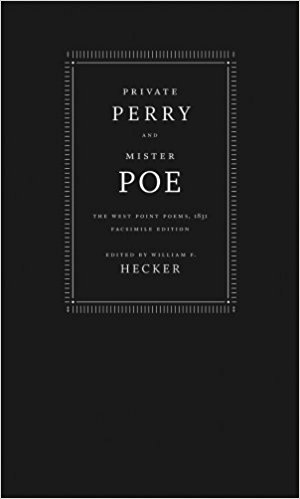
In a 2005 book titled Private Perry and Mr. Poe, an Army major named William Hecker argues that Edgar Allan Poe’s essays “The Philosophy of Composition” and “The Poetic Principle” were inspired by Poe’s service as an Army artilleryman from 1827 to 1829. Hecker researched the Army artillery manuals that Poe would have used and found in them many words and ideas that corresponded closely with those he later used in “The Philosophy of Composition” and “The Poetic Principle” to describe literature. In the two essays, Poe explains that every element of a successful poem or story should contribute to the work’s intended meaning and reception, or, in Poe’s words, they should create “unity-of- effect.”  Poe’s duty position in the Army was that of an “artificer”:  it was his job to calculate explosive charges and cut fuse lengths so that the shells fired by his unit’s cannons exploded precisely on their targets.  In other words, he was responsible for creating the artillery shell’s unity-of-effect.

That’s a pretty good piece of work on Hecker’s part—definitely ingenious if not provable or beyond criticism.  Not so many people know Poe’s essays, but most writers and readers would agree that the elements of a work of literature should contribute meaningfully in a coordinated way to the work’s theme and tone.  Poe’s essays are important articulations of the idea, so any information about their sources and origins is welcome.

Now, Michael Carson, a former Army officer and Iraq veteran, also makes a significant contribution to literary history and theory.  In “The October Revolution, Russia Occupation of Persia:  WWI Soldier Viktor Shklovsky’s Sentimental Memoirs,” a piece published on The WWrite Blog, a blog sponsored by the World War I Centennial Commission, Carson uncovers a previously unexplored war memoir written by Viktor Shklovsky, a founding member of the literary theory school known as “Russian Formalism,” that describes Shklovsky’s service in the Russian Army occupying Persia (now Iran) in 1917.  Since 1917 marked the first appearance of Shklovsky’s most well-known work, an essay titled “Art as Technique,” it is at least conceivable that Shklovsky composed “Art as Technique” while preparing to go to Persia or even while there.  Carson doesn’t push the point, and it’s not as clear in Shklovsky’s case as it is in Poe’s which came first—military service or literary theory—or exactly how military service and literary theory are connected, but that’s OK.  Carson’s discovery is an important breadcrumb for future scholars, especially given the nature and stature of Shklovsky’s ideas in “Art as Technique.”

To say that Shklovsky was a “Formalist” is to confuse apprehension of his most accessible ideas, however.  Thinking of literature in terms of its forms, or genres, and its higher-order ways of organizing itself, rather than its themes, characters, plots, and style, is hard-going.  Formalists assert that what really counts in a literary work is not content but the literary vessel in which content is contained:  poetry, memoir, reportage, fiction, etc.  Among other things, formalists speculate how given genres might best represent their times, or emerge in association with something else important about their historical moment.  At one level, this is an easy, obvious concept:  sonnets thrived in Elizabethan England, the novel in the 19th-century, and creative non-fiction came into its own only in the last few decades.  It’s harder, though, to say the next smart thing about the business, to go beyond surface observations and generalizations.

War literature offers examples of the problem.  Poetry may be the mode most correspondent with World War I, the novel with World War II, journalism and reportage with Vietnam, and the graphic novel and blog that of Afghanistan and Iraq.  But is this really even true—there are so many exceptions—and if so, so what?  Besides, there are many confusing data points.  Siegfried Sassoon, known best as a World War I poet, also wrote three novels based on his experience, and three memoirs that covered the exact same ground, and according to no less than Paul Fussell, the novels are truer than the memoirs.  American Vietnam War writer Larry Heinemann called his first novel Close Quarters a “straight up fictionalized memoir,” whatever that means, and the very title of Tim O’Brien’s “How to Tell a True War Story” speaks to similar confusion about formal boundaries between “real” experience and the modes in which one might write about it.  Critics often speculate whether the never-ending wars in Iraq and Afghanistan have made it hard for novelists to write about the two wars, because the “lack of closure” of the wars might preclude novelists from resolving their storylines and final thoughts (see Adin Dobkin’s recent LARB article for a recent example of this line of thinking).  I kind of get it—it’s one thing to write a novel about a character in a war that ends in glorious victory, and another to write one about character that ends in debacle and defeat.  Somehow, though, novelists figure it out, and novels get written.  But maybe an open-ended form, such as an ongoing serial novel, or a blog (gasp), or a more multimodal genre, such as the graphic novel, or a genre-bending hybrid, such as Brian Turner’s and Benjamin Busch’s memoirs, really is the form most congruent for writing about the forever wars.

All that said, Shklovsky’s “Art as Technique” is packed with much more accessible ideas about literature, so much so that is has become a staple in English undergraduate and graduate curriculums.  One of Shklovsky’s ideas is that art’s purpose is to revitalize human powers of perception.  A famous quote is that great art “makes the stone stoney”; that is, in the hands of talented writers, descriptions of rocks express whatever is essential about a rock, while also astonishing readers with the unique vitality of the author’s power of observation and expression.  Shklovsky’s word for how people become overly familiar with objects in everyday life and how they are commonly described in mundane literature is “habitualization,” while his word for art’s power to awaken new possibilities of perception is “defamiliarization.” “Defamiliarization” might just be a fancy-pants way of saying “vivid” or “memorable” or “literary” or “better” or “what I like,” but perhaps it really is the best word to sum up all those other words.  One way literature defamiliarizes common understandings, according to Shklovsky, is through the accumulation of closely observed details.  Another way is through the poetic quality of the language used to describe objects.  Together, detail and language create a sense of a sense of wonder that readers, or at least a lot of readers, enjoy and actively seek out, not for information about the subject being described, but for the sensation of “experiencing the artfulness of an object.”

All the above makes great grist for classroom discussion and essay prompts, and also has interesting application to war writing.  Shklovsky himself uses many examples from Tolstoy to illustrate defamiliarization and writes, “In War and Peace, Tolstoy uses the same technique [defamiliarization] in describing whole battles as if battles were something new.”  For my money, there’s an interesting tension that arises from using war writing as an example of the flow between habitualization and defamiliarization, because war is an inherently exotic and thrilling experience, with a natural power to compel interest when written about halfway decently.  But as Shklovsky archly points out (“as if battles were something new”), the experience of combat has been written about so many times that war lit has become one of the most habitualized of genres, overgrown everywhere with convention, cliche, and familiar expectations.  Still, readers, or at least those who are drawn repeatedly to war writing, may actually like the only-slightly-different character of war stories; the appeal of ritualized repetition–“refamiliarization,” to coin a phrase–of combat and military tropes might be stronger than the desire to be defamiliarized.  Meanwhile, authors, it seems to me, strive to avoid writing boring descriptions and clichéd stories—most of them feel the impulse to “make it new” very strongly—but understand that veering too greatly from convention risks making the form unrecognizable while draining war stories of the power that makes them compelling in the first place.

There are other complicating factors.  Veterans and military insiders familiar with military lingo and culture look to war writing for relatable depictions of their lives and bristle at what they perceive as misrepresentations.  In other words, they resist being defamiliarized in regard to things they think they know well (though Shklovsky would argue that defamiliarization, in the hands of masters, brings readers closer to what Poe, to bring his name back into play, once called “the precincts of reality,” rather than pushing them away).  Civilians turn to war writing to learn about events unknown personally by them, but as they read they become habituated to what must be a defamiliarizing reading experience in the beginning.  As new elements appear in war—night vision goggles or drones, for recent examples—and then begin to appear in written accounts, what initially jolts and excites with vitality with each instantiation in subsequent war-writing becomes familiar, mundane, and then worn-out.

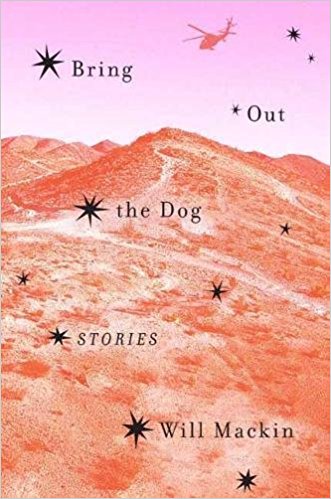
The push-pull between the familiar and the unfamiliar in contemporary war writing is illustrated well in the three stories by Will Mackin published the last few years in the New Yorker: “Kattekoppen,” “Crossing the River No Name,”  and “The Lost Troop.”  Published in advance of the release of Mackin’s short-story collection Bring Out the Dog next year, each of the New Yorker stories portrays the inner-workings of SEALs at war in Afghanistan; others in Bring Out the Dog are set in Iraq or America. Wonder of wonders, Mackin defamiliarizes the by-now completely crusted-over genre of SEAL fiction and non-fiction through a variety of techniques Shklovsky (and maybe Poe, too) would recognize.  Mackin served with the SEALs on multiple deployments as an air-support liaison responsible for calling in air strikes (shades of Poe!)—a position he wouldn’t have kept for two days if his technical competence, physical and emotional toughness, and basic good fit for SEAL-team culture were in question.  So he writes with an insider’s familiarity about SEAL team life and operations and thus renders technical and tactical detail with enough precision and authority to quicken the heart of the most hardcore judge of military detail accuracy.  He’s also at home with staple themes of SEAL-team literature–warfighting skill, easy accommodation with the business of killing, the gruff-but-powerful loyalty that unites the SEAL brotherhood—and dramatizes them convincingly, not as end points of the stories but as start points before moving on to more interesting things.  In these ways, Mackin fulfills Shklovsky’s injunction to “make the stone stoney” through the most alert portrait of how things really are, not merely how we are habituated to see them.

The real work of defamiliarization that occurs in Mackin’s stories, however, occurs on a larger scale with the reader’s increasing realization that Mackin has avoided the traps of glamorization and cliché that characterize other SEAL stories.  In Mackin’s hands, SEALs are not supermen, barbarians, or victims; an easy shorthand description of Mackin’s achievement is that he humanizes them, but that’s a tired word that’s been used too many times before. It’s more that Mackin’s found telling ways to portray the character and personality of individualized SEALs within the intensely social SEAL milieu as they execute highly specialized tactical and training operations, with the central motif being the banal, not outrageous, ways that team members jockey to prove their fitness to other members of their teams.  Adding to the defamiliarization process are surreal interjections, moments of narrator unreliability, constant references to the contingencies of observation and perception, and dislocations of the time-space continuum, as well as literary permutations of language that heighten the possibilities of everyday speech.  Not too much, mind you, but just enough to put readers on notice that the stories they are reading are at once more realistic and more artful than those that have come before.

In “Art as Technique,” Shklovsky’s interest is more fiction than in poetry, but he expresses a high regard for poetic language, which he calls “formed speech.”  He writes of how poetic language “gives satisfaction” by slowing and impeding easy apprehension of objects it describes, and quotes Artistotle to the effect that poetic language must appear “strange and wonderful.”  He distinguishes between poetic speech—“attenuated, torturous speech”–and prose—“the ‘direct’ expression of a child”—and notes how in both everyday speech and literature poetic speech and prose intermix to generate an “economy of artistic energy.”

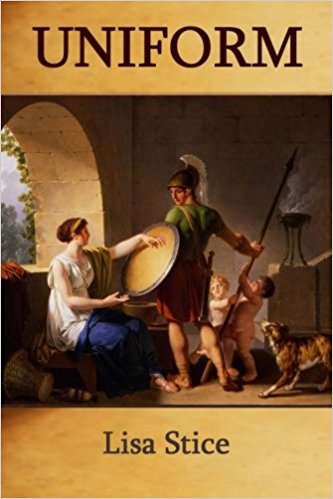
These interesting ideas about poetic language, as well as the fluid interplay of habitualization and defamiliarization, can be put to the test by looking at recent poetry by Lisa Stice and Eric Chandler.  Stice is the wife of a Marine, and her volume Uniform explores the vexing permutations wrought on domestic life by military service.  Chandler, a retired Air Force pilot, in Hugging This Rock, writes not just of being a pilot at war, but also about more sedate experiences and observations affiliated with family and community life.  Neither Stice nor Chandler is overly literary in their word choices or figures-of-speech, but their poems register as “formed speech” through careful arrangement of lines on the page to control the cumulative release of meaning and force.  Stice’s poetry describes her effort to reconcile herself to the ways that military life pressures tranquil domestic life even as codes of military appropriateness inhibit her from confronting such truths directly and publicly.  In other words, her poems register her defamiliarized surprise at the impact of her husband’s career on her own expectations and happiness, while also documenting her habitualization to new norms of military domesticity.  A good example is a poem about the preparations every military family must make when one member deploys:

“Family Readiness”

The paper pocket-folder
you left for me
in the file drawer of our desk:
limited power-of-attorney
your social security number
logins and passwords
names of command I can’t call
because they are with you
your deployment address blank
our bank accounts
contacts for your relatives
chaplain’s email
(but he’ll be gone too)
family birth certificates
list of what you want buried with you
how you’d want to be dressed
the song you’d want played
just in case

For a reader like me, who knows the military well, the poems surprise most with their apt reflection of experiences and observations to which I can relate.  To a reader not as familiar with the military, they’re a peek through the window at a world that is bound to be seen as weird and trying, and inspire wonderment at Stice’s fortitude.

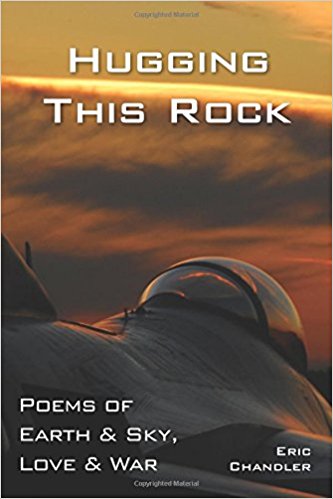
Chandler’s poetry intrigues by its author’s bio alone:  what reader wouldn’t be curious about the poetry a fighter pilot writes?  Might he be the second coming of James Salter, the Korean War Air Force ace later acclaimed as one of America’s foremost literary stylists?? Far too early to tell about that, so to return to theme…. In several of Chandler’s poems, such as the title poem, the effect of viewing the world from five miles up at Mach speed is the very point: “…but either way I’ve seen a bunch of cool things up there that I can think about / while we’re both down here hugging this rock.”  Chandler’s figure-of-speech–“hugging this rock”–suggests humility, a worldview and sense of self in which being a fighter jock is only a small part of an overall identity and life, with the most important aspects centered on human relationships, which must be defined by care and trust.  War is the subject of only about a quarter of Hugging This Rock poems, but sometimes the two halves of Chandler’s identity intersect.  “Maybe I Should Have Lied,” for example, depicts the tension of trying to reconcile being both a man-of-war and a family man:

“Maybe I Should Have Lied”

The teacher asked
Me to come to the class
And talk about flying.
He was my son’s teacher and
The jet’s always popular.

How fast? How high?
Pretty standard stuff.
I wore my flight suit
And handed out stickers even
Though they weren’t toddlers.

One kid asked
If I killed anybody.
I was surprised and
Shouldn’t have been.
I told him the truth.

Later that day,
In the squadron,
I asked a buddy
What he would’ve done.
I would’ve lied, he said.

I answered the question
In front of my son.
The only time it has come up.
“That’s what happens in combat.”
Next question, please.

In poems such as “Maybe I Should Have Lied,” Chandler portrays a civil-military divide not manifested by public debates, but by internal misgivings when compartmentalization just doesn’t work anymore. Many more poems in Hugging This Rock, and Uniform, too, also perform this kind of work, and a lot more, too, so please seek them out.

To close near where I began, some of the work left regarding Shklovsky is to figure out whether his literary ideas grew out of his experience of war, or vice-versa, or whether the relationship is more complicated, or perhaps nonexistent, or coincidental.  For now, though, kudos to the literary artificers:  Will Mackin, Lisa Stice, and Eric Chandler, Edgar Allen Poe and Viktor Shklovsky, and most of all William Hecker and Michael Carson.  Carson is one of the mainstays, along with fellow veterans Adrian Bonenberger and David James, of The Wrath-Bearing Tree, a culture, politics, and military affairs website always full of interesting things.  Hecker unfortunately is no longer with us—within a year of publishing his important work on the source of Poe’s ideas about literature, he was killed by an IED in Iraq.  RIP.

My own contribution to The WWrite Blog, on poet Joyce Kilmer’s wife Aline Kilmer, who was also a poet, can be found at the link.

William F. Hecker, editor, Private Perry and Mr. Poe:  The West Point Poems of 1831, with an epilogue by Gerard McGowan. LSU Press, 2005.

Will Mackin, Bring Out the Dog.  Random House, 2018.

Lisa Stice, Uniform.  Kelsay Books, 2016.

Eric Chandler, Hugging This Rock.  Middle West Press, 2017.