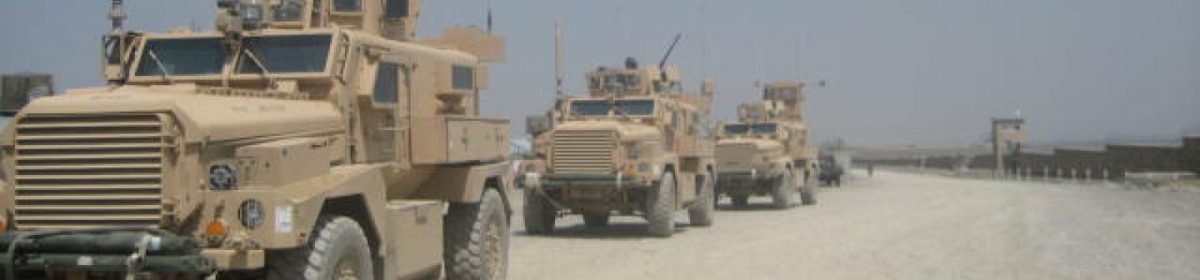
The Norwegian Way of War: Nobel

Nobel, a television drama about Norwegian special operators in Afghanistan and back home, went largely unremarked in America upon its release in 2016. Sometime since then, Netflix saw fit to slip the eight-part series into my “Recommended for Peter” queue, one more entry in the endless stream of diamonds and lumps-of-coal the video-streaming Goliath can’t stop sending my way. Fortunately and thankfully, this time Netflix is way more hit-than-miss, for Nobel is excellent.

The central story line concerns Lieutenant Erlang Riiser, a stoical and very competent man-of-war who, upon return to Norway after an eventful deployment in northern Afghanistan, receives a mysterious text telling him that a wealthy Afghan land-owner suspected of being a Taliban sympathizer has also arrived in Norway. The Taliban-friendly Afghan is in pursuit of his wife Washima, whom the Norwegians have granted refugee status out of fear for her safety, and he is also chasing a business opportunity brokered by high-placed Norwegian officials and businessmen. Riiser receives the text while attending an official function with his wife Johanne, who works as a deputy to the Norwegian minister of defense—one of said high-placed Norwegian officials. Riiser’s Ranger-danger spidey-sense tingling, he abandons his wife to chase down the anonymous lead. Finding Washima being pummeled by her husband, Riiser kills the husband and one of his henchmen and whisks Washima off to a hide-spot.

That all occurs in the first fifteen minutes of episode one. The rest of the hour and the subsequent seven episodes of Nobel spin out the aftermath and upshot of the fateful event, along with lots of back-story scene-setting in Afghanistan, as Riiser tries to discover the source of the text, deal with its consequences, smooth things out with his wife, and contend with a number of other issues, including a heroin-addicted father, a disabled teammate, the grieving mother of second teammate killed-in-action, a pesky muckraking journalist, and a troubled son coming to terms with the idea that his father is caught in a harrowing game of kill-or-be-killed. All the action is for big stakes: not only are oil-drilling rights in Afghanistan on the table, for which the Norwegians are trying to broker a deal in collaboration with a Chinese consortium, but also hanging in the balance is a Nobel Peace Prize, which, in case you don’t remember (I didn’t), is awarded by Norway, not Sweden.

That’s a lot, but the wide-ranging plot is Nobel’s strength. Its creators have crafted a complex but plausible story, one whose reach spans high and low, close and far, backwards and forwards, and they’ve imbued it with intelligence, drive, and capability of surprise. A couple of scenes strain credulity and it is paced a mite more slowly than you might think a war movie should be, but overall Nobel is dramatic without being melodramatic, exciting without being sensational, and neither reductive nor pandering in its presentation of war’s dangers and complexities. Also good are the production values. The “Afghanistan” scenes (filmed in Morocco) recoup well-trodden scenes from film and fiction—FOB life, soldierly banter and camaraderie, vehicle movement ops, IEDs, suicide bombers, the death of a buddy, shoot-or-don’t-shoot scenarios, tea-drinking schmoozefests with Afghans—with attention to detail and fresh accents, while also throwing in a few new ones—sex in the hootches, green-on-blue killing, and a buzkashi game, to name three.

Aksel Hennie is solid as Lieutenant Riiser. Neither Chris Kyle nor Jason Bourne, Riiser’s a mature man; his BMW station-wagon becomes him, while his Under Armour ballcap makes him look not youthful but slightly foolish, as if his suspect American fashion sense corresponded with suspect American ideas about things, such as the thought that joining the military and going to fight in Afghanistan was a good one. Watchful, thoughtful, and somewhat bug-eyed, he is slow to talk, leaving long pauses in the conversational flow as if he knew a little bit more or a little bit less than everyone else in the room. Only impulsive when the situation demands, Riiser is not addicted to thrill, or perhaps he keeps his addiction dampened down. Asked to deal with a lot, from international intrigue to tense combat to a shaky home life, he’s almost too stoical and practical in his responses for the other people in his life, especially his wife and kid, who practically beg him to be more there for them. His silent competence is both a virtue and a liability as the dramatic focus of the show: we understand that he represents a certain type of admirable-but-also-problematic military mindset, but the series could still do better to open him up emotionally and psychologically.

While Riiser is somewhat one-dimensional, Tuva Novotny, as Riiser’s wife Johanne, better carries off a bifurcated personality: her tightly pulled-back hair and constantly pursed lips signal all-business up-top, while her armband tattoo and leather trousers below speak to something more bad-ass. Miffed by her husband’s remoteness, perhaps she also senses that she’s not getting her due as a very pretty woman, and she finds herself susceptible to the flirtation of a raffish international entrepreneur. This subplot plays out in did-she-or-did-she-not-succumb? fashion, which is interesting, but the tension between the Riisers is even more interesting, if not as erotic. Johanne’s desperate to prove her competence in her own realm as the equal of her husband’s in his, and the series finale brings both members of the Riiser power-couple to Afghanistan, where their marital competiveness—mixed, to be sure, with love and care, however strained—crests on a wave of competing professional interests.

Much reference in Nobel is made to “the Norwegian way” of war-fighting and international business and politics. The mostly-unstated contrast to the Norwegian way is “the American way,” but a cheap-shot delivered early on drives the point home: one of the special operators proclaims if “we were Americans” a possible target “would already be dead.” On the political-business side, “the Norwegian way” speaks to some sort of rational deal-making centered on mutual interest and cultural sensitivity, as opposed, I’m guessing, to American shock, awe, and “kill ’em all” bum-fuckery. To be fair, when first American special operators and then an American Secretary of Defense appear in Nobel, they’re not portrayed as idiots with blood dripping from their teeth, but rather as shrewd practitioners of war’s complexity. Those cameos point to a grander theme. By the end of Nobel, the idea of a superior Norwegian way lies in tatters as events at both the national and individual levels humble the Norwegians. A thematic and visual motif of the series is explosions; they are featured not only in the background of the title sequence, but three characteristic Afghanistan explosions—an anti-personnel land mine, an IED, and a suicide bomb—punctuate the narrative. By the series end, Norway’s effort to escape the worst mistakes and moral quagmires of American folly have been blown to bits, and the men and women whose lives have been ruined by Afghanistan and in Afghanistan can blame neither Afghans nor Americans, but only themselves.

Nobel is directed by Per-Olav Sorensen and written by Mette Marit Bastad and Stephen Uhlander.

Epigraphs

“An epigraph is an effective literary tool that some writers utilize to focus the reader toward the theme, purpose, or concerns behind the work. It is included at the beginning of the piece of literature to offer insight into the motivation behind the artist’s vision. Generally a brief quotation taken from another piece of literature, the epigraph is oftentimes not a direct commentary upon the work but used to establish a mindset or offer insight into the factors that contributed to the manifestation of the work.”

-University of Michigan English 217 student website

Epigraphs are curious. First of all, I have trouble remembering the word and often confuse it with “epigram” and “epitaph.” Second, if I bother to read an epigraph before starting a book, I rarely remember it while reading the narrative proper. If an epigraph is too long, I mostly just let my eyes glaze over it. This is unusual, because epigraphs clearly have an important relation to the story that follows, and authors obviously go to some care to choose them and place them in front of us for consideration. But lots of books don’t have epigraphs. I recently pulled the Iraq and Afghanistan war fiction and poetry I own off the shelf and checked them for epigraphs. Most of the fiction employs epigraphs, but not all of it. Ben Fountain’s Billy Lynn’s Long Halftime Walk, Phil Klay’s Redeployment, Atticus Lish’s Preparation for the Next Life, Matthew Hefti’s A Hard and Heavy Thing, and Hassan Blasim’s The Corpse Exhibition are five that don’t, for instance. As if to make up for the books that don’t feature epigraphs, some authors provide two. Overall, reading a number of epigraphs in this way–very quickly, back-to-back–was enjoyable. The epigraphs definitely brought back strong memories of the book to which they were attached and together they created a thick literary web of intertextual references and signals. They made me think that epigraphs might be better read after reading the main text, not before.

Of the fiction that does include epigraphs, the most frequent source for them are the Greek classics. Many works, from Siobhan Fallon’s You Know When the Men Are Gone, published in 2011, to Brian Van Reet’s Spoils, published last year, quote Homer, Socrates, Aeschylus, or another writer from antiquity. Of the non-Greeks, many are from American and English canonical authors, some known as war-writers and some not. W.H. Auden provides epigraphs for Lea Carpenter’s Eleven Days and Helen Benedict’s Wolf Season. Stephen Crane is quoted by both David Abrams in Fobbit and by Matt Gallagher in Youngblood. The rest are from here-and-there, ranging in surprising exoticness from Sir Thomas Browne, used by Kevin Powers’ The Yellow Birds, to Jean Baudrillard, quoted by Odie Lindsey in We Come to Our Senses. Not to play favorites, but the one that jumped out at me as being both unexpected and particularly apt for the story the author tells is Jesse Goolsby’s use of Whitman for I’d Walk With My Friends If I Knew Where to Find Them. Whitman’s insistence on the procreative urge of the world seems very near to the American-flavored cosmic force Goolsby suggests shapes the lives of his protagonists, not in a crude sexual way, but in terms of existential yearning only half-understood.

For some reason, not as many volumes of contemporary poetry employ epigraphs. Hugh Martin’s The Stick Soldiers quotes Crane, so that’s three for the author of The Red Badge of Courage. Jehanne Dubrow’s Dots & Dashes includes an epigraph, but her Stateside doesn’t. Nor do Brian Turner’s Here, Bullet and Phantom Noise, Elyse Fenton’s Clamor and Sweet Insurgent, Colin Halloran’s Shortly Thereafter and Icarian Flux, Eric Chandler’s Hugging This Rock, and Charlie Sherpa’s Welcome to FOB Haiku, to name a few more.

I haven’t surveyed the dozens of memoirs I’ve read for epigraphs, but do note their presence in two of the more literary-minded of them, Benjamin Busch’s Dust to Dust (the epigraph quotes his father, the novelist Frederick Busch, who is also referenced by David Abrams in Fobbit) and Brian Turner’s My Life as a Foreign Country, which draws from the Italian poet Eugenio Montale.

Retire the Colors, an excellent anthology of war-themed essays by veterans and non-veterans edited by Dario DiBattista, uses a quote from Jennifer Percy’s Demon Camp for an epigraph, which is the only case I know of a contemporary war work quoting another. On the hunt, I tracked down Demon Camp to see what the always-interesting Percy might have used for an epigraph. I found two, one by Kierkegaard and the other by one of my favorite authors, James Salter, from a book I just finished reading and loved, his memoir Burning the Days. That was cool.

FICTION

Fobbit, David Abrams (2012)

Wars are nothing, in the end, but stories.

-Frederick Busch, The Night Inspector

In a hole in the ground there lived a hobbit. Not a nasty, dirty, wet hole, filled with the ends of worms and an oozy smell, nor yet a dry, bare, sandy hole with nothing in it to sit down on or to eat:  it was a hobbit-hole, and that means comfort.

-J.R.R. Tolkien, The Hobbit

 Brave Deeds, David Abrams (2017)

“Tell brave deeds of war.”

Then they recounted tales,—
“There were stern stands
And better runs for glory.”

Ah, I think there were braver
deeds.

-Stephen Crane, The Black Riders and Other Lines

Green on Blue, Elliot Ackerman (2015)

 Allah’s Apostle said, “War is deceit.”

-Iman Al-Bukhari, 846 AD

The Corpse Washer, Sinan Antoon (2013)

In both gardens are fruit, palm trees, and pomegranates

-The Qur’an

Sand Queen, Helen Benedict (2011)

For sweetest things turn sourest by their deeds;
Lilies that fester smell far worse than weeds.

-Shakespeare, “Sonnet 94”

Wolf Season, Helen Benedict (2017)

Behind each sociable home-loving eye
The private massacres are taking place…

-W.H. Auden, “In a Time of War,” 1939

Mothers have been stolen from their own tears.

-Kareem Shugaidil, “Flour Below Zero,” 2005

A Big Enough Lie, Eric Bennet (2015)

I thought about Tolstoy and about what a great advantage an experience of war was to a writer. It was one of the major subjects and certainly one of the hardest to write truly of, and those writers who had not seen it were always very jealous and tried to make it seem unimportant, or abnormal, or a disease as a subject, while, really it was just something quite irreplaceable that they had missed.

-Ernest Hemingway, Green Hills of Africa

mundus vult decripi ergo decipiatur [the world wants to be deceived, so let it be deceived]

-Petronius

The Watch, Joydeep-Roy Bhattacharya (2012)

I know that I must die,
E’en hadst thou not proclaimed it; and if death
Is thereby hastened, I shall count it gain.
For death is gain to him whose life, like mine,
Is full of misery.  Thus my lot appears
Not sad, but blissful; for had I endured
To leave my mother’s son unburied there,
I should have grieved with reason, but not now.

-Sophocles, Antigone

Eleven Days, Lea Carpenter (2013)

She looked over his shoulder
For vines and olive trees,
Marble well-governed cities
And ships upon untamed seas,
But there on the shining metal
His hands had put instead
An artificial wilderness
And a sky like lead

-W.H. Auden, “The Shield of Achilles”

You Know When the Men Are Gone, Siobhan Fallon (2011)

She turned to descend the stair, her heart
in tumult.  Had she better keep her distance
and question him, her husband?  Should she run
up to him, take his hands, kiss him now?

…And she, for a long time, sat deathly still
in wonderment—for sometimes as she gazed
she found him—yes, clearly—like her husband,
but sometimes blood and rags were all she saw.

-Penelope upon recognizing Odysseus, The Odyssey

 Youngblood, Matt Gallagher (2016)

In the desert
I saw a creature, naked, bestial,
Who, squatting upon the ground,
Held his heart in his hands,
And ate of it.

I said, “Is it good, friend?”
“It is bitter—bitter,” he answered;
“But I like it
“Because it is bitter,
“And because it is my heart.”

-Stephen Crane

I’d Walk With My Friends If I Could Find Them, Jesse Goolsby (2015)

There was never any more inception than there is now,
Nor any more youth or age than there is now,
And will never be any more perfection than there is now
Nor any more heaven or hell than there is now.

Urge and urge and urge,
Always the procreant urge of the world.

-Walt Whitman, “Song of Myself”

 Wynne’s War, Aaron Gwyn (2014)

He spoke of his campaigns in the deserts of Mexico and he told them of horses killed under him and he said that the souls of horses mirror the souls of men more closely than men suppose and that horses also love war. Men say they only learn this but he said that no creature can learn that which his heart has no shpe to hold. His own father said that no man who has not to war horseback can ever truly understand the horse and he said that supposed he wished that this were not so but that it was so.

-Cormac McCarthy, All the Pretty Horses

What Changes Everything, Masha Hamilton (2013)

You don’t need a war.
You don’t need to go anywhere.
It’s a myth: if you hurl
Yourself at chaos
Chaos will catch you.

-Eliza Griswold

Beirut. Bagdad. Sarajevo.
Bethlehem. Kabul. Not of
course here.

-Adrienne Rich

Be Safe, I Love You, Cara Hoffman (2014)

 Even from ten or fifteen miles away you get a good view of a burning village.  It was a merry sight. A tiny hamlet that you wouldn’t even notice in the daytime, with ugly, uninteresting country around it, you can’t imagine how impressive it can be when it’s on fire at night! You’d think it was Notre-Dame! A village, even a small one, takes at least all night to burn, in the end it looks like an enormous flower, then there’s only a bud, after that nothing.

-Louis-Ferdinand Celine, Journey to the End of the Night

 We Come to Our Senses, Odie Lindsey (2016)

 But, ultimately, what have you got against aphrodisiacs?

-J. Baudrillard, The Gulf War Did Not Take Place

 Bring Out the Dog, Will Mackin (2018)

We saw victory and defeat
and they were both wonderful.

-Barry Hannah, “Midnight and I’m Not Famous Yet”

These Heroic, Happy Dead, Luke Mogelson (2016)

…why talk of beauty what could be more beaut-
iful than these heroic happy dead
who rushed like lions to the roaring slaughter
they did not stop to think they died instead…

-e.e. cummings, “next to of course god america i”

 The Yellow Birds, Kevin Powers (2012)

A yellow bird
With a yellow bill
Was perched upon
My windowsill

I lured him in
With a piece of bread
And then I smashed
His fucking head…

-Traditional U.S. Army Marching Cadence

To be ignorant of evils to come, and forgetful of evils past, is a merciful provision in nature, whereby we digest the mixture of our few and evil dayes, and our delivered senses not relapsing into cutting remembrances, our sorrows are not kept raw by the edge of repetitions.

-Sir Thomas Browne

War of the Encyclopaedists, Christopher Robinson and Gavin Kovite (2015)

Nor do we doubt that many things have escaped us also,
for we are but human, and beset with duties…

-Pliny the Elder, the Original Encyclopaedist

 Sparta, Roxana Robinson (2013)

The man who does not wear the armour of the lie cannot
Experience force without being touched by it to the very soul.

-Simone Weil, The Iliad, or, the Poem of Force

 War Porn, Roy Scranton (2016)

Soldier, there is a war between the mind
And sky, between thought and day and night.

-Wallace Stevens

Spoils, Brian Van Reet (2017)

Low lie the shattered towers whereas they fell,
And I—ah burning heart!—shall soon lie low as well.

-Aeschylus

POETRY

Dots & Dashes, Jehanne Dubrow (2017)

War feels to me an oblique place

-Emily Dickinson

the dear sound of your footstep
and light dancing in your eyes
would move me more than glitter
of Lydian horse or armored
tread of mainland infantry

-Sappho

The Stick Soldiers, Hugh Martin (2013)

He could not accept with assurance an omen that he was about to mingle in one of those great affairs of the earth.

-Stephen Crane

OTHER

Dust to Dust, Benjamin Busch (2012)

Stories are … in a sense, about ending and about endings, and of course they are also the heartfelt prayer, the valiant promise, that what we have loved might live forever.

-Frederick Busch, “Deaths”

My Life as a Foreign Country, Brian Turner (2014)

Too many lives go into the making of just one.

-Eugenio Montale

Retire the Colors:  Veterans and Civilians on Iraq and Afghanistan, edited by Dario DiBattista (2016)

“They spent millions training me but they never taught me to come home.”

-Army Sergeant Caleb Joseph from Demon Camp by Jennifer Percy

Demon Camp: A Soldier’s Exorcism, Jennifer Percy (2014)

To understand original sin is to understand Adam, which is to understand that one is an individual and one is also part of the whole race.

-Kierkegaard, The Concept of the Dead

Dreams remained. For years afterwards in nightmares stark as archive footage. I was what I had been.

-James Salter, Burning the Days

Does Anyone Remember American Sniper?

Chris Kyle’s memoir American Sniper was a best-seller in 2012, and in 2014, when the movie version was released, the film was even bigger. I’m not exactly sure, but I’d bet American Sniper the book has outsold all other Iraq and Afghanistan war books combined. Likewise, the movie. Both seemed to matter; for a while they were all people talked about. What you thought about Chris Kyle the person and his book and how you felt about Clint Eastwood’s movie meant something: how you felt about them was how you felt about the wars, how you felt about the military, how you felt about veterans, pretty much how you felt about, well, America.

2018 is not 2014, and it’s been a couple of years since anyone I know has wanted to talk about American Sniper. The other week I caught a bit of the movie on TV on a Sunday afternoon while flipping channels between innings of a Mets game. That struck me as an ominous marker of American Sniper‘s place in the cultural memory–a sign that it was quickly moving past irrelevancy toward oblivion. Why has this happened? I don’t know, maybe it was just the flavor-of-the-day to begin with, possessing as much long-lasting significance as a Tamagotchi. Maybe it was more; I can throw out some possibilities. I think the facts of Kyle’s death, at the hands of a former Marine he was trying to help, really screws with people’s ability to decide whether he was a hero, a victim, or something else. His death in that way, as with Pat Tillman’s death in a friendly-fire incident, really short-circuits the logic of respect and reverence that might be or should be his due. Or, maybe it’s all the after-the-fact stuff that’s emerged about the real Chris Kyle that has deflated his reputation and caused people to temper their enthusiasm and lose interest. Maybe his star as a polarizing love-him-or-hate-him national figure has been eclipsed by the even more polarizing ascent of Donald Trump.

Whatever, I think our contemporary moment is an emptier place without Chris Kyle and Pat Tillman. They should be our war-heroes, and surely if they were still alive millions of Americans would hang on their every word. What if they still lived and had Twitter accounts? Veterans Twitter, and to a certain extent, the public veteran presence generally, is a mess, full of pretenders, profiteers, and self-promoters, men and women with thin voices lacking moral and military gravitas, incapable of calming the anxieties and shouldering the burdens of a worried divided people. In other words, leaderless. It’s easy to speculate that Kyle would be a conservative icon for like-minded veterans and members of the public, racking up millions of followers and thousands of likes proclaiming the virtues of a good-man-with-a-gun while “owning the libs” with his well-aimed Twitter shots. In contrast, Tillman might be the Democratic Party savior: a warrior of the highest order who despises Trump, everything he stands for, and everyone who supports him. I don’t know, maybe I have their politics completely wrong. Maybe the two wouldn’t even be on Twitter, but retired to the farm. I doubt it, though–no one’s retiring to the farm these days. Maybe they would be false gods, with feet-of-clay like everyone else. Maybe they could speak across party lines, wise voices for unity and reconciliation, leading us in a national singalong of Kumbaya. As we drift toward Civil War II in their absence we can only wonder.

To return to American Sniper, here are ten questions that I think are important to think about in regard to (mostly) the movie.

  1. Why was American Sniper so popular?
  2. Is American Sniper a pro-war or anti-war movie? Just because a movie shows “the human cost of war,” does that make it “anti-war”?
  3. Is Chris Kyle a hero or a victim?
  4. Does American Sniper exploit and demean Iraqis?
  5. What accounts for American fascination with SEALs and snipers?
  6. What does American Sniper ask us to think about Chris Kyle’s wife Taya?
  7. What do we make of the end of the movie—Chris Kyle’s battle with PTSD, his death, and his funeral? How do those events shape or change our perceptions of the early parts of the movie?
  8. How is American Sniper the movie different from American Sniper the book?
  9. What qualities do director Clint Eastwood and screenwriter Jason Hall bring to the movie that help make it so striking?
  10. What qualities do actors Bradley Cooper and Sienna Miller bring to the movie to make it so compelling?

Below I’ve excerpted bits-and-pieces from several reviews of American Sniper that appeared upon its release and also comments from interviews with director Clint Eastwood and screenwriter Jason Hall. I’ve also added a sentence of my own comment to each excerpt.

Army Iraq vet (infantry) and poet Brian Turner, “I Served in Iraq and American SniperGets It Right. But It’s Still Not the War Film We Need.”  The Vulture, Jan 22, 2015.

The film made me remember something else, too: the oft-repeated phrase We should just drop a nuke and turn this whole goddamn place into a glass fucking parking lot. This was an enlargement of what I’d regularly heard prior to deploying from Ft. Lewis, Washington: I’m going to go over there and shoot somebody in the face. And so, what started as an erasure of the signature of one’s identity, their face, evolved into the complete erasure of a civilization. But the thing is, I don’t think there was any clue about what was actually being erased in the first place. And in that cluelessness lays the problem with American Sniper….

The biggest problem I have with American Sniper is also a problem I have with myself. It’s a problem I sometimes find in my own work, and it’s an American problem: We don’t see, or even try to see, actual Iraqi people. We lack the empathy necessary to see them as fully human. In American Sniper, Iraqi men, women, and children are known and defined only in relation to combat and the potential threat they pose. Their bodies are the site and source of violence. In both the film and our collective imagination, their humanity is reduced in ways that, ultimately, define our own narrow humanity. In American Sniper, Iraqis are called “savages,” and the “streets are crawling” with them.

Comment:  Turner decries American desire to reduce war to simplistic acts of violence and bemoans American obliviousness to Iraqi history, culture, and people.

Army Iraq vet (artillery) and author Roy Scranton, “The Trauma Hero:  From Wilfred Owen to Redeployment to American Sniper. LARB, Jan 25, 2015.

American Sniperfocuses in tight on one man’s story of trauma, leaving out the complex questions of why Kyle was in Iraq being traumatized in the first place. The Iraqis in the film are villains, caricatures, and targets, and the only real opinion on them the film offers is Kyle’s. The Iraqis are all “savages” who threaten American lives and need to be killed. There’s some truth in this representation, insofar as this is how a lot of American soldiers thought. Yet the film obviates the questions of why any American soldiers were in Iraq, why they stayed there for eight years, why they had to kill thousands upon thousands of Iraqi civilians, and how we are to understand the long and ongoing bloodbath once called the “war on terror.” It does that precisely by turning a killer into a victim, a war hero into a trauma hero.

Comment:  Scranton wonders about the sympathetic portrait of Kyle at the expense of the hundreds of Iraqis he killed and the thousands more killed by other American soldiers.

Journalist Susannah George, “Here’s What Moviegoers In Baghdad Think of American Sniper.” Global Post, Jan 28, 2015.

In Baghdad, where much of the film is set, the movie drew full crowds at one of the city’s new upscale cinemas. Dressed in a fur-collared coat and loafers, Mohammed says many of the showings were sold out, and he knows of people who had to book their tickets a day in advance during opening week.

But after just a week on screens, the Mansour Mall theater pulled the controversial war movie. A theater employee sitting at the box office says management made the decision “because the hero of this film boasts of killing more than 160 Muslims.”  The employee declined to give his name because he did not have permission to speak to journalists.

Comment:  George points out that many Iraqis wanted the same people dead that Americans did—insurgents, Al Qaeda, jihadists, future ISIS members, and sectarian warfarers.

Army Iraq vet (infantry) and author Colby Buzzell, “Chris Kyle and the Iraq War are More Complex Than American Sniper—Or Criticism of It.”  The Guardian, Jan 23, 2015.

I still didn’t get all the criticism. I liked Kyle – at least, the Kyle in the movie, as I know nothing about the one on the page or off camera. In the movie he did his job, did it well and hit all his enemy combatant targets with not a civilian killed. He followed the rules of engagement and, if anything, was a pretty squared away soldier – one I’d be honored to serve along side – and, if people think that the real Kyle was a monster for doing the job that our country sent him to do, then that must mean that they think I’m a monster as well. I also tried to do my job to the best of my abilities while over there, just so that we could all go home and nobody in my platoon would get killed.

Did I give a shit about the Iraq people? Yes, but I, too, joined the military and not the Peace Corps. I had a pretty good idea what I was getting myself into. War is shades of grey, but I had to view it in black and white while doing my job over there. I’d have gone mad if I hadn’t. It was us vs them, kill them before they kill you, and, as my Battalion Commander once told us all right before rolling into a heavily insurgent occupied city of Tal Afar, “Shoot first, shoot straight, protect the innocent and punish the deserving.”

Comment:  Buzzell sees a lot of himself in Kyle—a pretty good guy who did the job the military asked him to—and wonders whether if people hate Kyle, they hate him, too.

Marine Iraq vet (infantry) Jon Davis, “A Former Marine’s Review of American Sniper.” Time, Feb 9, 2015.

The scene that meant the most to me when thinking about Cooper’s acting ability was one that most people were probably bored by. I’ll throw a spoiler because the plot point really doesn’t matter. It was the scene where Kyle and his family are having the tire on their car changed. A Marine recognizes Kyle and comes up to thank him with all the “you saved me in, blah, blah, blah… and ‘a lot of guys didn’t come back, blah, blah, blah’” tropes that are in every war movie. What you probably didn’t notice about that scene was Cooper. To moviegoers he was boring, but what I saw was something I don’t understand how he got right.

In that scene, Cooper displays classic signs of a veteran who doesn’t enjoy being thanked. He immediately deeply retreats upon being recognized and becomes politely evasive. His speech breaks down into monosyllabic chirps of general acknowledgement, while not maintaining eye contact and attempting to not carry the conversation further. While I’ve never saved anybody, I’ve had this experience dozens of times when random strangers thank me for my service. You really can’t describe the feeling that follows, but last Veterans’ Day when my boss made a big deal about thanking me in front of all my students, a motive I am deeply appreciative of, I was overwhelmed with a feeling I can only describe as a profound and sudden sense of humiliation which I can’t begin to quite understand. All I can say is Cooper’s portrayal of this feeling was something I saw in his short chirps and expressionless awkward glances that communicated a level of detailed research, coaching, and acting, to say the least of getting to know realveterans that needs to be known and acknowledged.

Comment:  Davis is attracted to the scene that shows Kyle’s discomfort at being thanked for his service, and sees it as representative of the skill the Clint Eastwood/Jason Hall/Bradley Cooper team brought to the film. 

Army Afghanistan vet (infantry) and author Adrian Bonenberger, “There Are No War Heroes: A Veteran’s Review of American Sniper.”  The Concourse, Jan 23, 2015.

Kyle embraces his role as a Navy SEAL sniper, which is central to both the plot and his identity. It’s interesting that the literary and cinematic history of snipers goes unaddressed in the film; up until the 1990s or so, it’s difficult to find them mentioned in valorous or positive terms. (America’s first unequivocal sniper heroes were Randy Shughart and Gary Gordon, the Delta duo who insisted on landing amid hundreds of hostile Somalis during the Battle of Mogadishu, sacrificing themselves to save a wounded comrade during the events portrayed in both the book and the film Black Hawk Down). For much of human history, a person who stayed back from combat and killed the enemy from afar was seen as unscrupulous at best. The original sniper is Paris, who dastardly kills the Greek hero Achilles from long range with a bow and arrow; Michael Moore, always a lightning rod for progressives and conservatives alike, stated the case more strongly in a tweet this past weekend suggesting that snipers were cowards.

Comment:  Bonenberger explores America’s new-found fascination with snipers as emblematic of the modern American way-of-war.

Movie-maker Michael Moore, Tweet, Jan 18, 2015.

My uncle killed by sniper in WW2. We were taught snipers were cowards. Will shoot u in the back. Snipers aren’t heroes. And invaders r worse

Comment: Moore gets to the point quickly why he doesn’t like American Sniper.

American Sniper screenwriter Jason Hall interview with Charles Thorp.  Rolling Stone, Jan 28, 2015.

Q:  So how much of the script was pulled from the book American Sniper?

A:  The book was written less than a year after he got back from combat. There was a lot of great material in there, but I absolutely knew there was more to this guy than was in those pages. It was more about what happened when he was over there, which was useful. You could tell he still had his armor on when he was writing; however; there was a lot of edge there. It didn’t really get into what happened when he came home and what going to war had cost him. I wanted to take a deeper look at that.

Comment:  Hall explains that he knew there was a more complicated man and a better story than was revealed in the book version of American Sniper.

Jason Hall interview with Ted Johnson.  Variety, Jan 10, 2015.

“The cost is man, the toll is man, and it’s this man and every other soldier that fights.  If we understand that, maybe we won’t be so hasty into jumping into war, and if we understand that, maybe we’ll find a way of welcoming [veterans] home better.”

Comment:  Hall explains that the real point of American Sniper is the human cost of being a combat soldier.

American Sniper director Clint Eastwood interview with Stephen Galloway.  The Hollywood Reporter, March 16, 2015.

Q:  The film became quite controversial when it came out because there were… People said it, you know, glorifies war or glorifies American snipers. Is that how you view it?

A:  No I don’t think it glorifies… I think it glorifies it, sure. I mean in the first sequence he shoots down… Yeah, the sniping part is. But you know then eventually as that scene indicates that he’s getting… You can see it’s starting to tell on him and later on when he visits a psychiatrist and has to talk to him and the psychiatrist says did you do anything along the way over there that you maybe or you felt you shouldn’t have. And you could tell by the look on his face that yeah, he’s got some regrets in there. And that’s just the way it is. I think it’s anti and it’s… It just depends on how you want to look at it. It’s probably… I think the whole picture and with him dying and everything it’s no good deed going unpunished.

Comment:  Eastwood ponders whether or not American Sniper glorifies war.