US special operations in Iraq and Afghanistan have been given fictional portraiture in Lea Carpenter’s Eleven Days and Aaron Gwyn’s Wynne’s War, but Ross Ritchell’s novel The Knife is the first to depict in detail the nighttime raids that have emerged as the signature American military tactic of the wars. Ritchell, a US Army 75th Ranger Regiment veteran, has placed his story about a special operations squadron in a mythical War on Terror battlespace called “Afghanipakiraqistan”—the scenes set in urban areas recall Iraq, while those set in desert mountains evoke Afghanistan. The unit—also vaguely described, but by some clues perhaps a US Army Special Forces “Green Beret” team–deploy on a moment’s notice to avenge the massacre of a sister unit. Immediately upon arrival in theater they are propelled into action to kill-or-capture the leaders of a terrorist enemy cell called al-Ayeelaa. Most of the narrative is told through the perspective of an operator named Shaw, but the thoughts and actions of several other members of Shaw’s unit as well as a variety of local Afghanipakiraqistan minor characters are also portrayed independently. Shaw and his team are full of swagger, confident and righteous in their certainty that they are just the men to eliminate the “[b]ad fuckers” of al-Ayeelaa. “Well, now they’re fucked,” Shaw’s commander briefs the men, speaking of their insurgent foe, but as events play out the special operators underestimate al-Ayeelaa, and Shaw’s faith that he is mentally tough enough to withstand the vicissitudes of the warrior “way of the knife” is undermined.
Many aspects of The Knife caught my eye in regard to my own experience in Afghanistan’s Khost and Paktya provinces. There, at least three Special Forces “Operational Detachment Alphas,” a Ranger regiment task force, a CIA-sponsored Afghan militia, and who-the-hell-knows how many other operator-as-fuck contingents vastly complicated my life as an advisor to the Afghan National Army. Explaining to my ANA counterpart why a mullah had been snatched in the middle of the night or the cousin of an ANA officer had been killed on a raid on a suspected bomb factory were several-times-a-week occurrences. The conversations were never pleasant and rarely did I have enough information to be convincing. I was high enough up the chain-of-command to gain some insight on the missions of the special operators in sector, but definitely not on the inside of their decision-making processes. The little I saw, unfortunately, convinced me that their actions were not very integrated in a comprehensive and united effort to support the legitimate government of Afghanistan and defeat its enemies in my area of operations. But I knew far more about their screw-ups—and I was privy to a few doozies—than I did their successes–they may well have saved my life many times over–so I was and remain relatively sanguine about the fact that the dark-side half of the wars has emerged as their most compelling storyline. It’s not as if the efforts of those of us who rambled around Khost and Paktya in the daylight trying to do good—Embedded Transition Teams, Provincial Reconstruction Teams, Agribusiness Development Teams, Brigade Combat Teams, battalion battle-space-owners, and the like—amounted to much, right? So why not give props to those who attacked very directly men-and-women in possession of guns and bombs and with malice toward Americans on their minds?
The Knife confirms the methodology of the midnight raiders: Pass the day pumping iron, shooting at the range, and watching videos while waiting for higher headquarters to send down cell-phone intercepts that confirm the location of evil-doers. Raids based on tips by so-called reliable, friendly informants could easily go awry, but phone intercepts were very precise. When one suspected insurgent called another to say, “Bring the cabbages and the carrots to my house now,” you knew they were talking about bombs and rifles, not produce. The operators would get the word at 0-dark-thirty, jump on helicopters, fly into the night, and execute a raid to kill-or-capture “high value targets” and grab all the weapons, cell phones, and hard-drives they could find: “Jackpot!” and “Touchdown!” in military code word terminology. Then back to base in time for omelets-to-order breakfasts at the team house or camp dining facility.
One scene in The Knife makes a pointed statement about the new way of special operator war. An old-school mission that has Shaw’s team walk dozens of miles through the mountains by night and sleep in their own piss and shit in hide positions by day in order to recon a remote village is a fiasco. On the infil Shaw kills a young boy who compromises the team’s hide position, and when they get to the village they find it abandoned. The boy’s death and the fruitless mission stand in contrast to the less wasteful, less complicated economy of midnight ops. Raids demand little preparation—actions on the objective are by SOP or improvised—and the teams themselves do little to collect, collate, or disseminate intel that contributes to a clearer picture of the enemy situation in sector. The operator way-of-war also requires no engagement with local populaces other than at the point-of-a-gun and little interaction with host-nation military forces save for token efforts to put a “local face” on missions by bringing along a few host-nation soldiers given limited roles. It is waging war reduced to simplicity, and as I’ve suggested above, possibly its most effective, nervous-nelly fretting about “collateral damage” aside.
No wonder men love it so. The last fifth of Ritchell’s novel casts a gloomy pallor on the first four-fifths, but for the most part The Knife is a big, fat wet kiss celebrating special operator culture and tactics. The operators seem enormously pleased with their self-images as swashbuckling rogues who have killed many times with impunity. Huge quantities of dip—the American soldier’s khat—and whatever meds the team doctor supplies keep them completely jacked or pleasantly buzzed or sedated, as needed. Freedom from equal opportunity briefing political correctness, reflective safety belt idiocy, guard duty boredom, and other regular Army horseshit allows Shaw and his team plenty of time for uninhibited sexist banter and horseplay, as well as weight-lifting and target shooting, which is a good thing, because those pastimes are part-and-parcel of the special operations way-of-the-knife. Ritchell’s narrative implies that all the conventional Army soul-of-the-warrior-killing-stuff is directly related to the tactical feebleness of conventional unit presence patrols, key leader engagements, and host-nation development missions: a military and a means of waging war for women and sissies and a waste of time. If an operator momentarily succumbs to thoughts of home or misgivings about shooting a child, there’s always another team member with whom he can exchange a few platitudes such as “I’m getting too old for this shit” and then bro-hug it out. A riotous squad-bay practical joke and another big chaw later, the warrior is right as rain and back in the fight. In this light, the death of friends and remorse about killing are not brutal consequences, but as beloved an element of the way-of-the-knife as dip, night vision devices, and bushy beards.
Ritchell tells his story briskly. Early scene efforts to paint Shaw’s team as colorful raconteurs and masters of insult stumble, but Ritchell’s ear improves noticeably as the novel progresses. A line delivered by an operator before the final mission, “Well. This’ll be an interesting night. I’m gonna go take a shit,” seems to channel the right measure of soldier linguistic flair—it made me laugh, anyway. Descriptions of team work-and-living spaces are detailed and interesting, and descriptions of combat are page-turners. The Knife is narrated in that terse, just-the-facts style that gets the job done of writing a novel from start to finish without being absolutely horrible, if falling far short of the highest levels of imagination and insight the novel also makes possible. Note the short sentences and extremely basic sentence patterns of the following passage:
Shaw shot out of bed, rattled. He hadn’t even felt the beeper vibrate in his pocket. It glowed with a 1 and headlamps started popping off in the tent. They hadn’t been in bed for more than a few hours. Shaw looked at his watch. Not even 0900 hours yet. He still hadn’t brushed his teeth from the long walk. He could taste too many days of chaw and dirt and Skittles and filth. His breath smelled like something had died in his gut.
Ritchell either idolizes Hemingway, or his prose has been hammered into lean, mean fighting shape by his MFA instructors and publishing house editors. Not that that’s a bad thing; it stands a better chance of being popular than any prose style I would favor more. My thoughts about The Knife—subject, theme, and style—it seems clear, then, are as ambivalent and conflicted as my thoughts about the real-life special operators I met in Khost and Paktya. Honestly, however, in the new world of war, anything’s better than asking conventional line units to battle highly motivated irregular enemy forces while simultaneously trying to prop up feeble nation-states, and the only other option, short of not fighting, is to bequeath the effort to those who believe whole-heartedly in the idea that they are “special.” The Knife offers a pretty clear picture of what we’re going to get when we do.
Ross Ritchell, The Knife. Blue Rider Press-Penguin, 2015.
Randy Brown, aka “Charlie Sherpa,” is the keeper of Red Bull Rising, a popular web compendium of information and commentary about the seemingly incongruous subjects of war literature and the Army National Guard. The title of Brown’s website refers to the 34th Infantry Division “Red Bulls,” a storied Iowa Guard unit with whom Brown served for many years. Having known a fair number of Red Bulls on my deployment to Afghanistan, I recognize qualities I associate with them in Red Bull Rising‘s voice and ethos, such as job pride and team focus. The Iowans I knew were congenial, but also quiet and serious, guarded I felt about their emotions and true thoughts, their humor manifesting itself in acerbic wit aimed at absurdity of circumstance. No Iowa soldiers I knew were poets, but now Brown’s new volume of verse, Welcome to FOB Haiku: War Poems from Inside the Wire, puts the Midwestern blend of earnestness and cleverness I saw in Afghanistan to work on behalf of poetry about service, deployment, and war.
Brown’s title foregrounds his attraction to haiku—the 17-syllable, three-line Japanese predecessor of the Tweet—as a compressed, minimalist way to comment on military language and experience. Great examples abound in FOB Haiku; veterans will recognize in the example below how Brown imaginatively engages with an acronym—SPORTS—taught to all basic trainees about how to calmly resolve a weapon malfunction in the heat of combat:
Your weapon is jammed?!
Slap. Pull. Observe. Release. Tap.
Then squeeze the trigger.
Many poems in FOB Haiku, not just the haikus, similarly riff on military lingo to strike short, sharp, and reasonably hard at sources of anxiety inherent to life in the Army. Besides haikus, Brown often employs the sonnet form, or references literary touchstones such as Hamlet and “Dulce et Decorum.” These poems might be said to appeal to readers who are already poetry lovers and point to Brown’s fusing of martial and literary registers to make each apprehensible to readers of all stripes. The poems’ military tones portray the contortions the Army inflicts not just on its members’ language and lived lives, but their identities and emotions, while the literary playfulness makes the contortions palatable by inflecting them with humor and historical connection. Brown says as much in an afterword:
In all of this my objective is to clearly communicate across military branches, experiences, generations, and the civil-military divide. I hope that the techniques described and used here will bridge potential gaps in understanding and make these stories accessible to new audiences.
The word “stories” is key here, for while few FOB Haiku poems are narratives, all point to the fact that what we feel to be true about military service is in fact imaginatively constructed. It’s not the stories we tell so much, but the stories in our minds that define who we are and what we hope to be. The idea that the words we use to process experiences and observations are themselves imaginative creations with histories and implications becomes clear in a poem titled “we are the stories”:
we are the stories
we tell ourselves
especially
the ones we’ve worn out
and broken in
like boots,
for now we can march on for days
where once we would get blisters
on our souls
The best FOB Haiku poems forego playfulness and academic learnedness to make more serious calculations in a more plain-spoken voice of the cost of service and war. In these the adherence to form is looser, but image, word, and line are more precise, more personal, and more independently conceived, and as a result more arresting. “love note from a drone,” for example, addresses the postmodern way of war. It starts:
I had been watching you for days,
fingers hovering above the button,
waiting for release.
I am sorry I crashed your wedding….
“fighting seasons” explores the dissonance felt by soldiers, Iowa men and women of the land and sky, transported halfway around the world to battle an enemy equally tied to the turning of the Earth. It begins:
Even a city boy from Eastern Iowa
follows the markets, like sports, on the A.M. radio
and have a vague sense of the harvests to come….
Among other positions in the Iowa Guard, Brown served often in his unit’s Tactical Operations Center, the command post headquarters responsible for tracking actions of subordinate units and relaying radio reports higher and lower. The duty clearly played to Brown’s strengths as an alert observer of people and events, as well as a wielder of words, and in fact probably honed them. In “static” Brown uses military radio-speak to tersely drive home the broken-and-distorted (a military radio-speak pun of my own) effect of military duty and its associated language on the life of home and family.
Turns out, the psychiatrist
is a former Navy Corpsman.
He says your 5-year-old problem is
That some signals can’t get through.
I learned brevity on Army radios,
pushing-to-talk in 5-second bursts,
waiting a beat to hear the response,
always thinking one phrase ahead.
Instead of speaking louder, I’m told
I should dial into your distance,
Quietly fine-tuning our conversations
As if I am cracking a safe.
How was your day, “over.”
Did you make any new friends, “over.”
Daddy loves you, “out.”
The Iowans I knew were committed to job performance and organizational goals, and were reluctant to say mean things about other people. Their dry wisecracking, I’m thinking, helped reduce pressure to perform and conform. Wise counsel and communication might be said to be another means to understand pressure-laden situations. Judging from his online persona and Welcome to FOB Haiku‘s cover blurbs, Brown seems to have served a valuable dual role as an Iowan citizen-soldier: part court-jester and part seasoned voice-of-experience. His excellent poetry does much the same for military, veteran, and civilian readers of war literature.
Randy Brown, aka “Charlie Sherpa,” Welcome to FOB Haiku: War Poems from Inside the Wire. Middle West Press, LLC, 2015. The limitations of WordPress have caused me to slightly modify the quoted passages.
The narrator of Brandon Caro’s novel Old Silk Road is a junior enlisted Army medic named Norman “Doc” Rogers. Assigned to an Afghan National Army advisor team in Nangarhar Province, near Jalalabad, Doc is a competent medic—someone you want nearby in combat. When it comes to soldiering, that’s the quality that matters most, which is fortunate because Doc’s other human virtues are questionable. He’s irritable, arrogant, impatient, selfish, scornful, lazy, emotional, and contemptuous of authority, and none of these defects come close to being the main problem. Addicted to the opiates in his aid bag and those he can wangle from Afghans in exchange for downloaded pornography, Doc surreptitiously shoots-up on the FOB and while on mission. When not nodding out, he hallucinates wildly. Visions of the ghost of Pat Tillman and a cast of doomed Afghanistan invaders dating back to Genghis Khan’s Mongol warriors remind him of his own mortality, but Doc’s over-stimulated imagination, it turns out, is no match for the incredible reality he encounters in Afghanistan: evidence that his military chain-of-command is massively involved in an opium-and-heroin cultivation and smuggling operation.
Or maybe not, for Doc’s story is so enveloped in dream, vision, flashback, flashforward, and other narrative trickery that exactly what’s real and what’s not is often hard to determine. Clearly and defiantly, though, Old Silk Road places soldier drug use on the Iraq and Afghanistan war-writing table, much as Jesse Goolsby’s I’d Walk With My Friends If I Could Find Them asks us to think about male-on-male rape in the military. American soldiers, or at least some of them, smoked hashish in Afghanistan when they had a chance, and the few stories I’ve read about American military complicity in Afghanistan drug smuggling rings makes me think we’ve only yet heard about the culprits who have been caught. Caro writes in detail of the mechanics of shooting up and the allure of druggy bliss. I don’t know if the authority comes from experience or not, but it wouldn’t surprise me if the contemporary national issues of traumatized veterans and record levels of white middle-and-upper-class heroin addiction are more tightly entwined than we have so far considered. Old Silk Road gives these possibilities imaginative portraiture, and I for one am inclined to believe that if an author can envision something, it’s probably already happening.
True to its title, the plot of Old Silk Road is that of the picaresque travel narrative. Doc Rogers’ Embedded Training Team has decided to convoy from FOB Mehtar Lam near Jalalabad to Camp Cobra near Kabul to partake of the Camp Cobra dining facility’s awesome Thursday night Mongolian barbecue. The advisors know the “Con-Op” is a boondoggle that might get them killed, but they are infected by a screw-it-all attitude generated by boredom and contempt for their fruitless mission trying to train the hapless Afghan army. Adventures ensue along the way; Doc has in mind a quick fling on Camp Cobra with a fellow medic named Gomez, but a suicide bomber attack kills a team member named Mortin and forestalls the hook-up. Worse, or almost as bad, Doc believes the Afghan army is complicit in his friend’s death. Doc is not the most reflective of young men, as illustrated by the following passage describing his thoughts as he mans the gun on his Humvee while spaced out on morphine:
Doing my best to keep an eye on potential troublemakers, I allowed my mind to drift carelessly into the abstract. I thought about Gomez. It was just as well we were foregoing our visit to Cobra. No need to encounter the legion of Joes she was probably sucking off in the aid station after dark.
And as much as I tried to avoid thinking about it, my thoughts inevitably wandered back to Mortin. He was so young. And why had it been him up in the turret and not me? Dumb luck, I suppose.
And I thought once again about the Embedded Training Team’s advisory mission and how futile it had become, if ever it had been a justifiable use of resources. It was hard enough to get the ANA soldiers to form a line for chow or sick call or God forbid clean their weapons, let alone execute complex tactical maneuvers or practice battlefield medicine. We couldn’t even count on them to show up on time for our convoy from Cobra to Bagram some two weeks earlier. And now we couldn’t trust them not to turn their weapons on us.
Doc, and maybe Caro, too, is also not much of a literary stylist. Passages careen between overwrought and under-nourished emotional responses to events, Doc never misses a chance to write “imbibe” for “drink” and “procure” for “take,” and he lards his narrative with chunks of insider technical explanation. It’d be interesting to compare the passage above with John Bartle’s similar portrait of an aid-station cutie and a dead soldier-friend in Kevin Powers’ The Yellow Birds–the last thing Doc’s interested in or capable of is Bartle’s melancholy lyricism. As for the ANA, Doc’s opinion is lower-than-low. If only those lazy, lousy ingrates were more like their heroin-addicted and joyriding American mentors they might actually defeat the Taliban! The Taliban in fact hardly figure in Old Silk Road—who needs them when the Afghan army is treacherous enough? Doc reports a troubled relation with his father, but the Oedipal juices have not stewed long enough to transform him from angry to thoughtful, let alone allow him to see his story as comic farce. For all that, Doc is perhaps representative of many male junior enlisted soldiers, if they were permitted to openly voice their thoughts. Chris Kyle somewhere said that the ghostwriters and lawyers who helped him write American Sniper made him look not too crude, but too nice. Left to his own authorial devices he might have sounded much like Doc Rogers: the kind of guy who figures if you don’t like him it’s your problem, not his. That sentiment may be close to the true spirit of American soldiers, no better and no worse than they should be. But Doc also reminds me of the apocryphal veteran described by Karl Marlantes in What It is Like to Go to War. Ask a young vet how hard it was to kill in combat, Marlantes writes, and he’ll probably tell you it was easy. Ask him again when he’s 60, and if he’s sober enough to answer….
Kudos to Caro for replacing one traditional soldier obsession—alcohol—with a fresher, more modern, equally depressing one–drugs. Also for giving his contemporary story an historical consciousness that includes the Russian, British, and Mongol failed takeovers of Afghanistan. I also like how Caro incorporates Pat Tillman—the doomed patron saint of our collective mishap in Afghanistan—into a personalized story of deployment tragedy. As an ex-Afghanistan ETT myself, I enjoyed Caro’s descriptions of places and events I too have experienced. My regard for the mission was far higher than Doc Rogers’, who hates it and thinks it is stupid. I was an old officer, though, and so were most of the other advisors on my team. I’m sure the mission baffled and the Afghans rankled our junior enlisted members just as much as they do Doc.
My real point of connection with Old Silk Road, however,is literary, not military. A few years back, I wrote a PhD dissertation on pre-Civil War popular fiction, the stuff everyone was enjoying except for the few who actually read Melville and Hawthorne in their time. Reading Old Silk Road brought back in spades styles, themes, and characters I encountered in early American stories. The hyper-skittishness about honor and slights exemplified by the berserk protagonists of novels by Charles Brockden Brown and John Neal. The picaresque road trip of Hugh Henry Brackenridge’s Modern Chivalry. The odd ruptures of the time-space-body continuum and racial paranoia of Robert Montgomery Bird’s Sheppard Lee. The sensational booze-induced hallucinations of temperance author T.S. Arthur’s Six Nights with the Washingtonians and Ten Nights in a Bar-Room. The exposé of extravagantly sinister and corrupt power à la George Lippard’s The Quaker City. Read Old Silk Road alongside Paul Gutjahr’s anthology Popular American Literature of the 19th Century and David Reynolds’ Beneath the American Renaissance if you don’t believe me. Judging by the fiction, people circa 1835 walked around half-addled by bad water or bad whiskey. Old Silk Road has the same manic, crazy-quilt energy. It’s not interested in propriety or what’s come before and it’s capable of anything. Alarming as it is to think of the drugs that are doing the damage today, especially against the backdrop of military duty, in the great war-writing game Old Silk Road asserts the value of raw idiosyncrasy in the face of more mannered and nuanced approaches.
Brandon Caro, Old Silk Road. Post Hill Press, 2015.
Soldier with mine detector, Iraq, 2005, by Bill Putnam. Used with permission.
I’ve updated the list of fiction, poetry, memoir, criticism, photography, and film I compiled last year about this time–new entries are bolded. 2015 was a busy year for contemporary war literature, with at least six novels published and four volumes of poetry. Also notable were new books by Colby Buzzell and Roy Scranton, two veterans who made their names as war writers but who are now expanding their reach to subjects far beyond their experiences as junior enlisted soldiers in Iraq.
Not many Iraq and Afghanistan titles are making year-end “best of” lists in major media venues so far in 2015, I’m sorry to observe. Critics–the “beadles of literature,” as they were called by early American novelist John Neal–apparently are not as impressed by this year’s offerings as they have been in past years by war-writers such as Phil Klay, Ben Fountain, and Kevin Powers. Or, perhaps they’ve decided “Mission Accomplished” in terms of what needs to be said artistically about fighting in Iraq or Afghanistan. Let’s hope that novels by Roy Scranton, Matt Gallagher, and others to be published next year reverse the trend. Movies about Iraq and Afghanistan also seemed scant in 2015—what am I forgetting?—but in 2016 film versions of Billy Lynn’s Long Halftime Walk and The Yellow Birds will be released.
I’ve added a list of major theatrical, dance, and operatic performances that address war in Iraq or Afghanistan.
If you think I’ve missed an important or interesting work, please let me know.
Iraq and Afghanistan War Fiction:
Nadeem Aslam: The Wasted Vigil (2008)
Siobhan Fallon (Army spouse): You Know When the Men Are Gone (2011)
Helen Benedict: Sand Queen (2011)
David Abrams (Army): Fobbit (2012)
Ben Fountain: Billy Lynn’s Long Halftime Walk (2012)
Kevin Powers (Army): The Yellow Birds (2012)
Joydeep Roy-Bhattacharya: The Watch (2012) Sinan Antoon, The Corpse Washer (2013)
Nadeem Aslam: The Blind Man’s Garden (2013)
Lea Carpenter: Eleven Days (2013)
Masha Hamilton: What Changes Everything (2013)
Hilary Plum: They Dragged Them Through the Streets (2013)
Roxana Robinson: Sparta (2013)
J.K. Rowling (aka Robert Galbraith): The Cuckoo’s Calling (2013)
Katey Shultz: Flashes of War (2013) Fire and Forget: Short Stories from the Long War, edited by Roy Scranton (Army) and Matt Gallagher (Army) (2013) Paul Avallone: Tattoo Zoo (2014)
Greg Baxter: The Apartment (2014)
Hassan Blasim, The Corpse Exhibition (2014)
Aaron Gwyn: Wynne’s War (2014)
Kara Hoffman: Be Safe, I Love You (2014)
Atticus Lish (USMC): Preparation for the Next Life (2014)
Phil Klay (USMC): Redeployment (2014)
Michael Pitre (USMC): Fives and Twenty-Fives (2014) Eliot Ackerman (USMC): Green on Blue (2015) Eric Bennett, A Big Enough Lie (2015) Brandon Caro (Navy): Old Silk Road (2015) Jesse Goolsby (USAF): I’d Walk With My Friends If I Could Find Them (2015) Carrie Morgan, The Road Back from Broken (2015) John Renehan (Army): The Valley (2015) Ross Ritchell (Army): The Knife (2015) Christopher Robinson and Gavin Kovite (Army): War of the Encylopaedists (2015) Matt Gallagher, Youngblood (2016) Matthew Hefti, A Hard and Heavy Thing (2016)
Iraq and Afghanistan War Poetry:
Juliana Spahr: This Connection of Everyone with Lungs (2005)
Brian Turner (Army): Here, Bullet (2005)
Walt Piatt (Army), Paktika (2006) Sinan Antoon, The Baghdad Blues (2008)
Jehanne Dubrow (Navy spouse): Stateside (2010)
Elyse Fenton (Army spouse): Clamor (2010)
Brian Turner (Army): Phantom Noise (2010)
Paul Wasserman (USAF): Say Again All (2012)
Colin Halloran (Army): Shortly Thereafter (2012)
Amalie Flynn (Navy spouse): Wife and War (2013)
Kevin Powers (Army): Letter Composed During a Lull in the Fighting (2014) Sylvia Bowersox (Army): Triggers (2015) Randy Brown, aka “Charlie Sherpa” (Army): Welcome to FOB Haiku (2015) Colin Halloran (Army): Icarian Flux (2015) Philip Metres: Sand Opera (2015) Washing the Dust from Our Hearts: Poetry and Prose from the Afghan Women Writing Project (2015)
Iraq and Afghanistan Memoir and Reportage (selected). I’ve greatly reduced this list from last year—I’m only including works that seem supremely artistic, imaginative, conceptual, or literary in their approach. Or, those that seem uniquely alert to new possibilities for publication, such as Colby Buzzell’s and Matt Gallagher’s memoirs, which originated in blogs begun in Iraq.
Colby Buzzell (Army): My War: Killing Time in Iraq (2005)
Sebastian Junger: War (2010)
Matt Gallagher (Army): Kaboom: Embracing the Suck in a Savage Little War (2010)
Benjamin Busch (USMC): Dust to Dust (2012)
Brian Castner (Air Force): The Long Walk: A Story of War and the Life that Follows (2012)
Adrian Bonenburger (Army): Afghan Post: One Soldier’s Correspondence from America’s Forgotten War (2014)
Jennifer Percy: Demon Camp (2014)
Brian Turner (Army): My Life as a Foreign Country (2014) Colby Buzzell (Army): Thank You For Being Expendable (2015) Roy Scranton (Army): Learning to Die in the Anthropocene (2015)
Iraq and Afghanistan War Photography:
Sebastian Junger and Tim Hetherington: Infidel (2010)
Benjamin Busch (USMC): The Art in War (2010)
Michael Kamber: Photojournalists on War: The Untold Stories from Iraq (2013)
Iraq and Afghanistan War Film:
In the Valley of Elah, Paul Haggis, director (2007) Lions for Lambs, Robert Redford, director (2007) The Hurt Locker, Kathryn Bigelow, director (2008) Standard Operating Procedures, Errol Morris, director (2008) Stop-Loss, Kimberly Pierce, director (2008) Generation Kill, David Simon and Ed Burns, executive producers (2008) Brothers, Jim Sheridan, director (2009) Restrepo, Sebastian Junger, director (2009) The Messenger, Oren Moverman, director (2009) Green Zone, Paul Greengrass, director (2010) Return, Liza Johnson, director (2011) Zero-Dark-Thirty, Kathryn Bigelow, director (2012) Lone Survivor, Peter Berg, director (2013) American Sniper, Clint Eastwood, director (2014) Korengal, Sebastian Junger, director (2014) The Last Patrol, Sebastian Junger, director (2014) Fort Bliss, Claudia Myers, director (2014)
Iraq and Afghanistan War Theater, Opera, and Dance
Exit 12 Dance Company, directed by Roman Baca (USMC), New York City (2007) Duty, Honor, Profit: One Man’s Struggle with the War in Iraq, written and directed by D. Richard Tucker/ACT Theater, Seattle (2008) The Telling Project (participatory staged readings), founded by Jonathan Wei (2008) Theater of War (staged reading of Greek drama and interactive cast-and-audience discussion), directed by Brian Doerries (2008) The Great Game: Afghanistan (drama), directed by Nicolas Kent and Indhu Rubasingham, New York City (2009) Bengal Tiger at the Baghdad Zoo (drama), written by Rajiv Joseph, directed by Moises Kaufman, starring Robin Williams, New York City (2011) Home of the Soldier (musical drama), written by Ben Cunis, directed by Paata Tsikurishvili/Synthetic Theater, Arlington, VA (2012) You Know When the Men Are Gone (drama), based on stories by Siobhan Fallon, directed by Joel Mullennix and Amy Kossow/Word for Word Performing Arts Company, San Francisco (2013) Goliath (drama), written by Takeo Rivera, directed by Alex Mallory/Poetic Theater, New York City (2014) Dijla Wal Forat: Between the Tigris and the Euphrates (drama), written by Maurice Decaul (USMC), directed by Alex Mallory/Poetic Theater, New York City (2015) The Lonely Soldier Monologues, based on Helen Benedict’s The Lonely Soldier: The Private War of Women Serving in Iraq, Concept Theater, London (2015) The Long Walk (opera), based on Brian Castner’s memoir of the same name, music by Jeremy Howard Beck, libretto by Stephanie Fleischmann/American Lyric Theater, Saratoga, NY (2015)
Iraq and Afghanistan War Criticism:
Elizabeth Samet: Soldier’s Heart: Reading Literature Through Peace and War at West Point (2007)
Stacey Peebles: Welcome to the Suck: Narrating the American Soldier’s Experience in Iraq (2011)
Elizabeth Samet: No Man’s Land: Preparing for War and Peace in Post-9/11 America (2014) Brian Doerries: The Theater of War: What Ancient Greek Tragedies Can Teach Us Today (2015) Ikram Masmoudi: War and Occupation in Iraqi Fiction (2015)
The lists are subjective and idiosyncratic, neither complete nor authoritative. Still, they might help those interested more clearly and broadly view the fields of contemporary war literature and film. My lists do not reflect hundreds of stories, poems, and photographs published individually in anthologies, magazines, and on the web. Some of my favorite stories, by authors such as Mariette Kalinowski, Maurice Decaul, Will Mackin, and Brian Van Reet, and photographs, such as the one by Bill Putnam published here, thus do not appear. Another deficiency is the lack of works by international authors and filmmakers, particularly Iraqi and Afghan artists. That project awaits completion.
The anatopic presence of antenna on a century-old fortress in Afghanistan.
The raucous digital media sphere spits out opinions in near real-time, but academics—PhD-wielding faculty members at colleges and universities—take longer to make up their minds. When ready, they publish their findings in “scholarly journals” viewed, if their authors are lucky, by a few dozen other professors and graduate students. Shrouded in technical jargon and ponderously paced, academic discourse is off-putting to many. But what academics sacrifice in mass appeal, they hope to regain by influence and by playing for the long-haul. They bargain that their ideas and arguments might wow their peers and their impressionable students and then through them enter the mainstream.
Recently, academics have begun to take the measure of contemporary war literature, and I’ve got some skin in the game.
The Modern Language Association conference is the biggest and most prestigious conference of the year for scholars of English and world literature. At the upcoming “MLA,” in Austin, Texas, in January, I’ll participate in a panel titled “Contemporary Literature of the Forever Wars.” Also on the panel are Roy Scranton and Stacey Peebles, about whom I’ve written often on this blog, and Aaron DeRosa, Patrick Deer, Ikram Masmoudi, and A.B. Huber—all exciting scholars with formidable intellectual energy and talent. A website we’ve created to accompany our panel is up, and Peebles, Scranton, and I have already posted short pieces we hope will jumpstart conversations in advance of MLA. My entry discusses the significant presence of women in the ranks of war-writing authors, Scranton addresses representations of Iraqi and Afghans in contemporary war lit, while Peebles inquires about the shifting depictions of masculinity in modern war stories and memoirs.
I’m also honored to have placed an essay in the latest War, Literature, and the Artsjournal, published by the Department of English & Fine Arts at the United States Air Force Academy. The essay’s titled “’A Phrase Too Cute to Do Our Ugliness Justice’: Portraying ‘Wounded Warriors’ in Contemporary War Fiction.” The title derives from a great Brian Van Reet short story called “Big Two-Hearted Hunting Creek”; my subject is representations of physical disability in contemporary war literature. WLA is not only about Iraq and Afghanistan, but much of it is. The current issue, for example, features writing or interviews featuring Brian Turner, Katey Schultz, Angela Ricketts, Brian Doerries, Jesse Goolsby, Richard Johnson, Brandon Lingle, Brooke King, and many other authors and artists associated with 21st-century war. There are also at least two other scholarly investigations of contemporary war literature: Jennifer Haytock’s “Women’s/War Stories: The Female Gothic and Women’s War Trauma in Helen Benedict’s Sand Queen” and Hilary Lithgow’s “’It’s All Good’”: Forms of Belief and the Limits of Irony in David Finkel’s The Good Soldiers.”
Finally, Brian J. Williams, who teaches at Tennessee Tech, published this summer an article in the scholarly journal American Literature an article titled “The Desert of Anatopism: War in the Age of Globalization.” As if Roy Scranton’s big word “anthropocene” wasn’t enough to make our heads hurt, now Williams asks us to contend with “anatopism,” which means “something that is out of its proper place.” But Williams, like Scranton, is on to something: he examines the presence in war film, television, and literature—mostly the early-on HBO TV series Generation Kill–of objects that you wouldn’t expect to see in a war zone, or in Iraq or Afghanistan generally, specifically consumer or high-tech items of the West. Think, readers who have deployed, of your sense of dislocation when you realized that cell phones and DVDs were a fact of life in nations that otherwise seemed stuck in poverty and pre-modernity. Williams’ point is that such anatopic moments created cognitive dissonance for American soldiers that made it hard to distinguish between war and peace, enemy and noncombatant, and, within themselves, their soldierly and civilian identities. Here’s how Williams describes one such occurence:
This scene, like so many other moments finding their way into the US corpus emerging from the Gulf Wars, highlights the increasing presence of anatopism in contemporary war texts—the presence of items that seem spatially out of place, as foreign to their location as anachronisms are foreign to their times. Such things shouldn’t be found in the desert; these material signs of home are as out of place as the soldiers themselves, according to the cognitive map most soldiers carry into the combat zone.
In this piece, I examine the ways that traces of the home front appearing in the war zone and depictions of the war in US representations (films, texts, videogames) create an environment neither comfortably alien nor recognizably familiar. The modern soldier in Iraq provides a key position from which to chart the ways in which globalization paradoxically makes the foreign more uncanny by making it familiar, an instability reflective of the larger politics of the war on terror as a whole.
I can think of dozens of examples of anatopism from my own experiences and from the war literature that I have read. The omnipresent water bottles and plastic shopping bags, for example, littered around kalat walls and along thousand-year-old goat trails in the Afghanistan mountains. There’s a great instance of anatopism in Elliot Ackerman’s Green on Blue, too, though the observer of the out-of-place item is a Pashtun, not an American. In a compound in a remote dirt-poor village where generators provide the only electric power, Ackerman’s narrator notes, “In the corner an enormous Hitachi television leaned against the ground. I could hear low murmurs of Urdu as programs from Pakistan flashed across its plasma screen.” Another prime example comes in Jesse Goolsby’s I’d Walk With My Friends If I Could Find Them. Three American soldiers on checkpoint duty observe a young woman walking toward them. She’s just a girl, it turns out, but she doesn’t listen to the soldiers’ commands to stop and be searched. Adding to the menace is the threatening incongruity of the soccer ball she carries, which the soldiers fixate on when she finally halts: “For a moment everything stops save the girl, standing still, turning the soccer ball in her hands, her small hands on the ball. They scope her as she turns the ball. Quiet.” Then the girl drops the ball and begins running toward the checkpoint, and the confused and panic-stricken Americans shoot her dead. The anatopic soccer ball has helped unhinge them and cost the young girl her life.
New York City in the last week featured more veterans and veteran-writing events than three of me could attend. Every day and night brought a reading, a show, a ceremony, or a celebration of some sort, with all happenings accompanied by the parallel-world hoopla of Facebook posts and Tweets. This year, many Veterans Day events specifically honored Iraq and Afghanistan veterans; no longer ancillary to the veterans of Vietnam, Korea, and WWII, vets of more recent vintage now occupy the spotlight of public acclaim. Indeed, many of the events were organized or sponsored or publicly supported by the many new veterans groups dedicated to public service, civic engagement, and mutual uplift. The tone of such organizations is relentlessly cheerful, energetic, and team-and-goal-oriented. Some evidence awareness that many veterans are struggling and that the wars in which we fought didn’t go so well, but others suppress such negativity in favor of a continuously upbeat vet-positive message and image. And, then, at the end of the week, with the terrorist attacks in Paris, recent-war veterans by the score held forth in public forums with all the confidence of men and women who, based on their own martial experience, expected to be listened to.
All good, I guess, but it was my lot last week to read Atticus Lish’s novel Preparation for the Next Life, about the catastrophic dissolution of an Iraq veteran and everyone with whom he comes in contact. It was a dour, doleful counterpoint to the triumphalist roar of the Veterans Day festivity and the pontification of vet-experts on Paris and ISIS. Not to say Preparation for the Next Life is a bad book, though its solemn pace, spread out over 400 pages of very small print, makes it anything but a quick, lively read. The fear is that it might be too good, and that through the force of its literary punch it re-instantiates the public image of the traumatized, alienated, and violent veteran that the vet-positive organizations are trying their hardest to overturn. And its sad-sack hero, who had his ass handed to him in Iraq, might undercut faith that veterans have something meaningful to say now about winning a war against almost the same enemy we fought from 2003-2011.
Lish’s protagonist is Brad Skinner, an Army infantry veteran of three Iraq tours, each of which successively contributed to his ruination. On his last tour, which only happens because he had been “stop-lossed” (remember when that was an issue?) from leaving the service at the end of his enlistment, he is badly injured in a battle that takes the life of his best friend. Once physically recovered and out-of-the-service, but still psychologically troubled, Skinner makes his way to New York City. Estranged from his family and not interested in socializing with other veterans, enrolling in college, or signing up for a Wall Street vet-hiring initiative, Skinner drifts from one beat-down neighborhood to another and drinks: “…if he partied hard enough, he’d eventually succeed in having a good time and would start wanting to live again.”
Skinner’s the kind of vet who wears his desert combat boots with American Eagle jeans, who chain-smokes while being devoted to pumping iron, who carries his assault pack and poncho-liner into civilian life like badges of honor; in other words a galoot who doesn’t realize what a poor impression he makes. Eventually he finds himself in Queens where against-the-odds he strikes up a romance with a young Chinese woman named Zou Lei. A non-observant Muslim from a remote far-western province and ethnically distinct from most other New York City Chinese, Zou Lei is in the US illegally and as without protective family or group affiliation as Skinner. It’s hard to see what she likes about Skinner, who is obviously troubled and without prospects, but like him she does, and he likes her too in return.
As the two begin to scrape out a fragile life together, hope flickers that they might actually be good for each other and they just might make it. But both encounter life-and-work-related challenges that lead to the novel’s grimmer-than-grim resolution. For Zou Lei, trouble comes in the form of a boss whose antipathy toward her makes it impossible to keep her job. For Skinner, it’s a pure evil piece-of-work named Jimmy, the adult son of the woman from whom he rents a room. Jimmy’s malice toward both Skinner and Zou Lei is breathtakingly destructive and jaw-droppingly portrayed. Skinner’s not such a nice guy himself, but the venom with which Jimmy perpetrates the final ruin of Skinner and Zou Lei’s life together seems both the cruelest twist-of-fate and their inevitable punishment for daring to think they might prosper while actually being so isolated and vulnerable. It’s as though Lish has reworked Roxana Robinson’s Sparta and Cara Hoffman’s Be Safe, I Love You to tell the story of a veteran’s demise as brutally as possible, all the while insisting that brutality is a literary virtue.
Lish narrates Preparation for the Next Life through the tightly-focused perspectives of his main characters, as if Go-Pro cameras were affixed to their foreheads documenting their lives as they unfold in front of them. Exposition, context, and internal thoughts are minimized, so we learn little about Skinner’s life before the Army, why he likes Zou Lei, or what he’s thinking as his life spirals downward. Battle scenes in Iraq are set in flashback, the style-du-jour in war fiction, as is the tight highly-restricted focus. The story in truth is as much Zou Lei’s as it is Skinner’s, with long passages at both the beginning and end of the novel devoted to her life pre- and post-New York. We learn, for example, far more about her life before coming to America than we do of Skinner’s growing up in his home nation. The story is also of New York City, but not the genteel-bohemian vet world of Columbia and NYU grad school and the Village and Brooklyn–to say nothing of the cheering masses who line 5th Avenue for the annual parade–but the deeply unknown and neglected worlds of Chinatown and white lower-middle-class enclaves in Queens. In Lish’s telling, these places are desperate dog-eat-dog realms where nobody treats anybody nicely or fairly–they’re stinking repositories of misery, poverty, misogyny, violence, criminality, racism, and drug dealing and drug abuse, left far behind by the let’s-all-be-media-savvy millenium America.
Many war writers are earnestly trying to find new ways to imagine the 21st century wars that evade the traps of outmoded or unwelcome storylines, but Preparation for the Next Life double-downs on the traumatized vet motif as if it were still 2010. I can’t imagine it’s the new novel about Iraq and Afghanistan that many people wanted, but it’s here now among us like a party-crasher at the vet feel-good banquet. Go ahead and try to ignore Preparation for the Next Life, but Lish’s vital imaginative vision, though unfashionably deployed, will make it hard to do so.
Atticus Lish, Preparation for the Next Life, Tyrant Books, 2014.
****
Thanks to the Rutgers University Veterans House for inviting me on Veterans Day to tape my memories of advisor service in Afghanistan for a Library of Congress oral history project. Thanks to Professor Maria Hoehn of Vassar College, who invited me the day after Veterans Day to speak to her class on “The American Military at Home and Abroad.” To be sandwiched between Michael Kamber the week before and David Abrams next week is an honor indeed. Also, I greatly enjoyed the Veterans Artist Program day-after-Veterans Day livestream broadcast from the Lincoln Center in New York City, especially the readings by Roy Scranton and Elliot Ackerman. Finally, thanks to Applebee’s for the free Veterans Day meal; the food and service were great and so was the company of veterans (from various wars) and their families.
Roy Scranton has consistently staked out positions or operated according to a vision that however murky or shocking at first look proved prescient in time. His editorial oversight (with Matt Gallagher) of the Fire and Forget anthology of short war fiction and his arguments in essays such as “The Trauma Hero” are examples of how he’s typically been a step-or-two in advance of other veteran-authors. The nature of his writing is to make major statements, rooted in the Western intellectual tradition, that assert bold claims, introduce new ideas, clarify implications, and help the rest of us define our own inchoate thoughts. Recently, Scranton has begun to explore other subjects and themes than those associated with war in Iraq and Afghanistan. As other contemporary war veteran-authors mature and move on, Scranton’s model illustrates how they might apply the experience of war and soldiering to new realms of thought, behavior, and circumstance.
I say all this because it’s not exactly clear if Scranton’s latest work, the pamphlet-length essay titled Learning to Die in the Anthropocene: Reflections on the End of a Civilization, can be called war literature at all. The Anthropocene, after all, is a recently-coined word describing the new era of global warming and climate change that threatens the extinction of civilized society and possibly human life on earth. The opening passages of Learning to Die in the Anthropocene, however, proclaim its war-writing bona-fides. Describing the dread he experienced during his deployment to Iraq in 2003 as a junior-enlisted artilleryman, Scranton, a Humvee driver in Baghdad, reports that he rolled out the gate each day expecting to die. The grim resolution infused him not with panic, but a stoic poise animated by vows to do everything possible to help his fellow soldiers survive the perils they would inevitably face. To learn how to die in the Anthropocene, we understand, Scranton first learned how to face death in Iraq. Later, while stationed at Fort Sill, Oklahoma, Scranton and his unit were placed on alert to deploy to New Orleans following Hurricane Katrina. Scranton did not go to Louisiana, but the experience further honed his sense of what it meant to function in the face of catastrophic danger, this time natural rather than man-made.
The distinction between disasters natural and man-made is important, for the salient point of Learning to Die in the Anthropocene is not that we are all doomed to die as a result of global warming. That’s going to happen, Scranton bluntly informs us. If we accept the scientific reports he marshals, the chain-of-events leading from melting ice caps to disease to famine to the annihilation of our species is unstoppable. Eco-activism is a feeble pipedream, and there’s no technological innovation or governmental-military-corporate plan that’s going to save us either, or even any of us. No one’s going to colonize Mars, and we’re not going to cryogenically freeze ourselves and ride out the rising waters in an icebox on top of the Rocky Mountains. Those techno-survivalist examples are mine, not Scranton’s, but they serve the point. To imagine the amalgam of power and money it would take to effect such measures is, according to Scranton’s logic, exactly what we should not be striving to do as we wait for the end of the world. Racing to save ourselves—individually, in groups, or as nations—will tear human society apart long before Mother Nature does her worst, unless we learn faster how to die better:
But while dying may be the easiest thing in the world to do, it’s the hardest thing in the world to do well—we are predisposed to avoid, ignore, flee, and fight it till the very last hour.
So what should we do? Advocating what he calls a “philosophical humanism” based on the teachings of epic and classical literature, Scranton recommends we embrace the knowledge of the ancients, who remind us endlessly to accept the transience of life and all things:
As I learned in Iraq and have had to learn again and again, the practice of learning to die is the practice of learning to let go: Learning to die means learning to let go of the ego, the idea of the self, the future, certainty, attachment, the pursuit of pleasure, permanence, and stability. Learning to let go of salvation. Learning to let go of hope. Learning to let go of death.
Acceptance of our mortality is, according to Scranton, not depressing but liberating. As the passage indicates, Scranton finds in his reading a pragmatic fatalism, blended with communitarian impulses, that matches the determined resolve with which he faced danger in Iraq. There are many flourishes to Scranton’s philosophical humanism, but a lot of it boils down to “Stay calm, treat each other well, remember the wisdom of the ages, do what you can while resigning yourself to the worst.” Looked at squarely, enacting Scranton’s prescription of “letting go” on a mass world-wide scale seems harder to imagine than building everyone a personal rocketship to Mars, but maybe. Though it seems likely we’ll kill each other like starving, disease-ridden hyenas as the human day goes down, we might also stiffen our individual sinews, band together bravely, and figure something out. The historical record, frankly, seems uneven on this point, as does what we know about human nature.
But whether Scranton’s prognostications come true or not, as a distinctive literary performance Learning to Die in the Anthropocene casts a beautiful allure. Scranton modulates skillfully the prose registers that have enabled him to finish a dissertation at Princeton, author feature articles for Rolling Stone and The Nation, and complete a novel with the earthy title of War Porn (to be published in 2016). Learning to Die in the Anthropocene’s sober first half explains how global warning induced by “carbon-fueled capitalism” is going to kill us all, but the second half soars on the strength of Scranton’s mythopoetic and extremely-learned stylistic wings. Referencing cultural touchstones ranging from the Babylonian epic Gilgamesh to the riot grrrl band Sleater-Kinney to heavyweight thinkers such as Ludwig Wittgenstein, Scranton directs us to preserve that cultural heritage in our archives and, more importantly, in our minds as the ideological and inspirational seeds from which a future civilization just might spring from our wreckage:
Wars begin and end. Empires rise and fall. Buildings collapse, books burn, servers break down, cities sink into the sea. Humanity can survive the demise of fossil-fuel civilization and it can survive whatever despotism or barbarism will arise in its ruins. We may even be able to survive in a greenhouse world. Perhaps our descendants will build new cities on the shores of the Arctic Sea, when the rest of the Earth is scorching deserts and steaming jungles. If being human is to mean anything at all in the Anthropocene, if we are going to refuse to let ourselves sink into the futility of life without memory, then we must not lose our few thousand years of hard-won knowledge, accumulated at great cost and against great odds. We must not abandon the memory of the dead.
Scranton’s dreamy word web here resembles a muted variation on the cosmic encouragement to be better-than-we-are that I associate with the minor key essays of Ralph Waldo Emerson–“Circles,” maybe, or “Experience,” certainly not “Self-Reliance”–if only that antebellum intellectual giant knew when he wrote just how bad the Civil War was going to be. Hope flickers in Scranton, but only faintly.
At Scranton’s book-launch reading last month in New York City, audience questions came from both global warming activists and war veterans. The activists pleaded with Scranton to validate their frenetic cries for collective action, which Scranton, though sympathetic, resolutely refused to provide. Scranton also didn’t rise to a veteran’s urging that he riff harder on the implications of his military service in Iraq—specifically, what it was like to be with other soldiers in a Humvee in a warzone—but the vet’s question got me thinking. When I rolled out the gate in Afghanistan, I always brought something to read along with my rifle, body armor, ammo, and first-aid kit. And while prepared for danger, I also had a mission, a plan, and some expectation that things would go reasonably well. I was also in the company of solid, like-minded soldiers bound by ethos and training to support each other to the death. Going forward now to face the end of the world, I’m happy to put Learning to Die in the Anthropocene in my assault pack or cargo pocket—it’s small enough—but I’m bringing a few other things, too, and I’m not going alone. There’s no military solution to the problem of the Anthropocene, and forming human wolfpacks in the style of Mad Max won’t cut it either. But soldierly equanimity combined with small-unit cohesiveness, preparation, and purpose might serve us very well.
Roy Scranton, Learning to Die in the Anthropocene: Reflections on the End of a Civilization. City Lights Books, 2015.
The 2013 Fire and Forget anthology of short war fiction features a who’s-who of established and soon-to-be-prominent war-writing authors.
Ten excellent short stories about war in Iraq and Afghanistan, listed in alphabetical order below by author, with no writer represented more than once. Very subjective, and not definitive, but I wouldn’t walk into a room of war writers without knowing them all. It’s interesting that of the stories featuring American service men-and-women, only one, Will Mackin’s “Kattekoppen,” is set entirely in-theater. Another, Annie Proulx’s “Tits-Up in a Ditch” features scenes set before, during, and after deployment. The others portray soldiers and Marines upon return to the States and feature flashbacks to or reminiscences about Iraq or Afghanistan–the signature narrative moves of contemporary war short fiction so far.
Hassan Blasim, “The Green Zone Rabbit.” The best of any number of diabolically perverse stories in The Corpse Exhibition, a collection of tales set mostly in Baghdad by Iraqi expatriate Blasim, the Edgar Allan Poe of the 21st-century.
Frederick Busch,“Good to Go.” Busch’s son Benjamin served two tours in Iraq and writes like a dream himself, but his father gets the nod here with this early-on (2006) story of a war-damaged Marine.
Siobhan Fallon, “The Last Stand.” Any story in Fallon’s remarkably even You Know When the Men Are Gone could have made the list, but this portrait of the collapse of a wounded veteran’s marriage stands out for its heart-rendering tenderness toward the two protagonists, Kit and Helena.
Mariette Kalinowski, “The Train.” One of three entries on the list from the Fire and Forget anthology (edited by Roy Scranton and Matt Gallagher), Kalinowski’s story of an alienated female veteran remains, as far as I know, the only fiction written by a woman veteran with significant outside-the-wire experience in Iraq or Afghanistan.
Phil Klay, “Redeployment.” There are other great stories in Klay’s collection Redeployment, but the title tale, with its already famous first line, “We shot dogs,” has captured both the public and critical imagination as the saga par excellence of the traumatized vet. “Redeployment” first appeared in the Fire and Forget anthology.
Nikolina Kulidzan, “The Final Cut.” This sizzling story, which appeared in the Veterans Writing Project journal O-Dark-Thirty, portrays directly what other war fiction has tip-toed around or treated demurely: the jangled-up erotic circuitry of redeployed veterans, both men and women.
Will Mackin, “Kattekoppen.” Surreal sci-fi influenced fiction about an artillery battery in Afghanistan; it appeared in the surprisingly war-lit-friendly New Yorker. For more sci-fi inflected short war fiction, see Brian Turner’s “The Last Wave” and Andrew Slater’s “New Me,” both in Fire and Forget.
Annie Proulx, “Tits-Up in a Ditch.” Proulx, like Frederick Busch, is a literary old master in relation to war writing’s young Turks, but her 2008 story anticipates many themes that would become later become commonplace in the works of other authors: women-in-uniform, IEDs, disability, post-deployment disaffection. “Tits-Up in a Ditch” first appeared in the New Yorker.
Katie Schultz, “Into Pure Bronze.” Sharp portraits of American fighting men and women abound in Schultz’s flash fiction collection Flashes of War, but this story of young Afghans playing soccer in Kabul Stadium arguably best showcases Schultz’s impressive powers of imagination and empathy.
Brian Van Reet, “Big Two-Hearted Hunting Creek.” The third story from Fire and Forget to make the list, Van Reet’s bleak and acerbic tale features two of the most-instantly-memorable protagonists of the war writing canon: the badly disabled Sleed and Rooster, two veterans whose physical carnage is more than matched by their damaged psyches.
Honorable mention stories and authors are too many to list, but I hope to give them their due in time.
Declassified US Army storyboard published in “The Most Lethal Weapons Americans Found in Iraq,” by John Ismay, October 18, 2013, New York Times.
In the military, there are the things that happen, and there are the ways that the things that happen are accounted for and publicized. The coin-of-the-realm of contemporary military communication is the storyboard, about which little has been written save for a post at my old blog here. The recent catastrophe in Kunduz, Afghanistan, in which a functioning hospital operated by Doctors Without Borders was destroyed by friendly airstrikes has sent the US high command Afghanistan into paroxysms of “trying to get the story right” while doing the utmost in “damage control,” damage defined primarily as harm to the reputation of the command. No doubt dozens of storyboards about the event have already been created and are circulating and competing “at the highest levels” of the military to establish the official response and lasting historical record of whatever-the-hell-happened on the ground (and in the air). They’re all classified, so the general public will never see them, but behind-the-scenes storyboards are serving as the basis for whatever statements about the mess are being released to the media. Here’s to hoping they help current US commander in Afghanistan commander General John Campbell get it right, for I have a high opinion of General Campbell–I knew him slightly as the very competent and sensible brigade operations officer when I was a company commander and fifteen years later he greeted me warmly by name when we ran into each other on a remote Afghanistan FOB.
The following is a story about storyboards I wrote this summer in which I adapted Ovid’s myth of Arachne and Athena to a modern context involving the creation of storyboards in a brigade headquarters in Afghanistan in response to a tactical screw-up. It’s not based on any event in particular, and may or may not have some resemblance to processes currently at work concerning Kunduz.
****
The Brigade Storyboard Artist
Captain Alex Athens had been the undisputed master of PowerPoint storyboards within the brigade headquarters since the unit’s arrival in Afghanistan. No order was disseminated until he had compressed it into a carefully orchestrated one-slide tapestry of photos, maps, graphic symbols, and textual data that prescribed every detail of an upcoming mission from intelligence to logistics to actions-on-the-objective. No mission was complete until he had compiled a perfectly manicured one-page/one-screen garden of text and images representing information, data, assessment, and analysis that thereafter would comprise the enduring record of whatever had happened, no matter what anyone said later on, and each storyboard he created was eminently ready to be submitted up the chain-of-command, if the event or mission recorded was important enough, to “the highest levels” and consequently shape understanding of what was happening on the battlefields and drive policy and strategy decisions. Nominally objective, his storyboards were in reality a representational reality meticulously constructed by Captain Athens’ highly organized, supremely artistic processing of what really realer-than-real soldiers had encountered outside the wire, reported in terse radio reports, scribbled about on notepads, photographed on pocket cameras, and committed to memory as best they possibly could under confusing, stressful circumstances. Though far from the senior officer on the brigade staff, Captain Athens had made himself its most valuable member in the brigade commander’s eyes. No one could tell the story of what was supposed to happen as well as Captain Athens, and no one could better tell the story of what supposedly had happened.
Captain Athens’ success had imbued him with an autocratic, aloof air that made him respected, though more feared than well-liked, among his peers on the brigade staff. In that claustrophobic and deeply unhappy cauldron of furious military endeavor, lots of people grumbled, could be prickly to deal with, and periodically descend into funks, but a spirit of shared servitude, black humor, and forced good cheer generally prevailed, so it was notable that Captain Athens had few friends among the many other staff officers, nor did he seem to bond with the other officers scattered throughout the base. But whether he was liked or not was really beside the point. Since no one worked for him directly, he couldn’t really make anyone miserable personally, so as long as he kept creating storyboards that were better than anyone else’s and were loved by the brigade commander, then that was enough, more than enough, really.
But when Captain Athens went on mid-tour leave, the problem arose of who would replace him as the brigade’s designated storyboard creator. Captain Jones tried, but his storyboards were full of errors and oddly unsynchronized typefaces and needed dozens of revisions before they were ready to be disseminated. Captain Smith’s were OK, but just OK, and he couldn’t complete them in a timely manner, let alone work on two or three simultaneously as could Captain Athens. With Captain Athens gone, both morale and effectiveness within the brigade headquarters plummeted. Without his storyboards suturing gaps between concept and plan and plan and action, uniting the headquarters across all staff sections and up-and-down the chain-of-command, it felt like the brigade was fighting the enemy one-handed. Orders were understood incoherently and execution turned to mush. Storyboards sent higher generated questions and skepticism, or even derision. The brigade commander’s mood turned more horrible than usual and he pilloried his deputy and senior staff members, accusing them of sabotaging the success of his command.
Desperate for help, the brigade ransacked their subordinate units for an officer or staff NCO who might replace Captain Athens. Of course none of the subordinate units wanted to give up their own best storyboard artist, so now they engaged in subterfuges to avoid complying with brigade’s tasking. That’s how Technical Sergeant Arrack’s name got sent up to brigade. In his battalion, he’d been a night shift Tactical Operations Center NCO whose potential as a storyboard artist was unrecognized. An Air Force augmentee to an infantry unit, he had never been outside the wire, much less in combat. Nothing much was expected of him by the infantry bubbas with whom he worked, thus the night shift TOC duty answering routine radio transmissions and compiling the morning weather report. The battalion submitted his name to brigade confident that it would be summarily rejected and they wouldn’t have to replace Sergeant Arrack on the night shift. But Sergeant Arrack’s trial storyboard for brigade had been magnificent. Created to support the brigade’s new plan to engage the local populace on every level of the political-economic-cultural-military spectrum over the next six months, it was a masterful blend of bullet points, text boxes, maps, charts, images, graphics, borders, highlights, and different type faces and fonts, totally first-class in every way and obviously presentable without correction even at “the highest levels.” The brigade operations officer’s heart leaped when he saw it, because he recognized how good it was and was confident that it, and Sergeant Arrack, too, would make the brigade commander very happy.
And so he was, and so for the remaining three weeks of Captain Athens’ leave Sergeant Arrack was the brigade go-to storyboard creator. In twenty-five days he generated thirty-seven unique storyboards in addition to the routine ones that accompanied daily briefings and needed only to be adjusted for recent developments. The entire life of the brigade during that period passed through Sergeant Arrack’s fingertips and into his computer’s keyboard and then to reappear in magically animated form on his workstation screen: raids, key leader meetings, unit rotation plans, IED and suicide bomber attacks, VIP visits, regional assessments, intelligence analyses, and every other operation and event that took place in the brigade’s area of operations was nothing until it was transformed by Sergeant Arrack’s storyboard artistry.
Captain Athens heard-tell of some of this while on leave and didn’t like it. Though overworked as the primary brigade storyboard artist, he liked the status and the attention it brought to him. Truth to tell, he was glad when his leave ended and he made his way back to the brigade headquarters. But his first meeting with Sergeant Arrack did not go well. Sergeant Arrack was seated at his workstation, busy on an important project. Engrossed in what he was doing, he had barely looked up. “Hmmm, good to meet you, sir, I’ve heard a lot about you,” he murmured, and turned his eyes back to his computer screen and began tapping away again at the keyboard. Captain Athens hated him immediately, and he could tell his place within the brigade HQ had now changed. Among other things, people just seemed to like Sergeant Arrack more than they liked Captain Athens, and were eager to work with him, eat with him, and hang out with him, while they approached Captain Athens gingerly. And when the brigade operations officer assigned Captain Athens a new storyboard project, it was obvious that it wasn’t a priority mission, what with the operations officer making a lame excuse about easing Captain Athens back in slowly.
Over the next five weeks, the tension between Captain Athens and Sergeant Arrack bubbled. Captain Athens was now Sergeant Arrack’s superior, and though Captain Athens didn’t do anything totally unprofessional, he didn’t make things easy for his subordinate, either. He assigned him menial tasks such as inspecting guard posts around the FOB walls in the middle of the night and inventorying the headquarters supply vans, all ploys designed to get Sergeant Arrack out of the brigade headquarters while reminding him of his place in things. Rarely did Captain Athens let Sergeant Arrack near a computer and he never complimented him or made small talk of any kind with him. Everyone on the staff saw what was going on, and gossiped about it endlessly, but no one said anything officially, and the atmosphere within the brigade headquarters roiled as a result of the unconfronted animosity. For his part, Sergeant Arrack spoke about the matter only in guarded terms with some of the other staff NCOs. He didn’t want to make trouble, but it wasn’t long before he hated Captain Athens just as much Captain Athens hated him. The brigade commander pretended not to notice anything was wrong, but neither did he tell anyone that he had come to like Sergeant Arrack’s storyboards more than Captain Athens’. The captain’s were good, but Sergeant Arrack’s were better.
The tension between Captain Athens and Sergeant Arrack boiled over when Captain Athens told Sergeant Arrack he was detailing him to the dining facility to conduct headcounts. Sergeant Arrack determined not to take the sleights any longer and complained to the senior Air Force NCO on post who spoke to the brigade command sergeant major who then spoke to the brigade commander. The conversation between the commander and the command sergeant major took place at an auspicious moment, however. The night previously a raid to capture a high value target had gone very wrong. The intended target had not been at the objective and the military age male who had responded to the noise outside the family kalat walls with an AK-47 in his hand and subsequently shot by the Americans had been a nephew of the provincial governor. That’s not to say he couldn’t have been Taliban, too, but there was no proof that he was, and his death would certainly demand explanation. Next, a woman in the kalat, distraught and angry, had charged the American soldiers, and she too had been shot. As the unit had waited for extraction from the already botched mission, the helicopters coming to get them had identified a group of gunmen a klick away from the landing zone. Not taking any chances, the helicopter pilots had opened fire on the shadowy shapes in their night vision goggles, but the gunmen turned out to be a platoon of Afghan army infantrymen on patrol with their American advisor team. Even worse than worse, the advisors had done most things right—they had had their mission plan approved, called in all their checkpoints, and marked themselves and the Afghans appropriately with glint tape and infrared chem lights that should have made them recognizable to the helicopter pilots–but once buried deep in the mountain valleys their comms had gone tits-up and they couldn’t talk to anyone quickly enough to forestall the attack from above. So now the airstrike was a cock-up of the highest order and six Afghan soldiers, along with the two civilians, plus one American soldier, were dead, and higher headquarters was screaming for information and the Afghan provincial governor was outside the door demanding to know what the brigade commander was going to do about it.
If any event was going to be briefed at “the highest levels,” it was this one for sure, and the brigade would need the best damn storyboard anyone had ever created to make sure the right narrative and message were conveyed or the mess would even grow bigger. It wasn’t just that the facts had to be right, the tone had to be perfect, or even more than perfect, if that was possible. The storyboard had to signify that the mishap in the dark night was just an unfortunate blip in a continuum of fantastically positive things that were happening and that everything was under control, that the brigade had this, would get to the bottom of things, learn the appropriate lessons, take the right actions, punish appropriately who needed to be punished, and just generally get on with it without any help from higher and especially without the basic competence of the unit, which meant the reputation of the brigade commander, being put up for discussion.
The brigade command sergeant major, oblivious to the events of the night before, walked into the brigade commander’s office at 0730 to discuss the Sergeant Arrack situation. Normally the brigade commander would have cut him off, but the mention of Sergeant Arrack’s name gave him an idea. He would have both Captain Athens and Sergeant Arrack build storyboards describing the events of the previous night. It would be the ultimate test, he thought, to build the best storyboard possible under the most trying conditions imaginable, and whichever storyboard was best would go a long way to forestalling tidal waves of scrutiny from above. The brigade commander issued directions to the operations officer and the operations officer passed the word to Captain Athens and Sergeant Arrack. Each commandeered a workstation with an array of secure and non-secure laptops spread out in front of them and multiple oversized screens on which to project their designs. They gathered records of radio message traffic and patrol debriefs, both hard-copy and digital, pertinent to the botched mission and opened up all the necessary applications on their computers. Each was told they had full access to anyone they needed to gather information and reconcile conflicting reports, but they had only two hours to complete their work and send their storyboards to the brigade commander, who of course would pick the one to be sent to higher. Captain Athens and Sergeant Arrack fueled themselves with energy drinks, snacks, and dip, and got to work. After two hours of furious endeavor, each pushed save one last time and sent their storyboards forward.
Captain Athens’ storyboard was good, real good. The brigade commander gazed at it on his computer screen and admired its very organized and aesthetically pleasing appearance. In the upper left corner was the required administrative information—unit name, date-time group, security classification, etc. Down the left border was a timeline, in great detail, of all the events that had taken place on the mission. In the upper-half-center was a map that showed the locations of the night’s major events. Each was marked with a succinct, well-turned description of what had occurred in each location. Below the map were four pictures, each dedicated to showing a different aspect of the night’s events. On the right were a series of summarizing statements that prudently listed complicating factors, actions already completed in response to the disaster, and actions planned to be taken in the name of damage control. Everything was done extremely competently, perfectly positioned, not a thing out of place. Borders, background, font and font-size were all to standard. It exuded the professionalism of a unit that had its shit together in every way and as such would undoubtedly forestall questions and offers of unwanted help. The brigade commander was pleasantly surprised; Captain Athens had come through in spades.
Then the brigade commander opened the email attachment sent by Sergeant Arrack. The PowerPoint slide clicked into focus and the brigade commander gasped, for what appeared was not what he expected and could hardly even be said to be a storyboard. Unbeknownst to the brigade commander, Sergeant Arrack had been up all night trying to resolve a problem with his daughter’s childcare plan back home in New Mexico. The situation still wasn’t right when he had gone to chow in the morning. At the dining facility, he sat with a group of soldiers from his old infantry battalion who filled him with stories of how shitty things had gone down on last night’s raid. When Sergeant Arrack arrived at brigade, a scorching email from his ex-wife greeted him accusing him of not fulfilling the requirements of their divorce decree. Then the operations officer gave him the mission to make a storyboard that would cover the brigade’s ass about the fucked-up raid, and do it in so-called “friendly” competition with an officer whose guts he hated, and vice-versa. “Fuckin’ fuck this fuckin’ horseshit,” he had muttered as he settled into his workstation.
Sergeant Arrack’s creation was immediately arresting, no doubt, but it had little obviously to do with the mission the night before. Instead, Sergeant Arrack had created a gruesome montage of horrific war-related images, snippets of military operations orders and Persian script, along with smears of colors, mostly red and black. The most striking image was that of an Afghan man with a knife sunk to the hilt in the side of his head. Somehow the man’s countenance teetered between that of an extremely gaunt but handsome young Afghan and a skullish death-head whose vacant eye-holes bore into the viewer like the gaze of doom. It was as if Sergeant Arrack, an extremely talented artist, had perceived the assignment as a chance to portray the hellishness of war as effectively as possible, without a touch of romantic idealization of its dark side, and had done so in way that manifested both supreme imaginative power and technical skill. The whole thing, beautiful and terrifying at the same time, constituted a huge FU to the Army mission in Afghanistan generally and to a brigade he no longer cared about personally.
The brigade commander expressed mild concern about Sergeant Arrack’s state-of-mind—“Holy shit, Sergeant Arrack has lost it!”—but he was too busy to either take offense or worry much about Sergeant Arrack now. He of course selected Captain Athens’ storyboard as the competition winner and with no changes immediately forwarded it to his boss accompanied by a note explaining that he was in full control of the response to the calamities of the previous night. He then told Captain Athens to look out for Sergeant Arrack but under no circumstances did he want to see him in the brigade headquarters again. Captain Athens didn’t have any problems with the order and even gloated a little that his competitor had cracked up under the pressure of the tough assignment. Sergeant Arrack’s perverted storyboard might be museum quality but that’s not what mattered now. Working with the command sergeant major and the Air Force liaison NCO, Captain Athens placed Sergeant Arrack on 24/7 suicide watch for a week and then reassigned him to the FOB fuel point in the motor pool. Now, instead of building slides in the air-conditioned brigade operations center for review at “the highest levels,” Sergeant Arrack pulls twelve-hour shifts in a plywood shack annotating fuel delivery and distribution on a crumpled, coffee-stained spreadsheet secured to a dusty clipboard. To kill time during the hours when absolutely nothing is happening, he sweeps spider webs from the corners of the office.
My advisor team, prior to deployment to Afghanistan. Fort Riley, KS, 2008
Asking whether writers who are not veterans can write credibly about war and the military is dumb, for writing about any subject succeeds to the extent it is well imagined and written, not because it emanates from the lived life of its author. Asking if readers who haven’t served in the military or seen war can accurately assess war writing is actually a more intriguing question. The answer’s “yes,” but there are also interpretive possibilities. Veterans lean into writing about war with an extra-level of attentiveness, while also being determined not to be impressed too easily. They are eager to see their own experiences reflected and critical of failed efforts to get the details right, so their enthusiastic sympathy for a book rises in proportion with which they can identify with characters, settings, and events portrayed on the page.
So it was for me on reading John Renehan’s novel The Valley. No fiction written so far about Iraq and Afghanistan has resonated so personally with my own experience and impressions. The physical geography of Army bases depicted in The Valley might well have been mine during my time in Khost, Afghanistan, with FOB Salerno, Spera Combat Outpost, and a tiny OP on the hill above Spera COP very nearly matching Renehan’s fictional equivalents. Scenes portraying long convoys to a remote outpost and a battle-as-it-was-fought-over-the-radio from an outpost Tactical Operations Center are also experiences I have lived through many times. Flashbacks in The Valley to episodes set at “land navigation” training sites at Fort Benning, Georgia, triggered recollections about my own formative experiences on the legendary Yankee Road North and South map-and-compass courses during Officer Candidate School, Infantry Officer Basic Course, and Ranger School. Even the novel’s central conceit—that of an officer assigned to conduct a meaningless Article 15-6 investigation in the midst of a warzone—reflected my own tour-of-duty. During my deployment, I spent three weeks conducting a senseless 15-6 investigation to determine the whereabouts of a unit’s lost property at a time–the 2009 national elections–in which the concentrated devotion of every American officer was required to make sure the mission went well. Finally, Renehan even uses the phrase “time now” multiple times–how could I not like that?
Novels are places where the nuances of social life are explored, and The Valley corroborates my experiences in this regard, too. Contemporary war fiction hasn’t spent much time portraying officers, but The Valley features a gamut of brass-wearing major and minor characters who conform to type while also displaying individuality. Most of the novel is focalized through the eyes of its protagonist, Lieutenant Black, and it seems clear enough that his views are also those of the author, who himself was a field artillery officer. Black reminds me of many disgruntled lieutenants I have known over the years, their Army hopes dashed and now seething with resentment and salivating to get out. Stuck behind a desk in the unit personnel office, Black burns with envy of a platoon leader still in command of his unit:
Derr spent most of his time outside the dreary midsize base where Black spent all of his time, stomping through the Afghan backhills with his platoon and shooting at people. It was precisely what Derr had imagined he would be doing when he set out to become an Army officer, and the universe had graciously given him no reason to question his assumptions…. When he had paper-type business he needed help with, he made his way to Black, to be found reliably behind his desk doing precisely the opposite of what he had imagined when he became an Army officer.
After travelling to COP Vega, Black observes a picture of Lieutenant Pistone, the COP’s officer-in-charge. It would take stones the size of the super-blood-moon for a fobbit such as Black to critique the leader of the most dangerous outpost in the battalion area of operations, but Black quickly sizes up Pistone as a lightweight:
Black was a quick study of the various sorts of people who are attracted to the military. There was a lot of different ones, but he felt he could peg Pistone pretty quickly. Geek made good.
He had known the type before. The brainy guy who was never good with the girls, never got picked for the team, spent an ineffectual childhood probably getting picked on a little bit, developed a nice put-upon complex. Then he discovered the military somehow and learned that even if you are all those things you can still get to do this. That your military life can stand as a triumphant ongoing Fuck You to all the guys who’d always been cooler.
He became your squared-away supersoldier, in his own way. Fastidiously organized, diligent about physical training. Not necessarily a good leader.
He walked around with the sound track of his freshly awesome life playing in his head. He tended to forget that succeeding in the military was not so much about his own cosmic journey to heroism as it was about how good he was at dealing with people, handling people, taking care of people. Sooner or later, the Army turned on him, left him friendless there as in life.
The Valley also features a nice portrait of Black’s battalion commander Lieutenant Colonel Gayley:
True, the beating bureaucratic heart of the Army had a slobbering crush on officers like Gayley. Somewhere in a lab at West Point his instructors had mixed him in a bowl, whipping into him the precise proportions of accountability, flawless attention to detail, chipper optimism, and bold cooperativeness, folding in a hardy tolerance for paperwork and a relentless professional ambition, with a dash of tanned physical perfection for flavor….
He was a little of everything and a little of nothing. He yelled at the right people, didn’t yell at the wrong people, didn’t fail in his duties, didn’t cause surprises or embarrassments. He was just so.
Black doesn’t hate Lieutenant Colonel Gayley exactly, or even think he’s incompetent, but the chin-up façade of perfection irritates him. It’s the kind of manicured remoteness that gets many officers branded “not real people.” Black, on the other hand, isn’t consumed with maintaining appearances at all costs and is shown bonding quickly with enlisted soldiers and standing up to NCOs used to steamrolling wishy-washy officers. It’s a fantasy image of being the lieutenant every young officer dreams of being, but few are consistently. In the context of The Valley, it’s proof that the overall Army mission is screwed because it doesn’t recognize the true leaders of combat soldiers in its midst. That’s not exactly my impression of how the Army recognized or didn’t recognize excellence, but it’s not entirely wrong either.
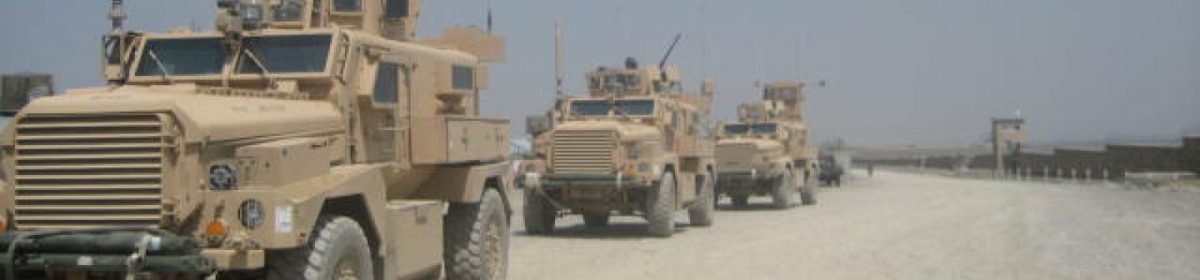
 US special operations in Iraq and Afghanistan have been given fictional portraiture in Lea Carpenter’s Eleven Days and Aaron Gwyn’s Wynne’s War, but Ross Ritchell’s novel The Knife is the first to depict in detail the nighttime raids that have emerged as the signature American military tactic of the wars. Ritchell, a US Army 75th Ranger Regiment veteran, has placed his story about a special operations squadron in a mythical War on Terror battlespace called “Afghanipakiraqistan”—the scenes set in urban areas recall Iraq, while those set in desert mountains evoke Afghanistan. The unit—also vaguely described, but by some clues perhaps a US Army Special Forces “Green Beret” team–deploy on a moment’s notice to avenge the massacre of a sister unit. Immediately upon arrival in theater they are propelled into action to kill-or-capture the leaders of a terrorist enemy cell called al-Ayeelaa. Most of the narrative is told through the perspective of an operator named Shaw, but the thoughts and actions of several other members of Shaw’s unit as well as a variety of local Afghanipakiraqistan minor characters are also portrayed independently. Shaw and his team are full of swagger, confident and righteous in their certainty that they are just the men to eliminate the “[b]ad fuckers” of al-Ayeelaa. “Well, now they’re fucked,” Shaw’s commander briefs the men, speaking of their insurgent foe, but as events play out the special operators underestimate al-Ayeelaa, and Shaw’s faith that he is mentally tough enough to withstand the vicissitudes of the warrior “way of the knife” is undermined.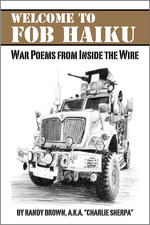


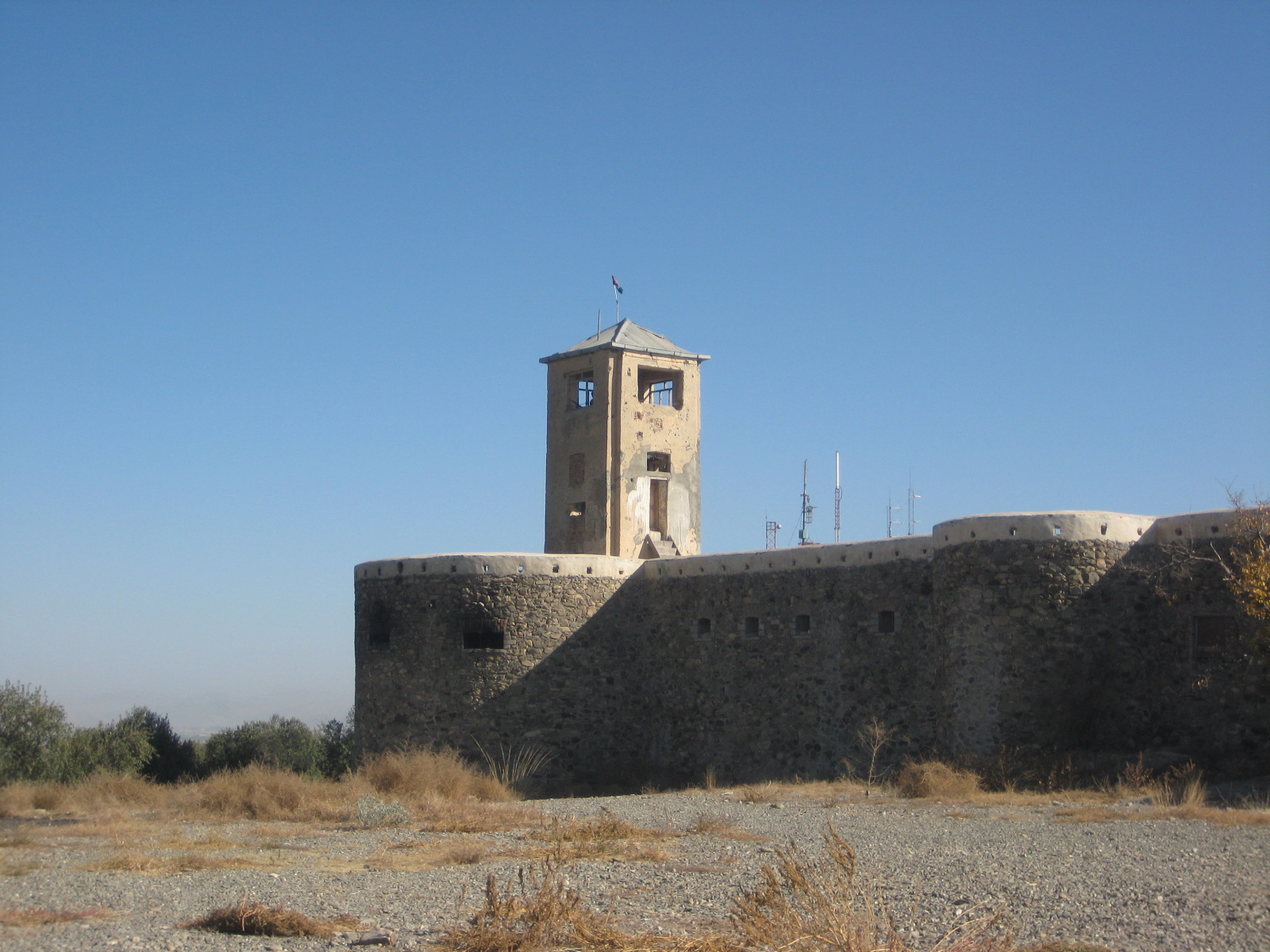
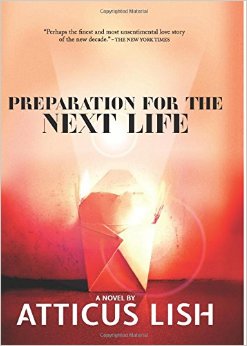

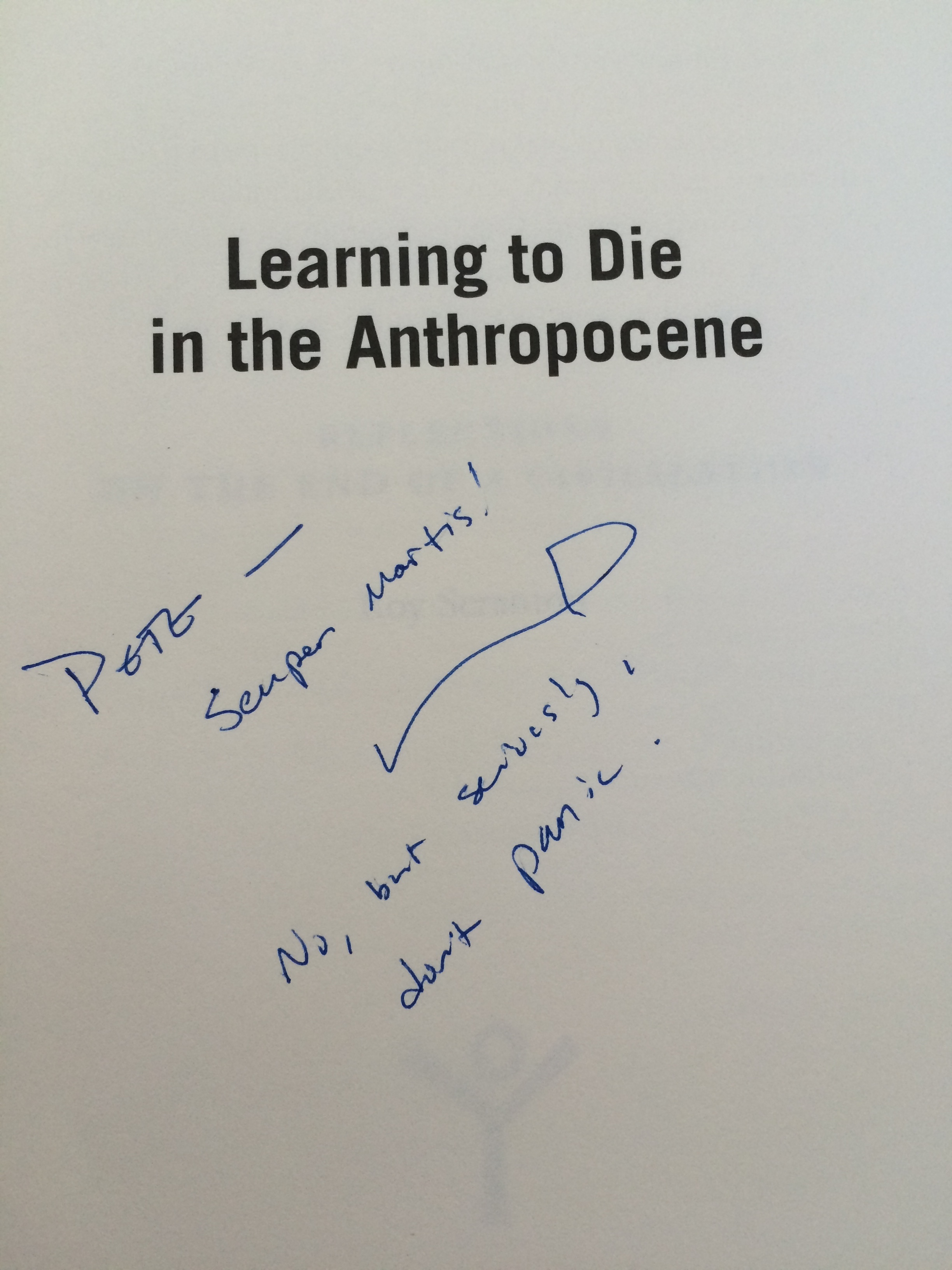
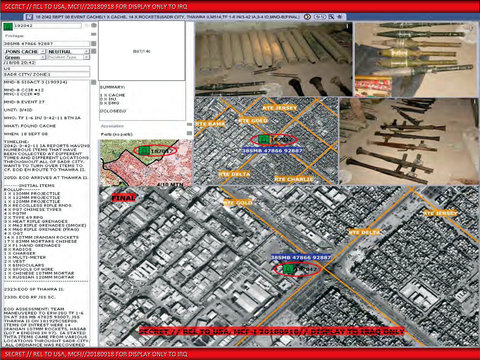
 Time Now: The Wars in Iraq and Afghanistan in Art, Film, and Literature