 On Tuesday 27 January at 4pm EST, I’ll participate in a Twitter bookchat sponsored by US Studies Online, an offshoot of the British American Studies Association. Our subject will be Phil Klay’s Redeployment and joining me will be Aaron DeRosa, a professor at Cal Poly-Ponoma, and Patrick Deer, a professor at New York University. DeRosa is guest-editing (with Stacey Peebles) an upcoming issue of Modern Fiction Studies titled “Enduring Operations: The Wars in Afghanistan and Iraq.” Deer is the author of Culture in Camouflage: War, Empire, and Modern British Literature, a study of World War II British literature, and he has recently turned his attention to American and British contemporary war literature. I know both DeRosa and Deer and their work and am excited to enter the brave new world of Twitter scholarship with them. Our bios and other background material can be found here. Follow me on Twitter, if you aren’t already, @TimeNowBlog, while the US Studies Online tag is @BAASUSSO. Spicing things up, right on time, is Roy Scranton’s “The Trauma Hero: From Wilfred Owen to “Redeployment” to American Sniper,” published today in the Los Angeles Review of Books. Scranton’s an ex-Army Iraq vet, one of the editors (with Matt Gallagher) of the seminal Fire and Forget war literature anthology, and a Princeton graduate student. A passionate advocate for environmental awareness, he published in 2013 in the New York Times an essay called “Learning How to Die in the Anthropocene,” only partly about Iraq, that lit up the eco-criticism world. Now, in the LARB piece, Scranton delineates a twentieth-century way of writing about war that resolutely depicts male veterans of combat as psychologically shaken, but not so much that they don’t attract our sympathy and respect. Scranton hates this tradition, which he calls a myth, which is to suggest it is a fantasy. He doesn’t think it necessarily accords with either how war has to play out or has to be depicted in fiction and film. He considers it instead an obscene ploy that redirects attention from the real victims of war—the dead, to include dead enemy and civilians—to their killers, while nefariously allowing traumatized killer heroes to avoid culpability for the wars in which they fought. Klay’s “Redeployment” provides fuel for Scranton’s ire, though Scranton is also quick to praise Klay’s “literary sophistication and suspended judgment” and Redeployment in its entirety. For those who haven’t read “Redeployment” lately, it begins with the striking line, “We shot dogs”—the narrator being a home-from-war Marine who parses the ethical relativity of having had to shoot both dogs and people in Iraq and the requirement now to put down his pet Lab, named Vicar. Reread “Redeployment,” read the rest of Scranton’s argument for yourself, decide whether you like it or not, and let’s talk it out 140 characters at a time next Tuesday.
Category: Art and War
Don’t Kill the Messenger: Oren Moverman’s Ode to Casualty Notification Officers
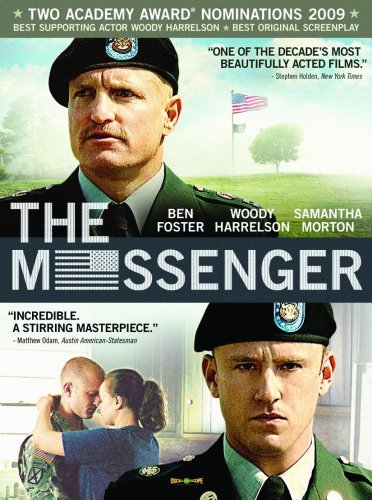 The Messenger, director Oren Moverman’s debut film after a successful screenwriting career, opened in 2009 to critical acclaim but limited popular success. It garnered two Academy Award nominations, made many year-end Top Ten lists, and earned a 90% critics approval rating on Rotten Tomatoes. On the other hand, Wikipedia tells us The Messenger never made back its paltry $6.3 million production cost at the box office. The reasons for both the esteem and the disregard are easy to see. Intelligent and alert to its characters’ emotional lives, The Messenger features striking performances by Ben Foster and Woody Harrelson as US Army casualty notification officers charged with delivering notice of a loved one’s death in Iraq or Afghanistan to the casualty’s next-of-kin, and Samantha Morton as the now-widowed recipient of one of the officers’ deathly missives. The film’s grim subject is matched by its languid art-house film pacing, unsympathetic characters, and struggle to find a compelling storyline. Foster, as Staff Sergeant Will Montgomery, an injured war hero, and Harrelson, as Captain Tony Stone, an embittered captain who never deployed, are cauldrons of pain, confusion, and loneliness. Alternately overly aggressive or defensive, the surly messengers of death treat each other miserably before reaching a rough rapprochement at the film’s end, though their self-hatred makes them proficient emissaries for the hateful news with which they punish their recipients. In terms of plot, Moverman has Staff Sergeant Montgomery fall for Olivia Pitterson, the character played by Morton—a huge violation of the rules the casualty notification officers work by. Pitterson is guarded in her grief and confusion, but ultimately sympathetic to Staff Sergeant Montgomery’s entreaties, which are clearly sexual in addition to emotional. The movie’s ending is bound to strike viewers as more sketchy than heart-warming.
Too harrowing for comfortable watching in the living room and hardly the stuff that would inspire a fun night out at the movies, The Messenger seems better suited for stage drama than cinematic entertainment. Plays invite intense explorations of human pain, with the darkened audience united in their experience of the tortured souls presented live for their contemplation. The roles played by the Foster, Harrelson, and Morton and the set-piece scenes where the soldiers notify parents and spouses that their loved one has died in combat would provide juicy fare for a generation of repertory actors. The notification scenes, six of them, for those not squeamish about watching human catastrophe as it unfolds, are wonderfully staged and performed. Probably no such mission proceeds entirely according to plan, but Moverman has engagingly brought to life idiosyncratic notifications and those that go drastically wrong. In one scene, for example, Captain Stone and Staff Sergeant Montgomery notify a young woman about her husband’s death in the presence of her father, who we learn didn’t even know she had married her beau before his deployment. In another, Stone and Montgomery must use a translator to deliver their scripted, recited message to a distraught Spanish-speaking father while his dead daughter’s infant plays in the background. In scenes such as these—undoubtedly based on reports from actual notification officers–The Messenger drives home the human cost of the wars in ways almost too grim to behold.
The Messenger interestingly dances with issues of military verisimilitude. I’m hardly the harshest critic in this regard, but couldn’t help noticing the goofiness with which the Foster and Harrelson characters wear their Army patrol caps—no soldier in for more than a week would fail to block his or her cap in convention with standard practice or wear it so sloppily. The younger, slighter Foster actually seems more like a junior officer than Harrelson, whose worn rigidness signals field grade officer or senior non-commissioned officer to me (though Captain Stone is said to be a prior-service enlisted soldier whose career as an officer is now topping out, a common enough occurrence in today’s military). But these quibbles don’t detract from the overall effectiveness of the movie. One scene, in addition to those mentioned above, really resonated with me. While drinking alone in a bar one evening, Staff Sergeant Montgomery overhears another vet, just returned, regaling his friends with stories from Iraq. Things go well initially, but the vet pushes his tale too far and soon crosses a line of experience and perspective his friends can’t fathom. As the laughter dies and silence descends upon the party, the vet’s epiphany that he is now far out of synch with his friends crushes him, and crushed me as I watched. Among all the other ways The Messenger is a beautiful downer, its representation of the broken circuits of communication connecting military and civilian is so far down as to be breathtaking.
Grillin’ Chillin’ and Killin’ with the Military 1%: Aaron Gwyn’s Wynne’s War
Lea Carpenter’s Eleven Days and Aaron Gwyn’s Wynne’s War are the first two contemporary novels to portray United States Special Operations forces at work in the post-9/11 wars. As it happens, both are set in Afghanistan: Carpenter’s featuring a Navy SEAL who goes missing-in-action on a mission that takes place the same night another SEAL team executes the raid that resulted in Osama Bin Laden’s death, and Gwyn’s describing a rogue Army Green Beret “Operational Detachment Alpha” (ODA) mission on horseback across the Afghanistan-Pakistan border. Carpenter’s novel is not without interest, but concerns primarily the angst of the missing SEAL’s mother while she waits to learn her son’s fate, while Gwyn offers extensive portraits of the ODA on its outpost in Nuristan province and outside-the-wire in search of a Taliban stronghold. Saving discussion of Eleven Days for another post, I’ll claim here that Wynne’s War effectively dramatizes many of the strengths, weaknesses, and persistent questions surrounding Special Operations in Afghanistan and Iraq, while also suggesting the possibilities of fiction for bringing these issues to light.
The role Special Operations played in Iraq and Afghanistan is, we know, “hotly debated,” to use a cliché of student writing. Never fully acknowledged while the wars were raging, a conglomeration of elite units—Green Berets, Army Rangers, SEALs, Delta Force, CIA (or as we were taught to call them “Other Government Agencies” (OGAs)) nightly executed countless raids to seize “High Value Targets” for detention and interrogation. Operating primarily on the basis of signal intercepts of insurgent telephone calls, the raids may well have broken the backs of terrorist organizations such as Al Qaeda, the Taliban, and the Haqqani network. In other words, they saved American and coalition lives on the ground in Iraq and Afghanistan and forestalled terrorist attacks in America and the West. I believe that, but it’s not exactly clear that it is the case, especially since the wars in Iraq and Afghanistan can hardly said to have been “won.” Well documented in books such as Jeremy Scahill’s The Dirty Wars (2013) are the negative aspects of darkside operations: Lack of coordination with conventional units. Incongruence with stated counterinsurgency and nation-building goals. Faulty execution that resulted in deaths of innocent noncombatants and seizure of individuals friendly to American forces and the legitimate governments of Iraq and Afghanistan. Divergence of important resources (particularly intelligence and helicopter assets) from mainline units. A general lack of accountability all-around. Speaking from my own experience in Khost province, Afghanistan, I frequently had to do damage control, with limited information, with my Afghan Army partners the morning after nighttime operators laid waste to a kalat, seized an important local official, or shot up Afghan security forces by mistake. These were not once-in-a-while occurrences, either; as Scahill explains, by fall of 2009, General Stanley McChrystal had ordered Joint Special Operations Command—the organization to which special operators of all services reported–to execute at least 90 raids a month in Afghanistan alone.
Whether effective or not, the mystique of Special Operations soldiers and missions dominates popular fascination with the war and, indeed, operates powerfully within the military imagination, too. Every soldier worth his or her salt wonders about the grueling selection procedures and the extensive training programs that turn work-a-day soldiers into Rambo-like purveyors of destruction. Within the range of military units, special forces operate most free of the petty rules and restrictions that make life in conventional units miserable—a freedom flaunted by special operators who appeared to some to spend most of their days pumping iron, firing exotic weapons, and growing beards while line dogs pulled tower guard and rode around in the back of armored vehicles waiting to hit IEDs. Or, as portrayed in Zero-Dark-Thirty, SEAL Team 6—the elite of the elite in the hierarchy of special units, according to their own publicity, at least—barbecued steaks and played horseshoes while waiting for the night’s mission to come down from higher. Grillin’ and chillin’, in other words, and then some killin’.
Gwyn gets a lot of these dynamics into Wynne’s War, even a Green Beret who cooks the best hamburger the protagonist, Elijah Russell, is said to have ever eaten. Russell is an Oklahoman cowboy who gains notoriety by saving a horse caught in a crossfire in Iraq between his Ranger unit and local bad guys. Now famous for his horsemanship under fire, Russell and his best friend Wheels are detached from the Rangers and assigned to an ODA in Afghanistan commanded by a charismatic and ferocious combat leader named Captain Carson Wynne. A two-time high school state champion football quarterback, a Princeton graduate, and a successful Wall Street hedge fund trader before giving it up to become a man-o-war (horse pun alert), Wynne has established what is in all respects an independent command on the Afghanistan-Pakistan border. Occupy that, brothers and sisters! Barely responsive to his Green Beret bosses, Wynne plans and executes missions as he sees fit, one of which now includes using horses to discover a Taliban lair rumored to house captured American soldiers, stolen Afghan lucre, or both. Snapping his fingers to obtain in a second what a conventional unit full-bird colonel couldn’t requisition in a million years, Captain Wynne has twenty American riding horses, four mules, and two soldier-horsemen—Russell and his battle buddy Wheels—serving in another theater flown in to help execute the mission. The rationale is that horses give Wynne’s ODA quieter, more dependable mobility in tough mountainous terrain than helicopters or vehicles—which is kinda sorta true, but just the kind of quixotic (second horse pun) approach that gives Special Forces a reputation, not for being the best-and-brightest warriors, but for being crackpot dreamers of enormously expensive and non-replicable ways of waging war.
Gwyn does very well by his material. Too savvy—he’s a college professor—to write pulp fiction, Gwyn instead pays homage to the real world mission in which Green Berets rode into battle on horses described in Doug Stanton’s Horse Soldiers and literary antecedents such as Cormac McCarthy’s All the Pretty Horses and Blood Meridian. No one could miss the parallels to Heart of Darkness and Apocalypse Now, either, with Captain Wynne playing the role of Kurtz and Russell that of the half-entranced/half-horrified witness to Wynne’s half-genius/half-madness. Russell, a junior enlisted soldier, is smart and self-assured, but still young and not privy to the insider culture of the older Green Berets, nor does he have access to all the mission information they possess, so he must make sense of things as they come. A scene in which the Green Beret outpost and its adjoining FOB come under rocket fire illustrates (and brings back memories):
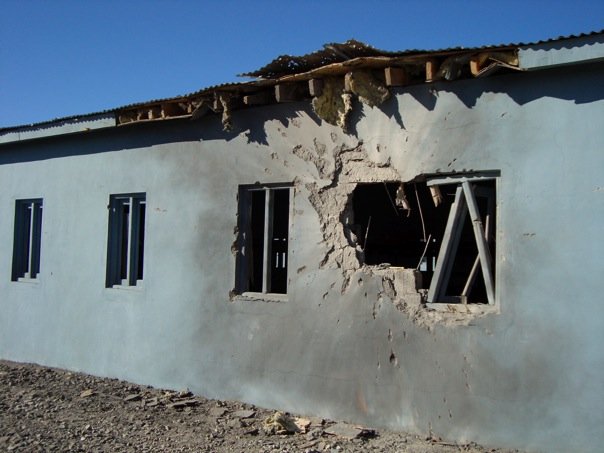
It had taken a while, but the hostiles had finally found positions from which they could range in their mortars, their rockets, and Russell emerged from his bunker into a bedlam of scrambling soldiers and smoke. He followed three men down an earthen trench toward the command bunker, which he saw, once he came onto the packed ground at the center of camp, lay in a smoldering rubble of sandbags and concrete and aluminum sheeting. A young soldier sat in the snow with his rifle across his lap like a child’s toy, head shaved, eyes wet, saying “You got no idea. You got no idea. “ There were men already searching the debris for survivors, and Russell fell in and began to heft bits of broken rock toward a pile that was forming several yards from where the bunker had stood. They’d just uncovered the first body when a man in his observation post called “Incoming!” and they dove behind what cover they could find and waited for oblivion.
Scenes in which Russell observes friendly Afghans decapitate an informer and in which Russell first sees combat with the Green Berets are equally vivid and well-described. So too is a romance Russell sparks up with a pretty medic—that she would give herself to him and not one of the brawny older warriors on the COP stretches things a little, but their junior enlisted youthful chemistry seems right once Russell’s expert horsemanship is acknowledged. But Wynne’s War really accelerates and excels once Captain Wynne, Russell, and the other Green Berets leave their compound in search of the Taliban stronghold:
They rode out of camp in the blue light before dawn, thirteen riders, four mules, six riderless horses bringing up the rear in the remuda. It was the first week of March, and there was still snow in the shadows of the trees and in the stony draws on the northern slopes, but by noon the air was warm enough for shirtsleeves. The horses stepped briskly, vapor rising from their nostrils like steam from a grate….
From this point, about halfway through the novel, to the end, the narrative is a pure rush of story-telling bravado, energy, and skill. Wynne’s War is too recently published to give away plot details here, but nothing I’ve read in the contemporary war lit canon matches the last 120 pages of Gwyn’s novel in terms of harrowing escapades, mounting suspense, interesting developments, and tense human drama. The novel’s preoccupation with horses fades, and the real action becomes a series of running fire fights with wily Taliban foes, battles that generate conflict among the Green Berets and increasing moral uneasiness on the part of Russell. Gwyn’s story-telling snap, crackle, and pop supersedes niggling about military details—it’s inconceivable that the Green Berets wouldn’t have “TACSAT” radios and satellite phones to help them out of their jams, for example—and war story and cowboy movie clichés. As a reading experience Wynne’s War goes where no contemporary war novel has yet ventured: extended scenes of soldiers fighting for their lives, each scene placed in order of increasing intensity culminating in the novel’s climactic gun battle.
Wynne’s War may not be the greatest story ever told, but it is way beyond hokum and malarkey. It confounds literary representation of Iraq and Afghanistan in much the same way that Special Operators themselves confounded thinking about how we went about winning the real wars on the ground. Though Gwyn is ultimately skeptical of Captain Wynne’s mad mission, the author’s writing chops enroute to the novel’s denouement render his Green Beret and Ranger characters fascinating and their story enthralling. Gwyn has figured out that war fiction might, just might, contain exciting events compellingly described. More brooding and contemplative war literature will have to account for the energetic new arrival on the scene.
Wynne’s War by Aaron Gwyn. Houghton-Mifflin, 2014
The Iraq and Afghanistan Wars in Fiction, Poetry, Memoir, Film, and Photography: A Compendium

Below I’ve catalogued memoirs, imaginative literature, and big-budget films published or released through the end of 2014 that represent important and interesting takes on America’s twenty-first century wars in Iraq and Afghanistan. The lists are subjective and idiosyncratic, not complete or authoritative. Still, they might help all interested in the subject to more clearly and widely view the fields of contemporary war literature and film. I’ve arranged the lists chronologically and within each year alphabetically by author or director. If I’ve misspelled a name or title, gotten a date wrong, or omitted a work you think important, please let me know and we’ll make the list better.
If the author or director has served in the US military, or is the spouse of a veteran, I have annotated the branch of service in parentheses.
The lists of “Important Precursor” texts and films represent works that I think are well known and influential among today’s war artists. A list of stage, dance, and performance war art is forthcoming.
Important Precursor Texts:
Michael Herr: Dispatches (1978)
Tim O’Brien (Army): The Things They Carried (1990)
Yusef Komunyakaa (Army): Neon Vernacular (1993)
Anthony Swofford (USMC): Jarhead (2003)
Important Precursor Films:
Oliver Stone (Army), director: Platoon (1986)
Stanley Kubrick, director: Full Metal Jacket (1987)
Ridley Scott, director: Blackhawk Down (2001)
Contemporary Fiction:
Siobhan Fallon (Army spouse): You Know When the Men Are Gone (2011)
Helen Benedict: Sand Queen (2011)
David Abrams (Army): Fobbit (2012)
Ben Fountain: Billy Lynn’s Long Halftime Walk (2012)
Kevin Powers (Army): The Yellow Birds (2012)
Joydeep Roy-Bhattacharya: The Watch (2012)
Nadeem Aslam: The Blind Man’s Garden (2013)
Lea Carpenter: Eleven Days (2013)
Masha Hamilton: What Changes Everything (2013)
Hilary Plum: They Dragged Them Through the Streets (2013)
Roxana Robinson: Sparta (2013)
J.K. Rowling (aka Robert Galbraith): The Cuckoo’s Calling (2013)
Katey Shultz: Flashes of War (2013)
Fire and Forget: Short Stories from the Long War, edited by Roy Scranton (Army) and Matt Gallagher (Army) (2013)
Greg Baxter: The Apartment (2014)
Hassan Blasim, The Corpse Exhibition (2014)
Aaron Gwyn: Wynne’s War (2014)
Kara Hoffman: Be Safe, I Love You (2014)
Atticus Lish (USMC): Preparation for the Next Life (2014)
Phil Klay (USMC): Redeployment (2014)
Michael Pitre (USMC): Fives and Twenty-Fives (2014)
Contemporary Poetry:
Juliana Spahr: This Connection of Everyone with Lungs (2005)
Brian Turner (Army): Here, Bullet (2005)
Walt Piatt (Army), Paktika (2006)
Jehanne Dubrow (Navy spouse): Stateside (2010)
Elyse Fenton (Army spouse): Clamor (2010)
Brian Turner (Army): Phantom Noise (2010)
Paul Wasserman (USAF): Say Again All (2012)
Colin Halloran (Army): Shortly Thereafter (2012)
Amalie Flynn (Navy spouse): Wife and War (2013)
Kevin Powers (Army): Letter Composed During a Lull in the Fighting (2014)
Contemporary Memoir, Blog-writing, and Reportage:
Colby Buzzell (Army): My War: Killing Time in Iraq (2005)
Kayla Williams (Army): Love My Rifle More Than I Love You: Young & Female in the U.S. Army (2006)
Nathaniel Fink (USMC): One Bullet Away (2006)
Marcus Luttrell (Navy) and Patrick Robinson: Lone Survivor (2007)
Peter Monsoor (Army): A Brigade Commander’s War in Iraq (2008)
Craig Mullaney (Army): The Unforgiving Minute (2009)
Matt Gallagher (Army): Kaboom: Embracing the Suck in a Savage Little War (2010)
Benjamin Tupper (Army): Greetings from Afghanistan: Send More Ammo (2011)
James Wilhite (Army): We Answered the Call: Building the Crown Jewel of Afghanistan (2010)
Benjamin Busch (USMC): Dust to Dust (2012)
Brian Castner (Air Force): The Long Walk: A Story of War and the Life that Follows (2012)
Sean Parnell (Army): Outlaw Platoon (2012)
Ron Capps (Army): Seriously Not All Right: Five Wars in Ten Years (2013)
Stanley McChrystal (Army): My Share of the Task (2013)
Adrian Bonenburger (Army): Afghan Post: One Soldier’s Correspondence from America’s Forgotten War (2014)
Jennifer Percy: Demon Camp (2014)
Brian Turner (Army): My Life as a Foreign Country (2014)
Photography:
Sebastian Junger: War (2010) and Tim Hetherington and Infidel (2010)
Benjamin Busch (USMC): The Art in War (2010)
Michael Kamber: Photojournalists on War: The Untold Stories from Iraq (2013)
Film:
Kathryn Bigelow, director: The Hurt Locker (2008)
Sebastian Junger, director: Restrepo (2009)
Oren Moverman, director: The Messenger (2009)
Kathryn Bigelow, director: Zero-Dark-Thirty (2012)
Peter Berg, director: Lone Survivor (2013)
Sebastian Junger, director: Korengal (2014)
Claudia Myers, director: Fort Bliss (2014)
Criticism:
Elizabeth Samet: Soldier’s Heart: Reading Literature Through Peace and War at West Point (2007)
Stacey Peebles: Welcome to the Suck: Narrating the American Soldier’s Experience in Iraq (2011)
Elizabeth Samet: No Man’s Land: Preparing for War and Peace in Post-9/11 America (2014)
A caveat up-front is that my lists do not reflect hundreds of stories, poems, and photographs published individually in anthologies, magazines, and on the web. Some of my favorite stories, by authors such as Mariette Kalinowski, Maurice Decaul, Will Mackin, and Brian Van Reet, and photographs, such as the one by Bill Putnam published here, thus do not appear above, though I hope to post more comprehensive lists in the future.
Another deficiency is the lack of works by international authors and filmmakers, particularly Iraqi and Afghan artists. Again, that project awaits completion.
My list of memoirs is probably the most subjective. The works I’ve listed are those I think important historically or interesting to me personally, with a small nod toward providing a variety of perspectives. The small number of photography texts I’ve listed combine evocative pictures taken at war and on the homefront with insightful commentary written by the photographers and collaborators themselves.
War Lit 2014: Where It’s Been, Where It’s Going
On Christmas, the New York Times published two articles on contemporary war literature by Michiko Kakutani, the paper’s premier book critic. One article, titled “A Reading List of Modern War Stories,” lists 38 books about Iraq and Afghanistan that Kakutani claims are most worth attention. In the second article, titled “Human Costs of the Forever War, Enough to Fill a Bookshelf,” Kakutani surveys a number of 21st-century war texts, measures their concerns, and generally celebrates their achievement. Though Kakutani’s focus encompasses war memoir and reportage in addition to fiction and poetry, much of the article and most of the accompanying pictures are devoted to authors of literature. The way these things go, Kakutani’s articles will constitute near-definitive pronouncements about post-9/11 war literature, so let’s chitter-chat about them now.

Everything on the booklist is worthy, but even so it is possible to quibble and argue—that’s the nature of such lists, right? For starters, why 38 books and not 37 or 39, let alone a round number like 35 or 40? The number seems both arbitrary and precisely exact at the same time, as if Kakutani either grew tired of reading at 38 or determined that no way her 39th favorite book about the wars was going to make the final cut. In any case, the list tilts to the recently published or soon-to-be-published, with only occasional citations of books published before 2010. Curiously, her list includes no poetry, specifically no Here, Bullet or Phantom Noise by Brian Turner, the first of which in my opinion is the most important contemporary war lit text of them all and Phantom Noise remaining the second best book of post-9/11 war poetry going (Here, Bullet being first). Kakutani does include Turner’s memoir My Life as a Foreign Country, no argument there, but overall her list includes seven first-hand accounts of service in Iraq and only one of Afghanistan, and the novels on Kakutani’s list about Afghanistan include three that have not even been released yet—Elliot Ackerman’s Green on Blue, John Renehan’s The Valley, Ross Ritchell’s The Knife. Omitted, though, is Joydeep Roy-Bhattacharya’s 2012 The Watch, which presciently portrayed life on a remote Afghanistan combat outpost, as does a novel that makes Kakutani’s list, Paulo Giordano’s The Human Body, an Italian work only recently published in America. Another Kakutani choice, Lea Carpenter’s novel Eleven Days, portrays Special Operations forces, as do Ackerman’s and Ritchell’s novels, thus contributing to the glamorizing of dark-side operators at the expense of line soldiers who constituted 95% of the deployed military. Finally, Kakutani’s list includes Hassan Blasim’s The Corpse Exhibition, which is great, but as several Times and Twitter commenters have noted, the list is otherwise deficient of Iraq, Afghanistan, or dark-skinned American perspectives.
If Kakutani’s list is idiosyncratic–probably more a compendium of suggestions from friends than the product of a ruthless critical regimen–her essay is excellent—generous, insightful, and eloquent. Kakutani succinctly itemizes the “particularities of the conflicts in Afghanistan and Iraq” as “changes in technology, the increased presence of female soldiers and, most importantly, the all-volunteer military, which has opened a chasm between soldiers (‘the other 1 percent’) and civilians.” By “changes in technology,” we might think of new weaponry such as IEDs, drones, and armored vehicles. Or means of surveillance, such as the pervasive use of signal intercepts by the intelligence community. Or, the communication platforms such as Skype and social media that have allowed deployed service members to remain much more in touch with the homefront than ever before. In regard to the depiction of these things in war fiction, none have been portrayed all that well or extensively and the journalistic coverage hasn’t been so good either, which means there’s a lot of opportunity for future war authors to help us understand them better. The “increased presence of female soldiers” on the battlefield has certainly been a salient component of contemporary war, though, oddly enough, not so much in the fiction Kakutani directs us toward. She also might have said a bit more about the “increased presence” of women in the formerly male-dominated preserve of war-writing itself. Siobhan Fallon, Kayla Williams, Elizabeth Samet, and Lea Carpenter are on Kakutani’s list, and they, along with Katey Schultz, Roxana Robinson, Helen Benedict, Hilary Plum, Cara Hoffman, Mariette Kalinowski, and others, constitute a significant new cultural phenomenon that complements the shifting nature of military demographics. But Kakutani is right on the money by asserting that the all-volunteer military and the civil-military chasm have been huge abiding concerns in the American war effort and the literature written about it. The issue goes way beyond simple fretting over how to thank soldiers for their service or worrying about PTSD, though those are important subjects oft written on. As Stacey Peebles argues in Welcome to the Suck, the story of every contemporary soldier saga is that of internal battle between competing senses of soldierly and civilian identity: How does being a soldier—killer, cog-in-the-machine, hero, patriot—jibe with the softer and more fluid civilian values and characteristics one brings into the military, never fully abandons while in, and then attempts to reclaim when out? The ailment Peebles diagnosed in a small number of works in 2011 is the essential tribulation defining almost every title in Kakutani’s literary corpus.
A section titled “Capturing a War’s Rhythm” is full of claims central to war literature. For instance, Kakutani explores the attraction of the short story for contemporary war writers. She writes, “Short stories, authors have realized, are an ideal form for capturing the discontinuities of these wars, their episodic quality, and so are longer, fragmented narratives that jump-cut from scene to scene.” She then traces a geneology of war lit that starts with the death-soaked collapse of idealism of World War I poets, the black humor of World War II authors Joseph Heller and Kurt Vonnegut, the charred stoicism of Michael Herr and the magical realism of Tim O’Brien, Vietnam-era authors read by everyone writing war lit today, and finds its modern voice in Iraq blog-writing by Colby Buzzell and Matt Gallagher. Kakutani also grounds the modern war lit boom in the MFA program and veterans support workshop scenes—both being fruitful incubators for storytelling talent. Finally, she ponders whether war fiction has adequately responded to larger political and ethical questions. How have authors represented Afghan and Iraqi “others” in a new global era marked by respect for diversity and concern for “nation-building,” impulses that have been met with implacable contempt by our opponents and soiled by our own nation’s new found regard for torture? These are all subjects and ideas I’ve toyed with in Time Now, but Kakutani has brought an outsider’s eye to the body of evidence and incisively and concisely articulated its importance.
Kakutani’s list and essay join two other great surveys of contemporary war literature published in 2014: George Packers’ New Yorker article “Home Fires: How Soldiers Write Their Wars” and Brian Castner’s Los Angeles Review of Books essay “Afghanistan: A Stage Without a Play.” Read them all, again, bookmark them on your computer, and let’s use them as guides as we consider the war fiction, poetry, memoir, and reportage 2015 will bring us.
War Lit 2014: Here Here! But What’s the There There?
Here here to war lit 2014, a year that brought us Phil Klay’s Redeployment, Hassan Blasim’s The Corpse Exhibition, and Brian Turner’s My Life as a Foreign Country, among many excellent others. The Iraq and Afghanistan wars, ferocious as they were at times, never captured the nation’s undivided attention. Now nine years after Fallujah, five full years after my own redeployment, fighting in Iraq flickers back to life while conflict in Afghanistan drizzles on. Time will tell what recent events mean in terms of American soldier boots on the ground, but the wars now seem to burn more hotly in the nation’s literary imagination than they ever did in its political awareness. War lit has established itself as a steady persistent presence in the minds of authors, publishers, critics, and readers. Not the biggest deal going, by any means, but book people seem far more willing now to give the wars their due than when 20 American soldiers a week were dying.

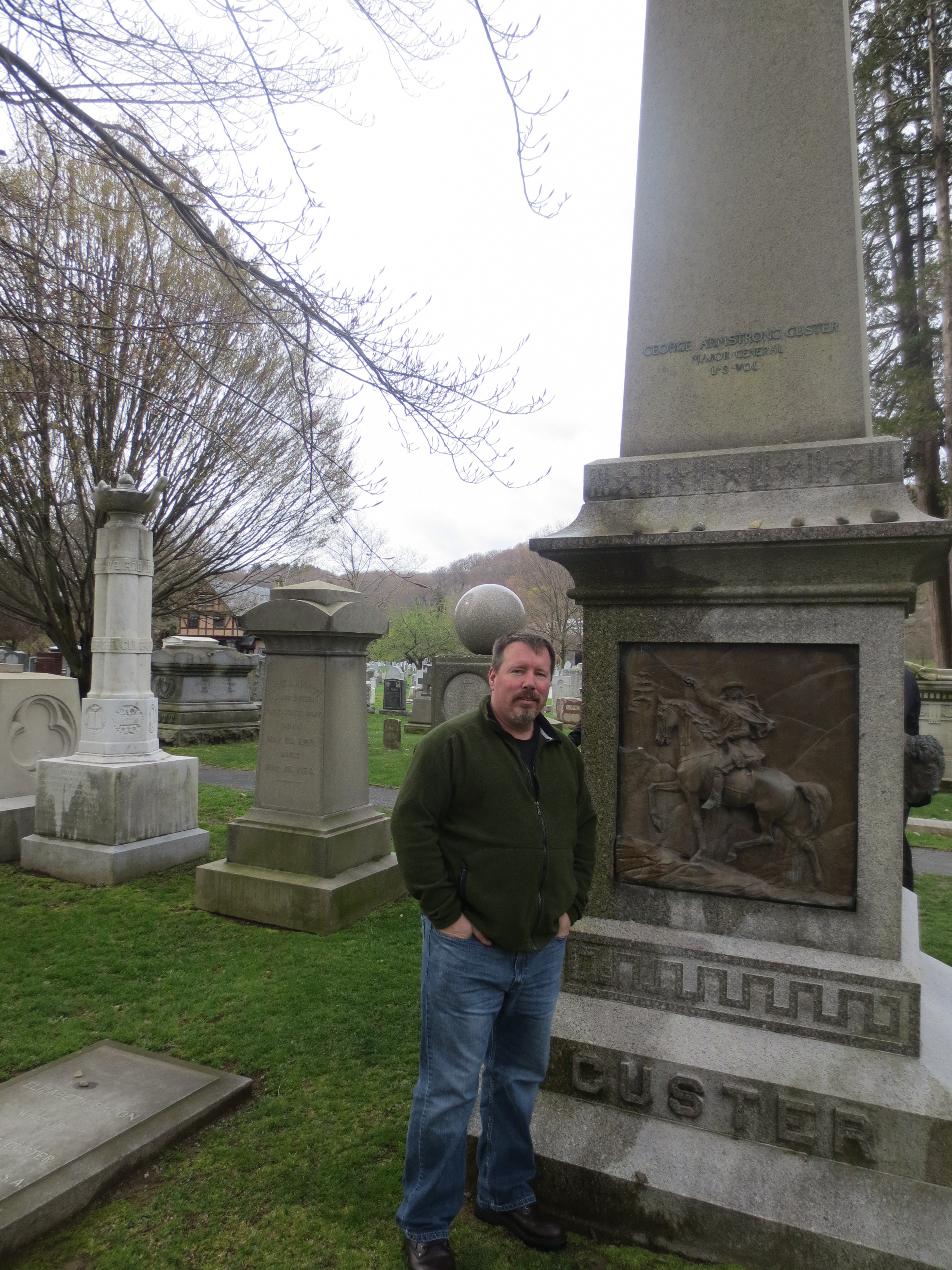
What is the right relationship of high-minded war literature and the nation at large? In World War II and even more so Vietnam, war literature, or at least a lot of it, acted subversively to question and undermine official pronouncements and stabs at controlling speech and thought. But in the 2000s and current decade, there seems to be no “there there” in terms of a dominant narrative or popular consensus against which our most sensitive and imaginative authors might set themselves, no greater truth on whose behalf they wield their words and stories. Leaving Blasim, an Iraqi expatriate, out of it, Klay and Turner, good as they are, rarely mock the wielders of power, so it’s hard to say how dangerous they are to the status quo. What government policy, cultural understanding, or body of literature, art, and film do they resist or subvert? Official sanctioning of torture and cross-border drone strikes? The “support the troops” ethos and the caricature of the troubled vet? The Navy SEAL and sniper memoir and Hollywood war sagas such as Zero Dark Thirty, Lone Survivor, and Fury? Yes to all, but the best might be to come. War lit doesn’t need to more polemical, just more expansive. Its focus on the lived life of individual soldiers and the plight of veterans, noble as it is, also feels somewhat preparatory, as if the genre in toto might be waiting for even more acute and impassioned observers to capture in the most accurate proportions the vexed connectivity of soldier experience, the wars at large, and the national mood.
The novel would seem to be the medium for just such a project, and we might remember the excitement of 2012 when The Yellow Birds, The Watch, Billy Lynn’s Long Halftime Walk, and Fobbit lit up the war lit scene. 2013 and 2014 seem not to have delivered the same wallop, but I’ve probably missed a thing or two. In the coming weeks I’ll turn my attention to a slew of 2014 (and older) releases. Waiting on my shelf are Lea Carpenter’s Eleven Days, Masha Hamilton’s What Changes Everything, Aaron Gwyn’s Wynne’s War, Atticus Lish’s Preparation for the Next Life, and Nadeem Aslam’s The Blind Man’s Garden. And 2015 will bring Elliot Ackerman’s Green on Blue, Jesse Goolsby’s I’d Walk with My Friends If I Could Find Them, and Matt Gallagher’s Young Blood. Ackerman, Goolsby, and Gallagher combine significant war experience and impressive writing talent, so as I pitch into my New Year’s reading, my hopes are high, very high. I hope yours are, too.
Tim O’Brien’s “Story Truth” and “Happening Truth” in the Contemporary War Novel
Do war stories need militarily-accurate detail to be compelling? Lots of contemporary war fiction bandies the author’s familiarity with up-to-the-minute jargon, gear, and nomenclature, as if the story’s success depended on readers tipping their hats to the author’s first-hand knowledge of what an MRAP, IFAK, or ETT might be. And why not? Iraq and Afghanistan were different from Vietnam, Korea, and World War II, and some of that difference is reflected in the gear, tactics, and language used by those who fought it. Why shouldn’t authors include a little bit or a lotta-bit of verisimilar detail in their stories?
But that’s not all there is to the question. Could one say that some contemporary war fiction is overly dependent on the insider knowledge that comes with “having been there, and done that”? Waving their litanies of military lingo and equipment as badges of authenticity, they distract attention from the author’s story-telling chops, attract gullible, easily-impressed readers, and repel discriminating ones who resent callous efforts at being manipulated.
 Tim O’Brien, the most important pre-9/11 writer to the contemporary war lit scene, defines these issues most succinctly. In the magnificent “The Things They Carried,” he itemizes the gear carried by infantrymen in Vietnam in long lists that stand-alone from the explicit events of the story. The effect is not only intoxicating, but groundbreaking. I don’t think the generation of World War II authors—Mailer, Styron, Heller, and Jones—ever slowed down the narrative flow of their novels in such a way to focus attention on the equipment and verbiage that enveloped their characters. But after O’Brien, almost every American vet and civilian author of Iraq and Afghanistan war fiction that I can think of somewhere makes such a move. Even a lefty-feminist poet such as Juliana Spahr, in her poem “This Connection of Everyone with Lungs” can’t resist name-checking the precise, specific equipment that help define how we fight now. Other arch-examples of the tendency include Phil Klay’s story “Frago” and Paul Wasserman’s poem “15 Months, 22 Days.” Klay’s and Wasserman’s works are self-conscious commentaries on the practice, and so too is Spahr’s, but for other authors the tendency seems to be more unknowing, or even craven.
Is any of this necessary? Tim O’Brien, again, leads the way in helping us understand. In an Atlantic magazine essay titled “Telling Tales,” he derides an over-reliance on verisimilar detail and instead argues that a story above all must be an original, striking act of the imagination. For O’Brien, realistic description is only a secondary attribute of fiction, one bound to eventually bore the reader unless the tale starts tickling the fancy through its artistic and fanciful rendering, or even contorting, of reality. Helen Benedict, in her review of Michael Pitre’s Fives and Twenty-Fives, takes another approach by arguing that reveling in military-specific jargon, equipment, and tactics amounts to glorifying war. I half-suspect she’s right, even as I wait for war writers to expand their reach to more and different realms of the Iraq and Afghanistan war experience, a move that can only be made by bringing the material and linguistic reality of the wars into view.
A good case in point in this discussion is Fives and Twenty-Fives itself. I praised it in my last post for subjecting the world of military movement in armored vehicles in Iraq to artistic rendering. I also hinted that Pitre was very observant about how military service shapes the habits of perception of service members. It’s not just what soldiers and Marines see and experience, it’s how they are trained to see and experience by military method and the danger of war. A chapter titled “The Rule” in Fives and Twenty-Fives illustrates by vividly portraying a small-unit patrol brief and the ensuing patrol. Almost every detail offered by Pitre suggests the ways that the Marines in the story have been altered by their service.
The platoon sergeant, Gunny Stout, proclaims, “Five and twenty-five’s the rule,” by which he means that the Marines on patrol will not look at just whatever they want to, but at assigned fields of vision, first five meters out, then 25. But Gunny Stout himself has also been changed. The body armor and sunglasses he wears, by hiding his middle-age flab and wrinkles, takes years off his appearance: “he looked like he could’ve been in grade school.” Gunny Stout, smart as a gunny should be, directs at every turn the absorption of patrol brief information by the Marines. He commands the platoon medic to stand next to the bomb-defusing technician, because it “helped the Marines” by inspiring confidence and unity. “Everyone stood still when [Gunny] talked,” “staring at the dirt during the convoy brief.” But when Gunny Stout commands, “Eyes up,” everyone directs their gaze his way. The platoon’s attention during the patrol brief is also monitored by the second sergeant in the chain-of-command, Michelle Gomez. Sergeant Gomez is “the only Marine allowed to move around during the convoy brief.” “She circled us,” Pitre’s narrator tells us, “like a sheepdog, making sure we all paid attention.”
Feminist critics remind us that oppression of women is often manifested through control of their bodies. They would have a field day with a scene in which Sergeant Gomez, prior to going on duty, works her long hair into a bun to meet the demands of military grooming standards. But Sergeant Gomez, no one’s victim or object of suppression, circumvents easy categorizing. When the narrator catches her fixing her hair, Sergeant Gomez fires back: “She notices me and narrowed her eyes, all mad. Like, what the fuck you looking at? Turn around. Get back to work, asshole.” The narrator, a young male medic, is unconcerned. He actually likes being spoken to like that. He’s smart enough to notice the contortions wrought on civility by military service, but in the context of actually being a Marine in the middle of a war he totally understands where Sergeant Gomez is coming from. And there is no one, absolutely no one, whom he trusts more than Gunny Stout and Sergeant Gomez to roll out the gate with on the unit’s daily mission to defuse and fill booby-trapped IED craters.
The scene strikingly portrays the flows of deference, obedience, and resistance characteristic of enlisted life in the service. Gunny Stout, the senior non-commissioned officer in the platoon, is the master of passive-aggressive instantiation of chain-of-command orders and policies, no matter how much they are hated. After the platoon leader, Lieutenant Donovan, directs the platoon to stop writing obscene and derogatory graffiti in the FOB port-a-johns, Gunny Stout affirms the directive, but modifies it in terms the junior troops appreciate:
Then, his voice so low the lieutenant couldn’t hear, Gunny Stout said to us, “I’m running over to the shitters after we break. In fact, I’ll give the whole platoon three minutes to do the same. You know that glistening, goddamn beautiful cock in the last stall on the right? I want a picture before it’s gone forever. One of you miscreants is a regular Leonardo da Vinci of dicks, and I’d hate to see the evidence erased for all time. Fucking tragedy.”
The platoon executes not just dutifully but laughingly, and the story doesn’t end there. On patrol, a sergeant named Marceau requests the other two sergeants in the platoon, one of whom is Sergeant Gomez, to switch to an unauthorized radio frequency the NCOs use to communicate freely out of earshot of the officers.
“Listen,’ I heard Marceau say. ‘You two deserve to know that most of those penis murals are mine. And I’ll be honest—I don’t think I can quit cold turkey. Over.”
Zahn and Gomez, in separate vehicles, both keyed their radios just to let Marceau hear them laughing.
Marceau, kept going, deadpan. “So here’s my compromise: I’ll keep drawing penises, and you can go ahead and put me down as a volunteer for the overnight shitter watch. Out.”
And so Pitre continues, eloquently dancing on the boundary line between realistic rendering and novelistic possibility. When we think of Sergeant Gomez, what do we think? True-to-life portrayal? Fantastical embellishment? A male fantasy? Or a well-drawn representation of how it is to be a woman soldier or Marine in the military today? Would we like the story more if it were written by a woman? Would a woman write such a scene? Has Pitre’s own service rendered him an insider’s advantage on life inside a small unit? Does it lend his story credibility? Or, could he have told the story just as well after reading lots of memoirs and watching YouTube clips? Tim O’Brien writes in a story titled “Good Form” of “story-truth” and “happening-truth” and asserts that story-truth, or emotional truth, is far more important than happening-truth, or realistic depiction. But how do you know story truth when you see it, and how far can you take it?
UPDATE: Adam Karr’s review of Fives and Twenty-Fives for Make Literary Magazine also riffs off the legacy of Tim O’Brien and the importance of realistic detail in war fiction. Karr’s review was in circulation before mine, and though I was not thinking of his review when I wrote this post, Karr should be given all credit for first raising this important issue, especially as it pertains to Fives and Twenty-Fives.
Iraq by the Numbers: On the Road with Michael Pitre’s Fives and Twenty-Fives
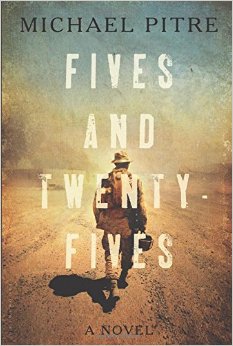 Michael Pitre’s Iraq War novel Fives and Twenty-Fives blends elements of Roxana Robinson’s Sparta and Joydeep Roy-Bhattacharya’s The Watch. Similar to Sparta, Fives and Twenty-Fives features a disaffected war-ravaged ex-Marine Corps officer apathetically making his way through graduate school while frustrating the concern—not to forget the desire—of a smart, beautiful woman many times too good for him. As in The Watch, Pitre’s novel’s narration is multi-voiced and non-linear. Besides Peter Donovan, the alienated Marine Corps officer, Fives and Twenty-Fives relates events through the eyes of an enlisted medic named Lester Pleasant and an Iraqi interpreter named Kateb al-Hariri, nicknamed “Dodge,” who both served in Donavan’s platoon in Iraq. Not only are an officer, a medic, and an interpreter dominant characters in The Watch, but narration in Fives and Twenty-Fives, as it does in The Watch, skips around among the three principals and back-and-forth between events transpiring in-theater and in America afterwards. As if these nods to literary predecessors weren’t enough, the climatic action of Fives and Twenty-Fives repurposes events writ large in American military history over the past two decades. Not to give away anything, but think wounded and surrounded American soldiers, helicopter rescue missions, and enemy Rocket Propelled Grenades.
Unoriginal as it may be in some ways, Fives and Twenty-Fives in other ways beautifully expands the range and deepens the texture of contemporary war fiction. For one, it features as much or more of a plot as we’ve seen from any contemporary war novel. Pitre forges characters and unfolds events in ways that seem plausible, artificed, unpredictable, and inevitable all at the same time. Donovan’s platoon is charged with filling potholes created by IED blasts on the “main supply routes” between Baghdad and Ramadi. But the deadly Groundhog Day-like routine of the mission is upset by personality conflicts within the platoon and the press of new missions, and then spills over into the post-war lives lived by Donovan and Pleasant in Louisiana and Dodge in Tunisia during the time of the Arab Spring uprisings.
The interesting storyline is the least of Fives and Twenty-Fives’s virtues, however. For example, each pothole Donovan’s Marines fill is booby-trapped with another IED, which adds to the danger of the platoon’s mission and necessitates the careful vigilance of always checking first five meters out, then twenty-five, that the Marines employ when they are on-the-ground, outside-the-wire. Here, and at many other places, Pitre describes how military duty and danger mandates new, carefully controlled, much more precise ways to perceive the world. Combat, we surmise, not only requires reorganization and regulation of typical speech patterns and the adaptation of new, non-standard lingo—as in radio transmissions and commands given during crisis—but demands the same of watching, listening, smelling, and mentally processing all sensory perceptions.
Fives and Twenty-Fives also excels in its descriptions of Donovan’s platoon as they execute their missions driving dangerous Iraq roads in their armored trucks. Contrary to what any Sebastian Junger film or any Navy SEAL or sniper memoir would tell you, the characteristic experience of combat for most in Iraq and Afghanistan was not battle on a combat outpost, a midnight raid, or a helicopter air assault. Rather, it was the “CONOP,” or convoy operation: movement in tactical formation in military vehicles whose names–Up-Armored HUMVEEs, MRAPS, and Cougars—mean little to the general American public, but were the world in which 1000s of fighting men and women lived most intensively while in Iraq and Afghanistan. One can get a sense of what French intellectual smarty-pants Pierre Bourdieu would call the habitus—the lived experience of everyday life—of tactical military vehicle movement by watching Bomb Patrol, an Esquire channel series about a Navy Explosives Ordnance Detachment in Afghanistan that features in-truck camera shots of the unit’s members as they roll down the road toward IEDs and ambushes. Or, one might read retired Lieutenant General Dan Bolger’s Why We Lost, which includes a long, detailed description of a CONOP in western Afghanistan. Why it takes the Esquire channel and a 3-star general to tell the world these things, I don’t know, but their accounts ring true to hundreds of hours I spent in armored vehicles on the roads in Afghanistan. War novelists have taken a while picking up on this, but Pitre thankfully everywhere is alert to the procedures of tactical vehicle movement as well as the material feel of it, to say nothing of the ambiance binding the occupants within a vehicle and with those in other vehicles in the formation.
Another correspondence to my own deployment experience came in the form of a fourth character in Fives and Twenty-Fives—one not given the benefit of her own speaking voice, unfortunately, though she looms large in the recollections of other characters. Sergeant Michelle Gomez is the de facto leader of Donovan’s platoon. Though the only woman, she is by far more experienced, decisive, and determined than Donovan and his weak-unit gunnery sergeant. Sergeant Gomez’s take-charge ability, in my experience, makes her not atypical but typical of the military women I met downrange, especially the sergeants, all of whom that I saw had no problem asserting their willpower over the soldiers under them or gaining the respect of the chain-of-command. In the hubbub of debate about the victimization of women in the military—and I’ve heard many first-hand accounts, so do not underestimate the problem—the ability of strong, strident women such as Sergeant Gomez to prosper in uniform is often overlooked. Adding to my interest in Sergeant Gomez was the descriptive detail that she was a Texan. I’m not sure how these things came to pass, but for a while in Afghanistan I was on a FOB with three Mexican-American women, each a sergeant, and each from a different Rio Grande valley town. All three possessed a good-natured competence that was so far above the norm it was almost unfathomable—a fact that immeasurably increased my respect for whatever’s cooking in the cultural stew of places like McAllen, Del Rio, and El Paso.
But Pitre’s greatest accomplishment in Fives and Twenty-Fives is the Iraqi interpreter Dodge. Initially somewhat of a cartoon figure, what with his goofy nickname and love for heavy metal and Huckleberry Finn, over the course of the book he grows exponentially in terms of interest and complexity. Pitre’s feat here to fully imagine a history for Dodge pre- and post-experience working with Americans that is both haunted and resonant with connections and implications. The war begins with Dodge, the son of a Saddam government bureaucrat, on the run from Shia death squads and Al Qaeda killers, and ends with him in Tunisia at the outbreak of the 2011 Arab Spring uprisings. What Pitre is suggesting by having his hero, the rebellious America-loving son of Baathist insiders, meet defeat in his own country only to become one of the avatars of Arabian democracy is hard to fathom. Is there a thought process that connects the aborted stab at freedom in Iraqi and the promise of true freedom in another country? I’m not sure, but the beauty of Pitre’s characterization is generated not so much by political symbolism, but by intimate portraits of Dodge’s relationship with his family and friends and the edge (or lack of edge) that his education in American literature gives him in the face of dealing with real Americans.
Donovan doesn’t bring much new to the brooding, erratic war-veteran table, but instead reliably mopes about until restored to life by reconnection with Pleasant and Dodge, and the kindling of a romance with a grad school compadre named Paige (nice play-on-words, you clever writing guy author!). Paige, pretty, smart, and totally together, foregoes her preppy rich New Orleans crowd for Donovan, which seems a stretch, but so it often goes in the fantasy realm of novels. Describing the connection between Donovan and Paige, Pitre writes in words that most vets will understand:
She knew just what to say. Just how to get me telling stories. This is a problem.
It’s not smart for me to tell stories. Makes people uncomfortable. But with a few bourbons in me, everything takes on a gallows humor and I just want to share, share, share. It’s why I drink alone, mostly. I don’t have the discipline to drink around people and answer their simple questions without saying something awful. Even the memories that seem funny in my head come out sounding like the summer vacation of a psychopath.
It’s even worse, though, when I just sit there quietly and refuse to discuss the war all. People get the impression that I’m the stereotypical brooding vet. That’s why I always keep two or three stories on deck, harmless and cute, to distract and move the conversation elsewhere.
Sand Queen author Helen Benedict, in her review of Fives and Twenty-Fives for the British paper The Guardian, asserts that there are only two questions that matter about any war novel. Is it honest, one, and does it glorify war, two? Benedict generally approves of Fives and Twenty-Fives, but with reservations. In Benedict’s thinking, honesty acknowledges that native Iraqis and Afghans suffered far more than Americans, and glorification is the result of schmoozy authorial love for military jargon, gear, tactics, and obsessive male concerns such as glory, patriotism, bravery, and soldierly camaraderie. Benedict’s points are good ones, though perhaps a bit dogmatic and restrictive. But honestly, I don’t think you could write a war novel grim enough to convince a young man, or nowadays, a young woman, to not enlist who wasn’t already disinclined to serve. A writer even shrewder than Benedict, the 18th-century Englishman Samuel Johnson, proclaimed that “no one ever regretted serving as a soldier or a sailor.” Johnson seemed to be blissfully dismissive of those killed or grievously maimed in battle, but his pronouncement rings true nonetheless. “Get some” the saying goes, or, as Jimi Hendrix asked, “Are you experienced?” The force of those phrases’ application still applies today to those possessed by the itch to see combat, those who want to write about it, those who want to read about it, the characters in Fives and Twenty-Fives, and I’m betting Pitre himself, no matter how harrowing the ride.
Michael Pitre’s Fives and Twenty-Fives. Bloomsbury, 2014. Thanks to Adam Karr for lending me his copy of Fives and Twenty-Fives. Karr’s own review of the novel can be found here, at the Make Literary Magazine website.
The Great War and Modern Memory: Paul Fussell Reconsidered
 At the bottom of this post is a video of the group reading at the Old Stone House in Brooklyn I moderated on Veterans Day. Below I’ve named my fellow readers, all veterans of Iraq or Afghanistan who are now active authors in print or on-line. I’ve listed the units with whom they deployed, along with their reading selections and the time their appearance can be found on the video. Each of us chose a passage from a work by a writer who fought in World War I or was profoundly affected by the war:
Introductions by Louis Crawford, Brooklyn Reading Works, and Brandon Willitts, Words After War.
Me, US Army officer, Embedded Transition Team advisor in Afghanistan: Introduction of readers.
Eric Nelson, US Army officer, 173rd Airborne Brigade, Afghanistan: Wilfred Owen, “Dulce et Decorum Est”; Siegfried Sassoon, Memoirs of an Infantry Officer (13:00).
Lisbeth Prifogle, USMC officer, aviation, Iraq: Frederic Manning, Her Privates We (19:20)
Jacob Sotak, US Army sergeant, Provincial Reconstruction Team, Afghanistan: Albert-Paul Granier, Cockerels and Vultures (27:00)
Me: Wallace Stevens, “Lettres d’un Soldat” (33:00).
Mariette Kalinowski, sergeant USMC, logistics and convoy ops, Iraq: Vera Brittain, Testament of Youth (35:00).
Adrian Bonenburger US Army officer, 173rd Airborne Brigade, Afghanistan: Louis Ferdinand Céline, Journey to the End of the Night (43:00).
Nate Bethea, US Army officer, 25th Infantry Division, Afghanistan: Robert Graves, Goodbye to All That (47:00).
Vic Zlatanovic, US Army enlisted, 173rd Airborne Brigade, Afghanistan: Rebecca West, The Return of the Soldier (57:20).
Me: Joyce Kilmer, “Rouge Bouquet” (1:06).
An obvious first link between Great War authors and contemporary war authors is the essential literariness of the effort to understand military experience. World War I authors such as Wilfred Owen, Robert Graves, and Siegfried Sassoon were highly educated and extremely aware of the British literary tradition they hoped to join and further with their works. Likewise, today, so many war authors are the products of first-class undergraduate educations and graduate MFA and journalism programs. Consciousness of what’s come before—not just of World War I authors, but also the great writers who came out of World War II and Vietnam—is also a feature distinguishable everywhere in contemporary war writing. There are other affinities, too. While listening to my fellow readers at the Old Stone House, I noted their attraction to passages that exposed the horror of World War I combat, reflected enormous disillusionment with stated national aims and ideals, and articulated the profound difficulty of getting on with life after the fighting was over. These are all real points of connection that suggest World War I literature remains relevant to our modern way of thinking about war and its consequences.
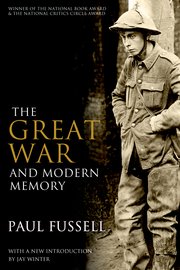
The scholarly work that explains best the influence of World War I and World War I writing is Paul Fussell’s The Great War and Modern Memory. First published in 1975, Fussell’s study was groundbreaking in its time and seems not to have aged a bit. Its greatness lies not just in Fussell’s attention to the ideas and language of authors of memoirs, poetry, and fiction about World War I, which is fantastic, but in the way he documents wholesale, pervasive shifts in habits of expression and thought throughout British and American culture as a result of the war. That World War I helped usher in our modern era is not news, but no one has as precisely or substantially documented exactly how as well as Fussell, who served as an infantry lieutenant in World War II before commencing a long, distinguished career as a professor at Rutgers and Penn.
Astonishing insights and claims jump off of almost every page of The Great War and Modern Memory. For example, Fussell writes, “Every war is ironic because every war is worse than expected…. But the Great War was more ironic than any before or since. It was a hideous embarrassment to the prevailing … myth which had dominated the public consciousness for a century. It reversed the Idea of Progress.” Expanding on this grand claim, Fussell continues:
Furthermore, the Great War was perhaps the last to be conceived as taking place within a seamless, purposeful “history” involving a coherent stream of time running from past through present to future. The shrewd recruiting poster depicting a worried father of the future being asked by his children, “Daddy, what did you do in the Great War?” assumes a future whose moral and social pressures are identical with those of the past. Today, when each day’s experience seems notably ad hoc, no such appeal would shame the most stupid to the recruiting office. But the Great War took place in what was, compared with ours, a static world, where the values appeared stable and where the meanings of abstractions seemed permanent and reliable.
Irony, Fussell claims, was the dominant mode of the great World War I writing tradition—the revealed horror of war giving the lie to innocence and idealism—and remains the tradition’s gift to war writers afterward. But there were many more ways that the war changed the way not just war writers, but everyone, thought about not just war, but everything. Fussell hits the jackpot of literary scholarship by plausibly connecting epochal shifts in the ways that people think, act, and use language with the cultural conditions that engendered such change. World War I, for example, was when governments and the popular press developed a quasi-official language of euphemistic high-diction to gloss over the senselessness of war slaughter: “warriors” instead of “soldiers,” “the fallen” instead of “the dead,” for examples. In the same vein, World War I was when official pronouncements, the popular press, and soldier-authors began to describe war using the language of sportwriting and the stage. It would take about two seconds to find in today’s war writing passages that channel the sporting spirit of plucky comradeship in the face of adversity or the sense that becoming a soldier and going to war is akin to an actor playing a role; Fussell says these trends first emerged in World War I popular and literary writing. Fussell’s boldest claim, perhaps, is that the great divide between opposing forces in France—dug-in trenches separated by a desolate “no man’s land”—instituted a cultural habit of binary thinking that simultaneously divided all life into antagonistic domains and drove caring people into endlessly fretting about making connections and overcoming difference.
That’s something to consider, for sure, but it gives a hint of Fussell’s stretch. It would take a lot longer piece of writing than a blog post to fully canvass Fussell’s claims, let alone connect them systematically to today’s war writing. That needs to happen, but what really needs happening is for a scholar as shrewd as Fussell to take stock of the growing body of Iraq and Afghanistan war literature and tell us what it has to tell us with the same acuity and detail as Fussell does for World War I writing in The Great War and Modern Memory. Scholarship on 21st-century war literature and popular writing about war awaits its coming-of-age.
Paul Fussell, The Great War and Modern Memory (Oxford, 1975, 2000).
Two scholarly works that do address contemporary war literature are Stacey Peebles’ Welcome to the Suck: Narrating the American Soldier’s Experience in Iraq (Cornell, 2011) and Ty Hawkins’ Reading Vietnam Amid the War on Terror (Palgrave-MacMillan, 2012). For more on World War I and World War II literature, see Patrick Deer’s Culture in Camouflage: War, Empire, and Modern British Literature (Oxford, 2009), among others. While there’s a shortage of scholarly work on Iraq and Afghanistan war literature, there’s a vibrant, growing body of critical work on war and conflict photography that may help us understand war writing as well. I’ll cover those works in a future post.
Brooklyn, the War Lit Capital of the 21st Century
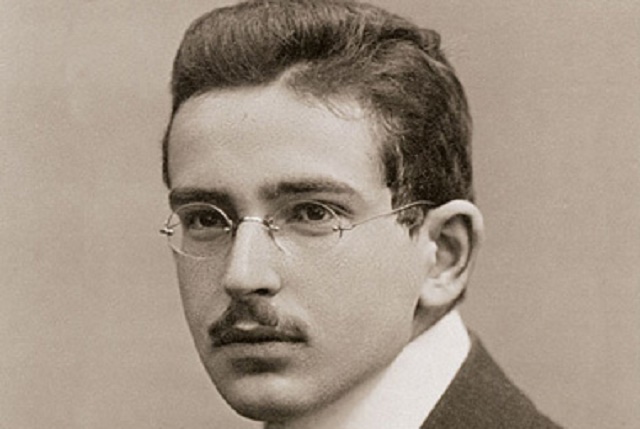
My title alludes to an essay titled “Paris, the Capital of the 19th Century” by Walter Benjamin, a German-Jewish writer well-known to those who have studied literature, history, or the arts in grad school, if not so famous among the masses. Benjamin’s thesis was that Paris, through its up-to-the-minute confluence of architecture, city design, affinity for new modes of artistic reproduction, and rampant indulgence of consumer capitalism, was the “it” city of the nineteenth century. The most modern, the most happening, the most vital, the first home of all things new and exciting.
Today, my local paper ran a story about how even Paris, along with many other cities, strives to capture the spirit of Brooklyn, the New York City borough that currently crackles with artistic and entrepreneurial creative energy. From my perch 50 miles north, I’ve been fortunate enough the last couple of years to make many forays into Brooklyn-land and drink deep of its magical mystical mojo. It’s hard not to get excited about what one discovers or become eager to seek the approval of its brave, bold, tough, and talented residents. Along with almost everything else in every other domain of life that seems worth paying attention to, Brooklyn sets the tone and pace of the contemporary war writing scene, too, with veteran and interested non-veteran authors by the dozens tapping into Brooklyn’s vitality in hopes of infusing their writing with urgency and relevance. Phil Klay, Matt Gallagher, and Roy Scranton, for examples, come immediately to mind as Brooklyn-based war authors who preside over not just the local, but national war lit scene by modeling excellence with their own work and exuding a generous spirit of encouragement to other war writers and readers.
On Veterans Day, I was invited by the war writers collective Words After War to moderate a group reading by up-and-coming war authors at the Old Stone House in Brooklyn. The Old Stone House, an historical site associated with the Revolutionary War Battle of Brooklyn, has for several years co-sponsored a Vets Day reading with an organization called Brooklyn Reading Works. The concept this year was for contemporary war writers to read selections from World War I authors in homage to the 100th anniversary of the beginning of the Great War. I liked the idea immediately—I’ve got plenty to say about the links between contemporary war writing and the WWI war writing tradition of Owen, Sassoon, and Hemingway, and I was eager to see which authors attracted the attention of other contemporary vets.
I’ll save the analysis for another column, however, and will, regrettably, for now shortchange attention to my fellow readers in this post. Below are my remarks and selections, for what they are worth. Thank you Words After War, the Old Stone House, Brooklyn Reading Works, and vet-authors Eric Nelson, Mariette Kalinowski, Lisbeth Prifogle, Jacob Sotak, Vic Zlatanovic, Nate Bethea, and Adrian Bonenberger. Most of the authors named are already in print and online, and all are working on projects that will make us pay even closer attention in the future.
XXX
“I’m honored to be here today to moderate Veterans Day: Writing War Fiction and Memoir as a guest of The Old Stone House, Brooklyn Reading Works, and Words after War. Tonight marks at least the third, or maybe even more, year in a row that Veterans Day has been commemorated with a literary event in this historic location. The format for this year’s event was conceived by Words After War executive director Brandon Willitts, who noted that 2014 was the 100th anniversary of the beginning of World War I, a war notable for the quality of the literature produced by those who fought it. Brandon’s idea was to have veterans of our contemporary post-9/11 wars who are active authors of fiction, poetry, memoir, essay, and nonfiction pay homage to the warrior-authors of the Great War, and in so doing render tribute to all those who have served our nation in its armed forces.
“I want to consider the particularly Brooklyn aspects of our endeavor here tonight. Brooklyn today is known for its hospitality to creative individuals—authors, artists, and musicians. But we might also remember its even stronger tradition of sending its sons and now its daughters to defend the nation and fight its wars. I couldn’t find exact numbers of Brooklynites who fought in World War I, but surely they were substantial, as New York state provided by far the greatest number of soldiers to the overseas army that fought in Europe. You can search online the names of those New York residents who died in World War I, and it shouldn’t surprise anyone that the first name, Boatswain Mate First Class Aksel Aanensen, and darn near the last, Private First Class Samuel Zuckerman, were from Brooklyn. We can also learn that a woman from Brooklyn, Daisy Kirkterp, a nurse, is memorialized for giving her life during World War I.
“Veterans Day is not Memorial Day, but those who gave their life in combat are a special subset of those whom we honor on Veterans Day, so let’s render tribute to Brooklyn residents who have died in Iraq and Afghanistan, such as Captain John McKenna, USMC (Iraq, 2007), and Army Specialist Deon Taylor (Afghanistan, 2008). We want above all to be sure that those who die in combat do not die in vain, and the families of Captain McKenna and Specialist Taylor should take great comfort in, among other things, their beloved lost ones are remembered in the proud, tough, caring community from which they came.”
XXX
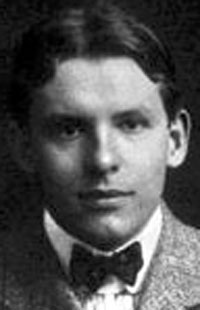
“Wallace Stevens is not usually thought of as a World War I poet, but the great American modernist appeared in print as early as 1914 with a poem, called “Phases,” that directly engaged the war. Shortly after the war ended, he wrote “Lettres d’un Soldat,” a passage from which I will now read. It is like no other Wallace Stevens poem or no other war poem that I’ve ever read, which makes it very cool indeed.”
John Smith and his son John Smith,
And his son’s son John, and-a-one
And-a-two and-a-threeAnd-a-rum-tum-tum, and-a
Lean John, and son, lean John,
And his lean son’s John, and-a-one
And-a-two and-a-threeAnd-a-drum-rum-rum, and-a
Rich John, and son, rich John,
And his rich son’s John, and-a-one
And-a-two and-a-threeAnd-a-pom-pom-pom, and-a
Wise John, and son, wise John,
And his wise son’s John, and-a-one
And-a-two and-a-threeAnd-a-fee and-a-fee and-a-fee
And-a-fee-fo-fum—Voila la vie, la vie, la vie
And-a-rummy-tummy-tum
And-a-rummy-tummy-tum.
XXX

“I will close by reading a poem by a poet who was not a Brooklynite, but who fought and died in the Fighting 69th Infantry, a legendary New York City unit. Sergeant Joyce Kilmer, the author of the famous poem “Trees,” and the namesake for Brooklyn’s Joyce Kilmer Square, wrote “Rouge Bouquet” just before his death in France in 1918. The poem, which is about the deaths of his fellow soldiers by artillery barrage in a French forest named Rouge Bouquet, is very much of its time not just in regard to its depictions of the horror of war, but in regard to its notions of duty, courage, and honor. We have more complicated notions about these values than did those who fought World War I, in part because of the test-by-fire the values were subjected to in the Great War. But let’s end with a poem that unabashedly renders the old virtues in the old ways, because the sentiments, despite how many times the world has turned since, can still stir us today.”
In a wood they call the Rouge Bouquet
There is a new-made grave to-day,
Built by never a spade nor picK
Yet covered with earth ten meters thick.
There lie many fighting men,
Dead in their youthful prime,
Never to laugh nor love again
Nor taste the Summertime.For Death came flying through the air
And stopped his flight at the dugout stair,
Touched his prey and left them there,
Clay to clay.
He hid their bodies stealthily
In the soil of the land they fought to free
And fled away.Now over the grave abrupt and clear
Three volleys ring;
And perhaps their brave young spirits hear
The bugle sing:
‘Go to sleep!
Go to sleep!’
Slumber well where the shell screamed and fell.
Let your rifles rest on the muddy floor,
You will not need them any more.
Danger’s past;
Now at last,
‘Go to sleep!’There is on earth no worthier grave
To hold the bodies of the brave
Than this place of pain and pride
Where they nobly fought and nobly died.
Never fear but in the skies
Saints and angels stand
Smiling with their holy eyes
On this new-come band….And up to Heaven’s doorway floats,
From the wood called Rouge Bouquet
A delicate cloud of bugle notes
That softly say:
‘Farewell!
Farewell!’
Comrades true, born anew, peace to you!
Your souls shall be where the heroes are
And your memory shine like the morning-star.
Brave and dear,
Shield us here.
‘Farewell!’

Thanks to Melissa Parrish, Iraq US Army vet, for turning me on to Wallace Stevens’ “Lettres d’un Soldat,” and in particular the great “John Smith and son John Smith” passage.
 Time Now: The Wars in Iraq and Afghanistan in Art, Film, and Literature