 Several good books about the contemporary wars have been written by graduates of an ingenious program that opens up United States Marine Corps Officer Candidate School to rising college seniors, with no obligation for candidates to serve even after they graduate from college. Most do, though, and so the open-armed, non-binding invitation has reaped the Marines a bounty of smart, literary-minded young men from elite colleges who desire a healthy helping of “Semper-Fi Do-or-Die” before getting on with their lives. Among the books written by such men are the memoirs Dust to Dust by Vassar grad Benjamin Busch, Joker One by Princeton grad Donovan Campbell, and One Bullet Away by Dartmouth grad Nathaniel Fink. Coming soon is Redeployment, a collection of short stories by Phil Klay, another Dartmouth grad.
Speaking as a UC-Berkeley grad who went to Army OCS to become an infantry officer, I can kind of relate.
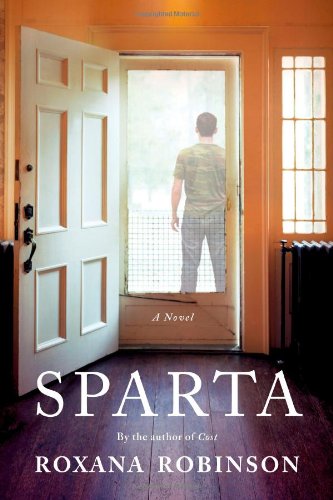
Also taking note of this phenomenon is Sparta, a novel by civilian author Roxana Robinson. Her protagonist is Conrad Farrell, a Williams College graduate from a comfy Westchester County, New York, far-suburban home, the kind whose dirt-road remoteness signals privilege, not poverty. Conrad’s decision to attend Marine OCS shocks and dismays his family and girlfriend. Now back from two savage tours in Iraq and out of the service, he begins a slow but steady deterioration from the ravages of post-traumatic stress.
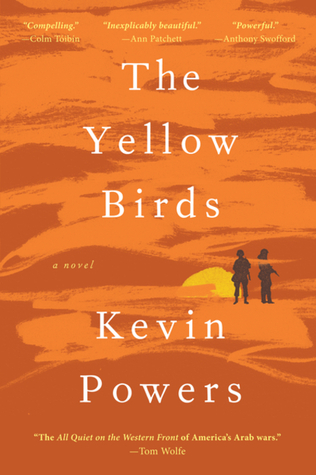
It’s not a pretty tale, and it’s not told in a pretty, artful way. Sparta is sort of an anti-The Yellow Birds. It relates a similar tale of downward decline, but with none of The Yellow Birds’ lyrical flights (no pun intended) or near as much plot. Episodes unfold schematically: first, impulsive and reckless anger, then apathy and lack of focus, then withdrawal and denial, next headaches and insomnia. Flashbacks and erectile dysfunction. A futile stab at counseling. Alcohol abuse and self-medication. Suicidal thoughts, then suicidal gestures. When Conrad hears a loud bang, you know he’s going to duck. When a car veers too close while he’s driving, you know he’s going to panic. Conrad’s behavior is so out of kilter that it is hard to believe his girlfriend stays with him for a minute, let alone a year. It’s difficult to imagine him as an effective officer, or a cheerful, intelligent guy before he joined. The story is told almost entirely through Conrad’s eyes, but there’s so much we don’t understand. We’re left wondering, for example, why he got out of the Marines, since he has no plan for the future and misses his men so much. Why not get a job to keep busy? Date or chase girls? His depression socks in before he even knows he’s depressed, which might be the nature of such things, but his aimlessness makes him seem more like a goofy man-child than a focused adult. And because we aren’t allowed to eavesdrop on the other characters’ conversations and thoughts, we lose not just their perspectives on Conrad, but a fuller rendering of the angst those close to him must have suffered while hoping that he would once more be OK.
For all that Sparta’s darn near impossible to put down. Because Robinson doesn’t waste a word describing Conrad’s quick step toward self-destruction, Sparta reads very quickly. The prose style is very direct—I can’t imagine a novel that begins as many sentences with “He,” as in the following passage describing Conrad in the process of bolo-ing the GMAT:
He was screwing it up. It was getting worse. He couldn’t pound the little things into any kind of sense. It was getting worse, and the worse he felt, the worse he did. He was in a long panicked slide backward. He could feel himself his going and couldn’t stop himself.
Conrad’s upper-crust stiffness combined with the USMC suck-it-up ethos leaves him not strong but emotionally brittle, and Robinson describes this toxic psychic predicament shrewdly in short, sharp strokes. The most extended descriptions of anything are of the habits and habitats of Conrad’s liberal East Coast native milieu. The references to GMATs, Volvos, maids, and commuter trains remind us that Robinson is not telling a general story about all damaged veterans, but a particular one about a member of a class whose disdain for the war and the military seems based as much on taste and lifestyle as politics. Conrad’s parents care about him, but they take little pride for his service, understandable given his downward spiral, but they also seem to lack the warmth, curiosity, empathy, or other means, to include vocabulary and courage, to connect with him. They are good people in their way, but they are at a loss, and their scorn for soldiering contributes to Conrad’s funk and may even be the cause of it. It’s hard not to think that one thing that really eats at Conrad—in addition to everything else–is his inability to admit that his decision to join the Marines was an act of class betrayal, a big huge self-inflicted mistake, that his parents were right, and that he had every reason to know better.
Roxana Robinson, Sparta. Picador, 2014.









 Time Now: The Wars in Iraq and Afghanistan in Art, Film, and Literature