Little Magazines 2: Ep;phany

Epiphany

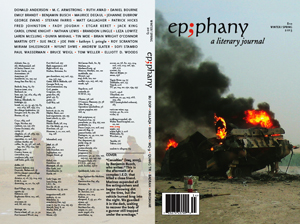
The winter/spring 2013 edition of Ep;phany: A Literary Journal is guest edited by poet Brian Turner. Not fooling around, Turner has solicited and selected quality work from a who’s who of contemporary war literature.  A roll call of contributors begins with Benjamin Busch, Roy Scranton, Bruce Weigl, Donald Anderson, Matt Gallagher, Jehanne Dubrow, and Paul Wasserman.  Turner’s also reached out internationally to include Israeli poet Etgar Karet, Myanmar poet Tin Moe, Irish author Fred Johnston, and others.

Everything I’ve read so far is wonderful, but here I’ll just offer a few initial impressions.  A poem by Army veteran Martin Ott called “Blanket Party” caught my eye with its reference to Fort Leonard Wood, Missouri, where Ott, as I did, underwent basic training:

      In Fort Leonard Wood, our rooms were windowless
      the days began in the dark for pushups on fields of rock.
      We were calorie-starved with only minutes to shovel
      chow, and set against other squads by barking sergeants..

Brian Wright O’Connor’s “Appointment at Bu Dop” explores his father’s service in Vietnam as the commander of an infantry battalion.  The essay concerns itself with treatment of enemy dead and body counts, but Lieutenant Colonel Mortimer O’Connor is in the news this week for other reasons:  he has just received a posthumous PhD in English Literature from Penn.  He was weeks away from completing his dissertation in 1968 when he deployed to Vietnam, where he was killed in action.

The cover photo by Benjamin Busch is a stunner.  Called “Casualties,” it was taken in Iraq in 2005.  It portrays the aftermath of an IED attack that killed a close friend; Busch describes the event at length in his memoir  Dust to Dust.   In Ep;phany, Busch writes, “…the vehicle burned long into the night.  We guarded it in the dark, waiting to recover the body of a gunner still trapped under the wreckage.”

Little Magazines 1: O-Dark-Thirty

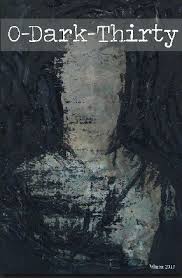
O-Dark-Thirty is a literary journal and website associated with the Veterans Writing Project.  The VWP is a non-profit based in Washington, DC that provides no-cost writing seminars and workshops for veterans, active and reserve service members, and military family members.  Its founder is Ron Capps, an Afghanistan veteran who has published widely.  He’s passionate about bringing as many veteran writers into print and publication as possible.

More power to him.

Volume 1 Number 2, the winter 2013 edition, of O-Dark-Thirty is out now.  It features non-fiction, fiction, poetry, and art by and about veterans from World War II onward.  Of special interest is Capps’ profile of William Zinsser, a U.S. Army sergeant in WWII and the author of On Writing Well, a best-selling and authoritative guide to writing non-fiction.  Zinsser is 84 and still teaching at New York’s New University.  Clearly, he has been inspirational to Capps, and why not?

Forums dedicated to war writing by vets are cool. Forums that bring together veterans of Iraq and Afghanistan with those of earlier wars are cooler still.

O-Dark-Thirty

William Zinsser On Writing Well

Happy Mother’s Day War Literature

Below I’ve reposted a slightly-edited post from my old blog, 15-Month Adventure, that I also published on Time Now last year on Mother’s Day.

To the Moms, the Whole Love

Moms come up quite a bit in writings about the war, I’ve discovered.  Not surprisingly, authors are sensitive to how military service touches those whose children do the fighting.  For example, here’s how Benjamin Busch in Dust to Dust describes his mother’s reaction to the announcement that he has joined the Marine Corps:

“My mother took a deep breath, her hands clamped to the edge of the table as if she were watching an accident happen in the street.  Her father had been a Marine, had gone to war and almost not come back.”

How to describe a mother’s anxiety about her child’s deployment?  Kaboom author Matt Gallagher’s mom, Deborah Scott Gallagher, writes:

“’I will be stalwart,’ I had said to myself on the drive home from the airport the morning I said goodbye to him. “I will be steadfast. I will read and listen to the reputable war reporters, and I will write my senators and congressmen, but I will not lose faith in my country. I will concentrate on sustaining my son rather than myself, and I will not confuse self-pity with legitimate worry and concern over him and his men. I will be proud, justifiably proud, but I will not be vainglorious! And I will never, never, never let him know how frightened I am for him.’

“But, within moments of returning home, I had broken all but one of these promises to myself. I was doing laundry and, as I measured detergent into the washer, the Christmas carol CD I was playing turned to Kate Smith’s magnificent contralto, singing, ‘I Heard the Bells on Christmas Day.’

“‘And in despair, I bowed my head,’ she sang. ‘There is no peace on earth, I said. For hate is strong and mocks the song of peace on earth, good will to men.’

“And, at that moment, for only the third time in my adult life, I began to sob — not cry, not weep — but sob uncontrollably, sitting on the floor of my laundry room, surrounded by sorted piles of bed linens and dirty clothes.”

And if the child comes back wounded?  Siobhan Fallon, author of You Know When the Men Are Gone, describes a trip to Walter Reed to meet injured soldiers and their families:

“And there were mothers. Unlike the military members and their spouses, who somehow all seemed in great and hopeful spirits, the mothers looked stunned. They seemed to be trying to grip their emotions tightly, but their faces hid nothing. Their faces said: ‘Why did this happen to my beautiful boy?’”

And how does a veteran describe his mother, a lover of language and books and authors and ideas, as he watches her fade late in life?  Benjamin Busch again:

“She had been a librarian.  All of the books and conversations about the importance of written words swelling inside her head like a star undergoing gravitational collapse into a black mass, its light still traveling out into space but its fires already burned out.  Nothing left but ash.”  Then he recounts her last words: “‘Oh my baby boy.'”

So much hurt.  So much damage.  So many memories.  So much love.

My mother, Ann Castle Boswell, Athens, Ohio, 1958, Athens, Ohio, the year I was born.
My mother, Ann Castle Boswell, Athens, Ohio, 1958, the year I was born

References:

Benjamin Busch, Dust to Dust:  A Memoir (2012).

Matt Gallagher, Kaboom:  Embracing the Suck in a Dirty Little War (2010)

Deborah Scott Gallagher, In a Hymn, Words of CourageNew York Times, December 23, 2011.

Siobhan Fallon, You Know When the Men Are Gone (2011).

Siobhan Fallon, A Visit to Walter Reed, March 29, 2012.

GI Film Festival: The Making of Fallujah and The Hornet’s Nest

Ongoing in Washington DC this week is the GI Film Festival, an event that since 2007 has showcased films by soldiers, veterans, and civilian-artists interested in war and military-related issues.  As I look over this year’s schedule, two films, The Making of Fallujah and The Hornet’s Nest, catch my eye.

The Making of Fallujah documents the production of an opera about the bloody battle fought in the titular city in 2004 and 2005. In particular, Fallujah the opera portrays the war and post-war experience of a Marine named Christian Ellis, who fought and was wounded in Fallujah, while also incorporating the points-of-view of American family members and Iraqi citizens.  As far as I can tell, Fallujah has never been staged live, but the movie about its making can be viewed online, along with a trailer and assorted behind-the-scene clips, at The Making of Fallujah. The film offers large swaths of what appear to be near-full-dress workshop performances.  The musical snippets are gorgeous and the storyline and backstory compelling.

The Hornet’s Nest is the feature attraction of the GI Film Festival this year.  From the trailer, it’s hard to tell whether the subject is a 101st Airborne operation in eastern Afghanistan or the father-son embedded journalist team (Mike and Carlos Boettchner) who get caught in the thick of the action, but it definitely promises plenty of human drama and up-close-and-personal small unit bang-bang.

GIFF-Transparent-Logo

What Was New and Different About the Wars in Iraq and Afghanistan?

IEDs and suicide bombers
Random rocket and mortar attacks
Year-long unit deployments
Real-time communication with friends and family back home
Social media and blogs
Women in frontline units
Married couples in theater
General Order #1
Fallen Soldier walls
Noncombatants, rules of engagement, nation-building, counterinsurgency, host-nation forces
FOBs and COPs
Body armor, eye protection, night vision devices, improved first-aid kits, laser aiming devices, assault packs, Camelbacks, Army Combat Helmets
Combat application tourniquets
Nasopharyngeal airway tubes
Combat weapon slings
Personal Locator Beacons
Stack formations, room clearance drills
Entry Control Points
Storyboards
BUBs
Battlefield Circulation
Contractors
Up-armored Humvees, MRAPs, Cougars, TCs, gunners, guys in back
National Guard unit deployments
Ranger task forces
Navy and Air Force embedded in ground units
Deserts
Mid-tour leaves
Interpreters
UAVs, drones, Ravens
FLIR imaging systems
mIRC tactical chat
Blue Force Tracker
Signal intelligence and surveillance
Personal computers
Other Government Agencies
High Value Targets
Personal Security Detachments
Key Leader Engagements
Kuwait and Kyrgyzstan
Jersey barriers, HESCOs
Bottled water
Sports and energy drinks
Wilms and Chigo HVAC systems
B-huts
Gators
Concrete bunkers
Gravel

(or only relatively new, but more widespread and with added emphasis and urgency than in past wars)

((on the lookout for representations of any and all of the above in art, film, and literature))

IMG_1063
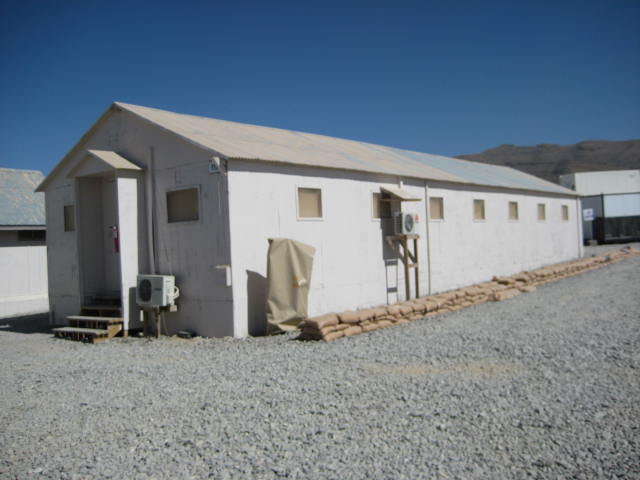
B-hut with Chigos, surrounded by gravel, FOB Lightning, Gardez, Afghanistan
IMG_1064
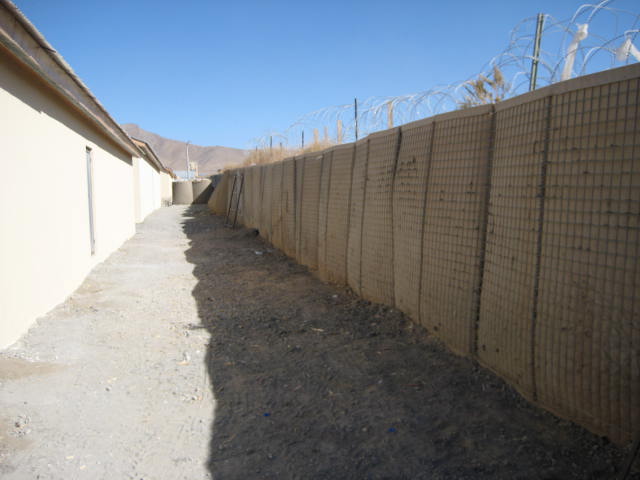
Hesco barriers, FOB Lightning, Gardez, Afghanistan
Wilms HVAC system, FOB Lightning, Gardez, Afghanistan
Bottled water, FOB Lightning, Gardez, Afghanistan.
Bottled water, FOB Lightning, Gardez, Afghanistan
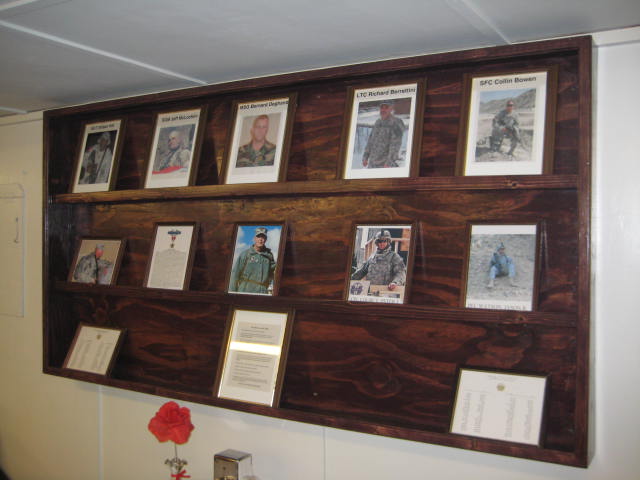
Fallen Heroes Wall, FOB Lightning, Gardez, Afghanistan
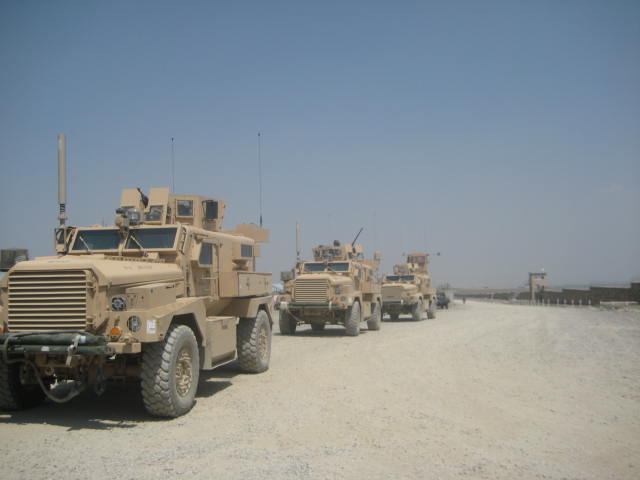
Cougars, Camp Clark, Afghanistan
Cougars, Camp Clark, Khowst, Afghanistan
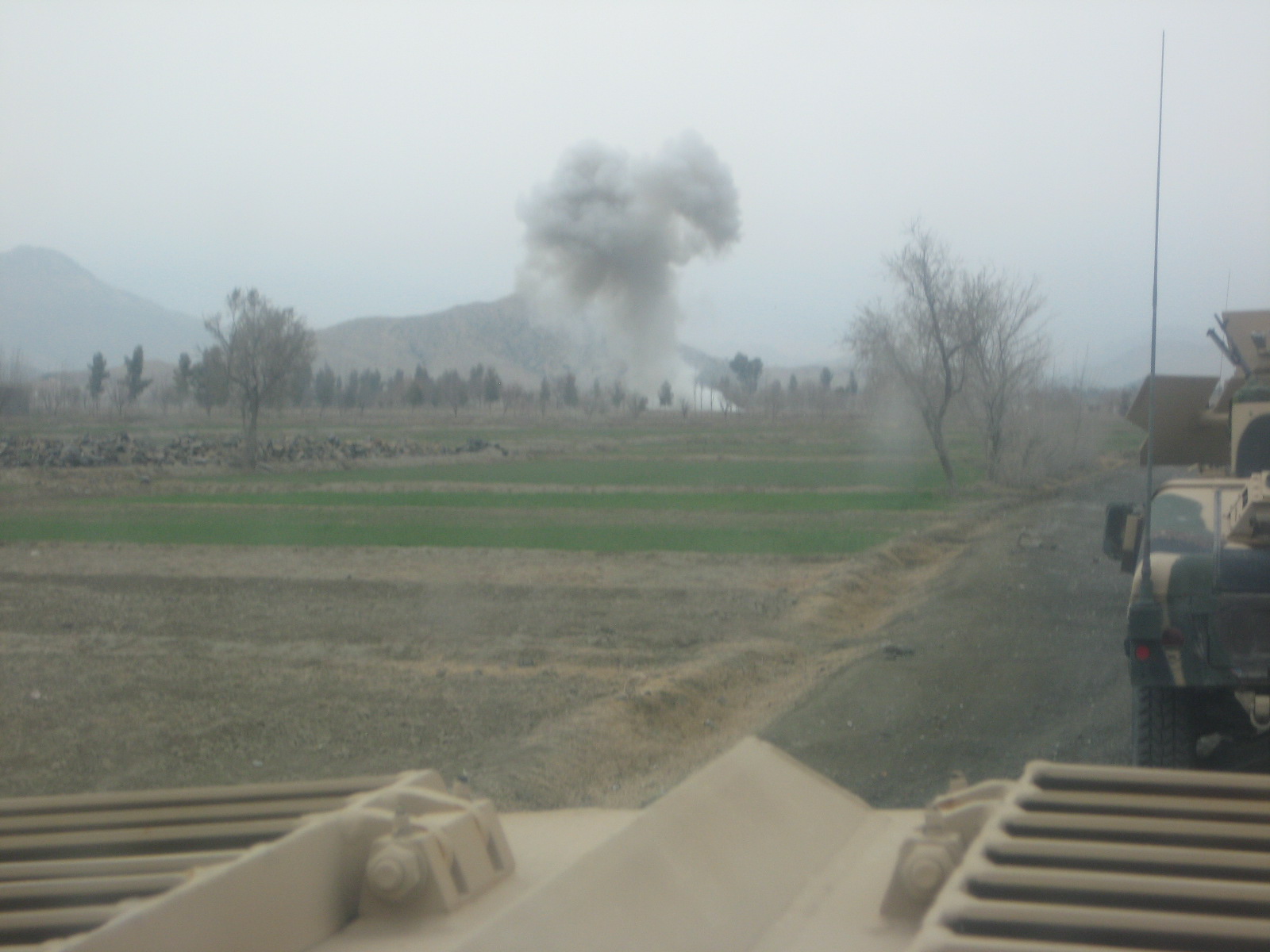
IED, Khowst, Afghanistan

Brian Turner, Benjamin Busch, Siobhan Fallon, and Exit12 @ West Point

IMG_0818

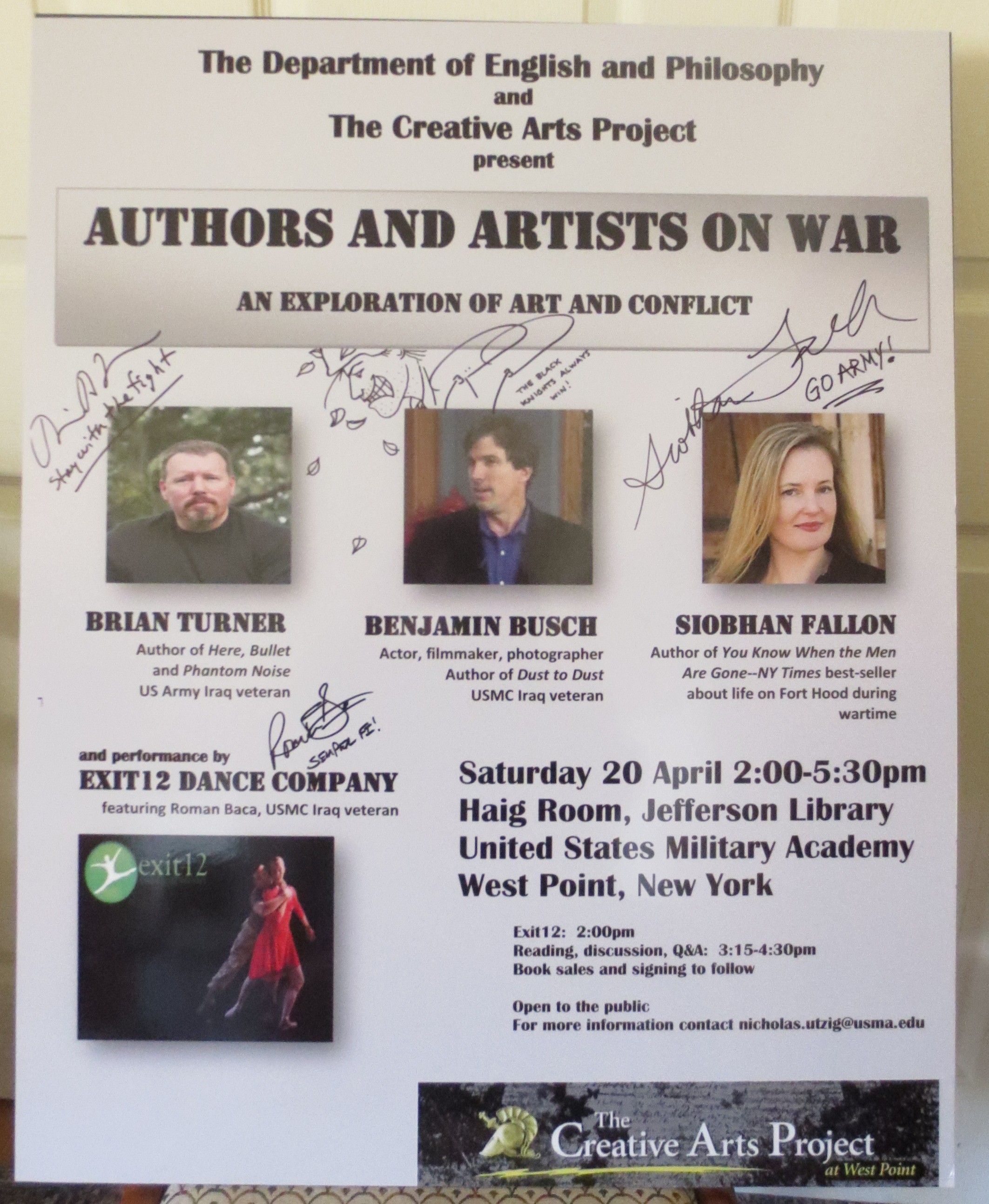
This event brought together three great authors–Brian Turner,  Siobhan Fallon, and Benjamin Busch–to speak about their efforts to portray the turmoil of war.  As each of them had been profoundly affected by the war in Iraq, it seemed fitting a decade and a month after the invasion to ask about their whereabouts in March 2003 and then have them describe when the war became manifest in their art. The remarks subsequently ranged over many subjects, but focused most specifically on the damage enacted on individuals and relationships by deployment and exposure to death and killing.

Asked to read selections from their works that generated strong audience reactions, Turner read “At Lowe’s Home Improvement Center” from Phantom Noise, Fallon read from her story “Leave” from You Know When the Men Are Gone, and Busch read passages from Dust to Dust that described his decision to join the Marines and his first few days of training at Quantico.

Later, each of the authors read passages or poems that had been written pre-2001 that had influenced them then or seemed important now.  Siobhan Fallon read from Tim O’Brien’s “The Things They Carried.”  Benjamin Busch read Joe Haldeman’s Vietnam War poem “DX,” which he had copied into a green military-issue notebook and carried with him in Iraq.  Finally, Brian Turner recited from memory Israeli poet’s Yehuda Amachai’s “The Diameter of the Bomb”—an especially appropriate poem in light of last week’s Boston Marathon bombing:

      The diameter of the bomb was thirty centimeters
      and the diameter of its effective range about seven meters,
      with four dead and eleven wounded.
      And around these, in a larger circle
      of pain and time, two hospitals are scattered
      and one graveyard. But the young woman
      who was buried in the city she came from,
      at a distance of more than a hundred kilometers,
      enlarges the circle considerably,
      and the solitary man mourning her death
      at the distant shores of a country far across the sea
      includes the entire world in the circle.
      And I won’t even mention the crying of orphans
      that reaches up to the throne of God and
      beyond, making a circle with no end and no God..

Amazing.

Exit12 performed two dances:  “Aggressed/This is War” consisted of two solo pieces that together depicted the story of a returned vet struggling to reintegrate into peacetime life.  “Yarjuun,” which means “We hope” in Arabic, was a piece written by Exit12 director Roman Baca in Iraq in collaboration with an Iraqi dance troupe.  Both dances were in turn playful, sad, sexy, and politically-charged, with inspired music, props, and choreography that dramatized the effects of war without being either too obvious or too elusive.

I had a hand in organizing this affair so I definitely want to thank the artists, all those in the audience, and all those helped make it happen.  Wish everyone reading could have been there, too!

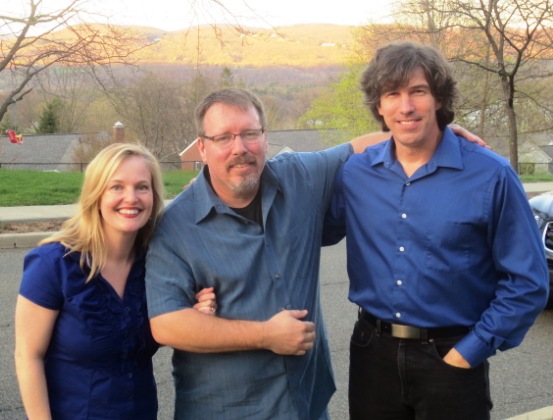
Below left to right:  Siobhan Fallon, Brian Turner, Benjamin Busch:

???????????????????????????????

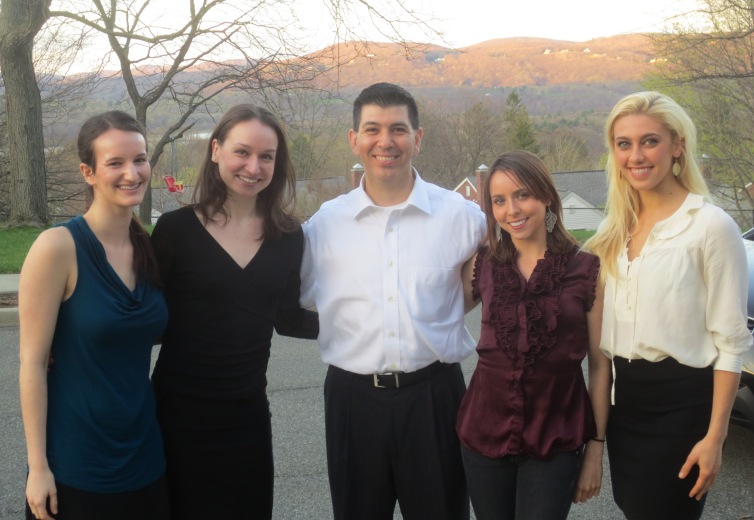
Exit12 below–Adrienne de la Fuente, Joanna Priwieziencew, Roman Baca, Chloe Slade, and Paige Grimard:

???????????????????????????????

Bill Putnam Photographs, Iraq September-November 2005

I’m bringing these pictures back to the top because Bill Putnam has emailed me information about them that is worth sharing.  Earlier I had written that they were from 2007-2008.  As you will read, I was off by several years.  I wrote that they were grim-but-beautiful artifacts from a grim, not-beautiful time.  I wasn’t wrong about that.  Below are Bill’s comments:

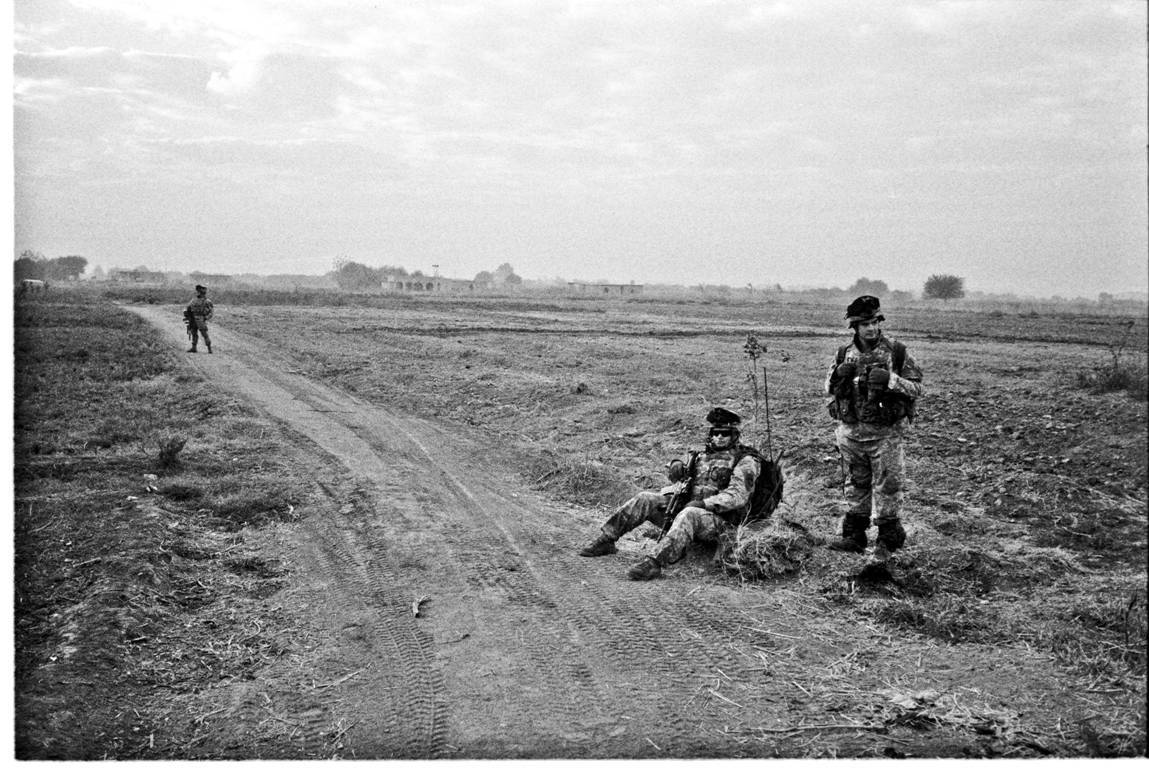
The photos were taken in Iraq during my time there as a freelancer between September and November 2005. The top two were shot during a stay with a Stryker company in eastern Mosul, around the walls of Ninevah. The bottom was made on Bayji Island near Bayji, Iraq.

A bit about each… It’s funny you picked three of my favorites from that time.

Putnam3

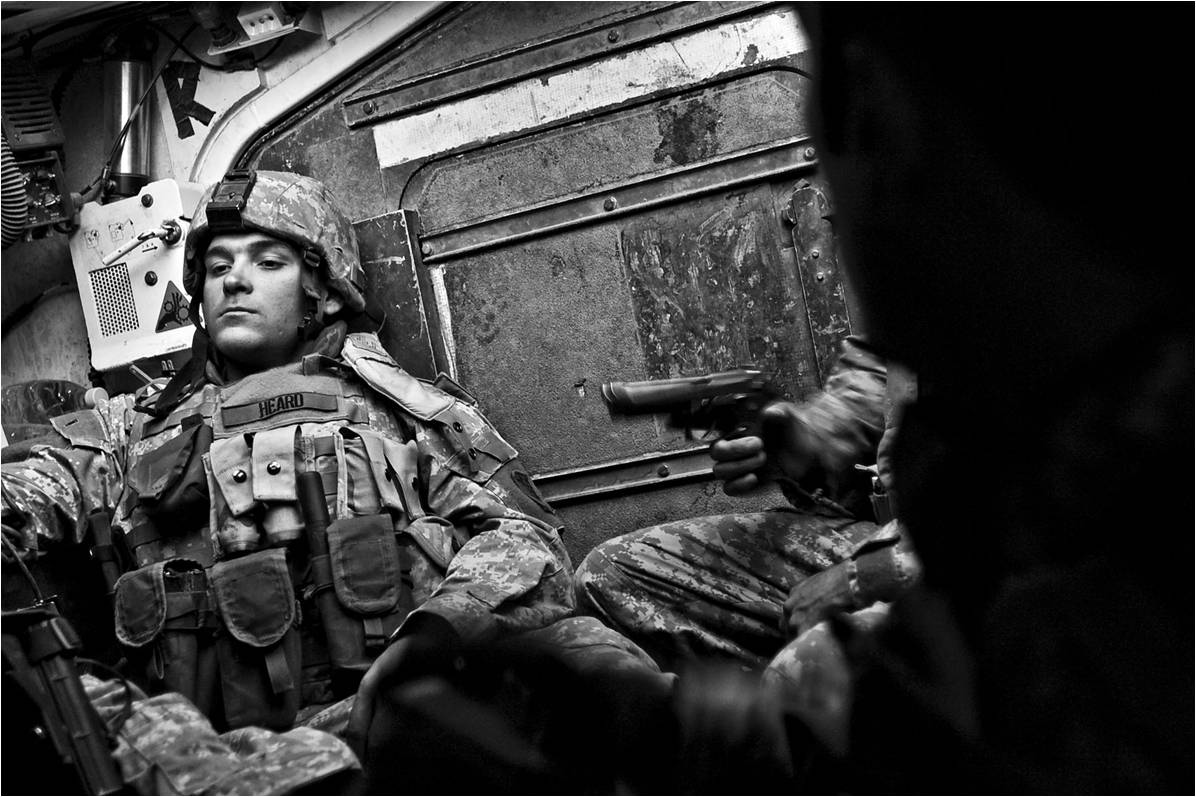
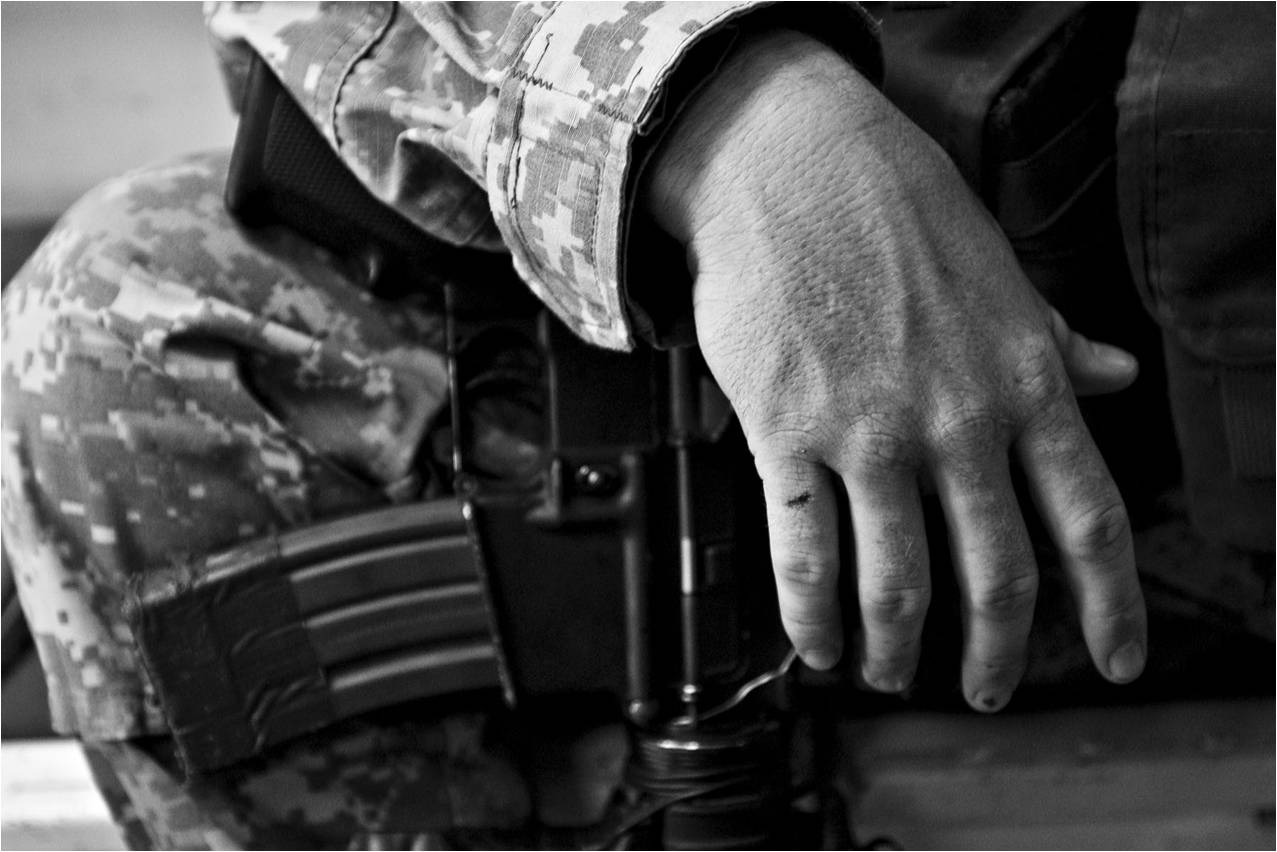
The top one was made fairly early in the morning after an all-night raid. The unit, Centurion Company, 2-1 Infantry, had been sent out with an SF team and bunch of Iraqi Army to hunt down a car bomb builder. They didn’t find him. This was early in the unit’s deployment (they were the guys who were extended in 2006 for three months during an early and not so effective “surge” into northwest Baghdad). To me it says a lot, not really about that war, but just war in general, especially war down at the nasty end of the spear. Hunter, the guy pictured, just looks exhausted. War is exactly that – exhausting in every sense – but this is physical exhaustion. The kid waving the gun (it was unloaded) was actually playing with a newly-installed laser pointer.

Putnam1

The middle photo was made in a Stryker as the company was heading back from a meeting with an Iraqi police colonel in a precinct. I liked the detail of this kid (I’ve forgotten his name, sorry) as we ride back to the FOB.

Putnam4

The bottom photo was made during my first week of a two-month embed with Abu Company, 1-187th Infantry. Unlike the first two which were shot digitally, this was shot with black-and-white film on a Leica rangefinder camera. It was early in the morning of the op’s second day. The two guys on the right are Bill and Michael, the platoon’s RTO and doc. The guy off in the distance is Tim, the platoon sergeant. The whole battalion was out there looking for weapon caches, doing what all grunts do in a counter-insurgency (even if we weren’t calling it that back then). If I remember it was cold that morning. We’d spent that night huddled in an abandoned house. The guys were tired and you can see that in Bill and Mike’s body language.

Thanks, Bill, for your photos and your comments.  We look forward to seeing the best of your current work documenting the transition of military responsibility in Afghanistan from US to Afghan control.

Used by permission.

Bill Putnam website: Bill Putnam Photography

Bill Putnam Twitter feed:  @BillPutnamPhoto

Brian Turner

In previous posts I have discussed three poets — Walter E. Piatt, Paul Wasserman, and Elyse Fenton — who explore how the contemporary wars have wrought alterations of perspective and emotion on those who fight them and those who have been affected by them. Below I offer a few comments on Brian Turner, by far the most well-known and important of contemporary war poets.

The author of two volumes of verse, Here, Bullet (2005) and Phantom Noise (2010), Turner combines an MFA in creative writing from the University of Oregon with seven years of service as an enlisted infantryman, to include a tour in Iraq with the 2nd Infantry Division. As such, he sits astride the domains of both the academic poetry establishment and the hundreds and thousands of veterans who have used verse to articulate their war experiences.  Neither entirely in one camp nor the other, he complicates assumptions and expectations of each by being at once sensational and subtle, raw and refined, accessible and complex.  A good example is the title poem of his first volume:

       "Here, Bullet"

       If a body is what you want,
       then here is bone and gristle and flesh.
       Here is the clavicle-snapped wish,
       the aorta's opened valves, the leap
       thought makes at the synaptic gap.
       Here is the adrenaline rush you crave,
       that inexorable flight, that insane puncture
       into heat and blood. And I dare you to finish
       what you've started. Because here, Bullet,
       here is where I complete the word you bring
       hissing through the air, here is where I moan
       the barrel's cold esophagus, triggering
       my tongue's explosives for the rifling I have
       inside of me, each twist of the round
       spun deeper, because here, Bullet,
       here is where the world ends, every time.

Interesting about the poem is the marriage of modern war imagery and emotion with the classical verse form of the apostrophe (a direct address to a non-human thing), all informed by a poetic smartness about half-rhymes, assonance, alliteration, and other literary effects. Thematically, the poem presents an original take on bravery. The poem is half-taunt and half-cry of pain, the challenge to the onrushing bullet a futile effort to both resist and understand war’s deadliness. The blur of emotions is matched by the interpenetration of the imagery, where the rifle and bullet are given human qualities and the soldier-speaker’s body parts are weaponized, as in “the barrel’s cold esophagus” and “my tongue’s explosives.”

The metaphysical musing of “Here, Bullet” is typical of many Turner’s poems, which only sometimes stop to consider events in which he personally participated. Occasionally though he works in a biographical vein. A great example is “Night in Blue,” from Here, Bullet. Several readers have told me it is their favorite Turner poem:

    
       "Night in Blue"

       At seven thousand feet and looking back, running lights
       blacked out under the wings and America waiting,
       a year of my life disappears at midnight,
       the sky a deep viridian, the houselights below
       small as match heads burned down to embers.

       Has this year made me a better lover?
       Will I understand something of hardship,
       of loss, will a lover sense this
       in my kiss or touch? What do I know
       of redemption or sacrifice, what will I have
       to say of the dead -- that it was worth it,
       that any of it made sense?
       I have no words to speak of war.
       I never dug the graves of Talafar.
       I never held the mother crying in Ramadi.
       I never lifted my friend's body
       when they carried him home.

       I have only the shadows under the leaves
       to take with me, the quiet of the desert,
       the low fog of Balad,
       orange groves with ice forming on the rinds of fruit.
       I have a woman crying in my ear
       late at night when the stars go dim,
       moonlight and sand as a resonance
       of the dust of bones, and nothing more.

When Turner isn’t considering his own emotions or the cosmological significance of war, his dominant mode is empathy for those with whom and against whom he fights. Two examples will suffice, one recording a birth in Iraq and one a death:

    
       "Helping Her Breathe"

       Subtract each sound. Subtract it all.
       Lower the contrailed decibels of fighter jets
       below the threshold of human hearing.
       Lower the skylining helicopters down
       to the subconscious and let them hover
       like spiders over a film of water.

       Silence the rifle reports. The hissing
       bullets wandering like strays
       through the old neighborhoods.
       Let the dogs rest their muzzles
       as the voices on telephone lines
       pause to listen, as bats hanging
       from their roosts pause to listen,
       as all of Baghdad listens.

       Dip the rag in the pail of water
       and let it soak full. It cools exhaustion
       when pressed lightly to her forehead.
       In the slow beads of water sliding
       down the skin of her temples --
       the hush we have been waiting for.

       She is giving birth in the middle of war --
       the soft dome of a skull begins to crown
       into our candlelit mystery. And when
       the infant rises through quickening muscle
       in a guided shudder, slick in the gore
       of birth, vast distances are joined,
       the brain's landscape equal to the stars.
    

       "Eulogy"

       It happens on a Monday, at 11:20 A.M.,
       as tower guards eat sandwiches
       and seagulls drift by on the Tigris River.
       Prisoners tilt their heads to the west
       though burlap sacks and duct tape blind them.
       The sound reverberates down concertina coils
       the way piano wire thrums when given slack.
       And it happens like this, on a blue day of sun,
       when Private Miller pulls the trigger
       to take brass and fire into his mouth:
       the sound lifts the birds up off the water,
       a mongoose pauses under the orange trees,
       and nothing can stop it now, no matter what
       blur of motion surrounds him, no matter what voices
       crackle over the radio in static confusion,
       because if only for this moment the earth is stilled,
       and Private Miller has found what low hush there is
       down in the eucalyptus shade, there by the river.

       PFC B. Miller
       (1980-March 22, 2004)

Turner poems record such facts of modern war experience as IEDs, women in uniform, “enhanced interrogation techniques,” and PTSD, but the characteristic most worth mentioning in conclusion is his deep interest in history. Turner’s not particularly interested in politics and his sense of the war’s ethical dimensions is expressed obliquely. He is, however, ever conscious that the Iraq soil on which he fought had a long, richly-recorded existence before America turned it into a 21st century battleground. This pre-history of Operation Iraqi Freedom wells up in Turner’s poetry in the form of references to ancient texts, images of ghosts, evocations of ancestors, and readiness to consider contemporary events in a temporal context extending deep into the past and into the future.

    
       "To Sand"

       To sand go tracers and ball ammunition.
       To sand the green smoke goes.
       Each finned mortar, spinning in light.
       Each star cluster, bursting above.
       To sand go the skeletons of war, year by year.
       To sand go reticles of the brain,
       the minarets and steeple bells, brackish
       sludge from the open sewers, trashfires,
       the silent cowbirds resting
       on the shoulders of a yak. To sand
       each head of cabbage unravels its leaves
       the way dreams burn in the oilfires of night.

Turner, the first or near-first Iraq veteran to turn his war experience into verse, has established an impressive standard of both poetic craft and thematic depth for the poets who have followed him. I highly encourage everyone to read Here, Bullet and Phantom Noise cover-to-cover to fully experience Turner’s stunningly imagined representation of how the war in Iraq was fought and how it was felt.

This post previously appeared in altered form on Thomas Ricks’ Foreign Policy blog The Best Defense.

Here, Bullet was published in 2005 by Alice James Books.

Here-Bullet

Phantom Noise was published in 2010 by Alice James Books.

Phantom Noise

Permission to quote Brian Turner’s poetry has been granted by Alice James Books:  www.alicejamesbooks.org
The Imagined Wars of the Heart

In an earlier post, I wrote of the similarity of Brian Van Reet’s “Big Two-Hearted Hunting Creek” and Siobhan Fallon’s “The Last Stand.”  In each story a badly wounded Iraq war vet confronts the fact that his wife has chosen to leave him.  In Fallon’s story, the vet and his wife are so tenderly portrayed that the reader is left gasping with sympathy for both of them.  We want them each to somehow be happy again, if not together then in their now separate lives.  In Van Reet’s story, the soldier and his wife are monsters, albeit colorful ones.  They have not been just buffeted and damaged by the war, but ruined by it.

Both stories are great, just in case that needs saying.

As up-to-the-minute as they are, “Big Two-Hearted Hunting Creek” and “The Last Stand” also belong to a tradition of stories about wounded male vets being jilted by wives and girlfriends.  Alice Fahs remind us of that in The Imagined Civil Wars when she describes a Civil War tale called “A Leaf From a Summer” published in Harper’s Weekly in November 1862.  Fahs writes:

“In that story a soldier faced an amputation hopefully because he had a letter from his beloved ‘next to his heart’; afterward, contrary to the surgeon’s expectations, he indeed ‘began to rally.’ But after receiving a letter telling him that his shallow lover had changed her mind and would not ‘marry a cripple,’ the hour quickly came ‘when they lowered him into the earth, and fired their volleys over him.’  As the narrator commented, ‘his enemy had struck him unarmed and unaware.’  As such the popular fiction revealed, the war only intensified a long-standing literary connection between love and war:  numerous stories claimed not only that women’s love was vital to a successful war but that love itself equaled war in its power to kill men.”

Below is a link to a web reprint of the story as it appeared in the 8 November 1862 Harper’s Weekly, for those who can’t get enough of that breathless, clichéd, one-sided 19th-century narration.

A Leaf From A Summer

“A Leaf From A Summer” is laughable, while the strength of Fallon’s and Van Reet’s stories is their ability to convey marital breakup with a sense of perspective, balance, nuance, and realism.  Examined in isolation, however, the pain of a soldier’s heartbreak is real and consequential.  A chapter called “Dear John” from Matt Gallagher’s excellent war memoir Kaboom:  Embracing the Suck in a Savage Little War describes the carnage wrought on the soldiers in his cavalry scout platoon when they were jilted while deployed.

“Dear Johns crushed men of otherwise unquestionable strength and total resoluteness.   In the time they most needed something right and theirs, it was taken away from them.  It wasn’t like getting dumped—it had a far more resounding impact on the soldier.  He became rougher, harsher, crueler…. Truthfully, it usually made him a better soldier, but he lost some vital slivers of his humanity in the process.”

Gallagher also explains that Dear Johns “didn’t just impact the recipient.  They affected the psyches of teams, sections, platoons, and troops, bringing home to everyone the recognition that the same thing could happen to them and forcing them to wonder if it was going to.  Or if it already had and they just didn’t know about it yet.  This mind fuck was the worst part for many.”

Gallagher points out that a soldier’s romantic interest represents his (or her) hope that an ideal or at least better world awaits his return and thus makes the misery of the war endurable and grounds his conduct while deployed.  But he also reminds us that many soldiers are shitty boyfriends or husbands.  Neglectful and needy by turns, they might be outraged and hurt by unfaithfulness even while being unfaithful themselves.  Gallagher doesn’t do much more to explain Dear Johns from a woman’s point of view, but Kit, the protagonist of “The Last Stand” and Sleed, the protagonist of “Big Two-Hearted Hunting Creek,” also present their spouses with many issues even without the problem of their dismemberment and disfigurement.  The implication seems to be that women are attracted by the idea of loving a soldier, but find the reality very difficult to deal with.  Perhaps they also suspect that male soldiers love war and the military more than they do their wives and girlfriends, and thus determine to make their men pay.

Brian Van Reet’s “Big Two-Hearted Hunting Creek” can be found in Fire and Forget:  Short Stories, published by De Capo Press in 2012.

Siobhan Fallon’s “The Last Stand” can be found in You Know When the Men are Gone, published by Amy Einhorn Books-Putnam in 2011.

Matt Gallagher’s Kaboom:  Embracing the Suck in a Savage Little War was published by De Capo Press in 2010.

Alice Fahs’ The Imagined Civil War:  Popular Literature of the North and South 1861-1865 was published in 2001 by the University of North Carolina Press.

Toni Morrison: “Words and War at West Point”

Toni Morrison Speaks at West Point

The link takes you to a New York Times article on Nobel Prize-winning author Toni Morrison’s visit to West Point, where she discussed her latest novel Home with cadets and faculty.  The article makes a great case both for the relevance of Home as a text concerned with the Iraq and Afghanistan wars and for the value of literature in helping future officers understand war.