Will Mackin’s “Kattekoppen”: Surreal War Fiction

Will Mackin’s Kattekoppen

If this link works, it will take you to a story in this week’s New Yorker called “Kattekoppen.”  Written by a vet named Will Mackin, it is told from the point-of-view of a SEAL Team 6 member in Logar Province, Afghanistan.  The subject is the team’s effort to recruit a trustworthy artillery liaison from the battery of regular army artillerymen on their compound.  One of the candidates is of Dutch descent; his mother routinely sends him care packages full of a Dutch licorice called Kattekoppen, which accounts for the story’s title.

Mackin’s story is true to my own fleeting experiences dealing with ODAs, OGAs, Ranger task forces, and other special operators in eastern Afghanistan.  My FOB, Camp Clark, was also home to two 155mm howitzers, so “Kattekoppen”’s portrait of its “cannon-cockers” brings back fond memories, too.  One of the funny aspects of the war in Afghanistan was how ad hoc it all was.  You’d think a SEAL Team 6 would have its own organic highly-trained artillery liaisons, and wouldn’t have to go recruiting among the Joes in whatever unit had recently rotated in.  Mackin’s account of the pick-up team nature of the Afghanistan fight is humorous, but also a little scary to contemplate.

Great sentence, describing artillery rounds arcing out toward their target:  “And, soon enough, I saw iron scratches against the clear blue sky.”  Yes, yes, a hundred times yes.

Realistic touches aside, though, what’s most notable about “Kattekoppen” are its surreal, fantastical, supernaturalistic, and hallucinogenic moments.  Midway through the tale, the first-person narration comes unhinged, as if the narrator had suddenly ingested a psychological stimulant. The veneer of verisimilitude tears and the reader is left to contemplate passages such as the following:

“Outside, covering everything was a pristine layer of snow, which dawn had turned  pink. I started the pink HiLux. I honked the horn and it made a pink noise. Levi  emerged from his pink tent with his pink ruck. I drove him down a pink road to  the pink L.Z. The rotator came in sideways, and its thumping rotors kicked up a  thick pink cloud.”

Shortly after, not just the narration, but the events themselves grow increasingly strange.

Coming hard on the heels of Brian Turner’s “The Wave That Takes Them Under” in Fire and Forget, “Kattekoppen” suggests that war authors are now pushing beyond the literal and verisimilar to tell their stories.   In an earlier post, I made fun of a weird 2008 movie called The Objective, which combined special forces derring-do in Afghanistan with science-fiction and horror elements.  But perhaps The Objective was on to something.  Looking backward, the precursor texts for this magical war realism must be Tim O’Brien’s 1978 novel Going After Cacciato and 1990 short story “How to Tell a True War Story.” Thinking about it all, my working hypothesis is that nitty-gritty detail and “explaining how it really was” are fine in theory and as far as they go, but that’s not quite enough for our most imaginative and anarchic war writers and artists.

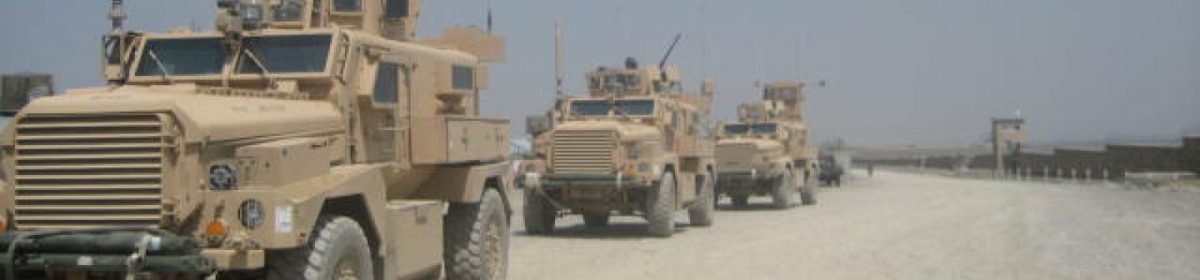
Camp Clark, Khowst Province Afghanistan, 2009.
Camp Clark, Khowst Province, Afghanistan, 2009.

Toni Morrison’s Home: The Africanist Presence in War Literature

2012 may prove to be the annus mirabilis for Iraq and Afghanistan war fiction. A year that saw the publication of Ben Fountain’s Billy Lynn’s Long Halftime Walk, Kevin Powers’ The Yellow Birds, and David Abrams’ Fobbit is not to be sneered at. Many years may go by before we see even one more war novel as good as any of those three.

Also published in 2012 was Home by Pulitzer and Nobel Prize winner Toni Morrison, the author of acclaimed novels such as The Bluest Eye, Song of Solomon, and Beloved. Home is an odd one whose inclusion in a discussion of Iraq and Afghanistan war literature is not an easy fit. The story of a traumatized African-American Korean War vet who returns to a racist 1950s United States, it invites the question why this novel now? What is Morrison asking us to think about? The only thing that seems to recommend it as an interjection in the national conversation about the current wars is the date of its publication.

I don’t know exactly what Morrison is up to, but I think the answer lies in a long non-fiction essay she published in 1992 called Playing in the Dark: Whiteness and the Literary Imagination. In Playing in the Dark, Morrison chides literary scholars for not recognizing the “Africanist presence” in American literature and culture. By the “Africanist presence,” Morrison does not mean just black characters in American fiction, such as Jim in Huckleberry Finn. Nor does she indict American authors for not including more black authors or addressing racial issues. Rather, she claims that American letters (and culture, too), start to finish everywhere is informed consciously and unconsciously by the nation’s five-hundred year history of a biracial existence. In Morrison’s view, über-American concepts such as individualism, preoccupation with evil and sin, and anxiety about our nation’s social cohesion owe their distinctiveness and power to white misgivings about the black American presence in the midst of their lived lives and imaginations.

So, according to Playing in the Dark, the Africanist presence is always already everywhere in literature, even in novels where there are no black characters.

Which brings us to Iraq and Afghanistan war literature, which by and large features few African-Americans and presents itself as not particularly concerned with racial matters. Whatever is important to note about the war, it suggests, it certainly is not America’s tortured history of race relations. If anything, we should applaud ourselves that whatever the hell has happened in Iraq and Afghanistan, black-white issues haven’t been the problem.

Morrison wouldn’t have it, I feel. If we think we have written race out of our national narrative of war and its aftermath, she suggests, we should probably think again. Home asks us to think that a whites-only story of Iraq and Afghanistan is much less than the truth, the whole truth, and nothing but the truth.

Fire and Forget III: Mariette Kalinowski’s “The Train”

Mariette Kalinowski’s “The Train” is the first story I know of by a woman vet who experienced combat and which portrays women in combat. If it is in fact the first such tale, then it’s guaranteed that “The Train” will be read for hundreds of years by scholars plumming the war experience of female vets.

So let’s check it out now.

Kalinowski is a USMC vet who according to the blurb in Fire and Forget served as a gunner on convoy operations during two tours in Iraq. “The Train” depicts an unnamed woman-vet haunted by guilt for her failure to save the life of her best friend and mentor, a woman named Kavanagh, when they were attacked by a suicide bomber. Much of the story is set before and after the vet’s deployment, but the scenes set in Iraq burn brightest with the vivid detail and emotional intensity of real-life deployment. I’m sure that Kalinowski in her capacity as a convoy gunner had thousands of opportunities to consider the decision that serves as the crux of “The Train”: the right now, instantaneous mental cycling through the Rules of Engagement to decide whether an approaching car or individual is a friend or foe.

Decide right and shoot, and you’ve saved American lives.  Decide right and don’t shoot and nothing happens, well, nothing has happened.  Decide wrong and shoot, and you’ve killed an innocent civilian. Decide wrong and don’t shoot, and a suicide bomber explodes in your midst.

In “The Train,” the scenario plays out badly at an Entry Control Point (or “ECP”) of a FOB in Iraq. ECPs–the gates that permit entrance and exiting of a base–figure prominently in several Fire and Forget stories, and not surprisingly so. In life and in fiction, they are liminal spaces in the lives of deployed soldiers, the place where familiar and foreign meet, the boundary point between a tense safety inside the base and the dangerous, deadly world outside. Imagined lyrically, Entry Control Point might well have served as a better title than Fire and Forget. It speaks to the guardedness with which vets control access to their inner lives.

(I know, I know, I should have edited my own damn anthology!)

The protagonist vet’s crushing sense of responsibility for Kavanagh’s death is rendered directly: “She should have died with Kavanagh. She shouldn’t be walking across the platform trying to reach the escalator. She shouldn’t be in the city at all. She had tried to forget everything; had tried to sink into drunkenness, into meds, tried to stay awake in fear of the dreams, burrow into some dark place that would give her a break from the memories, from the ECP that would come when she inevitably fell asleep.  The pain of self-abuse still felt better than the guilt.  Guilt drove it all.  Anger that things had gone so wrong.”

Survivor guilt is the theme of Kevin Powers’ The Yellow Birds and Ben Fountain’s Billy Lynn’s Long Halftime Walk. It also figures prominently in Toni Morrison’s Home, about the Korean War, but published last year like Powers’ and Fountain’s novels. Hell, it’s the theme of my own post-deployment trauma, for what that’s worth. So, nothing so new here—unless we begin to parse the particularly feminine aspects that Kalinowski brings to the depiction.  Late in the story, for example, the protagonist sizes up a woman, and the narrator comments, “Cute shoes. She looks at the sandals on the other woman’s feet. Strappy with a faint gold sheen. She could see herself wearing those shoes with a light sundress.” Now there’s a few sentences you won’t find in The Red Badge of Courage or The Naked and the Dead, so welcome, brave new world.

That’s catty of me, but Kalinowski put it out there for us to consider. More substantial is her portrait of the sisterly connection between the protagonist and Kavanagh. Here we have the first vivid description of the female flip side to the oft-described fraternal camaraderie of soldierly bands of brothers. My sense of Kavanagh and the protagonist is that they are much like many of the women with whom I have served. They enjoy each other’s company, and they really enjoy soldiering. That is, they enjoy everyday putting on the uniform and falling into formation. They like packing up their rucksacks and A-bags and moving out with their units. They like the rough love of their sergeants and contemplating the perplexing worldview of their officers. They like doing their jobs, and they like hanging out in the dining facility and talking shit with their peers. They, like Kavanagh and the protagonist, enjoy grabbing 12-packs at the end-of-the-day and drinking the evening away (in the States, not on deployment!). For them, that is as essential an aspect of service as competing for soldier-of-the-month and doing PT every morning. They like bitching a lot but still doing what they are told while “getting over” when they can and yet not earning a reputation as a fuck-up. Male soldiers like all the above, too, but for women it comes with an extra sizzle of newness and difference, and you can see it in their eyes and in their step.  They don’t experience it just as women, but they kind of do, too, sometimes, in some ways.

It’s all good, unless men in their own units ruin it for them, or they begin to sense that it’s all really just a big guy’s game that is no longer worthy of their interest or full effort.  Which does happen in real life, but doesn’t happen in “The Train” and isn’t Kalinowski’s point.

It’s all good, until the war outside the ECP makes it bad, very very bad, irreversibly bad. Which does happen to soldiers male and female and does happen in “The Train” and is Kalinowski’s point exactly.

On Stage-Siobhan Fallon’s You Know When the Men Are Gone

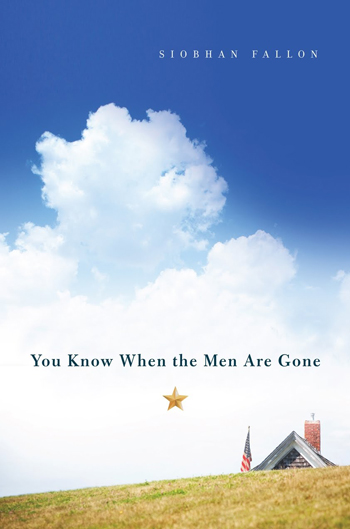
From San Francisco comes news that the Word for Word Performing Arts Company will stage an adaptation of Siobhan Fallon’s You Know When the Men Are Gone that features two of the collection’s short stories, “The Last Stand” and “Gold Star.”  “The Last Stand” is about a badly wounded Fort Hood soldier who, among other things, clambers upon a mechanical bull in a last ditch effort to save his pride, his marriage, and everything else worth living for.  He stays atop the bull for only a few moments and alas the marriage doesn’t last much longer.  It’s my favorite story in YKWTMAG; by the end of it your heart goes out to both the soldier and the woman who doesn’t love him enough anymore to stay married to him.  “Gold Star” is about a young war widow named Josie Schaeffer who still resides at Fort Hood in the weeks after the death of her husband overseas.  Kit Murphy, the wounded soldier whose wife ditches him in “The Last Stand,” reappears in “Gold Star.”  A soldier in Sergeant Schaeffer’s squad, he wants to pay his respects to his former sergeant’s wife–by far, it appears, the most heartfelt thing anyone in the Army has done for her after her husband’s death.  Both stories are about loss, big loss, with the slight sliver of connection between Kit and Josie at the end of “Gold Star” hardly recompense for the pain.

No doubt the shows will render well Fallon’s knack for emotional nuance and ear for dialogue.  I’m curious how they will recreate her superb eye for the physical details of military base life and sensitivity to the ambiance of Army culture.

The shows will run from 31 January to 24 February at the Z Space theater in San Francisco.

Word for Word specializes in stage adaptations of  classical and contemporary fiction.

SF-Picture

Update 23 February 2013:

Two reviews of the Word for Word/Z Space production in San Francisco of Siobhan Fallon’s You Know When the Men Are Gone are available online.  Both lavish praise on the performance.

From the San Francisco Chronicle.

From an online review called Edge.

Fire and Forget II: Brian Van Reet’s “Big Two-Hearted Hunting Creek”

Brian Van Reet’s “Big Two-Hearted Hunting Creek” had me with its opening lines:

A few weeks ago, Sleed and I loaded onto a sleek tour bus.  We filed behind a gaggle of other “wounded warriors” –the term the Army used to refer to us in official memoranda.  I guess it’s what we were, but the phrase was too cute to do our ugliness justice.

The second contemporary story I know of to take the plight of wounded, disabled, and disfigured veterans as its subject—Siobhan Fallon’s “The Last Stand” is the first—“Big Two-Hearted Hunting Creek” recounts its narrator Rooster and his best friend Sleed’s participation in an Army-sponsored fishing trip for long-term Walter Reed patients.  The tale obviously tips its hat to “Big Two-Hearted River” and other stories published in 1925 in Ernest Hemingway’s great return-from-war collection In Our Time.  In “Big Two-Hearted Hunting Creek,” Rooster’s face has been horribly scarred and a hand mangled by a bomb in Iraq.   Now, seething with anger and regret, he contemplates a life “transformed in a flash I could not remember.”  He lashes out against his parents and is prone to fits of rage-induced impulsive behavior, such as biting the head off a rainbow trout he cannot properly fillet.

And Rooster’s the healthy one compared to his friend Sleed, who lost a leg and his private parts in the same blast that injured Rooster.  A charismatic and energetic soldier when whole, Sleed is now “Jake Barnes and Ahab rolled into one,” his self-hatred and grouse against the world amplified by the fact that his wife has left him and is now, according to a detective Sleed has hired, having public sex with her new boyfriend:  “‘Restrooms, parked cars–my man said he got footage of them in the car outside my baby’s daycare.’”

Ouch.

Spoiling for vengeance, Sleed stalks two teenage girls playing hooky from….  Well, I don’t want to give away the plot details more than I have already.  It’s a brutal, ugly tale, but great for all that.  Fully imagined and instantly memorable, Rooster and Sleed owe more to Flannery O’Connor’s grotesque purveyors of evil  in stories such as “A Good Man is Hard to Find” and “Good Country People” than Hemingway’s stoic Jake Barnes, the emasculated hero of The Sun Also Rises.  But lord let’s hope Van Reet really is trying to work the same black comic vein for which O’Connor is famous.  If  his rendering of the despair and self-loathing of badly-wounded soldiers is meant to be literally true and representative, then we’ve all got a lot to answer for.

According to the Contributors notes in Fire and Forget, Van Reet is a University of Virginia (Wahoo-wah!) drop-out who earned a Bronze Star with “V” Device for action in Baghdad.  More power to him in all things.

Brian Van Reet’s Webpage

Fire and Forget: Short Stories

Fire and Forget is a new collection of war-themed short stories written mostly by veterans of the Iraq and Afghanistan wars.  The collection features well-known authors such as Brian Turner, Colby Buzzell, David Abrams, and Siobhan Fallon, as well as group of lesser known veteran authors associated with the New York University Veteran Writers Workshop.  Editors Matt Gallagher (author of the war memoir Kaboom and an Iraq and Afghanistan Veterans of America mainstay) and Roy Scranton (a former artilleryman and now a grad student at Princeton) are both members of the Workshop and have also contributed stories to the collection.

The forward to Fire and Forget is provided by Colum McCann—not a vet, but a prominent Irish-American author who has served as mentor for many of the Fire and Forget authors.  McCann’s interest in the project is much the same as mine in this blog:  the protracted but inevitable emergence of a body of literature by which the wars will accrue their definitive representation and legacy.  He writes:  “The stories of the wars that defined the first decade of the twenty-first century are just beginning to be told.  Television programs, newspaper columns, Internet blogs.  We’ve even had a couple of average Hollywood movies, but we don’t yet have all the stories, the kind of re-interpretive truth-telling that fiction and poetry can offer.”

The phrase “fire and forget” is a militaryism that describes missiles that once launched do not require further guidance from their operators to be accurate.  Such smart missiles hone in on their targets through the use of laser and infrared optic systems or internal radars.  As such, fire and forget missiles have not been weapons especially associated with the IED and dumb bomb-wracked wars in Iraq and Afghanistan, so editors Gallagher and Scranton take time to explain how the phrase serves their purpose in other ways. On one hand, Fire and Forget stories, once launched into the world, might catalyze within public consciousness with the unerring aim of a smart missile, alerting readers to what they have not paid enough attention to in regard to the wars.  On the other hand, the stories represent catharsis for their authors.  Haunted by memories of their war experience, they write, and as they write, they cease to be haunted.

Hopefully.

All of Fire and Forget’s stories deserve focused attention, and I’ll give that to them in future posts if my energy permits.  Here, though, I’ll attempt just a brief survey.  The stories divide into two camps:  those that are set in-theater, and those which situate themselves in the States upon the return home.  An example of the first is Brian Turner’s “The Wave That Takes them Under,” the war poet’s first published fiction as far as I know.  The story of a patrol lost in an Iraq desert sandstorm, the tale dramatizes notions of temporal instability Turner also explores in one of my favorite poems from Here, Bullet, “To Sand.”  Another, Roy Scranton’s “Red Steel India” places its characters in a much more mundane deployment experience, that of fighting off hours of endless boredom on duty at a FOB Entry Control Point, where the only excitement consists of seriously strained interactions with Iraqi soldiers, interpreters, and camp workers.  Whether portraying the fantastical or the banal, the in-theater tales feature grunts’ eye perspectives on deployment, far from the sterile perspectives recounted in more official histories, memoirs, journalism, and government pronouncements.  By such narratives, we begin to feel how the war was experienced by those who in most cases were most vulnerable, without the armor of degrees, age, or rank.

The stories set on the homefront reflect the difficulty so many vets have reestablishing relations with family and loved ones and reintegrating into society.  Several feature plots that reunite soldiers who served together overseas; the nostalgia for the camaraderie of deployment is palpable.  Quite a few feature violent incidents in the lives of their vet protagonists, ranging from a rage-induced killing of a chicken in Matt Gallagher’s “And Bugs Don’t Bleed” to a drunken smash-up of a fast-food franchise in Colby Buzzell’s “Play the Game” to a grotesque act of public indecency in Brian Van Reet’s “Big Two-Hearted Hunting Creek.”  The stories suggest that vets’ most basic problem, stated in the most basic way, is calming the heck down.  Siobhan Fallon—not a vet, but the spouse of one—works in a somewhat quieter, more domestic key.  Her tale “Tips for a Smooth Transition” updates the ages-old saga of Odysseus’s return to Penelope after the Trojan Wars, complete with the misrecognitions, tests of trustworthiness, and bedroom dramatics of Homer’s original.  It portrays an Army officer, home for the third time, whose multiple deployments have turned him into a joke or poor imitation of a husband, not malicious or unfaithful, but Will Ferrell-like in his obliviousness and self-absorption.  And yet, his wife, through whose eyes the story is told, is riven by doubts in her own right to judge, since, as we learn, she herself has been less than circumspect while her husband’s been gone.   Smart in its observed detail, astute in its psychological insight, and even funny at moments in a way the other stories in Fire and Forget generally are not, “Tips for a Smooth Transition” seems to have the fullest sense of the subtle, as opposed to sensational, ways the wars have wreaked havoc on their participants’ happiness and emotional health.

In closing, for now, hat’s off to all the Fire and Forget authors and editors.  I’m sure I’ll be writing more about their stories as I turn them over in my mind in the weeks and months ahead, and I look forward to reading anything the authors publish in the future.

Fire and Forget

The Arts of War

In the spring of 2013 I will teach a class titled “The Arts of War.”  The course will focus on war literature from Iraq and Afghanistan, and the course theme will be the homecoming and aftermath.  Selections from Homer’s Odyssey will get the class started, as will Sophocles’ Philoctetes.  We’ll also look at Hemingway’s In Our Time, particularly “Soldier’s Home,” as well as some other poems, stories, and memoirs from the great tradition of war literature.  Turning to contemporary texts, we will read the following:

Brian Turner:  Here, Bullet and Phantom Noise.

Siobhan Fallon:  You Know When the Men Are Gone.

Benjamin Busch:  Dust to Dust.

Pat Fountain:  Billy Lynn’s Long Halftime Walk.

Kevin Powers:  The Yellow Birds.

Toni Morrison: Home.