Front row: Mary Doyle, Lauren Halloran, Mariette Kalinowski, Kayla Williams. Second row: Roxana Robinson, Andria Williams, Jay Moad, Adam Stone, Vicki Hudson, Olivia Kate Cerrone. Back row: Julian Zabalbeascoa, Jesse Goolsby, Angie Ricketts, David Chrisinger, Adrian Bonenberger, Brian Castner, John Ismay, me. If we had taken the picture just a few minutes earlier, Colin Halloran, Brian Turner, Benjamin Busch, Ron Capps, Matt Gallagher, Justin Hudnall, Sylvia Ankenman Bowersox, and a few other war-writing stalwarts would have been in it, too.
Above and below’s a collection of photographs from this year’s Association of Writers and Writing Programs conference. Apologies for my mug being in so many of them; all credit goes to the writers of fiction, poetry, and memoir whose work is the reason AWP exists.
Ron Capps, me, Kayla Williams, Maurice Decaul, Colby BuzzellJesse Goolsby, Andria Williams, me, Matt GallagherLauren Halloran, Mary Doyle, Jerri Bell, Vicki Hudson, Mariette KalinowskiAdrian Bonenberger, Angie Ricketts, Kayla Williams, Brian CastnerBrian Castner and Phil KlayPhil Metres
We’re all mostly smiley-face here, which is great; nothing wrong with enjoying a little company. Just the meals alone were special: lunch at a taco truck with Colby Buzzell; dinner at a chic French place with Veterans Writing Project honcho Ron Capps, his wife Carole, and VWP fellow-travellers Kayla Williams and Jerri Bell; a quickie cafeteria meal with Matt Gallagher, Benjamin Busch, and Adrian Bonenberger in which Gallagher, Busch, and Bonenberger said at least twelve funny things each; an after-panel snack-and-beer with a group of writers where we were joined by Lauren Halloran’s mom and dad–her mom a veteran of the Gulf War with great stories to tell; and a dinner at the Sherman Oaks home of Susan Derwin, a friend from the academic world, where I met Tom Helscher, who went to the same junior high at the same time as me in Virginia and who now runs a veterans writing program at UC-Santa Barbara.
One of the most salient comments about contemporary war-writing I heard at AWP struck a soberer note, however. I asked Roxana Robinson, an AWP featured speaker, the president of The Authors Guild and author of the excellent war novel Sparta, to what she attributed her interest in contemporary war writing and what she thought its merits. Her response was that war writers who are veterans have a more extensive and authentic relationship with violence–violence in which they may have participated, witnessed, been touched by, or dwelt on. Writers who haven’t fought, deployed, or lived within a profession devoted to war, she continued, have at best a second-hand relationship with wartime violence, and this distance means that they struggle in their attempts to portray it, imagine its possibilities, not just for how it might happen, but for how it reverberates afterwards. I don’t think Robinson was trying to stir the pot about whether civilians can write about war; after all she’s the author of an essay titled “The Right to Write,” in which she persuasively argues that non-veterans can do so. It’s the subjects, war and the military, I heard her saying, that infuse war writing with an urgency centered on contemplation of what it means to harm others while facing injury and death oneself.
I shared the paragraph above with Robinson to make sure I paraphrased her correctly and had permission to do so. In her reply, she graciously wrote:
I very much like your last sentence, which is beautifully phrased, and which reminds me all over again of how much this subject interests me. These are some of the great questions, aren’t they – contemplating your living self as an agent of death. Contemplating the imminence of death to your living self. Not just contemplating but understanding these things in your body.
With at least twelve events featuring authors who have written about deployment to Iraq and Afghanistan, the recent Association of Writers and Writing Program conference offered plenty of opportunity to assess the public face of war writing while also catching up with fellow members of the war writing community. Within an hour of arrival, for example, I was trading stories with Colby Buzzell, whom I had never met before, at a taco food truck near the Los Angeles Convention Center, the site of the conference this year. AWP, as the conference is called, was full of such moments for me, and, I suspect, many others. The panel presentations and readings were excellent, and just as rewarding were the off-stage conversations with old and new friends.
Notions of inclusion and expansion characterized the war-writing panels, as many were specifically designed to showcase authors who were not white male combat veterans writing lugubrious sagas of self. All to the good, and I’m eager now to read authors such as Qais Akbar Omar, a former Afghan interpreter who has written a memoir titled A Fort of Nine Towers; Vicki Hudson, a former MP officer whose creative and non-fiction writing begins to redress the glaring omission of LBGT voices in the war-writing field; and Mary Doyle, a former Army NCO who’s now a prolific author of military-and-deployment accented detective fiction. A panel on memoir featured Kayla Williams, maybe the first female Iraq veteran to write a memoir (she’s now written two), and Angie Ricketts, who has written about the cloistered world of infantry officer wives suffering through their husbands’ multiple deployments. Elsewhere, I was delighted to hear Mariette Kalinowski read fiction that originated in her service as a gunner on Marine convoys in Iraq; Philip Metres read poetry about Abu Ghraib from his volume Sand Opera; and ex-Marine playwright Maurice Decaul speak of his efforts to produce plays written, performed, and staged by veterans.
Phil Metres reads from Sand Opera
The war writing interest in diversity coincided somewhat uneasily with a larger AWP concern this year with matters of race. Touchstones included the furor over the removal of Vanessa Place from the AWP selection committee because of her alleged insensitivity (in the name of fighting racism) about issues important to black Americans, Claudia Rankine’skeynote speech, which targeted the literary world for its implicit racism, and a Ruth Ellen Kocher blog post documenting two demeaning incidents at AWP that reinforced her impression that even among progressive-minded white writers, her black skin signifies second-class citizenship. Everyone who serves in the heavily-integrated military is race-conscious, though most of us like to think that the armed forces are free of, or at least freer of, the racial polarization that currently characterizes much of America. Evidence exists that corroborates this somewhat smug perception, but it is hardly appropriate for white veterans to pronounce definitively that all is well. The same issues surface in the war writing scene, too, with interesting permutations. Neither Mary Doyle nor Maurice Decaul, both black, make race a central concern in their writing about service and war. At her panel, Doyle actively resisted such categorization and explained that if anyone wants to know what really drives her literary bent, they should ask about her lifelong love for Dick Francis, the English author of detective novels set in the upper-crust world of horse-racing. A sweet AWP moment for me was eavesdropping while Doyle and Brian Turner reminisced about a shared deployment to Bosnia, proof that at least sometimes the peculiarly intense experience of service in the Army green machine overwhelms preoccupation with skin color. But it’s not as easy as that, nowhere near the last words on the matter, and I would love to hear Doyle’s and Decaul’s (or anyone’s) most developed thoughts about race and the military, and race and writing about war, should they be inclined to offer them. For what it’s worth, I have written a little more about the subject on this blog in a post titled Toni Morrison’s Home: The Africanist Presence in War Literature.
A second theme emerging out of the alchemy of public and private remarks was a sense that war-writing has matured as a publishing genre, which is to say that it is a much more commercial affair now than previously. Where once war writers were just happy to make it into print, many now are savvy practitioners of the business side of writing, where book deals are made and real money is on the line in the way of advances, foreign sales, next-book contracts, movie options, and ancillary speaking-and-writing gigs. As Jesse Goolsby noted, “The ‘off-page’ stuff can be as important as what’s on the page.” In separate events, Goolsby, Brian Castner, and Kayla Williams each spoke candidly and at-length about publishing—together the three might make a great panel at next year’s AWP titled “The Business of War Writing” (hint, hint). The two themes of diversification and professionalization intersected in frequent discussions about publishers’ receptivity to nontraditional war narratives. From my vantage point, publishing houses seem reasonably open to diverse perspectives, especially when rendered with a smidgeon of literary talent and verve. Things could always be better, of course, but the evidence so far suggests that it is readers, general readers, not the literary-minded ones, who perpetuate the popularity of books by and about young men who have performed bravely in combat, with best-selling titles such as American Sniper and Outlaw Platoon being the proof.
My contribution to AWP this year was to help organize two panels for which I also served as moderator. The first, Iraq Veteran-Writers Ten Years Later: Words After Words After War, featured four writers who all served in Iraq prior to 2005 and subsequently commenced lives largely organized around writing. Two authors, the aforementioned Colby Buzzell and Kayla Williams, were among the first veterans into print after 2003, while two others, Ron Capps and Maurice Decaul, have taken longer to find their writing voices and appreciative audiences. My intent here was to allow these interesting authors to take us back to their deployment days and then help us follow them forward as their thoughts about their service in Iraq coalesced and matured and their lives as writers evolved. Each had insightful ideas and anecdotes to speak of–why aren’t all AWP panels taped and archived? It’s impossible to reduce their common concerns to a sentence, but I sensed that Decaul and Williams are now exploring writing and life possibilities still deeply informed by early experience in Iraq, while Capps and Buzzell are more ready to move on, as if their deployment memories have now (perhaps thankfully) reached a half-life state of dissolve. Whatever these four authors do next, we’ll all be watching—it’s not just that they are “leaders” per se within the war-writing community, though they are, but that they now bring so much hard-earned gravitas to bear on any subject they choose to examine. More simply put, they’ve lived through more of life and life’s writing experiences than most of the rest of us.
Speaking of which–life–participants on the memoir panels spoke often about the problems of “life-writing,” which involves carefully modulating impulses toward self-promotion, self-disclosure, self-deception, self-deprecation, and even self-laceration. It took the panels featuring fiction to illustrate the insidiousness of this dynamic by portraying scenes too touchy to confess to in memoir. The aim of my second panel, New Directions in Contemporary War Literature, was to bring forth authors of novels about the military and war written within the last two years and see what reverberations their readings generated. I couldn’t have been happier with the result, the exact shape of which I didn’t see coming and which truth to tell was somewhat scary, though all the better for that.
Jesse Goolsby, the author of I’d Walk With My Friends If I Could Find Them, went first, choosing a passage from near the end of the novel in which one of the characters, Wintric Ellis, long after the war, sits in his car trying to work up the courage to kill the soldier who sexually assaulted him in Afghanistan. Early in the novel, Wintric participates in a shoot-or-don’t-shoot scenario in Afghanistan when he and his buddies are faced by a suicide bomber; now at the end of the novel it emerges that what has wrecked Wintric’s life was not enemy on the battlefield, but one nominally on his own side, and he must once more decide whether to kill someone or not. It’s a wrenching scene, similar in its way to Siobhan Fallon’s great short story “Leave,” and was beautifully read by Goolsby.
While Wintric deliberates, he fields a call from his wife, who wonders what he is up to. Wintric lies to her about his intentions, and it turns out that he has lied to her about other aspects of his deployment, too, more out of shame than meanness. Such deceit and cowardliness is hard to own up to in memoir, but the very stuff that fiction is good at portraying. Mendacity (to reference Cat on a Hot Tin Roof) also figures in Andria Williams’ The Longest Night, which dramatizes a real-life nuclear catastrophe that took place on an Army base in Idaho during the Cold War, while also offering startling astute portraits of the men who worked on the base and their families. Williams read an early scene foreshadowing the reactor meltdown and another longer one describing the mediocre career and desultory marriage of Master Sergeant Richards, a pompous senior NCO in charge of the reactor. The passage, told from the NCO’s wife’s point-of-view, is simultaneously devastating and funny-as-hell, and Williams’ reading, as did Goolsby’s, captivated the audience. The bigger import, alas, also had much in common with Goolsby’s: a military whose self-image is very badly out of sorts with its reality. Where there should be heroism, there’s folly; where leadership, selfishness; competency, dysfunction; loyalty, deceit; trust, contempt; camaraderie, betrayal; and faithfulness, infidelity.
If anything, the discrepancy between reality and appearance was heightened in the passage that Gallagher read from his novel Youngblood, one line of which went, “We were what we pretended to be.” The scene portrayed Youngblood hero Lieutenant Jack Porter as he makes a “blood money” reparations payment to the family of an Iraqi noncombatant they have killed. Porter finds himself adrift in a moral wasteland that puts him at odds not just with Iraqi values and customs, but also with the expectations of his men and his chain-of-command. Not trusting himself or anyone else, but performing, so to speak, on stage with all eyes on him, Lieutenant Porter must depend upon his wits to decode the swirl of ambiguous clues to determine what he should do and how he should feel. Many literary roads lead back to Melville, and as Gallagher read of Porter’s confusion I was reminded of Benito Cereno’s Amasa Delano, the Yankee ship captain who boards a slave ship on which the slaves have rebelled and taken control. As the slaves force the slave ship captain to pretend he is still in charge, Delano struggles to understand that the appearance of normality that the slaves have constructed for him is a fraud, as his powers of discernment, undermined by arrogance and false assumptions, prove far too weak to help him figure out the complicated situation he finds himself in. Critics have noted many references to the pretend world of theater in Benito Cereno, and much the same occurs in Youngblood, where really-real reality is continuously destabilized by Gallagher’s references to the stories, lies, myths, delusions, pretense, and other means of distortion and manipulation that purport to describe it.
The three readings, taken together, portrayed the complicated and often perverse flux of identity and play of truth inherent to life in uniform, with the authors in superb control of their material. If the message and tone were ominous, perhaps I’m making too much of it. Novels are imagined projections about how things might be, after all, not official pronouncements about the way things are. In any case, though, the story-writing talent on display set a high bar for the next round of novels about military and war. Two audience members, neither veterans, but the authors of many novels between them, told me the reading was the best event they attended at AWP. I was glad to hear that, but not too surprised, because I was pretty sure beforehand that it, like AWP itself, was going to be good.
Many thanks to all who made AWP so enjoyable this year. In addition to everyone named above I’ll mention Lauren and Colin Halloran, Jerri Bell, Benjamin Busch, Adrian Bonenberger, Jay Moad, Brandon Lingle, Carole Florman, Susan Derwin and Steven Venz, Tom Helscher, Justin Hudnall, Sylvia Ankenman Bowersox, Olivia Kate Cerrone, Julian Zabalbeascoa and his wife Kate, Lisa Sanchez, David Chrisinger, Christopher Robinson, Danuta Hinc, Christopher Meeks, all friends, family members, and fellow travelers, everyone I’ve forgotten, and last but not least Roxana Robinson for hanging out with us for a while and then saying such nice things on social media.
The Association of Writers and Writing Program conference—AWP for short–is the year’s largest gathering of literary fiction, non-fiction, memoir, and poetry authors; small and big publishing house managers and editors; MFA program directors and students; and writing acolytes of unaffiliated stripe. This year’s AWP is in Los Angeles this coming Thursday through Saturday, March 31-April 2. Among the several hundred offerings are at least 11 events focused on writing about war or featuring authors of prominent war literature works. I’m fortunate to be part of two of them, and I’m excited about attending as many of the others as I can. Below I’ve listed the events featuring war writing of which I am aware and include links to as many authors’ (war-writers and those on panels with war-writers) webpages as I could find. Let me know if you spot any mistakes, omissions, or changes from the official program.
1. Iraq Veteran-Writers 10 Years Later: Words After Words After War. Peter Molin, Colby Buzzell, Kayla Williams, Maurice DeCaul, Ron Capps. Thursday 1:30pm. Room 408 A, LA Convention Center, Meeting Room Level.
2. The National Book Critics Circle Celebrates Award-Winning AuthorsPhil Klay, Héctor Tobar, and Amy Wilentz. Thursday 3:00pm. Petree Hall, LA Convention Center, Exhibit Hall Level One.
3. Blood and Water: Poets Pouring into Nonfiction. Laura McCullough, Benjamin Busch, Kelle Groom, Michael Klein. Thursday 4:30pm. Room 407, LA Convention Center, Meeting Room Level.
6. Veteran Poetry Reading. Jeb Herrin, Karen Skolfield, Vicki Hudson, Soul Vang. Saturday 9:30am. Room 513, LA Convention Center, Meeting Room Level.
7. Equal Voices: Evolution of the Modern War Memoir. Adrian Bonenberger, Kayla Williams, Brian Castner, Angela Ricketts. Saturday 10:30am. Diamond Salon 6&7, JW Marriott LA, Third Floor.
8. Women Soldiers and Veterans Writing Their Lives. Sonya Lea, Warren Etheredge, Suzanne Morrison, Maggie Shartel, Kelly Dickinson. Saturday 12:00pm. Room 512, LA Convention Center, Meeting Room Level.
9. Helping: A Tribute to Robert Stone. Marlon James, Roxana Robinson, David Ulin. Saturday 12:00pm. Diamond Salon 6 &7, JW Marriott LA.
10. New Directions in Contemporary War Fiction. Peter Molin, Matt Gallagher, Andria Williams, Jesse Goolsby. Saturday 1:30pm. Room 510, LA Convention Center, Meeting Room Level.
11. Inheriting the War Anthology Reading: Poetry and Prose by Descendants of Vietnam Veterans and Refugees.Cathy Linh Che, Philip Metres, Laren McClung, Monica Sok. Saturday 3:00pm. AWP Bookfair Stage, LA Convention Center, Exhibit Hall Level One.
12. Peter Ho Davies, Joyce Carol Oates, and Roxana Robinson: A Reading and Conversation. Sponsored by the Author’s Guild, Ecco, and Kundiman. Saturday 8:30pm. Concourse Hall, LA Convention Center, Exhibit Hall Level One.
Leon Uris’s Battle Cry was a best-seller in 1953.The back cover verbiage offers a fair assessment of what war writing marketeers thought was important in 1953: men and manliness.
“Anxiety of influence” is a phrase associated with literary critic Harold Bloom. It refers to the response of authors to important and beloved precursor authors by writing works that either imitate cherished models or attempt to surpass them. The phrase was on my mind as I composed my spoken comments at our MLA 16 roundtable discussion “Contemporary Literary of the Forever Wars,” which I have excerpted below. Please read them in conjunction with my published remarks about war-writing authored by women at our panel website.
***
“…almost nobody, it seems, remembers Bobbie Ann Mason’s 1985 novel In Country or has seen the 1989 movie based on it. This is curious, because Mason’s novel was critically praised upon publication and reasonably popular (the movie a little bit less so). This is curious because In Country dramatizes issues still very current in today’s body of war fiction: the troubled vet, the problem of homecoming, the difficulty of finding words to convey the experience of war, the vexed dispute over authority and right-to-speak about war, and an already yawning civil-military divide. This is curious, because In Country was authored by a woman and is narrated through the perspective of a young woman named Samantha Hughes, the niece of its troubled Vietnam vet protagonist.
“I don’t know if women or male authors of contemporary war fiction feel the force of Mason’s influence—I haven’t read or heard any of them say so—and I haven’t (yet) done the legwork of tracing the exact lines of connection between Mason and contemporary war writing. I won’t even say much more about Mason here, but rather speculate about the Vietnam War author everybody HAS read and praised: Tim O’Brien, and specifically O’Brien’s short-story ‘How to Tell a True War Story.’ One reason ‘How to Tell a True War Story’ is so popular is because it addresses and dramatizes what have emerged as the driving aesthetic and ethical imperatives of contemporary war writing: its relationship to ‘truth,’ its effort to define what is really important about the experience of war, and its attempt to adjudicate who has the right to decide what is really important about the experience of war.
“Upon rereading ‘How to Tell a True War Story’ recently, however, I came to the conclusion not that the story pronounces definitively on the business of writing about war, but that O’Brien’s narrator—who is quite distinct from O’Brien himself, in my reading–is quite possibly insane, or at least driven to sputtering frustration by his inability to explain exactly how to tell a true war story, or to demonstrate what a true war story really looks like. If I were to read ‘How to Tell a True War Story’ out-loud, I would do so as if it were a nineteenth-century dramatic monologue along the lines of Robert Browning’s ‘My Last Duchess’ or Edgar Allan Poe’s ‘The Cask of Amontillado’—the last thing the narrator is at the end of the story is calm, reasonable, and satisfactorily arrived at an explanation of what a true war story is all about. Its famous last lines, ‘It’s about love and memory. It’s about sorrow. It’s about sisters who never write back and people who never listen’ deserve to be shouted, not patiently explained, with the narrator becoming ever more agitated and inchoate. The surety with which he has begun his tale has evaporated in the face of the difficulty of extrapolating meaning from the anecdotes he relates and the inadequacy of his epigrammatic stabs at profundity. Statements such as ‘A true war story is never moral’ and ‘True war stories do not generalize’ are not home-truths then, but desperate last-ditch hand-holds on the way to radical incoherence.
“And what about the ‘sisters who never write back’—specifically the ‘dumb cooze’ sister of Curt Lemon—and ‘those people who never listen’? By ‘those people,’ the narrator seems to have in mind the woman of ‘kindly temperament and humane politics’ who approaches him after a reading to express her dismay about the poor water buffalo shot by Rat Kiley. The narrator’s over-the-top anger that the woman has missed the point of his story is decidedly part of his problem getting at the truth of war-story-telling. The narrator’s sense of what that project entails clearly includes women, or more properly put, implicates them: ‘It’s always a woman,’ as he states. Specifically, women are representatives and objects of love, desire, beauty, and sex, though never soldiers or people the narrator respects. They inform war writing’s aesthetic, ethical, rhetorical, ontological, epistemological, and every other kind of -ological structure, but the images of women who don’t write back or listen well suggest that the narrator has trouble figuring how they do so meaningfully. In other words, the problem is his, not Curt Lemon’s sister’s or the well-intentioned woman in the audience. The narrator’s frustratingly incomplete conceptualization of war and war writing, bereft of understanding how women have important roles to play or things to say, stands as a signifying dramatization of the male-dominated and male-centric state of war-writing prior to Iraq and Afghanistan. Today’s cohort of women veterans and women war authors, we can thus understand, are in the process of addressing and rectifying that failure of communication….”
****
In future posts, I’ll sketch a few ways I think the presence of women in significant numbers both in uniform and in the ranks of war writers has changed war-writing. I’m also thinking about ways that masculinity has reconfigured itself in modern war fiction, perhaps beneficially and admirably so, but probably more likely in an effort to re-instantiate its privileges on new contemporary terms. I’m glad to hear from anyone else who also has thoughts on the matter.
At the recent Modern Language Association (MLA) conference in Austin, Texas, six of us convened a panel titled “Contemporary Literature of the Forever Wars” to discuss the memoirs, fiction, and poetry of war in Iraq and Afghanistan. Ikram Masmoudi, whose War and Occupation in Iraqi Fiction I recently reviewed, wasn’t able to join us, unfortunately, but Stacey Peebles, Patrick Deer, Roy Scranton, AB Huber, and I reiterated and expanded upon remarks we have posted on our panel website. Our moderator, Aaron DeRosa, offered brief introductory remarks that set the tone for the panel, and, it should be noted that he and Peebles are coediting an upcoming issue of Modern Fiction Studies devoted to Iraq and Afghanistan war literature—the call for papers of which can be found here.
DeRosa had us speak in order of increasingly speculative and conceptual slant, so while Peebles, Deer, and I began by taking mostly backward looks at works already written, Scranton’s and Huber’s concluding comments made provocative challenges to future war writers. Scranton reminded us that war writing, whatever its virtues, owes its existence to war’s victims, a fact depressing enough to contemplate when we’re talking about Americans and even worse when war lit’s triumphs are predicated on the dead bodies of Iraqis and Afghans who neither asked for war nor benefited from it. To make his point, Scranton suggested that Hassan Blasim’s “The Corpse Exhibition,” about an Iraqi virtuoso of artistic war-death, is arguably the most apt war story written to date for how it dramatizes the moral reprehensibility of producing art about killing. In its wake, Scranton warned, less self-conscious war fiction risks naivety and ethical undernourishment.
Huber took the discussion to even more intriguing places. Riffing on the latent implications of “unmanned” in the phrase “unmanned aerial devices,” Huber inquired what it meant for war fiction when its heroes are displaced from the battlefield to drone command centers 1000s of miles away. Speculating that new ways of war, such as drone-fighting, that don’t have men staring death in the face are rendering conventional war fiction, poetry, and memoir obsolete, Huber suggested that modern war has generated new textual forms such as “the leak”: depersonalized, de-narrativized documents stripped of authorial experience and authority and creative origin and which fuzz the borders between official and unofficial. Sporting with one of my own lines, “When the great work about war in Iraq and Afghanistan is written, it will be written by a woman,” Huber suggested that battlefield records placed into public view by Chelsea Manning’s Wikileaks already constituted the exemplary literary artifact of 21st-century war.
Huber’s comments might be considered fanciful by non-academic audiences, but they got the roomful of scholars thinking—exactly the kind of visionary re-imagining of the possibilities of war literature we all hoped the panel would inspire. The body of modern war literature so far produced, centered on the experience of author-combatants, earnestly tries to set the conditions for its understanding. Discerning readers, however, accept neither war writing’s ideas nor its premises as either self-evident or given, and have begun to work it over hard. Once more, I encourage you to read the statements posted on our MLA panel website–they are important first words in the process.
***
Austin was full of pleasures other than MLA, and a real highlight for me was meeting and having lunch with Brian Van Reet, the author of two of my favorite short stories about war in Iraq, “Big Two-Hearted Hunting Creek” and “Eat the Spoil.” Van Reet’s novel Spoils, he is happy to report, will be out in 2017.
Soldier with mine detector, Iraq, 2005, by Bill Putnam. Used with permission.
I’ve updated the list of fiction, poetry, memoir, criticism, photography, and film I compiled last year about this time–new entries are bolded. 2015 was a busy year for contemporary war literature, with at least six novels published and four volumes of poetry. Also notable were new books by Colby Buzzell and Roy Scranton, two veterans who made their names as war writers but who are now expanding their reach to subjects far beyond their experiences as junior enlisted soldiers in Iraq.
Not many Iraq and Afghanistan titles are making year-end “best of” lists in major media venues so far in 2015, I’m sorry to observe. Critics–the “beadles of literature,” as they were called by early American novelist John Neal–apparently are not as impressed by this year’s offerings as they have been in past years by war-writers such as Phil Klay, Ben Fountain, and Kevin Powers. Or, perhaps they’ve decided “Mission Accomplished” in terms of what needs to be said artistically about fighting in Iraq or Afghanistan. Let’s hope that novels by Roy Scranton, Matt Gallagher, and others to be published next year reverse the trend. Movies about Iraq and Afghanistan also seemed scant in 2015—what am I forgetting?—but in 2016 film versions of Billy Lynn’s Long Halftime Walk and The Yellow Birds will be released.
I’ve added a list of major theatrical, dance, and operatic performances that address war in Iraq or Afghanistan.
If you think I’ve missed an important or interesting work, please let me know.
Iraq and Afghanistan War Fiction:
Nadeem Aslam: The Wasted Vigil (2008)
Siobhan Fallon (Army spouse): You Know When the Men Are Gone (2011)
Helen Benedict: Sand Queen (2011)
David Abrams (Army): Fobbit (2012)
Ben Fountain: Billy Lynn’s Long Halftime Walk (2012)
Kevin Powers (Army): The Yellow Birds (2012)
Joydeep Roy-Bhattacharya: The Watch (2012) Sinan Antoon, The Corpse Washer (2013)
Nadeem Aslam: The Blind Man’s Garden (2013)
Lea Carpenter: Eleven Days (2013)
Masha Hamilton: What Changes Everything (2013)
Hilary Plum: They Dragged Them Through the Streets (2013)
Roxana Robinson: Sparta (2013)
J.K. Rowling (aka Robert Galbraith): The Cuckoo’s Calling (2013)
Katey Shultz: Flashes of War (2013) Fire and Forget: Short Stories from the Long War, edited by Roy Scranton (Army) and Matt Gallagher (Army) (2013) Paul Avallone: Tattoo Zoo (2014)
Greg Baxter: The Apartment (2014)
Hassan Blasim, The Corpse Exhibition (2014)
Aaron Gwyn: Wynne’s War (2014)
Kara Hoffman: Be Safe, I Love You (2014)
Atticus Lish (USMC): Preparation for the Next Life (2014)
Phil Klay (USMC): Redeployment (2014)
Michael Pitre (USMC): Fives and Twenty-Fives (2014) Eliot Ackerman (USMC): Green on Blue (2015) Eric Bennett, A Big Enough Lie (2015) Brandon Caro (Navy): Old Silk Road (2015) Jesse Goolsby (USAF): I’d Walk With My Friends If I Could Find Them (2015) Carrie Morgan, The Road Back from Broken (2015) John Renehan (Army): The Valley (2015) Ross Ritchell (Army): The Knife (2015) Christopher Robinson and Gavin Kovite (Army): War of the Encylopaedists (2015) Matt Gallagher, Youngblood (2016) Matthew Hefti, A Hard and Heavy Thing (2016)
Iraq and Afghanistan War Poetry:
Juliana Spahr: This Connection of Everyone with Lungs (2005)
Brian Turner (Army): Here, Bullet (2005)
Walt Piatt (Army), Paktika (2006) Sinan Antoon, The Baghdad Blues (2008)
Jehanne Dubrow (Navy spouse): Stateside (2010)
Elyse Fenton (Army spouse): Clamor (2010)
Brian Turner (Army): Phantom Noise (2010)
Paul Wasserman (USAF): Say Again All (2012)
Colin Halloran (Army): Shortly Thereafter (2012)
Amalie Flynn (Navy spouse): Wife and War (2013)
Kevin Powers (Army): Letter Composed During a Lull in the Fighting (2014) Sylvia Bowersox (Army): Triggers (2015) Randy Brown, aka “Charlie Sherpa” (Army): Welcome to FOB Haiku (2015) Colin Halloran (Army): Icarian Flux (2015) Philip Metres: Sand Opera (2015) Washing the Dust from Our Hearts: Poetry and Prose from the Afghan Women Writing Project (2015)
Iraq and Afghanistan Memoir and Reportage (selected). I’ve greatly reduced this list from last year—I’m only including works that seem supremely artistic, imaginative, conceptual, or literary in their approach. Or, those that seem uniquely alert to new possibilities for publication, such as Colby Buzzell’s and Matt Gallagher’s memoirs, which originated in blogs begun in Iraq.
Colby Buzzell (Army): My War: Killing Time in Iraq (2005)
Sebastian Junger: War (2010)
Matt Gallagher (Army): Kaboom: Embracing the Suck in a Savage Little War (2010)
Benjamin Busch (USMC): Dust to Dust (2012)
Brian Castner (Air Force): The Long Walk: A Story of War and the Life that Follows (2012)
Adrian Bonenburger (Army): Afghan Post: One Soldier’s Correspondence from America’s Forgotten War (2014)
Jennifer Percy: Demon Camp (2014)
Brian Turner (Army): My Life as a Foreign Country (2014) Colby Buzzell (Army): Thank You For Being Expendable (2015) Roy Scranton (Army): Learning to Die in the Anthropocene (2015)
Iraq and Afghanistan War Photography:
Sebastian Junger and Tim Hetherington: Infidel (2010)
Benjamin Busch (USMC): The Art in War (2010)
Michael Kamber: Photojournalists on War: The Untold Stories from Iraq (2013)
Iraq and Afghanistan War Film:
In the Valley of Elah, Paul Haggis, director (2007) Lions for Lambs, Robert Redford, director (2007) The Hurt Locker, Kathryn Bigelow, director (2008) Standard Operating Procedures, Errol Morris, director (2008) Stop-Loss, Kimberly Pierce, director (2008) Generation Kill, David Simon and Ed Burns, executive producers (2008) Brothers, Jim Sheridan, director (2009) Restrepo, Sebastian Junger, director (2009) The Messenger, Oren Moverman, director (2009) Green Zone, Paul Greengrass, director (2010) Return, Liza Johnson, director (2011) Zero-Dark-Thirty, Kathryn Bigelow, director (2012) Lone Survivor, Peter Berg, director (2013) American Sniper, Clint Eastwood, director (2014) Korengal, Sebastian Junger, director (2014) The Last Patrol, Sebastian Junger, director (2014) Fort Bliss, Claudia Myers, director (2014)
Iraq and Afghanistan War Theater, Opera, and Dance
Exit 12 Dance Company, directed by Roman Baca (USMC), New York City (2007) Duty, Honor, Profit: One Man’s Struggle with the War in Iraq, written and directed by D. Richard Tucker/ACT Theater, Seattle (2008) The Telling Project (participatory staged readings), founded by Jonathan Wei (2008) Theater of War (staged reading of Greek drama and interactive cast-and-audience discussion), directed by Brian Doerries (2008) The Great Game: Afghanistan (drama), directed by Nicolas Kent and Indhu Rubasingham, New York City (2009) Bengal Tiger at the Baghdad Zoo (drama), written by Rajiv Joseph, directed by Moises Kaufman, starring Robin Williams, New York City (2011) Home of the Soldier (musical drama), written by Ben Cunis, directed by Paata Tsikurishvili/Synthetic Theater, Arlington, VA (2012) You Know When the Men Are Gone (drama), based on stories by Siobhan Fallon, directed by Joel Mullennix and Amy Kossow/Word for Word Performing Arts Company, San Francisco (2013) Goliath (drama), written by Takeo Rivera, directed by Alex Mallory/Poetic Theater, New York City (2014) Dijla Wal Forat: Between the Tigris and the Euphrates (drama), written by Maurice Decaul (USMC), directed by Alex Mallory/Poetic Theater, New York City (2015) The Lonely Soldier Monologues, based on Helen Benedict’s The Lonely Soldier: The Private War of Women Serving in Iraq, Concept Theater, London (2015) The Long Walk (opera), based on Brian Castner’s memoir of the same name, music by Jeremy Howard Beck, libretto by Stephanie Fleischmann/American Lyric Theater, Saratoga, NY (2015)
Iraq and Afghanistan War Criticism:
Elizabeth Samet: Soldier’s Heart: Reading Literature Through Peace and War at West Point (2007)
Stacey Peebles: Welcome to the Suck: Narrating the American Soldier’s Experience in Iraq (2011)
Elizabeth Samet: No Man’s Land: Preparing for War and Peace in Post-9/11 America (2014) Brian Doerries: The Theater of War: What Ancient Greek Tragedies Can Teach Us Today (2015) Ikram Masmoudi: War and Occupation in Iraqi Fiction (2015)
The lists are subjective and idiosyncratic, neither complete nor authoritative. Still, they might help those interested more clearly and broadly view the fields of contemporary war literature and film. My lists do not reflect hundreds of stories, poems, and photographs published individually in anthologies, magazines, and on the web. Some of my favorite stories, by authors such as Mariette Kalinowski, Maurice Decaul, Will Mackin, and Brian Van Reet, and photographs, such as the one by Bill Putnam published here, thus do not appear. Another deficiency is the lack of works by international authors and filmmakers, particularly Iraqi and Afghan artists. That project awaits completion.
The anatopic presence of antenna on a century-old fortress in Afghanistan.
The raucous digital media sphere spits out opinions in near real-time, but academics—PhD-wielding faculty members at colleges and universities—take longer to make up their minds. When ready, they publish their findings in “scholarly journals” viewed, if their authors are lucky, by a few dozen other professors and graduate students. Shrouded in technical jargon and ponderously paced, academic discourse is off-putting to many. But what academics sacrifice in mass appeal, they hope to regain by influence and by playing for the long-haul. They bargain that their ideas and arguments might wow their peers and their impressionable students and then through them enter the mainstream.
Recently, academics have begun to take the measure of contemporary war literature, and I’ve got some skin in the game.
The Modern Language Association conference is the biggest and most prestigious conference of the year for scholars of English and world literature. At the upcoming “MLA,” in Austin, Texas, in January, I’ll participate in a panel titled “Contemporary Literature of the Forever Wars.” Also on the panel are Roy Scranton and Stacey Peebles, about whom I’ve written often on this blog, and Aaron DeRosa, Patrick Deer, Ikram Masmoudi, and A.B. Huber—all exciting scholars with formidable intellectual energy and talent. A website we’ve created to accompany our panel is up, and Peebles, Scranton, and I have already posted short pieces we hope will jumpstart conversations in advance of MLA. My entry discusses the significant presence of women in the ranks of war-writing authors, Scranton addresses representations of Iraqi and Afghans in contemporary war lit, while Peebles inquires about the shifting depictions of masculinity in modern war stories and memoirs.
I’m also honored to have placed an essay in the latest War, Literature, and the Artsjournal, published by the Department of English & Fine Arts at the United States Air Force Academy. The essay’s titled “’A Phrase Too Cute to Do Our Ugliness Justice’: Portraying ‘Wounded Warriors’ in Contemporary War Fiction.” The title derives from a great Brian Van Reet short story called “Big Two-Hearted Hunting Creek”; my subject is representations of physical disability in contemporary war literature. WLA is not only about Iraq and Afghanistan, but much of it is. The current issue, for example, features writing or interviews featuring Brian Turner, Katey Schultz, Angela Ricketts, Brian Doerries, Jesse Goolsby, Richard Johnson, Brandon Lingle, Brooke King, and many other authors and artists associated with 21st-century war. There are also at least two other scholarly investigations of contemporary war literature: Jennifer Haytock’s “Women’s/War Stories: The Female Gothic and Women’s War Trauma in Helen Benedict’s Sand Queen” and Hilary Lithgow’s “’It’s All Good’”: Forms of Belief and the Limits of Irony in David Finkel’s The Good Soldiers.”
Finally, Brian J. Williams, who teaches at Tennessee Tech, published this summer an article in the scholarly journal American Literature an article titled “The Desert of Anatopism: War in the Age of Globalization.” As if Roy Scranton’s big word “anthropocene” wasn’t enough to make our heads hurt, now Williams asks us to contend with “anatopism,” which means “something that is out of its proper place.” But Williams, like Scranton, is on to something: he examines the presence in war film, television, and literature—mostly the early-on HBO TV series Generation Kill–of objects that you wouldn’t expect to see in a war zone, or in Iraq or Afghanistan generally, specifically consumer or high-tech items of the West. Think, readers who have deployed, of your sense of dislocation when you realized that cell phones and DVDs were a fact of life in nations that otherwise seemed stuck in poverty and pre-modernity. Williams’ point is that such anatopic moments created cognitive dissonance for American soldiers that made it hard to distinguish between war and peace, enemy and noncombatant, and, within themselves, their soldierly and civilian identities. Here’s how Williams describes one such occurence:
This scene, like so many other moments finding their way into the US corpus emerging from the Gulf Wars, highlights the increasing presence of anatopism in contemporary war texts—the presence of items that seem spatially out of place, as foreign to their location as anachronisms are foreign to their times. Such things shouldn’t be found in the desert; these material signs of home are as out of place as the soldiers themselves, according to the cognitive map most soldiers carry into the combat zone.
In this piece, I examine the ways that traces of the home front appearing in the war zone and depictions of the war in US representations (films, texts, videogames) create an environment neither comfortably alien nor recognizably familiar. The modern soldier in Iraq provides a key position from which to chart the ways in which globalization paradoxically makes the foreign more uncanny by making it familiar, an instability reflective of the larger politics of the war on terror as a whole.
I can think of dozens of examples of anatopism from my own experiences and from the war literature that I have read. The omnipresent water bottles and plastic shopping bags, for example, littered around kalat walls and along thousand-year-old goat trails in the Afghanistan mountains. There’s a great instance of anatopism in Elliot Ackerman’s Green on Blue, too, though the observer of the out-of-place item is a Pashtun, not an American. In a compound in a remote dirt-poor village where generators provide the only electric power, Ackerman’s narrator notes, “In the corner an enormous Hitachi television leaned against the ground. I could hear low murmurs of Urdu as programs from Pakistan flashed across its plasma screen.” Another prime example comes in Jesse Goolsby’s I’d Walk With My Friends If I Could Find Them. Three American soldiers on checkpoint duty observe a young woman walking toward them. She’s just a girl, it turns out, but she doesn’t listen to the soldiers’ commands to stop and be searched. Adding to the menace is the threatening incongruity of the soccer ball she carries, which the soldiers fixate on when she finally halts: “For a moment everything stops save the girl, standing still, turning the soccer ball in her hands, her small hands on the ball. They scope her as she turns the ball. Quiet.” Then the girl drops the ball and begins running toward the checkpoint, and the confused and panic-stricken Americans shoot her dead. The anatopic soccer ball has helped unhinge them and cost the young girl her life.
Roy Scranton has consistently staked out positions or operated according to a vision that however murky or shocking at first look proved prescient in time. His editorial oversight (with Matt Gallagher) of the Fire and Forget anthology of short war fiction and his arguments in essays such as “The Trauma Hero” are examples of how he’s typically been a step-or-two in advance of other veteran-authors. The nature of his writing is to make major statements, rooted in the Western intellectual tradition, that assert bold claims, introduce new ideas, clarify implications, and help the rest of us define our own inchoate thoughts. Recently, Scranton has begun to explore other subjects and themes than those associated with war in Iraq and Afghanistan. As other contemporary war veteran-authors mature and move on, Scranton’s model illustrates how they might apply the experience of war and soldiering to new realms of thought, behavior, and circumstance.
I say all this because it’s not exactly clear if Scranton’s latest work, the pamphlet-length essay titled Learning to Die in the Anthropocene: Reflections on the End of a Civilization, can be called war literature at all. The Anthropocene, after all, is a recently-coined word describing the new era of global warming and climate change that threatens the extinction of civilized society and possibly human life on earth. The opening passages of Learning to Die in the Anthropocene, however, proclaim its war-writing bona-fides. Describing the dread he experienced during his deployment to Iraq in 2003 as a junior-enlisted artilleryman, Scranton, a Humvee driver in Baghdad, reports that he rolled out the gate each day expecting to die. The grim resolution infused him not with panic, but a stoic poise animated by vows to do everything possible to help his fellow soldiers survive the perils they would inevitably face. To learn how to die in the Anthropocene, we understand, Scranton first learned how to face death in Iraq. Later, while stationed at Fort Sill, Oklahoma, Scranton and his unit were placed on alert to deploy to New Orleans following Hurricane Katrina. Scranton did not go to Louisiana, but the experience further honed his sense of what it meant to function in the face of catastrophic danger, this time natural rather than man-made.
The distinction between disasters natural and man-made is important, for the salient point of Learning to Die in the Anthropocene is not that we are all doomed to die as a result of global warming. That’s going to happen, Scranton bluntly informs us. If we accept the scientific reports he marshals, the chain-of-events leading from melting ice caps to disease to famine to the annihilation of our species is unstoppable. Eco-activism is a feeble pipedream, and there’s no technological innovation or governmental-military-corporate plan that’s going to save us either, or even any of us. No one’s going to colonize Mars, and we’re not going to cryogenically freeze ourselves and ride out the rising waters in an icebox on top of the Rocky Mountains. Those techno-survivalist examples are mine, not Scranton’s, but they serve the point. To imagine the amalgam of power and money it would take to effect such measures is, according to Scranton’s logic, exactly what we should not be striving to do as we wait for the end of the world. Racing to save ourselves—individually, in groups, or as nations—will tear human society apart long before Mother Nature does her worst, unless we learn faster how to die better:
But while dying may be the easiest thing in the world to do, it’s the hardest thing in the world to do well—we are predisposed to avoid, ignore, flee, and fight it till the very last hour.
So what should we do? Advocating what he calls a “philosophical humanism” based on the teachings of epic and classical literature, Scranton recommends we embrace the knowledge of the ancients, who remind us endlessly to accept the transience of life and all things:
As I learned in Iraq and have had to learn again and again, the practice of learning to die is the practice of learning to let go: Learning to die means learning to let go of the ego, the idea of the self, the future, certainty, attachment, the pursuit of pleasure, permanence, and stability. Learning to let go of salvation. Learning to let go of hope. Learning to let go of death.
Acceptance of our mortality is, according to Scranton, not depressing but liberating. As the passage indicates, Scranton finds in his reading a pragmatic fatalism, blended with communitarian impulses, that matches the determined resolve with which he faced danger in Iraq. There are many flourishes to Scranton’s philosophical humanism, but a lot of it boils down to “Stay calm, treat each other well, remember the wisdom of the ages, do what you can while resigning yourself to the worst.” Looked at squarely, enacting Scranton’s prescription of “letting go” on a mass world-wide scale seems harder to imagine than building everyone a personal rocketship to Mars, but maybe. Though it seems likely we’ll kill each other like starving, disease-ridden hyenas as the human day goes down, we might also stiffen our individual sinews, band together bravely, and figure something out. The historical record, frankly, seems uneven on this point, as does what we know about human nature.
But whether Scranton’s prognostications come true or not, as a distinctive literary performance Learning to Die in the Anthropocene casts a beautiful allure. Scranton modulates skillfully the prose registers that have enabled him to finish a dissertation at Princeton, author feature articles for Rolling Stone and The Nation, and complete a novel with the earthy title of War Porn (to be published in 2016). Learning to Die in the Anthropocene’s sober first half explains how global warning induced by “carbon-fueled capitalism” is going to kill us all, but the second half soars on the strength of Scranton’s mythopoetic and extremely-learned stylistic wings. Referencing cultural touchstones ranging from the Babylonian epic Gilgamesh to the riot grrrl band Sleater-Kinney to heavyweight thinkers such as Ludwig Wittgenstein, Scranton directs us to preserve that cultural heritage in our archives and, more importantly, in our minds as the ideological and inspirational seeds from which a future civilization just might spring from our wreckage:
Wars begin and end. Empires rise and fall. Buildings collapse, books burn, servers break down, cities sink into the sea. Humanity can survive the demise of fossil-fuel civilization and it can survive whatever despotism or barbarism will arise in its ruins. We may even be able to survive in a greenhouse world. Perhaps our descendants will build new cities on the shores of the Arctic Sea, when the rest of the Earth is scorching deserts and steaming jungles. If being human is to mean anything at all in the Anthropocene, if we are going to refuse to let ourselves sink into the futility of life without memory, then we must not lose our few thousand years of hard-won knowledge, accumulated at great cost and against great odds. We must not abandon the memory of the dead.
Scranton’s dreamy word web here resembles a muted variation on the cosmic encouragement to be better-than-we-are that I associate with the minor key essays of Ralph Waldo Emerson–“Circles,” maybe, or “Experience,” certainly not “Self-Reliance”–if only that antebellum intellectual giant knew when he wrote just how bad the Civil War was going to be. Hope flickers in Scranton, but only faintly.
At Scranton’s book-launch reading last month in New York City, audience questions came from both global warming activists and war veterans. The activists pleaded with Scranton to validate their frenetic cries for collective action, which Scranton, though sympathetic, resolutely refused to provide. Scranton also didn’t rise to a veteran’s urging that he riff harder on the implications of his military service in Iraq—specifically, what it was like to be with other soldiers in a Humvee in a warzone—but the vet’s question got me thinking. When I rolled out the gate in Afghanistan, I always brought something to read along with my rifle, body armor, ammo, and first-aid kit. And while prepared for danger, I also had a mission, a plan, and some expectation that things would go reasonably well. I was also in the company of solid, like-minded soldiers bound by ethos and training to support each other to the death. Going forward now to face the end of the world, I’m happy to put Learning to Die in the Anthropocene in my assault pack or cargo pocket—it’s small enough—but I’m bringing a few other things, too, and I’m not going alone. There’s no military solution to the problem of the Anthropocene, and forming human wolfpacks in the style of Mad Max won’t cut it either. But soldierly equanimity combined with small-unit cohesiveness, preparation, and purpose might serve us very well.
Roy Scranton, Learning to Die in the Anthropocene: Reflections on the End of a Civilization. City Lights Books, 2015.
Declassified US Army storyboard published in “The Most Lethal Weapons Americans Found in Iraq,” by John Ismay, October 18, 2013, New York Times.
In the military, there are the things that happen, and there are the ways that the things that happen are accounted for and publicized. The coin-of-the-realm of contemporary military communication is the storyboard, about which little has been written save for a post at my old blog here. The recent catastrophe in Kunduz, Afghanistan, in which a functioning hospital operated by Doctors Without Borders was destroyed by friendly airstrikes has sent the US high command Afghanistan into paroxysms of “trying to get the story right” while doing the utmost in “damage control,” damage defined primarily as harm to the reputation of the command. No doubt dozens of storyboards about the event have already been created and are circulating and competing “at the highest levels” of the military to establish the official response and lasting historical record of whatever-the-hell-happened on the ground (and in the air). They’re all classified, so the general public will never see them, but behind-the-scenes storyboards are serving as the basis for whatever statements about the mess are being released to the media. Here’s to hoping they help current US commander in Afghanistan commander General John Campbell get it right, for I have a high opinion of General Campbell–I knew him slightly as the very competent and sensible brigade operations officer when I was a company commander and fifteen years later he greeted me warmly by name when we ran into each other on a remote Afghanistan FOB.
The following is a story about storyboards I wrote this summer in which I adapted Ovid’s myth of Arachne and Athena to a modern context involving the creation of storyboards in a brigade headquarters in Afghanistan in response to a tactical screw-up. It’s not based on any event in particular, and may or may not have some resemblance to processes currently at work concerning Kunduz.
****
The Brigade Storyboard Artist
Captain Alex Athens had been the undisputed master of PowerPoint storyboards within the brigade headquarters since the unit’s arrival in Afghanistan. No order was disseminated until he had compressed it into a carefully orchestrated one-slide tapestry of photos, maps, graphic symbols, and textual data that prescribed every detail of an upcoming mission from intelligence to logistics to actions-on-the-objective. No mission was complete until he had compiled a perfectly manicured one-page/one-screen garden of text and images representing information, data, assessment, and analysis that thereafter would comprise the enduring record of whatever had happened, no matter what anyone said later on, and each storyboard he created was eminently ready to be submitted up the chain-of-command, if the event or mission recorded was important enough, to “the highest levels” and consequently shape understanding of what was happening on the battlefields and drive policy and strategy decisions. Nominally objective, his storyboards were in reality a representational reality meticulously constructed by Captain Athens’ highly organized, supremely artistic processing of what really realer-than-real soldiers had encountered outside the wire, reported in terse radio reports, scribbled about on notepads, photographed on pocket cameras, and committed to memory as best they possibly could under confusing, stressful circumstances. Though far from the senior officer on the brigade staff, Captain Athens had made himself its most valuable member in the brigade commander’s eyes. No one could tell the story of what was supposed to happen as well as Captain Athens, and no one could better tell the story of what supposedly had happened.
Captain Athens’ success had imbued him with an autocratic, aloof air that made him respected, though more feared than well-liked, among his peers on the brigade staff. In that claustrophobic and deeply unhappy cauldron of furious military endeavor, lots of people grumbled, could be prickly to deal with, and periodically descend into funks, but a spirit of shared servitude, black humor, and forced good cheer generally prevailed, so it was notable that Captain Athens had few friends among the many other staff officers, nor did he seem to bond with the other officers scattered throughout the base. But whether he was liked or not was really beside the point. Since no one worked for him directly, he couldn’t really make anyone miserable personally, so as long as he kept creating storyboards that were better than anyone else’s and were loved by the brigade commander, then that was enough, more than enough, really.
But when Captain Athens went on mid-tour leave, the problem arose of who would replace him as the brigade’s designated storyboard creator. Captain Jones tried, but his storyboards were full of errors and oddly unsynchronized typefaces and needed dozens of revisions before they were ready to be disseminated. Captain Smith’s were OK, but just OK, and he couldn’t complete them in a timely manner, let alone work on two or three simultaneously as could Captain Athens. With Captain Athens gone, both morale and effectiveness within the brigade headquarters plummeted. Without his storyboards suturing gaps between concept and plan and plan and action, uniting the headquarters across all staff sections and up-and-down the chain-of-command, it felt like the brigade was fighting the enemy one-handed. Orders were understood incoherently and execution turned to mush. Storyboards sent higher generated questions and skepticism, or even derision. The brigade commander’s mood turned more horrible than usual and he pilloried his deputy and senior staff members, accusing them of sabotaging the success of his command.
Desperate for help, the brigade ransacked their subordinate units for an officer or staff NCO who might replace Captain Athens. Of course none of the subordinate units wanted to give up their own best storyboard artist, so now they engaged in subterfuges to avoid complying with brigade’s tasking. That’s how Technical Sergeant Arrack’s name got sent up to brigade. In his battalion, he’d been a night shift Tactical Operations Center NCO whose potential as a storyboard artist was unrecognized. An Air Force augmentee to an infantry unit, he had never been outside the wire, much less in combat. Nothing much was expected of him by the infantry bubbas with whom he worked, thus the night shift TOC duty answering routine radio transmissions and compiling the morning weather report. The battalion submitted his name to brigade confident that it would be summarily rejected and they wouldn’t have to replace Sergeant Arrack on the night shift. But Sergeant Arrack’s trial storyboard for brigade had been magnificent. Created to support the brigade’s new plan to engage the local populace on every level of the political-economic-cultural-military spectrum over the next six months, it was a masterful blend of bullet points, text boxes, maps, charts, images, graphics, borders, highlights, and different type faces and fonts, totally first-class in every way and obviously presentable without correction even at “the highest levels.” The brigade operations officer’s heart leaped when he saw it, because he recognized how good it was and was confident that it, and Sergeant Arrack, too, would make the brigade commander very happy.
And so he was, and so for the remaining three weeks of Captain Athens’ leave Sergeant Arrack was the brigade go-to storyboard creator. In twenty-five days he generated thirty-seven unique storyboards in addition to the routine ones that accompanied daily briefings and needed only to be adjusted for recent developments. The entire life of the brigade during that period passed through Sergeant Arrack’s fingertips and into his computer’s keyboard and then to reappear in magically animated form on his workstation screen: raids, key leader meetings, unit rotation plans, IED and suicide bomber attacks, VIP visits, regional assessments, intelligence analyses, and every other operation and event that took place in the brigade’s area of operations was nothing until it was transformed by Sergeant Arrack’s storyboard artistry.
Captain Athens heard-tell of some of this while on leave and didn’t like it. Though overworked as the primary brigade storyboard artist, he liked the status and the attention it brought to him. Truth to tell, he was glad when his leave ended and he made his way back to the brigade headquarters. But his first meeting with Sergeant Arrack did not go well. Sergeant Arrack was seated at his workstation, busy on an important project. Engrossed in what he was doing, he had barely looked up. “Hmmm, good to meet you, sir, I’ve heard a lot about you,” he murmured, and turned his eyes back to his computer screen and began tapping away again at the keyboard. Captain Athens hated him immediately, and he could tell his place within the brigade HQ had now changed. Among other things, people just seemed to like Sergeant Arrack more than they liked Captain Athens, and were eager to work with him, eat with him, and hang out with him, while they approached Captain Athens gingerly. And when the brigade operations officer assigned Captain Athens a new storyboard project, it was obvious that it wasn’t a priority mission, what with the operations officer making a lame excuse about easing Captain Athens back in slowly.
Over the next five weeks, the tension between Captain Athens and Sergeant Arrack bubbled. Captain Athens was now Sergeant Arrack’s superior, and though Captain Athens didn’t do anything totally unprofessional, he didn’t make things easy for his subordinate, either. He assigned him menial tasks such as inspecting guard posts around the FOB walls in the middle of the night and inventorying the headquarters supply vans, all ploys designed to get Sergeant Arrack out of the brigade headquarters while reminding him of his place in things. Rarely did Captain Athens let Sergeant Arrack near a computer and he never complimented him or made small talk of any kind with him. Everyone on the staff saw what was going on, and gossiped about it endlessly, but no one said anything officially, and the atmosphere within the brigade headquarters roiled as a result of the unconfronted animosity. For his part, Sergeant Arrack spoke about the matter only in guarded terms with some of the other staff NCOs. He didn’t want to make trouble, but it wasn’t long before he hated Captain Athens just as much Captain Athens hated him. The brigade commander pretended not to notice anything was wrong, but neither did he tell anyone that he had come to like Sergeant Arrack’s storyboards more than Captain Athens’. The captain’s were good, but Sergeant Arrack’s were better.
The tension between Captain Athens and Sergeant Arrack boiled over when Captain Athens told Sergeant Arrack he was detailing him to the dining facility to conduct headcounts. Sergeant Arrack determined not to take the sleights any longer and complained to the senior Air Force NCO on post who spoke to the brigade command sergeant major who then spoke to the brigade commander. The conversation between the commander and the command sergeant major took place at an auspicious moment, however. The night previously a raid to capture a high value target had gone very wrong. The intended target had not been at the objective and the military age male who had responded to the noise outside the family kalat walls with an AK-47 in his hand and subsequently shot by the Americans had been a nephew of the provincial governor. That’s not to say he couldn’t have been Taliban, too, but there was no proof that he was, and his death would certainly demand explanation. Next, a woman in the kalat, distraught and angry, had charged the American soldiers, and she too had been shot. As the unit had waited for extraction from the already botched mission, the helicopters coming to get them had identified a group of gunmen a klick away from the landing zone. Not taking any chances, the helicopter pilots had opened fire on the shadowy shapes in their night vision goggles, but the gunmen turned out to be a platoon of Afghan army infantrymen on patrol with their American advisor team. Even worse than worse, the advisors had done most things right—they had had their mission plan approved, called in all their checkpoints, and marked themselves and the Afghans appropriately with glint tape and infrared chem lights that should have made them recognizable to the helicopter pilots–but once buried deep in the mountain valleys their comms had gone tits-up and they couldn’t talk to anyone quickly enough to forestall the attack from above. So now the airstrike was a cock-up of the highest order and six Afghan soldiers, along with the two civilians, plus one American soldier, were dead, and higher headquarters was screaming for information and the Afghan provincial governor was outside the door demanding to know what the brigade commander was going to do about it.
If any event was going to be briefed at “the highest levels,” it was this one for sure, and the brigade would need the best damn storyboard anyone had ever created to make sure the right narrative and message were conveyed or the mess would even grow bigger. It wasn’t just that the facts had to be right, the tone had to be perfect, or even more than perfect, if that was possible. The storyboard had to signify that the mishap in the dark night was just an unfortunate blip in a continuum of fantastically positive things that were happening and that everything was under control, that the brigade had this, would get to the bottom of things, learn the appropriate lessons, take the right actions, punish appropriately who needed to be punished, and just generally get on with it without any help from higher and especially without the basic competence of the unit, which meant the reputation of the brigade commander, being put up for discussion.
The brigade command sergeant major, oblivious to the events of the night before, walked into the brigade commander’s office at 0730 to discuss the Sergeant Arrack situation. Normally the brigade commander would have cut him off, but the mention of Sergeant Arrack’s name gave him an idea. He would have both Captain Athens and Sergeant Arrack build storyboards describing the events of the previous night. It would be the ultimate test, he thought, to build the best storyboard possible under the most trying conditions imaginable, and whichever storyboard was best would go a long way to forestalling tidal waves of scrutiny from above. The brigade commander issued directions to the operations officer and the operations officer passed the word to Captain Athens and Sergeant Arrack. Each commandeered a workstation with an array of secure and non-secure laptops spread out in front of them and multiple oversized screens on which to project their designs. They gathered records of radio message traffic and patrol debriefs, both hard-copy and digital, pertinent to the botched mission and opened up all the necessary applications on their computers. Each was told they had full access to anyone they needed to gather information and reconcile conflicting reports, but they had only two hours to complete their work and send their storyboards to the brigade commander, who of course would pick the one to be sent to higher. Captain Athens and Sergeant Arrack fueled themselves with energy drinks, snacks, and dip, and got to work. After two hours of furious endeavor, each pushed save one last time and sent their storyboards forward.
Captain Athens’ storyboard was good, real good. The brigade commander gazed at it on his computer screen and admired its very organized and aesthetically pleasing appearance. In the upper left corner was the required administrative information—unit name, date-time group, security classification, etc. Down the left border was a timeline, in great detail, of all the events that had taken place on the mission. In the upper-half-center was a map that showed the locations of the night’s major events. Each was marked with a succinct, well-turned description of what had occurred in each location. Below the map were four pictures, each dedicated to showing a different aspect of the night’s events. On the right were a series of summarizing statements that prudently listed complicating factors, actions already completed in response to the disaster, and actions planned to be taken in the name of damage control. Everything was done extremely competently, perfectly positioned, not a thing out of place. Borders, background, font and font-size were all to standard. It exuded the professionalism of a unit that had its shit together in every way and as such would undoubtedly forestall questions and offers of unwanted help. The brigade commander was pleasantly surprised; Captain Athens had come through in spades.
Then the brigade commander opened the email attachment sent by Sergeant Arrack. The PowerPoint slide clicked into focus and the brigade commander gasped, for what appeared was not what he expected and could hardly even be said to be a storyboard. Unbeknownst to the brigade commander, Sergeant Arrack had been up all night trying to resolve a problem with his daughter’s childcare plan back home in New Mexico. The situation still wasn’t right when he had gone to chow in the morning. At the dining facility, he sat with a group of soldiers from his old infantry battalion who filled him with stories of how shitty things had gone down on last night’s raid. When Sergeant Arrack arrived at brigade, a scorching email from his ex-wife greeted him accusing him of not fulfilling the requirements of their divorce decree. Then the operations officer gave him the mission to make a storyboard that would cover the brigade’s ass about the fucked-up raid, and do it in so-called “friendly” competition with an officer whose guts he hated, and vice-versa. “Fuckin’ fuck this fuckin’ horseshit,” he had muttered as he settled into his workstation.
Sergeant Arrack’s creation was immediately arresting, no doubt, but it had little obviously to do with the mission the night before. Instead, Sergeant Arrack had created a gruesome montage of horrific war-related images, snippets of military operations orders and Persian script, along with smears of colors, mostly red and black. The most striking image was that of an Afghan man with a knife sunk to the hilt in the side of his head. Somehow the man’s countenance teetered between that of an extremely gaunt but handsome young Afghan and a skullish death-head whose vacant eye-holes bore into the viewer like the gaze of doom. It was as if Sergeant Arrack, an extremely talented artist, had perceived the assignment as a chance to portray the hellishness of war as effectively as possible, without a touch of romantic idealization of its dark side, and had done so in way that manifested both supreme imaginative power and technical skill. The whole thing, beautiful and terrifying at the same time, constituted a huge FU to the Army mission in Afghanistan generally and to a brigade he no longer cared about personally.
The brigade commander expressed mild concern about Sergeant Arrack’s state-of-mind—“Holy shit, Sergeant Arrack has lost it!”—but he was too busy to either take offense or worry much about Sergeant Arrack now. He of course selected Captain Athens’ storyboard as the competition winner and with no changes immediately forwarded it to his boss accompanied by a note explaining that he was in full control of the response to the calamities of the previous night. He then told Captain Athens to look out for Sergeant Arrack but under no circumstances did he want to see him in the brigade headquarters again. Captain Athens didn’t have any problems with the order and even gloated a little that his competitor had cracked up under the pressure of the tough assignment. Sergeant Arrack’s perverted storyboard might be museum quality but that’s not what mattered now. Working with the command sergeant major and the Air Force liaison NCO, Captain Athens placed Sergeant Arrack on 24/7 suicide watch for a week and then reassigned him to the FOB fuel point in the motor pool. Now, instead of building slides in the air-conditioned brigade operations center for review at “the highest levels,” Sergeant Arrack pulls twelve-hour shifts in a plywood shack annotating fuel delivery and distribution on a crumpled, coffee-stained spreadsheet secured to a dusty clipboard. To kill time during the hours when absolutely nothing is happening, he sweeps spider webs from the corners of the office.
“No Slack” by Michael Figueroa. Used by permission.
Among many other sharp insights and well-turned phrases in his Harper’s essay “First-Person Shooters: What’s Missing in Contemporary War Fiction,” Sam Sacks writes, “Proclaiming that veteran authors have transformed war into Homeric masterpieces filled with timeless truths is a way of excusing our own indifference.” There’s a lot to unpack in that sentence, but I’m most interested in Sacks’ very true observation that modern war writers have frequently used classical Greece mythology and history to give form and meaning to their own stories. I’ve long observed this trend, too, and wondered where it comes from and what it gets us. By “timeless,” Sacks means that values, events, and themes first formulated by the ancient Greeks persist and operate in modern war experience much as they did for Homer, Sophocles, and the other classical authors of Greek myth and history. Sacks is suspicious of this tendency, and, as the title of my post suggests, so am I.
Even given the extremely convention-bound strictures of war writing, I’m far more interested in the particularity of modern war, as reflected for example in Maxwell Neely-Cohen‘s exploration of the role of video games in the lives of service members deployed to Iraq and Afghanistan, than I am in finding points of connection with, say, Herodotus. The Greek canon is above my carping pot-shots, I fully realize, and so too are excellent contemporary war works that draw deeply on Greek antecedents, such as Joydeep Roy-Bhattacharya’s The Watch and Roxana Robinson’s Sparta, among many others. A fine essay by veteran David James on the Wrath Bearing Tree website titled “Dispatch from Greece: Myth, Tragedy, Resistance, and Hope” reminds of how profound can still be the allure of classical Greece. As James reminds us, “The myths we choose to believe or not believe have real world consequences – they are of critical importance in shaping popular opinions and current events.” But even so, I’ll push on.
Two works by psychiatrist Jonathan Shay, Achilles in Vietnam: Combat Trauma and the Undoing of Character (1994) and Odysseus in America: Combat Trauma and the Trials of Homecoming (2002), seem to me most responsible for this contemporary literary and cultural compulsion to namecheck classic Greece. Shay uses the stories of Achilles and Odysseus to explain the experience of combat and redeployment in regard to Vietnam, but his works have been as prescriptive going forward as much they have been helpful looking back. The public discourse about traumatized veterans returning from Iraq and Afghanistan is so saturated—wittingly or unwittingly—by terms and concepts articulated first by Shay that contemporary writers, particularly those who reference the legends of ancient Greece, from here forward should subtitle their work “after Jonathan Shay.”
Shay’s work has been unquestioningly helpful in America’s effort to understand the plight of psychologically-troubled veterans and his use of the Achilles and Odysseus stories substantial and compelling. But there are other ways to think about the matter, too. My thoughts have been spurred this summer by reading Ovid’s TheMetamorphoses. Ovid was a Roman who knew well how Rome saw itself as the inheritor of Greek greatness and The Metamorphoses is the only known source we have today for dozens of well-known Greek myths. But if you read The Metamorphoses entire, and make your way through the haze of translation, it’s hard not to conclude that Ovid didn’t think much of the Greek pantheon. His whole project, in my reading, was to undermine and ridicule the values and accomplishments of its heroes by gleefully reveling in their excesses.
That’s a lot to prove, and I’m not going to be able to do it all here, but I’ll quickly make a few claims about Ovid’s interpretation of classic Greek mythology. In The Metamorphoses, authority and power corrupt absolutely and are never to be trusted, especially when placed in the hands of men, and particularly fathers. Freedom from authority is the most enviable state to find oneself in, especially when it is coupled to the freedom of the imagination as demonstrated by artists, but artists too are subject to the same destructive personal characteristics that affect gods, warriors, and everyone else in the Greek mythos. Individual altruism in the world is almost non-existent, and so too is benevolent collective effort; greed, spite, revenge, and perverse desire drive human conduct. Relations between men and women are abysmal and generational conflict is endemic and both dynamics virtually guarantee endless social turbulence. There’s no heroic resistance or wiley subterfuge, either; both stoicism and activism in the face of injustice and hardship will accomplish nothing except getting one killed, or at best, turned into a tree or animal. Military valor is a farce and the resort to violence and deceit to solve problems and get what one wants is as lamentable as it is inevitable.
And all that’s not even the biggest problem, which is that the Greek mythos is so full of pompous grandiosity that it leaves no room for the qualities Ovid prizes most: alertness, agility, imagination, irreverence, and quickness. After reading Ovid, it’s hard to take the ancient Greeks as seriously as they took themselves. To invest in a heroic conception of Greek mythology, Ovid suggests, is to risk internalizing patterns of deference to and imitation of false gods that will cause us to act as badly as they do.
To test this conclusion, I’ve been rewriting some of the myths in The Metamorphoses and placing them in contemporary war contexts to better see their import. I’ve already published one, based on the myth “Cyex and Alceone,” which can be found here. Other myths I’ve adapted include “Daphne and Apollo,” “Jupiter and Io,” “Arachne and Athena,” and “Theseus, Ariadne, and the Minotaur.” Time will tell if I ever publish any of these, but the titles alone point to something vital: Ovid allows modern war authors interested in the classical mythos many opportunities to portray women in the military and in the lives of male soldiers beyond the reincarnations of Antigone, Tecmessa, and Penelope we have so far seen.
Anyone interested in pursuing this line of inquiry further would do well to read Yale English professor Wai Chee Dimock’s 2002 essay, “Non-Newtonian Time: Robert Lowell, Roman History, Vietnam War,” published in American Literature. Dimock is famous for her concept of “deep time,” in which she confounds simplistic understanding of American history as bound by things that happened only from the time of the Pilgrims and Virginia colonists onwards. In “Non-Newtonian Time,” Dimock explores American poet Robert Lowell’s poetic adaptations of Roman historical episodes, published in 1965 at a time when Lowell was organizing artists and authors to protest the Vietnam War. Rome of course was the original imperial empire, and Lowell, along with Dimock writing 35 years lately, was highly alert to the very complicated use of time and myth and history when brought forward centuries and put to the service of artistically describing war.
Finally, I recently reread Siobhan Fallon’s story “Leave,” from You Know When The Men Are Gone. You Know When The Men Are Gone practically inaugurated the current war-fiction boom when it was published in 2011, and its epigram is none other than a quotation from The Odyssey. All good, very good, but what intrigued me about “Leave” was the deft way Fallon interlaces the macabre story about a soldier stalking his unfaithful wife with references to Hans Christian Andersen children’s fables. And not the cutesy-wutesy Americanized smiley-face versions of Andersen’s bedtime stories, either, but the original, perverse nightmarish versions, which are undiluted by niceness. To me, that seemed a great repurposing of tales from our cultural archive, now blended organically into a modern story about war that defies upliftingness in every way except for the respect it generates for the quality of the author’s insight, imagination, and craft.
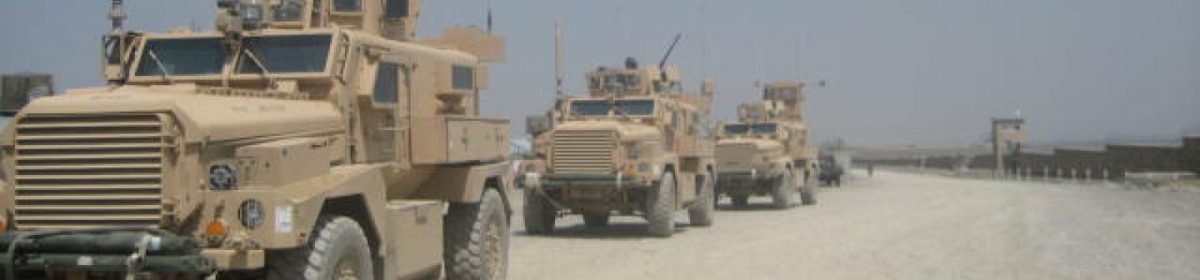
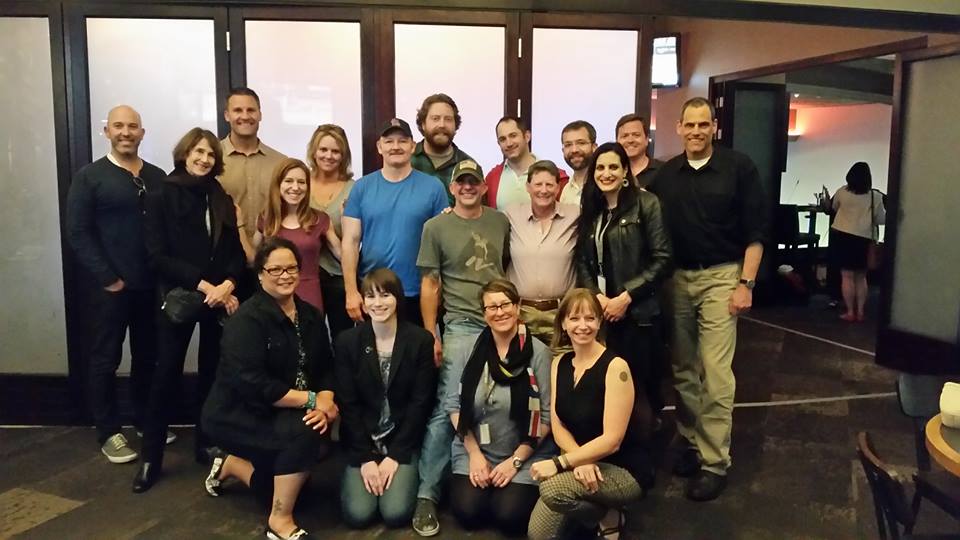


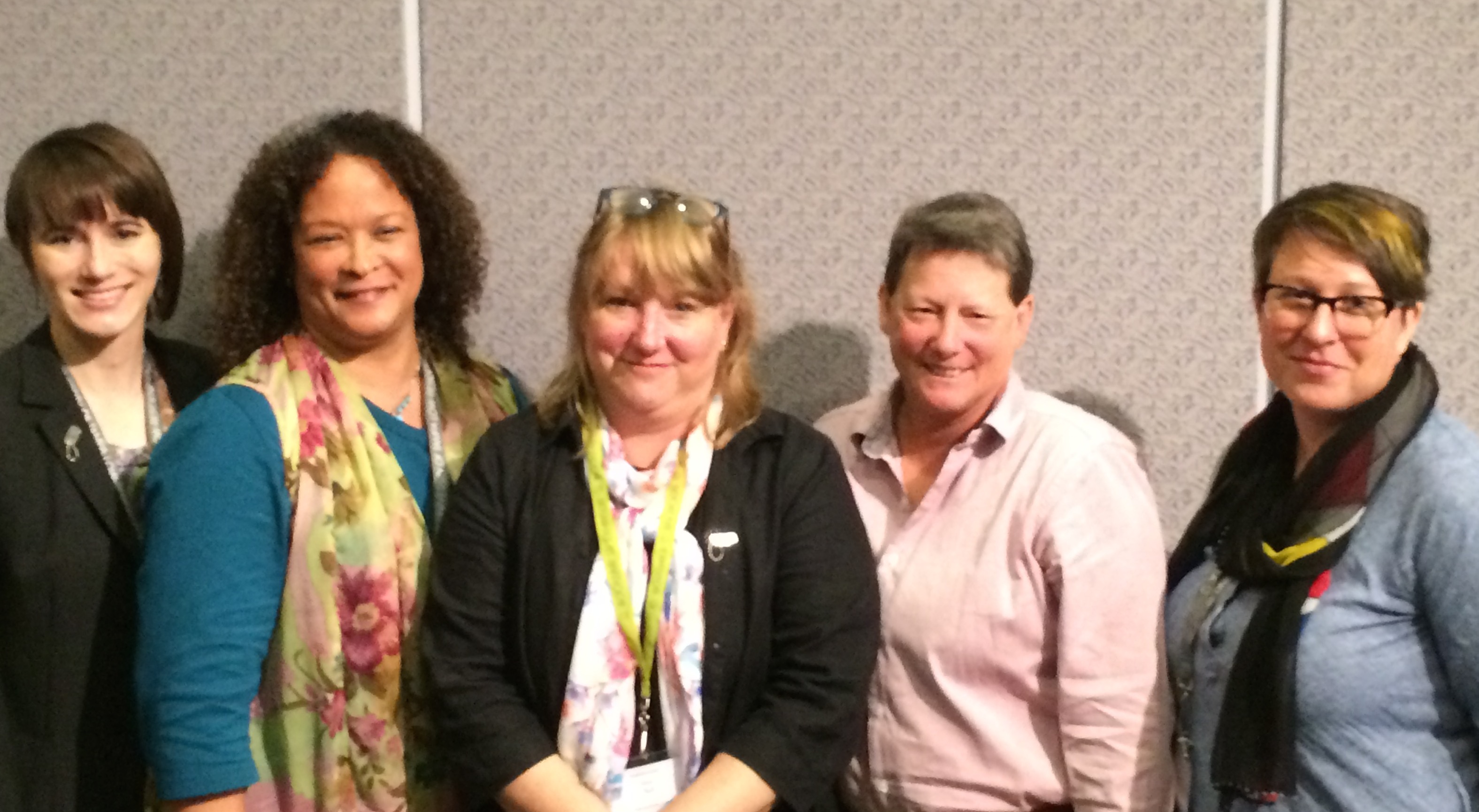
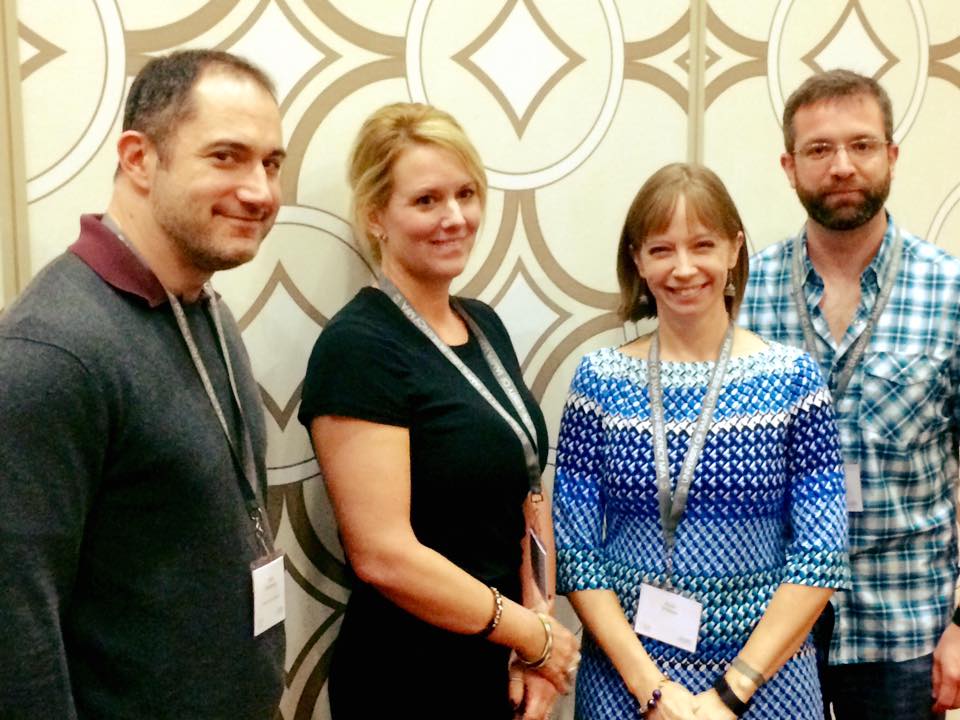
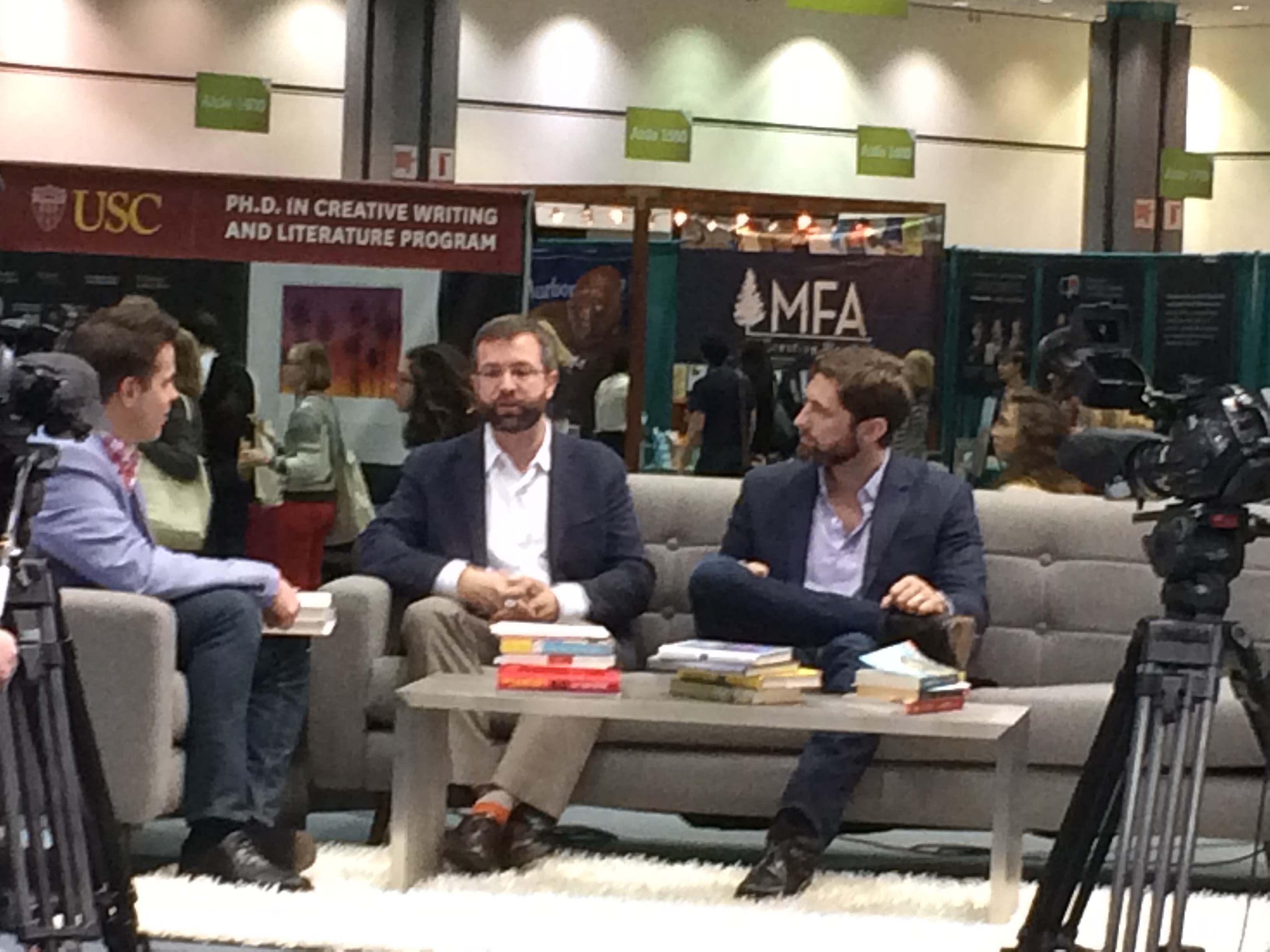
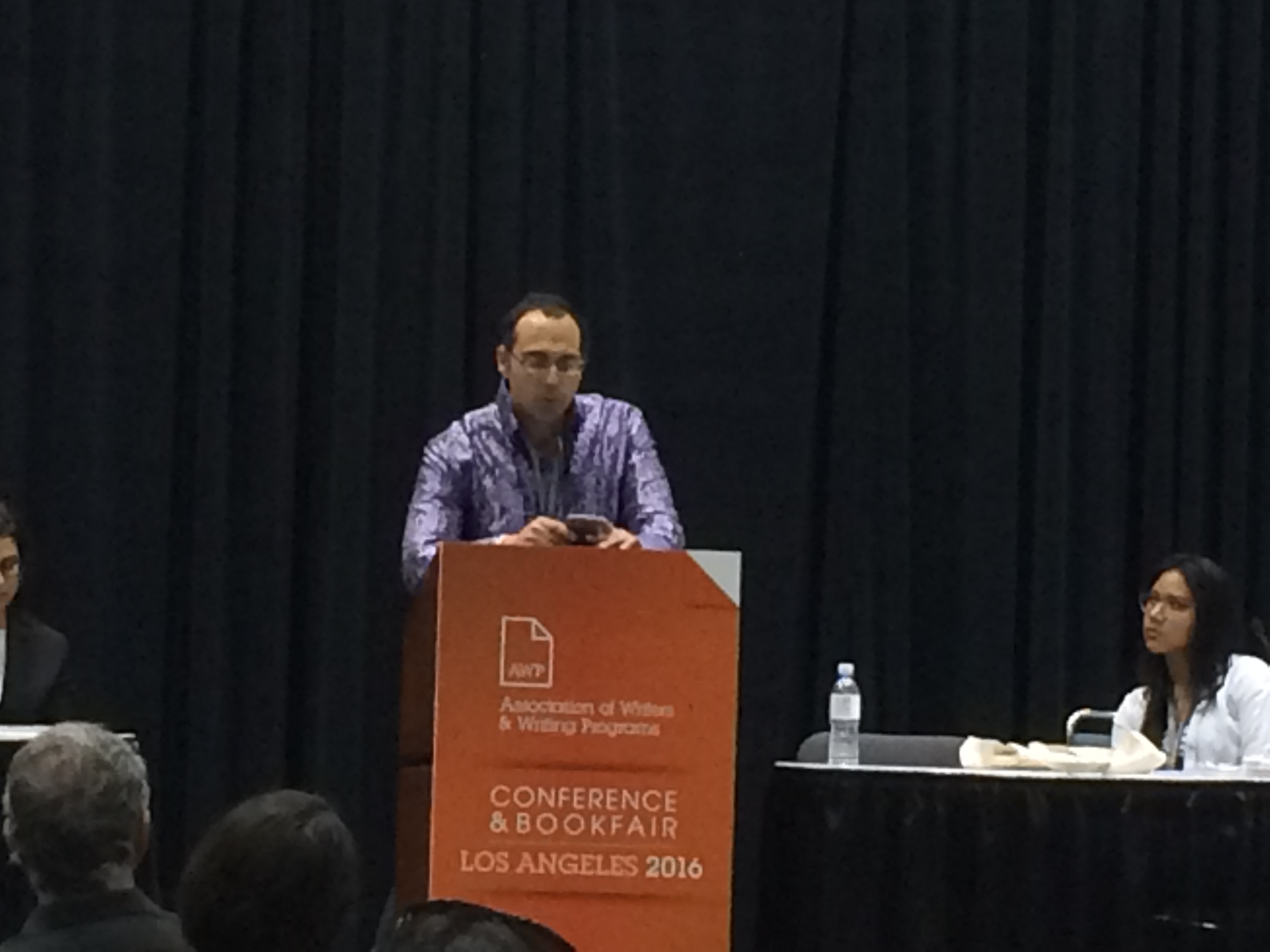

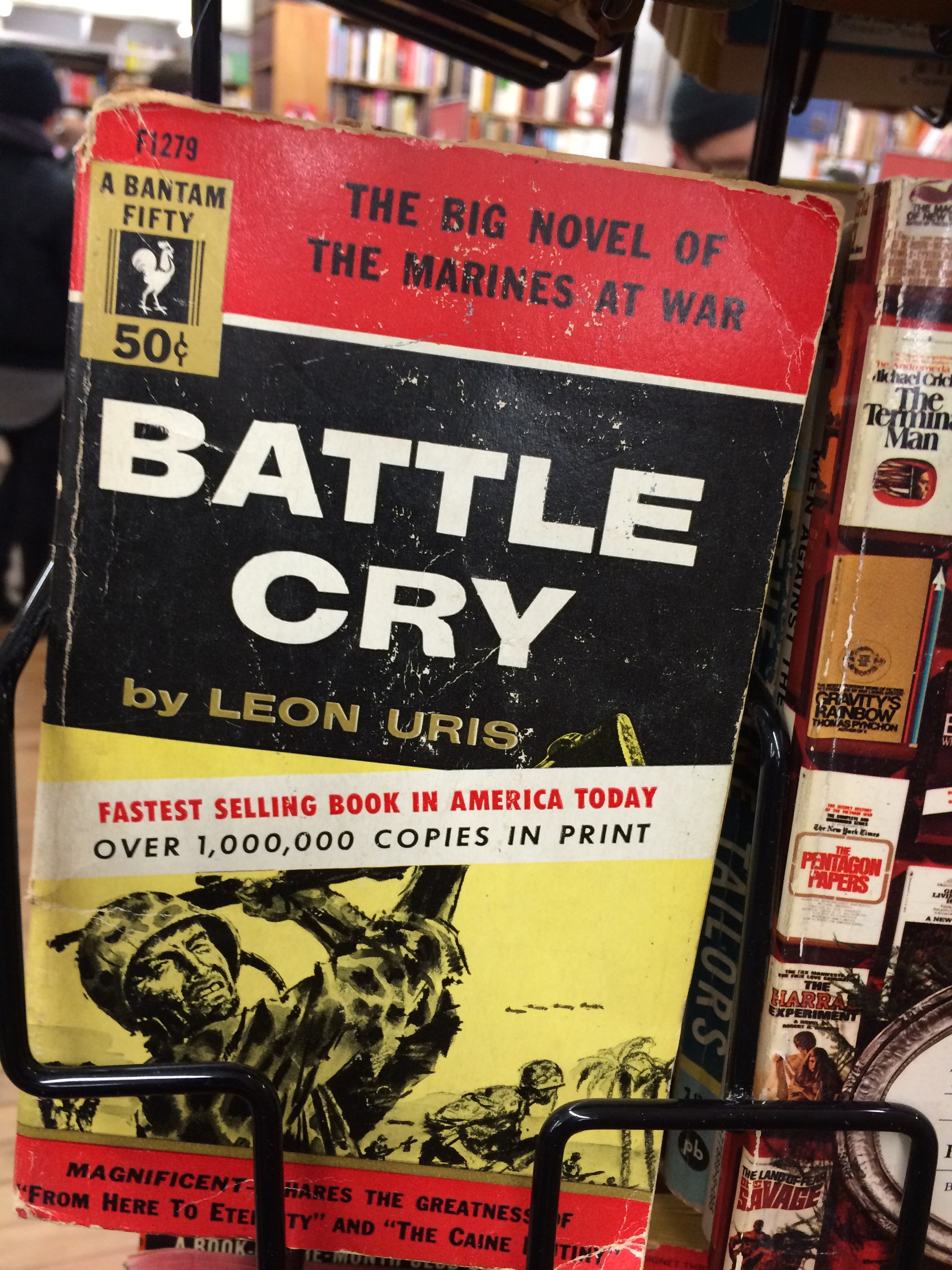
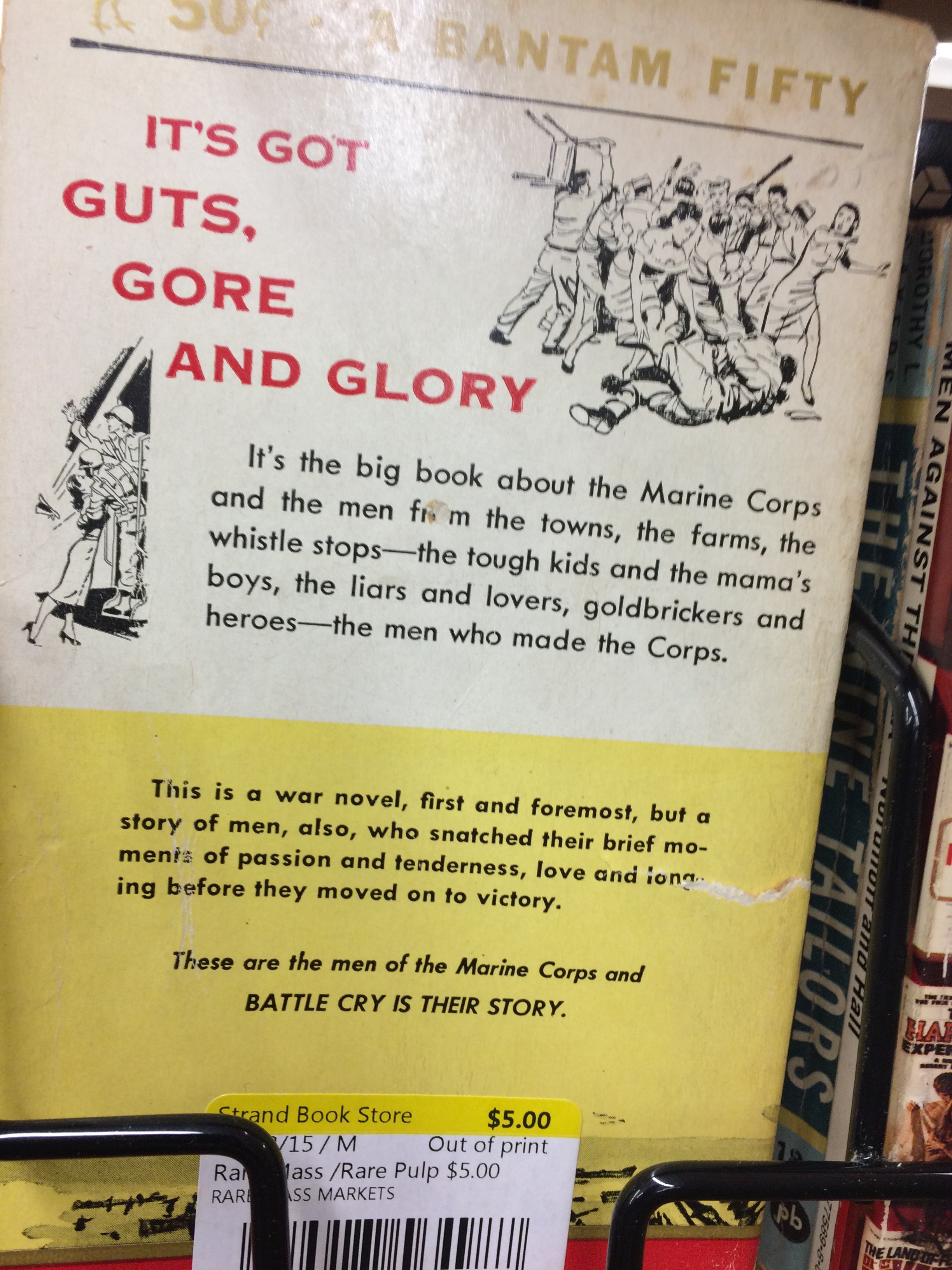
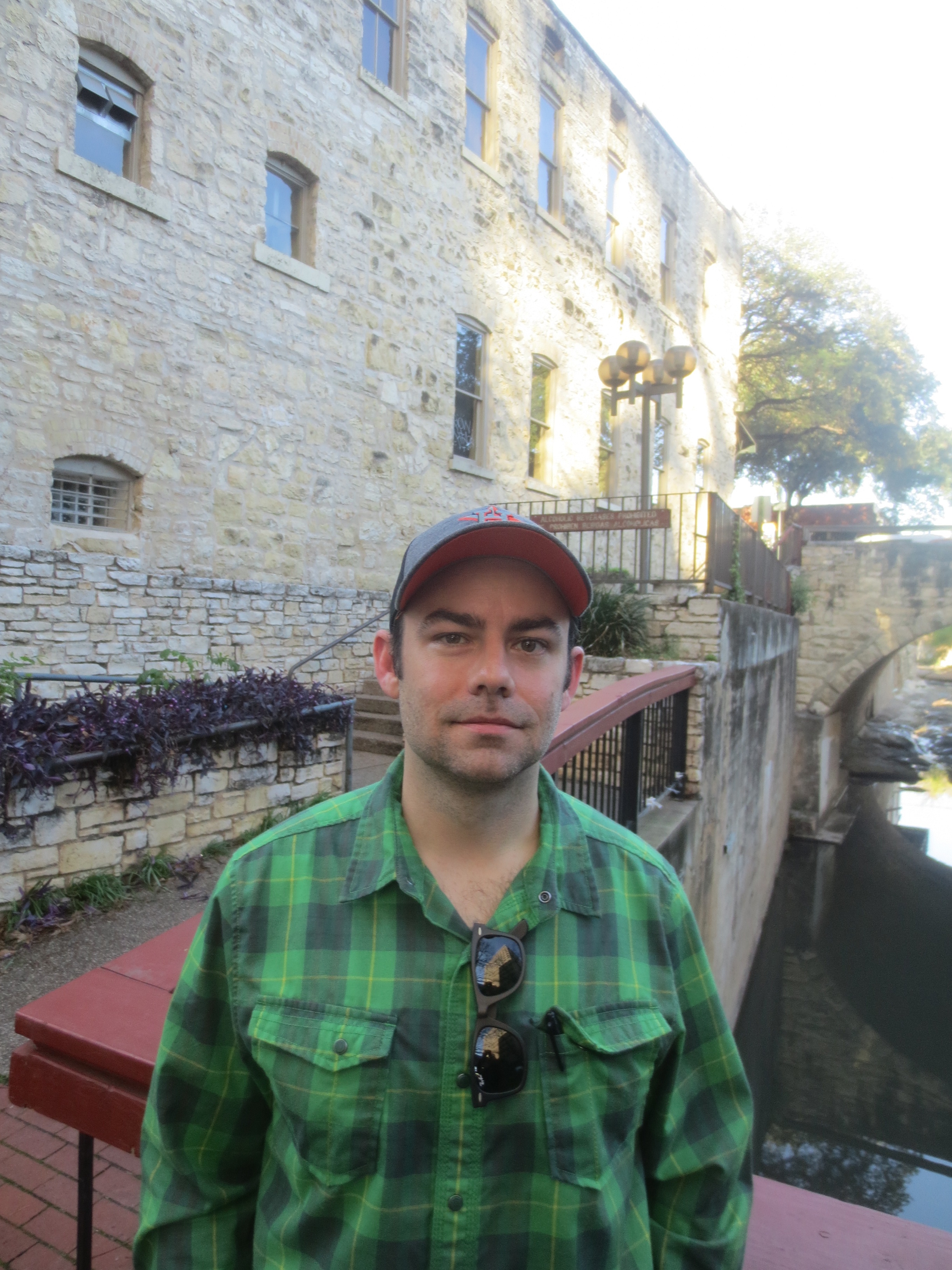

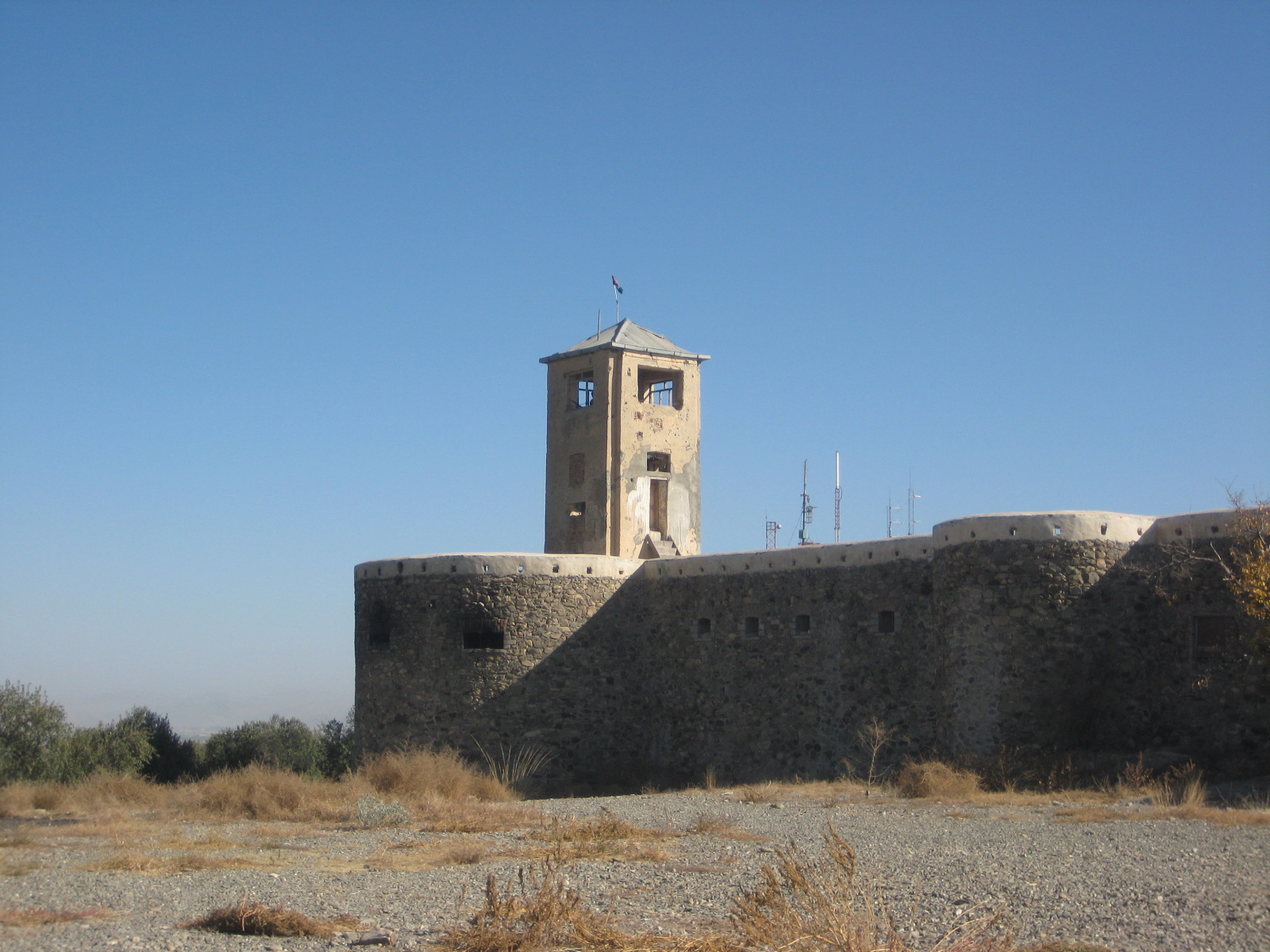

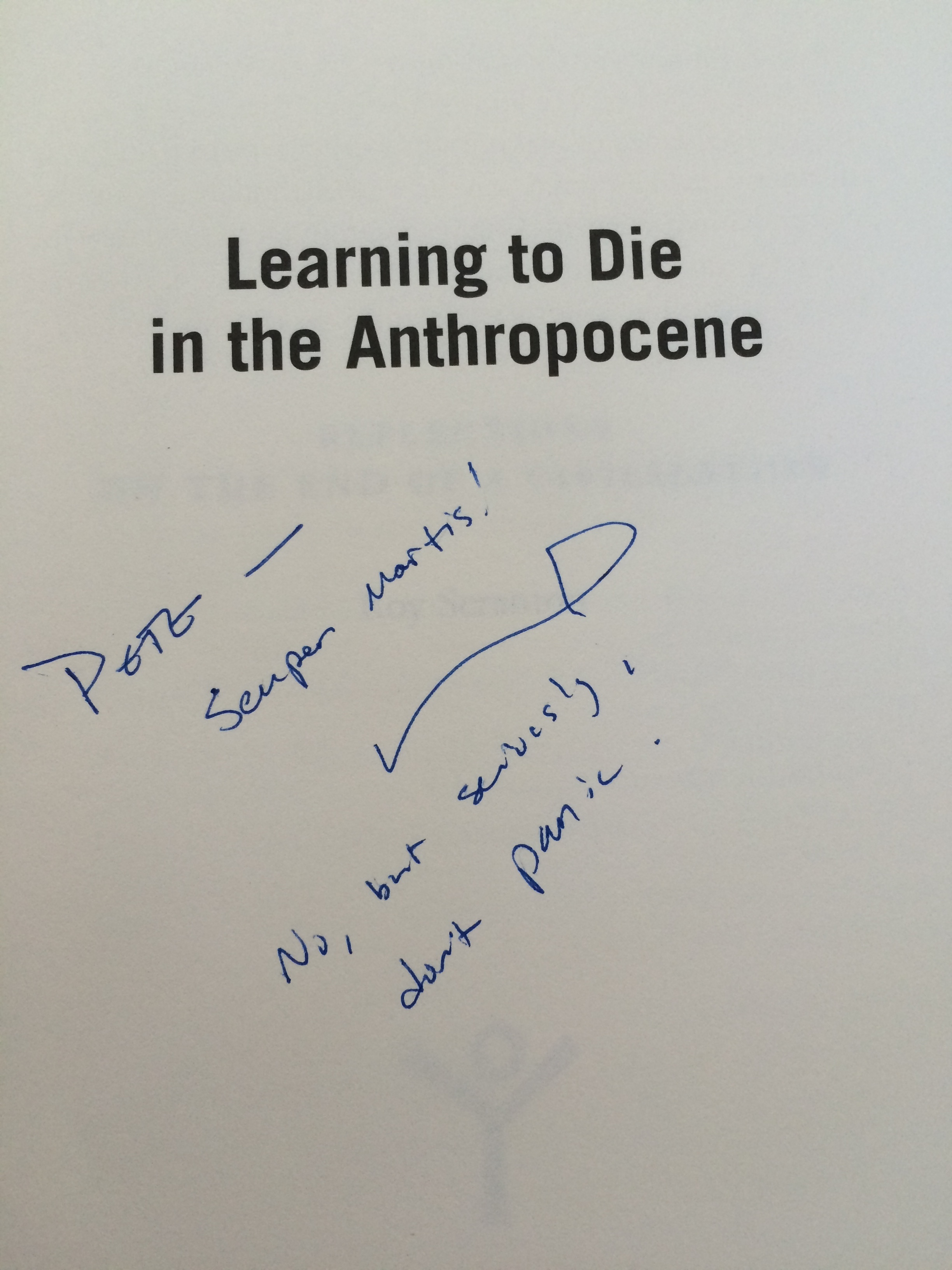
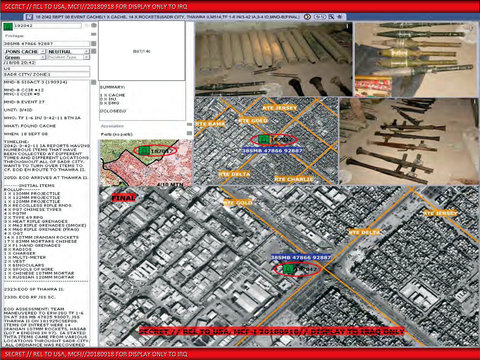
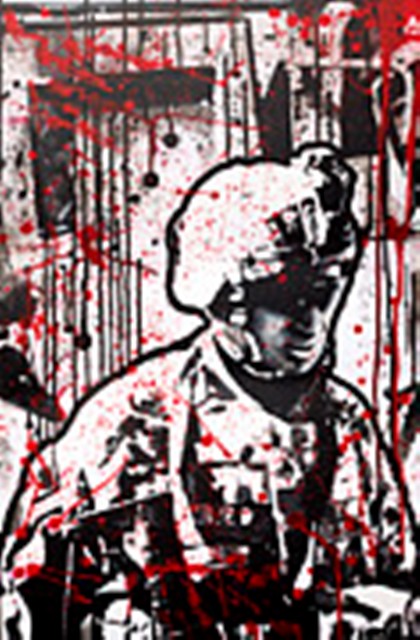
 Time Now: The Wars in Iraq and Afghanistan in Art, Film, and Literature