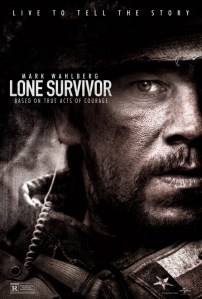
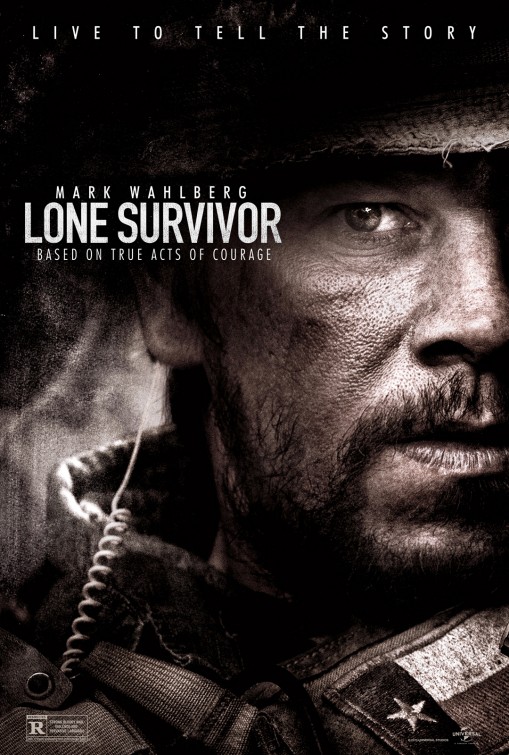
 Lone Survivor joins a number of recent movies that portray unique or elite units at war in Iraq and Afghanistan: The Objective, Zero Dark Thirty, and The Hurt Locker, for starters, and you might throw in Act of Valor and Delta Farce, too. The last two aren’t set in Iraq or Afghanistan, but promote and capitalize on the allure special operations units and missions have for Hollywood filmmakers and American audiences. Perfectly understandable—special operators exude that same allure within our actual fighting forces, too. Anyone who served on a FOB that was home to a special forces outfit knows exactly what I’m talking about—the burly, bearded men swaggered about their compounds exempt from penny-ante rules about uniforms and grooming, owned the coolest weapons and trucks, and seemed to get all the bad-ass missions.
This micro-level schism played out at the higher strategic levels, too, as recorded in numerous memoirs and histories. What made the biggest contribution to achieving our war aims? The endless grind of counterinsurgency operations to win the hearts-and-minds of the populace and their leaders, or the dashing midnight raids to kill or capture insurgent “high value targets”? Even line soldiers who got their full fill of danger and fighting on daily operations basked in the opportunity to brush shoulders with the Operational Detachment-Alphas, Ranger task forces, and Other Government Agencies that saturated the warzones. Machine gunner Colby Buzzell writes in My War of a raid his unit conducted with an elite force: “Doing a joint mission with Task Force 121 in Iraq was every infantryman’s wet fucking dream…. And of course we all wished that we were them.”
Filmmaker Peter Berg gets the ultra-competent insouciance of the Navy SEALs right in the early scenes of Lone Survivor, the story of a four-man SEAL team mission to track a high-level Taliban leader. The opening shots of would-be SEALs going through selection training in Coronado were very inspiring. Speaking as someone who joined the Army almost solely for the chance to go to Ranger School, I did my own basking in sympathetic admiration for other men who sought out the hardest tests of strength and stamina they could find. That Lone Survivor’s opening montage of abjectly brutal training played, unexpectedly, to the spacey post-rock of Explosions in the Sky sealed the deal for me. Explosions in the Sky was a key component of my personal Afghanistan soundtrack—a friend gave me a compilation CD just before deploying—and now to see the band’s music used prominently in Berg’s movie excited me to no end.
“Lone Survivor” by Explosions in the Sky
The long first two-thirds of Lone Survivor sustained the strong positive impressions of the opening scenes. Berg appears to have composed the portraits of the SEALs at home in their Bagram Air Force Base camp and the first phases of their doomed reconnaissance mission with an eye toward realism and authenticity both to Marcus Luttrell’s memoir and what he could glean of what these things actually looked like. But as the SEAL’s mission goes awry and the big battle that took the lives of three of Luttrell’s teammates begins, minor quibbles with both the SEAL team tactics and Berg’s movie-making strategy began to intrude.
Why didn’t the SEALs bring an interpreter?
Why didn’t they take the Afghan goatherders with them back to their helicopter pick-up zone and then release them when they were extracted?
Couldn’t they find hide positions that gave them better fields of fires from which they might defend themselves when attacked ?
I’ve got my own combat decisions to be second-guessed, so let’s leave those questions alone and concern ourselves with Berg’s moviemaking choices. Once the outnumbered SEALs begin to battle the Taliban, authenticity in Lone Survivor takes a backseat to jazzed-up razzmatazz action movie-making. Luttrell’s book, which I love, describes the SEAL team being pushed backwards from their hilltop defensive position, with the men alternately leaping or being blown off a series of mountainside ledges. To film these tumbles down the mountainside, Berg employs a telescopic close-up/slow motion/ground-level tracking/stereophonic thudding sensational film style that portray the falls from perspectives unattainable by any human in real time. But to what end? As filmed, it appears the falls would be impossible to survive without concussions or broken bones, but none of that happens to Luttrell and his mates. With each successive leap and tumble, then, Lone Survivor begins to morph from near-documentary biopic to war-movie fantasy-thriller.
So it was with a slight foreboding I waited for Berg’s rendition of the best scene in Luttrell’s memoir: his account of team leader Lieutenant Michael Murphy’s courage in exposing himself to enemy fire to make one last satellite phone call for help. Luttrell writes,
“I could hear him talking. ‘My men are taking heavy fire… we’re getting picked apart. My guys are dying out here… we need help.’
“And then Mikey took a bullet straight in the back. I saw the blood spurt from his chest. He slumped forward, dropping his phone and his rifle. But then he braced himself, grabbed them both, sat upright again, and once more put the phone to his ear.
I heard him speak again. “Roger that, sir. Thank you.’”
Continuing, Luttrell writes,
“Roger that, sir. Thank you. Will those words ever dim in my memory, even if I live to be a hundred? Will I ever forget them? Would you? And was there ever a greater SEAL team commander, an officer who fought to the last and, as perhaps his dying move, risked everything to save his remaining men…. If they build a memorial to him as high as the Empire State Building, it won’t ever be high enough for me.”
The scene is the emotional centerpiece of the book—Luttrell’s awed recognition that Lieutenant Murphy is not just brave and competent and fiercely dedicated to his sailors, but that he also possesses an uncrackable sense of military deference and personal politeness in regard to his superiors. Later in the book, Luttrell learns of the pashtunwali codes of hospitality that bind the Afghan villages who rescue him. But here, watching Lieutenant Murphy he attains a similar glimpse into another foreign culture—that of his officers, or at least one of them, who insists on human decency and the importance of respectful communication in the most dire conditions.
Berg downplays much of this. In the midst of movie that guns for big emotional buy-ins, the scene is hurried over. If I recall correctly, we don’t even get the “Roger that, sir. Thank you” remarks, nor is the scene portrayed from a perspective clearly identifiable as Luttrell’s—who according to his book was the only one who saw it. Try if you can to find a YouTube clip of the scene–it’s not in any of the trailers. Can we speculate that perhaps Berg didn’t know how to manage its portrayal, or perhaps even that he didn’t want to? The filmmaking logic here would be that emphasizing Murphy’s heroism and Luttrell’s response would shift the focus from Luttrell and the team to Murphy. I get that, and am sure Murphy would agree, too. But the decision might also reflect Berg’s opinion that Murphy made the wrong decision to let the goatherders go and thus doesn’t deserve heroic portrayal. I don’t want to think the worst, so let’s let it remain a curiosity that a cinematic portrayal of a Medal of Honor-winning moment gives it such short shrift.
Also hurried over are the book’s entire last third, which tells of Luttrell’s rescue by the villagers of the anti-Taliban town of Sabray and their efforts to deliver Luttrell to American search parties. These events get about 10 minutes of screentime in the movie, and that which is portrayed deviates from Luttrell’s gripping and sensitive account to tell a far more Hollywood-y story so packed with action-movie clichés to be almost laughable. In his review of Lone Survivor for The Daily Beast, Benjamin Busch argues that Berg missed a chance to make a better movie by sticking closer to the book. Or, a better movie by leaving out the Sabray scenes entirely and keeping the focus on combat. I agree that something more powerful lurks behind the scenes that Berg cartoonishly renders. At movie’s end, the Luttrell character says goodbye to his rescuer Sarawa, more Explosions in the Sky cues and then segues into a cover version by Peter Gabriel of David Bowie’s “Heroes”—one of my all-time favorite songs—that overlays a closing credits montage of all the soldiers and sailors killed in the Lone Survivor operation. As the credits rolled, tears welled in my eyes and pride in the courage, competence, and fundamental decency of Luttrell, Murphy, all the members of our nation’s elite fighting forces, and Sarawa, too, swelled in my chest. I don’t love love Lone Survivor, but I definitely can’t hate it, either. I’m just a little mad at it. I don’t know whether to be angry at corporate moviemaking dynamics or Berg’s artistic direction, but I want Lone Survior to be even more than it is, and it’s pretty clear where it goes wrong.
Anyone interested in the geneology of Hollywood’s love affair with special operations has to watch the Vietnam-era The Green Berets, starring John Wayne (1968). Unabashed heroism and patriotism soon fell out of favor in Hollywood, and movies after The Green Berets—The Deer Hunter, Coming Home, Apocalypse Now, Platoon, Full Metal Jacket— were apt to be gloomy and skeptical. Things began to change in 1986 with the release of the Chuck Norris sizzler The Delta Force and its sequels, but the real work rekindling the glamor of special operations in impressionable young men’s minds were books published in the ’90s by former SEAL Team 6 commander Richard Marcinko and British SAS operator Andy McNab. To say their memoirs are inspirational page-turners would be a huge understatement. I’m betting that special operators who haven’t read Marcinko’s Rogue Warrior (1992) and McNab’s Bravo Two Zero (1993) are few and far between.
 This week I’ll be presenting at the Association of Writers and Writing Programs conference in Seattle. Thanks to Roy Scranton for the invite; it’s an honor to be part of a panel with Roy, Joydeep Roy-Bhattacharya, and Phil Klay. If you’ll be at AWP, too, check us out at 10:30 on Friday morning.
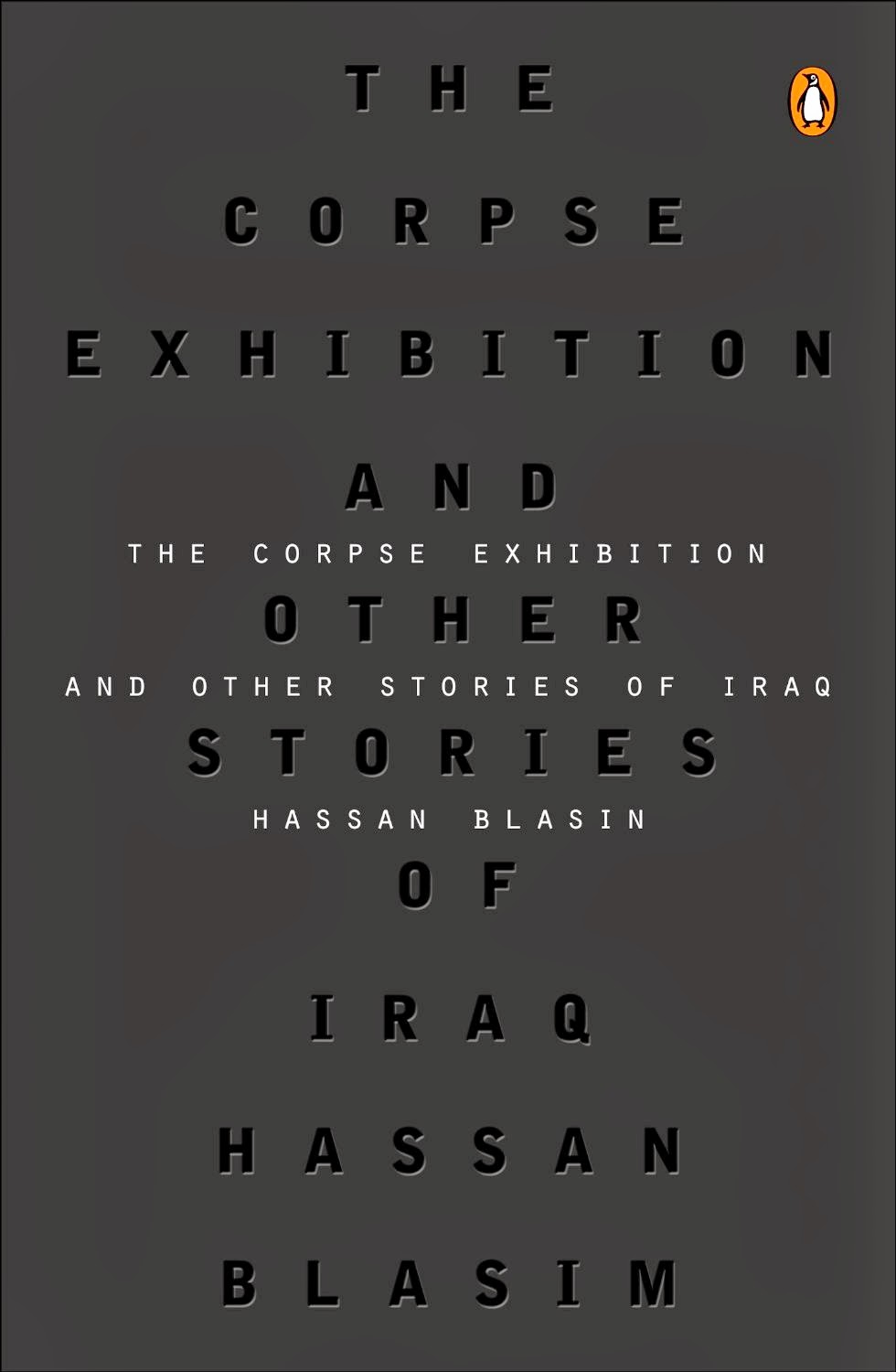 To give you an idea of what’s on my mind, here’s an excerpt from Iraqi short-story writer Hassan Blasim’s “An Army Newspaper.” Blasim’s narrator is the cultural editor of a military newspaper during the Iraq-Iran War. He writes of the submissions that he would receive from soldier-authors:
 Time Now: The Wars in Iraq and Afghanistan in Art, Film, and Literature