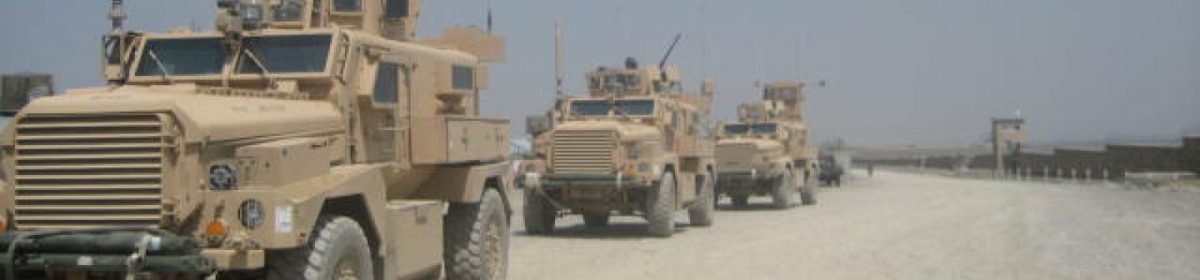
One aspect of the wars in Iraq and Afghanistan not generally understood is how dependent were American and other Western forces on the services of native interpreters to mediate virtually every interaction with host-nation military personnel and civilians. Given the lack of Arabic, Dari, and Pashto speakers actually in the military and the paucity of bilingual speakers in Iraq and Afghanistan, you can assume that anything you might have read about in the papers that involved on-the-ground operations, and the millions of missions and engagements you didn’t, took place with a native speaker translator at the side of the officer or NCO charged with carrying them out. Though some interpreters in Iraq 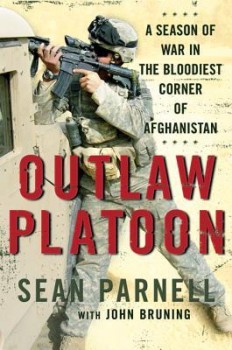 and Afghanistan were American citizens or residents recruited in America and then deployed back to their homelands, most were natives. The fullest portrait of a host-nation interpreter and a US military member I know of appears in Sean Parnell’s Outlaw Platoon (2012), a memoir about Parnell’s service as an infantry platoon leader in Paktika province, Afghanistan. Parnell uses anecdotes about his interpreters, one, named Abdul, faithful and competent, the other, Yusef, untrustworthy and treacherous, to frame his account. “A good ‘terp,’” writes Parnell, “could make a huge difference in daily operations.”
“Terp” was the commonly used shorthand to describe military linguists. I never really liked the term, but it was ubiquitous and even I would use it to describe “Terp Village,” the humble compounds affixed to US bases in which a unit’s interpreters lived. The term appears again in a passage found in journalist-historian Bing West’s The Wrong War (2011). West, describing operations in southern Afghanistan, writes, “The interpreters were the funnel for all coalition interactions with Afghans at all levels.” Then, describing an interpreter named Siad, West continues: “Siad was typical of the local  interpreters. They all tried hard, and most worshipped the grunts they served locally. Their thirst for absorbing American culture never ceased… Their skills were marginal, no matter how hard they tried. Their hearts were huge. Anyone who doubted the magical image of America in the minds of millions of Afghans had only to spend a day under fire with a U.S. squad and the local terp.”
Before examining fictional representations of interpreters, I’ll post a passage from a private document written by a former interpreter of mine who is now applying for admission to the US. It offers insight into the lived life of the men described abstractly so far:
I am engaged now and my fiancé is from Ghazni province. All her relatives know that I am working with Coalition Forces as a linguist. For that reason, I cannot go to Ghazni province now to see her or relatives or take part in a condolence or happiness party. Since I know that everybody knows that I am working with Coalition Forces I do not feel free and I am sure my life is at risk. Even in Kabul City where I live, I cannot go out at night and visit other people because I am very afraid my life is at risk.
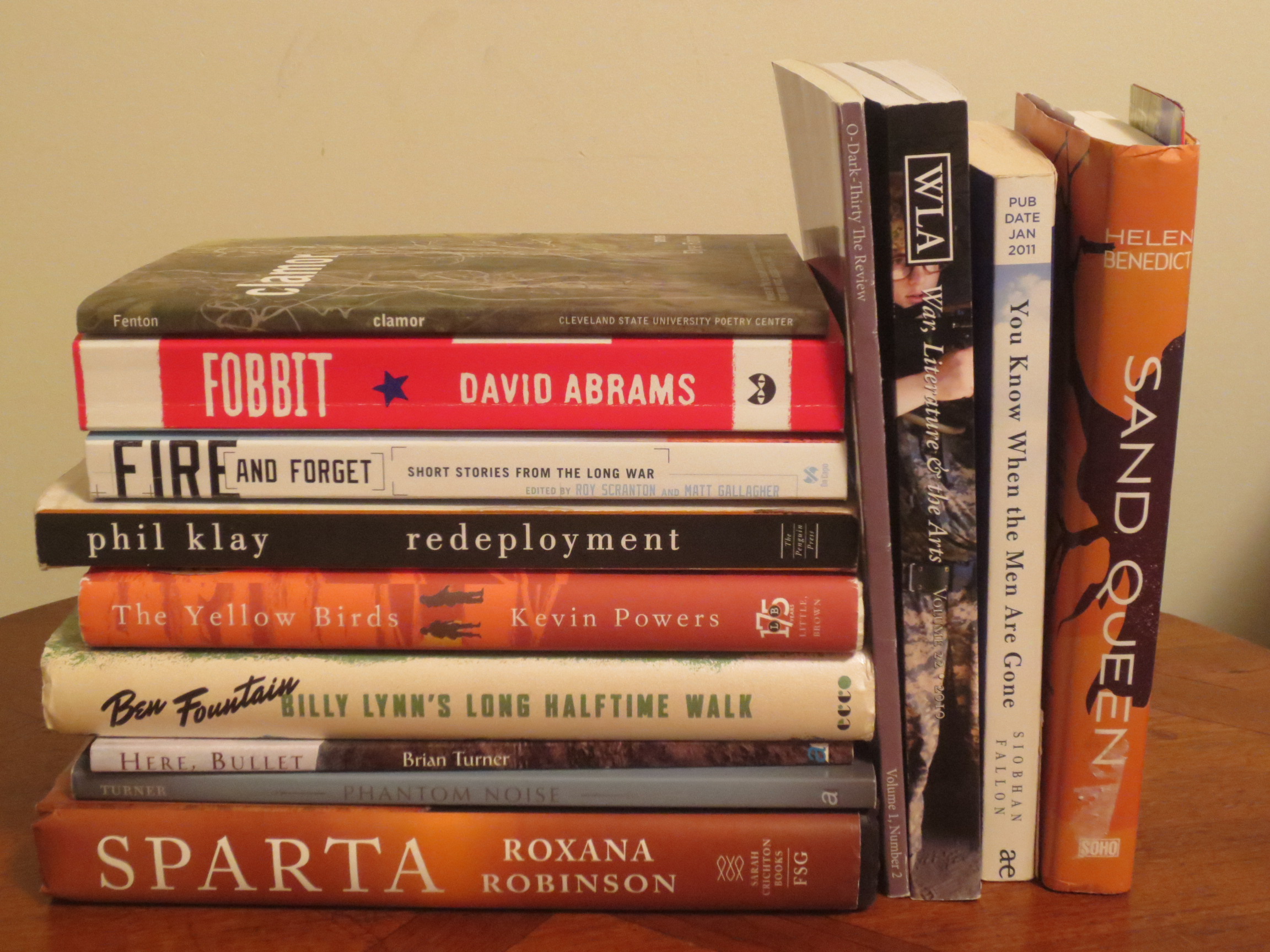
War fiction writers have begun to make something of the possibilities offered by these complex figures and intense soldier-local national relationships. Their portraits do what fiction does: combine artistic creativity with realistic verisimilitude to provide social, psychological, and emotional nuance. They might be said, however, to focus on dramatic aspects where the day to day record is more placid or positive. The first depiction of which I am aware is in a Siobhan Fallon short story “Camp Liberty,” from her collection You Know When the Men are Gone (2011). In this story, Fallon tells of a soldier deployed to Iraq, named David, whose romantic relationship with 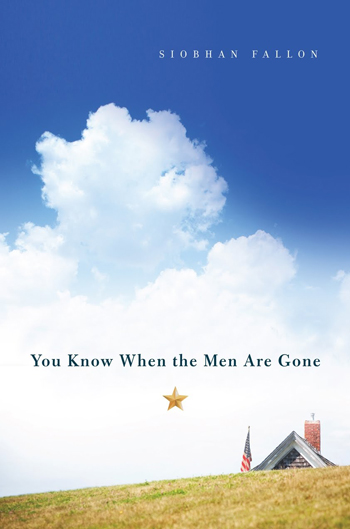 Marissa, his stateside fiancé, fades as the working one with Raneen, a female interpreter, intensifies. David grows enamored of Raneen, but she disappears and is probably killed before he is able to speak to her in anything but an on-the-job context. Her disappearance leaves him more adrift than he imagined possible, and perhaps now too estranged from Marissa for that to ever be right again. Fallon puts a romantic spin on what was usually a close working relationship between two men, while characterizing David and Raneen’s relationship as at least reasonably compatible and effective, but other stories depict much more fraught relationships.
In Kevin Powers’ The Yellow Birds (2012), an Iraqi named Malik appears as a minor character early in 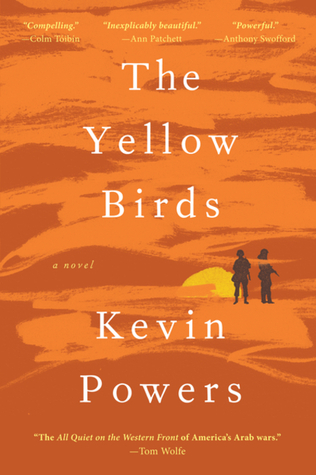 the book. Powers’ narrator John Bartle tells us that Malik’s “English was exceptional… He’d been a student at the university before the war, studying literature.” He wears a hood and a mask because, he says, “’They’ll kill me for helping you. They’ll kill my whole family.’” A few pages Malik is killed by a sniper, and Bartle and his friend debate whether to include him in their morbid count toward 1000 Coalition Force casualties:
“Doesn’t count, does it?” Murph asked.
“No. I don’t think so.”
Bartle reports, “I was not surprised by the cruelty of my ambivalence then. Nothing seemed more natural than someone getting killed.”
 “Money is a Weapons System,” by Phil Klay, in his recently released collection Redeployment (2014) portrays “a short and pudgy Sunni Muslim” interpreter known as “the Professor.” Sullen and contemptuous, the Professor is “rumored to have blood on his hands from the Saddam days,” but Klay’s narrator, says, “Whether that was true or not, he was our best interpreter.” A short exchange reflects their tense relationship:
“Istalquaal,” I finally said, trying to draw him out. “Does it mean freedom, or liberation?”
[The Professor] opened his eyes a crack and looked at me sidelong. “Istalquaal? Istiqlal means independence. Istalquaal means nothing. It means Americans can’t speak Arabic.”
The most extensive portrait of an interpreter and the only one I know of published first in English that attempts to portray the interpreter’s thoughts and point of view is Joydeep Roy-Bhattacharya’s The Watch (2012). In this novel, 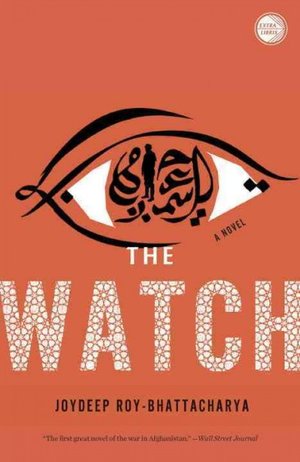 which is set in the southern, Pashtun-region of Afghanistan, a young ethnic Tajik interpreter named Masood, loyal to the Americans and eager to do well, is dropped off at a remote combat outpost in the middle of the night after the big battle. He doesn’t know about the battle, but expecting better he confronts hostility and mysterious behavior at every turn from his new American hosts and allies. Roy-Bhattacharya gets right the incredibly uneven regard of young American soldiers for those outside the fraternal ranks of their unit. Masood is mystified and hurt by the Americans’ baffling rudeness, and yet it is more complex than that—just when he is ready to write off the Americans as barbarians, he meets a medic who knows more about Afghan literature and history than he does, then the warm and wise COP first sergeant, and finally the outpost commander, whose fanatical adherence to mission and security coincides with a more than passing fluency in Pashto and Dari.
The dramatic focus on interpreters and the soldier-interpreter relationship, to my mind, suggests several points:
- The interpreter, not the host nation populace, was the “other” most often encountered by American soldiers, and the only one with whom he or she might bond. With emotional investment, however, comes gratitude, guilt, and feelings of loss after the relationship ends.
- In life, the relationship between soldier and interpreter was often characterized by respect and mutual affection. In fiction, however, the relationship is mined for tension and drama. The interpreter, from the fiction author’s viewpoint, is part of the problem, and dysfunctional interpreter relationships symbolize the divide between Western military forces and the populaces they intend to help.
- The interpreter himself, or herself, is a complex, in-between figure who must manage a thicket of complicated personal histories and commitments. In some ways they become “people without a country,” or a contemporary “tragic mulatto,” neither white nor dark and doomed to unhappiness and premature death.
- Contemplation of the interpreter’s role help us understand the basic unreality and unknowability of the wars: mediated, filtered, coming to us second-hand via seriously invested witness-participants. The general situation short of combat was always linguistically, rhetorically, and even artistically arranged for us by translators about whom we knew little and did little to comprehend.
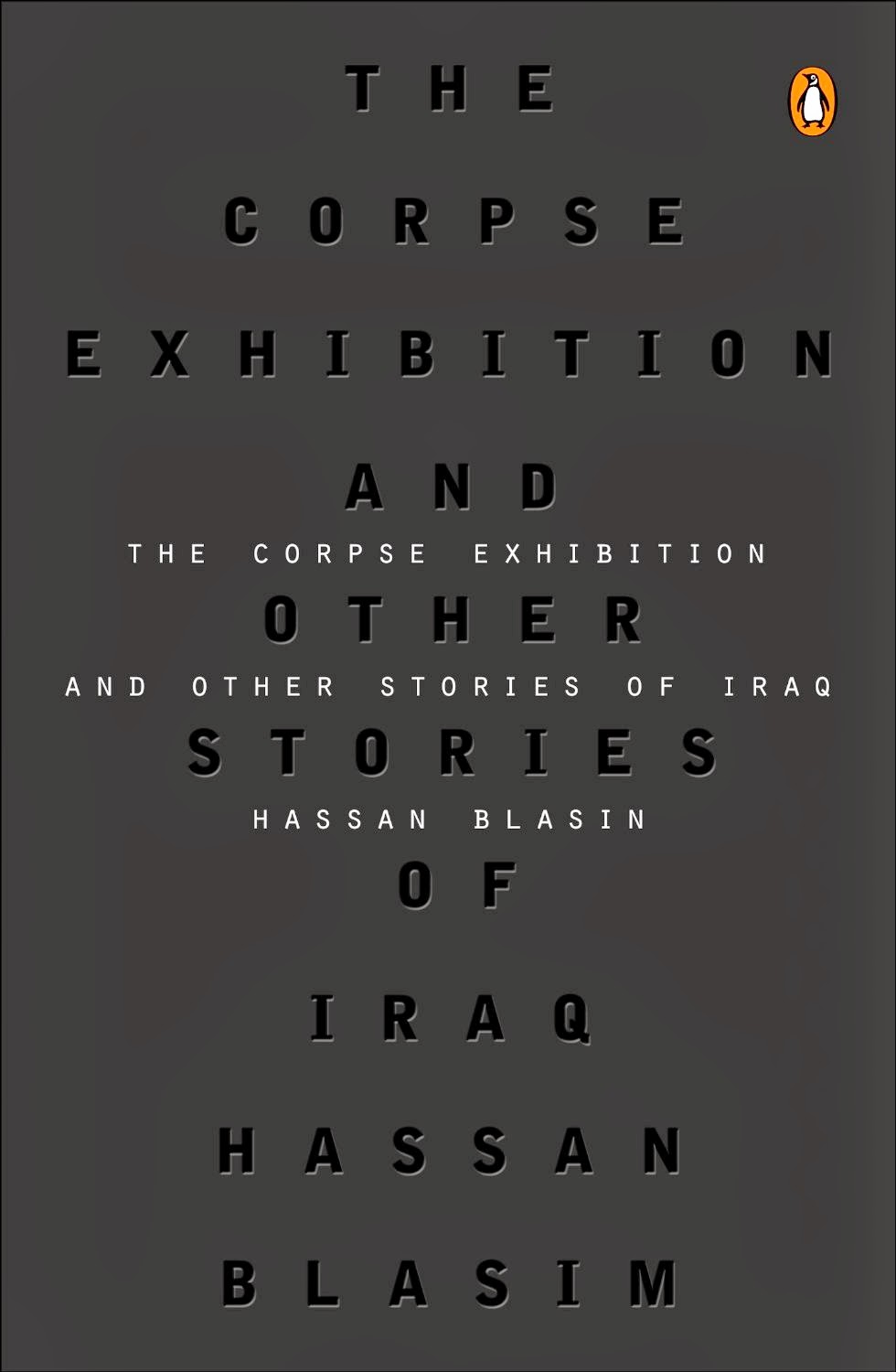 The only fiction I know of written by an Iraqi or Afghan that portrays interpreters is Iraqi expatriate author Hassan Blasim’s story “The Nightmares of Carlos Fuentes,” from his recently published collection of translated short stories The Corpse Exhibition (2014). It is also the only tale that imagines a future existence for interpreters post-war and measures the long-term consequences of their involvement with Americans. Carlos Fuentes is the pseudonym of an Iraqi named Salim Abdul Husain who has emigrated to Holland; he has taken the name because he reports that his own name makes him a marked man in the eyes of those who won’t forgive him for working as a translator for American forces. Carlos Fuentes has seen nothing but violence and injustice in Iraq, and in Holland he becomes a model citizen, fully embracing European values and habits while scorning immigrants who don’t. Blasim’s narrator states:
“Why are the trees so green and beautiful, as though they are washed by water every day? Why can’t we be peaceful like them? We live in houses like pigsties while their houses are warm, safe, and colorful. Why do they respect dogs as humans? …. How can we get a decent government like theirs?” Everything Carlos Fuentes saw amazed him and humiliated him at the same time, from the softness of the toilet paper in Holland to the parliament building protected only by security cameras.
All goes well for Carlos Fuentes until he begins having nightmares about his past life. He takes extremely fantastic measures to avoid the nightmares—“One night he painted his face like an American Indian, slept wearing diaphanous orange pajamas, and put under his pillow three feathers taken from various birds”–and yet nothing works. At tale’s end he is confronted in a dream by Salim Abdul Husain, his old self:
Salim was standing naked next to the window holding a broom stained with blood…. Salim began to smile and repeated in derision, “Salim the Dutchman, Salim the Mexican, Salim the Iraqi, Salim the Frenchman, Salim the Indian, Salim the Pakistani, Salim the Nigerian….”
The Carlos Fuentes character takes aim at Salim with a rifle, Salim jumps out the window, and the narrator tells us that Carlos Fuentes’s wife finds him dead on the pavement below in the morning. In a final indignity, Carlos Fuentes’ death is reported in the papers as that of an “Iraqi man” rather than a “Dutch national,” and his brothers have his body taken back to Iraq for burial. No one it seems has been much convinced by his effort to renounce his past.
Interpreting the interpreter, we can surmise that Carlos Fuentes’ divided self and attempted cultural makeover does not hold. The war has traumatized him beyond his knowing and his idealization of the West a dream not meant for him to possess. But it’s not just about what happens to him while working alongside American and European forces in country, or that his attempt to adopt and internalize Western values and beliefs have instead generated pathological self-hatred and destructiveness. It’s about the lived life of immigrants after the personal relationship ends, the Americans go home, and the rest of the interpreter’s life begins. Blasim’s story, and all stories about interpreters, remind us that real linguists exist by the 1000s in both Iraq and Afghanistan or elsewhere, and letting them fend for themselves now that we are gone is one more of the ways we fought the wars very callously and in ways that kept us from being as successful as possible.
****
Most of this post was first presented at the recent American Comparative Literature Conference in New York City. Thanks to panel organizer Susan Derwin for inviting me to speak. Thanks to fellow panelist Brian Williams, who reminded me of the presence of the interpreter Malik in The Yellow Birds. The paper as delivered at ACLA did not reference The Yellow Birds. I am invested in this subject because of my own positive experience with two interpreters in Afghanistan who are now in the United States, enlisted in the US Army, and who hope to become US citizens. I am actively engaged in trying to help a third trusted interpreter emigrate to the US. Paul Solotaroff describes the difficulty interpreters have in obtaining visas in “The Interpreters We Left Behind,” published this week in Men’s Journal.

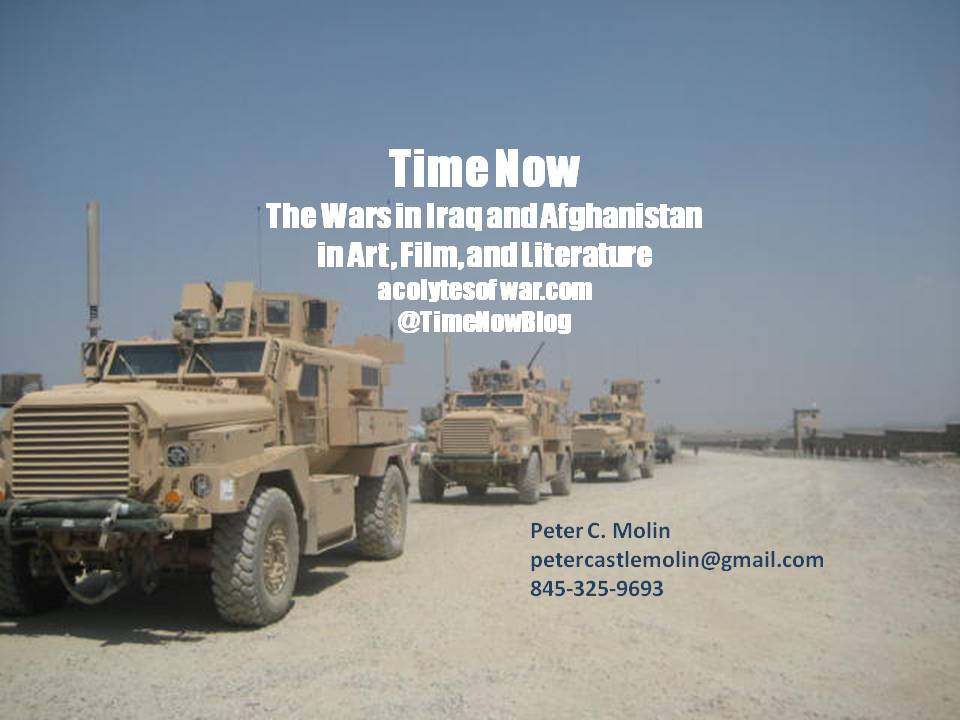
 Time Now: The Wars in Iraq and Afghanistan in Art, Film, and Literature