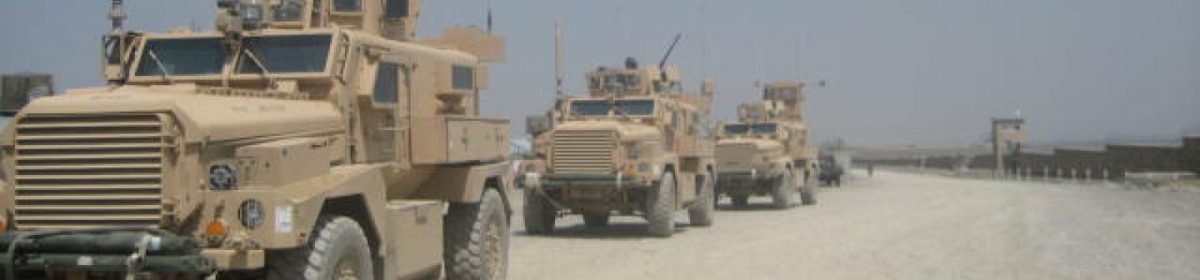
My review of Colby Buzzell’s latest essay and magazine article collection Thank You for Being Expendable is up at The Bridge, a website dedicated to “Policy, Strategy, National Security, and Military Affairs,” as their Medium site explains. The Bridge has actually run three reviews of Buzzell’s latest, so let me salute my co-reviewers, a US Army officer who goes by the nom-de-plume Angry Staff Officer and a US Air Force officer named Blair Shaefer, both of whom turn many nice phrases. The ASO, for example, writing of the senior junior enlisted faction of the military known as “E4s,” who tend to be the most reliable indicator of unit morale, writes, “if there actually was an E-4 Mafia, Colby Buzzell would be the godfather.” Shaefer describes Thank You For Being Expendable the “punk rock alternative to Service Academy and/or Ivy League-educated military officer GWOT memoirs.” Like!
I connected with The Bridge managing editor Nathan K. Finney through my involvement with the Military Writer’s Guild. MWG has been around for a while as an organization comprised (mostly) of serving and veteran writers of the serious policy and strategy analysis persuasion, but it has lately reinvigorated its recruiting efforts and extended its reach to a few of us on the artistic side of things. I’m glad to be part of MWG and eager to see where it goes. Publishing on Medium and using Slack to handle internal business has already made me feel a good twenty years younger, so things are off to an excellent start, as I see them.
Colby Buzzell, Thank You for Being Expendable, and Other Experiences. Byliner, 2015.
Below are ten articles on contemporary war literature published in reputable mainstream press venues in the last two years. Some are by veterans, one is by a non-veteran author of fiction, and the rest are by critics and in-house book-reviewers, but all in my mind are major statements in regard to the imaginative literature written by Americans about the wars in Iraq and Afghanistan. I’ve listed them in chronological order, added a few notes and a quotation from each, and offered a few overarching comments at the end.
1. Brian Van Reet, “A Problematic Genre: The Kill Memoir,”New York Times. Van Reet asserts the superiority of war fiction over the glut of memoirs by service members a little too proud of the lives they took in Iraq and Afghanistan. Specifically praising David Abrams’ Fobbit and Kevin Powers’ The Yellow Birds, Van Reet writes, “Though they are fictional, they read, in my mind, like more accurate depictions of the totality of what happened in Iraq than any of the supposedly factual accounts I have mentioned.” July 16, 2013.
2. Ryan Bubalo, “Danger Close: The Iraq War in American Fiction,”Los Angeles Review of Books. Bubalo calls Billy Lynn’s Long Halftime Walk “the best of them,” and proposes a means of understanding the genre’s achievement as a whole: “In fact, the most striking similarity of these fictions is their overarching orientation toward the war. These are writers of different backgrounds and abilities, writing different types of war tales that independently confirm our national sense of the Iraq War as a great folly.” December 25, 2013.
3. Phil Klay, “After War, a Failure of Imagination,”New York Times. Klay asserts that it is an ethical imperative for both veteran authors and civilian audiences to understand war imaginatively. “To enter into that commonality of consciousness, though, veterans need an audience that is both receptive and critical,” Klay writes, “Believing war is beyond words is an abrogation of responsibility — it lets civilians off the hook from trying to understand, and veterans off the hook from needing to explain.” February 8, 2014.
4. George Packer, “Home Fires: How Soldiers Write Their Wars,”The New Yorker. Packer surveys fiction, poetry, and memoir written by veteran and offers the following categorical assessment: “Their work lacks context, but it gets closer to the lived experience of war than almost any journalism. It deals in particulars, which is where the heightened alertness of combatants has to remain, and it’s more likely to notice things.” Packer singles out Brian Turner’s poem “Al-A’imaa Bridge” and Phil Klay’s Redeployment, especially the story “Prayer in the Furnace,” for praise. April 7, 2014.
5. Roxana Robinson, “The Right to Write,”New York Times. Robinson argues that non-veteran voices should be welcomed in the war literature conversation. She reminds us that “Some of the greatest war writers were not soldiers: Ernest Hemingway, Stephen Crane, the blind Homer. They entered the world of war through compassion, not combat. We judge them by their work, not their military service. And we benefit from that work; they have widened our understanding of war.” June 28, 2014.
6. Jeff Turrentine, “Review: Fives and Twenty-Fives, by Michael Pitre, a Tale of Dangerous Duty in Iraq,”Washington Post. In the course of his review, Turrentine calls the recent boom in war literature “a Golden Age,” and offers examples of excellence and a reason for the boom: “Although we’re still a few years away from being able to view the wars in Iraq and Afghanistan through the clarifying lens of closure, a number of writers have taken it upon themselves to put together the beginnings of a canon. The best of them, like the short-story writer Phil Klay (Redeployment) and the novelists David Abrams (Fobbit) and Ben Fountain (Billy Lynn’s Long Halftime Walk), seem to understand that the protracted nature of modern war … can easily lead to chronic moral fatigue. That’s a highly troubling state for our fighting men and women to find themselves in. But for a fiction writer who’s striving to create believably complex characters, there’s no better place to start.” August 25, 2014.
7. Brian Castner, “Afghanistan: A Stage Without a Play,”Los Angeles Review of Books. Castner explores why so much fiction has been written about war in Iraq and so little about Afghanistan. After surveying a number of authors, veterans, and critics (including me), he writes, “All agreed on this: there is something different about Afghanistan, and it has affected our nascent literature on the war. Consider three factors: the United States’ relationship with the conflict, the type of soldier who served each theater, and the topography — cultural, historic, geographic — of Afghanistan itself.” October 2, 2014.
8. Michiko Kakutani, “Human Costs of the Forever Wars, Enough to Fill a Bookshelf,”New York Times. Kakutani writes, “So far, fiction about the Iraq and Afghanistan wars has tended to have a chamber music quality, using short stories, fable-like allegories or keyhole views (from individuals and platoons) to open small windows on those conflicts. Why has there been no big, symphonic Iraq or Afghanistan novel?” Kakutani praises Ben Fountain’s Billy Lynn’s Long Halftime Walk, Kevin Powers’ The Yellow Birds, and Brian Castner’s and Kayla Williams’ memoirs, among others, but saves her highest plaudits for Dexter Filkins’ journalistic The Forever War for how it combines “micro” and “macro” level reportage of damage done in Iraq. December 25, 2014.
9. Michiko Kakutani, “A Reading List of Modern War Stories,”New York Times. In a companion piece to the critical survey published on the same day, Kakutani names 39 memoirs, novels, and non-fiction accounts that, presumably, constitute the works about war in Iraq and Afghanistan to which we should pay attention to first. The list is idiosyncratic–why 39 titles?–and subjective—no Brian Turner Here, Bullet, for example, yet three novels unpublished at the time the article appeared—but conversation-starting, at least, if not canon-forming. December 25, 2014.
10. Roy Scranton, The Trauma Hero: From Wilfred Owen to Redeployment and American Sniper,“Los Angeles Review of Books. Scranton traces a war literature genealogy centered on what he calls the “trauma hero”—soldiers pained by their participation in war who then need therapeutic recoupment to become whole again upon return home. “By focusing so insistently on the psychological trauma American soldiers have had to endure, we allow ourselves to forget the death and destruction those very soldiers are responsible for,” Scranton writes. January 25, 2015.
And so we can see the outlines of a general angle of critique and praise: The wars as folly, though experienced painfully by participants. An interest in the homefront and the aftermath of war. The short story as the form best suited to wars that have resisted closure and were experienced fragmentally. A sense that what counts most are soldiers’ accounts—not civilians’–written by those with some reflective purchase on their experience and who question their choices, wrangle with their responsibility and complicity, and come to understanding of the immense wrongness of war and militaristic thinking. One subject our intellectual tastemakers don’t yet seem interested in is the new, substantial, and important presence of women in the ranks of war authors, which is curious, nor have we seen much effort to assay new war literature written by non-Americans.
We might add a few other features that are touched on only here-and-there by the critics: The corpus’s affinities and deviations from the writing inspired by other wars, especially that of Vietnam, World War I, and—going way back—the Homeric wars of ancient Greece. The quickness with which highly literary works began appearing so soon after the cessation of combat. In contrast to what the critics have noticed, the field’s inclusiveness of non-veteran authors eager to write about military and war-related subjects and themes. An interest, manifested fitfully, in depicting Iraqi and Afghan characters, and perspectives on war from those on the homefront or soldiers and Marines other than combat infantrymen. The implications of a small all-volunteer force that experiences war first-hand while the nation-at-large pays attention or not, as it will. Wars newly-defined by reliance on strategies and techniques—torture, drones, Special Operation raids, cross-international-boundary strikes never officially acknowledged, counterinsurgency and nation-building operations—ethically frowned upon or considered unimportant previously. A national war rhetoric characterized by respect for individual soldier service but ambivalent about war aims articulated by first President Bush and then President Obama. A war carried out by a citizenry and fighting force completely immersed in a new communicative realm made possible by technology. The difficulty of finding equitable ground for dialogue between veterans and civilians.
The critical evaluations so far have been complimentary, by-and-large, which is cool, but sharper-edged critique by sterner critics is sure to come. Speaking of which, Stacey Peebles’ Welcome to the Suck: Narrating the American Soldier’s Experience in Iraq (2011) aside, we also await the academic community’s assessment of contemporary war literature using the current methodologies of literary analysis. In fact, we will soon have a survey of war literature written by Iraqis—Ikram Masmoudi’s War and Occupation in Iraq War Fiction (2015)—before we have one written about contemporary American war novels–another curious state of affairs. For any interested academics, Peebles and Aaron DeRosa are co-editing an upcoming issue of Modern Fiction Studies devoted to contemporary war literature, a welcome effort that will greatly accelerate the critical evaluation of our “Golden Age” of war literature.
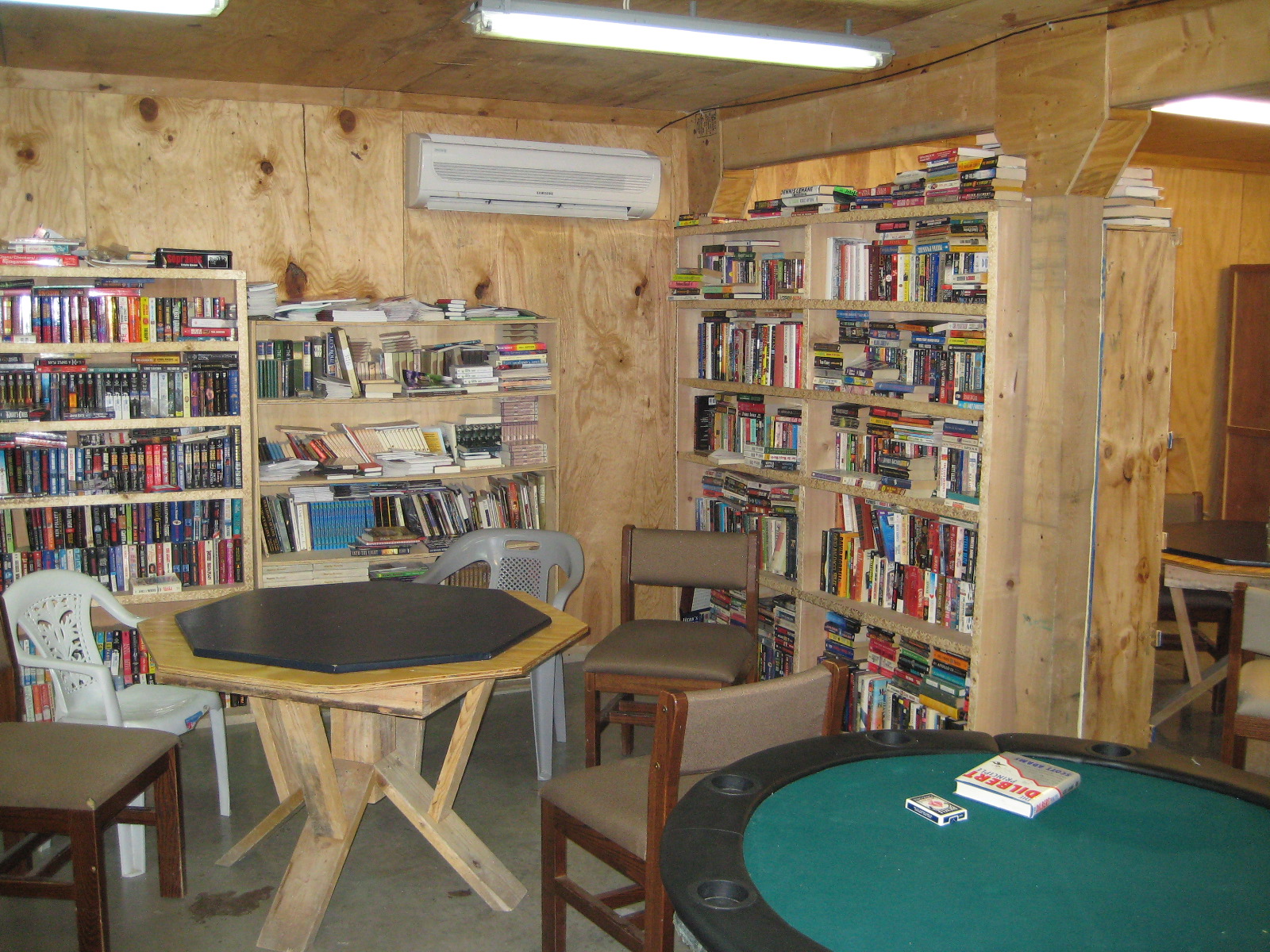
The “take-one/leave-one” bookshelf, Camp Clark, Afghanistan
Photograph by Bill Putnam–please click to enlarge.
Memorial Day is the quietest of national holidays and probably should be even quieter still. It’s hard to say anything in honor of fallen soldiers, Marines, airmen, and sailors that isn’t inadequate to their loss and thus seems fraudulent and self-serving. Even so, it’s hard to resist saying something, and perhaps even necessary. Below are the names of soldiers killed in Iraq and Afghanistan with whom I served, taught, or knew well. All were good men, and their memory informs my sense of what war writing—to include Time Now—can do and be. Here’s to all the good men and women who died in Iraq and Afghanistan, and all those who died in our previous wars, too.
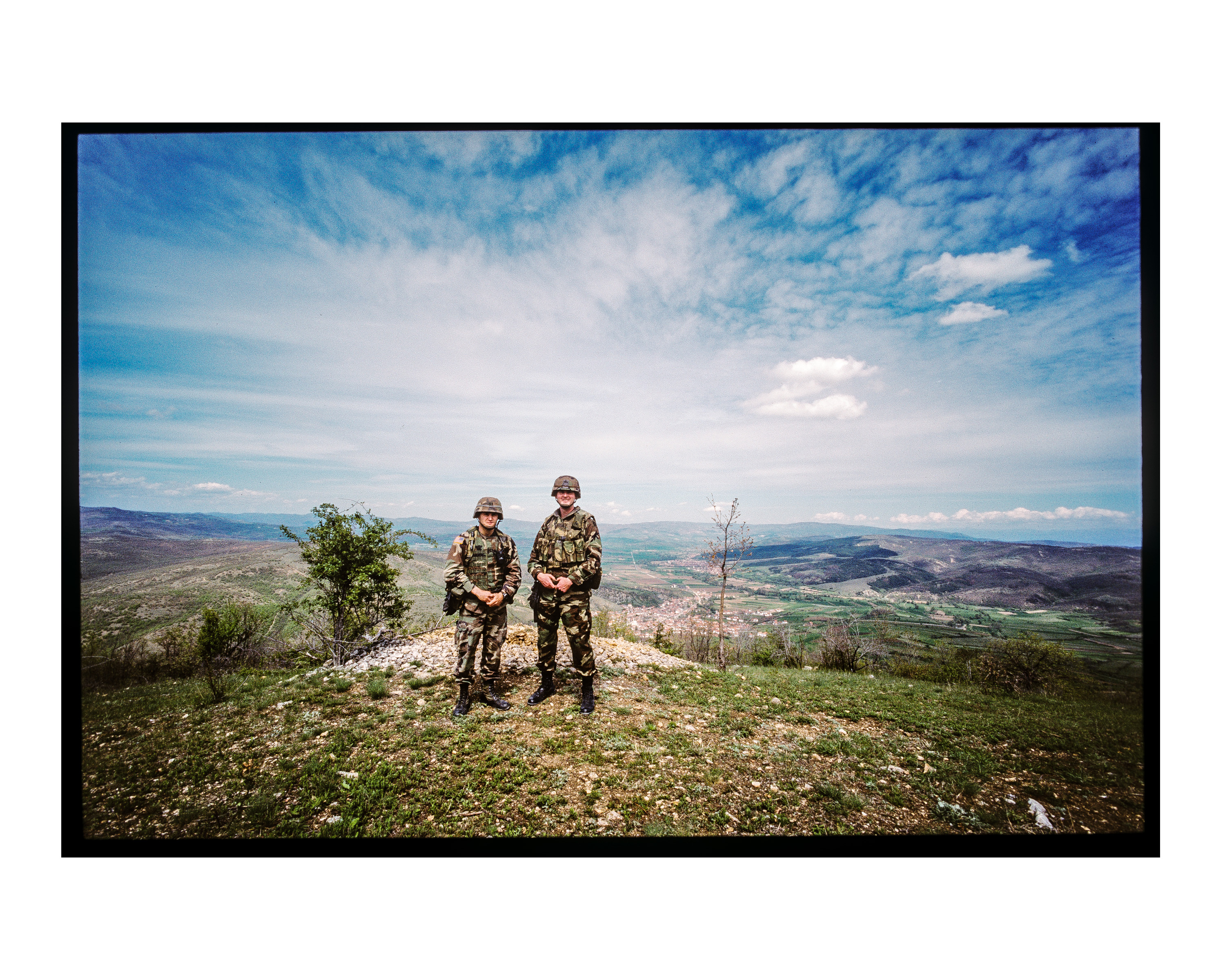
On the right in the photograph above is Captain David Taylor, one of my lieutenants when I commanded a company in the 82nd Airborne Division. In the picture, taken in 2001, he’s standing on a hill outside Gnjilane, Kosovo, where he served as a company commander in a task force of which I was the executive officer. In 2006, Major Taylor was killed in an IED attack in Baghdad.
I’m also thinking about First Sergeant John Blair, Sergeant First Class Kevin Dupont, and Staff Sergeant Alex French, all US Army advisor team members who died in action in Khost or Paktya province, Afghanistan, while I was there. Also, Specialist Peter Courcy and Private First Class Jason Watson, who were assigned to Camp Clark, as was I, when they died in an IED blast just outside Khost city. Colonel Ted Westhusing and Lieutenant Colonel Joe Fenty, friends who died in Iraq and Afghanistan respectively, and former students Captain Dennis Pintor, killed in Iraq, and First Lieutenant Todd Lambka, killed in Afghanistan. Finally, Major Bill Hecker, whom I knew only through email, but who before dying in Iraq in 2006, published a book on Edgar Allan Poe, an achievement that impressed me enormously.
In my thoughts, I also remember the deaths of allies who fought on our side in Iraq, Afghanistan, and all the wars before.
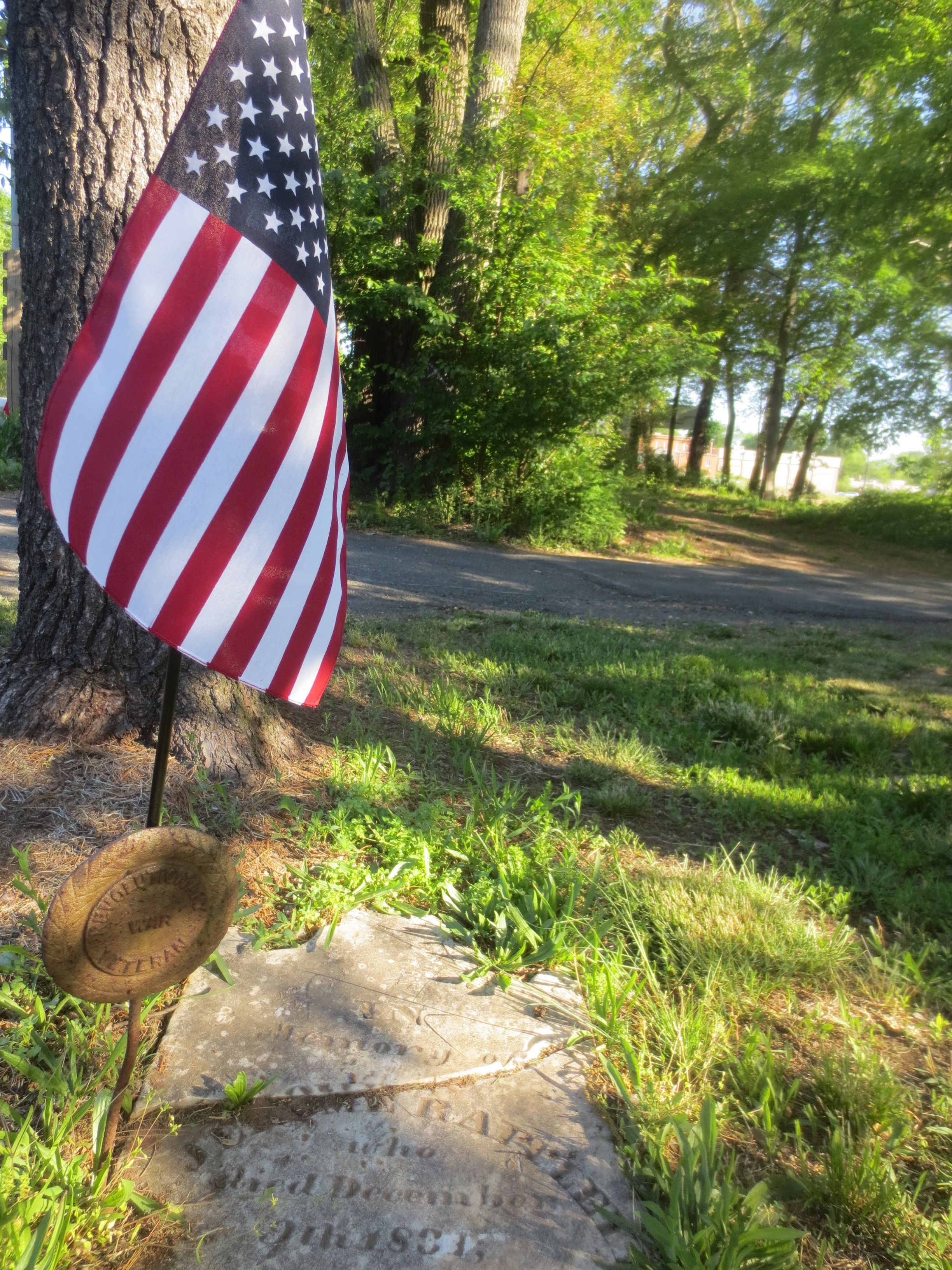
Below is a photograph I took today in a small cemetery in Franklin Township, New Jersey, of a flag placed on the gravestone of a Revolutionary War veteran. I’m glad he is remembered and now add my measure of tribute.
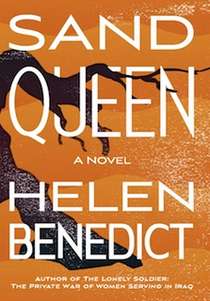
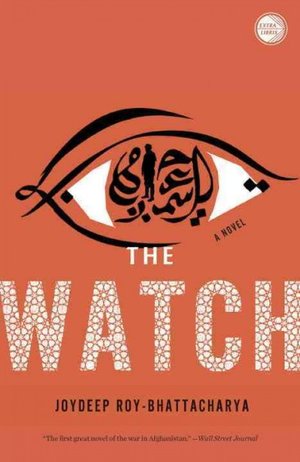
My post last week about poetry written by Afghan women prompted one reader to ask me about fictional portraits of Afghan and Iraqi women and another to ask me about my own experiences with Afghan women during my deployment to Khost and Paktya provinces in 2008-2009. The first query can be answered quickly, for there aren’t many. In Sand Queen (2011) Helen Benedict features a young Iraqi woman named Naema. In The Watch (2012) Joydeep Roy-Bhattacharya portrays a young Afghan woman named Nizam. In both novels, the women narrate their stories in first person in chapters that alternate with others that relate events from American point-of-views. In both novels, the young women have come to American bases or outposts to plead the case of relatives killed or captured by Americans. In Sand Queen, Naema wants to know what’s become of her father and brother, who have been imprisoned in Camp Bucca. In The Watch, Nizam wants the Americans to return the body of her brother, a vaunted Pashtun jihadist, who has been killed in an attack on their compound. The Americans intend to evacuate Nizam’s brother’s corpse to Kabul to verify his identity and publicize his death.
Naema and Nizam are more intelligent, more mature, and more articulate than the Americans with whom they interact. Their integrity and sense of ethics are also superior. Through them, Benedict and Roy-Bhattacharya suggest how ill-equipped most American soldiers were for dealing with Iraq and Afghan nationals, especially women, with anything approaching subtlety and sensitivity. Stupidity and brutality more accurately describe things.
Short story authors Katey Schultz and Siobhan Fallon also occasionally portray “local national” women in their fiction. Benedict, Roy-Bhattacharya, Schultz, and Fallon are all civilians who never served in the military. In the fiction about Iraq and Afghanistan written by veterans, Iraq and Afghan women barely appear. Survey The Yellow Birds, Fobbit, Redeployment, and the Fire and Forget anthology and tell me what you find. Of recently published fiction by veterans, Elliot Ackerman’s Green on Blue includes a young Afghan woman as a secondary character, but not so much Jesse Goolsby’s I’d Walk With My Friends I Could Find Them and Michael Pitre’s Fives and Twenty-Fives. Benedict, Schultz, and Fallon are all women, but not all women authors are given to portraying “host nation” women. None appear in Sparta, They Dragged Them Through the Streets, Be Safe I Love You, or Eleven Days, all written by women. Male civilian authors are more of the same: no Iraq or Afghan women in the male-authored Billy Lynn’s Long Halftime Walk, Wynne’s War, or The Apartment.
So that’s an interesting but not very impressive record. I salute the civilian authors who have made the imaginative stretch to portray war from the viewpoints of Iraqi and Afghan women. The veterans, I’m thinking, just don’t have much real-world experience to draw on, for most of us spent our year or years overseas without any meaningful contact with local women. Here’s the sum total of my experiences, and I went “outside the wire” four or five days a week, at least in the first eight months of my deployment, to interact with Afghan civilians in one capacity or another.
Every woman we saw on the roads of Khost province wore blue burqas that covered them from head-to-toe. When we passed them in our trucks, they would turn away from us and hunch down in a ball until we passed. This behavior outraged our interpreters. “Do you know why they are doing that?” they would ask, “It is because the Taliban is making them.” But the times we saw women on the street were few. On most missions, we only saw men. Stopping to speak with the women we did see was unimaginable.
We hosted a shura on our camp and one of the speakers was a woman politician of some fame in Afghanistan. I wish I remembered her name, because I wonder how she came to prominence and what’s become of her. After the public shura, I was privy to an hour-long private meeting in which the woman-politician was the only female in a group of twelve (and I the only American). Her veil came off and she bantered back-and-forth, seemingly at ease, with the men, who also seemed to enjoy the occasion immensely.
A package bounced out of one of our trailers on a bumpy patch of road and was immediately picked up by a young Afghan male who carried it into a kalat. We stopped and sent our interpreter to retrieve the package. I watched as he was met at the door by a woman who vehemently denied that anything had happened. She and our interpreter jabbered back and forth for a few minutes and then the interpreter pushed past her into an interior room, retrieved the package and returned to our trucks.
Adolescent girls before maturity played on the streets without restraint, and it was heart-breaking to think about those obviously within a few months of disappearing behind the veil and kalat walls for the rest of their lives. We hosted weekly medical clinics on our camp and saw a steady stream of young girls there, but all were escorted to us by their fathers and older brothers, never their mothers and older sisters. My Afghan counterpart sometimes was visited by his seven-year-old daughter, who scampered about the office as a young girl would anywhere, alternately snuggling up to her father and then dancing across the room in peels of laughter. For a while, a young Afghan-American woman worked as an interpreter on our camp. We all liked her fine, but she had trouble relating to the Afghan officers. I think the problem was more that her command of Dari and Pashto were not great and also that she was demure by nature—a huge handicap in a nation made up of emotional and outspoken verbal combatants.
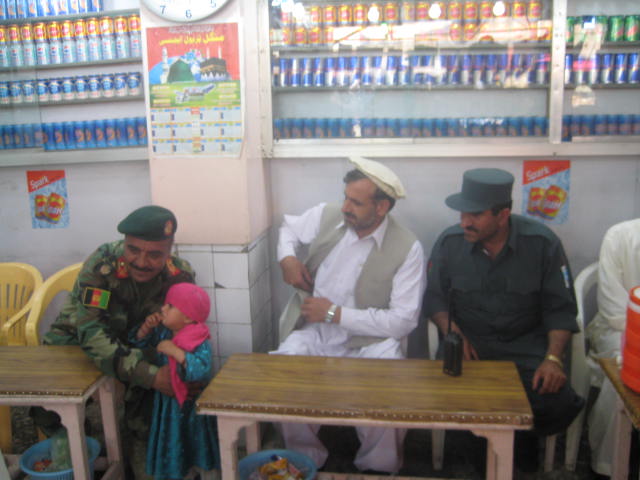
An ANA brigade commander, the governor of Khost, and the Khost police chief with a young girl in a downtown Khost ice cream shop.
So that was it—pretty slim pickings, all-in-all, and though I’m sure we could have done better, the pickings were certainly even slimmer for rank-and-file soldiers. The men and women who served on Provincial Reconstruction Teams, which were charged with nation-building and humanitarian missions, had more significant interactions, but their numbers were few. NGOs had developed a network of women’s schools, clinics, and centers in they years after 9/11, but by the time I arrived most had closed, if not been blown up. Maybe more was happening in Kabul and inside the Green Zone in Iraq, but I wouldn’t know. Much has been made lately of the Cultural Support Teams made up of women who passed rigorous qualification tests to work with Special Operations units to facilitate their interactions with women. I don’t want to gainsay anything the women on these teams accomplished, and I look forward to finding out more about them, but accompanying Green Berets, SEALs, and Rangers on midnight missions to seize High Value Targets in my mind unfortunately doesn’t qualify as a significant and sustained engagement with the women of Afghanistan, and in any case the whole effort came at least five years too late. If there were feminine hearts-and-minds to be won, or important intelligence to be gained from the distaff side of Afghan and Iraq society, we didn’t do much to glean them. That’s good news for military wives worried about their husbands misbehaving downrange or falling in love with an Afghan or Iraqi beauty, but bad news for war writers interested in portraying the full range of citizenry in the lands in which we fought.
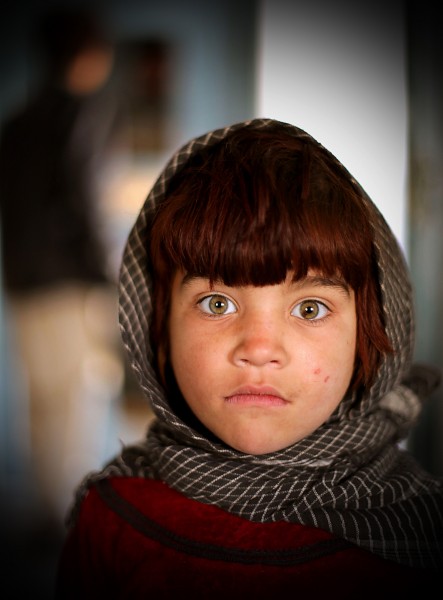
A girl at the Camp Clark clinic, 2009. Picture by an International Security Force and Assistance Force photographer.
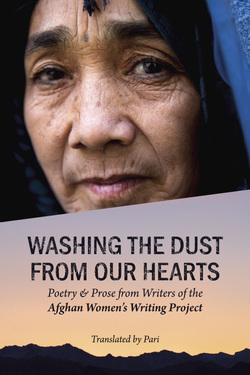
Washing the Dust from Our Hearts: Poetry and Prose from Writers of the Afghan Women’s Writing Project is, as far as I can tell, the second volume published by the organization named in its title. The first, The Sky is a Nest of Swallows, appeared in 2012, while Washing the Dust from Our Hearts is out just this year. The Afghan Women’s Writing Project (AWWP), formed in 2009 by journalist and novelist Masha Hamilton, is a collective comprised of interested American writers and publishing world friends who facilitate via the Internet writing by women in Afghanistan. Most of the collective’s work is online, but Washing the Dust from Our Hearts and The Sky is a Nest of Swallows represent efforts–pretty substantial ones–to place in print female voices from a land often described as the worst place in the world to be a woman. Afghanistan is also said to be a land thick with poets, with a tradition dating back to the great 13th-century mystic Rumi, but it has been a male tradition never hospitable to women writers and now even less so under the pressure of the Taliban.
The Afghan poets who participate in AWWP do so at great risk—the hardship and danger of writing publicly, especially for Western audiences, is writ large in many Washing the Dust from Our Hearts poems. Women participate, they tell us, because they feel empowered by doing so and because they want the world to know their plight. They use the artistry of poetry to give shape to the suffering of women and the nation at large at the hands of the Taliban during an extended period of war. The beauty of poetry comes in the expression of loss, mixed with pride in their defiant survivors’ strength, and their ability to imagine a better Afghanistan that was and which might be again.
My favorite poem in Washing the Dust from Our Hearts is “My Beautiful and Lovely Kandahar”by a woman named Shogofa, the link to which is at the Afghan Women’s Writing Project website. Another favorite, a stanza from which I will quote here, is “My Wild Imagination” by “M”:
I am one of those women with a wild imagination
who yearns to see equality of Afghan men and women
in action and law. I want lovers to walk
in the streets of Kabul, Herat, Mazar,
holding hands, sharing hugs,
free of harassment and harsh looks aimed at them like bullets.
An interesting aspect of AWWP is that the women write in English; the poems in Washing the Dust from Our Hearts appear in their English original version and also in versions translated into Dari, the Afghan version of Persian, and then transcribed into Arabic script by a woman named Pari. This remarkable alchemy of poetic production and reproduction is made possible by the care and let us not forget resources of the American (and other international) members of the collective. I salute AWWP for their effort and achievement and encourage you to support them.
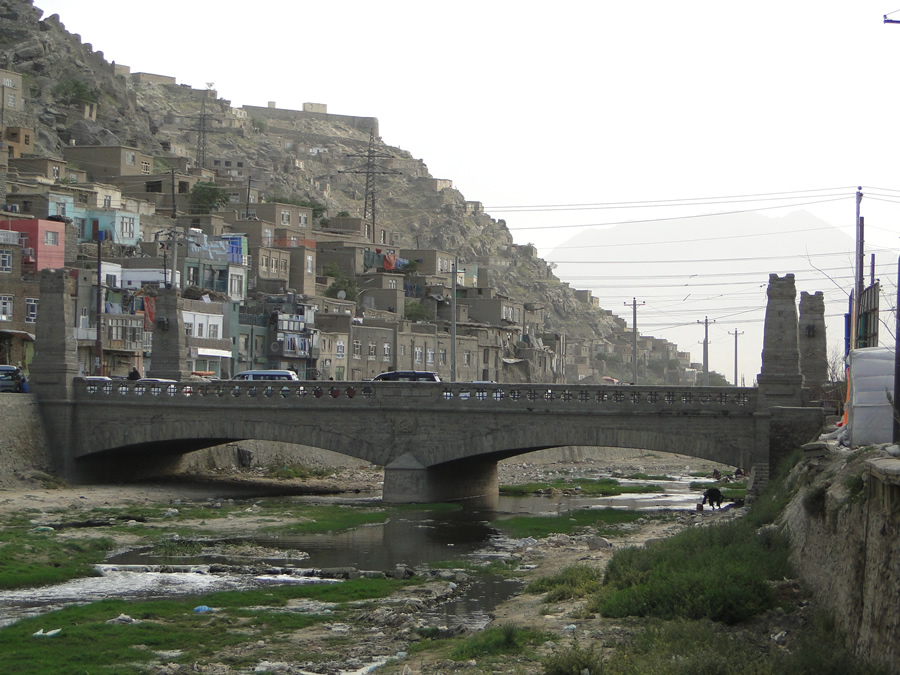
A photo of a Kabul bridge, by Roya, from the AWWP website.
Washing the Dust from Our Hearts: Poetry and Prose from Writers of the Afghan Women’s Writing Project. Edited by Lori J.O. Noack; translated by Pari. Grayson Books, 2015.
 My review of Colby Buzzell’s latest essay and magazine article collection Thank You for Being Expendable is up at The Bridge, a website dedicated to “Policy, Strategy, National Security, and Military Affairs,” as their Medium site explains. The Bridge has actually run three reviews of Buzzell’s latest, so let me salute my co-reviewers, a US Army officer who goes by the nom-de-plume Angry Staff Officer and a US Air Force officer named Blair Shaefer, both of whom turn many nice phrases. The ASO, for example, writing of the senior junior enlisted faction of the military known as “E4s,” who tend to be the most reliable indicator of unit morale, writes, “if there actually was an E-4 Mafia, Colby Buzzell would be the godfather.” Shaefer describes Thank You For Being Expendable the “punk rock alternative to Service Academy and/or Ivy League-educated military officer GWOT memoirs.” Like!
 Time Now: The Wars in Iraq and Afghanistan in Art, Film, and Literature