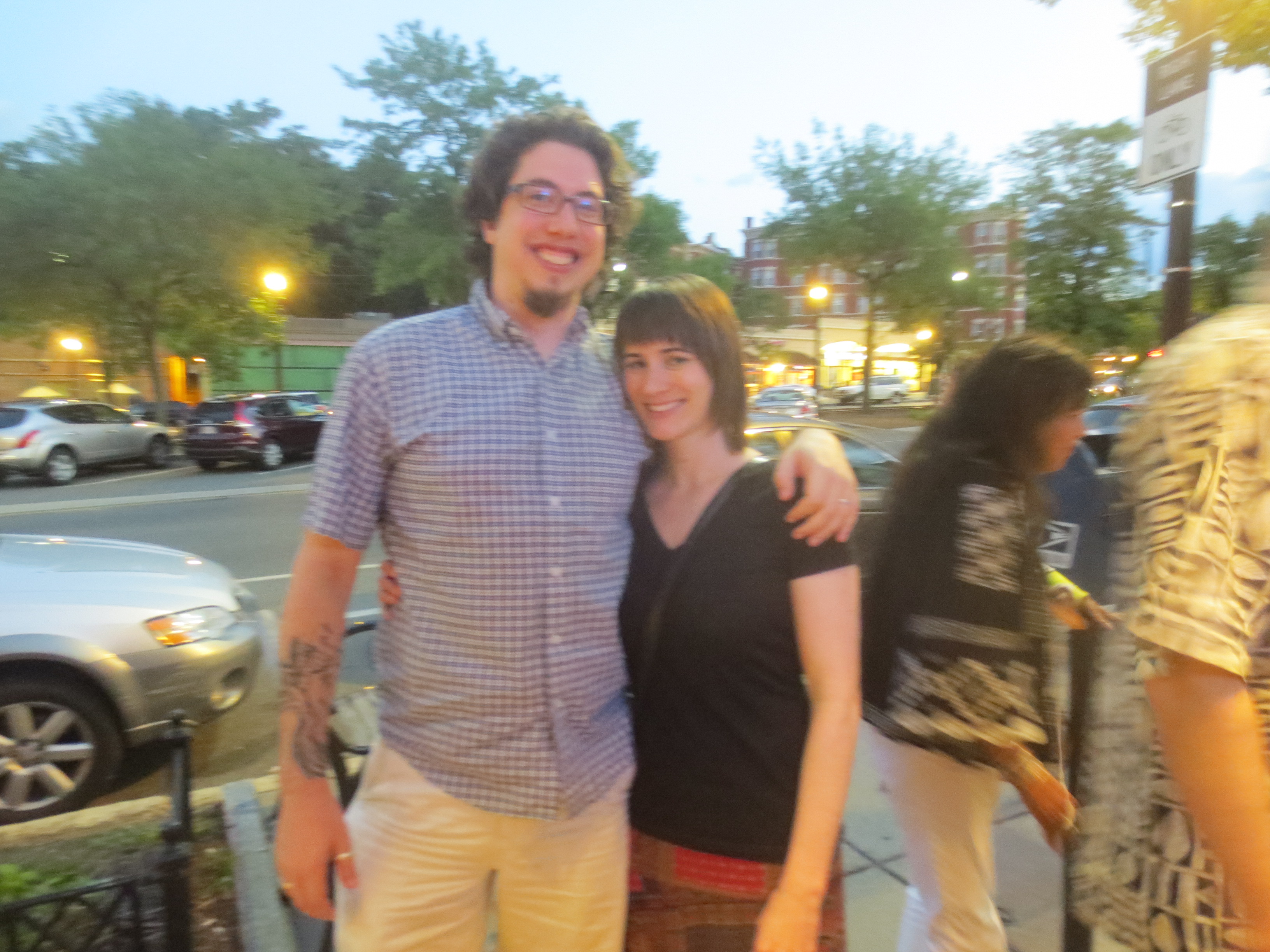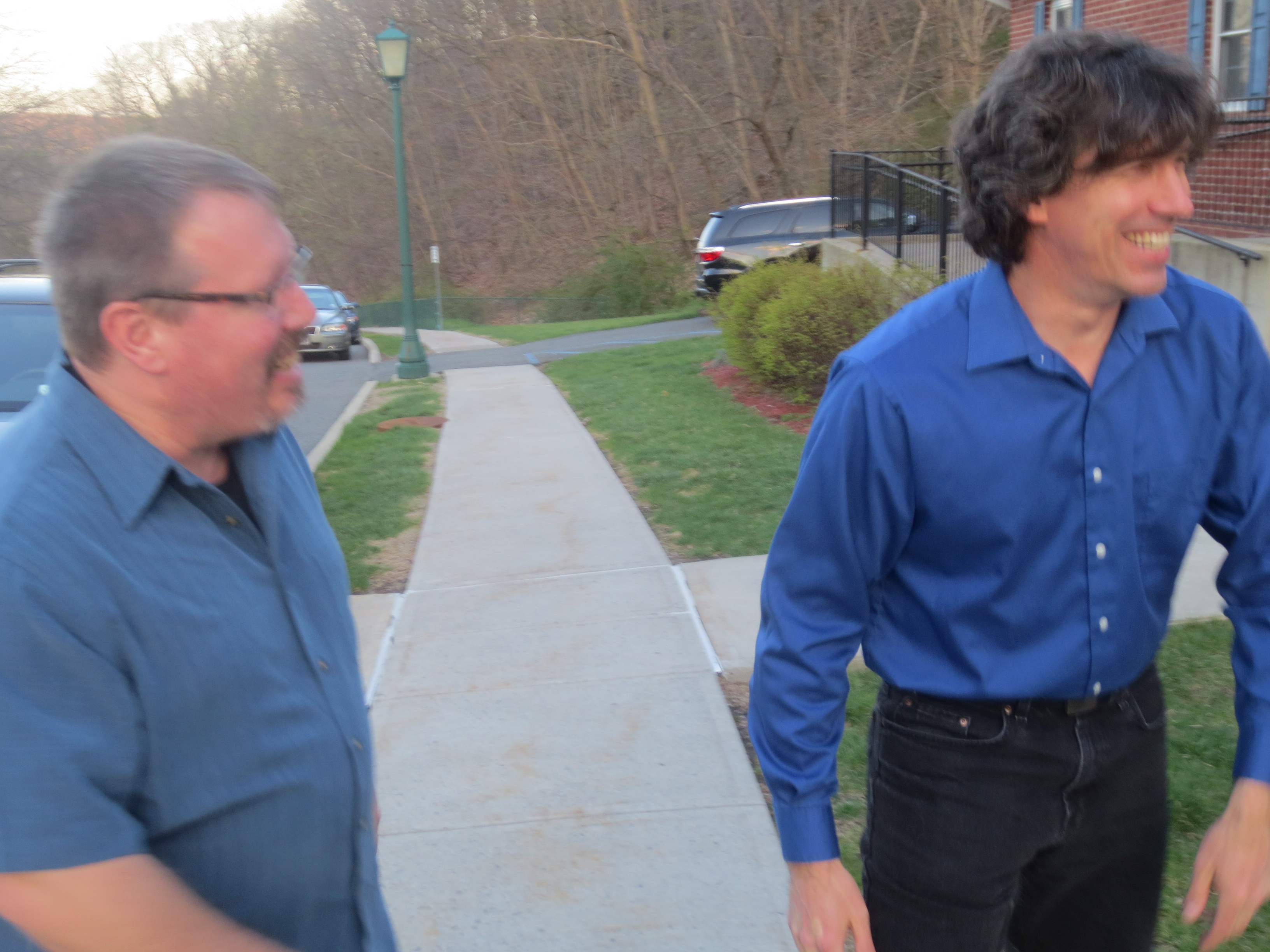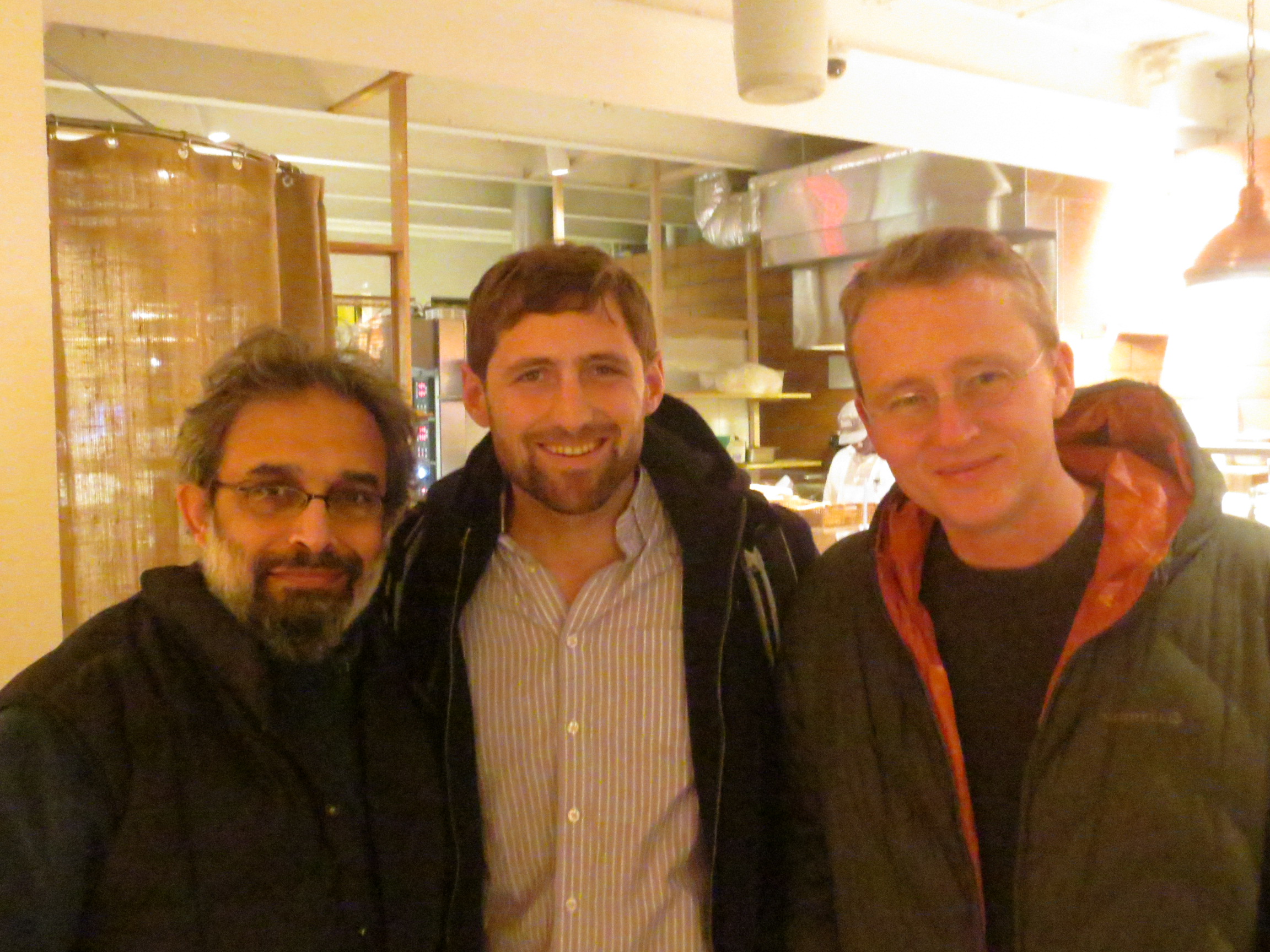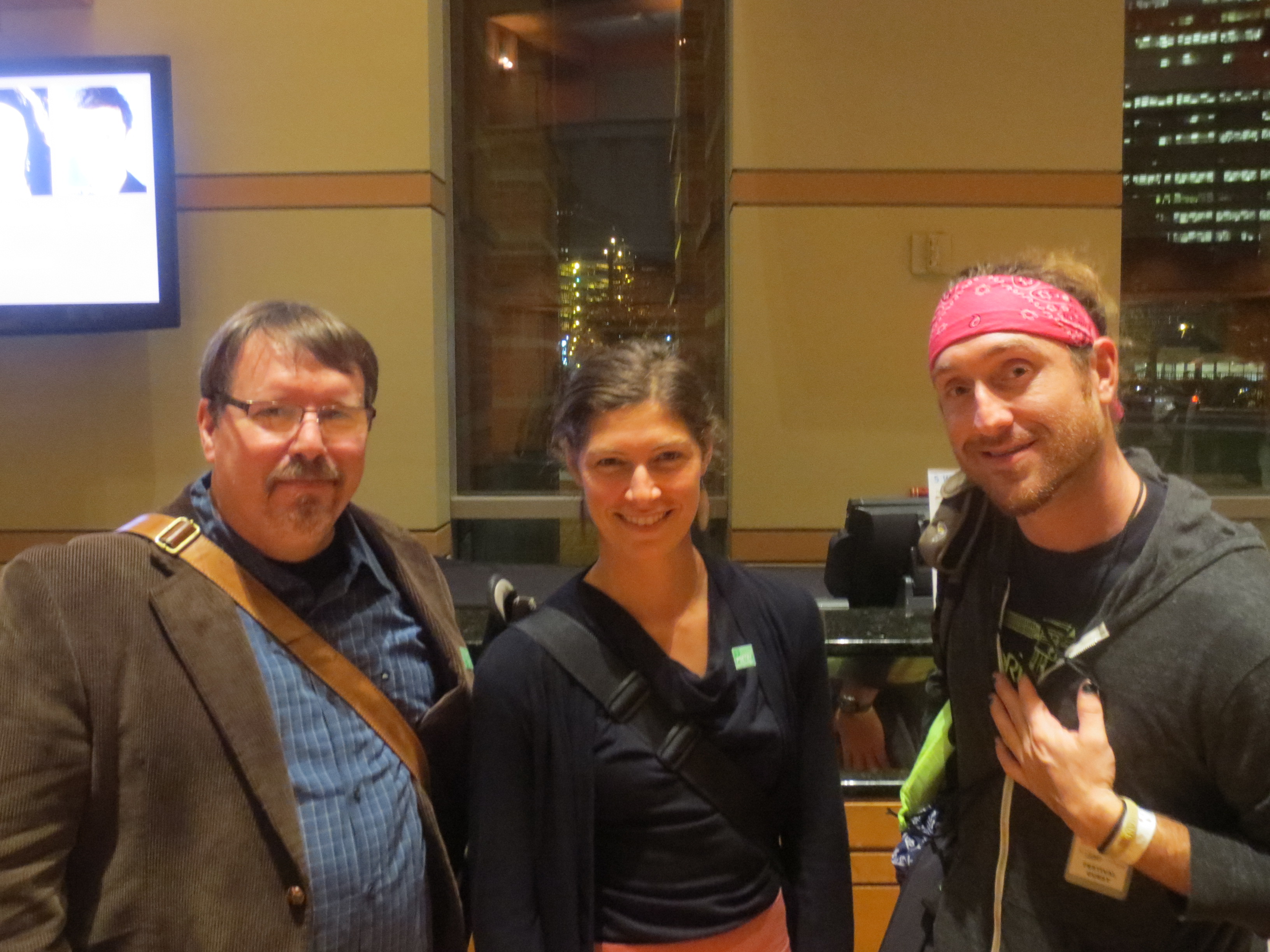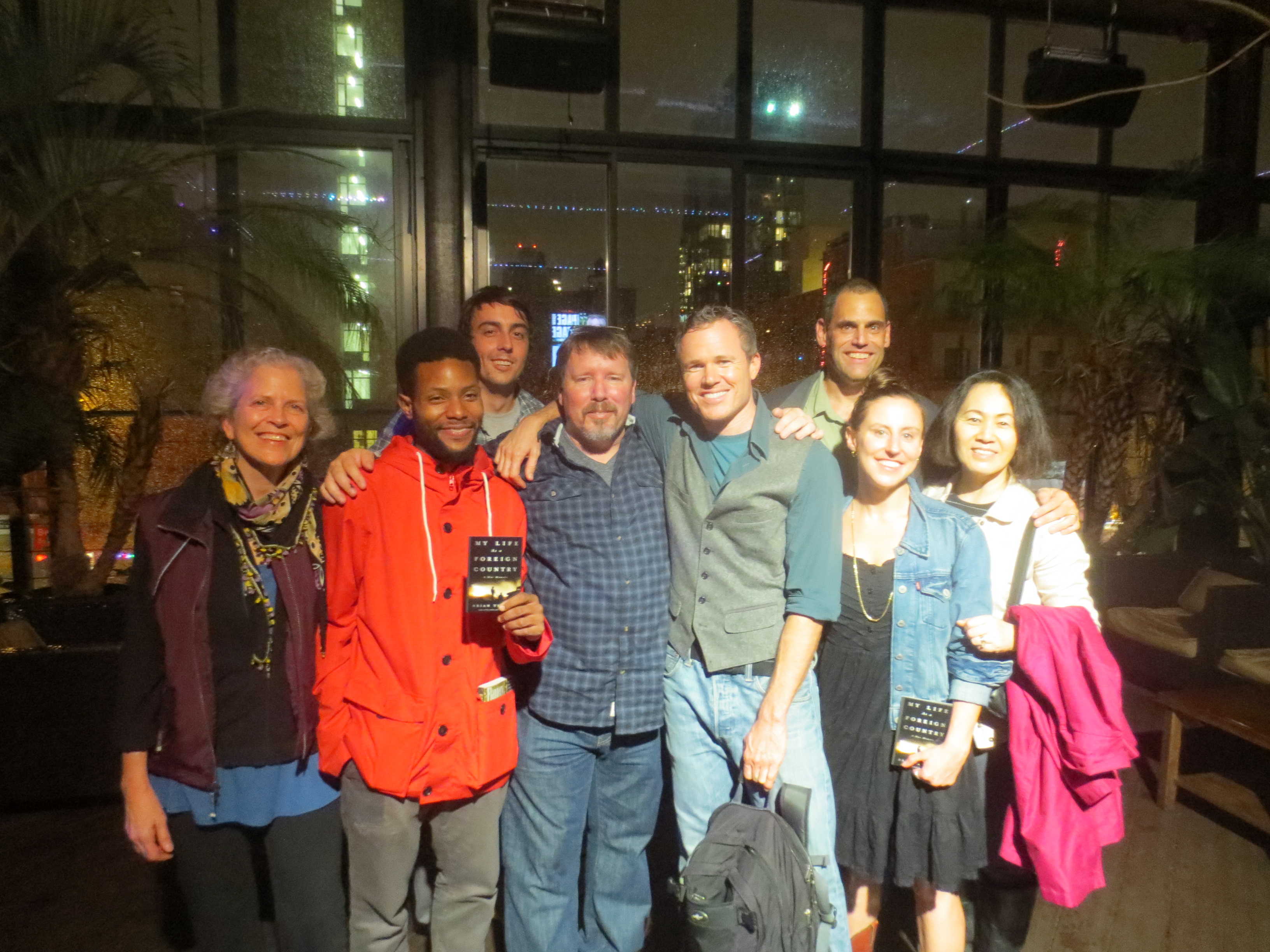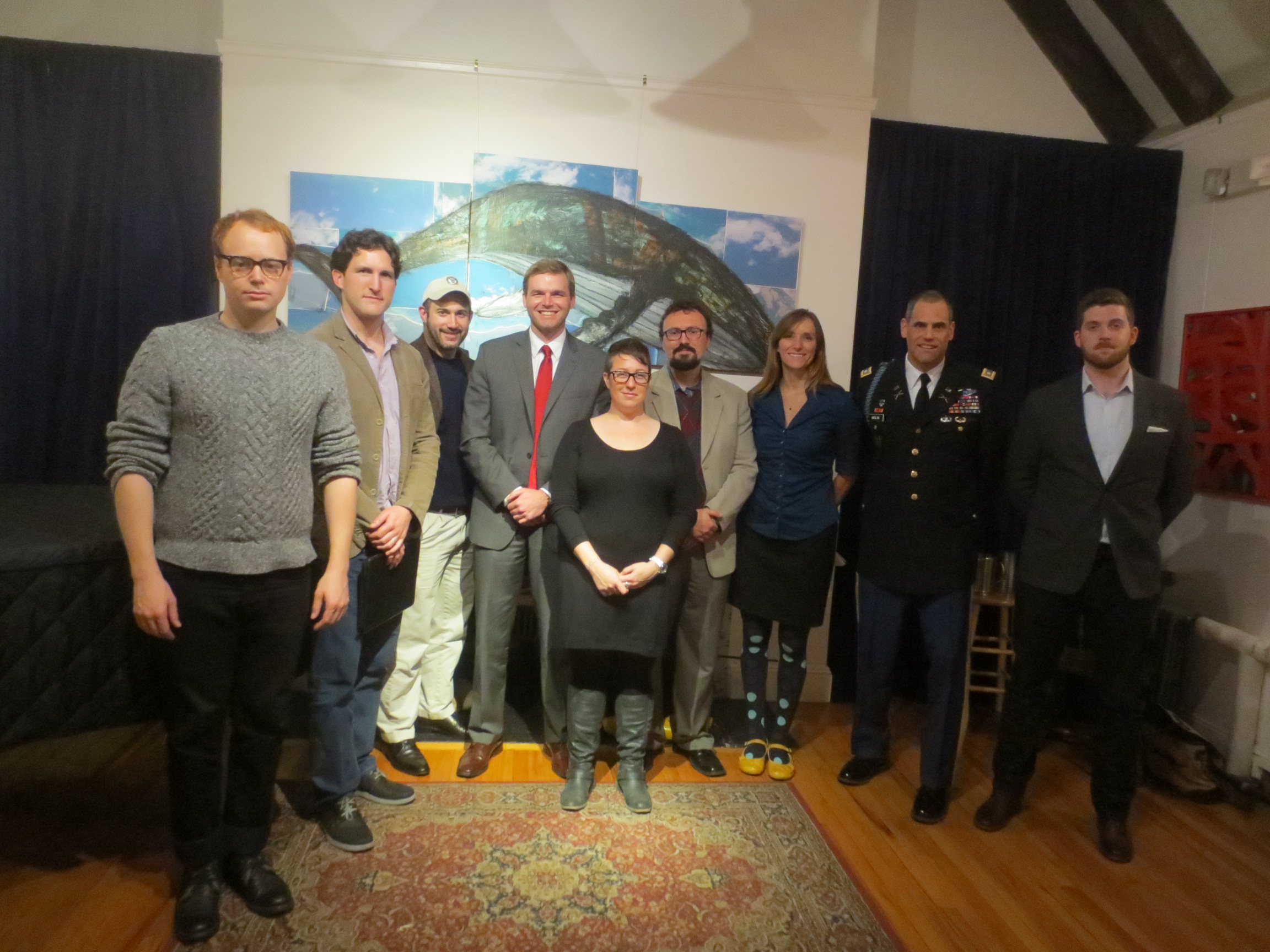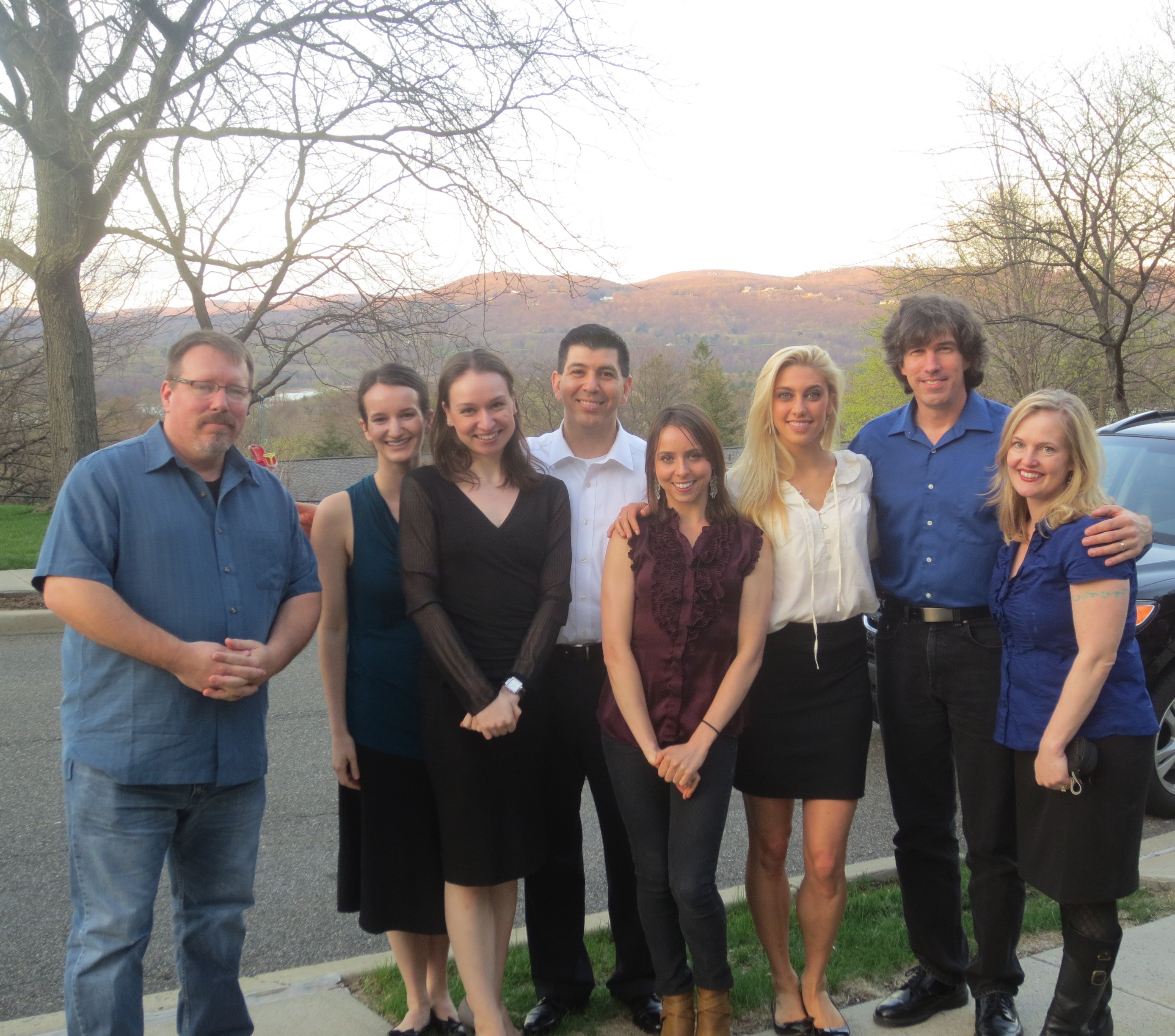
A War Writer Portrait Gallery

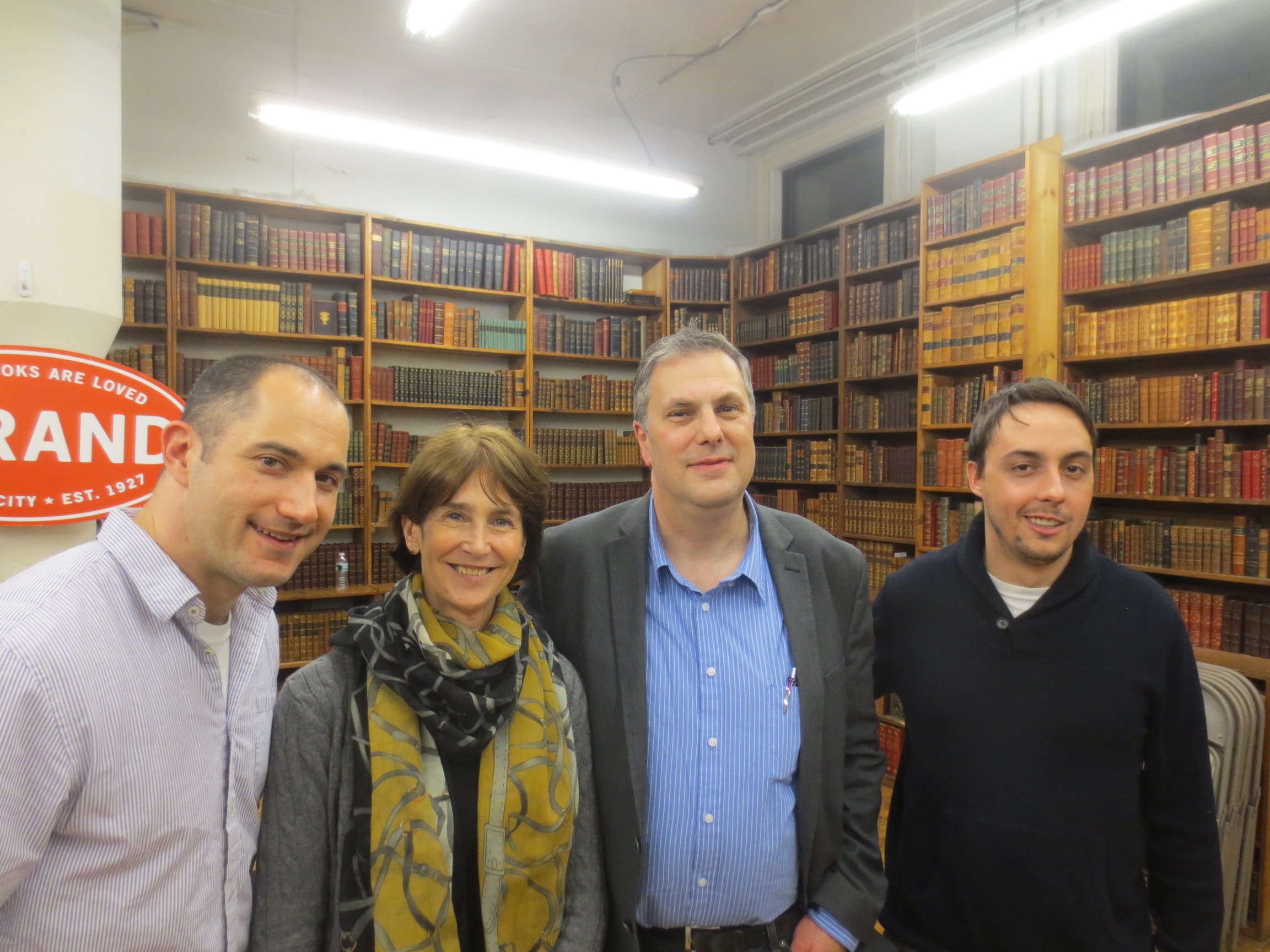
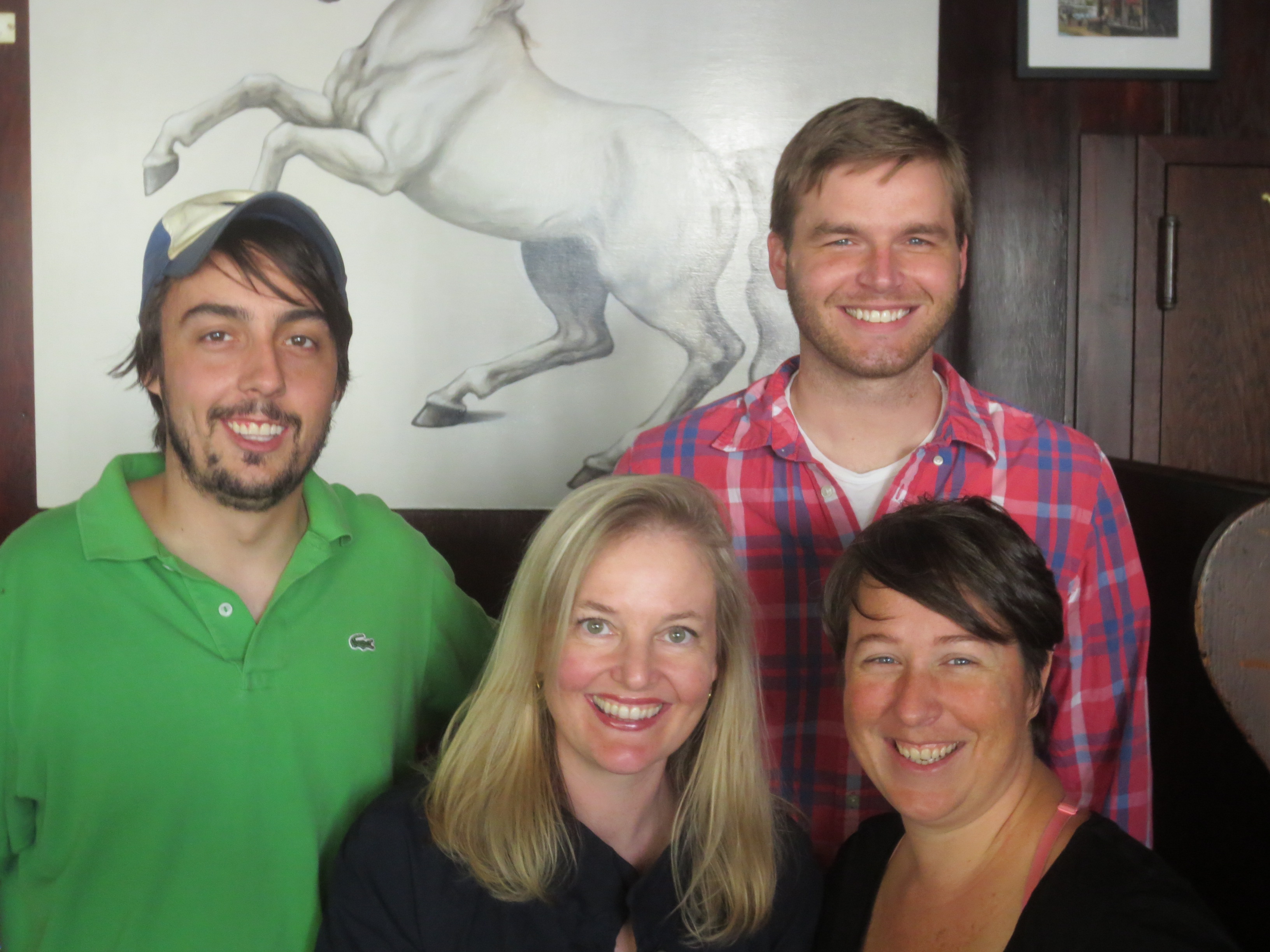
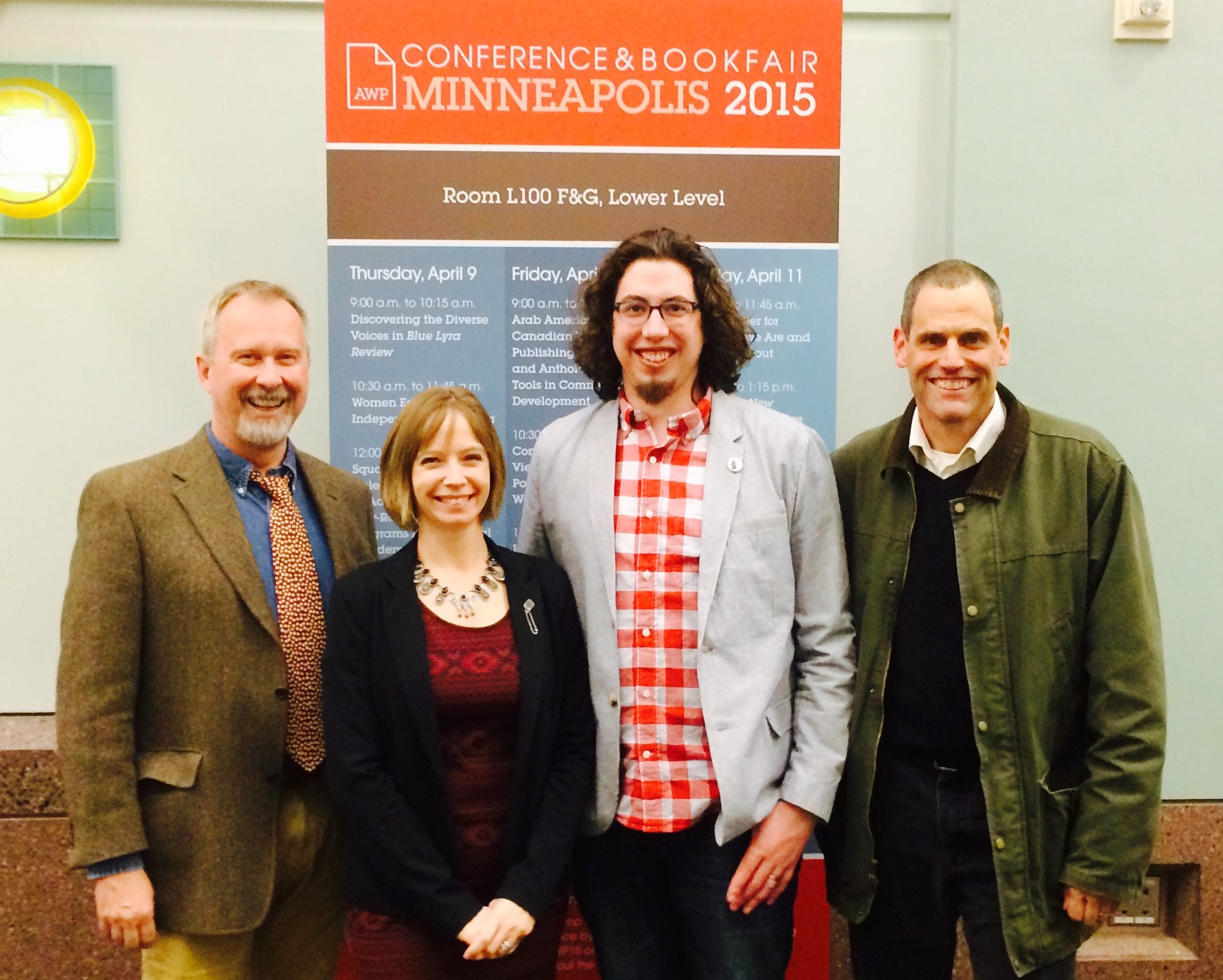
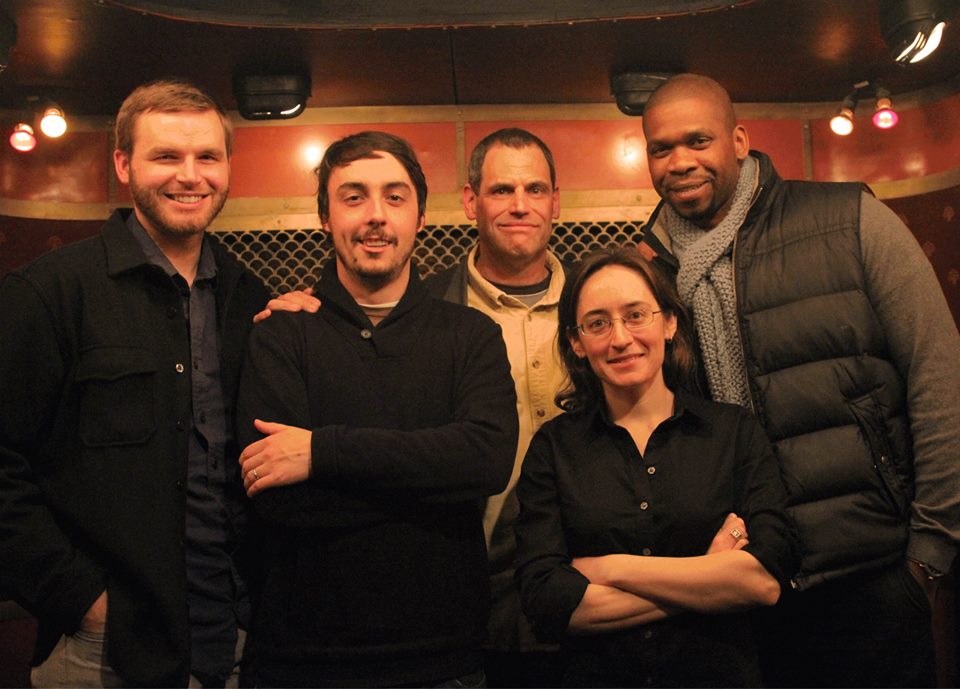
War is a grim subject, and war writing comes from painful and angry places, but all my opportunities to meet and converse with modern war writers in person have been fun, laugh-filled events that defy super-seriousness. Below is some of the “ocular proof,” as Othello put it. Only Hassan Blasim seems able to resist what must be an American impulse to smile for the camera, but I can attest that in conversation Blasim doesn’t miss many chances to put things in humorous perspective. Thanks for the good writing so far, everyone, and to more good times and more great writing to come.

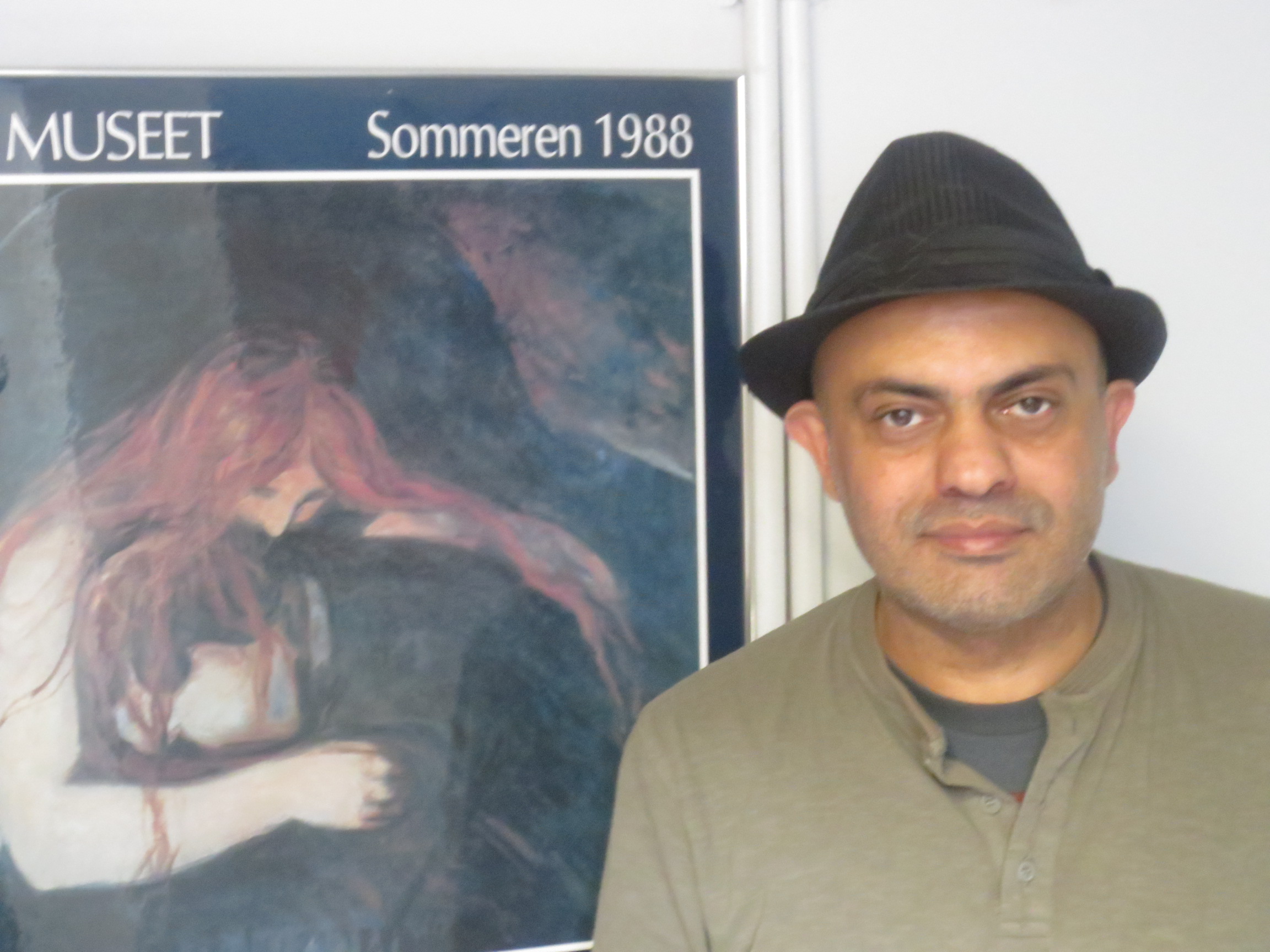
Hassan Blasim
Hassan Blasim
Benjamin Busch
Benjamin Busch
Siobhan Fallon
Siobhan Fallon
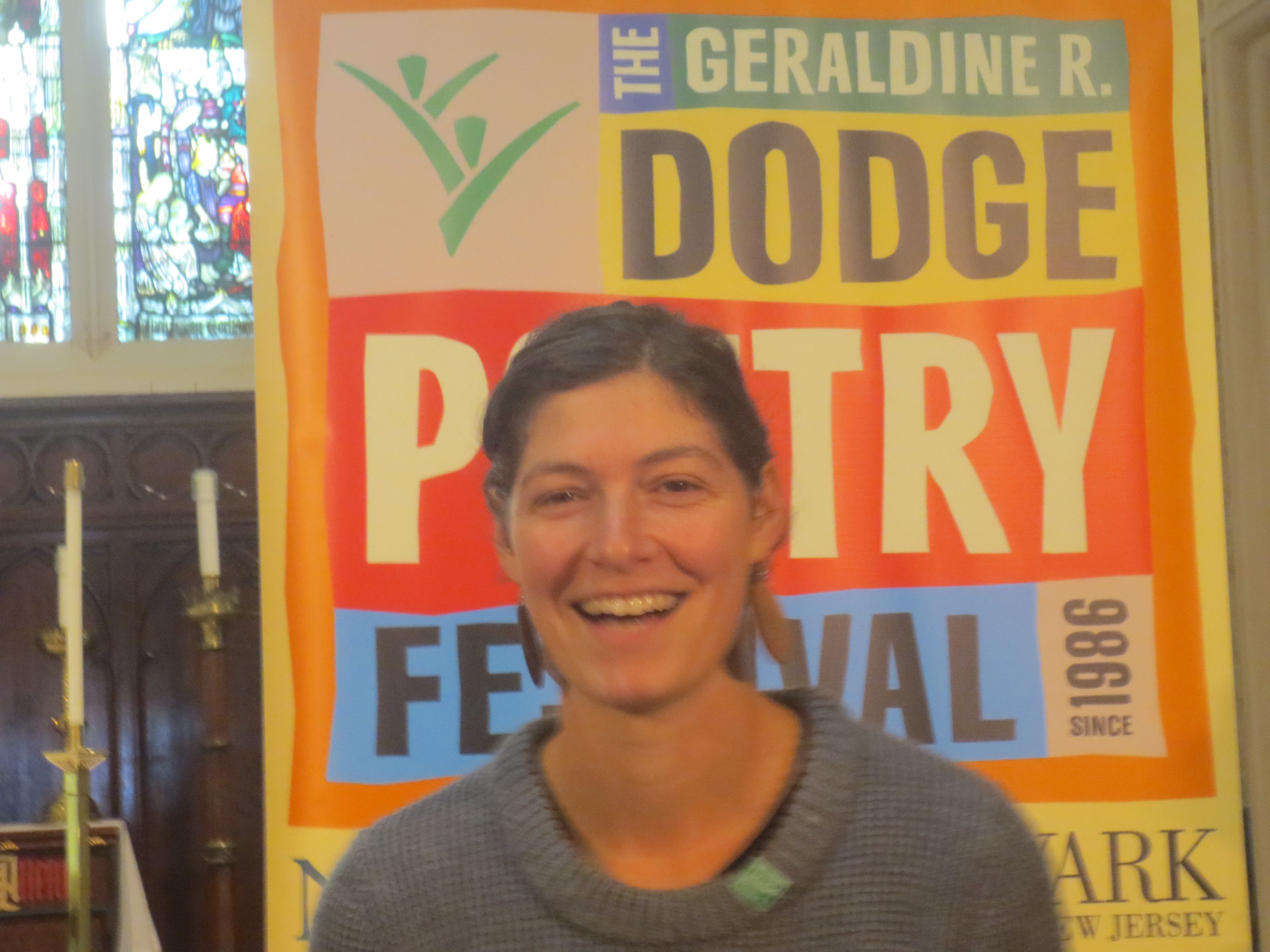
Elyse Fenton
Elyse Fenton
Phil Klay
Brandon Willitts
Brandon Willitts
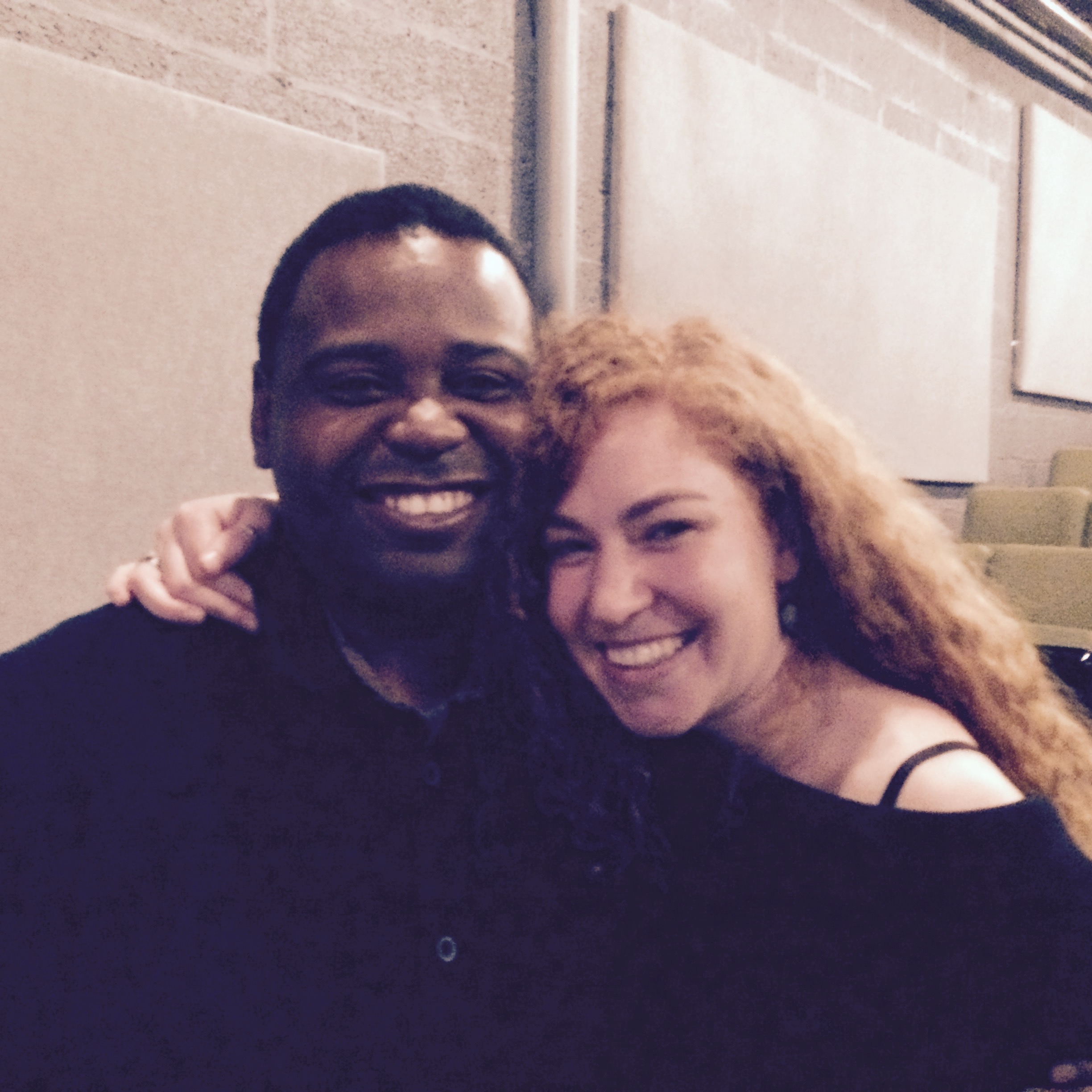
Maurice Decaul and Alex Mallory
Colin and Lauren Halloran
Mariette Kalinowski and Siobhan Fallon
Siobhan Fallon and Andria Williams
Phil Klay and Hassan Blasim
Brian Turner and Benjamin Busch
Joydeep Roy-Bhattacharya, Phil Klay, and Roy Scranton
Matt Gallagher, Andrew Slater, and Fred Marchant
Brian Turner, Elyse Fenton, and xxxx.
Brian Turner, Elyse Fenton, and Jeremy Stainthorp-Berggren
Adrian Bonenberger, Roxana Robinson, David Abrams, and Matt Gallagher
Matt Gallagher, Siobhan Fallon, Brandon Willitts, and Mariette Kalinowski
Ron Capps, Kayla Williams, Colin Halloran, me.
Ron Capps, Kayla Williams, Colin Halloran, me
Brandon Willitts, Masha Hamilton, Phil Klay, and Maxwell Neely-Cohen
Brandon Willitts, Matt Gallagher, me, Teresa Fazio,   and Paul Wolfe
Brandon Willitts, Matt Gallagher, me, Teresa Fazio, and Paul Wolfe. Photo by Kelly Shetron, used by permission of Words After War.
Matt Gallagher, Brian Turner, the performance poet Rives, and a few happy fans
Brian Turner, Matt Gallagher, the performance poet Rives, and a few of their fans
A whole bunch of us
Nathan Bethea, Eric Nelson, Adrian Bonenberger, Brandon Willitts, Mariette Kalinowski, Vic Zlatanovic, Lisbeth Prifogle, me, Jacob Sotak
Brian Turner, Benjamin Busch, Siobhan Fallon, and Adrienne de la Feunte, Joanna Priwieziencew, Roman Baca, Chloe Slade, and Paige Grimard of Exit 12 Dance Companyt 12
Brian Turner, Benjamin Busch, and Siobhan Fallon, along with Adrienne de la Feunte, Joanna Priwieziencew, Roman Baca, Chloe Slade, and Paige Grimard of Exit 12 dance company

All photos taken by me, my wife Sang Hui, or with our cameras, with one exception:  the picture of Brandon Willitts, Matt Gallagher, Teresa Fazio, and Paul Wolfe.  This picture I downloaded from the Words After War Facebook page and somehow filed in our personal gallery.  My intent was to use only pictures that we had taken, but it is too good not to include.

Video Game Day: Maxwell Neely-Cohen’s “War Without Tears”

call-of-duty-advanced-warfare-logo

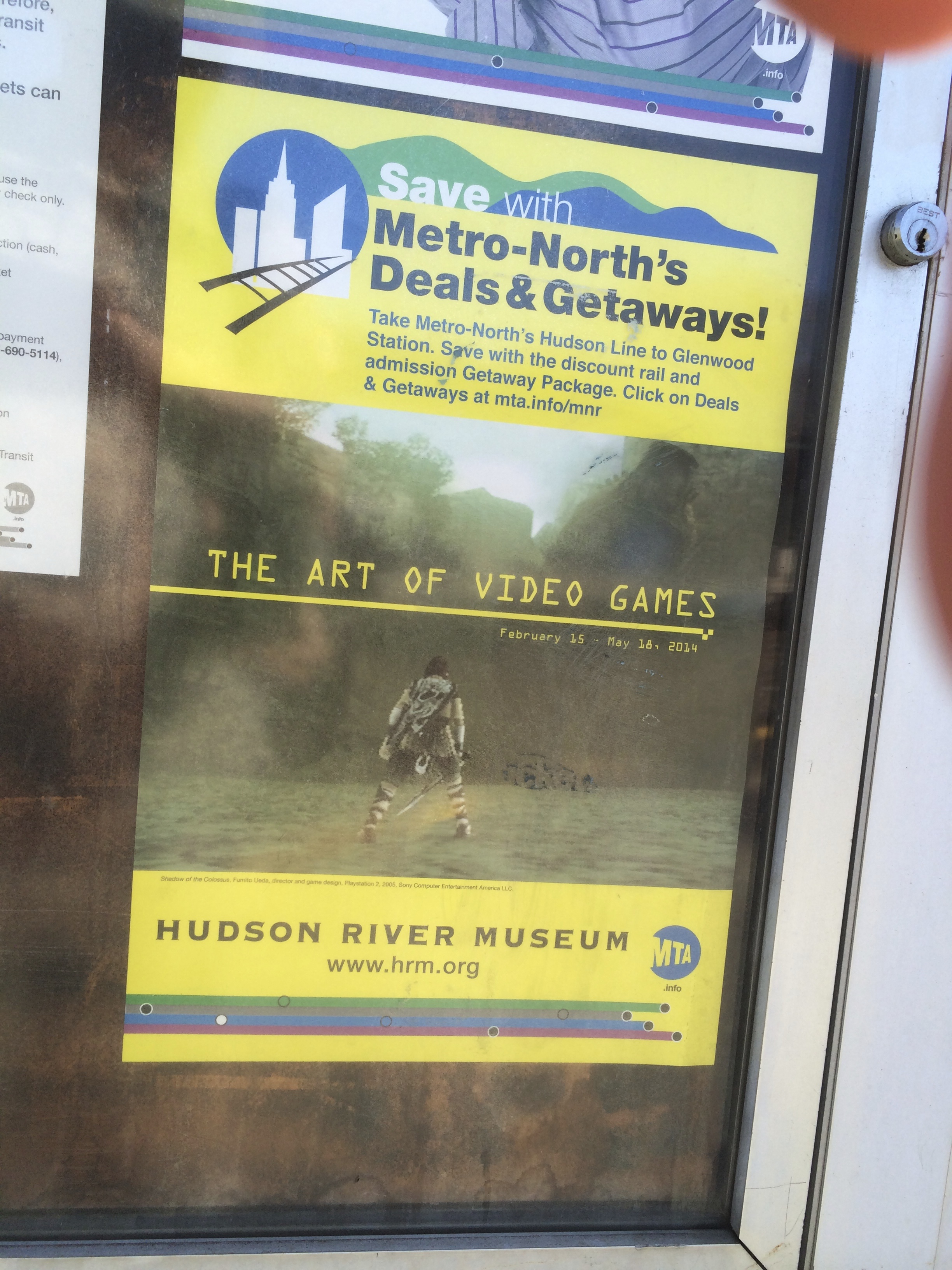
Has anyone ever noticed that Time Now has never featured a post about video games and video game culture? Probably not, but the omission has long bothered me. “Video games” as a category may fit uneasily within this blog’s self-defined rubric of “art, film, and literature.” In my mind, though, the fantastically stylized, heavily aestheticized representational world of video games, especially first-person shooters (FPSs) and military role-playing games (RPGs), have much in common with the imaginary depictions of combat featured in traditional artistic-entertainment forms such as books, pictures, and movies about war. Both as an influence on real soldiers and as a commentary on modern warfaring, their importance is unquestionable. That I haven’t been able to articulate the linkage between video game popularity and a nation-at-war has seemed to me a huge shortcoming of Time Now. If there is anything that has made the blog stodgy and culturally out-of-touch, it is that.

This teeth-gnashing is linked to life, naturally, for I’ve never played so much as a second of a military-themed video game, even as my two sons have played many hours of Call of Duty under my own roof and many soldiers with whom I deployed played FPSs and RPGs whenever they could.

Given my near-neurotic diffidence to actually playing video games, I’ve done what I’ve always done in such cases: I turned to books for understanding of a phenomenon I was too hung up about to enjoy for myself. And yet, the pickings here so far have been slim. Until recently, the most substantial investigation of video games and modern war has been a great chapter in scholar Dora Appel’s War Culture and the Contest of Images that explores the popularity of America’s Army, a first-person shooter developed at West Point—get this—in the same building where I worked for ten years. I had never paid much attention to America’s Army before reading Appel and subsequently was driven to apoplectic wonder to learn that it was not just an effective recruiting tool (its intended use), but actually garnered respect from the hardcore gaming community. Fuck! What else has the Army done so well (and I have missed) in the last 15 years?

I say all the above to say this:

Last week, a New York City-based writer named Maxwell Neely-Cohen published on Boing Boing  and the Armchair Empire an essay on video games and contemporary militarism called “War Without Tears: The Relationship Between Video Games and Violence Is Healthier Than We Think.”  I knew the project was in the works, because I’ve met and chatted with Neely-Cohen at various war-lit events and surmised that if anyone could write a great essay on the connection between video game and martial culture, he could. Having worked as an intelligence analyst and the author of a cool coming-of-age novel called Echo of the Boom, Neely-Cohen combines writing chops with an ultra-alert mind thoroughly in tune with our generational moment. Himself a veteran gamer, he brings to the subject an insider’s savvy devoid of snoopy-pants suspicious judgmentalism many other writers, such as me, probably couldn’t avoid.

Neely-Cohen’s essay combines reportage, first-person experience, and the kind of speculative cultural commentary—pro-technology and progressively anti-authoritarian—you would expect from a website sponsored by anarcho-futurist-technophile author Cory Doctorow. Below are some snippets that set-up Neely-Cohen’s larger argument. I won’t explain or explore the full dimensions of his claims now—let’s just say they are bold and provocative, and I hope he’s right that video-game playing is “healthy”—but you can bet I’ll be thinking about them in the weeks to come.

Even with the success of movies like American Sniper and books like Phil Klay’s Redeployment, the most consumed artistic images of the past 14 years of American conflict lie in video games.

More people are pretending to fight wars than actually fighting them. What does this mean?

But in addition to these larger constructs, in some small cultural way, video games must have played at least some role in pushing the actual experience of warfighting further from the public mind.

At the same time, video games present a stark example of a civilian population increasingly disengaged from war and the military, a distraction from the violence which they portray.

Young people, particularly young men, can now fulfill that cultural and psychological obligation towards the experience of organized violence—without actually joining the military.

IMG_0051
I didn’t make it to this exhibit from a year or so ago, but I’m glad to know someone was thinking along the same lines as me.

In Our Time

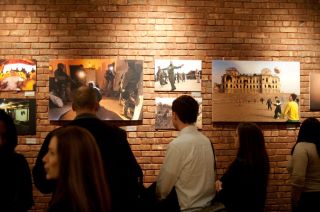
On the 116th anniversary of Ernest Hemingway’s birth, I’m republishing my tribute to him that I first posted on my old blog 15-Month Adventure. It recounts, in the style of Hemingway, a visit to the Conflict Zone war photography exhibit in New York City in 2012. The photo described in the story, taken by Jed Conklin, can be found in the gallery (#5 of 20, to be specific) at this New York Times story on the exhibition. Read my story, please, read the link, and then read today at least one story from In Our Time, Hemingway’s great collection of home-from-war fiction.

****

The veteran made his way across the first floor and took the elevator up to the third floor. There were so many people in the gallery that he could not see the photos on the walls. He had to squeeze people aside just to look at them.

The pictures were really good. Some were of soldiers in action, like one of a Marine pulling another Marine to safety. Another showed a soldier staring through the window of a Humvee that had just been attacked. The windshield was splattered with blood and gore, and an M4 rifle lies on the hood of the Humvee.

The picture was intense, but it was the rifle on the Humvee hood that got him. He remembered using that same space for quick meetings, and how soldiers would spread their weapons and gear across the flat surface to free their hands to take notes or look at their maps.

Now, in the picture, the M4 looked forlorn as it lay separated from the soldier inside the vehicle. But also sinister, the jet black weapon and its equally black sling sprawled on the yellow-brown Humvee hood like a nest of vipers on the desert floor.

Other pictures showed soldiers in calmer moments. Many were of Iraqis and Afghans. Some were taken during moments of fear, pain, and loss, others in the midst of daily life. These pictures were good, too.

The veteran looked at every picture twice. Then he stood outside on the sidewalk and thought about going back in to see them one more time. He watched the crowd come and go and decided to head home. The cab driver seemed willing to talk, but the veteran let the cab roll on quietly, up the Avenue of Americas and then Park Avenue to Grand Central.

Four Hispanic men were clowning around in the line at McDonald’s. One of the men began singing a song in English, “Open Arms” by Journey. The guy could really sing. He sounded just like Steve Perry. He was really good. But then he stopped, and he and his friends started cracking up again in Spanish.

On the train, the veteran read Hemingway’s In Our Time. The stories were good. The best was “The Battler,” but the one that made him wonder most was “Soldier Home.” The protagonist, a WWI vet back from the war, goes to see his sister play “indoor baseball.” What the hell was indoor baseball?

He was thinking about that when he noticed the woman across the aisle. She had been fiddling with her phone and computer and drinking a 24-oz. can of beer. Now, though, she was upset. At first he tried to ignore her, but it was impossible. She had a bloody nose that would not stop bleeding.

“Can you watch my stuff for a minute?” she asked.

She hurried to the bathroom. The veteran moved across the aisle to stake a better claim on her things. After a while, she returned, and he went back to his side of the train.

When the veteran’s train arrived at his station, he got off and he went home.

Conflict Zone

Contemporary War Fiction: Is The Best Yet to Come?

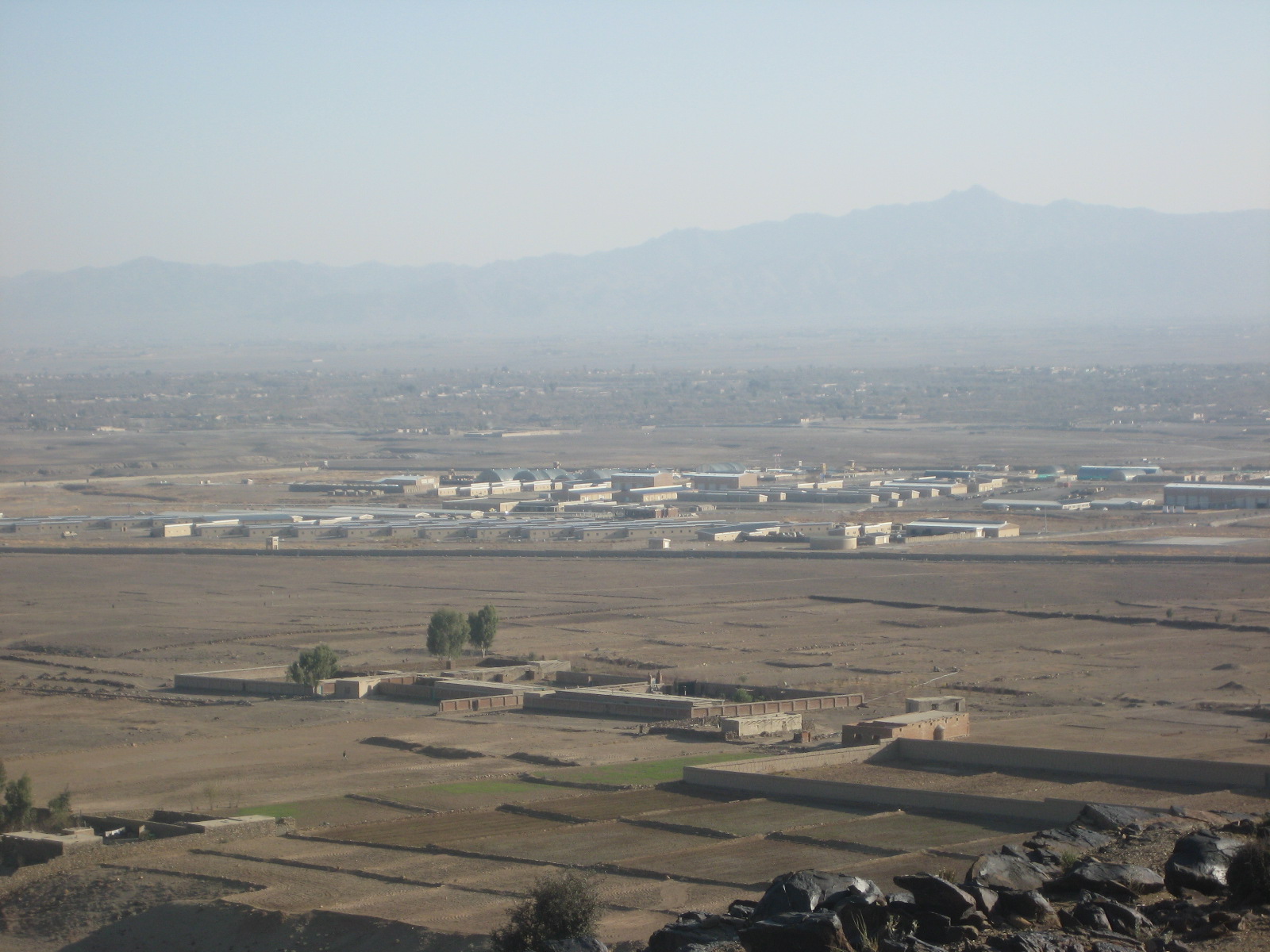
Camps Parsa and Clark, Khost Province, Afghanistan

In an essay published online in Harper’s this week titled “First-Person Shooters: What’s Missing in Contemporary War Fiction,” Sam Sacks takes millennial war authors to task for writing solipsistic stories that focus on the plight of woebegone individual soldiers traumatized by their deployments. Childlike innocents more than hardened warriors, the protagonists of war fiction bumble through their tours without doing any real fighting and then wallow in self-pity upon return. Their constant complaints that they don’t understand what they have experienced are matched only by their assertions that even if they could explain what happened on deployment, readers who hadn’t been there wouldn’t get it. The whole thing, Sacks asserts, is “pitiable,” coming from soldiers who were supposed to have fought competently and bravely, and made worse by MFA programs that have transformed veteran would-be writers into morose belly-button gazers too dull and chicken to address the moral and political implications of their service.

Thus Sacks seems not very impressed by the war lit he’s read so far, giving it what feels like a grade of C- or even D-  for its failure to achieve all that it might have. “One of the jobs of literature is to wake us from stupor,” he concludes, “and the best attempts of today’s veterans have done little to disturb it.” Though Sacks doesn’t mention American Sniper, the logic of his critique explains why the memoir and film were so popular. While fiction protagonists fret about buddies killed by random mortar rounds, Chris Kyle shot bad guys left and right, didn’t feel a lick of remorse, wrote about it candidly, and was subsequently rewarded with adoration and riches. Kyle’s claim that “For myself and the SEALs I was with, patriotism and getting into the heat of the battle were deeply connected” doesn’t reflect Sacks’ politics, but Sacks would probably find it a more profound and honorable statement about the larger dimensions of Iraq and Afghanistan than anything in name-your-favorite-novel by name-your-favorite-author-of-war-fiction.

Sacks is a lively writer, and he knows how to insert a knife and twist it so it really hurts. I don’t disagree with most of his observations, though, just the final assessment. The trends and patterns Sacks identifies are writ large in the pages of the stories he examines. But rather than taking the measure of contemporary war fiction in order to damn its authors, I value what the corpus of war fiction has accomplished so far and for what it promises in the future. Most soldiers were not heroes, the wars were damn confusing, and that confusion is clearly and smartly reflected in the writing about it so far. “Write-what-you-know,” an MFA precept that irritates Sacks to no end, seems prudent for vet novelists the first time out, even if it leads to the “the abyss of subjectivity,” as Sacks claims. Holding veteran authors responsible for exacerbating the civil-military divide also seems a little harsh, given what so far has been a better effort than anyone else has attempted to bridge that divide. Sacks thinks it is a problem that no veteran has yet written a work that combines the imaginative sweep of War and Peace with the cultural punch of Uncle Tom’s Cabin. But the issues he identifies as structural and endemic are better seen as challenges for the next round of war fiction writers to figure out and transcend—which I’m pretty sure they are already in the process of doing.

Those Lazy, Hazy Days of War Writing Summer…

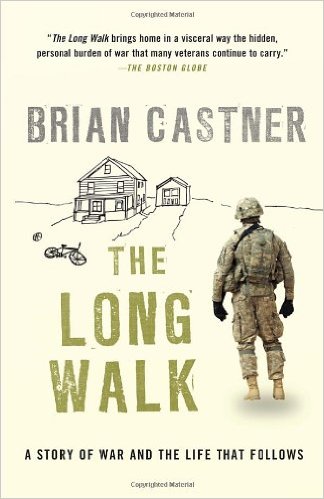
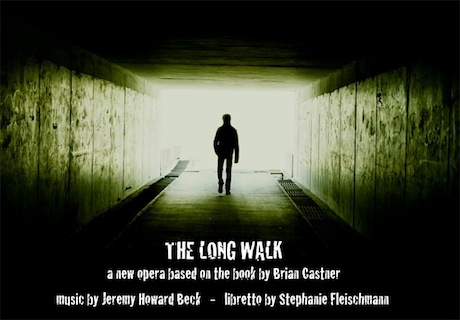
The Long Walk…aren’t so lazy and hazy if you live in the New York City area, where the artistic and intellectual processing of the wars in Iraq and Afghanistan affords almost too many events to absorb. The highlight of the summer is the staging in Saratoga Springs (180 miles up the Hudson River from Manhattan) of an opera based on Brian Castner’s memoir The Long Walk. Castner probably didn’t see it coming, but in retrospect it’s not hard to recognize his memoir’s operatic potential. Castner’s record of his tours in Iraq as the head of an Air Force Explosives Ordnance Disposal detachment and his troubles readjusting to civilian life afterwards is fine in its particulars—in a perfect world it would be more popular than American Sniper. It’s got more harrowing combat scenes, for instance, as well as better descriptions of specialized military training and more honest, reflective, and generous portraits of how difficult redeployment can be. But what really elevates The Long Walk is Castner’s imagining of his life in terms of darker, larger, may I say mythic forces that imbue existence with cosmic significance. In particular, Castner describes what it means to be overcome by “The Crazy”—those oh-fuck moments after war when you realize just how screwed over combat and danger have made you, no matter how normal you appear or try to be. Castner’s richly-situated exploration of the larger-than-life forces that envelop him are I’m sure what inspired the opera producers Jeremy Beck and Stephanie Fleischmann.

The Long Walk Opera

More prosaic, but still exciting, war-lit readings are taking place within the city itself. Words After War impresarios Brandon Willitts and Matt Gallagher are sponsoring not one, but two series of readings. Monthly events at The Folly, a Greenwich Village bar partly owned by Gallagher, have featured local veteran and military-themed writers, such as Mariette Kalinowski, Kristin Rouse, and Jake Siegel, as well as civilian authors, reading unpublished and recently published work in an intimate setting. Words After War also co-sponsors a second set of readings, called Danger Close, in conjunction with New York University English professor Patrick Deer. Deer is part an academic consortium named the Cultures of War and Postwar Research Group and the author of Culture in Camouflage, a study of literature written in Britain during World War II, so it’s great that he has now turned his attention to contemporary American war writing while helping showcase its authors in intriguing pairings with compelling moderators. One Danger Close event featured Phil Zabriskie and Jesse Goolsby in conversation with Lea Carpenter, and a second had Myra Jacob hosting authorial collaborators Gavin Kovite and Christopher Robinson along with August Cole and P.W. Singer. And as if that weren’t enough, the energetic and innovative Willitts and Gallagher have announced a third event, a one-off called Writing War, to take place July 30 at the Brooklyn Historical Society and featuring Phil Klay, Matt Gallagher, Sara Novic, and Maurice Decaul.

Words After War is by far not the only game in New York town, either. War author and Restrepo filmmaker Sebastian Junger, for example, has been hosting readings featuring veteran authors and war journalists at HIS bar-restaurant the Half-King and elsewhere in the city. Earlier in the summer, Arts in the Armed Forces, a vet-friendly organization founded by actor and ex-Marine Adam Driver, helped promote an off-Broadway play by Daniel Talbott titled Afghanistan, Zimbabwe, America, Kuwait. Alex Mallory, who has staged at least two plays about war in Iraq with her troupe Poetic Theater, is back July 27 with a staged reading of her work There Are No Camels in Beirut, about conflict in that strife-torn city in 2006. Invitations to events and announcement of new programs by writing collectives such as Voices From War and the NYU Veterans Writing Workshop arrive weekly if not daily. And in the most out-of-the-blue way possible, I’ve been consulted by the event-designers of Gigantic Mechanic, a Brooklyn arts initiative currently developing an interactive theater experience called Hearts and Minds, which will allow audience members to role-play members of an infantry squad on patrol in Iraq. That’s not quite as cool as having an opera made of your life, but I’m flattered to have been asked for input.

So that’s New York for you, creatively and endlessly engaged and productive. I hope things are as busy and interesting as you want them to be wherever you are this summer.

The American Sniper Situation: The Not-So-Secret Inclinations of Popular Taste

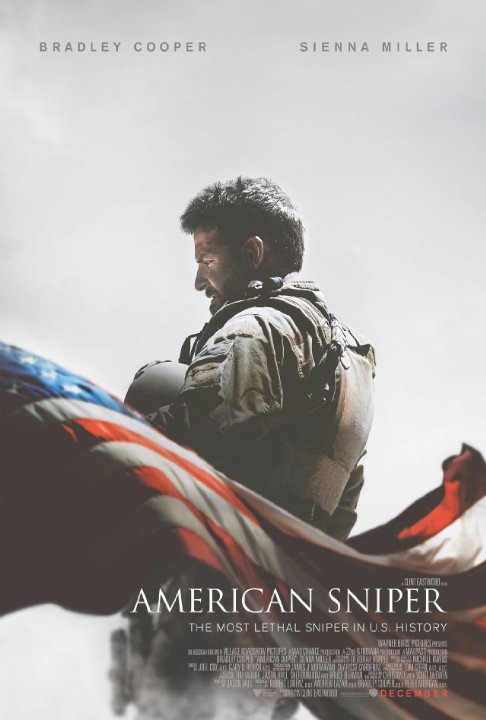
American SniperI’ve been asked to contribute to an anthology of essays on American Sniper and have been working on my contribution the past few weeks. The project’s given me a chance to reread many of the reviews published upon the memoir’s and then the movie’s releases, and below I offer a list of some of the most pertinent ones. One subject of discussion has been whether Clint Eastwood’s movie version of American Sniper is faithful to Kyle’s memoir and if either the movie or the book fully and accurately relate the totality of Kyle’s life and service. Other reviews ask what is so “American” about Kyle and his brand of sniper-heroics. Still others question whether the movie glamorizes war generally or justifies specifically war in Iraq and glorifies the contributions of Navy SEALs to the American military effort. Some reviews take issue with the movie’s portrait of Iraqi civilians and combatants, while a final set discusses the memoir’s and film’s depiction of the potentially traumatic effects of combat and deployment.

Taken together, the memoir, the film, the reviews, and everything and everyone pertaining to their production and distribution, to include the thoughts of the real-life men and women portrayed, to include Kyle’s victims, constitute what Israeli photography critic Ariella Azoulay would call an interpretive “situation”: analysis of an artistically- and technologically-shaped representation of a real-world person or event that incorporates everything that has been said and could be said about both, in order to elicit the most detailed and just understanding of the moral, political, and aesthetic stakes involved. A tall order indeed–too tall for me here, but no doubt the American Sniper situation allows us to gain traction on at least two pertinent questions about the millennial wars:

What does it take for young Americans to kill in combat, what is it like to kill in combat, and what is it like to live afterwards?

What stories about war connect with audiences and why?

I’m writing my anthology contribution on the first question, so will hold my thoughts here, but am happy to take a swing at the question about American Sniper‘s astounding popularity. I think a lot of something Edgar Allan Poe wrote about Nathaniel Hawthorne in 1848. Speaking of Hawthorne’s short story collections in the years prior to writing The Scarlett Letter, Poe wrote, “But the simple truth is, that a writer who aims at impressing the people is always wrong when he fails in forcing that people to receive the impression. How far Mr. Hawthorne has addressed the people at all is, of course, not a question for me to decide. His books afford strong internal evidence of having been written to himself and his particular friends alone.”

That’s a fascinating statement. It suggests that if writers (and moviemakers) want to be popular, they have only themselves to blame if they aren’t. The subjects, themes, and styles that people like, Poe implies, are right there for the taking for he or she who will. I wonder how true that is? And if American Sniper‘s success means that contemporary war-story-tellers have finally hit the sweet spot of war-story popularity, I wonder what that bodes for war writing and war movie-making to come? As another critic of Poe’s time, Alexis de Tocqueville, put it when writing about American theater in Democracy in America (1835), “Authors soon discover the secret inclinations of public taste,” which suggests that the public’s inclinations don’t remain secret for very long. Chris Kyle’s co-authors were lawyer Scott McEwan and veteran writer of military thrillers Jim DeFelice, so we know he had experienced help shaping the material of his life so that it resonated with audiences. An even more telling statement comes from one of Kyle’s editors, Peter Hubbard, who is described in a New York Times article by Julie Bosman as saying that “he was determined to publish [American Sniper] for a general-interest reader, the kind of person who would pick up a big blockbuster thriller. ‘I didn’t want it to be characterized as a genre military book,’ he said. ‘It functions as a great action and adventure story.’” As is well-documted in many reviews below, Clint Eastwood and his screenwriter Jason Hall substantially altered Kyle’s memoir in ways that clearly tapped “the secret inclinations of public taste.” From an ethical-aesthetic perspective, the question is whether they did so according to their own sense of artistic integrity, cravenly, or both. You know what would be interesting? Another movie version of American Sniper, made by a filmmaker/screenwriter team with radically different ideas about Kyle and his memoir than had Eastwood and Hall. If that happened, we would definitely have a “situation” to consider.

****

An American Sniper Critical Compendium

Julie Bosman. “A Wave of Military Memoirs With You-Are-There Appeal.”  New York Times 18 March 2012.

Nicholas Schmidle. “In the Crosshairs.” The New Yorker 3 June 2013.

Brian Van Reet.  “A Problematic Genre: ‘The Kill Memoir.'” New York Times 16 July 2013.

David James. American Sniper and the Hero Myth.”  Wrath Bearing Tree 17 December 2014.

David Denby. “Living History: Selma and American Sniper.”  The New Yorker 22 December 2014.

Alex Horton. American Sniper Feeds America’s Hero Compex, and It Isn’t the Truth About War.” The Guardian 24 December 2014.

Michael Cummings and Erin Cummings. “The Surprising History of American Sniper‘s ‘Wolves, Sheep, and Sheepdogs’ Speech.” Slate 21 January 2015.

Dana Stevens. “The Battle Over American Sniper.” Slate 21 January 2015.

“Confused About How You Are Supposed to Think About American Sniper? Here Are Twenty Thinkpieces That Can Help You Put Things in Perspective.” Clickhole 22 January 2015.

Brian Turner. “I Served in Iraq and American Sniper Gets It Right. But It’s Still Not the War Film We Need.” The Vulture 22 January 2015.

Adrian Bonenburger. “There Are No War Heroes: A Veteran’s Review of American Sniper.”  The Concourse 23 January 2015.

Colby Buzzell. Chris Kyle and the Iraq War Are More Complex than American Sniper–or Criticism of It.” The Guardian 23 January 2015.

Courtney Duckworth. “How Accurate is American Sniper?” Slate 23 January 2015.

Roy Scranton. “The Trauma Hero: From Wilfred Owen to Redeployment and American Sniper.” Los Angeles Review of Books 25 January 2015.

Cara Buckley. American Sniper Fuels a War on the Homefront.” New York Times 28 January 2015.

Susannah George. “Here’s What Moviegoers in Baghdad Think About American Sniper.” Global Post 28 January 2015.

Joe Davis. “A Former Marine’s Review of American Sniper.” Time 9 February 2015.

If you have suggestions for additions to this list, please let me know.