AWP16 War Writing Preview

AWP16home

The Association of Writers and Writing Program conference—AWP for short–is the year’s largest gathering of literary fiction, non-fiction, memoir, and poetry authors; small and big publishing house managers and editors; MFA program directors and students; and writing acolytes of unaffiliated stripe. This year’s AWP is in Los Angeles this coming Thursday through Saturday, March 31-April 2. Among the several hundred offerings are at least 11 events focused on writing about war or featuring authors of prominent war literature works. I’m fortunate to be part of two of them, and I’m excited about attending as many of the others as I can. Below I’ve listed the events featuring war writing  of which I am aware and include links to as many authors’ (war-writers and those on panels with war-writers) webpages as I could find. Let me know if you spot any mistakes, omissions, or changes from the official program.

1. Iraq Veteran-Writers 10 Years Later: Words After Words After War. Peter Molin, Colby Buzzell, Kayla Williams, Maurice DeCaul, Ron Capps. 
Thursday 1:30pm. Room 408 A, LA Convention Center, Meeting Room Level.

2. The National Book Critics Circle Celebrates Award-Winning Authors Phil Klay, Héctor Tobar, and Amy Wilentz. 
Thursday 3:00pm. Petree Hall, LA Convention Center, Exhibit Hall Level One.

3. Blood and Water: Poets Pouring into Nonfiction. Laura McCullough, Benjamin Busch, Kelle Groom, Michael Klein.
 Thursday 4:30pm. Room 407, LA Convention Center, Meeting Room Level.

4. Unsung Epics: Women Veterans’ Voices
. Lauren Halloran, Vicki Hudson, Mary Doyle, Mariette Kalinowski, Jerri Bell. Friday 12:00pm. Room 407, LA Convention Center, Meeting Room Level.

5. Beyond Combat: Nontraditional War Stories. Lauren Halloran, Olivia Kate Cerrone, Qais Akbar Omar, Mariette Kalinowski, Elana Bell.
 Friday 4:30pm. Room 506, LA Convention Center, Meeting Room Level.

6. Veteran Poetry Reading. Jeb Herrin, Karen Skolfield, Vicki Hudson, Soul Vang.
 Saturday 9:30am. Room 513, LA Convention Center, Meeting Room Level.

7. Equal Voices: Evolution of the Modern War Memoir. Adrian Bonenberger, Kayla Williams, Brian Castner, Angela Ricketts. 
Saturday 10:30am. Diamond Salon 6&7, JW Marriott LA, Third Floor.

8. Women Soldiers and Veterans Writing Their Lives. Sonya Lea, Warren Etheredge, Suzanne Morrison, Maggie Shartel, Kelly Dickinson. Saturday 12:00pm. Room 512, LA Convention Center, Meeting Room Level.

9.  Helping:  A Tribute to Robert Stone.  Marlon James, Roxana Robinson, David Ulin. Saturday 12:00pm. Diamond Salon 6 &7, JW Marriott LA.

10. New Directions in Contemporary War Fiction. Peter Molin, Matt Gallagher, Andria Williams, Jesse Goolsby.
 Saturday 1:30pm. Room 510, LA Convention Center, Meeting Room Level.

11. Inheriting the War Anthology Reading: Poetry and Prose by Descendants of Vietnam Veterans and Refugees. Cathy Linh Che, Philip Metres, Laren McClung, Monica Sok.
 Saturday 3:00pm. AWP Bookfair Stage, LA Convention Center, Exhibit Hall Level One.

12. Peter Ho Davies, Joyce Carol Oates, and Roxana Robinson: A Reading and Conversation. Sponsored by the Author’s Guild, Ecco, and Kundiman. Saturday 8:30pm. Concourse Hall, LA Convention Center, Exhibit Hall Level One.
Nadeem Aslam’s The Wasted Vigil

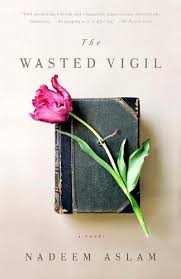
The Wasted VigilThe Wasted Vigil, Anglo-Pakistani author Nadeem Aslam’s ambitious novel about war in Afghanistan, did not arrive unheralded in 2008. Widely reviewed in major media outlets, it was pronounced the first important novel depicting contemporary war in Afghanistan, or, for that matter, Iraq. The Wasted Vigil‘s publication afterlife, however, has been curiously quiet—I’ve seen it referred to only here-and-there in writing about 21st century war fiction and it seems not to have been a significant influence on the rush of American-authored war novels that began appearing in 2011. Reviewing The Wasted Vigil in 2016, then, is a matter of restoring its pride-of-place in the annals of contemporary war literature, exploring the reasons for its semi-obscurity, and taking the measure of its interesting aspects.

The Wasted Vigil is both panoramic in scope and intensively focused in terms of time and place. Major characters include Marcus, a British expatriate entomologist who has lost a wife, a daughter, and a hand to the Taliban; David, an American ex-spy who has lost a brother to war; Lara, a Russian woman whose brother died in Afghanistan; and Casa, a young Taliban jihadist. The secondary cast numbers a variety of Afghan villagers and militia men, US special forces and contracted security operatives, and family members and friends of the American, British, and Russian major characters. The action takes place in and around Marcus’s house near Jalalabad, where Marcus has lived through decades of invasion, civil war, efforts to expel infidels, and the first years of Operation Enduring Freedom. The house, like the highly symbolic edifices found in the works of magical realists such as Gabriel Garcia-Marquez or Salman Rushdie, to say nothing of Poe’s gothic House of Usher, features a number of fanciful embellishments. In the basement lies a giant Buddha-head and the remnants of a perfume factory—the Buddha-head, though not the perfume factory, has somehow survived the reign of the Taliban. Upstairs, Marcus’s Afghan wife in a fit of insanity has nailed the books in the library to the ceiling, while Marcus himself has lathered with mud the friezes painted on the interior walls to hide them from Taliban scrutiny. Outside, a nearby lake serves David’s Quixotic-Thoreauvian ambition to build by hand a birch-bark canoe, in the midst of the war, with, as it comes to pass, the help of Casa, who has disguised his identity as a Taliban. Aslam stirs this stew of schematic ingredients and serves them up in ways meant to be clearly representative of the failed aspirations of each character’s national and demographic origin. Over the course of a few days, described with frequent flashbacks and explanatory digressions, the hopes of each of the major characters, and in some cases their lives, are destroyed and the fragile polyglot, multinational dream of coexistence comes undone.

The Wasted Vigil reveals all its main characters to be unwitting or witting perpetrators of the fall of the house of Marcus, as well as its victims, but Aslam clearly designates Casa as the primary destroyer of the tenuous social harmony Marcus’s house represents. While other Afghans make decisions and act according to understandable mixtures of personalized desires and search for advantage, influenced by Islam and history but not predetermined by them, Casa is possessed of a diseased worldview that makes him impervious to reason, tolerance, gratitude, or kindness, while sharpening every impulse to wage war on infidels and generating heinous ideas about women. Aslam subtly portrays the thoughts of a young man infected by Talibanism as Casa is exposed to the sacrilegious ways of Marcus’s house and its residents. The end result, though, the default setting so to speak, is always a robotic return to form that drives him to destroy non-believers in the name of Allah. The depiction could not be bleaker; in comparison, Afghan insurgents portrayed in novels such as The Watch, Green on Blue, and The Valley are models of cosmopolitanism. To hope that it might be otherwise, The Wasted Vigil suggests, is foolishness—the unrewarded effort referred to in the novel’s title.

A critic blurbed on the paperback edition of the The Wasted Vigil praises the “sheer, astonishing loveliness” of Aslam’s prose, but a 2008 New York Times review takes Aslam to task for what it perceives as unnecessarily “florid” language in sentences such as, “The pomegranate was on a table close to the fireplace. She slit it open now. The outer layer of scarlet seeds had been warmed by the flames. The temperature of menstrual blood, of semen just emerged from a man’s body.” The reviewer comments: “Perhaps Afghanistan, a place of extremes, invites this overblown style. It certainly seduced Aslam, a writer of considerable talent, into thinking he could render its titanic tragedies by pushing his language into operatic effusion.” Hanging an author by the poor quality of his worst sentences might be churlish, but the critique invites consideration whether Aslam just tried too hard, too early on, to say too much about events unfolding in the “Graveyard of Empires,” as if the literary razzle-dazzle interfered with a more accessible story more simply told. The wave of contemporary war novels that began arriving in 2011—Sand Queen, Billy Lynn’s Long Halftime Walk, The Yellow Birds, The Watch, and Fobbit, for examples—revealed the inclination of American authors and readers for tales tightly focused on the experiences of young American fighting men and women. In other words, their characters, and by extension, their authors (Sand Queen author Helen Benedict and The Watch author Joydeep Roy-Bhattacharya are partial exceptions here) were not very interested in the historical and cultural dimensions of the wars in which the protagonists fought. It would take a few more years before authors of contemporary war fiction began to attempt the longer, wider, deeper, more comprehensive views that Aslam pioneered in 2008. Similarly, war lit readers initially put off by The Wasted Vigil’s grandiloquent style, overpopulated and exotic cast, somewhat preposterous setting, highly programmatic plot, and bleak theme might now reconsider whether it all really is too extravagant or not.

My review of Aslam’s 2013 novel The Blind Man’s Garden.

Nadeem Aslam, The Wasted Vigil. Vintage-Random House, 2008/2009.

Sinan Antoon’s The Corpse Washer

The Corpse Washer 2The subject of Iraqi-American author Sinan Antoon’s 2013 novel The Corpse Washer is the devastation wrought on an Iraqi family by the American occupation and subsequent sectarian violence. Antoon has lived in America since 1991, but The Corpse Washer reads as if it were a novel written from the Iraqi side, from the inside, with all the authority and righteousness of witness and victim that perspective entails. As such, it makes novels about the Iraq War depicted from American vantage points seem ethically unstable, as if spinning tales for publishing profit and reading pleasure about the petty dramas of American fighting men and women in a war that we started and in which everyone who fought volunteered was a problem. Was the waste of Iraq worth it if for no other reason than that it provided grist for the ambitions of a few dozen American literary aspirants? Does every page of contemporary war lit come at the expense of a dead Iraqi? Every dollar made?

Those are tough questions, even as they are willfully oblivious to the conscience and politics reflected in much contemporary war fiction, and in any case Antoon is not immune from their reach. But if we accept that The Corpse Washer reflects an authentic Iraqi sensibility, how does it differ from American war fiction? Originally published in Arabic in 2010 as The Pomegranate Alone and translated into English by Antoon himself, The Corpse Washer’s protagonist is Jawad Kazim, the scion of a Baghdad family whose livelihood for generations has been the preparation of the dead for Muslim burial. Secular, educated, and artistic, Kazim eschews the family profession, but the press of war drives business up while destroying the multifarious civil society that might nourish dreams of escape. As options disappear and his own family is touched by violence, Kazim, to his despair, inherits his father’s profession. At the level of message, then, The Corpse Washer is simple and clear: Kazim may not be interested in war, but war is interested in him, and if war hasn’t yet killed Kazim, at novel’s end he is fully imbricated in its harvest of dead bodies, as, the novel suggests, are all Iraqis.

Stylistically, The Corpse Washer’s prose texture is lyrical and figurative compared to the no-frills verisimilitude of most American war fiction. A passage such as the following is almost unimaginable coming from an American war author and would inspire suspicion in many readers:

Death is not content with what it takes from me in my waking hours, it insists on haunting me even in my sleep. Isn’t it enough that I toil all day tending to its eternal guests, preparing them to sleep in its lap? Is death punishing me because I thought I could escape its clutches? If my father were still alive he would mock my silly thoughts. He would dismiss all this as infantile, unbecoming to a man. Didn’t he spend a lifetime doing his job day after day, never complaining of death? But death back then was timid and more measured than today.

I can almost hear death saying: “I am what I am and haven’t changed at all. I am but a postman.”

If death is a postman, then I receive his letters every day. I am the one who opens carefully the bloodied and torn envelopes. I am the one who washes them, who removes the stamps of death and dries and perfumes them, mumbling what I don’t entirely believe in. Then I wrap them carefully in white so they may reach their final reader–the grave.

Judging by the worldviews described in The Corpse Washer and the Afghanistan war novels (The Wasted Vigil and The Blind Man’s Garden) by Pakistani-English author Nadeem Aslam, both authors and their characters view life much more grandiosely than do Americans. Nature, family, history, art, religion, and philosophical meditation on the cosmic swirl of good and evil appear to play bigger parts in the minds of Muslim citizens of the middle East and southwest Asia than they do in the minds of Americans soldiers and the authors who write about them. In the works of Antoon and Aslam, the events of the day are saturated with connections to larger frames-of-reference, in particular the crushing burden of Islamic faith, which the characters find simultaneously enriching and loathsome. Jesse Goolsby’s excellent novel I’d Walk With My Friends If I Could Find Them provides evidence for the comparison. The deepest conversation its three American soldier protagonists have while in Afghanistan concerns which Division I football teams don’t have the word “university” in their names. Goolsby damningly (though with love, too) portrays how obsession with trivia and nonsense betrays the protagonists’ lack of vocabulary and even inclination to think in larger terms before and after service, too. The banal quality of their talk and vacuous quality of their minds are the results of poor educations and weak American cultural- and family-based traditions of passing on wisdom. Ill-equipped to think well about the events of their lives, they eventually pay the cost in moral and mental distress they don’t understand and can’t describe.

Perhaps, though, little ultimately and practically differentiates banter about football and couching every utterance in high-flown language and baroque references to religion, art, and history, for all the good either does anybody. Perhaps Americans are blissfully lucky not to be haunted by larger structures of awareness, and our virtues, such as they are, may only be possible because of our defects. No one expects 20-year-olds to be as sensitive as older men trained to be artists and clerics and women informed by 2500-year-old traditions of family, anyway, and for all the cultural richness of Iraqi Islamic society the social-political pay-off seems to be slight, what with its horrible oppression of women and propensity to mutilate opponents, either before or after killing them, neither of which Antoon is shy about portraying. But whether writerly affectation or cultural truth, the literary consequences of the high-flown style are two: a far less inspired prose texture in works written by Americans about Americans, one, and, two, the rendering of the impression that a nation populated by deeply perceptive people was first liberated, if that’s the right word, and then ruined by another whose soldiers were astonishingly crude.

Sinan Antoon, The Corpse Washer. Yale University Press, 2013.

War Dance: Costa Compagnie’s After Afghanistan

Costa Compagnie
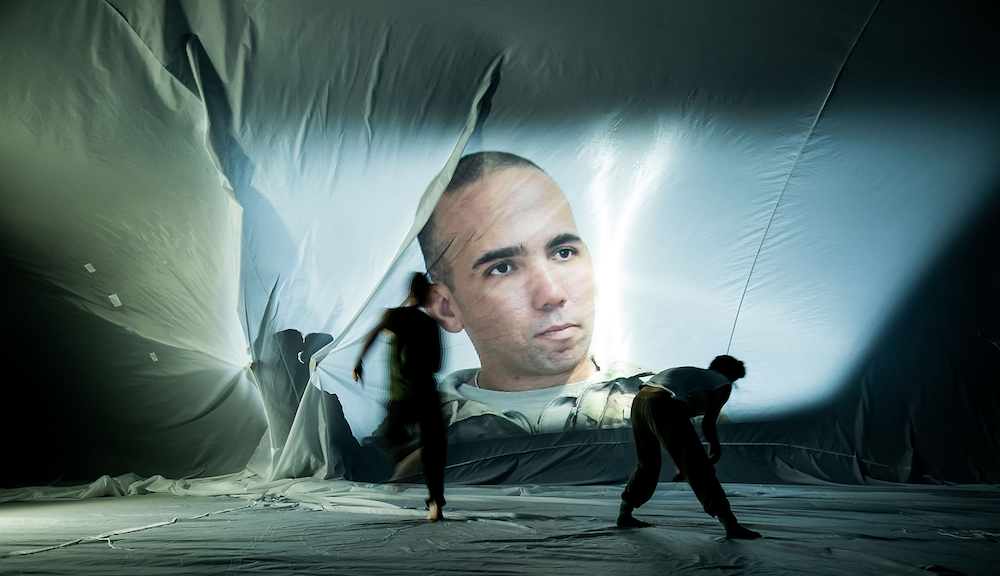
A scene from Costa Compagnie’s Conversion_2: After Afghanistan.

Two years ago I had the pleasure of meeting Felix Meyer-Christian, the artistic director for Costa Compagnie, a German performance art collective. Costa Compagnie productions combine images, video, music, dance, spoken word, and audience interactivity in what their website calls an “Archeology of the Present” that investigates “global transformative processes.” The highly conceptual self-descriptions belied a much easier-to-describe task that brought Meyer-Christian and me together: I helped him interview US Army service members who had served at the American military base in Heidelberg for a project exploring the base’s 50+ year history as a locus of German-American relations organized around joint military endeavor. The kaserne closed in 2013, but in its time its presence focalized intense social and political processes and personal emotional responses, especially for Germans, whose shared military history with the USA since the end of World War II has not been unproblematic. Costa Compagnie sought to capture this intensity and complexity through mixed-media art–an audacious project. Just one complicated aspect, for instance, was reconciling the fondness with which most American soldiers remember their time in Heidelberg, as well as the fondness, as I understand it, held by many Heidelberg residents who perhaps worked at the kaserne or did not view its existence with any particular animosity, with the militaristic and global-political considerations that underwrote its existence.

The project, titled Conversion_1: A German-American Choreography, was staged in the Heidelberg kaserne gymnasium in 2014. A trailer for Conversion_1 illustrates how Costa Compagnie generates artistic analogies for not just representing but recreating the experience of living within such a highly complicated admixture of historical and social currents:

Even as Meyer-Christian was conducting interviews for Conversion_1, he was also preparing for a second production, titled Conversion_2: After Afghanistan. Conversion_2’s intent was to extend Conversion_1’s interest in militarized shared histories as reflected at the level of community to German and American FOBs in Afghanistan as the NATO and ISAF involvement there wound down. From the Costa Compagnie website comes this description:

The Costa Compagnie does not try to explain the world to the audience. Instead they very effectively and powerfully document the kaleidoscope of an heterogeneous Afghan present on the way to an uncertain future by artistic means.

In the trailer for Conversion_2, the opening shots of a pneumatic drill-equipped crane breaking down a US Army FOB are particularly stunning. Some of the music is ambient military base noise—generators, aircraft engines, and other machinery—turned into pulsing electronica, which is also very cool. Costa Compagnie premiered Conversion_2 in Germany in 2015 and will stage a reduced-scale all-English version  at Vassar College in the fall of 2016. They are also negotiating to perform in New York City as well. I’ll be there if they do, and I hope you will be, too.