Veterans War Writing: Anthologies R Us

“Corregidor in Wait” by Rachel McNeill, from After Action Review (2011). Used with permission.

Anthologies of writing by veterans have been a significant feature of contemporary war literature since the genre emerged as a recognizable form circa 2005. Single-author memoirs, blogs, novels, graphic novels, poetry volumes, and assorted other literary endeavors have been plenty, but the most impactful publishing format arguably has been the collection of short fiction, non-fiction, or poetry pieces assembled and published by enterprising editors. Often growing out of writers’ workshops and regional literary collectives, anthologies have served as gateway vehicles of expression and publication for hundreds of veterans while comfortably repurposing military camaraderie in the name of authorship. Below are the anthologies of which I’m aware, most of which I own and have read; I’m sure there are many others. I’ve also noted the editors and listed the authors who were reasonably prominent at the time of publication or since have become so—apologies in advance for the many names I’m sure I’ve erred by not including.

1. Operation Homecoming: Iraq, Afghanistan, and the Home Front, in the Words of U.S. Troops and Their Families (2006). Edited by Andrew Carroll with a preface by Dana Gioia. Operation Homecoming, as far as I know, stands at the head of the field and thus gets all the kudos that come with being first. In addition to less renown voices among its 89 contributors, Operation Homecoming features work by authors such as Benjamin Busch, Colby Buzzell, and Brian Turner, highly literate veterans who had already achieved some fame as authors and in ensuing years would become leaders of the war lit field.

2. Move, Shoot and Communicate (2007). The first of five anthologies published by Warrior Writers, a veterans-writing organization headquartered in Philadelphia and led by Lovella Calica, whose contribution to veterans writing began early and continues impressively to this day. I have not personally read Move, Shoot, and Communicate, but it is available through the Warrior Writers website.

3. Re-Making Sense (2008). Edited by Lovella Calica. A second Warrior Writers anthology—again, I have not personally seen Re-Making Sense.

4. After Action Review: A Collection of Writing and Artwork by Veterans of the Global War on Terror (2011). Edited by Lovella Calica, with a foreword by Brian Turner and an afterword by James A. Moad II. Yet another anthology from the very industrious Warrior Writers. This one, which I have read, contains poems and narratives by Roy Scranton, Victor Inzunza, Chantelle Bateman, Rachel McNeill, Emily Yates, Paul Wasserman, Jennifer Pacanowski, and Jeremy Stainthorp Berggren, among others.

5. Fire and Forget: Short Stories from the Long War (2013). Edited by Roy Scranton and Matt Gallagher, with an introduction by Colum McCann. A seminal work featuring fiction by several already well-known war writers such as Siobhan Fallon, Brian Turner, Matt Gallagher, and Colby Buzzell and a number of talented, ambitious newcomers who would find their way into print many times in the ensuing years, to include Scranton, Phil Klay, David Abrams, Gavin Ford Kovite, Mariette Kalinowski, and Brian Van Reet among them.

6. Outside the Wire: American Soldiers Voices from Afghanistan (2013). Edited by Christine Dumaine Leche with a foreword by Brian Turner. A very interesting collection of essays and vignettes composed by soldier-students of editor Christine Leche in classes she taught on US Army FOBs in Afghanistan. Leche includes a number of ingenious prompts she used in her classes that seem to have inspired her students to address war subjects and themes from a variety of fresh angles.

7. Standing Down: From Warrior to Civilian (2013). Selected and edited by Donald H. Whitfield with a foreword by Benjamin Busch. A work sponsored by the high-powered, highly resourced National Endowment for the Humanities, Standing Down features already published work by David Finkel, Brian Turner, Benjamin Busch, and Siobhan Fallon among other moderns, in addition to essays and reminiscences from pre-9/11 wars. The biggest of all the anthologies of which I am aware of, checking in at 494 pages.

8. Warrior Writers: A Collection of Writing & Artwork by Veterans (2014). Published by Warrior Writers and edited by Lovella Calica and Kevin Basl. One more from Warrior Writers, this eponymous collection includes writing by most of the authors who also appear in After Action Review, plus Maurice Decaul, Brian Turner, Hugh Martin, and Vietnam era vet-author stalwarts Bruce Weigl and Fred Marchant—80 authors total, the second most of the anthologies I’ve read.

9. Incoming: Veteran Writers on Coming Home. Edited by Justin Hudnall (2015). A product of Hudnall’s San Diego-based story-telling collective So Say We All, Incoming features non-fiction essays and stories by Benjamin Busch, Brandon Lingle, Brooke King, Tenley Lozano, Natalie Lovejoy, Lizbeth Prifogle, William Corley, and Adam Stone.

10. See Me For Who I Am: Student Veterans’ Stories of War and Coming Home (2016). Edited by David Chrisinger and with a foreword by Brian Castner. See Me For Who I Am features essays written by student veterans at the University of Wisconsin-Stevens Point, where Chrisinger teaches a veterans reintegration course.

11. Retire the Colors: Veterans & Civilians on Iraq and Afghanistan (2016). Edited by Dario DiBattista with an introduction by Ron Capps. Featuring work by Brooke King, Lauren Kay Halloran, David Chrisinger, Matthew J. Hefti, Colin D. Halloran, Teresa Fazio, and Brian Castner.

12. Our Voices United: 9 Women Veteran Authors (2016). Edited by Sergeant Stephanie J. Shannon. I know that women veterans’ stories are foregrounded in books such as Kirsten Holdmstedt’s Band of Sisters (2007) and Helen Benedict’s The Lonely Soldier (2010), but this recently published small collection is the only stand-alone collection of essays by contemporary war veterans I could find. That can’t possibly be, so please correct me and I will make adjustments to the post.

13. Holding It Down Philadelphia: A Collection of Writing by Veterans (2016). Edited by Warrior Writers’ Lovella Calica and Kevin Basl, Holding It Down Philadelphia features poetry by several Philly-based veterans.

14. The Road Ahead: Stories of the Forever Wars (forthcoming in 2017). Edited by Adrian Bonenburger and Brian Castner with a foreword by Roxana Robinson. An unofficial sequel to Fire and Forget featuring fiction by (mostly) established war writers, including Elliot Ackerman, Benjamin Busch, Brandon Caro, Maurice Decaul, Teresa Fazio, Thomas Gibbons Neff, Aaron Gwyn, Alex Horton, Chris Wolfe, Kristen L. Rouse, Kayla M. Williams, and Brandon Willitts.

Mention should also be made of the Veterans Writing Project journal 0-Dark-Thirty (online and print), the United States Air Force Academy journal War, Literature, and the Arts (online and print), and Military Experience and the Arts (online). All three journals partake of the spirit of the anthology by showcasing a wide range of veteran stories and perspectives.

I could write at length on each of these collections and may well do so in the future. A necessary first step is making more precise distinctions among them, because each anthology, to say nothing of the pieces within them, features a unique approach, ethos, and publishing history. The Warrior Writers anthologies, for example, reflect the raw anger of veterans troubled by service and deployment, while Fire and Forget channels a more polished literary vibe. Incoming and 0-Dark-Thirty, among others, juxtapose contemporary veteran voices with those from past wars. While early anthologies took pride in showcasing as many veteran writers as possible and blending unknown and established writers, more recent anthologies such as Retire the Colors and The Road Ahead feature established authors who have already made their mark on the war writing scene. Each of the anthologies might also be characterized by how earnestly they offer page space to women, minority, and non-combat arms veterans, as well as family members of veterans. At a more refined level of analysis, each anthology speaks to its particular political and cultural moment–roughly defined by the President in office when it is published–with varying degrees of relation, passion, nuance, and focus. One wonders for instance, how the forthcoming The Road Ahead will constitute a response to the new era ushered in by the election of President Trump—at what roads ahead will they both be looking?

In regard to sins of omission, no one yet, to my knowledge, has organized an anthology on the basis of rank (junior enlisted, NCO, junior officer, field grade officer), which I think would be a helpful way of understanding the viewpoints of service members based on that crucial determining factor. Same for anthologies based on branch of service. I’m also somewhat surprised to discover that anthologies showcasing writing by women or wounded and disabled vets seem to be mostly missing-in-action (and all the more reason to look forward to 2017’s It’s My Country Too: Women’s Military Stories from the American Revolution to Afghanistan, edited by Tracy Crow and Jerri Bell, with a foreword by Kayla Williams). Many many anthologies focus on redeployment, which is OK, but which also seems to short-change consideration of aspects of deployed military life that might interest. There’s very little, for instance, that offers factual, fictional, or poetic recounting of unit chain-of-command conflicts and personalities and just as little on the romantic and erotic lives of soldiers. Interest in Iraqis and Afghans is notably lacking, and, at the level of style, most anthology entries sacrifice literary flair for directness of expression.

Finally, the anthologies’ introductions, forewords, and afterwords alone are worth examining for how they frame each project. Common themes include giving voice to diverse military experiences; seeking clarity about troubling events; rendering the particular reality of deployment, combat, and redeployment; and, always, bridging the communication and understanding divide between the small percentage of Americans who have served in Iraq and Afghanistan and the large percentage who haven’t. To let the editor who seems to have started it all have the last word, Andrew Carroll writes in the introduction to Operation Homecoming, “…now that the idea of seeking out the undiscovered literature of our nation’s troops and their loved ones has taken hold, it is exhilarating to think of all that is yet to be found and of everything, ultimately that is still to be written.” Hear hear, and salute to the editors, publishers, authors, and readers of the nation’s twenty-first century veterans’ anthologies.
Canon Wars: 20th and 21st Century War Fiction Authored by Veterans

img_1067

I was asked to compile a list of twentieth and twenty-first century novels and short-story collections about war authored by American veterans. I was limited to ten titles—two for each of our major conflicts—but I broke the rules and chose three each for World War II and the Global War on Terror. Here’s my list:

World War I

John Dos Passos (US Army Medical Corps), Three Soldiers (1919)
Ernest Hemingway (American Red Cross), A Farewell to Arms (1929)

I know Hemingway wasn’t technically in the military, and Dos Passos only served for a short time, but it’s too hard to ignore the connection between their war-time exploits and the books they authored about the war. I was tempted to include F. Scott Fitzgerald’s The Great Gatsby because I’ve always been intrigued by the reference to Gatsby’s service in a “machine gun battalion” in The Great War, and I know Fitzgerald wrote This Side of Paradise while in uniform at Fort Leavenworth. But neither of those reasons are fulsome enough to include either work. I also wish two other WWI veterans who turned out to be estimable writers, E.E. Cummings and Malcolm Cowley, had written fiction based on the war, but it was not to be.

World War II

Joseph Heller (Army Air Corps), Catch-22 (1961)
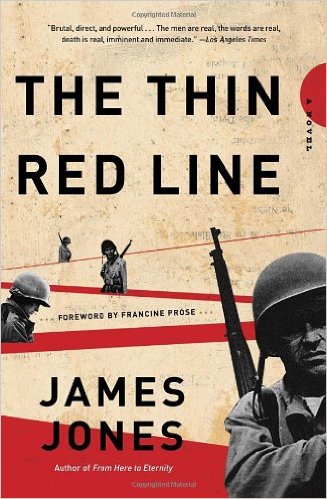
James Jones (Army), The Thin Red Line (1962)
Kurt Vonnegut (Army), Slaughterhouse Five (1969)

All three works are marvels. Catch-22 and Slaughterhouse Five I read when young and they helped me understand how war might best be described using humor, satire, and irony. The Thin Red Line I read recently and was stunned by how interesting and perceptive it was.

Korea

James Salter (Air Force), The Hunters (1956)
Richard Hooker (H. Richard Hornberger) (Army), MASH: A Novel About Three Army Doctors (1969)

Salter’s novel about Air Force fighter pilots is great; any writer who can write sentences as finely tuned as the following has my respect:

“Flying with him was like being responsible for a child in a crowd.”

“He was not fully at ease. It was still like being a guest at a family reunion, with all the unfamiliar references.”

“It was still adventure, as exciting as love, as terrible as fear.”

“The sky seemed calm but hostile, like an empty stadium.”

MASH: A Novel About Three Army Doctors affects the insouciant air toward military authority and bureaucracy that the popular TV show it inspired excelled at. Honestly, though, MASH-the-novel seems a little thin and, in some aspects, such as its racial humor, dated.

Vietnam

Larry Heinemann (Army), Paco’s Story (1986)
Tim O’Brien (Army), The Things They Carried (1990)

Rereading these two highly-regarded works made me realize how entrenched in their time they are: They privilege the experience and views of the combat grunt and the angry veteran to the point of mythologizing them and they’re obsessed with authority, credibility, authenticity, and right-to-speak issues. Vietnam War fiction badly needs historicizing to measure its preoccupations and how much it really has to say to to contemporary war fiction.

Iraq and Afghanistan

David Abrams (Army), Fobbit (2012)
Kevin Powers (Army), The Yellow Birds (2012)
Phil Klay (Marines), Redeployment (2014)

Cutting things off somewhat arbitrarily at 2014, I’m limiting the contemporary war listings to two National Book Award nominees (The Yellow Birds and Redeployment, with Klay’s short-story collection taking the prize) and one (Fobbit) that might well have been. All of them pay homage to the tradition of veteran-authored war fiction while working changes upon it, commensurate with the changing times and their authors’ unique perspectives.

So that’s my veteran-author war fiction canon for your consideration and debate. It’s a great tradition, all-in-all, and I enjoyed reading or rereading these books and many others over the summer and making my choices. The books that impressed me most were James Salter’s The Hunters and James Jones’ The Thin Red Line. Saving The Hunters for another day, I say a little more about The Thin Red Line below. Considering Jones’ achievement made me wonder why no contemporary veteran-author has yet written a novel about the year-long deployment to Iraq or Afghanistan of a platoon, company, or battalion with the same anthropological overview as Jones. It would seem like a natural. Most soldiers experienced the wars as cogs in complex social organizations artificially and temporarily arranged to both protect them and prepare them to give up their lives. Arguably what was going on around them and outside of them was of more interest and importance—and definitely more various—than what was happening to them and inside of them individually.

****

What People Mean When They Talk About “Panoramic” War Novels:  James Jones’ The Thin Red Line

ttrlThe literary artistry of James Jones’ novel The Thin Red Line is hard to define and in some ways hard even to detect. On one level, his account of a US Army infantry company’s exploits from their arrival on Guadalcanal during World War II to their departure proceeds at the level of realistic description that resembles journalism and history. Even when we factor in his attention to the human stories of the members of “C-for-Charlie” Company—their fears, desires, backstories, and emotions—it still seems, in many respects, to aspire to a common sort of long-form non-fiction narrative that embraces both big events and individual profiles.

The particular and peculiar way that Jones manipulates the register between exterior actions and interior views is what is so hard to pin down. That The Thin Red Line is panoramic in a way no contemporary war novel is a testament as much to Jones’ imagination as it is to the fact that he must have taken good notes while he was in the Army. Jones provides extensive accounts of the actions and thoughts of roughly fifteen members of C-for-Charlie, from privates through the four company commanders who lead them on Guadalcanal, and maybe thirty other enlisted soldiers and officers appear as minor characters. He describes the men as they prepare to disembark from their troop transport ship, in their early days on the island as they acclimatize to the jungle climate and prepare to go into battle, a week’s worth of harrowing combat on a hill mass known as The Dancing Elephant, a couple of weeks recouping in a rest area, and then another week of combat to seize a hill named The Giant Boiled Shrimp and a village named Boola Boola, followed by a brief period of recovery before they depart Guadalcanal enroute to another South Pacific island.

Jones, who fought on Guadalcanal, tells us in a forward that the physical geography and battles he describes are imaginary, but surely he wants to relate in as much detail as possible what infantry combat looks like tactically and feels like emotionally, seemingly in a corrective to other authors’ accounts of battle. Tactically, he precisely and compellingly explains how platoons, companies, and battalions go into battle and how the land on which they fight—the hills, dales, dips, furrows, outcroppings, and other geographical features, plus the vegetation—impact the fighting at every turn, both for the bigger units and the individual soldier. He is very interested in what happens when a unit comes under fire, takes casualties, and then collects itself to seize objectives and complete missions. His account of how the dread felt by infantrymen before battle intensifies in combat and threatens to paralyze them until they become hardened to the prospect of their death is especially astute. He is very interested in the fact that some men perform well in combat and others don’t; while some of C-for-Charlie’s heroes are predictably wily, feisty types whom you might think would do well in a fight, not all are, and the distribution of fear and courage is anything but systematic: men brave in one instance, freeze up in another, while some men who know themselves to be cowards find ways to perform well under fire, at least sometimes. Jones is also interested in leadership, how NCOs and officers through some peculiar amalgamation of judgment, decisiveness, words, actions, luck, and circumstance cement their ability to lead troops in combat in the eyes of their superiors, their men, and in their own minds. Three successive commanders of C-for-Charlie, for example, are relieved-for-cause, and it doesn’t always seem fair, but rather than rendering judgment, Jones traces the contours by which faith in their ability ebbs away. Among the enlisted soldiers, a steady rate of attrition opens up opportunities for the most ambitious and combat-capable of underlings to rise to the top in a process that would be almost Darwinian were it not for the fact that death and injury in battle often strike without regard for who’s fittest.

Considered as a social organism, C-for-Charlie in Jones’ portrait seems organized not so much by rank, but by a ruthless jockeying for regard by its members, which is usually framed in terms of manhood—who is toughest, who is most aggressive, who is most cocksure, who is most competitive, who wants whatever he wants the most. In this milieu, men are quick to judge each other as punks, lightweights, and cowards, and are driven by furious impulses toward revenge, jealousy, and entitlement, engendered by sleights and perceived grievances big and small. The camaraderie of men bound by a sense of family is documented, but selfishness and contempt more than love and care define the soldierly bond. The C-for-Charlie family is perverse in other ways, too, most notably by the flux of its membership engendered by death, evacuation for wounds, or reassignment, as in the case of its commanders. Characters are whisked out of the book on nearly every page, rarely to be heard from again, an effect that is as unsettling for readers as it must have been for the unit, and each removal generates a seismic recalibration not just of the official rank structure, but of the homosocial lineaments of C-for-Charlie culture.

Jones’ attitude toward his soldier-characters is part of The Thin Red Line’s curious allure. The odd use of “C-for-Charlie”—a way of referring to an infantry unit I’ve never seen before (yes, I know there are C Companies, often called Charlie Company, in infantry battalions, but consistent use of “C-for-Charlie” is idiosyncratic)—has the effect of anthropomorphizing a military organization, but Jones doesn’t privilege the point-of-view or experiences of any of its individual members. The company first sergeant, a philosophical type with a drinking problem, appears in the novel’s opening and closing scenes, but seems to have changed little from beginning to end and doesn’t loom especially large in the events that befall C-for-Charlie. A second character, a company clerk named Fife, a coward at heart who finds himself at least temporarily capable of battlefield prowess, occupies the most page space in the novel. But he too is whisked off the page short of the conclusion, and The Thin Red Line can hardly be said to be his story.

Jones seems interested in every aspect of C-for-Charlie’s existence on Guadalcanal, so scenes in the rear area receive almost as much attention as scenes of battle, and he also seems very interested in telling a war story without resorting to sentimentalism and sensationalism. Nor does he seem to be telling an “anti-war” story, though its clear enough after reading The Thin Red Line that war is a horrible human endeavor, and the military is a horrible way of organizing people socially. Though dramatic things happen—many of them—drama is never milked for effect—that some soldiers might butt-fuck each other the night before battle is related in the same register as scenes of horrific wounding or tremendous acts of bravery or a drunken brawl in a rest area after battle. And yet the forward pace of the novel proceeds inexorably; Jones’ artistry finds the right word-web to mirror how the propulsive forces of military culture and war shape the little lives of its participants, yet where the military and war disdain human life, Jones manages the tricky feat of inculcating interest in his characters without saturating them and his readers in a goo of sympathetic identification. The soldiers’ lives play out or end on Guadalcanal somewhat as if subject to fate as hypothesized by Shakespeare’s Gloucester, “As flies to wanton boys are we to Gods, they kill us for their sport,” but that implies that men’s lives, precious to the men themselves, are at least of sadistic interest to higher powers. In The Thin Red Line’s cosmos, men live and die more as if subject to James Joyce’s vision of God, one who pares his nails indifferently while looking down on his creations. To search for other analogies in literature, the men of C-for-Charlie seem like the battling ants described by Thoreau in Walden, viewed from on high with forensic interest, but in Jones now endowed with thoughts and personalities. The Thin Red Line not only is not character-driven, it’s not plot-driven, either, and yet still—again, Jones’ artistry at work—it is not just a “one thing after another” chronological narrative. The sense that a novel creates a social microcosm that replicates the cosmic working out of character and event of real life is a tenet of the realist and naturalist novel, which are outdated genres, but The Thin Red Line feels anything but dated—if anything it is a bracing reminder of what supremely talented authors are capable of. It’s hard not to think that no one writes novels like The Thin Red Line anymore because Jones has done it as well as it can be done, but still, I’d like to see contemporary authors try.

Finally, all my praise above would just be moot if it were not for Jones’ greatest gift: his ability to consistently write amazing sentences, to say things in ways that just startled me with their unanticipated aptness. I can’t remember a book that I found myself turning down more page corners to remind myself of passages to which I wanted to return. I could list quite a few, but in the name of even-handedness, there are a few clinkers, too. In the library copy I read, a previous reader circled the words “more good” where Jones might have used “better” and placed a question mark in the margin. Toward the end of the novel, a lieutenant loses part of his hand when a grenade he is throwing explodes prematurely. Jones attributes it to the neglect of the distracted, careless woman who cut the fuse too short in the ordnance factory where it was assembled; the aside seems contrived and crude. Finally, I didn’t like the book’s epigram, in which Jones thanks “war” for providing so much material of interest. The tone is satirical and manic and not a good prelude at all for the cool and laconic prose voice of the novel’s narrative. But those are minor exceptions in a 500-page book that otherwise impresses on every page.

Many thanks to Roy Scranton, Rachel Kambury, and Drew Pham–fellow members of an informal TTRL admiration society.pham-scranton-kambury-molin

At the Movies: Whiskey Tango Foxtrot, War Dogs, and A War

War Voyeurs: Whiskey Tango Foxtrot

wtfThe book upon which the Tina Fey star-vehicle Whiskey Tango Foxtrot was based, a memoir by Kim Barker about life as a journalist in India, Pakistan, and Afghanistan titled The Taliban Shuffle, was clever and charming in spots, but overall disappointing. Barker spent some nine years in southwest Asia, with extensive access to important players and witness to major historical events, and she might have written a thick, panoramic, even definitive account of international relationships during a period of extreme interest. Instead, she, or her editors, decided the better story to tell was that of the raffish Kabul subculture of expatriate journalists, men and women “getting their war on” in obvious imitation of Hunter S. Thompson and Michael Herr, complete with coy references to the cocaine and booze that accelerated their hi-jinx, hook-ups, and delusional self-images as rogues and swashbucklers. Perhaps I’m just envious because I missed the party, but honestly, it seems more like a waste.

Directed by Glenn Ficarra and John Requa, the movie Whiskey Tango Foxtrot is, if possible, more lightweight than the book on which it is based. Barker the author at least had the decency to understand that returning to Afghanistan after quitting her job as a reporter to work as a bartender at an expat bar emitted a strong odor of inconsequence, if not outright failure. In contrast, Fey, one of the producers of the movie in which she stars, turns the memoir into a tale of triumph in which her Kim Barker character provides the US military forces with important intelligence while goading them into action to accomplish a big mission. Fey the actor is not the problem—she commands the screen in every scene she appears, which in this movie is all of them—but Fey the producer most definitely is. Retired Lieutenant General David Barno, the former commander of military forces in Afghanistan, in this War on the Rocks review smartly praises the broad contours of Whiskey Tango Foxtrot’s portrait of the war he for a while led. Unfortunately, the movie’s production values are abysmal, with its depiction of Afghans, soldiers, and war degraded by cheapo clichés, poor casting decisions, and story-telling incongruities. Sure, it’s just a (war) comedy, but Whiskey Tango Foxtrot could have tried a lot harder. Grade: B-.

War Profiteers: War Dogs

war-dogsTodd Phillips’ War Dogs, like Whiskey Tango Foxtrot, views conflict in Iraq and Afghanistan through the prism of those on the war machine periphery, in this case two young American men trying to strike it rich by selling weapons and equipment to US forces and their allies. Production values are not a big problem in War Dogs, though the one scene depicting combat in Iraq is as ridiculous as anything in Whiskey Tango Foxtrot. For the most part, however, War Dogs employs the super-slick look and feel of The Big Short, another fired-up movie about craven money-making. Where Phillips really steals a march on Fey, though, is in his choice of subject. Whiskey Tango Foxtrot’s glamorizing of the press corps war subculture seems tired in part because it such a Vietnam thing to do: by and large, journalists in Iraq and Afghanistan so defanged their anti-establishment bite and compromised their integrity by capitulating to the military’s embedding programs that they rendered themselves unworthy of admiration. By the time Operations Iraqi and Enduring Freedom got going, all the kids too cool to be common soldiers but still interested in sniffing combat did so not by grabbing pens, notebooks, and cameras. Instead, they became security contractors and arms-dealing entrepreneurs—lucrative jobs that allowed them to snuggle close to the bloody business of killing without having to stand in morning formations and wear safety reflective belts to go to the latrine. Watching Jonah Hill and Miles Teller ham it up as two morally impoverished young men way in over their heads, but forced to be endlessly resourceful, living by their wits and their balls, succeeding beyond expectations and having the time of their life, at least for a while, puts the lack of gusto and independence of journalists, to say nothing of soldiers, in high relief. Grade B+.

War Criminals: A War

a-warProduction values are emphatically not a problem in Danish director Tobias Lindholm’s A War, about a squared-away company commander named Claus (played by Pilou Asbaek) in Afghanistan who is brought up on charges that his combat decisions led to the death of civilian noncombatants. The combat scenes are among the best I’ve seen in a contemporary war movie and even better are the quieter moments in which the young officer interacts with his soldiers on a small, remote outpost. Those occupy the first half of A War, while the second half is set in Denmark, where Claus is tried. Mostly staged in court or in Claus’s home, where he reunites with his wife Maria (Tuva Novotny) and their children, these scenes are good, too—they certainly do nothing to contradict my impression that Denmark is a far more sensible and hipper country than America. The problem with A War, however, is that the courtroom scenes are unfortunately not very dramatic. No real tension or passion divides or animates its main characters, the plot twists are kind of dull, and the ending flat. As good as it is, the minor key A War desperately needs some Hollywood razzmatazz. Maybe not a warzone rave, as in Whiskey Tango Foxtrot, or a clandestine infiltration of Iraq as in War Dogs, but serious shots of energy and imagination along the lines of other military tribunal films such as The Caine Mutiny and A Few Good Men. If only, say, Jonah Hill and Tina Fey had played Claus and Maria, instead of the subdued Asbaek and Novotny, A War might have bubbled with over-the-top irresistibility. Yea, that would have been the ticket…. Grade: B+.

Time Now Fiction: Junior and Io, a Guard-Tower Reverie

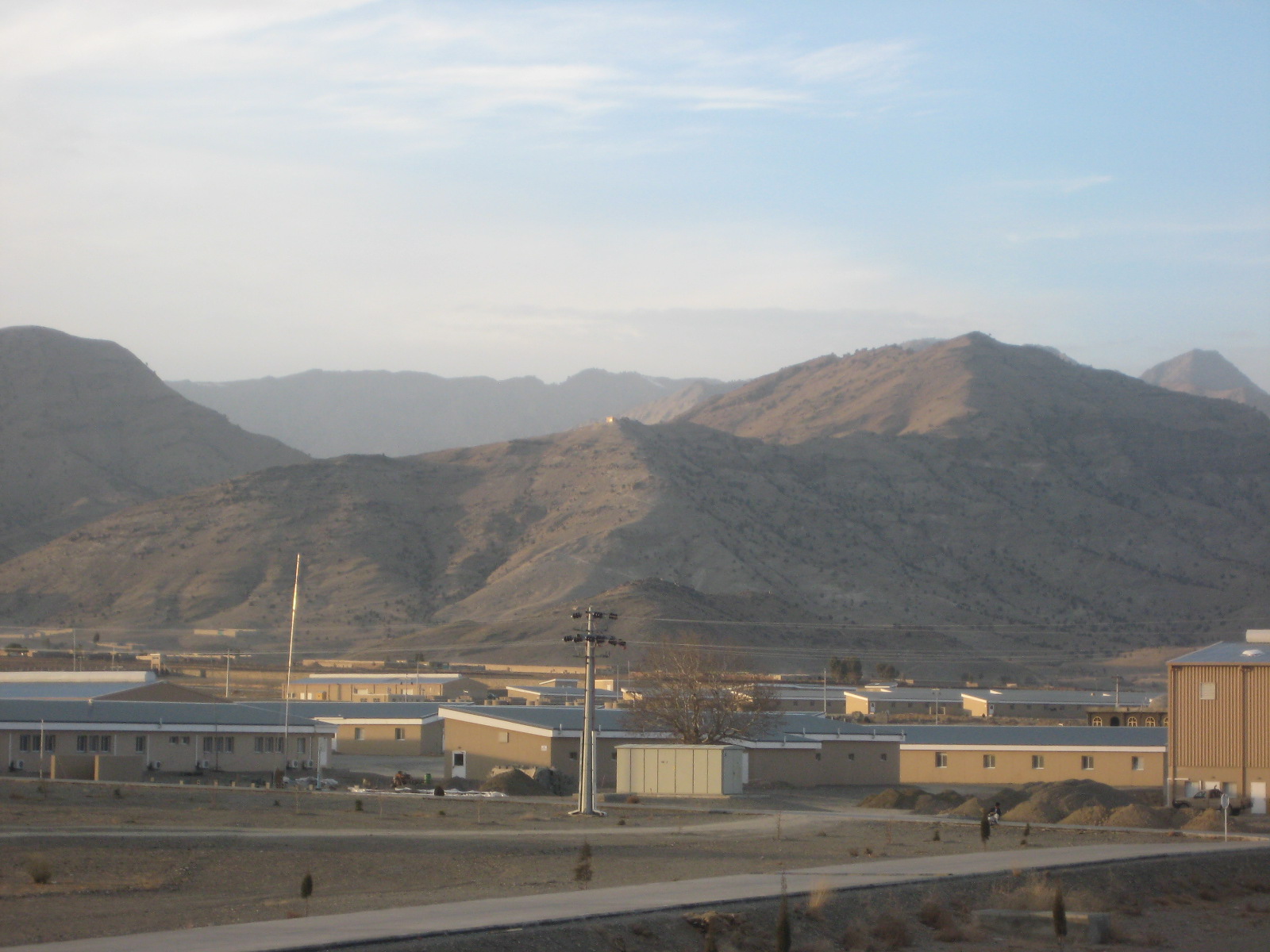
A view from an American FOB guard tower in Afghanistan overlooking an adjacent ANA compound.

Below is another Time Now adaptation of a myth found in Ovid’s Metamorphosis. This one’s based on the “Jupiter, Juno, and Io” legend, in which Jupiter seduces Io, a young woman, and then turns her into a cow to conceal his crime from his wife Juno. That’s not quite how my story goes, but I was intrigued by the myth’s notion of how humans and animals might communicate. My interest in the myth also has two other sources, one military and one literary:  First, many long hours pulling guard duty in the field in Korea and the United States and on deployments to the Sinai, Kosovo, and Afghanistan. Second, a chapter in Matt Gallagher’s memoir Kaboom titled “Dear John,” in which he writes of the devastating effect on his soldiers of learning that their wives and girlfriends had not been faithful. “Dear Johns crushed men of otherwise unquestionable strength and total resoluteness,” Gallagher reports. “In the time they most needed something right and theirs, it was taken away from them.” My story doesn’t involve a “Dear John” act of betrayal, but close enough.

This story joins two other Ovid myths I’ve adapted to modern military circumstances, “Ceyx and Alceone” and “Arachne.” Two more are forthcoming.

****

Junior’s big idea was that pets and domesticated animals were really dead people reincarnated. The thought began as one of a million idle ideas that came to him while pulling guard duty in a tower on his small FOB in Afghanistan. Nothing ever happened on the two-hour shifts, so his mind, racing on dip and Monster drink, had plenty of time to drift. This idea stuck more than most, however, and soon he found himself preoccupied by it. No longer alive as living men or women, household and barnyard animals possessed human-like minds capable of thought, love, and purposeful action. Unable to speak or write, they nonetheless had brains like humans and so they preferred life in proximity to people, especially people they once knew and had loved when they too had been human.

Thus the affection. Thus the loyalty. Thus sad looks begot by eternal misunderstanding and incomprehension.

To Junior the theory made great sense and he couldn’t understand why other people hadn’t already figured it out. Couldn’t they understand why their pets stared at them so? Or curled up at their feet? Why horses and cows were so docile? Why they didn’t lash out at their owners and run away at the first opportunity?

When Junior explained his idea to his girlfriend Io via Skype, she thought he was crazy, and not in a funny, charming way. In fact, it was close to the final straw. She had been disappointed with Junior for some time, and now this. She had already been thinking about breaking things off, but really hadn’t had a good reason to do so except that he no longer thrilled her and she was ready to move on. The deployment had made things worse for them, not better, and she was now impatient about being Junior’s girlfriend.

If Junior ever said this crazy idea out loud in public to any of their friends, that was definitely it. It was bad enough that he asked her to take it seriously. It wasn’t clever. It wasn’t smart. It was just dumb.

Within the week, Io dumped Junior via instant message. Dumping him by IM didn’t make her proud, but she was too irritated to write a letter and she damn sure wasn’t going to tell him over the phone and listen to him plead and moan.

“I need to end things,” she had written, “You’ve changed, and I need space.” Then she blocked him on Facebook and refused to answer any of his emails.

Stunned by Io’s rejection, as well as by awareness of how badly he had blown things, Junior stumbled about camp in a daze. For a week he was useless, and then he turned back to the demands of the mission with a rigor that had not been there before. When his unit returned to the States, he couldn’t completely remove herself from Io’s orbit of friends and venues, but she flat out refused to talk to him, at least in any way that was personal or heartfelt or came near offering an explanation for her actions or giving him a chance to ask for a second chance. She still wouldn’t answer his texts or emails or chat requests, and she definitely didn’t let him be alone with her anywhere.

Desperate to be in her presence, Junior contrived ways to run into Io in person. But when chances came to speak with her, Io offered only pleasantries and generalities. In terms of allowing Junior access to her thoughts or feelings, nothing. After a while, she cut him off completely and would pass by him stone-faced without making eye contact.

Io’s actions caused Junior to reconsider his theory about reincarnation and animals. He decided that people who weren’t open but guarded like Io had become were like the animals he once had thought were so fond of humans. Instead of being full of affection and yearning, though, he now thought they had no interior life whatsoever and were mostly just there. If they didn’t share, or wouldn’t share, that was precisely what it meant to be non-human. And there was no possibility for restoration, either—nothing was going to make an animal talk and nothing was going to make Io like Junior again. It was clear beyond question that wasn’t going to happen.

Junior realized all this with certainty one evening when he found himself at an off-post bar and Io walked in. She was gorgeous, her face glowing and her shining hair splayed across her shoulders. Io was with girlfriends, not another guy, so Junior approached, hoping against hope for a friendly conversation. He said hello, and then a few other things, but Io just stood there placidly. In the middle of one of Junior’s sentences, she looked over his shoulder to say hi to someone, and a smile broke out on her face and her eyes once more danced. Then she turned her attention, dull and flat, back to Junior, and Junior stammered on, trying to be pleasant and unconcerned. As he stood there talking, though, Io began to grow fuzzy in detail and rubbery in shape. At first Junior couldn’t tell why his vision was distorted—was it him or was it her? Within seconds, though, he realized Io was no longer even human. She still stood in front of Junior, not now a person but a cow, four legs and hooves and big round eyes, standing silent, gone forever.

Bangerz: All Killer, No Filler Contemporary War Fiction

3rd Brigade, 101st Airborne "Rakkasans" on a hilltop in Afghanistan. Photo by Bill Putnam.
3rd Brigade, 101st Airborne Division “Rakkasans” on a hilltop in Afghanistan.              Photo by Bill Putnam.

War writing, particularly fiction, redefined itself during the Global War on Terror. World War II and Vietnam War stories relentlessly focused on the combat experience of young men. The exploits of soldiers other than infantrymen and fighter pilots, adventures other than combat, and the travails of life after war, subjects that are central to contemporary war writing, were then on the periphery. I’m not speaking of war pulp fiction, either, the kind that sensationally portrays combat and glorifies fighting prowess. That genre, which formerly was plentiful, now is rare, and exists in refashioned form mainly in the “kill memoir” genre authored by snipers and special operators. My subject is work considered “literary”—fiction written by well-educated writers whose works are published by major publishing houses and high-brow journals and which compete for critical attention and book awards. The James Jones, Norman Mailers, Tim O’Briens, and Larry Heinemanns, to name names, of yesterday. The Ben Fountains, Phil Klays, and Brian Turners of today.

The old era has largely passed, but the allure of combat narratives has not completely vanished. Whether written by a veteran trying to explain “what it was like” or a civilian author exercising fantastical powers of imagination, sensational scenes of bullets flying, bombs exploding, and soldiers fighting still make war writing vivid and generate intense emotional responses. And why not? People are curious about exotic events and surely one of the tenets of fiction is to present readers with descriptions of aspects of life they are unlikely to have seen personally. In Billy Lynn’s Long Halftime Walk, Ben Fountain has Billy Lynn wonder, “How do you describe the worst day of your life?” but many contemporary war writers have not shied from the challenge. Surveying the field briefly, I easily recall the great battle scene that opens Joydeep Roy-Bhattacharya’s The Watch, the taut face-offs on Baghdad streets described in David Abrams’ Fobbit (as well as a beautiful passage written from a mortar round’s point-of-view), and the brief description of combat tersely rendered by Atticus Lish in Preparation for the Next Life. One of the best and longest descriptions of men fighting comes in Aaron Gwyn’s Wynne’s War, the last half of which unabashedly and reverently pays homage to movie and pulp fiction Westerns by portraying a group of Special Forces soldiers (on horseback, no less) fighting it out over a period of days–not exactly my own experience of combat, or anything that probably happened often in Iraq or Afghanistan, but very exciting to read. The post-IED strike battle thrillingly described in Matthew Hefti’s A Hard and Heavy Thing, on the other hand, replicated experiences similar to ones I have lived through, and I’m sure many other veterans as well, and consequently triggered in my mind memories and comparisons. But still… though passages describing combat occupy some 50% of Wynne’s War’s page space, the percentage is probably less than 10 or even 5% of Billy Lynn’s Long Halftime Walk, A Hard and Heavy Thing, Preparation for the Next Life, Fobbit, and The Watch.

Short fiction about the wars in Iraq and Afghanistan abounds, but as I recollect stories about soldiers set entirely or mostly “outside the wire” and which depict soldiers, as the mission of the infantry states, “closing with and destroying or capturing the enemy,” not-so-many examples present themselves. To repurpose terminology from the world of club music describing a song that is “extremely tight or just unbelievably awesome” and radiates “unbelievable swell or swag” (Urban Dictionary), in a way that seems right given we’re talking about gunshots and explosions, here’s a short list of contemporary war short fiction “bangers.” Or, to give it the cool modern flair of a Miley Cyrus album title, “bangerz”:

Nathan Bethea, “Agincourt” (published under the headline “Whatever You Do Someone Will Die: A Short Story About Impossible Choices in Iraq” on The Daily Beast). Short quote from the beginning: “This will be the worst day of your life. In years to come you will recount the most intricate details to yourself with obsessive precision, as if tracing the wood grain of a childhood bunk bed from memory. It is not a healthy kind of remembrance.”

Ted Janis, “Raid” (from the Fire and Forget anthology). One of the first modern stories to portray military special operations forces, in this case Army Rangers, in action. Also one of the few stories to describe American soldiers grievously wounded in battle.

Gavin Ford Kovite, “When Engaging Targets, Remember” (from the Fire and Forget anthology). Maybe the first and definitely one of the best of many modern war stories to play dialogically with the rhetoric of official Army documents and manuals.

Kyle Larkin, “Minarets” and “The Night Before Christmas” (both published on the Military Experience and the Arts website). In the former, an infantry platoon in Iraq wakes up to the sound of Islamic prayer, and in the latter, death, not Santa, comes calling for an American soldier.

Katey Schultz, “The Ghost of Sanchez” (from Flashes of War).  I could have chosen a number of excellent stories by Schultz, the only non-veteran and only woman on the list, but this one rocks hardest. Set in Afghanistan, which raises the question–why are there so few stories portraying Operation Enduring Freedom?

Roman Skaskiw, “Television” (from the Fire and Forget anthology). I don’t know why this story is called what it is, but OK, it’s a great and maybe the first portrait of a common subject in Iraq and Afghanistan war fiction: a lieutenant who is challenged by a tougher, more aggressive NCO.

Brian Turner, “The Wave That Takes Them Under” (from the Fire and Forget anthology). A speculative fiction war narrative complement to Turner’s great poem “To Sand” in Here, Bullet. And because you can never get enough Brian Turner, the passage titled “The Soldiers Enter the House,” from My Life as a Foreign Country, published as a stand-alone story on Medium.

Brian Van Reet, “Eat the Spoil” (originally published in The Missouri Review). A tank platoon dismounts to chase insurgent mortarmen through an Iraqi insane asylum and into a swamp. Also, perhaps the craziest “we shot dogs” story ever.

Honorable Mention–stories about artillerymen who wield death and destruction by firing big guns from inside FOB walls:

Phil Klay, “Ten Kliks South” (from Redeployment). An earnest, clever, and cute (a rare combination) story about an artilleryman who tries to calculate his share of the responsibility for the deaths caused by the rounds he helps fire.

Will Mackin, “Kattekoppen” (first published in the New Yorker). Selected for inclusion in Best American Short Stories 2014. More please, Will Mackin, it’s been too long.

I don’t want to canonize these stories, overly privilege their authors, or suggest they are the best tales yet written about the wars. Rather, I just want to give them their due as a body of work, while wondering why there aren’t more, and propose we read them alongside Jones, Mailer, O’Brien, and Heinemann to judge just how writing about combat in the 21st century resembles or differs from writing about combat in the 20th century.

The Dirty South: Odie Lindsey’s We Come to Our Senses

OD LindseyOdie Lindsey’s collection of short stories We Come to Our Senses is the first contemporary war fiction title released by Norton, one of the most prestigious publishing houses going. Lindsey, a veteran of the First Gulf War, teaches at Vanderbilt and has placed a number of his stories in estimable journals. One, “Evie M.,” was selected for inclusion in Best American Short Stories 2014, where, as it happens, it sits next to Will Mackin’s excellent story of war in Afghanistan “Kattekoppen.” Befitting the impressive resume, the stories in We Come to Our Senses are very together: mature, surprising, and deft in all the right ways and measures. Though Lindsey is a veteran and We Come to Our Senses a first book, the stories don’t burn with the white-hot intensity of narratives by young men or women just back from Fallujah or Helmand and now eager to impress themselves upon the literary world. Instead, they illustrate how an author from a slightly older generation might depict early middle-aged veterans connecting the dots leading back from lives that have come unhinged to things that seemed reasonably innocent when lived through while young. We Come to Our Senses thus suggests usefully and beautifully what Iraq and Afghanistan war fiction might look like when contemporary veterans have let their deployment experiences simmer for a few more years, while gaining confidence and skill as writers–“we come to our senses,” indeed.

Many We Come to Our Senses stories arrive in sets linked by recurring characters, a fashion in short-story collections that works to good effect here. Several, including “Evie M.,” track a group of men and women who deploy to the First Gulf War as members of an Alabama National Guard unit. Far from the frontlines, the soldiers burn shit, get drunk, and pair off in short or long term relationships as best and often as they can. On return, with no battlefield exploits to speak of, untouched by notions of patriotism and service, and unprepared by the military to do anything of significance, they stumble-and-bumble along for the next decade or so. No horrors of combat derail them, but their minds, as was their service, are preoccupied by the romances, flings, and crushes that served as cushions against the stress of deployment. The men drift in perpetual states of wistful mopiness that seems to operate mostly as a blissful narcotic for them, but the aftermath of lusty military youth is far more dire for the women, even fatal. Evie M., whose relationship with a fellow soldier went to shit in Iraq, is suicidal, as is the eponymous protagonist of “Colleen,” who has been perversely abused by a creepy fellow soldier while deployed. Another set of stories features a young woman named Darla who carries a deadly infectious disease, the result of a one-night-stand with a soldier.

One of the best stories in We Come to Our Senses, “Chicks,” is set in Hollywood, but most of the others take place in the South, in particular that scruffy cultural space where the lingering remnants of white trash Dixie bump up against shiny new prosperity and respectability, with a verdant natural world of hot sun and creepy-crawly non-human things, along with lots of drinking and guns and odd encounters with the parallel social world of African-Americans, adding further regional color, as if the milieu had been suggested by 1000s of hours listening to the great Drive-By Truckers. My favorite, “So Bored in Nashville,” is about a young man’s last night on the town with his best friend before enlisting. Lindsey’s typical prose voice is sparse in the manner of Richard Price or maybe deadpan ironic like Chuck Palahniuk’s, but “So Bored in Nashville” accelerates into a razzed-up register that reminds me of T.C. Boyle:

Bars and booze and lacquer and glass and smoke and teevee and tourists and shots, and pit-stop at Randall’s to chop up a Xanax, to snort then smoke then back to the bars. In this city, through the bars, we wind up packed in a room full of ads. Living ads, that is, sexy and skinny young women ads. New England or Oklahoma transplants, wannabe country stars clad in fishnets and bra tops, hot pants and logos, and who proffer shots of some dye-injected Extreme Liquor product. A temp job, they swear, they serve you straight out of their navels, wherever, no problem. For ten bucks a pop they make ten bucks an hour, while your lips suckle shots of their amazing young stomachs. And they’re dying to sing, will do anything to demo. (All of this action in a Vandy sports bar, not an airport strip club, let alone a music industry hang.) And tomorrow I leave, for Forts Jackson then Benning. Signed the contract when the Army offered me 11B, Option 4: Airborne Infantry. I am twenty-six and terrified. Yet I felt compelled to follow through after the recruiters told me how difficult it was to secure this assignment. How rare it is these days to earn Option 4, Airborne, war on and all.

Hoo-ah! they barked. You tha man!

Randall and I depart that bar, we drive on. He says zero about my deployment.

Easily bored, wildly reckless, and scandalously sacrilegious, a hot mess after being dumped by a woman he still pines for, and now eager for the approval of more assured men such as his friend Randall and his recruiters, the narrator will be just fine. In fact, he’s just what they’re looking for in the airborne, and pretty much like every other young man already there, in my three years and 40+ jumps worth of experience. Perfect.

All in all, it’s a bleak vision, at points comically rendered but mostly driven home on the strength of Lindsey’s eye for detail and the right word at the right time. He hugs his characters close, but not on the terms we’re commonly asked to appreciate veterans. Forget thanking them for their service, because their service was basically nothing, and don’t bother trying to support any of his troops, unless you are personally prepared to deal with a whole lot of heartbreak and anguish.

****

Here, Benjamin Busch reviews We Come to our Senses, along with Whitney Terrell’s The Good Lieutenant, Harry Parker’s Anatomy of a Soldier, and Luke Mogelson’s These Heroic, Happy Dead, for the New York Times.

Julia Lichtblau’s review for The Common, “War Stories for the PTSD Generation,” commends We Come to Our Senses for its realistic and empathetic portraits of women. “In its warm heart, We Come to Our Senses loves women,” Lichtblau writes.

Odie Lindsey, We Come to Our Senses. Norton, 2016.

War Writing: The Raw and the Cooked

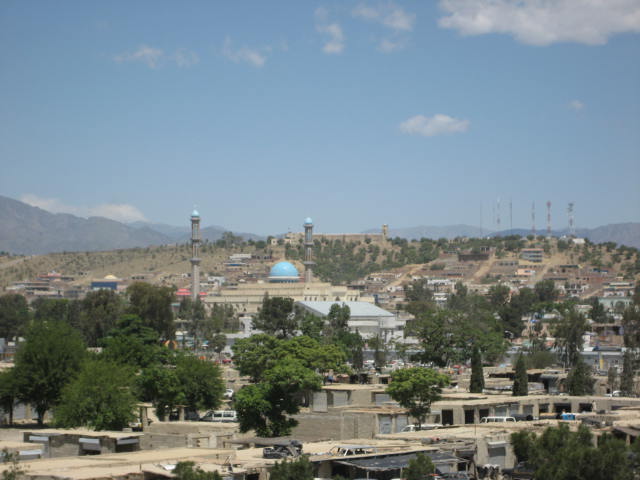
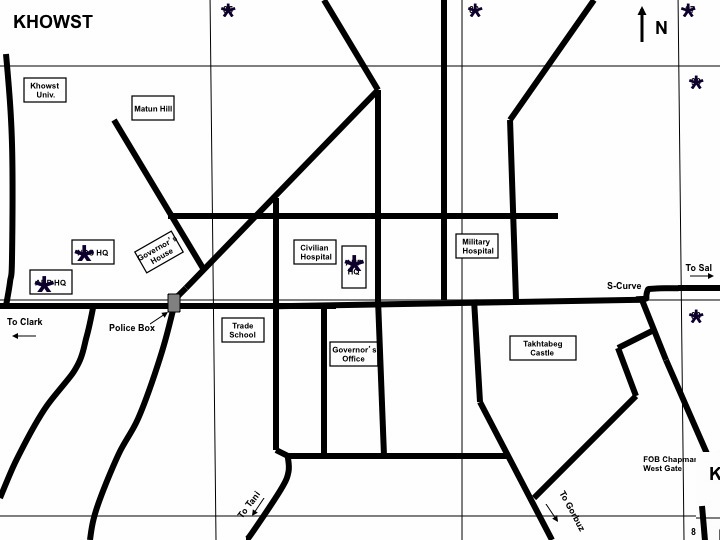
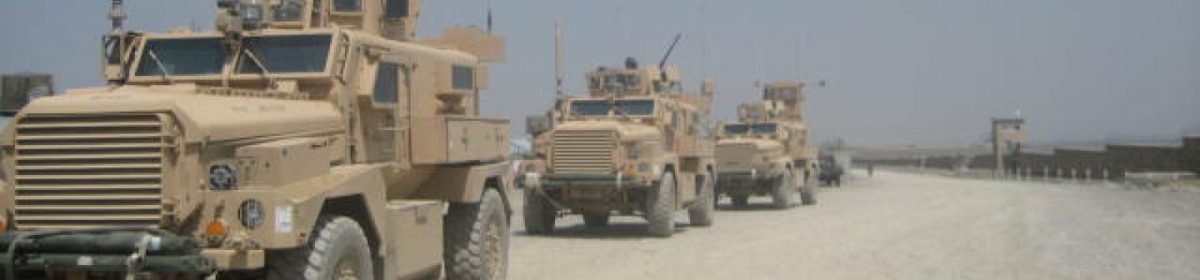
Khost Province, Afghanistan. USAF Photograph
Khost Province, Afghanistan (USAF photograph).

A flutter of recent data points raise the questions whether veterans are natural storytellers and whether they are prone to adorn their stories to impress listeners. An article by “Angry Staff Officer” on the Task and Purpose website titled “Three Things That Make Service Members Great Storytellers” asserts that the combination of “mission, story, and time” allows men and women in uniform to “relate our cultural and personal experiences to a group, bring them into the story in an intimate setting, and reveal a shared identity.” Angry Staff Officer cites soldiers from the South as military tale-tellers par excellence, a notion corroborated in “Colleen,” from Odie Lindsey’s fine collection of stories about Southern veterans of the Gulf War and Operation Iraqi Freedom titled We Come to Our Senses. The narrator sets a scene in a VFW hall:

A couple of men asked Van Dorn how he was, and he held court as he blustered and bragged. They tolerated this, because storytelling—his or anyone’s—cued up the opportunity to indulge their own tales, to again revisit their trauma.

So the men did just that, they ran a story cycle, memory to memory, barstool to barstool, and on down to Colleen.

But it’s not just service members from below the Mason-Dixon Line. Last week, at a family reunion in upstate New York, my cousin’s kid Teddy, who served as an infantryman in Iraq, at a late night campfire related tales that were quite a bit more engaging than anyone else’s. Teddy didn’t speak of war, and he didn’t bluster or brag, but he smoothly turned routine events of his life into stories and the people who populated them into personalities. Like Angry Staff Officer describes in his post, as I listened to Teddy it was as if I was once more in an MRAP on a long conop in Afghanistan, eavesdropping through earphones to the crew members spin tales about past missions, past assignments, and past lives.

While Angry Staff Officer writes of how service members and veterans communicate among themselves, David Chrisinger explores how and why veterans frequently embellish the stories they tell or write for civilians. In a piece titled “The Redemptive Power of Lying” posted on Warhorse, Chrisinger writes, “I’m OK with lies—the ones my students need to tell themselves, and in turn, tell me—but I’m not OK with bullshit.” Matt Gallagher, who always has something good to say in these cases, picks up on Chrisinger’s theme. In a recent story published in Playboy titled “Babylon,” Gallagher has his protagonist, a female USMC vet living in Brooklyn, state:

Some of the biggest posers I’d known were vets. The pogue who never left Kuwait but needed to pretend he’d crossed the brink. The staff officer whose lone patrol off base became more dangerous with each of her retellings. Even the grunts, it was rare for them to stick to the truth, because the truth was never enough. War stories meant bullshit, that’s just how it was. Deep down, I knew I’d exaggerated what happened that day in Al Hillah to people, be they surly uncles I wanted to impress or lipstick dykes I wanted to screw. I wasn’t proud of it. But still. It’d happened, and it’d probably happen again.

Maybe we’d earned the right to bullshit….

Recently, the popular Humans of New York website and its even more popular Facebook page have been featuring Iraq and Afghanistan vets relating vignettes of intense wartime experiences. The vignettes, or anecdotes, exemplify the tendencies noted by Angry Staff Officer, Chrisinger, and Gallagher: short, well-turned, gripping accounts of extraordinary events experienced by the veterans, accompanied by poignant statements about the events’ lingering significance in their lives. The posts have been shared on Facebook upwards of 10,000 times, and the comments sections have generated hundreds of compliments, denunciations, and other expressions of belief, disbelief, support, and even accusations that the veterans’ stories were fictive.

If the Humans of New York posts offer a glimpse of the contemporary war-story-telling zeitgeist, the lessons are simple: 1) Go sensational. 2) Go emotional. 3) Keep your own experience at the center, and 4) Convey conviction that your perspective of the event you describe is the true one. Don’t mince around; what people want to hear about is either the worst thing that ever happened to you or the most triumphant. The worst thing is always the shock of learning that war is much worse than you could have imagined or can handle. The best thing is always that you acquitted yourself well in combat.

If you can’t hit those notes, well OK, but be ready for a less-than-enthusiastic response from the reading masses. Tell a subtle, nuanced tale reflecting perplexed anxiety about things that you observed while you were in the military, and five, 500, or 5,000 people might be interested. Tell a graphic story of harrowing adventure and personal tumult, and your audience will be 50,000, 500,000, five million, or more. Edgar Allan Poe wrote long ago, “But the simple truth is, that the writer who aims at impressing the people, is always wrong when he fails in forcing that people to receive the impression.” The lineaments of war story popular connection are right there for the taking. Hint—they look a lot like American Sniper. Reading suggestion—another story in Lindsey’s collection, titled “Chicks,” a funny one about a screenwriter trying to pitch his war-movie script to a producer, brilliantly dramatizes and complicates Poe’s notion. Just in case it’s not obvious–“Chicks” will never be as popular as American Sniper.

Many years ago the French anthropologist Claude Lévi-Strauss proposed the phrase “the raw and the cooked” to distinguish between primitive and advanced indigenous populations. Lévi-Strauss’s specific subject was food preparation—the move from eating food raw to cooking it clearly demarcated a cultural advance—but lots of critics have since used the phrase to analyze all kinds of human activities, and I’m going to do the same now. War stories, says I, come in two kinds—the raw, visceral kind that use blunt language to describe combat, killing, war brutality, and the rough aspects of military life, and the more mannered and brooding efforts I am calling “the cooked,” which might be described as an attempt to represent a thinking-person’s take on war. Both terms have connotations: when it comes to war writing, “raw” is inevitably linked with “honesty,” which makes “cooked” seem overly-analytical or even evasive. If you’ve eaten twenty straight raw meat-and-potato dinners, however, you might appreciate a little imaginative culinary preparation the next meal around. No doubt, I prefer a literary “cooked” approach, but I’m also in awe of the power of the “raw” to capture the imagination of soldiers, writers, and audiences, so, really, as you work through what I say next, try to avoid thinking of either term as inherently pejorative or complimentary. Instead, consider them as poles on a spectrum of war storytelling possibility.

The great example of contemporary “raw” war-writing is American Sniper. Never mind that Chris Kyle had extensive ghost-writing help, parts of his memoir may have been fabrication, and Kyle himself disavowed aspects of his own story. American Sniper resonated deeply because readers responded to and respected Kyle’s unapologetic and visceral account of his actions in a voice that they identified as authentically his own. Whether it was the truth, the whole truth, and nothing but the truth, or not, it just seemed honest:

I had a job to do as a SEAL: I killed the enemy—an enemy I saw day in and day out plotting to kill my fellow Americans.

The first time you shoot someone, you get a little nervous. You think, can I really shoot this guy? Is it really okay? But after you kill your enemy, you see it’s okay. You say, Great….

I loved what I did. I still do. I don’t regret any of it. I’d do it again.

I never once fought for the Iraqis. I could give a flying fuck about them.

There are many signature elements of a “raw” war story that help register such honesty. One of them is a blunt, hard-boiled prose style, full of profanity and tough talk, as if the author, his narrator, and his characters were really angry about something. Another is unbridled contempt for the chain-of-command; raw war stories bristle with certainty that higher-ups are stupid, vain, and selfish. A third is a thorough self-identification as a soldier or veteran and the assertion of undying brotherhood with fellow soldiers. A fourth is preoccupation with killing and battlefield carnage. A fifth is the treatment of the enemy as savages without humanity or distinction. These signature elements, in my opinion, are diluted in contemporary war writing, American Sniper excepted. If you don’t believe me compare Larry Heinemann’s Vietnam War novel Paco’s Story, which won the National Book Award in 1987, with Phil Klay’s Redeployment, which won the same award for 2014. In terms of the rawness criteria I have established, Paco’s Story rates about a 9 on a scale of 10, while Redeployment gets maybe a 3 or 4. American Sniper is up there with Paco’s Story in terms of rawness, but where Heinemann’s rawness is a stylized literary effect that impressed critics and several thousand readers in its time, Kyle’s memoir has been scorned by critics, while causing the masses to build memorials in his honor.

Kyle’s last quote above—about not giving a “flying fuck” about Iraqis—is interesting, because it brings into play something I’d like to propose is true of contemporary war writing. The signature elements of raw war stories may not appear as often in war writing across the board these days, but the fifth still persists as a demarcation point separating war writing into raw and cooked segments. The main ingredient of a “raw” war story about Iraq and Afghanistan, I would say, is lack of interest in or outright contempt for Iraqis and Afghans, while a “cooked” war story manifests curiosity about them, attempts to portray them “as people,” and worries about the cost of war on them. I could without hesitation divide the 20 or more works of fiction I’ve reviewed on Time Now and the countless works I’ve read but have not (yet) reviewed, and rate them based on their empathy for the inhabitants of the land in which the Americans portrayed were fighting. Stacey Peebles also (first, really) hit on this means of evaluation in a chapter in Welcome to the Suck: Narrating the American Soldier’s Experience in Iraq in which she compares Brian Turner’s Here, Bullet and John Crawford’s Iraq War memoir The Last True War Story I’ll Ever Tell. Crawford left Iraq venomously disdainful of Iraqis, while Turner’s surfeit of empathy for Iraqi people, history, and culture threatened to overwhelm his effectiveness as an infantry sergeant. Peebles writes, “If Crawford takes in nothing of Iraq and empties himself out until he is a hollow shell, Turner takes in so much that he is full to bursting.” It follows then that Crawford’s memoir is “raw” and Turner’s poetry is “cooked.”

Which brings us back to the Humans of New York. The names of the veteran story-tellers are not given, but the second and third are both authors about whom I’ve written about on this blog, Jenny Pacanowski and Elliot Ackerman, respectively. Both are savvy writers and in Pacanowski’s case a seasoned performer of spoken-word poetry. In her scathing, ribald, and often extremely funny monologues, Pacanowski presents her tour-of-duty in the Army and Iraq as terrible to the point of traumatizing. Ackerman’s Afghanistan war novel Green on Blue, on the other hand, is practically void of American characters and instead places a Pashtun militia member at its narrative center. According to the schema I have set up, Pacanowski’s poetry is an example of “raw” war writing, while Ackerman’s novel represents the “cooked.” But in their Humans of New York vignettes, we can see them each moving toward a middle ground: Pacanowski fighting to demilitarize her all-consuming self-identification as an angry veteran, Ackerman letting down his guard to let the world take a better measure of who he is as a person. Be sure to read them, and salute to both.

Right on Time, Five Years Later: Roy Scranton’s War Porn

War PornRoy Scranton’s Iraq war novel War Porn, out this week, by all accounts was substantially complete by 2011. Indeed, Scranton reports that he began writing War Porn while he was still in the Army in 2005, about the time of the events he portrays in the novel. That War Porn now appears in 2016 raises interesting questions. According to a 2011 The Atlantic article by Matt GallagherScranton could not at the time find a publisher. As Gallagher points out, no major house had yet put out a novel about Iraq or Afghanistan, and Scranton at the time was a fledgling, far-from-established author. Six years later, however, much has changed. War writing as a publishing genre has grown exponentially, and Scranton has compiled an impressive body of work. No doubt these factors help explain why War Porn now sees the light-of-day, but almost certainly there’s more.

In conversation a couple of years back, Scranton stated that he had maintained a “consistent line-of-thinking” throughout his writing ventures, which include editorial oversight and a contribution to the war story anthology Fire and Forget, a striking essay published in the Los Angeles Review of Books on the war literature “trauma hero,” the end-of-the-world treatise Learning How to Die in the Anthropocene, a PhD dissertation on post-WWII poetry, and numerous essays and articles in both the popular press and scholarly journals. Be that as it may, if we read War Porn as a 2011 novel it’s one thing: not just a topical novel about matters of extremely recent national interest and not just a work that anticipated major themes Scranton would revisit often, but a missed opportunity, historically, that might have significantly influenced the wave of war novels to follow, which by Scranton’s lights consistently fell into a trap of over-extending sympathy toward US soldiers with bruised feelings. If we read War Porn as a 2016 novel, it’s a look backwards at an era and events rapidly vanishing from public memory, and it also comments retroactively on the slew of Iraq and Afghanistan war novels written since 2011. But it also announces new approaches and inflections, better late-than-never, that might significantly impact war writing to come. How to reconcile the two possibilities?

War Porn consists of three interrelated storylines. One is narrated by an American soldier, Specialist Wilson, and describes Wilson’s service as a Humvee driver in Iraq in the war’s early years. Wilson is arguably no-better-and-no-worse than he should be as a person or soldier, but his banal complicity in the Army’s military occupation of Iraq illustrates how the military dehumanizes even those “just doing their duty.” The consequential damage on Iraqi civil society of an occupation force made up of 100,000+ men-and-women much like Wilson are illustrated in a second storyline depicting an Iraqi US Army interpreter named Qasim al-Zabadi. Things end badly for Qasim, and though he is more victim than victimizer, with far less options than Wilson, and no escape at the end of a year’s deployment, he too has made at least one disastrous choice and must now must endure the consequences of foolishly trusting Americans. The third storyline involves a group of liberal, late-20-something residents of Utah, whose comfy life and beliefs are upset by the arrival to their Columbus Day barbecue of an Iraq War vet named Aaron. Aaron has been a guard at a US military detention facility, and he has a thumb drive full of photos to prove it—the “war porn” of the novel’s title. Aaron even more than Wilson is unrepentant about his involvement in war atrocity and not above using his stash of prison photos to titillate the other party-goers. Far from being “traumatized” and equally far from being a dedicated citizen-soldier ennobled by his time in service, Aaron’s roguish familiarity with evil intimidates the hell out of his male host while dizzying up his host’s wife’s libido. Linking the three storylines are prose-poem interludes in which Scranton channels a collective unconscious voice declaiming the amalgamated collection of fables, lies, half-truths, myths, delusions, and anxieties that underwrote the Iraq War in the American and Iraqi cultural climate.

It’s a lot to take in, but the storylines, scenes, and episodes are carefully integrated, while also serving the purpose of providing a kaleidoscopic view of war experience without privileging the perspective of any one participant, particularly that of a twenty-year-old American male combatant. The prose-poems can be a little polemical, though the one I like best, an hallucinogenic deconstruction of the allure of movie war heroes, worked beautifully when read by Scranton at War Porn’s book launch last week in New York. In contrast to the fired-up prose-poems, Scranton’s narrative prose voice is understated, somehow millennial slacker-ish, focused on acts and words rather than thoughts and emotions, a textural effect that schmoozes the reader into underestimating the grimness of Scranton’s vision until the book’s concluding pages. The chapters featuring Qasim portray Iraqi discourse as laden with Islamic parables and platitudes, which I guess has some relation to the way Muslims really speak in their native languages, though it may also be as much a Western literary mode of representing exotic speech as anything. A passage such as the following, on the other hand, which describes Qasim’s short stay in Scotland as a student, shows Scranton’s talent as a lyrical prose stylist:

Qasim had been north only a few gloomy months–cold, humiliating months full of unnerving lessons in the limits of his talent; dismal months of constipation, headaches, and a constantly running nose; lonesome months where the English he so struggled to master always seemed to bend back on his tongue into gibberish; nightmare months where he wandered the streets in a muddle, baffled and awed by the strange stone city around him and the cruel, doughy faces of the Scots who lived there; despairing months where each night, curled under his duvet with the door shut against his roommates, he struggled desperately to keep from weeping, to keep them from hearing him weep, despondent for home and exhausted from working so hard and falling behind and the unending gray skies pissing rain–when at last the phone rang and his mother told him in a stern, quiet voice that his father was ill and the doctors did not expect him to survive the winter.

The chapters featuring Wilson and Aaron are heavily conversational, and Scranton’s ear for distinguishing between characters by the shape and flavor of their speech rings true to me. The characters banter and parry with each other in that way that signifies cleverness and relaxed conviviality from the inside, but from the outside seems like just a lot of aggressive posturing, as if so-called pals were really “frenemies” who secretly hated and were in competition with each other–which they do and which they are.

All the characters are interesting, even charismatic to a degree, but War Porn’s final scenes makes clear that Scranton’s not interested in giving any of them, save Qasim, a break. The word “choice” appears often in the mouths of the novel’s characters, and the accumulated effect makes the point that if you are an American, your attitude and ideas about Iraq, as well as your actions, whether you served there or not, are the result of decisions, and not just things you drifted into unwittingly when you were young and thus easily excusable. Once stained by the war in Iraq, the American veterans in War Porn in the name of honesty pretty much stop trying to be good people, as they learn just how capable they are of sadistically manipulating and dominating those over whom they hold authority. Much as the civilians at the Utah barbecue must recalibrate their ideas about Iraq when troubled by Aaron and his photos, so the novel’s readers will also have to perform mental gyrations to reestablish their moral equilibrium in regard to a war most experienced only second-hand–pornographically?–through the words and images of those who have fought.

So why wasn’t War Porn published in 2011? At his book launch, Scranton offered a couple of reasons that went beyond the facts that he was a young unknown and war novels were not yet a thing. 2011, he reminded the audience, was a time when “supporting the troops” and “thanking soldiers for their service” was all the rage. War Porn, alas, offers precious little grounds for thanking any of its soldier-characters for anything. Further, Scranton continued, a tenuous truce characterized Iraq circa 2011, which made it not the time for unremittingly bleak novels about a failed invasion, populated with unredeemable characters. Instead, the national literary appetite pined for stories about sensitive soldiers buffeted by service and combat, the sentiment against which Scranton’s “trauma hero” essay seethed. In War Porn, Scranton spends little time tracing the psychology and mental processes of his characters, as if to make a statement that it’s by one’s acts and words that one’s character and morality must be judged, not by some impossible-to-prove literary sketch of a person’s interior landscape.

In the last three years, the rise of ISIS and the disintegration of peace in Iraq have created space for more skeptical looks at the Iraq War, especially the early years, when the ethical rottenness and intellectual ineptitude, in addition to the practical difficulty, of the occupation was on display for anyone who cared to look closely. Also, the simplistic sanctimony of uncritically thanking guys like Wilson and Aaron for their service has begun to wane, making unflattering literary portraits of veterans possible in the name of somehow working toward a more even-handed consensus on what it actually means to be a veteran. Scranton’s notion that war “dehumanizes” its participants might be said to be as much a trope as the idea that it “traumatizes” them, and critics will object that Scranton himself lacks a basic humane attitude toward his characters and that he willfully neglects the sacrifice, patriotism, courage, and real suffering of young Americans sent to war. Let it happen–the conversation needs to take place, and Scranton’s literary skill and fierceness of vision make him a stout antagonist for anyone who wants to take him on. War Porn, written in the 00s, finds its moment in 2016, five-to-ten years late, but also right on time. Here’s to Scranton for reminding us not to repeat the military mistakes of 2003-2005 nor replicate the publishing trends of 2011-2015, though we probably will, as these things go, in both cases, despite his fine warning.

Roy Scranton, War Porn. Soho, 2016.

The War Writing Rhetorical Triangle

The concept of a “rhetorical triangle” is well-known to graduate students of composition, rhetoric, and communications. A way of imagining any particular act of communication, but especially that of public speakers and authors in the act of argument and persuasion, the rhetorical triangle attempts to depict the relationship between speakers and authors, their subjects, and their audiences. Graduate students ground their academic interest in the rhetorical triangle in Aristotelian definitions of ethos, pathos, and logos, each linked to a specific corner of the triangle, and put their understanding to practical use in undergraduate composition classes. There, the rhetorical triangle helps students understand the importance of author and speaker subject positions and the notion of intended audiences. Often, the rhetorical triangle is embellished in textbooks and slide presentations with the addition of circle that envelops the triangle, meant to represent “context”—why a particular subject is under discussion at all, what outside pressures bear on it, what underlying assumptions impact the effort being made at communication, etc. Figures A and B below depict the rhetorical triangle and the rhetorical triangle + contextual circle as they typically are represented.

Slide1

Slide2

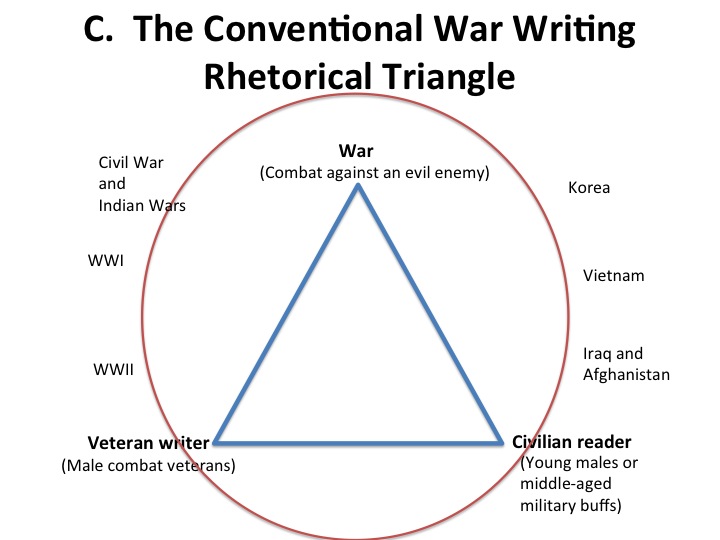
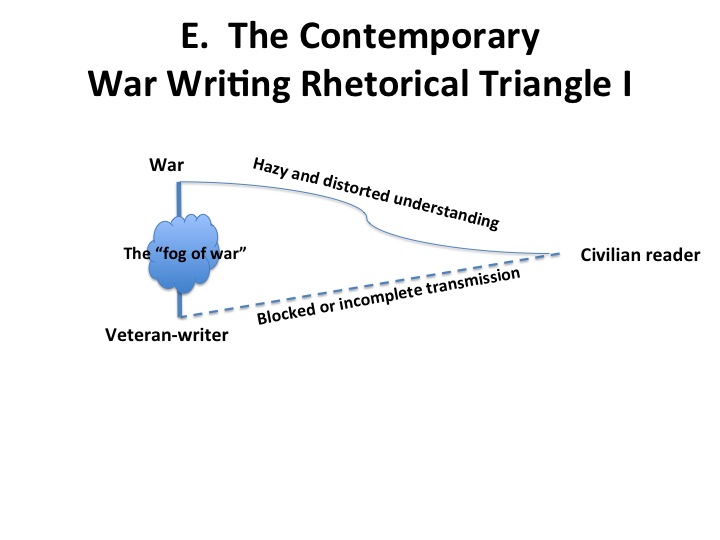
All good, but I’ve long thought that the typical rhetorical triangle, as it exists as a visual metaphor, was a little too rigid, unsubtle, and unimaginative to portray the complexity of any “communicative situation,” to borrow another phrase from the rhetoric-and-composition world. My misgivings crystallized as I began thinking about how the rhetorical triangle might apply to war writing, by which I mostly mean fiction and poetry about war authored by veterans of war, though not without application to memoir, non-fiction, and veterans-in-the-classroom scenarios, as well as works written by journalists, historians, and civilian authors of imaginative literature who have studied war closely. Still, if we retain the basic equilateral triangle and round circle shapes of the standard rhetorical triangle + contextual circle, we might enhance it as follows in Figure C to portray what traditionally might be said to be the relationship of veteran-writers, war, and civilian readers who have not been to war:

Slide3

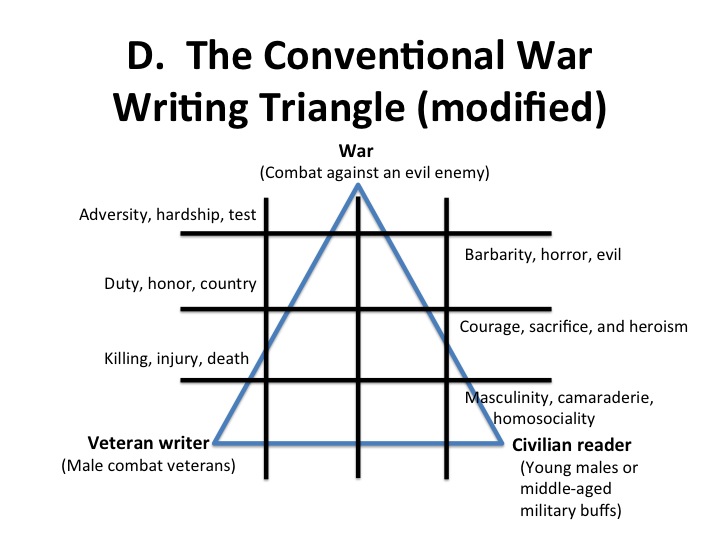
As my thinking about this pictorial representation of war writing dynamics proliferated, or perhaps festered, I began to question whether the circle representing context adequately conveyed what is most salient about the attempt to render the experience of war to readers who had not seen combat. Rather than a benign circle hovering on the outskirts of the acts of writing and reading, I thought that a grid imposed over the top of the triangle might better depict how war writing as a genre is forcibly shaped by an array of recurring events, attitudes, themes, tropes, scenes, and expectations, as well as reliance on a short list of time-honored antecedents as literary models, that together harmfully solidified the relationships of writer, subject, and reader into hardened positions, perilously close to cliché, stereotype, “confirmation biased” patterns of cause-and-effect, and self-prophecizing conclusions. Figure D shows my effort to portray context as an imposed grid:

Slide4What might be a work of literature, or a movie, that could be given as an example of war writing that conforms to the Figure D model? There’s no perfect example—the diagram is a cartoon, after all—but let’s for the sake of argument posit works such as Stephen Crane’s The Red Badge of Courage and Erich Maria Remarque’s All Quiet on the Western Front as the ur-novels of modern warfare: stories that concern themselves not just with describing the “horrors of combat” and the possibility of transcending them, but the psychological effect of witnessing and enduring the horrors. Yes, I know Crane was not a veteran, but he ventriloquized one admirably, and like I said, the examples are not perfect. What’s important is that many many works of fiction, as well as memoirs and movies, have repeated, with various amounts of skill, motifs and manners-of-treatment originating or advanced in exemplary fashion by Crane and Remarque.

But as war writing evolved and permutated over the course of the 20th century, differences in style, perspective, and approaches also emerged. A very common refrain found in Vietnam War writing is the idea that “the truth of war cannot be conveyed,” sometimes expressed as “you had to be there to understand it,” notions that would seem to undermine the whole effort of writing about war. They didn’t, however, and in practice the sentiment seems to operate more as a marker of authenticity than a confession of ineptitude. The arch-expression of the idea is Tim O’Brien’s well-known “How to Tell a True War Story,” which compellingly dramatizes a veteran-author’s difficulty in conveying to civilians the essence of what fighting in Vietnam was all about. O’Brien’s famous last line, “It’s about sisters who never write back and people who never listen,” drives home the point that in the narrator’s mind at least one corner of the rhetorical triangle, that of the audience, is drastically estranged from both the veteran-author and whatever might be said to be the truth and reality of war.

A post-9/11 war reiteration of the fractured war-writing rhetorical triangle appears in Matt Gallagher’s novel Youngblood. In the Prologue, the narrator-veteran describes several instances of difficulty connecting with civilians who ask him what Iraq was like. He ends by stating,

What was it like? Hell if I know. But next time someone asks, I won’t answer straight and clean. I’ll answer crooked, and I’ll answer long. And when they get confused or angry, I’ll smile. Finally, I’ll think. Someone who understands.

Here, Gallagher’s narrator’s hoped-for “communicative situation” is marked by frustration and distortion, which, if only those miserable qualities could be attained, would stand as a great improvement on the incomprehension and indifference that have so far governed his attempt to describe war.

The contemporary emphasis on “failure to communicate” might be reflected in the following variation on the war-writing rhetorical triangle (Figure E):

Slide5

Features of the contemporary model include:

  1. The veteran-author’s personal relationship to his or her subject of war is intense and intimate, as represented by a thickened, shortened line, but the connection is obfuscated by that very closeness, as well as the more general difficulty of apprehending the truth or reality of combat described as “the fog of war.”
  2. The civilian reader’s relationship to the veteran-writer, and vice-versa, is distant and beset by communication difficulties, as portrayed by the long, broken line.
  3. The civilian reader’s understanding of war is also remote, indistinct, and untrustworthy, as depicted by the thin, wavering line.

In Figure F below, I have added in a contextual circle that names what I think are the most important contemporary social, political, cultural, and technological influences on war, the men and women who go to war and then write about it, and the nation-at-large. I’ve also noted some changes in the composition of the corners of the triangle to reflect modern trends.

Slide6

I won’t take time here to explain these factors or how they put pressure on the legs and corners of my war writing rhetorical triangle. Many are obvious or self-explanatory, and none are beyond the ken of readers who have made it this far and who now choose to roll them around in their minds to consider their relevance. I might well have portrayed them as a grid, as in Figure D above, but for the sake of clarity, mostly, I haven’t. Taken together, the diagram suggests a contemporary war writing field characterized by multiple variables, full of complexity, ambiguity, perspectival variations, and tenuous, arguable intersections joining war, writing about war, and readers.

Might the broken-and-distorted contemporary war writing rhetorical triangle be as much a trope, or even a cliché, as anything that’s come before? Some very good veteran-authors have taken up the question. Benjamin Busch, in “To the Veteran,” his introduction to the veteran writing anthology Standing Down: From Warrior to Civilian, states, “We often feel there is a certain authenticity lost somewhere, that language cannot completely express our experience to those who do not share it,” but ultimately he concludes that the stories in Standing Down “prove that transference of experience is possible with language.” Similarly, Phil Klay in a New York Times essay titled “After War, A Failure of Imagination,” writes, “Believing war is beyond words is an abrogation of responsibility — it lets civilians off the hook from trying to understand, and veterans off the hook from needing to explain.” Busch and Klay are formidable writers, but I’m not sure everyone, including many veterans, agrees that veterans can express the reality of war in a way that is perceived as meaningful and reasonably fulsome by civilians. The fact that Busch and Klay have to assert their case proves the sentiment they hope to rectify is both real and a problem. Whether their perception is an enduring and truly true structural feature of war writing or merely a passing truism-of-the-day remains to be seen.

Many thanks to the organizers and participants of the 2016 Veterans in Society seminar at Virginia Tech, where I first presented on the “War Writing Rhetorical Triangle.”

War Songs: Khost, Afghanistan in the Western Musical Imagination

Khost City, Afghanistan
The Great Mosque, Khost City, Afghanistan, 2009

The seven months I served in Khost province were certainly the most interesting and intense part of my year in Afghanistan. A small place, as Afghan provinces go, about the size of a fair-sized American county, ringed by peaks ranging up to 12,000 feet high, Khost (sometimes spelled “Khowst”) is tucked up against the Pakistan border about four hours from Kabul, accessible by road only through a treacherous mountain pass. Though not as well-known as storied battleground provinces such as Kunar, Helmand, or Paktika, Khost has been the site of many important episodes relevant to the Global War on Terror and Operation Enduring Freedom. Osama Bin Laden, for example, is said to have first fought Russian infidel occupiers in Khost and later to have been in Khost when the Twin Towers fell on 9/11. In 2004, Pat Tillman was killed in Khost and in 2009 FOB Chapman, located just outside of Khost city, was infiltrated by an Al Qaeda operative who detonated a suicide vest in the presence of CIA agents, killing seven of them—an event portrayed in the movie Zero Dark Thirty.

My job in Khost, as an advisor to the Afghan Army, took me throughout the province and brought me in constant contact with Khost residents of every station, experiences that preoccupied me then and now in terms as much sociological as military. Overall, there were some successes, some defeats, a lot of wonderment, and a great deal of ambiguity about what it all amounted to. Through it all, the very name Khost, whose etymology I do not know, struck me with an almost mystical power of suggestiveness, and still today it conjures up memories and emotions that, try as I might to contain them within the realm of the factual and rational, remain infused with the aura of dream, nightmare, romance, epic, and odyssey.

Apparently, I’ve learned in the last week, Khost has also generated evocative associations in the minds of musically-minded young men in places as far afoot as Vancouver, Canada; Birmingham, England; and Austin, Texas, places where Khost or derivations of Khost are being used as band names. As far as I can tell, no one in any of the groups has served in Khost or is Afghan, but each of the far-flung musical Khosts is making distinctive, idiosyncratic music, not for the masses, perhaps, but informed by a unique artistic vision that we can assume they hope their band name helps transmit.

First up is Khøst, a Vancouver, Canada, DJ duo who specialize in Electronic Dance Music remakes of popular songs such as Coldplay’s “Yellow.” I’m not sure where the “slashed-o” comes from, but band member Tyler Mead describes how his partner Grayson Repp chose their name:

The name was a spontaneous idea really… After having already tried to build to different aliases, this one seemed to stand out. Originally, Grayson had seen the word in a movie [Zero Dark Thirty?] and liked the sound of it. It wasn’t until about a month later that we realized the potential, having the sound “khost” be representative of the west coast where our sound had originated.

Khost Yellow

Over in Birmingham, England, Khost has also been appropriated by Andy Swan and Damian Bennett, a duo whose musical genre is metal industrial noise. This Khost musical enterprise’s sonic landscape is brutal to the extreme, as described in the following review:

The end result is akin to an apocalyptic machine devouring all traces of humankind from the face of the earth before setting its sights on the planet itself. The tracks grind, rumble, strain and teeter on the brink of collapse to create an all-out sense of stifling claustrophobia.

Khost UK

I’m fine with music that’s both weird and tries to be dangerous, but I couldn’t find an explanation for why Swan and Bennett chose “Khost” as the name of their band. For all I know it’s also some Scandinavian or German word for “land of the underground where people wear helmets with horns, drink blood, and play detuned electric guitars.” One review I read, however, posits that the sound of the band’s name is as harsh as the music the duo make, with connotations of “cost” and “ghost.” That take was interesting to me, because I never thought the word “Khost” sounded ugly, even given a few horrific experiences I endured in the province. In fact, contra to both the Canadian and English bands’ usage, Khost as far as I know is pronounced with a very soft emphasis on the “k,” so that it is pronounced more like “host,” but with a small hitch in the throat at the beginning of the word and a larger push of air on the “h” that doesn’t come naturally to English speakers, an effect that softens the word’s clipped terseness as it is written.

Be that as it may, the third appropriators of Khost, a band in Texas who call themselves The Khost, would also probably be surprised at the English reviewer’s opinion.  A post-rock band in the mode of their fellow Texans Explosions in the Sky, but with vocals, The Khost’s aural impact is as mellow and gentle as the industrial Khost’s is abrasive, though not without its own sense of drama. I texted back-and-forth with a member of The Khost, who informed me they were inspired by stories of military service in Khost province told by a friend of the band’s. I asked if any of their songs addressed militaristic subjects, and The Khost member replied, “All the songs are pretty much about more inner psych and personal revelations so nothing directly about war. Does our music remind you of Khost?”

Good question….

The Khost Stella MarisKhost Waking Indigo


EDM doesn’t do a lot for me, though I salute its impulse toward ecstatic celebrations of collective dance. I’m more intrigued by the heavy duty sounds of industrial-metal, and I thoroughly enjoy post-rock. I listened to a ton of Explosions in the Sky while in Afghanistan, have composed many Time Now posts with their music playing in the background, and I was glad to see the band’s music featured prominently in the movie version of Lone Survivor. So, in answer to The Khost’s question, well, yeah.

All told, here’s to the Canadian EDM Khøst, the English industrial-metal Khost, and the Texan post-rock The Khost. None of their songs, as far as I know, reference Afghanistan or things military, nor do they channel the Pashtun spirit or musical signatures of the real Khost, but that’s OK. An academic argument could be made that their use of Khost is somehow inappropriate in an Orientalism kind-of-way, but that’s an argument I wouldn’t support. If the name of an exotic dot-on-the-map halfway around the world has somehow inspired Western musicians to be more imaginative and adventurous, that’s the greater good. That a word important in their artistic dreamworld is also huge in my personal lexicon of suggestive terms is so much the better.

Map of downtown Khost that I made in 2009