At the American Comparative Literature Conference last week in Seattle, I participated in a seminar titled “What Does War Look Like? Visual Trauma and Representation.” Organized by Brenda Sanfilippo, a UC-Santa Cruz professor whose husband is a former paratrooper, the seminar explored the ethics and aesthetics of photographs, films, comic books, and graphic novels depicting war, conflict, and violence. My own contribution was a discussion of an Israeli theorist of photography named Ariella Azoulay. In The Civil Imagination: A Political Ontology of Photography (2012) and two previous works, Azoulay advances a concept called “the photographic situation.” Properly understood, “the photographic situation” expands our understanding of how we might interpret photographs, while suggesting that photography, as a visual medium, uniquely and importantly engages us with the modern world. Heady stuff for sure, but I’ll save the detailed explanation for another post.
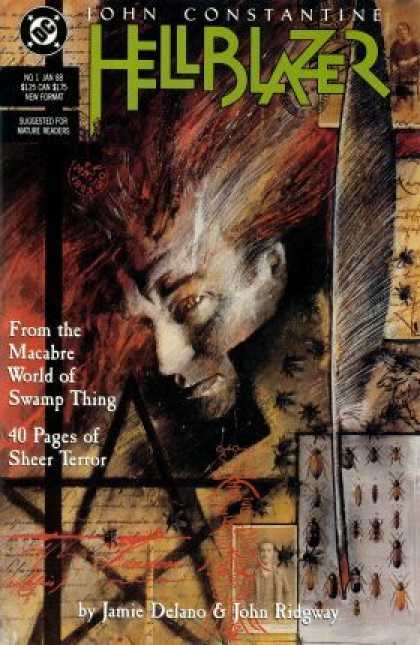
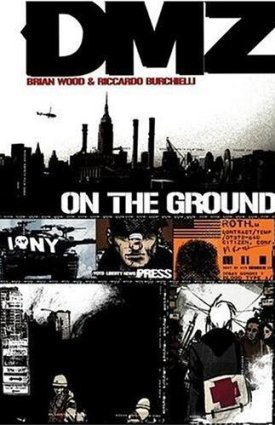
Most of the other presentations focused more specifically on actual photographs or other popular culture artifacts. Two presentations that especially interested me were on comic book series, one by Spencer Chalifour on the Hellblazer series and the other by Najwa Al-Tabaa on DMZ. I didn’t know either Hellblazer or DMZ, each of which address war in Iraq or a generalized state of emergency post-9/11, or much really about comic books at all, but am perfectly willing to consider that comic books, graphic novels, cartoons, and comic culture directly or indirectly channel the zeitgeist that envelops the hearts and minds of soldiers who fought in Iraq and Afghanistan. If we expand our definition of comic culture to include video gaming, role-playing games, and animated movies, I know it. Among a million other data points, I could point to Chris Kyle’s admission in American Sniper of his love for playing Command and Conquer, a shooter-killer video game, in-between real-world sniper missions in Iraq. He wasn’t the only soldier whose entertainment choices—more visual than textual—blurred and blended with his or her experience of combat.
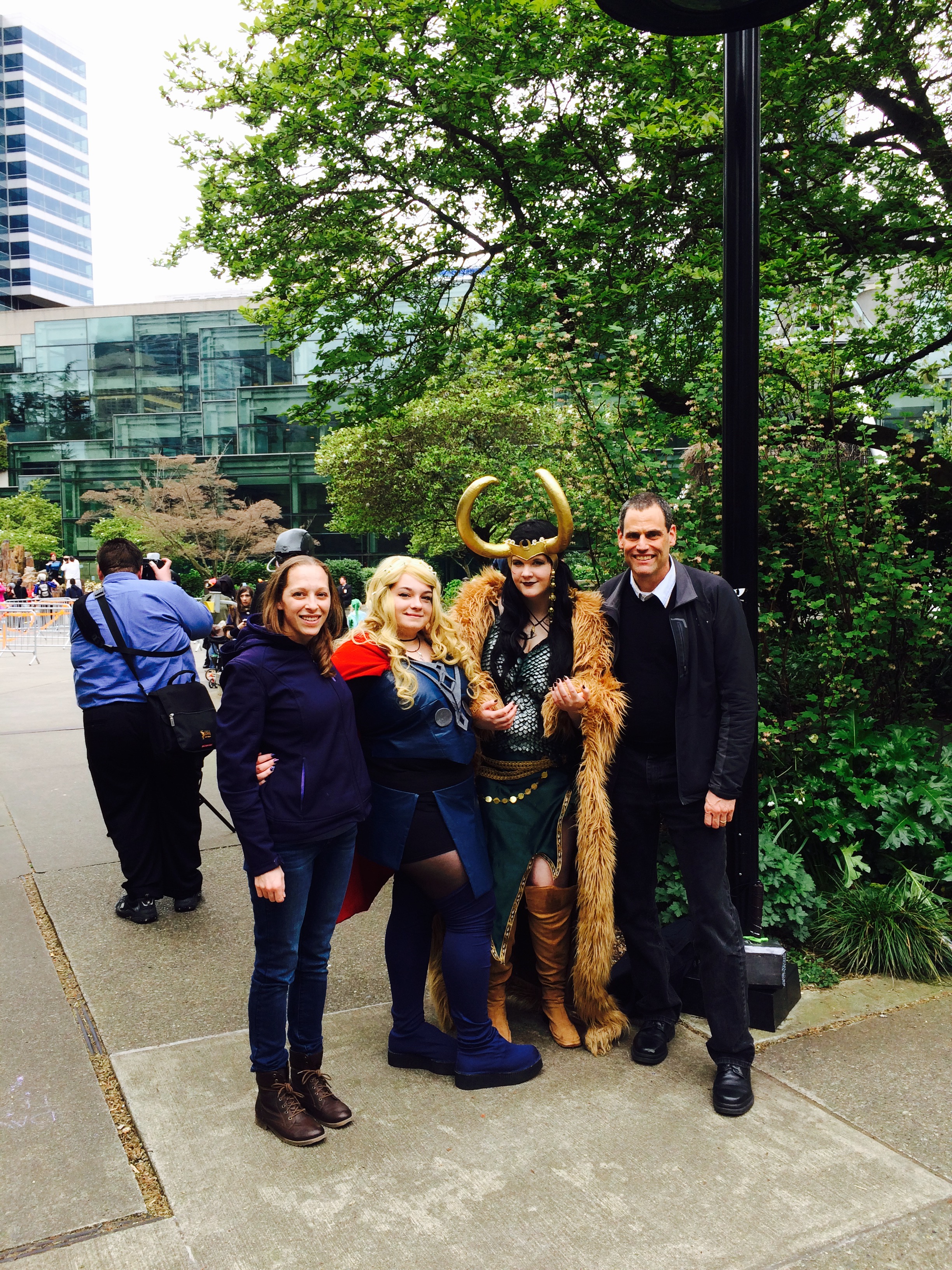
As it happened, next door to the ACLA conference, the Emerald City ComiCon, or “ECCC,” was taking place at the Washington State Convention Center. Needless to say, ECCC’s attendance dwarfed ACLA’s, and its attendees looked like they were having a hell of a lot more fun. The Convention Center grounds swelled with thousands of comic culture nuts, costumed to the hilt, gathered to celebrate their favorite comic book, animé, cosplay, sci-fi, fantasy, and role-playing-game works, heroes, authors, and creators. It was impossible not to be jazzed by the explosion of imaginative energy and cheerful sociability. There was a critical edge, too, of a sort, to ECCC, though quite unlike the super-serious tone of ACLA. “How to Make Beer Money with Your Comic or Zine,” ran one panel title that caught my eye. Noticeably absent from the ECCC agenda, however, were testosterone-soaked shooter games such as Call of Duty and action-adventure games such as Grand Theft Auto, the likes of which soldiers in Iraq and Afghanistan by the hundreds of thousands enjoyed. The ComiCon crowd is not shy about its fascination with darkness, perversity, evil, and violence, but it is a very stylized engagement—very girly and geeky and progressive–that eschews militarism and modern war, not that that’s a bad thing….
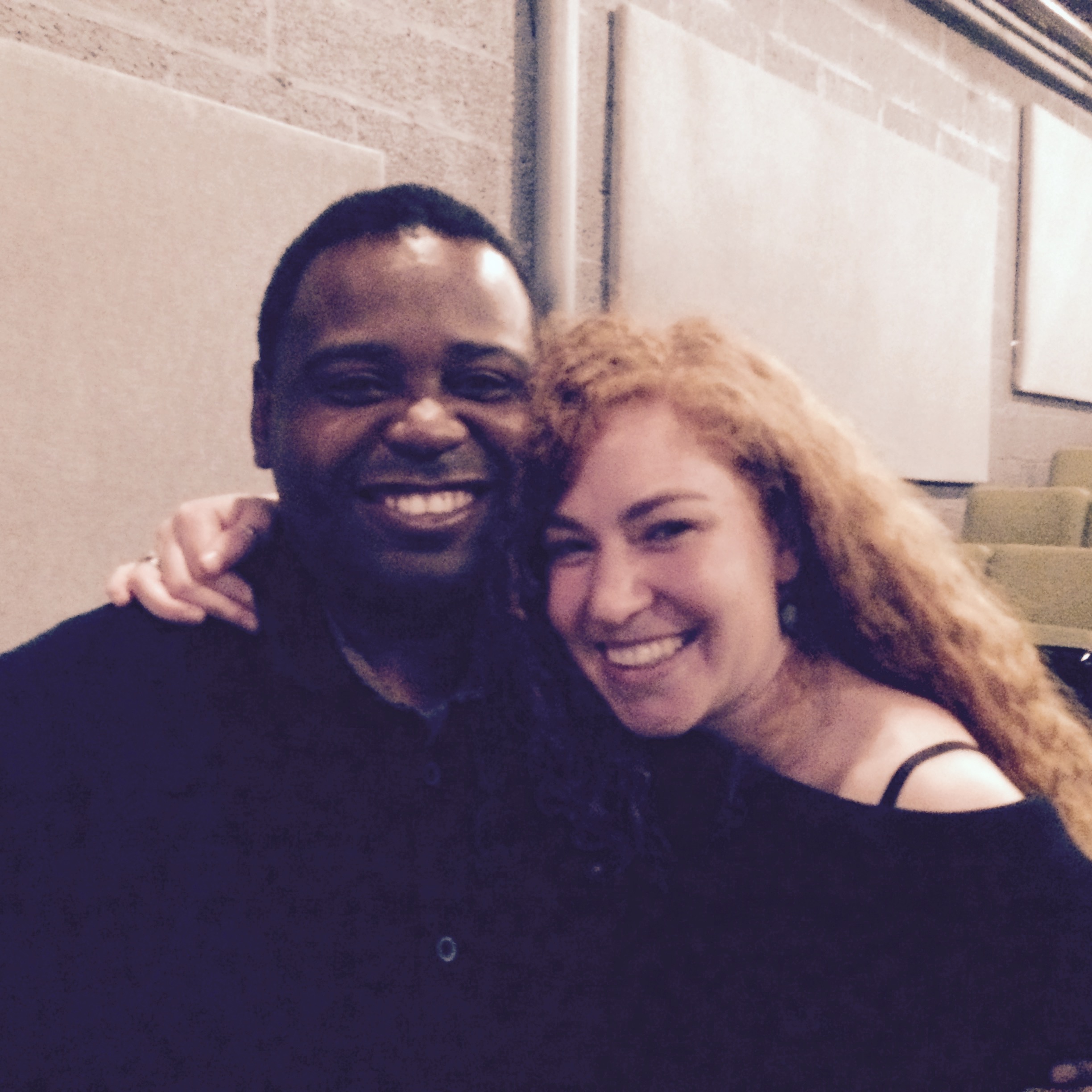
Fellow ACLA attendee and US Army major and Iraq veteran Deborah Dailey and me at Emerald City ComicCon, 2015.
Meanwhile, back at ACLA, I was delighted to listen to a paper titled “The Spread of the Camp: Power, Law, and the ‘New Democracy’” given by a University of Delaware professor named Ikram Masmoudi at a panel on contemporary Arabic literature. Masmoudi, as if in answer to a question I never asked because I didn’t know who the heck to query, catalogued a number of novels published in Iraq since 2003 that portrayed “Operation Iraqi Freedom” from the perspective of Iraqis. Specifically, Masmoudi examined representations in recent Iraqi fiction of American “camps,” or what we might call more often a FOB: armed enclaves of foreigners that spread parasite-like across the country in the 2000s after the American invasion and, as these things happen, now are being replicated by Iraqi factions themselves as new-fangled communal living spaces organized to meet the demands of civil war.
Masmoudi’s presentation was very exciting to me. I know well the achievement of Hassan Blasim and am somewhat aware that Sinan Antoon’s The Corpse Washer and Ahmed Saadawi’s Frankenstein in Baghdad lurk out there waiting to be read. Now, thanks to Masmoudi, I know that other Iraqi fiction writers have been busy, too. A short list includes:
Madmen of Camp Bucca, by Shakir Noori Green Zone, by Shakir Noori The Freedom of the Bagged Heads, by Jassim al-Raseef The American Granddaughter, by Inaam Kachachi Beyond Love, by Hadiyya Hussein
A translated version of The American Granddaughter exists and is available for purchase on-line, while Masmoudi herself is translating Beyond Love. The first three await translation from Arabic, but based on Masmoudi’s account of them at ACLA, they have much to offer American readers interested in seeing what the war looked like from the other side. Masmoudi also has an academic study coming out later this year called War and Occupation in Iraqi Fiction (Edinburgh University Press). Now who would have predicted a full-length scholarly study of Iraqi war fiction would appear in English before one examining war novels written by our own citizens? Let’s get busy, ye fellow American literature scholars.
Thanks to Brenda Sanfillipo and Najwa Al-Tabaa for organizing our ACLA seminar and inviting me to participate, and thanks to everyone who presented. I haven’t finished thinking about your papers yet.
The Conference on College Composition and Communication is a big deal for English 101 teachers. Imagine 10,000 strong of us—for I am one—descending on a town near you and geeking out to presentations with titles such as “Rhetorics and Ecologies of Scale: Composing Across Environments and Disciplines.” We party, too, believe it or not. A composition textbook giant, Bedford-St. Martin, throws us a big annual to-do, complete with free bars and buffet spreads. This year, in Tampa, the party was held in the Florida Aquarium, so the party went down with manatees and sharks circling in the background.
Brandon Willitts, pictured here, couldn’t make it, so the 4Cs got me.
I presented twice at 4Cs this year at panels interested in veterans in the composition classroom. I was proud to be there and gladdened that the composition teacher community takes the issue so seriously. One presentation was titled, “When the Vet in the Classroom is the Teacher.” That was mostly about me, so I’ll spare you the details here. I was supposed to be in the room to support Brandon Willitts, the executive director of Words After War, as he presented to college teachers interested in veterans literary collectives. When Willitts couldn’t make it, I filled in. Below are my remarks, complete with copious quotations from Willitts and Matt Gallagher. The assembled English teachers were interested in Words After War because of its proven success at joining military and civilian writers in common dialogue and the techniques it uses to encourage writing workshop participants to throw themselves into their work.
“Writing After the War: An Inclusive Community-based Approach to Understanding War and Conflict through Literary Programming”
My discussion of Words After War, a New York City literary organization, compliments the essays in Generation Vet: Composition, Student-Veterans, and Post 9/11 University (2014), “I Have to Speak Out” by Eileen Schell and Ivy Kleinbart. about the Syracuse Veterans Writing Group, and “Closer to Home” by Karen Springsteen, about a national organization called Warrior Writers.
The subject is what Schell and Kleinbart call “a parallel movement of ‘self-sponsored’ community writing groups led by and for military veterans” (119). They are parallel to and complement composition courses on college campuses designed around the needs of veterans. The goal is to create forums outside academia, or partially affiliated with academia, in which veterans write about and process war experience in the company of other vets and sympathetic, interested civilians. The writing is often neither non-academic nor artistic, but aimed at personal expression and explanation.
The specific subject today is Words After War—a New York City literary organization notable for its rapid rise to prominence, built on a sensibility deeply connected to its New York City location and an expanded sense of what a community writing group might do and be. The two names most prominently associated with Words After War are Brandon Willitts and Matt Gallagher. Willitts is a former Navy enlisted sailor who served in Afghanistan and Gallagher is a former Army cavalry officer who served in Iraq. Gallagher’s blog Kaboom was one of the first blogs from the war zone and served the basis of his memoir Kaboom: Embracing the Suck in a Savage Little War (2010). His novel Young Bloods will appear later this year.
Willitts provides the vision and organizational drive, while Gallagher’s experience as an author and combat soldier lends Words After War great credibility and supplements his deft touch as primary writing instructor. I am not officially connected to Words After War, but I am friends with Willitts and Gallagher, respect their achievement enormously, and have attended and participated in several Words After War events. But my support of the vet writing scene is more than just supporting Words After War—I have engaged with vets-in-the-classroom issues on several campuses and have participated in or familiarized myself with a variety of vet writing organizations, such as Voices From War, the Veterans Writing Project, and Warrior Writers.
So what is special about Words After War?
Its website describes it as a literary organization, one dedicated to encouraging writing about war, while having conversations about war, primarily as it is represented in literature. Its belief is that literature—art and expression—is an effective tool (or medium) for communication and growth organized around the sharing of stories. The active writing component of Words After War lies in its effort to create a supportive, creative community through workshops, studio retreats, literary mentorships and a writer-in-residence program. Therapy is not the avowed aim; Willitts writes, “we do not aim to be anything more than a literary nonprofit that serves the veteran community (and interested civilians).” “I believe,” reports Willitts, “above all else, our success is based on our inclusive model and our adherence to quality writing. Quite simply, we aim to be good, competent, progressive, thoughtful, and interesting.” A stated goal and reason to applaud Words After War is its demonstrated success at bringing veterans and civilians together in the same writing, reading, and conversational space. A New York City writing workshop takes place weekly at Mellow Pages, a storefront reading room and library in Brooklyn, while out-of-city workshops of longer duration have also taken place at Marlboro College and Canisius College, with another event at Wesleyan College in the works. All have featured roughly equal numbers of civilian and veteran writers.
As to what happens in a Words After War workshop, I’ll quote Gallagher at length:
We’re in our fourth semester of the Brooklyn WAW workshop now, and in every one, it’s been half veteran, half civilian. While that was the design of the idea on a macro level, we’ve never influenced actual enrollment numbers to match that, it’s happened organically (10 to 16 people per semester). What they’re seeking can run the gamut, but the most common refrains I’ve heard from students are 1) an MFA-lite experience 2) a writing community 3) exposure to war and conflict literature they’d otherwise have missed by themselves. Obviously, the experience and literary ambitions can vary wildly, and we have had some students there who are seeking a more “writing-as-therapy” experience. The groups have always been pretty generous, though, so a person like that doesn’t get their piece workshopped the same way our gruff, uber ambitious neo-Hemingways do.
Each semester has 10 workshops. 8 of those 10 are more seminars than anything – I’ve sent out reading materials to discuss ahead of time, so we can talk craft for an hour. Then I use those craft lessons to intro 2 or 3 writing prompts, allowing students 30 to 40 minutes to work from those prompts. The idea being, maybe any material generated from those prompts can be a seed for something students want to take home and really refine, if they choose to.
2 of the 10 workshops per semester are full, MFA-style writing workshops – 4 students will have submitted up to 10 pages of material ahead of time, and those submissions are the class’s sole focus for the two hours we’re together. The student being workshopped cannot speak or respond until they very end. I set a basic structure of conversation for each piece (i.e. let’s talk about this piece’s structure, character development, tone) and the rest of the students deliberate over those matters, usually starting with what worked, then progressing to what didn’t. Not every student chooses to submit for these workshop sessions; generally speaking, about 70% of participants do, though.
Memorable moments – I always love having the class read “Pale Horse, Pale Rider” by Katherine Anne Porter. It’s a good way to energize our civilian students, as thinkers and writers, to prove to them that this giant, awful subject of war is theirs, too, if they want it. And it’s a good way to shut down the neo-Hemingway vets who are convinced the only way to write about something is direct experience. Sets the tone for the WAW vision, I think – good writing is good writing, let’s talk craft, not amount of chest hairs.
A vast majority of our WAW participants are working on short stories, novels and memoirs, with a slight majority skewing non-fiction. (Sign of the publishing world times, is my guess, and a natural entry point for a young writer with a story to tell.) A couple have and do dabble in poetry, and we have a returning cast of Columbia Journalism students, though they tend to come more for creative escapism than as a means to hone their journalism craft, from what I’ve gathered.
Words After War’s New York City location also makes it unique in several ways. The location allows Words After War to draw on the tremendous pool of veteran writers living in New York, many of whom are not just talented, but already published or very ambitious to make a career in letters. It also connects them to the larger art and creative scenes of New York and Brooklyn. Not only are its weekly writing workshops held at Mellow Pages, a venue that features obscure titles by likes of Slavoj Zizak and Alain Badiou, and Words After War readings that I’ve been to have been staged in venues—bars, performance spaces, and historical sites—that can be described as very cool or very hip, depending on which generation’s vocabulary you employ. New York City also gives Words After War access to the publishing world and MFA program scene, so events often are staged in conjunction with bookstore and publishing media campaigns, or academic writing circles. Words After War also interacts with (and to a certain extent compete with) other war writer groups such as Voices After War. New York City also brings proximity to the city’s pool of non-veteran writers, and many events feature writers who are not veterans reading from works not directly concerned with war in Iraq and Afghanistan. Willitts reports that one of the most surprising developments about WAW is the interest in and participation by civilians. He tells me that one of the first signs that the organization had legs came in fall 2013 when he staged a reading at Brooklyn performance space that over 50 people attended, most of whom were unknown to him. “To get over 50 people to an event in New York City,” Willitts claims, should always be considered a success, given the number of competing cultural events on any night.” New York City also gives Words After War easier availability to New York City press possibilities. The organization has been featured not just on PBS, but in the New York Times and even Vanity Fair. Finally, Words After War’s location presents fundraising opportunities not necessarily available to other vet writing groups. Willitts has put a lot of his own money into standing up Words After War, while also relying on private donations, but promises to initiate a new fund-raising strategy later this summer.
Brandon Willits’ love of literature and his desire to encourage war writers are true and energetic, but he’s also an aggressive social entrepreneur who in a short time has developed a healthy list of contacts in media and publishing. He’s not above leveraging them on behalf of veteran writers, most of whom, I would say, harbor dreams of making it into print. It’s interesting to think about the possibilities and problems of Words After War’s rapid emergence as a big-time player not just on the war lit community, but the national publishing field.
One way to think about it all is that Words After War’s vision and record of achievement is as an inspiring, positive, and an almost inevitable organizing of a vibrant New York City war writing scene and bringing it to the attention of the world. It’s also possible to think of Words After War as an industry leader—one that models a number of possibilities for vet writing groups elsewhere and inspires others to create similar organizations. One goal, in fact, is to create a series of writing workshop programs exportable beyond the New York City area—one day, two-day, and week-long events that are run in conjunction with colleges, community writing groups, and veterans organizations across the nation. Because Willitts and Gallaghers’ ethos is one of inclusiveness and encouragement, I can easily imagine a war writer in some other part of the country hearing about Words After War and growing very excited about the possibility of moving to New York City and plugging into Words After War events and activities in the name of being where the “the action is,” so to speak.
A reason to be more ambivalent would be a suspicion that the Words After War endeavor seems slightly, or greatly, careerist and self-promoting. One might wonder how long it might preserve its grassroots, democratic ethos as members receive literary plaudits and compete for publishing contracts. We might also ask if its very emphasis on notions such as “community” and “support” encourages a groupthink or otherwise limits creative and interpretive possibilities. Words After War, for example, does not seem invested in aligning war writers with political outspokenness, nor (as I have said), in viewing writer as a therapeutic vehicle for dealing with trauma.
A final possible criticism could be that Words After War really hasn’t been as productive as its own ideals and publicity might suggest. The writers-in-residence, studio retreat, and literary mentorship programs currently exist mostly as good ideas on paper, for example. Other vet-writing organizations such as Warrior Writers and the Veterans Writing Project have been around a lot longer than Words After War and might wonder when their work too might be featured on PBS, to say nothing of Vanity Fair.
But I’ll conclude by once more emphasizing positive aspects over the concerns. Words After War has grown so rapidly in its first two years of existence, that its unfair to yet judge it on what it hasn’t yet accomplished at the expense of celebrating its achievements. The talent in New York City’s war writing scene is impressive, with many writers only at the beginning of what I think will be long careers as writers and public intellectuals, and I support all organized efforts to promote their rise in the world of letters. Leaving Willitts with the last words, I’ll quote his response to my question of what he thinks the achievement of Words After War has been:
“For a long time I didn’t know what I had built, probably because I was too close to it to see the total picture. It took a friend of mine to sort of show me that, no matter what happens in the future, I will have built of community of supportive readers and writers who came together during an important time in our nation’s history. I guess I never saw it before, but maybe I did do that. Or, then again, maybe they would have come together on their own. But the evidence does suggest that we had something to do with the current state of affairs, as no one seemed to be talking to one another much before Words After War and a lot more folks know one another now because of Words After War.”
****
If you’ve read this far, I salute you. I have two veterans in the classes I teach this semester. I hope I am making the experience enjoyable and productive for both of you.
So many thanks to Sue Doe and Lisa Langstraat, co-editors of Generation Vet: Composition, Student-Veterans, and the Post 9/11 University, for organizing the 4Cs’ presentations on student-veterans and for all you do in support of veteran-students at Colorado State University.
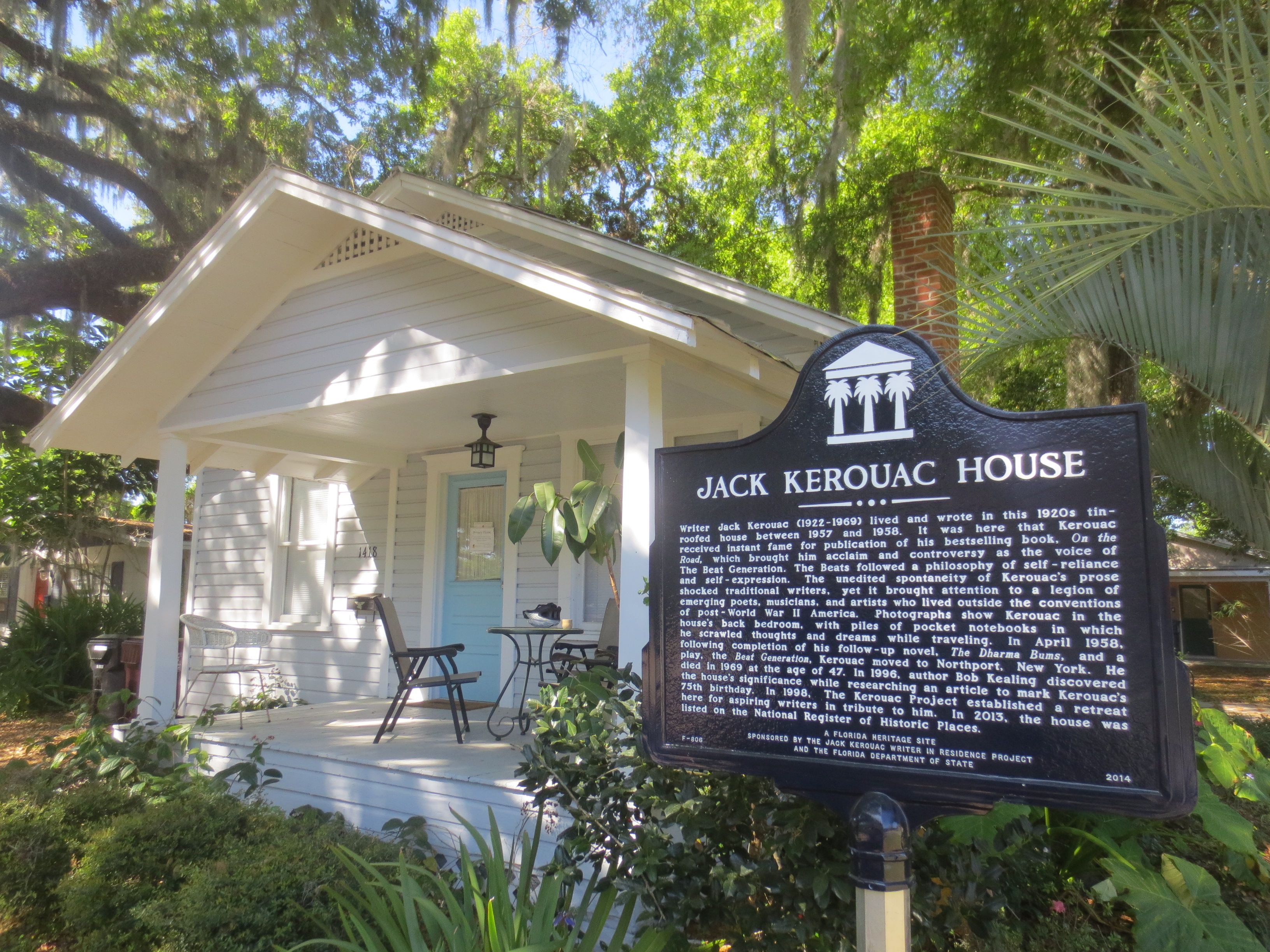
On the way to Tampa, I stopped at the house in Orlando where Jack Kerouac wrote The Dharma Bums in 1957. Brian Turner lived here, too, for a while, and now lives around the corner.
Who built these things? An abandoned fortress near Spera Combat Outpost, Khost province, Afghanistan.
Last week I presented twice at the Conference on College Composition and Communication in Tampa, Florida. One presentation was part of a panel called Community Writing Programs for Veterans; my contribution was a discussion of the New York City writers’ collective Words After War. Two days later, I read a paper titled, “When the Veteran in the Class is the Teacher” as part of a panel on student-veterans.
This week, I read original fiction at Pete’s Candy Store, Brooklyn, NY, as part of their annual veterans reading night event. Also reading will be Teresa Fazio, Chris Wolfe, and Brandon Willitts, hosting will be Matt Gallagher.
My next stop is the American Comparative Literature Association conference in Seattle, where I will join a seminar titled, “What Does War Look Like? Visual Trauma and Representation.” My paper is called “Ariella Azoulay and the Photographic Situation of War in Iraq.”
Then on to the Association of Writers and Writing Programs conference, or “AWP” for short, in Minneapolis. I’m moderating a panel titled “Who Can’t Handle the Truth? Memoirs by Iraq and Afghanistan Veterans” that features Ron Capps, Kayla Williams, and Colin D. Halloran. Capps is the author of Seriously Not All Right and the maestro of the Veterans Writing Project. Williams’ two memoirs are Love My Rifle More Than You and Plenty of Time When We Get Home. Halloran is the author of the poetry collection Shortly Thereafter and has a memoir and another volume of verse in the works.
Last stop is the American Literature Association conference in Boston. I’ll be on a panel called “The Politics of Contemporary War”; my paper will be on canon (not “cannon”!) formation within the contemporary war body of fiction and poetry. The panel will be moderated by Aaron DeRosa, and also presenting will be Stacey Peebles and Laura Clapper. DeRosa and Peebles are currently co-editing an upcoming issue of Contemporary Fiction Studies dedicated to 21st-century war fiction; Peebles is also the author of Welcome to the Suck: Narrating the American Soldier’s Experience in Iraq, the praises of which I’ve sung many times in Time Now.
Spera Combat Outpost, a combined US-Afghanistan outpost on the Pakistan border.
Appreciation Yak: Only thing I like about Fayetteville is all the eye candy. Military men are the best men. I’m in heaven every time I come home from school.
Subsequent Yaks:
I’m the opposite. They’re not really my type, but so many of them message me on dating sites (sad I know, but it’s convenient) since so many live around here.
Really… I feel like most military guys are super sweet, plus they stay in shape… Which is greattt.
My type is more like, k-pop boy band kinda guy lol.
Haha, they’re cool too.
I dunno, I guess something just kinda scares me about masculinity. At least you have plenty to be happy about in this city lol.
That’s about the only thing.…
Yep nothing else pretty much. Like I’m trying my hardest to think of something to do here other than shopping.
I’ve been watching Netflix like it’s my job.
Except when their PTSD does something bad to you.
That’s not always the case…. Can’t be afraid of people because of possibilities.
I can be afraid of anything I want, thank you very much. And PTSD scares me. I know from first hand.
First replier here, I agree the PTSD can be potentially very harmful for both in a relationship, but another reason for me is, I wouldn’t be able to handle the times he has to go off and fight.
That is such a good point! My friend’s boyfriend just got deployed for nine months.
Yeahh… loneliness, lots of worrying., and trust issues on my part (or his part, too). It wouldn’t really work out for me I think.
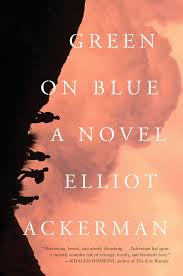
USMC veteran Elliot Ackerman’s novel Green on Blue describes events that ring true to my own deployment experience in east Afghanistan. As an advisor who daily spent hours in the company of Afghans with loaded weapons, a “green on blue” incident—the murder of an American by an Afghan army member–was always a possibility. Ackerman’s descriptions of torturous truck journeys down narrow wadis and on the edge of cliffs brought back memories, too. As I’ve written elsewhere, for every story of combat in Afghanistan, I have five involving crazy vehicle escapades. The portraits of village shuras and life behind kalat walls in Green on Blue mirrored dozens of my own engagements with Afghans, often with me being the only American in a room full of turbaned and bearded Pashtun men.
For all that, as I began to read Green and Blue I was prepared to be disappointed, for I knew it might be hard not to quibble with Ackerman’s rendering of combat on Afghanistan’s eastern border with Pakistan. Happily, though, Ackerman gets all the above right and whole lot more, too. Through the audacity of its imaginative reach, as well as the acuity of its insight into what war in Afghanistan is about, Green on Blue significantly expands the borders of contemporary war literature.
The story’s protagonist is Aziz, a young Paktika province Pashtun who signs on as a member of a militia to revenge the death of his parents and the loss of a leg by a beloved older brother. The militia he joins is led by a ruthless, mysterious, and charismatic leader named Commander Sabir. Sabir, aided and funded by an American advisor named “Mr. Jack,” battle with a clan led by a wizened tribal warrior named Gazan for control of a middle-of-nowhere village called Gomal. Gomal has no tactical, political, or economic significance, but Aziz, Sabir, Gazan, and other Afghans in the story fight over it in an endless cycle of violence rooted in personal vendettas and dreams of war profiteering. As the novel unfolds, Ackerman drives home the point that war in Afghanistan, as it is experienced by actual Afghans, is only circumstantially concerned with the American intervention. Even the green on blue murder that gives the book its title is more a matter of circumstance than an act motivated by hatred and global politics.
Ackerman, who served as I did as an advisor, suggests that pashtunwali codes of nang and badal—honor and revenge, respectively—motivate Pashtuns to ceaselessly seek retribution against each other for wrongs inflicted on family members. And as if nang and badal weren’t fuel enough to keep the fighting going for another thousand years, Sabir and Gazan are well aware that their place in the bigger conflict keeps the local economy going. Not only do they stand to profit personally by siphoning off war-related lucre, their followers and their families’ livelihood depend on it, too. Commander Sabir explains:
All are caught up in this, he said. The question is whether you’ll be a victim or prosper in it. What justice is there for you if Gazan, who crippled your brother, prospers in peace with the Americans? What justice is there if we lose control of him and never build our outpost [in Gomal]? Yes, there will be peace for Gomal and Gazan, but us, what of us? The Americans will no longer need us. How do we survive then?
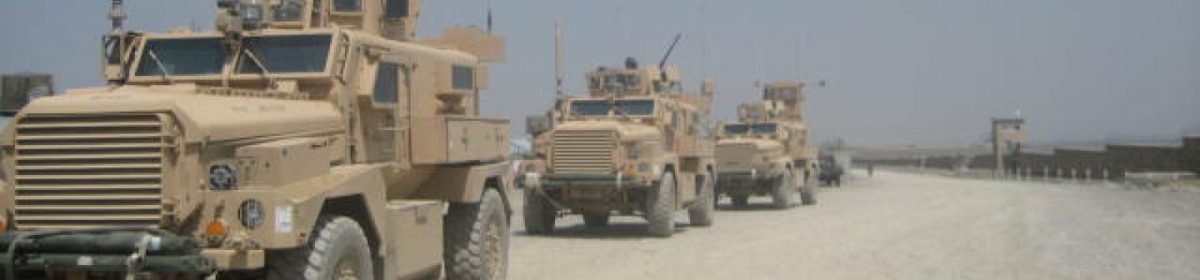
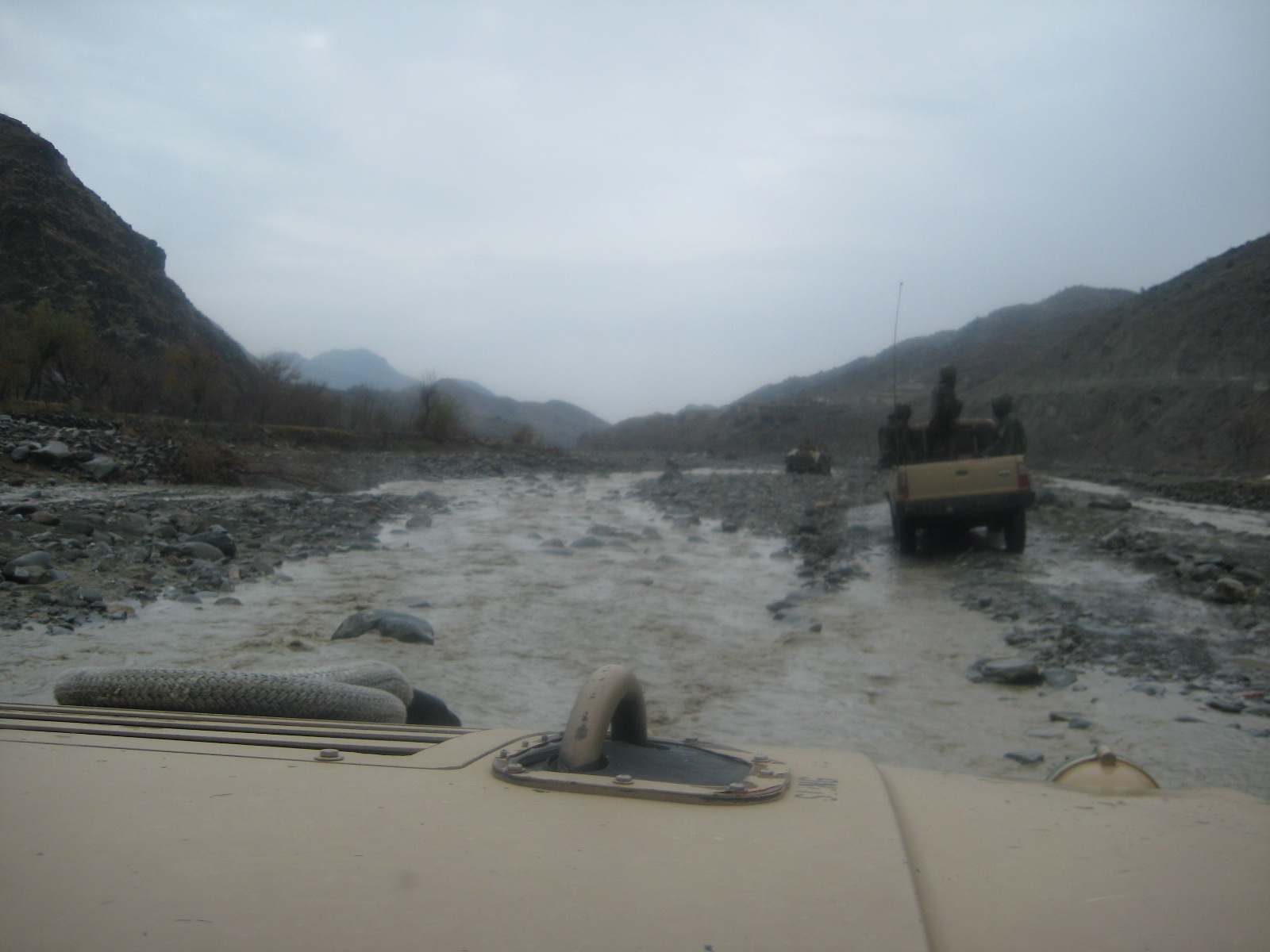
Every warzone has its characteristic look, feel, and pace, or at least our mental pictures of them do. I saw American Sniper this weekend and the many scenes portraying Marines and SEALs clearing houses in urban areas resonated in my mind as sui generis Iraq combat. I enjoyed Sebastian Junger’s movies Restrepo and Korengal very much, but their endless scenes of soldiers on outposts blasting away at remote hillsides with their machine guns didn’t do much for me in terms of characteristically representing war in Afghanistan (and I was responsible for a very similar outpost, Spera COP, in my own sector). For me, most vividly, Afghanistan entailed vehicle movements deep into remote districts and enclaves. Combat action was always possible and sometimes occurred, but the long drives there and back felt like something epic even when there was no battle. Ackerman’s descriptions of treacherous truck movements through Afghanistan wadis and mountains are frequent and rich:
We rushed past Shkin village, where cooking fires glowed inside the few mud-walled homes. We drove on towards the darkness of the southern mountains. At the base of the range, our convoy slowed to a crawl. Here the north road continued south, but we turned off and traversed the uneven ground to a wet ravine tha rolled out like a sloppy tongue. I watched Commander Sabir’s HiLux ease itself into the ravine’s mouth. It took the first bend and was swallowed by the mountain. Issaq’s HiLux followed and then, quickly, the rest of us. And our convoy disappeared.
The mountains closed around us. We drove through them like children playing in a window’s long curtains, chasing each other, all of us near, hidden in the fold….
But Green on Blue‘s most interesting feature is its first-person narration in Aziz’s voice. War novels such as Joydeep Roy-Bhattacharya’s The Watch and Michael Pitre’s Fives-and-Twenty-Fives admirably feature Afghan and Iraqi characters, but Ackerman’s feat surpasses those with its plausible and engaging rendering of a life experience as foreign as an American might imagine. Such acts of ventriloquism are not without risk; an easy criticism would be that rather than a feat of empathetic representation, it bespeaks an act of literary imperialism bankrupt in principle and doomed to fail practically. Ackerman could well have told the story from Mr. Jack’s point-of-view or presented the story as memoir, for surely many of its events are close to those he experienced or heard about on deployment. But we have already have portraits of American army captains in Afghanistan in The Watch and Aaron Gwyn’s Wynne’s War, so kudos to Ackerman for approaching his story from a different direction. Green on Blue sympathetically makes us privy to Aziz’s dawning awareness of just how complicated and bleak is the world he inhabits.
Ackerman renders Aziz’s voice simply and directly; rarely, for instance, does Aziz envelop his thoughts in Islamic platitudes or verses from the Koran. Instead, nang and badal and various Pashtun proverbs are the constants in his mental flow:
Once, in Sperkai, an older child had split my lip in a fight. When my father saw this, he took me to the boy’s home. Standing at their front gate, he demanded that the father take a lash to his son. The man refuse and father didn’t ask twice. He struct the man in the fact, splitting his lip just as his son had split mine. Before the man could get back to his feet my father left, the matter settled. On the walk home, my father spoke to me of badal, revenge. He told me that a man, a Pashtun man, had an obligation to take badal when his nang, his honor, was challenged. In Orgun, every stranger’s glance made me ache for a time when my father might return and take badal against those who’d pitied his sons.
Once in while, the register shifts into ‘murican-Injun’ picture-speech, as when Aziz says, “We turned wrenches until our shadows were made long by the late-afternoon sun.” And in a couple of places, Aziz sounds suspiciously like a young American MFA-trained author, as in a passage where he considers the feel of a pistol in his hand:
Its heft sunk into my palm, and I felt the permanence of its metal. A pistol’s purpose was the same as a rifle’s, but achieved it so casually. A rifle requires the whole body to fire it. Laying the buttstock into the shoulder, leaning against the recoil, concentrating on the sights, all of this draws from every part of the shooter. But with a pistol, just a flick of the wrist and a light twitch with an index finger delivers a hard bullet.
Overall, though, Aziz’s voice is fine. Ackerman lets the events of the story pull the narrative forward by having Aziz relate them without much stylistic overlay. His thoughts and actions seem motivated by what anyone would conceive of as plausible human nature, leavened by pashtunwali. When I arrived in Afghanistan, an American told me that working with Afghans was much like working with Americans, except that Afghans possessed two great fears that Americans didn’t worry as much about: one, they might die at any moment, and two, their families would be left destitute as a result. The statement served me well as I watched the Afghans I knew make choices and express their beliefs. Now, reading Green on Blue, the claims seems true also for Aziz, whose ability to choose is constrained everywhere by the proximity of death and poverty, and animated only by dreams of nang and badal. His war, like my war, was not just flying bullets and exploding mines, but complex local social dynamics characterized by grudge, worry, feud, and angling for advantage.
On the wadi road to Spera, Khost province, Afghanistan, January 2009.
Dijla Wal Furat: Between the Tigris and the Euphrates photo by Bjorn Bolinder.
Sitting in the audience before Poetic Theater’s production of playwright Maurice Decaul’s Dijla Wal Furat: Between the Tigris and the Euphrates, I mused that the last year or so has not brought many stage representations of contemporary war and war-related issues. The last one that came to mind was another Poetic Theater production, Goliath, that I attended one winter ago. I once proposed that theater might be the artistic medium that best portrays war subjects in ways that compellingly binds together veterans and non-veterans in shared contemplation, but this seems not to have happened. So I guess I was wrong, if in no other way than that I overestimated that a large audience might be found for any stage performance not on Broadway.
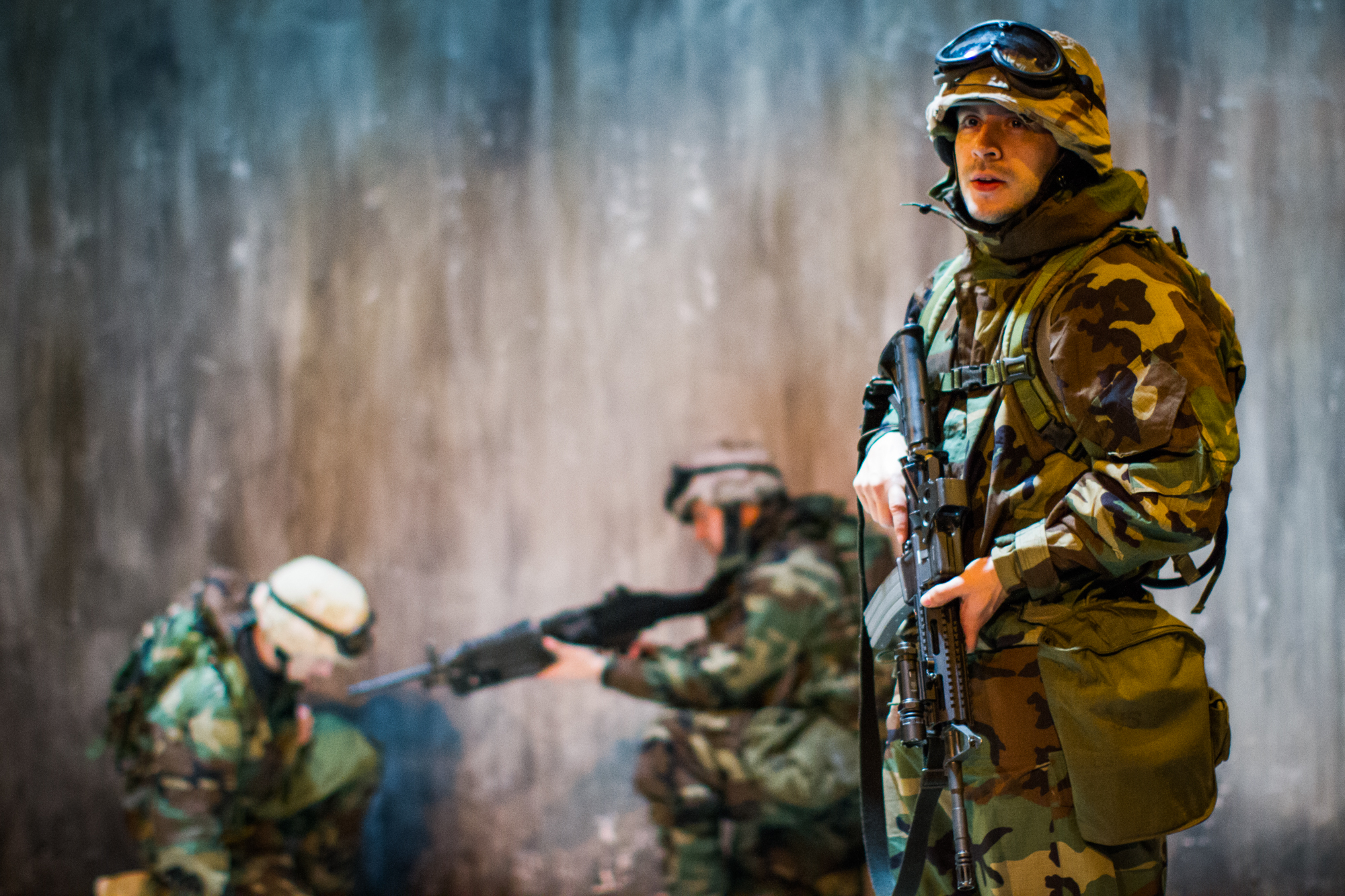
Be that as it may, as the lights dimmed and Dijla Wal Furat: Between the Tigris and the Euphrates opened, I leaned forward in anticipation of the shared-in-darkness vitality of theater. Decaul, a USMC vet who participated in the invasion of Iraq in 2003, takes us back there to portray Marines in action in those early days of war. 2003 seems so long ago—the first moments of a decade-plus of war whose full horrible dimensions no one saw coming. The remoteness of Decaul’s story was exemplified by the chemical protective suits his characters wore and the gas masks they carried. Boy does that gear ever date them…. Remember when Weapons of Mass Destruction were what we though the war was about? Of course no WMDs were ever found by anyone, but Decaul’s retrospective portrait brings to the fore salient aspects that eventually would characterize war in Iraq and Afghanistan. The infliction of unintended casualties on innocent civilians. The difficulty of determining friend from foe. The presence of the press in the combat zone as omniscient judges. The spasms of guilt that would afflict individual soldiers and Marines as they killed and saw buddies killed. In the years after 2003 these issues would metastasize and become defining, overwhelming aspects of our war experience.
I enjoyed everything about Dijla Wal Furat, but within the context of the greater story, two individual scenes dazzled as examples of theatrical possibility. The opening scene, in which a Marine mortar squad “hangs” (or, launches) rounds—one of which goes off-course and kills innocent Iraqis—marvelously blended the real-world choreography of a crack mortar crew with the artistry of stage dance, music, light, and sound. Another scene, in which an Iraqi man is followed about on stage by the ghost of his dead friend, poignantly drove home the lingering presence of the past as it affects those still alive in the present. The mortar and ghost scenes showed Decaul the master of two trains of stagecraft—representational fidelity to real life heightened aesthetically and the magical permutation of real life in the pursuit of greater artistic truth. Decaul, I’ve learned, has been accepted into a prestigious Brown University program for talented young playwrights and Dijla Wal Furat provided plenty of evidence why. Kudos also to director Alex Mallory, who also brought Goliath to the Poetic Theater stage last year, and all the actors.
Since watching Dijla Wal Furat I’ve been exploring other books and artworks to make better sense of 2003. My general impression is that the entire nation was driven mad by the 9/11 attacks to the point it couldn’t think well about anything. Watching the HBO series Generation Kill again and reading Love My Rifle More Than You, Kayla Williams’ excellent memoir about service in Iraq in 2003, reminded me of how simultaneously naïve and arrogant we were as a military, how many mistakes we made, and how consequential it would all become. Increasing my despair has been Jeremy Scahill’s Dirty Wars: The World is a Battlefield (2013), in which Scahill describes the growth of Joint Special Operations Command and special operations in general in the years after 9/11. Decaul and Williams vividly portray the difficulty and inefficiency that typified ground force operations in the early Iraq days; Dirty Wars describes an administration that at the highest levels expected as much and didn’t really care. In Scahill’s telling, Secretary Rumsfeld, Vice-President Cheney, and President Bush were too transfixed with turning the CIA and military special forces into worldwide kill/capture teams in search of high value terrorist targets to focus on the mess that was fast becoming Iraq from 2004-2008. Contemptuous of conventional ground forces—too stodgy, not aggressive or responsive enough, led by dullards and manned by drop-out post-adolescents, as Scahill describes their attitude—our national leaders abdicated responsibility for establishing anything like the appropriate conditions by which men and women like Decaul and Williams might succeed on the ground and feel especially proud of their service afterwards.
Whether any of that is the truth, the whole truth, and nothing but the truth, I don’t know, but it’s all got me thinking.
Dijla Wal Furat: Between the Tigris and the Euphrates writer Maurice Decaul and director Alex Mallory on opening night.
TalkinBroadway review of Dijla Wal Furat: Between the Tigris and the Euphrateshere.
Ex-Marine Elliott Ackerman’s novel Green on Blueis out this week and I’m eager to read it. Green on Blue’s point-of-view—it’s told through the eyes of an Afghan young man who serves in a native militia attached to US forces in an eastern Afghanistan province—and Ackerman’s sympathy for the Afghans with whom he served jibes with my own experience. As an advisor in eastern Afghanistan, I dealt not just with official Afghan National Security Forces such as the Army, the National Police, and Border Police, but with various arbaki: quasi-official tribal fighting forces raised from local ranks of military-aged-males. Arbakis ranged from functionary gate-and-tower guards on US FOBs to kick-ass killers affiliated with Other Government Agencies such as the CIA. Generally they were considered more reliable and competent than ANSF units, within the scope of their missions. Their hatred of the Taliban and war-mongering bandits (or, “dooshmen”) seemingly sincere and battle-tested, the fact remained that an arbaki’s real loyalty was not to Americans but to the regional overseers–let us say “warlords”–who organized them and sold their services to US occupiers.
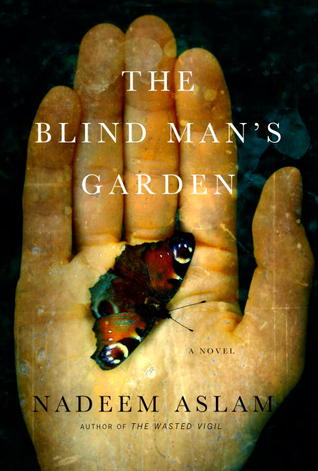
Green on Blue awaits, but by chance this winter I came across British-Pakistani author Nadeem Aslam’s novel The Blind Man’s Garden, which treats similar subjects. Published in 2013 to acclaim in England but little notice in the United States, The Blind Man’s Garden is actually Aslam’s second novel portraying conflict in contemporary Afghanistan through the eyes of natives; an earlier work, The Wasted Vigil, appeared in 2008. The protagonists of The Blind Man’s Garden are Mikal and Jeo, Pakistani brothers-by-adoption who cross into Afghanistan to render aid to civilians injured by American invaders after 9/11. Mikal and Jeo are not Taliban, but thoughtful young men eager to defend the integrity of a neighboring country bound by culture and religion. Their first night in Afghanistan, however, is a disaster: they are seized by mercenary arbaki fighters and then caught in conflict between competing arbaki, one of which is aligned with US Special Forces. Jeo is killed and Mikal is captured, has his trigger fingers amputated to prevent further resistance, and then ransomed to Americans by a profiteering warlord.
Scenes illustrating Mikal’s treatment by interrogators at Bagram Air Force Base are unstinting in their portrait of American brutality. If you don’t think Americans physically tortured suspected opponents in the early days of the war on terror, well, Aslam does. American propensity for sadistic violence, to say nothing of their inclination to wage their own version of jihadist war on Islamic nations, is a given in the minds of Aslam’s Pakistani characters. Aslam-the-author’s take is more complicated. His portrait of the Koran-saturated belief systems and ways of life of contemporary Pakistanis is a badly-needed detailed representation of a world Americans basically spent a decade fighting without knowing much about. For those interested, The Blind Man’s Garden offers a nuanced portrait of the conflicting attitudes toward the West held by those who waged war against us and those whom the wars affected. Many scenes and passages in The Blind Man’s Garden portray a rich, venerable culture, wise and deeply connected to nature, education, faith, family, and history. The Pakistani folkways and circuitries of thought that Aslam holds up for admiration make American culture typified by Burger King and TMZ appear as superficial as it is often accused of being.
But Aslam also suggests that Pakistan is trapped, to the point of poison and doom, by its deep entanglement with a religion that drives devout believers not just to jihad against the West but to conflict with each other. A passage seen from the perspective of Kyra, a Pakistani military officer who resigns his commission rather than be a part of an organization tainted by its support of the West, illustrates. Here Kyra is gazing at a traditional non-militant religious academy he intends to turn into a madrassa he will use to transform young men into jihadists:
Nine-Eleven. Everything about it is a lie, he is beginning to believe. A conspiracy. Flying large aircraft at low altitudes in an urban sky is not a simple thing. There had to be something manipulating air traffic control. There had to be somebody who switched off the warning system for the Pentagon. From what he has read and heard it seems that the air force did not scramble for more than an hour. Kyra is a military man so he knows about such basic things. It was all staged, to invent an excuse to begin invading Muslim lands one by one.
He looks toward the arch above Ardent Spirit’s front gate. It was removed from the entrance of the original building and brought here when the school changed premises. When Rohan [the school’s founder and Mikal and Jeo’s father] and his wife founded it, the arch had read “Education is the basis of law and order.” Soon the word “Islamic” was added before “Education” by Rohan himself, apparently against his wife’s wishes. Over the years it has been amended further, going from “Islamic education is the basis of law and order” to “Islam is the basis of law” and then to “Islam is the purpose of life,” while these days it says “Islam is the purpose of life and death.”
Under Ahmed the Moth [another school supervisor], Ardent Spirit had developed links with Pakistan’s intelligence agency, the ISI. Pupils were selected to be trained in combat at jihadi camps run by the ISI, and ultimately sent to carry out covert operations in Kashmir…. Kyra could have maintained the connection but he feels nothing but revulsion at the army and the ISI for abandoning Afghanistan. The Arden Spirit pupils now belong to him alone and through them he’ll set his plans in motion, molding them to be warrior saints, brilliant in deceit against the West and its sympathizers here at home.
The business about the changing sign hints at humor, and in another passage a character cracks that the easiest way to break up an anti-US protest in Pakistan is to announce that US visas are being handed out around the corner. But levity is in serious short supply elsewhere in The Blind Man’s Garden; Aslam calls contemporary Pakistan a “heartbroken and sorrowful land.” An austere dignity is the most any Pakistani can hope for in the face of Islamic extremism inspired by a hatred, fear, and envy of the West that tears apart families, divides generations, and inflicts grievous harm on good people. But even moderate Islamic belief in the novel’s view makes many adherents—particularly women and anyone who has gotten a sniff of the West’s cultural diversity and opportunities—miserable. Mikal’s chief Bagram torturer is hardly the most heinous character in The Blind Man’s Garden, and neither is a Special Forces captain who, late in the novel, crosses into Pakistan on a one-man solo mission to find and kill Mikal after his release from American custody. The Americans in The Blind Man’s Garden aren’t drawn in enough detail to be more than minor characters, but that’s OK. The novel’s excellence lies in its depiction of a Pakistani society that appears, from the outside-looking-in, to despise itself and to be making its members terribly unhappy. The title refers to a garden dear to Rohan, the original peace-loving patriarch of the Ardent Spirit school. Rohan is blinded midway through the novel, and his disability accelerates his marginalization from contemporary mainstream Pakistani life and thought. Rohan once dreamed of recouping the glorious years of Islamic ascendency, when Islam, dominant from India to Spain, made other belief systems look weak and tawdry in comparison to the majesty of its purpose and achievement. The garden now grows neglected and Rohan is helpless to prevent its decline or enjoy what beauty it still possesses.
The novel goes slightly awry in its last third when Mikal joins with the Special Forces officer in a desperate effort to save the officer’s life, played out in barren desert and mountain landscapes. The saga is a little too contrived and dependent on coincidence, and reads like something out of Cormac McCarthy–not a bad thing sometimes but here less interesting than The Blind Man’s Garden‘s deeply-textured portraits of Pakistan social life. The saga’s not really even needed, frankly, because by the point it begins in the novel Aslam’s work–humanizing America’s enemies–has already long been done and done well.
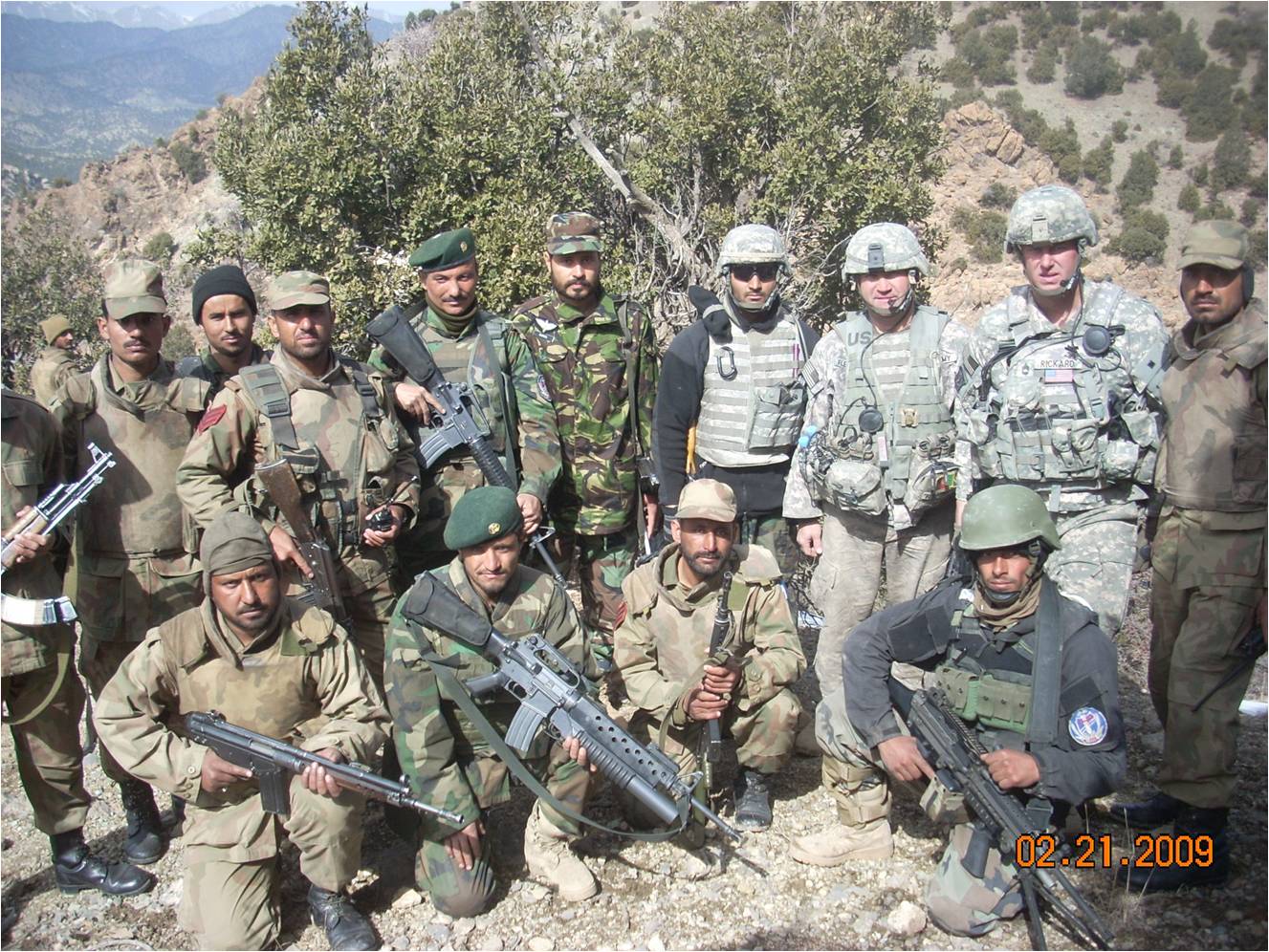
US, Afghan, and Pakistan forces on the Afghanistan-Pakistan border, Khost Province, 2009
A Los Angeles Review of Books review of The Blind Man’s Gardenhere.
Nadeem Aslam, The Blind Man’s Garden. Knopf, 2013.
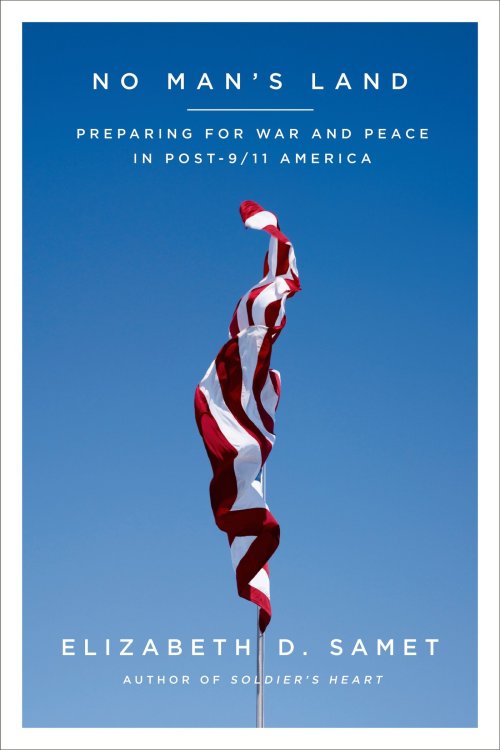
In No Man’s Land, Elizabeth Samet attempts to construct, or re-construct, a personal narrative that makes sense of the Iraq and Afghanistan wars, particularly as they have colored her relationship with the cadets she teaches at the United States Military Academy. Samet, a full professor in the Department of English and Philosophy at West Point, is the author of an earlier work titled Soldiers’ Heart: Reading Literature Through Peace and War at West Point. Published in 2007, Soldier’s Heart was well-received by both critics and popular reading audiences and in my mind deservedly so. Samet’s meditation about her own relation to, not to say complicity with, the post-9/11 wars represented an early, important statement about how the wars were going to be processed by the nation’s intelligentsia. Along with Brian Turner’s Here, Bullet and Colby Buzzell’s My War, Soldier’s Heart staked out forms and manners that were both highly literary and very responsive to new imperatives—two strains that still characterize fiction, poetry, and memoir written by vets and non-vets alike. Though not above criticism, Soldier’s Heart possessed the extreme virtue of being first–pioneering in terms of asking questions and proposing answers that others have since built on.
In No Man’s Land, Samet argues that combatants and the civilian populace alike contemplate the Iraq and Afghanistan wars using modes of thought and frames of reference inadequate to the realities and complexities of contemporary conflict, a charge she doesn’t withhold from herself as the book opens. She claims that much of the problem has been an inability to think imaginatively enough about what modern war entails—a problem for political and military planners charged with successfully conducting the wars in Iraq and Afghanistan, but also for her and an even bigger one for soldiers—particularly cadets and young officers—who must live through war and after. Befitting an English professor, Samet draws on a vast array of memoirs, classical texts, film, and fiction and poetry to find similar points of dislocation in canonical and popular imaginative works. For Samet, literary touchstones help explain contemporary anxiety and their close study is one means by which confused young soldiers, a hidebound institutional military, and an oblivious, naïve citizenry might resolve seemingly intractable paradoxes and contradictions that have thwarted successful execution of the war and thinking well about it.
Samet’s title refers obviously to the ravaged battlefields of World War I, but Samet uses the phrase to describe a more pervasive, almost metaphysical sense of “war vertigo” experienced nationally today by a country befuddled and ultimately let down by simplistic narrative understandings. The solution for Samet is rejecting easy answers, dwelling within ambiguity, and cultivating an opportunistic, imaginative flexibility that recognizes unfruitful paradigms and moves beyond them. Chapter by chapter in No Man’s Land, Samet leads by example, exposing shibboleths of thought and expression (which might include the phrase “lead by example,” though Samet doesn’t take that particular one to task) dear to cadets, her military colleagues, the nation at large, and the nation’s political overseers. It is the first two entities that Samet knows best and cares about most. More than sociological survey, more than literary analysis, No Man’s Land is a work of cultural critique, with the culture subjected to the most scrutiny a military that doesn’t understand how badly it is underserving its members or its nation.
Infusing No Man’s Land’s sense of urgency is Samet’s apprehension that she herself might be instantiated within a military apparatus she suspects might be structured on outworn underpinnings. As a full professor at West Point, with enough stature to be asked to speak to the Ranger Regiment, Training and Doctrine Command general officers, and Pentagon senior staff, Samet mounts her critique-from-within subtly. Aware that the military possesses a sublime ability to ignore provocateurs, especially those who never served in uniform, Samet holds up her EN102 Literature course, a mandatory class taken by all freshman, or “plebes” at West Point, as an effort to cultivate the highly individualistic perceptiveness and creativity she feels the Army needs to break the binds of group thought and outmoded traditions. Samet may be a confidant of upper-echelon military maestros, but her heart is with the still malleable and enthusiastic 18-year-old plebes possessed by inchoate desire to be part of a military that is commensurate with their own intelligence and capacity to dream (to borrow from Fitzgerald).
As a recently retired faculty member at West Point who taught EN102 under Samet’s direction several times, I can attest to her commitment to using the course as a laboratory for change on behalf of an Army otherwise capable of only clunky efforts at self-critique and transformation. I can also testify to the reciprocal affection held by many of Samet’s students in her EN102 and English major classes, an affection shown by their desire to stay in touch with Samet after graduation and commissioning. Much of No Man’s Land recounts email conversations with former students serving in Iraq and Afghanistan, or meet-ups with them in New York City, Alaska, or back at West Point upon their return from war. Samet’s intimacy with her former students clearly inflects her point of view; much of her diagnosis of what ails the Army is generational. Never trust an officer over the age of 30 could be the abiding mantra of passages such as the following:
In today’s army there seems to be a substantial divide between senior and junior officers. As a result of the last decade’s wars, young officers have been promoted more quickly than their predecessors at the end of the last century and have had less time to learn and practice some of the administrative procedures that dominate life in garrison. In the fact of this, some senior officers—the same ones who wax lyrical about the hardships that lieutenants and captains have endured in combat—display considerable impatience with them….
Junior officers, for their part, entrusted with significant responsibility in combat, often in remote locations where decisions must be made quickly and independently, return frustrated and impatient to garrison life’s cult of preparation, attendant inflexibility, and atmosphere of fear that innovation might open the door to disaster. Used to operating beyond the reach of routine, these officers return to find their lives scripted down to the last detail, mired in layers of bureaucracy.
But No Man’s Land is rarely so vituperative, most of it is delightful and fresh. Samet ranges far-and-wide to excavate heretofore unacknowledged literary antecedents—Edith Wharton and French detective novelist Georges Simenon, for examples—who offer new perspectives on war. Samet is the first critic I know of to examine the impact of Harry Potter on a generation of erstwhile warriors (though I’ll claim credit as the first to consider J.K. Rowling as a war author here). Passages describing veterans’ fascination with motorcycles and the open road, an analysis grounded in Hunter Thompson’s classic Fear and Loathing with the Hell’s Angels no less, describing her stint as an officer representative to West Point’s baseball team, and a surveying the military’s World War II theatrical entertainment unit dazzle with unexpected insights and connections.
No Man’s Land best passages dig into the belief and value systems the Army lives by and attempts to inculcate in its newest members. Samet’s English professor roots show once more as she exposes the rhetorical limitations of Army discourse as they underwrite practice. “Preparation” “service,” “ambition” “boots on the ground,” “professionalism,” the Army’s preoccupation with small-unit leadership and its cult of command, and civilian rituals of thanking soldiers for their service are a few of the concepts and practices Samet targets for takedown. Discussing the stated Army value of “selfless service,” for example, she compares it to “ambition,” a word upon which the military frowns so severely that it rarely permits its mention in doctrinal literature. Samet, invoking English philosopher-statesman Francis Bacon, writes: “Yet given sufficient (and sufficiently capacious) avenues for exercise, personal ambition might still be harnessed for good. A commander without ambition, Bacon reminds us, is about as useful as a cavalryman stripped of his spurs. Don’t expect to win a war, he admonishes, with a general like that.” To see elitism in such a statement is possible, but a squarer way of addressing the issue would be to admit that any soldier—from private to general–’s desire to do well and dream boldly might be categorized usefully as “ambition.” What are your big ideas? What do you want to accomplish? A tragedy for Samet, more implied in No Man’s Land than stated, is that her beloved students by training or choice eventually embrace military platitudes and conventions either at the level of ideology or as practical career success strategies. But Samet suggests that it is also a nagging, ill-defined understanding of their inadequacy that drives talented young officers not into conformity, but right out of the military.
Wrangles with No Man’s Land exist at the level of neglected subjects that I wish Samet had discussed more thoroughly, such as reflection on the actual act of killing and being responsible for lives and lives lost in combat. It would take another book to tie Samet’s charges to actual operational failures in Iraq and Afghanistan and policy decisions in Washington, and even on Samet’s own grounds—that the military is inhospitable to talented young people—she might have given voice to military leadership who have also perceived and tried to address the issues. Somewhat surprisingly, Samet seems not too interested in the experience of women in the military or the broader subject of a military coming to terms with changing gender norms. Early passages in the book that make connections between The Odyssey and our modern interest in post-war experience have, frankly, been done already and thankfully Samet quickly moves on to other, more interesting things.
My final criticism is also my biggest fear. Samet’s sympathy for the views of what might be said to be a pretty select group of highly literate young officers suggests that the Army needs to be especially good for officers who, say, love Edith Wharton as much as she does. I don’t think that way, let me be clear, but a counterargument might be that sensitive interpreters of literature are exactly what the Army doesn’t need at this point in time—it needs hard, fast, decisive thinkers who don’t get lost in thought.* Further, Samet’s sentiment belies the fact that young officers in every generation, to include a huge proportion of the best, have always exited the military in droves once their initial term of service is up. That’s not an apology for the way things are, but to suggest that military service never was and will probably never be as good as Samet—and I—want it to be. The Army cake has been baked for a long time now, by which I mean its structure, its relationship with the nation it serves, and its capacity for growth are deeply rooted in 200 years of practice, and plenty of people think it is doing pretty darn well, or at least reasonably OK, all things considered, and don’t see much need for improvement, whatever happened in Iraq and Afghanistan aside.
*Now, if Samet had referenced Willa Cather, another early 20th-century American author, I wouldn’t carp like this. I’ve taught Cather’s O Pioneers many times to cadets and was gladdened the other day to read that Colin Powell’s favorite book in high school had been Cather’s My Antonia. Growing up in the Bronx, Powell reports, Cather’s story of young people transitioning from youth into adulthood in Nebraska had done exactly what we think literature should do: It filled him with wonder at both the similarity and difference of people whose circumstances were far different than his own.
Elizabeth Samet, No Man’s Land: Preparing for War and Peace in Post-9/11 America. Farrar, Straus and Giroux, 2014.
Literary historians tell us that during the Civil War, World War I, and World War II odes, ballads, and other popular and folk forms of expression related to the wars often appeared in newspapers, magazines, and other venues of wide-spread public dissemination. Though the offerings did not shy from describing battlefield death and destruction, they also paid homage to fallen heroes and attempted to galvanize patriotism and a spirit of sacrifice on the part of the nation’s citizenry. It was against such popular effusions, the historians claim, that more complex and brooding artists, such as Walt Whitman and Wilfred Owen, wrought artful takes on war that eventually made the popular war literature of their time appear simplistic, naïve, and old-fashioned.
By Vietnam, so goes this line of historical retrospective, the elevated literary tone and anti-war politics had practically driven popular styles and themes out of existence. Today, even a Hollywood commercial blockbuster such as American Sniper gussies itself up in the mannerisms of critique, rather than celebration, even if celebrating American war prowess is its (unstated) intent. One exception could be the realm of music, because music unabashedly makes plays on the hearts of listeners and thus might seek to channel the intense emotions generated by war in search of popularity. But even there the record is scant. As far as I can tell, popular hit radio has left the wars untouched. So too have modern or contemporary rock and the club, urban, and dance scene. Metal and punk I don’t know too much about, but country has more to show for itself, though flag-wavers such as Toby Keith’s “Courtesy of the Red, White, and Blue” seem to be isolated cases that prove the rule rather than common fare.
All of which is funny, because music remains vitally important in the lived lives of soldiers at war. Every soldier since 2001 I’m thinking has gone to war with a playback device full of songs and their heads full of many more. I’ll bet there’s few, for example, who haven’t sung along to the Killers as they chant “I’ve got soul, but I’m not a soldier” and not thought about the implications for their own identities as fighting men and women. But as much as music shapes their actual lives, men and women in the military might listen long and hard for representations of war and soldiers.
And yet I have come today to praise war music, not bury it. Below is a sampler of songs from the popular idiom that illustrate that at least once-in-a-while our nation’s musicians have referenced Iraq and Afghanistan in ways old and sometimes new.
1. Old Crow Medicine Show, “Levi.” Written in honor of Lieutenant Leevi Barnard, US Army, KIA in Iraq in 2009. OCMS can do no wrong, in my opinion, and the sight of these young Virginia men singing and playing their hearts out live makes me go mushy inside.
2. Jason Isbell, “Dress Blues.” Written in honor of Corporal Matthew Conley, USMC, KIA in Iraq in 2006. Country-rock megastars Zac Brown Band have taken to covering this song, which is cool.
3. The Offspring, “Hammerhead.” Nothing subtle about this, but if you think songs about post-war rage should be as aggressively loud as post-war rage itself, or if you just love punk-rock power-chording like I do, then the Offspring have you covered.
4. Josh Ritter, “Girl in the War.” The lyrics are enigmatic and might be interpreted as other than a commentary on women on the battlefield, but why make it hard? The title alone suggests how the times-have-a-changed.
I’m sure there’s more out there, so if I’ve overlooked one of your favorites, send it to me, and if we ever meet, let’s listen to it together. Who knows how any of this works in the minds of impressionable young men and women? I’m old enough to have listened to both Bob Dylan’s “Blowing in the Wind” and Barry Sandler’s “The Ballad of the Green Berets” in the 1960s. I love Dylan way more than I do Sandler, but later I joined the Army and though I wasn’t Special Forces, I served alongside Green Berets in Afghanistan, so which artist ultimately had the most influence on me?
Roy Scranton set the war writer community abuzz this week when the Los Angeles Review of Books published his essay “The Trauma Hero: From Wilfred Owen to “Redeployment” to American Sniper, a takedown of the ethos and practice of contemporary war narrative. As Scranton’s co-editor of the seminal Fire and Forget anthology, Matt Gallagher, put it on Twitter: “Well @RoyScranton goes full provocative here….” Those who know Scranton understand cantankerous is often the way he rolls. Fiercely proud of his iconoclast status, he is more than capable of biting hands that feed him and precipitating his dismissal from clubs that might let him join. The club, in this case, though, is one he helped form: the third cohort of contemporary war writers, with those who published prior to 2011 being the first, the bumper crop of circa-2012 fiction authors the second, and the third being the NYC-and-MFA crowd–Phil Klay, Andrew Slater, Mariette Kalinowski, and Brian Van Reet among them–selected by Scranton and Gallagher and offered to the public in Fire and Forget. Scranton, with Gallagher, conjured that third wave into being, but now he seems to want to be the agent of its dismantling. “First I’m going to make it, then I’m going to shake it ’til it falls apart,” as the lyrics to a great song go.
Some of us like Scranton all the more for who he is, but, skipping past inside-war-writer-circle dramatics, what about the charges Scranton levies against war narrative? Is the general import of war literature from the World War I onward to glamorize “trauma heroes”—young (almost always male) veterans who seem a little bit too satisfied with their status as brutalized survivors of war? Do such representations really distract us from profound consideration of the political and moral costs of war, not to forget the injuries and deaths we have inflicted on our enemies and noncombatants? Is that what American Sniper does? And is that what Phil Klay’s “Redeployment” does, too? Really? Phil Klay either no more aware or just as craven as the makers of American Sniper?
Is war lit all about the angst of young white males? Photo by Bill Putnam.
I haven’t seen American Sniper yet, so I’ll forego commenting on it and focus my comments on Redeployment, the National Book Award winner for 2014. Klay’s collection of short stories are not above criticism, a bit of which was brought forth in the Twitter book chat I participated in this past week. No stories in Redeployment are told through the eyes of Iraqis, and only “Money as a Weapons System” features Iraqi characters. But “Money”–my favorite story in the collection–is a funny satire of US war aims and execution, as well as the obliviousness of the American people and government, so Klay can’t be accused of totally ignoring “the bigger picture.” A certain male-veteran-voice perspective is privileged in Redeployment, and many of the tales revolve around vets who participated in killing whose brooding thoughts about the matter are now being aesthetically rendered for our perusal. We gape at the inner devastation wrought on Rodriguez, a hardened killer who hates Iraqis, in “Prayer in the Furnace” and we ache or are even amused by the narrator of “Ten Kliks South,” a naive artillerymen obsessed with measuring his culpability for the deaths inflicted by rounds he helps fire.
The beauty of the stories is their nuance in playing with the details of the “myth of the trauma-hero,” not their crushing conformity to a mold. And overall, I’ll suggest Klay interrogates the myth as much as he might unwittingly instantiate it. Or, more specifically, stories such as “After Action Report” and “War Stories” dramatize and problematize what it means to live in the midst of the myth’s creation during war and afterwards. In “After Action Report,” for example, the narrator claims credit for a unit’s first kill in Iraq as a favor to the actual killer who doesn’t want to live with the stigma. In recounting how the narrator is newly perceived by those who don’t know better, the story portrays ironically the processes and implications of being identified as a combat killer, a pressure so real that even the narrator begins to internalize it. In “War Stories,” it’s not that war-damaged veterans especially want to be seen as traumatized heroes, it’s that civilians push them into playing the role, a role that proves irresistible, especially when there’s a chance that doing so might persuade pretty young women to join them in bed–a dynamic that leaves Jessie, a war-wounded woman veteran in the tale, in an awkward limbo as she watches swirls of erotic energy shape the actions and attitudes of her male vet friends. In the title story, the one at which Scranton aims most of his ire, I see a complexity that Scranton does not. The narrator doesn’t facilely privilege the killing of his own dog, or an Iraqi dog, over the deaths of actual Iraqis. Instead, for me, the story recounts the first-person narrator’s growing apprehension that his moral balance is out-of-skew, with Klay the author asking readers to use their distance from the narrator to understand their own ethical imbalances and blind spots.
But Scranton’s a smart guy, and he wouldn’t say what he did without being on to something. His concern certainly has more to do with how Klay’s stories are conveniently understood by undiscriminating readers than with the tales themselves. And other writers have told me that they do struggle with writing stories that don’t feature stereotypical war-damaged vets. I’ve read a draft of Scranton’s novel War Porn and know how hard he has tried to avoid enveloping his war vet protagonist in sentimental shrouds of pity and dark romance. But the trauma hero myth is insidious, by its own internal logic—how dark would you have to paint a vet to make him or her beyond sympathy? Brian Van Reet couldn’t have made the protagonists of his Fire and Forget story “Big Two-Hearted Hunting Creek” any more despicable, and I love them to death, go figure. Same with Hassan Blasim’s most memorable characters. The only solution, I’m thinking, is to portray vets as stupid unlikeable jerks who were jack-asses while deployed and tedious pains to be around afterwards. Lauren, the traumatized protagonist of Cara Hoffman’s Be Safe I Love You is the fictional character I’ve seen who comes the closest to this “ideal,” though as I discuss in my Time Now review, I’m not sure if that is by Hoffman’s design or not. I’m also thinking that someone will soon write a book about Iraq and Afghanistan vets that portrays them as complete buffoons–perhaps the only way the excesses of self-seriousness might be exposed, ridiculed, and deflated to sensible, manageable proportions. I’m having lunch with Scranton later this week and look forward to talking these things out. And I plan to watch American Sniper soon, too.
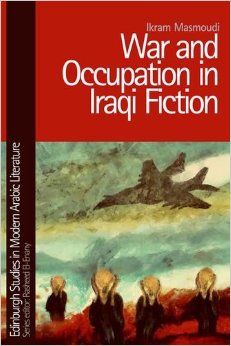 A translated version of The American Granddaughter exists and is available for purchase on-line, while Masmoudi herself is translating Beyond Love. The first three await translation from Arabic, but based on Masmoudi’s account of them at ACLA, they have much to offer American readers interested in seeing what the war looked like from the other side. Masmoudi also has an academic study coming out later this year called War and Occupation in Iraqi Fiction (Edinburgh University Press). Now who would have predicted a full-length scholarly study of Iraqi war fiction would appear in English before one examining war novels written by our own citizens? Let’s get busy, ye fellow American literature scholars.


 Time Now: The Wars in Iraq and Afghanistan in Art, Film, and Literature