Dodge (War) Poetry Festival 2014

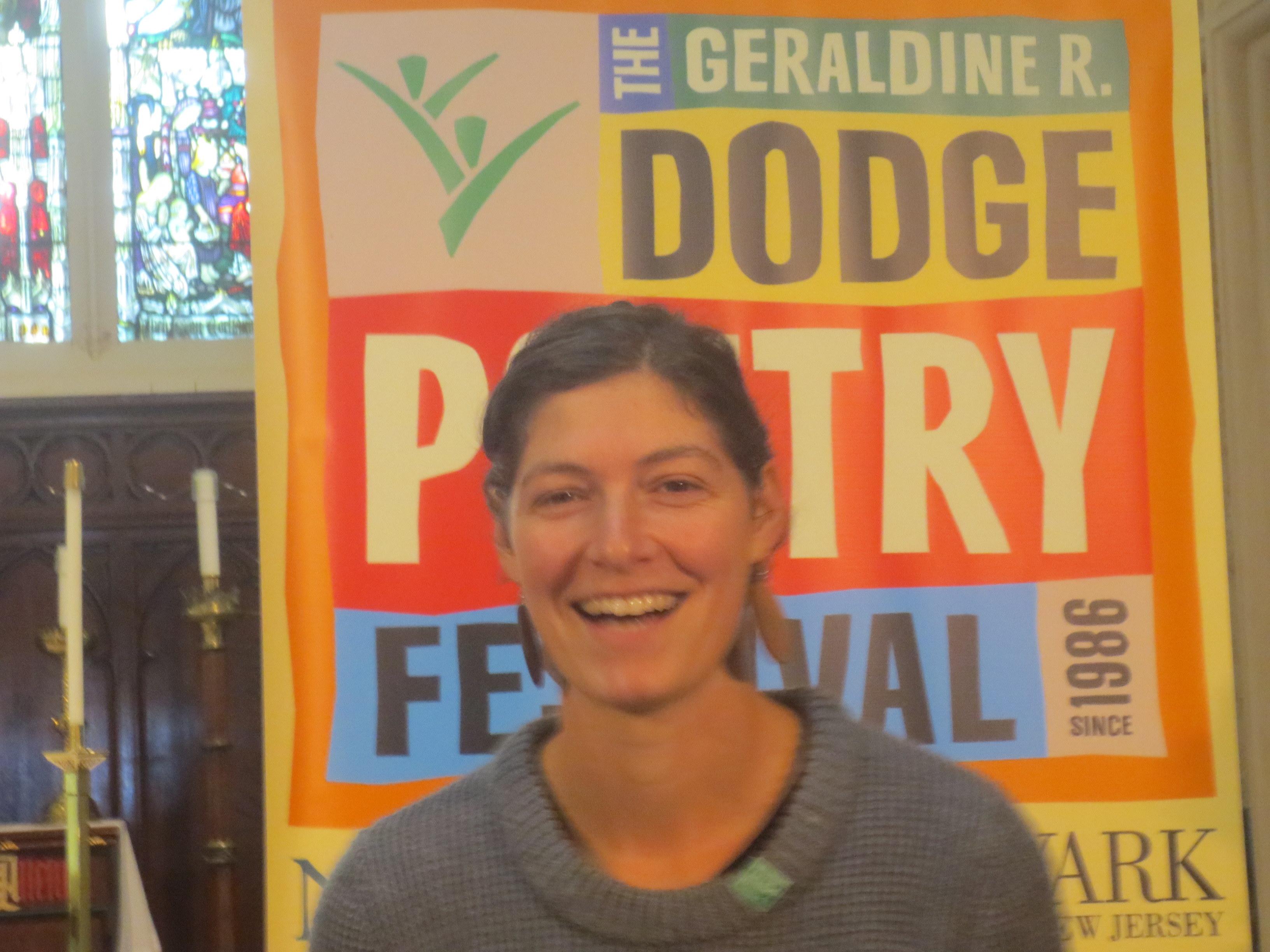
Elyse Fenton at Dodge Poetry Festival 14.
Elyse Fenton, Dodge Poetry Festival 2014.

War subjects and themes were the focus of this year’s Dodge Poetry Festival, the nation’s largest celebration of poetry, held annually in Newark, New Jersey. The marquee event was a contemporary war poem extravaganza called Another Kind of Courage, about which more later. But sprinkled throughout the readings and panel discussions featuring big-time civilian names such as Gary Snyder and Robert Pinsky were poets familiar to readers of this blog such as Brian Turner, Elyse Fenton, and Jehanne Dubrow. The commingling of war-themed poems within the greater flow of versification rendered ample opportunity to think about how war has inflected poetry generally in the 21st century. It also allowed one to take stock of how a first-generation of contemporary war poets might be moving on to subjects and approaches more centered within the poetry mainstream.

Jehanne Dubrow
Jehanne Dubrow

Fenton, for example, appeared on a panel that featured among others Richard Blanco, a gay Hispanic-American poet who read at President Obama’s second inauguration, but America’s recent wars were barely mentioned by the participants. Fenton, the wife of a veteran, read only “After the Blast” from her acclaimed first work Clamor. Her other poems, from a current work-in-progress called “Sweet Insurgency,” had little to do with deployment, combat, or life on the homefront, though the title alone attests to the lingering persistence of things, words, and ideas military in Fenton’s apprehension of the world. Dubrow, for her part, read just three poems from her impressive work Stateside, to include one I love called “Nonessential Equipment,” on a panel that featured no other war poets. Her husband continues to serve in the Navy, but Dubrow has turned her attention to subjects other than the vexations of martial marital relations. Still, the interest in violence and trauma inherent in Stateside continues, or is even intensified, in the poems Dubrow read from a soon-to-be published work about her mother’s harrowing life growing up in El Salvador.

As for Turner, readings at Dodge and another one a week earlier in New York gave ample evidence that he has plenty of poetry to draw on that doesn’t explicitly touch on his service as an infantryman in Iraq. Many examples can be found in Phantom Noise, but others, some that predate his military service and others written after, look at family history, regional influence, and the complexities of modern life. In New York, at an event called Stage Meets Page, Turner traded turns reading with a performance poet named Rives, a winner of freestyle contests and a giver of TED talks. Rives is probably used to blowing poetic competition off the stage, but Turner more than held his own, riffing off Rives’ cues and dipping deep into a black notebook full of funny, startling, brilliant verse that had far more to do with life out of uniform than in. For an example of the same from Dodge, on a panel on masculinity and poetry that also featured the aforementioned Pinsky and Blanco, Turner read “Zippo” from Phantom Noise.
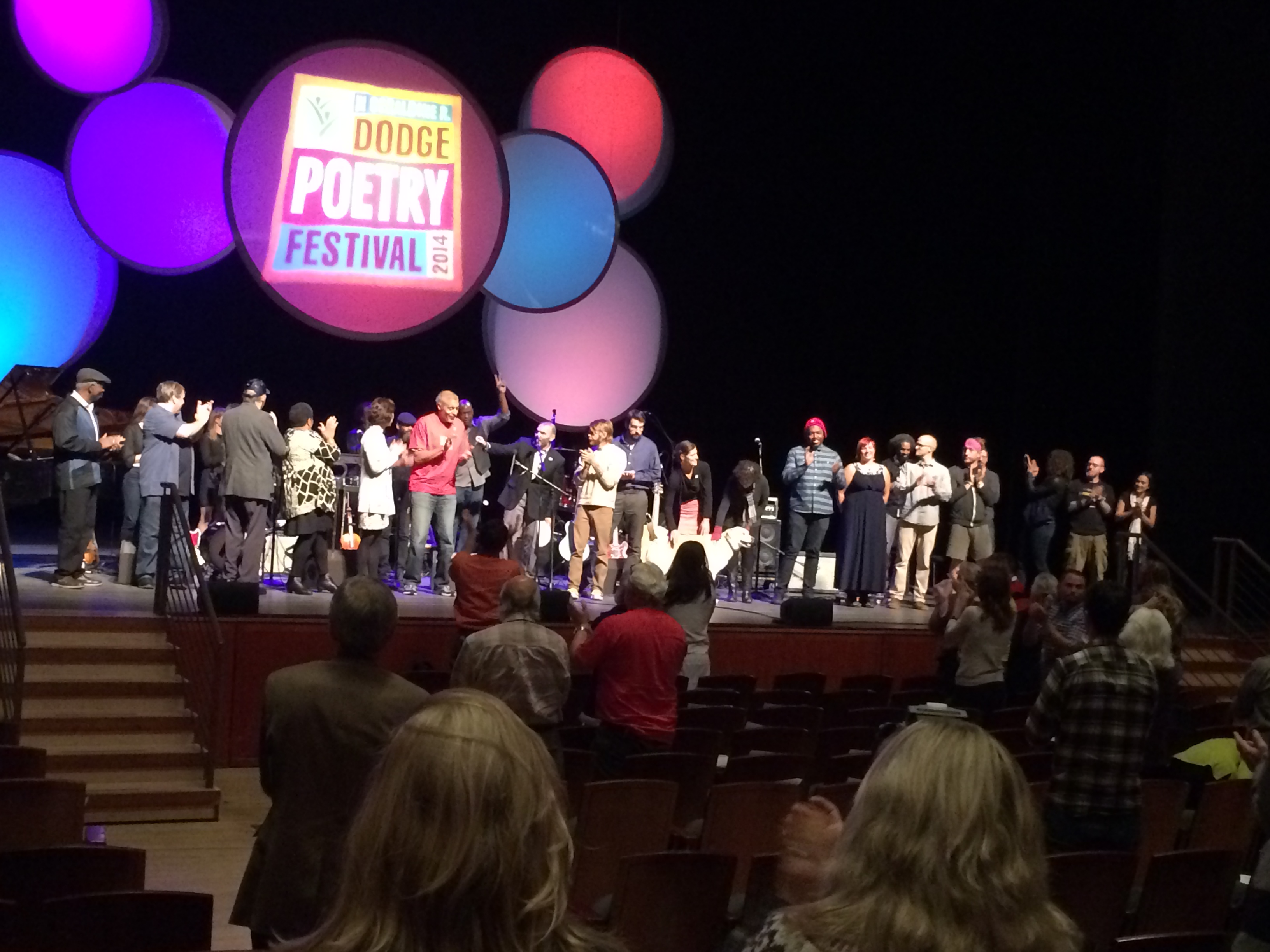
Another Kind of Courage poets and musicians take their bows, Dodge Poetry Festival 2014.

The Another Kind of Courage event brought Turner, Dubrow, and Fenton together with wise war-poet old hands Yusef Komunyakaa and Marilyn Nelson and a group of younger vet poets associated with a collective called Warrior Writers. Together, as organized by festival program director Martin Farawell, they recounted a narrative-in-verse about deployment through the multiple voices of a large and diverse body of poems read by their authors. The general arc of the story focused on psychological trauma and political outrage, which is understandable and dramatic, but by no means the be-all and end-all of what war poetry is and can be. Still, Another Kind of Courage inspired wonder about the possibilities of staging war poetry and showcased many fantastic individual performances. Warrior Writers’ Jeremy Stainthorp Berggren galvanized the audience with the Eminem-like “PTSD (P.lease T.ry S.omething D.ifferent)” and Jennifer Pacanowski’s “Parade,” read to the accompaniment of a simple guitar strum, did much the same in a softer key.
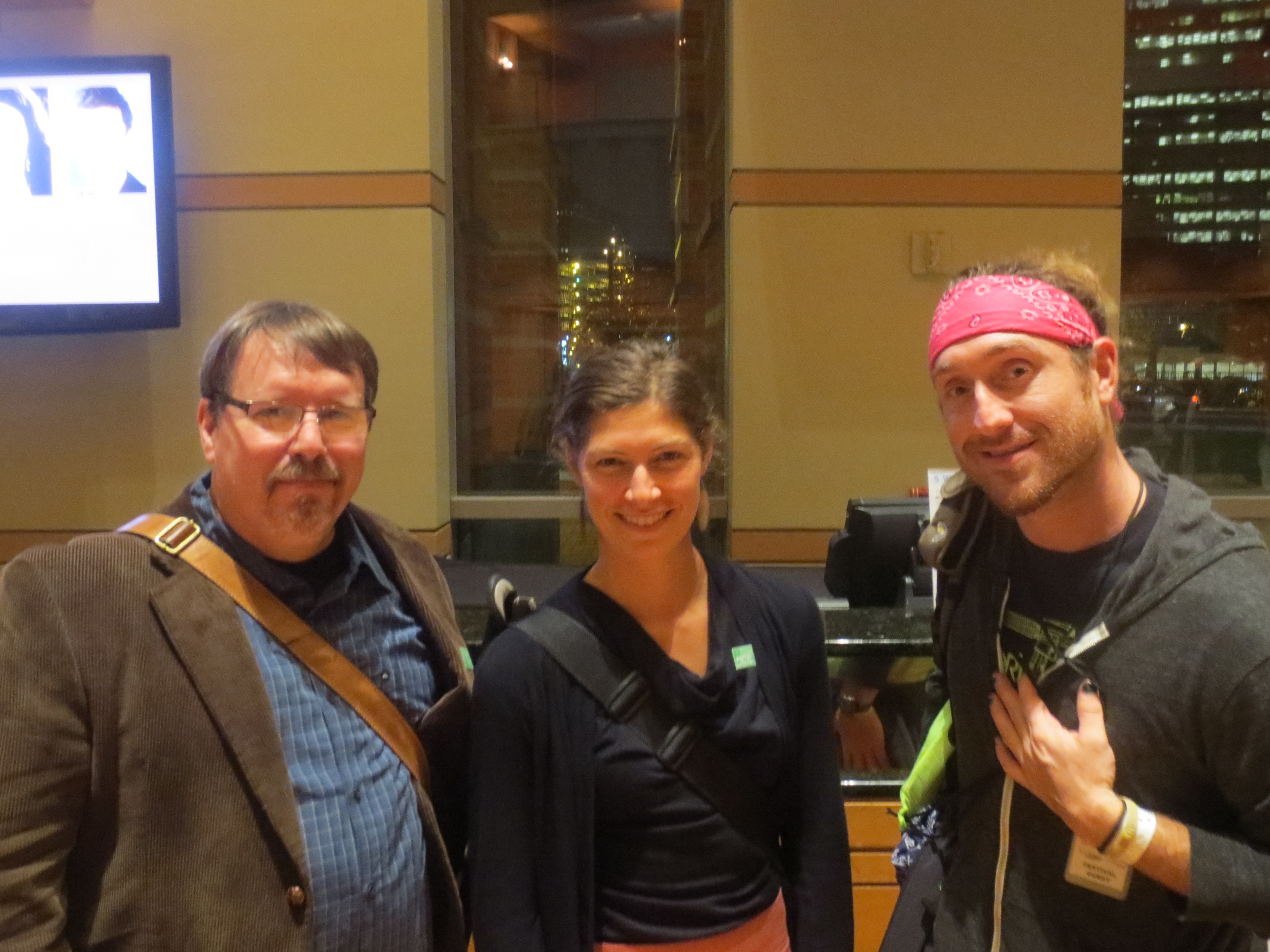
Brian Turner, Elyse Fenton, and Jeremy Stainthorp Berggren at Dodge Poetry Festival 14
Brian Turner, Elyse Fenton, and Jeremy Stainthorp Berggren, after the Another Kind of Courage performance. Dodge Poetry Festival 2014

For all of the above, a highlight of Dodge for me was meeting Robert Pinsky for the first time since I took a class from him almost 30 years ago, when, fed up with graduate school, I asked him to write a letter of recommendation for my application to Officer Candidate School. Pinsky, a former national poet laureate, published a volume of poetry called Gulf Music in 2007. Interested in knowing if it addressed the wars in Iraq and Afghanistan, I purchased a copy and read it between acts at Dodge. I didn’t have to look long, for the very first poem, “Poem of Disconnected Parts,” ruminates on torture in the name of politics as perpetrated by oppressive regimes around the world, the United States unfortunately not excepted. But Pinsky, it turns out, is ambivalent or confused about conflict and violence more than he is stridently opposed; many of the poems in Gulf Music document him trying to work out the exact relationship between the propensity to inflict harm and the inclination to create art. In “Poem of Disconnected Parts,” for example, he writes:

The [torturers] created nicknames for torture devices:
The Airplane. The Frog. Burping the Baby.

Not that those who behead the helpless in the name
Of God or tradition don’t also write poetry.

In “Inman Square Incantation,” he writes:

Forgive us, we don’t exactly believe or disbelieve
What the President tells us regarding the great issues
Of peace, justice, and war—skeptical, but distracted

By the swarm of things.

That seems about right, but in a poem (perhaps aptly) titled “Stupid Meditation on Peace,” the drift of Pinsky’s thought turns more sinister and daring. He begins by describing himself as an “Insomniac monkey-mind,” an image that sets up a series of stanzas that consider the proposition that art depends on the dark energy of conflict:

We choose one of two tributaries: the River
Of Peace, or the River of Productivity.
The current of Art he says runs not between

Banks with birdsong in the fragrant shadows—
No, an artist must follow the stinks and rapids
Of the branch that drives millstones and dynamos.

Is peace merely a vacuum, the negative
Of creation, or the absence of war?
The teaching says Peace is a positive energy:

Still something in me resists that sweet milk,
My mind resembles my restless, inferior cousin
Who fires his shit in handfuls from his cage.

Pinsky’s not wrong, I feel, and he’s way too hard on himself. But these are hard things to say or prove, and must be couched in terms of irony, possibility, and humor, if not self-deprecation and laceration. For certain though, Pinsky the poet is tied up with the life course that took me to the battlefields of eastern Afghanistan: the letter of recommendation I still have is the material proof.
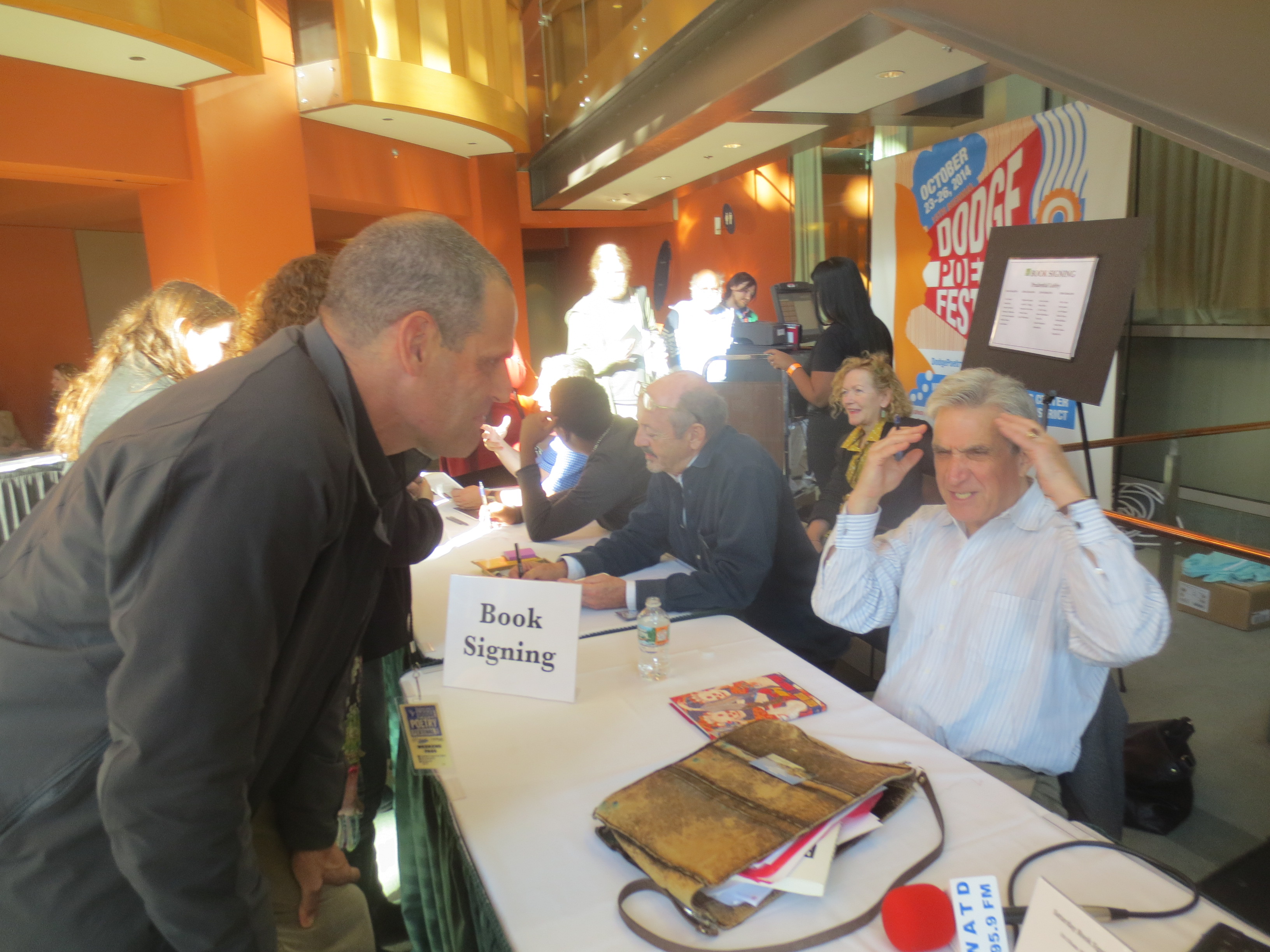
Robert Pinsky seems a little dismayed by my reappearance in his life.

Robert Pinsky, Gulf Music. Farrar, Strauss, and Giroux, 2007.

“Tomorrow the War Will Have a Picnic”: Global Perspectives on the Global War on Terrorism

arts_books2-1_49“Tomorrow the War Will Have a Picnic” is a poem written by an Iraqi author named Abdul Razaq Al-Rubaiee on the eve of the American invasion in 2003.  It and other poems written by Iraqi poets are collected in the anthology Flowers of Flame: Unheard Voices of Iraq (2008). Flowers of Flame came to my attention when a scholar proposed to speak about it for a panel titled Global Perspectives on the Wars in Iraq and Afghanistan that I am trying to set up for the American Comparative Literature Association conference next March in Seattle. Alas, as I write I don’t have enough papers to meet the ACLA’s requirement of six to make the panel a go. But the entries I have received have already done much of what I hoped to accomplish by alerting me to the work of non-American authors who have written stories, poetry, and plays about Iraq and Afghanistan.  Flowers of Flame is one example, and below are a few more:

The Blind Man's GardenPakistani-British novelist Nadeem Aslam’s The Blind Man’s Garden (2013), tells the story of two brothers who enter Afghanistan from Pakistan not to fight Americans, but to help wounded Afghans. Aslam’s earlier novel The Wasted Vigil (2008) is also set in Afghanistan.  An interview with Aslam at Bookslut is especially not to be missed for many reasons–I’ll quote my favorite part, in which Aslam describes how he taught himself to be a writer:

So over the course of the next 10 or 11 years I read everything. I would go to person A and say, “Tell me, who’s a great writer?” William Faulkner. So I read everything by William Faulkner. I would begin with the first novel and end up with the last novel. I would go to person B and say, ‘Who’s a great writer?’ Thomas Hardy. I read everything by Thomas Hardy, sequentially. Who’s a great writer? D.H. Lawrence, James Joyce, Vladimir Nabokov, Dostoevsky.

And then I wanted to know, how much thought is allowed in one paragraph? How many images are allowed per page? What is a comma? And so I copied out the whole of Moby-Dick by hand. I copied out the whole of As I Lay Dying by Faulkner by hand. I copied out Lolita. I copied out Beloved. I copied out The Street of Crocodiles by Bruno Schulz, Gabriel García Márquez’s The Autumn of the Patriarch….

Christine Evans is an Australian-born playwright who now lives in America. Her multi-media play You Are Dead. You Are Here (2013, with more productions coming in 2015) portrays a relationship between a male American soldier and a young female Iraqi blogger.  An earlier play called Slow Falling Bird (2003) features an Afghan girl living in limbo in an Australian immigrant detention center.  Evans’ other plays–Trojan Barbie (2009) and Weightless (2007)–don’t invoke Iraq and Afghanistan directly, but instead comment obliquely on modern life as it has been shaped by a decade of war.  Trojan Barbie, by-the-by, draws inspiration from Euripides’ The Trojan Women to portray the plight of women in the midst of a war, conflict, and violence-saturated historical epoch.  In the latest PMLA, a seriously scholarly journal published by the Modern Language Association, Ellen McLaughlin describes her own stage adaptation of Sophocles’ Ajax called Ajax in Iraq (2009).  Evans’ and McLaughlin’s works add two more data points to the now indisputable pile of evidence proving that classic Greek literature has been the go-to sourcepool for contemporary war writers.

you-are-dead

I’ve appealed to ACLA for an exception-to-policy and will soon find out if my panel will occur or not.  I hope so, but even if it doesn’t, many thanks to the scholars who brought Flowers of Flame, The Blind Man’s Garden, and You Are Dead. You Are Here to our attention.  I look forward to reading both the original works and the critical commentary.

Flowers of Flame: Unheard Voices of Iraq.  Edited by Sadek Mohammed, Soheil Najm, Haier Al-Kabi, and Don Veach. Michigan State University Press, 2008.

Nadeen Aslam.  The Blind Man’s Garden.  Knopf, 2013.

Christine Evans.  You Are Dead.  You Are Here.  Indie Theater Now, 2013.

October in the Railroad War Lit Earth

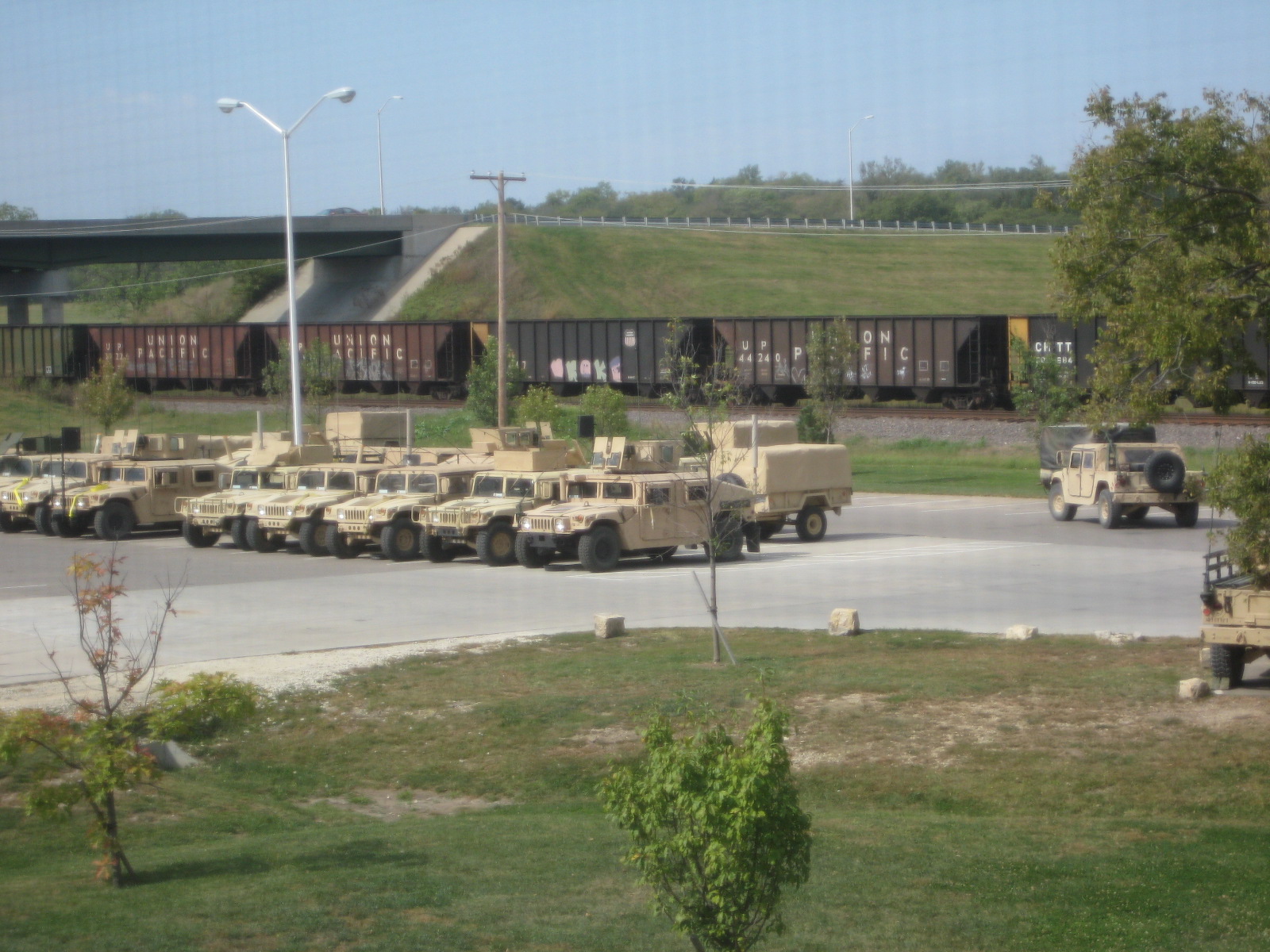
Fort Riley, Kansas, October 2008

“October in the Railroad Earth” is the title of a beautiful prose-poem by Jack Kerouac, who served for about a week in the Navy during World War II and somewhat longer in the Merchant Marine. I have already used the title of Kerouac’s fantastic ode to autumn for the title of a post on my old blog. There it actually made a lot of sense as I wrote about long, glorious days of training in the warm Kansas sunshine while we prepared to deploy to Afghanistan. But I can’t resist repurposing the title, so here we go. A potpourri of miscellaneous war-lit notes is not my usual modus, but ideas, events, and publications have been accumulating so fast that I can’t possibly give each the extended consideration it deserves, so please bear with me.

Late in August, I attended a Sunday afternoon writing workshop co-sponsored by New Jersey branches of the Combat Paper Project and WarriorWriters. With veterans of Somalia and Vietnam I traded writing prompts relevant to military experience and we read each other our responses. Here’s one I wrote on “environment”:

I find very few soldiers wax poetical about Iraq.  Nothing about the flat desert, the hot sun, and the squalid chaos of the cities seems to have impressed them.  Afghanistan, on the other hand, exerted an enchanting allure on many of the soldiers who served there.  The high mountains, often snow-capped and surprisingly forested, the clean air (at least outside of Kabul), the ancient villages built into the sides of wadi and mountain walls, and the roads that snake through the treacherous mountain passes all possess intoxicating powers. Quickening everyone’s step and filling them with wonder, the landscape makes soldiers fall halfway in love with a country that might kill them.

Speaking of falling in love with soldiering in Afghanistan, check out Brian Castner’s impressive essay in the LA Review of Books called “Afghanistan, A Stage Without a Play” on why so little fiction has been written about Afghanistan compared to Iraq. It’s curious, Castner wonders, why Afghanistan seems to have inspired triumphalist memoirs by Navy SEAL team members and infantry lieutenants, while the literary output of Iraq has been fiction and poetry written by disillusioned enlisted soldiers. I’m honored to have been quoted by Castner alongside several other veteran-writers. Along the same lines, I was fortunate to view the movie Korengal and hear Sebastian Junger speak about his love for the soldiers he filmed in action on COP Restrepo in Afghanistan. The next night, in contrast, at Penumbra, a hip photography exhibition space in New York City, I heard Benjamin Busch speak more grimly about the photographs he took in Iraq first as a deployed Marine and earlier this year when he returned to write a story for Harper’s called “Today is Better than Yesterday.” The twinned events inspired many reflections about the linkage of war, words, and images about which I hope to write soon. On a more personal level, Junger and Busch are men-after-my-own-heart, for sure: older, deeply cerebral and artistic gentlemen driven to delve deep into the mysteries of the manly realm of war. Speaking of which, I spent a fun, rewarding afternoon in New York with Maurice Decaul, ex-USMC Iraq vet, ex-Columbia, and now in NYU’s graduate fiction writing program. Decaul writes like the second coming of John Keats, as illustrated by a New York Times essay titled “Memory Lapse” and the poem “Shush,” featured below. But more importantly, Decaul is a genial warm soul who instinctively gravitates towards helping people and getting them organized for effective action and life. As he regaled with me stories about the Columbia and NYU veterans’ programs, I realized exactly how curmudgeonly have been my own efforts in this regard.

Another gentleman, Brian Turner, is reading several times in the NY-NJ-Conn area in the coming months following the release of his memoir My Life as a Foreign Country. I hope to make a couple of the readings, in particular the Dodge Poetry festival “Another Kind of Courage war poetry event on Saturday October 25 in Newark, NJ. The bill also includes Yusef Komunyakaa, Marilyn Nelson, Jehanne Dubrow, and Elyse Fenton, all poets whose work I know and admire. On Veterans Day, I’ll join several other vet-writers to read selections from our favorite World War I authors at an event organized by Words After War and Brooklyn Reading Works at The Old Stone House in Brooklyn.

I also have two conference presentations lined up for next spring. In March, in Seattle, I am moderating a panel at the American Comparative Literature Association conference on literature inspired by the wars in Iraq and Afghanistan written by non-Americans. As I write, nobody has submitted a paper proposal, which honestly I kind of anticipated. But if you are an academic and know of a work about the post-9/11 wars written by someone who wasn’t born in the US of A, please consider joining me. In April, I will participate on a panel on war memoir at the Association of Writers and Writing Programs conference in Minneapolis. Also on the panel are Ron Capps, Colin Halloran, and Kayla Williams, so I’m very excited to take part. AWP is a huge party, for those who have never been, in addition to being an intellectual feast for the literary-inclined, so please join us if you can.

And so it goes, on and on. To Jack-y Kerouac-y, maybe not a patron saint of war writing, but certainly a kindred spirit and fellow traveller of all who burned to live intensely and then express themselves through their art.

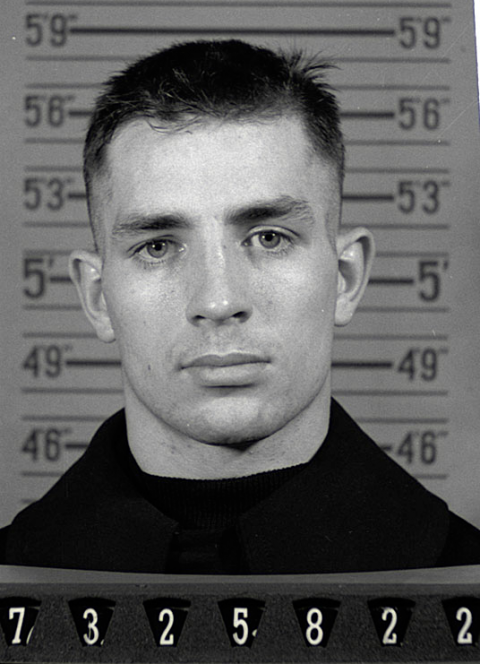
Jack Kerouac's Navy enlistment photo, 1942.
Jack Kerouac’s Navy enlistment photo, 1942.

War Memoir/Poetry: Amalie Flynn’s Wife and War

I’m curious why there haven’t been more post-9/11 war novels written from the perspective of a wife and that portray marriage and family life in the period after redeployment. Have we seen any? Siobhan Fallon’s collection of short stories You Know When the Men are Gone, when it appeared in 2011, seemed to announce that marital tension wrought by war would be THE subject most attractive to talented war writers and alert readers. And yet, since then, not so much of anything, really. A story here and there. Some poetry. But no long fiction, from Fallon or anyone else.

Maybe the options for portraying martial domestic life are limited. A chirpy story of foibles on the family homefront while Daddy’s off killing Taliban and Al Qaeda bad guys followed by a happy family trip to Disneyland seems neither serious nor dramatic enough, you know what I mean? A failure of imagination might also be involved. Perhaps, though, it just takes guts to depict the guts of marital strain. The blogosphere is full of writing by savvy wives of deployed service members. Writers such as Andria Williams and Angie Ricketts I’m sure don’t miss much, and their posts give the impression that they could say a lot more even than they do about military married life. But as wives of officers, they, perhaps, are bound by the same chin-up, perpetually optimistic codes of propriety that bind their husbands, and that might be what keeps them from telling all the stories, even in fictional form, that they might. I know it’s true for me, still an active-duty officer, as I think about writing short stories and novels. A little too much interest in keeping up appearances, which sometimes earns officers the accusation that they “are not real people,” is even more toxic for a would-be writer of fiction. You’ve got to put it out there, and you can’t be afraid when it gets a little messy.

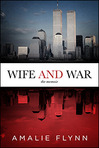
Wife and WarAn interesting twist on this line-of-inquiry is afforded by Amalie Flynn’s Wife and War. Subtitled “the memoir,” it more accurately is a memoir-in-verse, as Flynn has spaced out her sentences and paragraphs a few to a page in a way that resembles long-line poetry and mixed these passages with more conventional snippets of lyric verse. Most of the lyric passages refer to the fall of the Twin Towers on 9/11, which Flynn witnessed. An example reads:

But what I didn’t know then is what marriage is like, how it is a net,
like the tulle of my wedding dress. How it is.

The wire mesh, found inside a wall,

Found out on a street, after a building falls down.

How it entangles you, and how hard it is to walk away.

Flynn has lived through a lot more than just the horrifying experience of being present at Ground Zero. An equally traumatizing event from childhood, a miscarriage (or two?), and a rocky patch in her relationship with her Navy officer husband following his deployment all make their way into Wife and War’s 400+ pages. My interest here though is not Flynn’s life but her choice of poetry to tell her story. Long narrative poems haven’t been in literary fashion since the first half of the nineteenth century, but I can understand their appeal to contemporary writers looking for a means of expression more starkly stated than diffusely explained while still being more suggestive than explicit. The modus of Wife and War is to render a striking scene, event, or image minimalistically and then hint at rather than explore and analyze the cluster of emotions, perspectives, and implications that might accrue to it. For example, on one page:

I am still awake, in this new house, our bed, and my husband’s arm,
crossing over my chest, like a deadbolt.

[Next page]

And I think about the mechanism of a lock. The safety on the M4 my
husband carried for one year in Afghanistan,locked but ready.Or the way
we sleep, too often, now, now that he is home, how we sleep, together, in
our bed, but locked on opposite sides. Or our hearts, that organ we assign
too much to, or maybe, not enough, locked inside of our rib cages.

[Next page]

That’s good, plenty good enough as is for most. But there’s also a lot of white space left on the page that might be used to fill in details, provide context, sketch in character (and more characters), explain a little more, if not better, in either fact or fiction. Kudos to Flynn for thinking how the resources of literature might be brought to bear on one’s personal narrative, kudos to her for letting us see the shape that marriage to a service member might take. Wife and War’s amalgam of memoir and verse probably won’t inaugurate a new public affection for narrative poetry, but it does bravely beckon other war writers to give the spaces inside a military marriage–its guts–the attention they deserve.

Amalie Flynn’s Wife and War: The Memoir. 2013.

Requiem for Sergeant T: Brian Turner’s My Life as a Foreign Country

“I am a drone aircraft plying the darkness above my body, flying over my wife as she sleeps beside me, over the curvature of the earth, over the glens of Antrim and the Dalmation coastline, the shells of Dubrovnik and Brcko and Mosul arcing in the air beside me, projectiles filled with poems and death and love.”

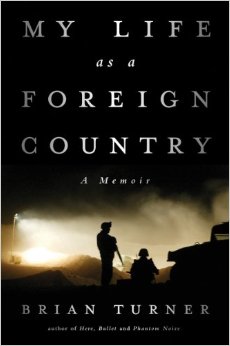
My LifeSo begins Brian Turner’s My Life as a Foreign Country, a start that just barely illuminates the the work’s enigmatic title and strange epigram taken from Eugenio Montale: “Too many lives go into the making of just one.” Half-memoir and half-rumination on the cosmology of soldiering and combat, My Life as a Foreign Country blends crystal-clear accounts of Turner’s upbringing in California and service in the Army with historical digressions, hallucinatory alterations of the here-and-now, and imagined vignettes describing the lives and thoughts of a cast of characters ranging from Iraqi bomb-makers to Japanese kamikaze pilots. It’s a lot to absorb, and matters are not helped by the subdivision of the book into 11 unnamed chapters further broken into 136 smaller sections, titled only by numbers, ranging in length from a sentence to a few pages. There’s kinda-sorta a logical narrative progression from chapter to chapter and within each chapter, but the trail is faint and easily lost, especially on the first reading. For sure there’s work to be done trying to explain the literal progression of Turner’s narrative, for those who like their readings literal, but clearly My Life as a Foreign Country is meant more to be experienced than explained. Even so, I’ll offer a few general comments about Turner’s methodology and vision.

Readers familiar with Turner’s poetry in Here, Bullet and Phantom Noise will recognize some subjects and themes treated in those volumes, such as car bombs, nighttime raids, soldier suicides, and life within a squad and on a FOB. The turn to prose sacrifices the preciseness, conciseness, and suggestiveness of the poetry in favor of a more expansive treatment of this familiar material that allows for more dialogue, description, characterization, and reflection. Turner can be as terse as Hemingway in parts, but his natural bent is to let his sentences flow with the momentousness of what they are describing. An example from one of the most moving chapters in the book, in my opinion, describes the thoughts of a young Iraqi male as he floats along the Tigris looking for a place to fire a mortar at American forces:

And Malik leans into the rowing, fascinated by the machine of his body, how the muscles of his arms take to the task of rowing so that the separation of body and oar become a fiction, Malik closing his eyes to subtract the night sounds of the world around him, until all that exists are the blades of their oars slipping into the water, two brothers in unison, propelling the boat forward with such ease he thinks they could just keep rowing, hour after hour, down through Baghdad and beyond, through sunrise and sunfall until they reached the wide mouth of the sea, the lights of Basra glowing behind them as they rowed into the crests and hollows of the Persian Gulf, Malik standing high at stern and calling out into the salt spray, calling to the adventurers who traveled these waters before him, the adventurers to come, saying, “’I’m here, world—Malik, as alive as anyone who has ever lived. Malik.’

The most stunning passage in the book, by far, is a reworking of a Rick Moody poem called “Boys.” Rendered in prose form by Turner and given the prosaic chapter title name of 49, we can do better by calling it by its first line: “The soldiers enter the house.” What follows is four pages of insanely intense and vivid and evocative description of the lives and thoughts of soldiers conducting a midnight raid on a compound belonging to a scared Iraqi family. A small quote won’t do it justice, but even a snippet such as, “The soldiers enter the house with only nine credits earned toward an associate’s degree in history from the University of Maryland. They kick in the door and enter the house with the memory of backyard barbecues on their minds” displays Turner’s gift with words and, even better, his ability to see poetic potential in mundane facts. The passage is incantatory even when read silently, and is even more so when read aloud, as I have heard Turner do so in performance.

My Life as a Foreign Country decidedly departs the time-space continuum in its later stages when Turner straight-facedly describes an RPG hit that kills him: “Sgt. Turner is dead,” he writes. The author-Turner is not dead, of course, but the imagined death, I’m thinking, bespeaks the author-Turner’s desire, at long last, to put his identity as a soldier behind him, a problematic venture given that it is his identity as a warrior that has inspired his poetry and gained him a paying audience. But noticeably absent in a memoir by an accomplished author are extended descriptions of Turner’s writerly development before joining the military, while in, and afterwards. To parse the book’s title, then, we can say that the “foreign country” he speaks of are the parts of his life—boyhood and a short period in adulthood—when he was consumed by soldiering, not art. The two clearly have never not been connected for Turner, but My Life as a Foreign Country foregrounds contemplation of the first, while leaving his literary life for another day.

Too bad, a little, because Turner fascinates in person when he speaks about the genesis of his poems and poetic craft. Those aren’t the fish he’s frying in My Life as a Foreign Country, but I’ve learned that Turner often bases poems on deep private allegiances to other poems he knows and loves, as the passage quoted above draws on Rick Moody’s “Boys.” I’ll go out on a limb here and say that the precursor text for My Life as a Foreign Country is Walt Whitman’s “Song of Myself.” We see the similarity in the unnumbered stanzas, we see it in the shared interest in cosmic connectivity, we see it in the brooding preoccupation with death and the swirls of mortality that buffet our lives. Whitman kills off his poetic persona, too, at the end of “Song of Myself,” only to promise the reader that he has been resurrected in different form: “I effuse my flesh in eddies and drift it in lacy jags / I bequeath myself to the dirt to grow from the grass I love / If you want me again look for me under your boot-soles.”

Whitman concludes, “Failing to fetch me at first keep up encouraged / Missing me one place search another / I stop somewhere waiting for you.” I can’t state exactly what Sergeant Turner is up to at the end of My Life as a Foreign Country, but since I know him not just as a gruff former NCO but also as a sweet soul who cares deeply, I’m not surprised to read very near the book’s conclusion that, “because Sgt. Turner is dead, he will remain at his post.” Like Whitman at the end of his own long poem, Turner is somewhere ahead looking out for us while we scramble to catch up.

Brian Turner, My Life as a Foreign Country. Norton, 2014. I read an early draft of My Life as a Foreign Country and am honored to be mentioned in the acknowledgements.

Run Silent, Run Deep: Greg Baxter’s The Apartment

The ApartmentThe press blurbs on my copy of Greg Baxter’s novel The Apartment describe it as “unshowy” and “understated,” and compared to the stylistic and thematic pyrotechnics of war novels by authors such as Ben Fountain and Hilary Plum, the descriptions fit. The story of a day-in-the-life of a Navy veteran of tours in Iraq both in uniform and as a contractor as he searches for an apartment in an unnamed European city, The Apartment’s prose surface rarely calls attention to itself. Nor does much dramatic happen in the course of the day, although the first-person narrator eventually does find a place to live. Nothing seems to have much consequence, which is definitely the way the narrator wants it, but Baxter’s own thoughts about the matter are more inscrutable. As we contemplate the narrator’s effort to lose himself in his new identity as an unremarkable expatriate in a bland, far-off land, a new take on the subject of life after war seems to emerge. While service has not made the narrator dysfunctional, he is deeply disenfranchised. Twenty years in the Navy and after have left him nothing to be proud of, while filling him with contempt for the nation he served. But not inclined to make a fuss of anything, he seeks only to be left alone while he disappears from view.

The narrator is said to have been a submariner, a detail that resonates personally with me. On my tiny landlocked FOB in Afghanistan were several Navy submariners, plopped among us by the idiosyncrasy of the military manning system, and they impressed me as quiet, regimented, and very precise individuals. Frankly, I think they looked at us Army types as dangerous cowboys who were making everything up as we went along, which wasn’t exactly wrong, and I’m sure the qualities they possessed, as does The Apartment narrator, served them very well on long tours in tight quarters under the ocean. The narrator’s job in Iraq was as a staff intelligence analyst, with, on the first tour at least, some duty as an intel liaison to ground troops. Missions outside the wire showed him the face of combat, while duty inside the wire taught him that he might turn military service into big bucks as a contractor back in the warzone following retirement. His thoughts about the filthy crosshatching of lucre and patriotism offer some clues to his disillusionment. A fellow contractor tells him, “I mark my prices up one thousand per cent.” The narrator himself says, “The way I estimated my fees for the Army—I worked for the Army more than anybody else—was to dream up a figure that seemed unreal and add a zero.” The remark is just one of several scathing indictments of the military:

“From the bottom to the very top, the one thing all American leaders had in common was an unpreparedness for the very thing they’d wake up to face the next day.”

“A lot of the guys I met in Iraq were insufferable nerds, idiots, bullies, or bureaucrats who could not function in the civilian world, where some degree of creativity is required. But I also encountered the calm, stoic intelligence of the men who seemed less like human beings and more like discrete manifestations of the immortality of violence.”

Well, ouch, but poking holes in the structural lash-up of the American war effort is as easy as shooting fish in a barrel, and not even the narrator’s main concern. Whatever his thoughts about contractor perfidy and military pathology, the narrator takes the money he earns in Iraq and runs away, as far away as he can get. More pressing than political critique is a disgust with himself that borders on self-hatred, and the remedy is oblivion: “In a year I’d like to be invisible,” he states, “I’d like to have a life where people don’t monitor my movements, even accidentally.” Friends, family, and somebody to talk to mean little to him, and the business of finding somewhere to live is more of an annoyance than a means to solidify his place in the world. As it happens, he is accompanied on his search for an apartment by two cool and pretty younger women, but for the narrator even the desire for a relationship and the flames of lust burn dimly. Two scenes in which he and one of the women change clothes in front of each other, for example, come and go with nary a flicker of erotic heat.

The upshot of the narrator’s strange dream of a life and Baxter’s strange dream of a novel is as hard to fathom as the course of the submarines on which the narrator served. Baxter has imagined into existence an Iraq veteran of a different breed, and given us few hints whether he thinks his vet narrator’s plight is exemplary or representative, or whether things will end well or not for him. The Apartment exerts an alluring pull, but like the deep vasty ocean it doesn’t give up easily the mysteries that may lie beneath its enigmatically flat surface.

Greg Baxter’s The Apartment, Penguin, 2012.

PS:  Run Silent, Run Deep, by Commander Edward L. Beach, Jr., a novel of World War II submarine action published in 1955, is the first war novel I remember reading, way back in fifth or sixth or seventh grade. Thanks, Grandma Lulu!

Hybrid War Literature: Jennifer Percy’s Demon Camp

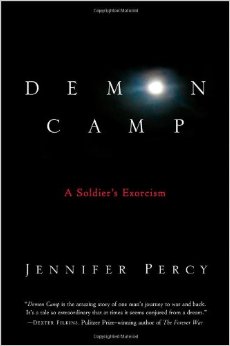
Demon CampI was thirty pages into Jennifer Percy’s Demon Camp before I learned, thanks to a quick check of Amazon reviews, that I was not reading a novel. I felt stupid, which is kind of normal, but also disappointed, because I thought the story’s conceit was outstanding: an investigative journalist covering the story of an Afghanistan veteran possessed by demons starts seeing demons herself. I was also enjoying Percy’s style, which reminded me of the lurid tones of Cormac McCarthy. Bring on the strange, at long last something really weird. The opening paragraph set the trap:

Sergeant Caleb Daniels wanted to save all the veterans from killing themselves. A machine gunner three years out of the 160th Special Operations Regiment, 3rd Battalion, he’d tried to kill himself, four or five times, but he was interrupted each time—once by his dead buddy Kip Jacoby; once by his girlfriend Krissy, whom he met at a strip club; once on a lake by his house in his canoe when the rain stopped and he saw the moon; and once when the demon called the Black Thing came into his bedroom in Savannah and said, ‘I will kill you if you proceed,’ and Caleb said, ‘No you won’t, asshole, because I’m going to do it myself.

So Caleb Daniels, it turns out, is a real person, and on Demon Camp‘s terms, so too is the Black Thing. Percy writes, “Caleb said these things could transfer, and because these things are not limited to war, I started to wonder if it was following me.” Demon Camp is not then a story of descent into madness, but of seeming madness taken very literally.

If Demon Camp isn’t a novel, what is it? Investigative journalism, perhaps, but the haunted prose and Percy’s insertion of herself into the story are just the beginning of its breaches of the tenets of objective reportage. Creative nonfiction, a genre beloved by MFA programs, though not one that has garnered much traction among the reading public, is another possibility. Creative nonfiction authors such as Annie Dillard combine reportage and reflection in highly wrought soufflés that say as much about them as the objects of their investigation. But the knock on creative nonfiction is that it is more of a literary experience than anything having to do with real life. Percy, as I make sense of Demon Camp, has something urgent to say about the wars in Iraq and Afghanistan, the people who fought them, and the nation that sent them off and to which they return.

The highlight of Caleb Daniel’s service was deployment to Afghanistan with the famed 160th Special Operations Regiment “Night Stalkers” aviation unit. Left behind at the FOB on the helicopter mission to save the Navy SEALS on the Operation Red Wings mission that served as the basis for the book and movie Lone Survivor, Caleb avoids the death that came to sixteen others when the Taliban shot down their CH-47 Chinook. Too wracked by guilt and PTSD to continue serving, Caleb commences a post-Army life that, as documented by Percy, is a tornado of destructive behavior: employment false-starts, financial difficulties, broken relationships, drinking, run-ins with authority, violence, the whole nine yards. And all this before we consider his membership in a fringe religious sect that believes wholesale in good and bad demons and exorcisms, played out in Georgia backwoods churches “down four dirt roads,” as Percy writes. The immediate object of Caleb’s faith is exorcising the demons that, for him, represent PTSD. Barely interested in morality and good behavior, Caleb is drawn to evangelical religion because it offers a convincing explanation for the presence of evil in the world.

Caleb’s chicken-fried version of the battle between heaven and hell makes William Blake’s cosmology look simple and logical, for those familiar with the visionary English poet. But Percy’s approach eschews the irony Flannery O’Connor might bring to the same subject for the straight-faced respect Walker Evans and James Agee displayed when they portrayed with stark dignity Alabama sharecroppers in Let Us Now Praise Famous Men. I’m straining here to find analogies for Demon Camp’s strange brew, so let me close with a few simpler statements that will help you decide whether to read it for yourself. It’s not Caleb’s standard issue dysfunctional behaviors Percy’s most interested in describing, it’s his strange belief system and means of processing experience. Emerging into adulthood, shaken by the war but seemingly untouched by the normative institutional values he was supposed to have obtained from family, school, and church, to say nothing of the Army’s “official” values of loyalty, duty, respect, selfless service, honor, integrity, and personal courage, Caleb possesses a hot mess of an interior life that I think Percy actually admires. Patriotism, discipline, and other soldierly virtues be damned, Caleb’s stew of ideas, motivations, and fears stand as huge reproaches to authority and convention, and authority and convention should take heed. Caleb is more disorderly–or disordered–than they imagine and not cowed in the least by their supposed power, and he’s probably not the only one who thinks and feels as he does. Entranced by her mixed-up but charismatic subject, Percy offers him to us an antidote to the idealized, simply motivated “good soldier,” and she challenges us to take him as seriously as she does.

But Percy’s even bigger grouse, I think, is with the conventions of war literature. My theory is that Demon Camp is as generically and stylistically unstable as it is because Percy believes much writing about the war is far too settled. Why write another same-old, same-old story? Too comfortable with itself, falling predictably into standardized themes and scenes, and making few demands on the reader, the whole war lit biz, I’ll bet Percy would say, instantiates what it purports to critique. Willing to break rules and take risks, to include ridicule, misunderstanding, and lack of sales (though I think Demon Camp would make a great movie), Percy plays for the bigger stakes of being a game-changer.

Sergeant Caleb Daniels, if you read this, thank you for your service, trite at that phrase is. To make it through Survival, Evasion, Resistance, and Escape school and to soldier successfully with the Night Stalkers speaks volumes. I hope you are healthy, happy, and productive.

Jennifer Percy, Demon Camp:  A Soldier’s Exorcism. Scribner, 2014.

Life During Wartime: Hilary Plum’s They Dragged Them Through the Streets

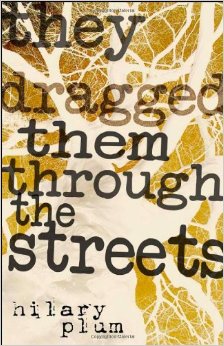
They Dragged Them Through the StreetsOne reason I like books about war written by civilian authors is that I’m interested in what aspects of military experience and combat intrigue them most. Soldiers who write like to explore their reasons for joining, their initiation into the business of killing, their contemplation of mortality, their fraternal feelings with fellow soldiers, their contempt for the chain-of-command and its explanations for why they are fighting, and their alienation from the civilian world unto which they return. Pretty typical, when you think about it, right?

But different things catch the eye of civilian novelists. Hilary Plum, for example, in her 2013 novel They Dragged Them Through the Streets, describes the coping methods of a group of anti-war activists after their leader Zechariah Berkman blows himself up while making a bomb meant for a military recruiting station. The group’s radicalism has been catalyzed by the suicide of the brother of one of its members. Jay, an Iraq vet, has hung himself while struggling with PTSD and alcoholism, and his death inspires his brother Ford and friends Zechariah, Vivienne, Sara, and Ford’s girlfriend “A” to seek violent retribution against the war machinery and the duped public that supports it. The novel, told in alternating short chapters related from the point-of-view of each of the major characters, describes their efforts to understand the allure of revolutionary violence, Zechariah’s charismatic influence and tragic death, their fascination with a war most Americans think little about, and their own tangled feelings about Jay and each other.

Vivienne, the novelist, seems to express perspectives that most closely resemble Plum’s. Or, at least, she is the most articulate about what it means to try to write about war, as when she describes Zechariah:

Dangerous how Z lived, then, for he never slowed. Typing furiously, reading everything, his voice rising as he spoke on the phone. The war the war the war. He commissioned pieces for his magazine and was never satisfied with them. Just chatter, he’d say, waving a hand at the screen, slamming books closed. Waste of time.

Vivienne takes a more meditative approach, though she is also aware that the war saturates her thoughts and writing:

Now I have become a book myself, by which I mean, something whose choices have already been made. What I mean is—the past is lost to us. Its dreamed-up cities, its false trees of words. There’s no way to live among them; touch them and they crumple, or the hand just goes through. The sentences a web stretched over the paths I walked with A, the dew on its strands destroyed by our passing. I am not even that, not even a twist of silk stretching from twig to tree bark. I am a relic, the simple fact of the past…. This is why my novels are not novels of history: they loop and loop. In the end either the feet dangle or the whole slips away free.

While Zechariah’s and Vivienne’s relationship with war is cerebral and textual, the other characters’ ties are more visceral. Sara works as a nurse in a shelter for veterans and the homeless. A, Ford’s girlfriend, begins an affair with a journalist who has worked in Iraq. Ford, of course, bears the biggest burden, not so much A’s treachery, which doesn’t seem to bother him much, but the death of his beloved older brother. Plum’s greatest interest seems to be the collusion of forces that might drive a war opponent to political violence. In retrospect, such an investigation is mostly mute, because political opposition to the war, even in the early days when the invasions of Iraq and Afghanistan were presided over by the big-bad triumvirate of President Busch, Vice-President Cheney, and Secretary of Defense Rumsfeld, was feeble, and in the wars’ later stages, opposition was totally dissipated by feel-goodism for “the troops” and President Obama, as well as the blissed-out national mania for social media. In America, the revolution not only was not televised, it wasn’t even documented by status updates, because it didn’t come close to happening.

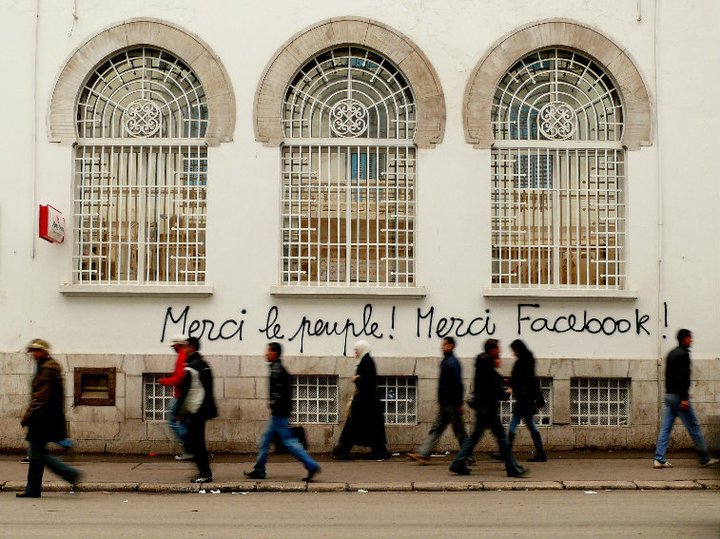
Arab Spring graffiti from Tunisia, 2011.
Arab Spring graffiti from Tunisia, 2011. There, but not here?

Well, better words than bombs, truly, though Zechariah’s belief in print-and-paper journalism seems a little quaint. Why doesn’t he get his thumbs flying on his smartphone?! But I salute Plum for exploring the conditions that might radicalize a dissatisfied citizenry to the point of violence. They Dragged Them Through the Streets resembles greatly Doris Lessing’s The Good Terrorist, a 1985 novel that portrays a similar assortment of privileged white bomb-makers struggling to reconcile murder in the name of politics with middle-class upbringings. As it happens, I read The Good Terrorist in my plywood bunk on FOB Lightning, Paktya province, Afghanistan, in what passed for my downtime during deployment. Grabbed at random from the book exchange in the Morale, Welfare, and Recreation Center, The Good Terrorist induced reveries that had me comparing the political docility—that is to say the civility—of the white West with the rage of our Afghan enemies, who rained rockets and mortars upon our camp and sprinkled the roads we traveled with IEDs. The comparison made me think that Lessing might have rendered her bourgeois revolutionaries in shades more comic or accusatory than respectful. The same charge could be levied against Plum, but that would be wrong. As her character Vivienne’s words remind us, imaginatively portraying a world that didn’t happen helps us understand better the one that did.

RIP Doris Lessing, 2007 Nobel Prize laureate, d. 2013.

Hilary Plum, They Dragged Them Through the Streets. The University of Alabama Press, 2013. 

Who’s Catching Who Coming Through the Rye? Cara Hoffman’s Be Safe I Love You

Be Safe I Love You

Cara Hoffman’s Be Safe I Love You reads much like Kevin Powers’ The Yellow Birds told from a woman veteran’s perspective. Like The Yellow Birds’ John Bartle, Be Safe I Love You protagonist Lauren Clay is a moody, out-of-sorts individual before enlisting in the Army, and like Bartle, traumatizing service in Iraq plunges her into madness upon return. To tell stories of lives ruined by war, Hoffman and Powers bend the language of narrative to stylistic extremes. Their prose is lyrical and suggestive, unafraid to leave the precincts of fact, logic, and linear chronology for both subtler and more sensational orders of meaning-making. Thematically, The Yellow Birds and Be Safe I Love You both assert that the aspect of war with the most potential to haunt veterans on return is failing to protect others for whom they felt responsible. John Bartle and Lauren Clay live through war, but soldiers very close to them do not.

But more than The Yellow Birds, the novel Be Safe I Love You really resembles is Catcher in the Rye, J.D. Salinger’s classic tale of youth angst. Holden Caulfield, the hero of Catcher in the Rye, is beset by a self-imposed obligation to save his sister Phoebe from the terrors and hypocrisies of adult life. In Be Safe I Love You, Lauren’s own overdeveloped sense of obligation extends not just to Army compadres, but to her younger brother Danny, who still resides at home with their dysfunctional father. In Catcher in the Rye, Holden dreams of running away to the west with Phoebe; in Be Safe I Love You, Lauren schemes to travel to the frozen Canadian north with Danny. Nerves jangled by the intensity of war, Lauren now thinks the journey will rescue Danny from the comfortably numb bliss of 24/7 online life. The plan is not just quixotic but crazy, and some of the most poignant parts of Be Safe I Love You reflect Danny’s growing realization that his beloved older sister is no longer the trustworthy guardian on whom he once depended. Lauren’s military service brought nothing but pain, guilt, shame, and madness, and her plan to save Danny is a self-destructive fantasy that may kill him, too. It’s Lauren who needs saving, not Danny.

Lauren’s case is extreme, but Hoffman’s onto something, and she proceeds as if determined to find the reasons why the hero of her own novel does not inspire more sympathy. Lauren was always the responsible one, but now, her take-charge tendencies swollen by promotion to sergeant in the Army, she just comes on too strong all the time. “I couldn’t afford to be fucking sensitive,” Lauren harrumphs, “I had to get things done.” Later, Hoffman writes of Lauren’s mindset:

She’d come home to a world of fragile baby animals. Soft inarticulate wide-eyed morons with know-nothing epiphanies and none of them—not one of them—did what she said, which was beginning to grate on her, cut to the heart of how wrong things were. Still she could accept that these people didn’t know how to lead or follow, but they could at least shut up. If anyone owed her anything for serving in Iraq it was to shut the fuck up.

Lauren’s soldierly discipline and odd sense of mission, along with her arrogance and irritability, dismay her friends and family, while making her extremely difficult to help. A second problem is Lauren’s lingering guilt about joining the Army. “Because deep down they knew you were doing something wrong in the first place,” Lauren thinks, “All that training was not for rescuing kittens from trees.” Later, Lauren screams at her father when he tries to compare her service to their friend PJ’s in Vietnam:

“I’m not PJ. Understand? I didn’t get drafted. I wasn’t some sitting-target chump with eight weeks of basic. I enlisted. I was educated. I had people under my command…. I am a beneficiary of this war… We got paid… If you never make another dime I’ve saved still saved enough to put Danny through state school and pay his rent until he graduates.”

The implication here is that post-traumatic stress and other forms of contemporary veteran dysfunction are exacerbated by their victims’ knowledge that at some level they volunteered for and were compensated for what they now suffer. Be Safe I Love You’s portrait of Lauren’s deterioration is as bleak and cold as the New York state hinterlands and the far reaches of northeast Canada in which the novel is set. It suggests not that America needs to understand what ails its troubled veterans, but that such veterans themselves should slow down, listen to what people are trying to tell them, and figure out how and why they are scaring the friends and family to whom they have returned.

Cara Hoffman, Be Safe I Love You. Simon and Schuster, 2014.

(Women’s) War Fiction: Katey Schultz’s Flashes of War

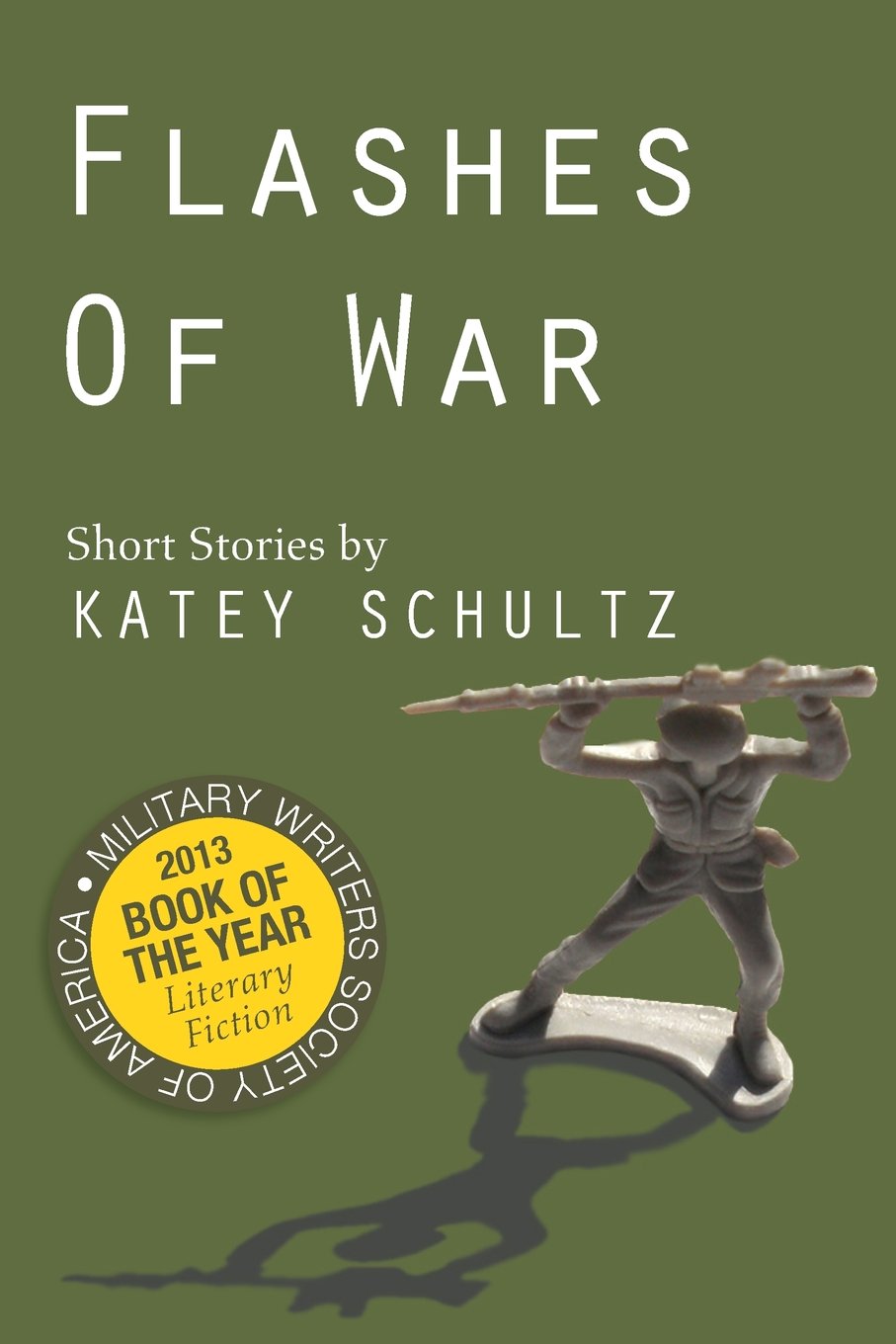
Flashes of WarThe wars in Iraq and Afghanistan placed large numbers of women in combat, arguably for the first time in history. The literature of the two wars features large numbers of women authors, again arguably the first time such a thing has happened. Searching for historical precedents, one might examine the work of British authors Virginia Woolf and Vera Brittain, whose novels in the 1920s and 1930s featured both scenes set during World War I and characters whose lives were affected by the war long after it was over. Each author had family members killed in World War I—Woolf a brother-in-law and Brittain a fiancé and a brother—oh my–and Brittain also worked as a nurse during the war, which might help explain why they made war central in their novels.

Woolf and Brittain established a promising precedent for future women war authors, but not much following World War II, Korea, Vietnam, and the twentieth century’s smaller wars capitalized on their strong examples. Beginning with the publication of Siobhan Fallon’s You Know When the Men Are Gone (2011), Helen Benedict’s Sand Queen (2011), Toni Morrison’s Home (2012), and Roxana Robinson’s Sparta (2013), however, we now find ourselves in the midst of a flourishing boom of fiction written by women about war. Other recent books such as Katey Schultz’s Flashes of War (2013), Hilary Plum’s They Dragged Them Through the Streets (2013), Masha Hamilton’s What Changes Everything (2013), Cara Hoffman’s Be Safe I Love You (2014), and let’s not forget J.K. Rowling’s detective novel The Cuckoo’s Calling (2013) signal the very serious intent of women authors to expand the male-drawn boundaries of war lit. To examine this body of work in detail, a good start point is Schultz’s Flashes of War. Containing thirty very short stories set in Iraq, Afghanistan, and back in America and an editorial postscript in which Schultz explains her rationale and process, Flashes of War bumps forward the possibilities inherent in war literature in several interesting ways.

In her “Epilogue,” Schultz, who is not a vet, describes fiction as a means of understanding two wars she knew little about. “As someone inclined to make sense of the world through story, I knew my window into these wars would have to be narrative,” she writes. Not interested in history or journalism, she found herself drawn “to intimate moments of a soldier’s or civilian’s life. Images, decisions, and thoughts so small and experienced under such strain that even an interview with the most forthcoming individual could not unearth them.” Inspired by YouTube videos and news snippets garnered on the Internet, Schultz explains, “Eventually, I filled myself with enough information to precisely imagine my way toward fiction I could believe in.” That’s smart stuff, I don’t care who you are—almost to the heart of what I most appreciate about fiction.

Turning to the stories themselves, Schultz relates them from the perspectives of civilians, soldiers, Iraqis, Afghans, and Americans. Sometimes, she groups them around a common subject to compare and contrast viewpoints. “Amputee” and “Permanent Wave, for example, feature a woman vet and a male vet dealing with amputated limbs, while “The Waiting: Part I” and “The Waiting: Part II” describe the tedious-yet-fraught endurance required of both soldiers on deployment and spouses at home. Schultz’s eye for subjects is curious, imaginative, and even idiosyncratic. “Poo Mission” is about a soldier who has to do just that in the middle of a patrol, while “Into Pure Bronze”’s subjects are a group of Afghan boys who play soccer on the same Kabul field that was formerly used by the Taliban to stage mass executions. A woman’s lot in war is featured prominently in many tales, as in one called “With the Burqa,” which is related by an Afghan woman.  It begins:

With the burqa, it was like this: the world came at me in apparitions, every figure textured by the mesh filter in front of my eyes. In a city with so much death, it was easy to believe half of the people I saw were ghosts. Women sat like forgotten boulders along the sidewalks in Kabul. We begged. We prayed.

But many or most Flashes of War stories feature American fighting men, of whom one is said, “Until joining the Army, he never realized that what a man believes could be so far from what a man does.” The two longest tales—and also my favorites—“Home on Leave” and “The Quiet Kind,” feature young men sorting through complicated emotions and life predicaments post-war. The protagonists are both junior enlisted soldiers without college degrees trying to plug back into life in the rural South, a perspective freshly different from the over-educated and overly analytical city-based heroes of many contemporary war stories. Schultz’s lean and clean prose style avoids literary mannerisms for the most part, but often drops into indirect free discourse (talk about being overly analytical!) to reflect the thought and language of her young, mostly blue-collar characters. A passage describing Bradley, the hero of “Home on Leave,” goes:

At the party—a welcome home thrown by his brother—he’d expected the backslapping and WMD jokes that came later that evening. Even the uncertain gazes from folks who probably thought he’d been killing Iraqi citizens. What he hadn’t expected was this: the soft-eyed looks all the girls gave him, the respectful nods from guys he didn’t even know. In the ten seconds it took Bradley to hop out of his truck and walk across Jared’s yard, the entire party’s eyes found him. He felt their attention like a shot of adrenaline. He’d been places since graduation. He must know things now; he might even be traumatized. And brave. Surely he was very, very brave.

The number and brevity of Flashes of War’s tales are two of its virtues. Schultz ingeniously injects enough detail, variety, characterization, and plot into each to make one wonder and, better, eager to see what comes next. Not every book needs to be War and Peace, and in an age of rapid-fire Internet reading habits, stories that hit quick and hard and get out fast definitely have their place. While the battle of words rages on about whether a non-veteran can write realistic and compelling war fiction, or even has the right to, with a snide side-skirmish that especially impugns a woman’s ability to do so, thank goodness authors such as Schultz aren’t waiting around for permission to tell their stories.

Katey Schultz, Flashes of War. Apprentice House-Loyola, 2013.