Here’s ex-Metallica bassist Jason Newsted’s new band performing a song called “Soldierhead” from their 2013 album Heavy Metal Music:
Here is Newsted’s explanation of the lyrics from the Songfacts website:
And the lyrical content is based upon the Pat Tillman story, the NFL football player that went to be a hero and died of friendly fire in Afghanistan. So it was about standing up for yourself and being a hero. He was a gifted person; always could jump higher and run faster than everybody and wanted to use those abilities to protect what he believed in. The song is about standing up for what you believe in, and being willing to give your life for what you believe in. So even when you have it really good, you’ll still stand up for something you believe in, even though you wouldn’t have to. So that’s the subject matter in that one.
Here are the lyrics:
Bombs go off around me Bullets chase my head Demonscene hellscape Try to not get dead
From the cradle I was in Straight for the firing line By the teeth of my skin Dragon and the serpent versus swine
Never quite ready It just becomes your turn Evertight steady No more light to burn
A lie has no feet Cannot stand alone A cry in the street Who cast the first stone
With dirt between my teeth I made the devil sell his soul I know that he can bleed Moon goes dark sun grows cold
Where my mind would take me Never coming near Scared my heart would break me Why am I here
Pat Tillman interests me, too, and I wrote about him on my old blog here. My impression is that Tillman had a contemplative sereneness about him, while Newsted suggests he was full of anger and darkness. Who knows? That’s what art allows us to do, explore possibilities. I am very sure there will be more musical tributes and film and literary adaptations of Tillman’s life story in the years to come.
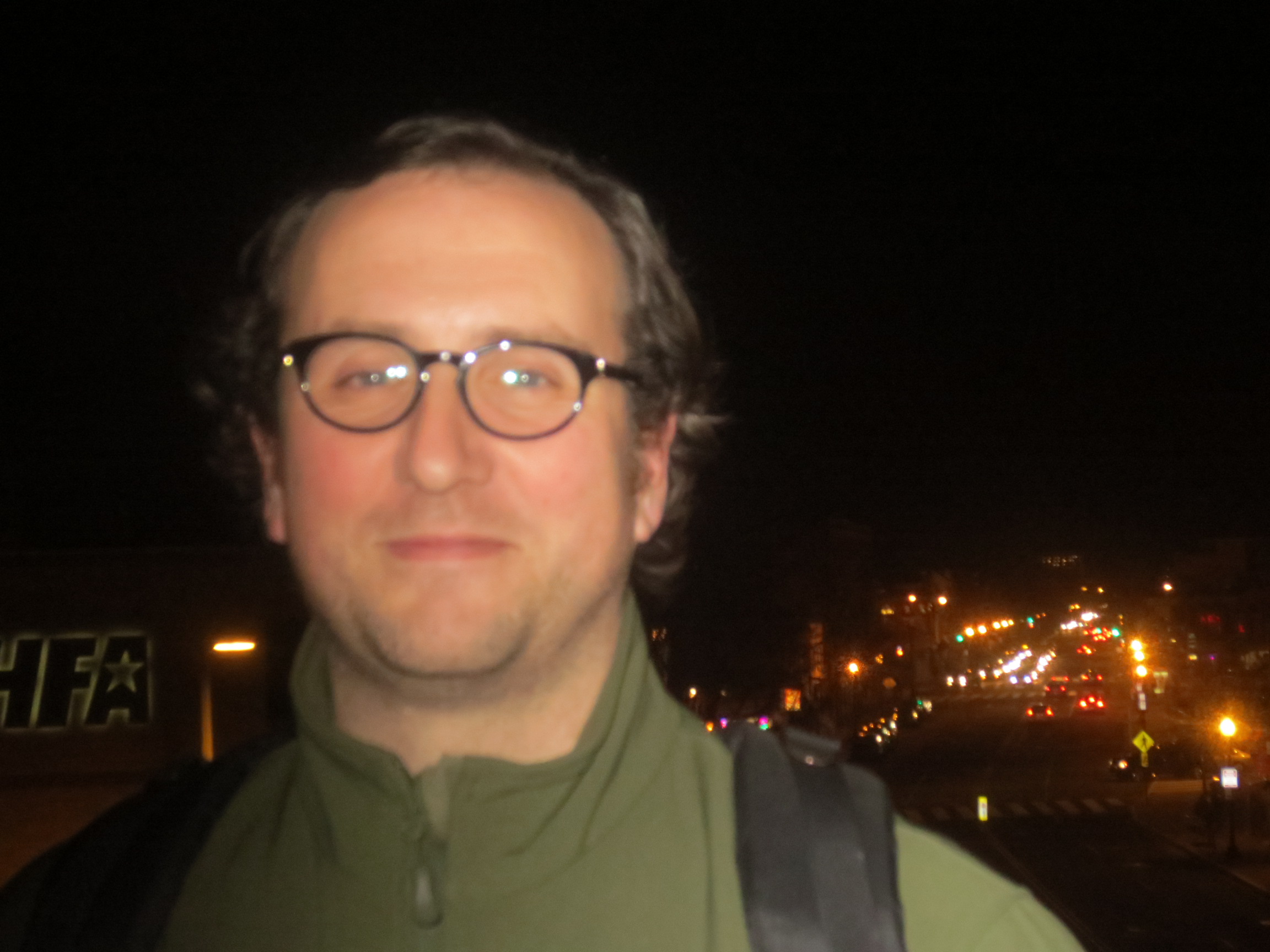
A trip to DC allowed to reconnect with Bill Putnam, the former US Army combat cameraman and embedded journalist whose work I have featured many times in this blog. Bill and I first met in Kosovo in 2002 where we were both part of Task Force 2-14, based in Camp Monteith in the northern part of the American sector. Later Bill served in Iraq as both a soldier and a civilian photojournalist and then twice in Afghanistan, first with the 101st Airborne Division in Paktika province and then in Helmand at Camp Leatherneck as the public affairs officer for a unit charged with training Afghan security forces. He currently lives in Washington and is going to school while looking for new photographic opportunities.
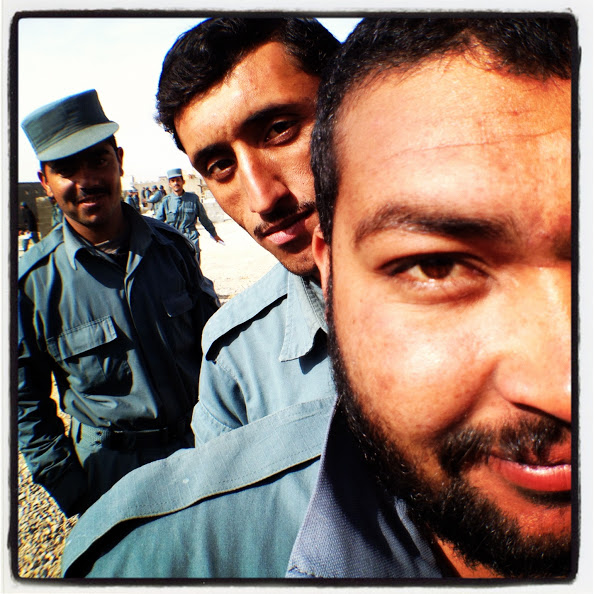
For me, Bill’s pictures are so alert to their subjects’ eyes that they read like uncanny straight shots into whatever it is the subjects think most important. What they most want you to know, or what they most need to hide, or both. Below, for example, is a shot Bill took of Afghan National Police recruits in training at Camp Leatherneck.
In DC, we met at a dark, moody bar blasting classic and contemporary punk rock—hell yea–and traded our stories and plotted future projects. Bill told me the backstory of the pictures I’ve published here and brought me up-to-date on his current endeavors. Here’s to you, Bill, and thanks for everything you’ve contributed to Time Now–you’re a true acolyte-of-war, now moving on to other things.
The picture above is called “Rough Day at Rushdi Mullah.” The artist is Army Specialist ________. It was sent to me by a friend who served alongside Specialist ______. Here is the story behind the picture:
“Here is that drawing that I meant to send you. Sorry for the delay, but I lost your e-mail address. Backstory: It was drawn by one of our Public Affairs Office soldiers, Specialist _______. On February 6, 2007 I was on battlefield circulation with her and we stopped at the Combat Outpost in the village of Rushdi Mullah, a very volatile village south of Baghdad in the heart of the Triangle of Death. As we approached the outpost we monitored the call that they had come under sniper fire and had a casualty. We entered the COP as B Company/4-31 Infantry was responding to the incident. The casualty was Private First Class ________, KIA by a sniper bullet as he was maintaining security in his rooftop guardpost. He was 20 years old and from ________.
“COP Rushdi Mullah was the tip of the spear. It lay on a key Line of Communication that basically bisected the Triangle of Death and controlling that village enabled us to make the final push to the Euphrates and gain freedom of movement throughout our Area of Operations. It was not only key terrain, but it was mere feet away from some of the baddest Al Qaeda insurgents that ever needed a high lead diet. We put B Company out there and they withstood furious resistance and delivered devastating effects on the enemy. They had nothing, no sanitation, hot chow, no down time, and 24 hour security to withstand the relentless attacks of the enemy. They took pride in being the hardest of the hard and hammering at the strength of AQ.
“The unit dealt with the situation, increased their security posture and took positive measures to ensure the village felt their resolve. The sniper was ultimately hunted down and killed. But the moment that this picture was captured was that moment, when all the smoke had cleared, that you realized that these noble, hardened warriors were young boys from farms in Kansas and slums in Detroit, but they were brothers in arms, committed to each other and they lived and died with each other. We lost a great American on February 6, 2007, and those boys in B Company/4-31 paid a price as well. As Daniel Patrick Moynihan said at Kennedy’s funeral, ‘We may laugh again, but we will never be young again.’
“Thanks for letting me share this with you, and thanks for what you are doing.
____”
Thank you ___, thank you Specialist ________, thank you Private First Class________, thank you B Company/4-31 Infantry. Specialist ______ and Private First Class ________, I’ll publish your names if you or your family give me permission. Thank you to all who have served and who are serving now. Thank you to the people of Iraq and Afghanistan who want a decent, fair, peaceful life, as we all do.
Joydeep Roy-Bhattacharya’s 2012 novel The Watch registers many firsts in the burgeoning contemporary war lit genre. It’s the first novel I know that’s set in Afghanistan. The first set on a combat outpost, as opposed to a FOB. The first to feature an extended battle scene—a terrific sequence that describes a Taliban effort to overrun the Americans in their small fortress. The first to feature prominently the voices of host-nation civilians, in this case that of a young Pashtun woman—a double amputee at that—and a young Tajik male who works as an interpreter for American forces. Not a first, in fact much like David Abrams’ Fobbit, The Watch narrates chapters through the perspective of several different American soldiers, from junior enlisted to first sergeant to lieutenant to captain, as well as the Afghan voices described above. But unlike Fobbit’s satirical approach, The Watch is deadly serious—a tragedy. At story’s end, the Americans and Afghans who have not been killed have absolutely no chance of living happily into the future.
The Watch’s plot adapts that of Antigone, Sophocles’ classic Greek play about a young Theban woman who defies the state by insisting that her brother, killed on the wrong side in a civil war, be accorded proper burial honors. In The Watch, Nizam, the Pashtun double-amputee, is the Antigone figure. Her brother, defiant of the American occupiers if not a Taliban by ideology, lies dead outside of COP Tarsândan after a midnight attack. In the play, Antigone is thwarted by King Creon, the Theban ruler, who represents the power of the State, and her sister Ismene, who counsels moderation and fears Creon’s wrath. In The Watch, the Creon role is occupied by Captain Connolly, the COP commander, while Ismene is Masood, a Tajik interpreter whose loyalties are split between the Americans who fight the treacherous Taliban and the Afghan cultural codes that emphasize respect for the dead. Sophocles’ play clearly favors Antigone, a heroic young woman who fights authority, but dramatic space is left open to consider King Creon’s and Ismene’s perspectives. Roy-Bhattacharya builds this same ambiguity into The Watch, especially in regard to Captain Connolly, on whom the fate of Nizam and her brother’s remains depend. Portrayed unflatteringly in the novel’s early stages, by the end we see the staggering complexity of interests and consequences he must juggle to effectively “take care of troops and accomplish the mission”—that onerous mantra of military leadership whose twin dictates are usually in stark opposition. It’s as if Roy-Bhattacharya realized in the course of writing The Watch that Connolly was too sympathetic to be a Creon. The heavy-handed imposition of authority in the novel is by the greater US military and foreign policy apparatus that organized the war and now issues Connolly orders. Connolly’s deliberations under the pressure of those orders, like Creon’s under the Greek gods’, are human, all too human.
The Watch’s abiding interest in Captain Connolly intrigues me. Not to privilege the war experience of the officers, but I’m glad to see at least one portrayed favorably in the skeptical world of war fiction. I also liked the character of Masood. In The Watch, Masood is dropped at COP Tarsândan in the middle of the night after the big battle and confronts hostility at every turn from his new American hosts and allies. Roy-Bhattacharya gets right the incredibly uneven regard of young American soldiers for those outside the fraternal ranks of their unit. Frankly, the average 20-year-old American male doesn’t have it in him under the best of circumstances to welcome graciously strangers who do not share his cultural background, and the circumstances of the soldiers on Tarsândan are anything but the best. Masood is mystified and hurt by the Americans’ baffling rudeness, and yet it is more complex than that—just when he is ready to write off the Americans as barbarians, he meets a medic who knows more about Afghan literature and history than he does, then the warm and wise COP first sergeant, and finally Captain Connolly, whose fanatical adherence to mission and security co-exist with a more than passing fluency in Pashto and Dari. This extremely wide diversity in manners and education certainly exists within the American military and our larger society as well.
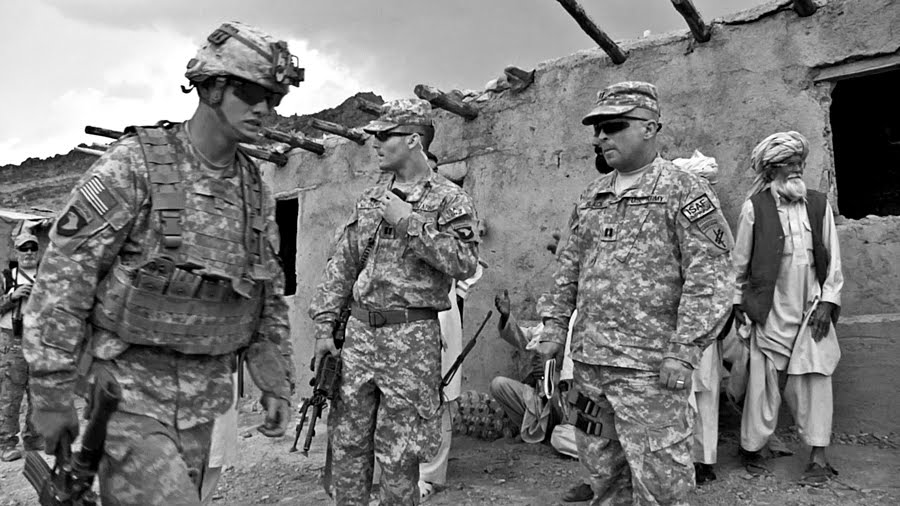
American soldiers in Afghanistan. Picture by Bill Putnam, used by permission.
Roy-Bhattacharya was born and raised in India and did not come to America to live until he began graduate school here as a young man. In Masood, perhaps we see him replaying the highs and lows of his own first encounters with an America that bestows its hospitality and respect to outsiders in fitful and perplexing lurches. This perspectival complexity is reflected in Roy-Bhattacharya’s acknowledgements: one to “the people of Afghanistan” and another to an American he refers to as, “Officer, Gentleman.” He also writes,
“To the U.S. Army officers in Afghanistan who befriended me and technically foolproofed the book—you know who you are—I have no words to adequately express my thanks. I remain in awe of your objectivity, in gratitude for your unwavering enthusiasm, and in your permanent debt for your gift of friendship.”
Roy-Bhattacharya himself might be something of a Masood. He helps us understand the war, hating what it has done and made us do and be, but not hating those of us who fought it.
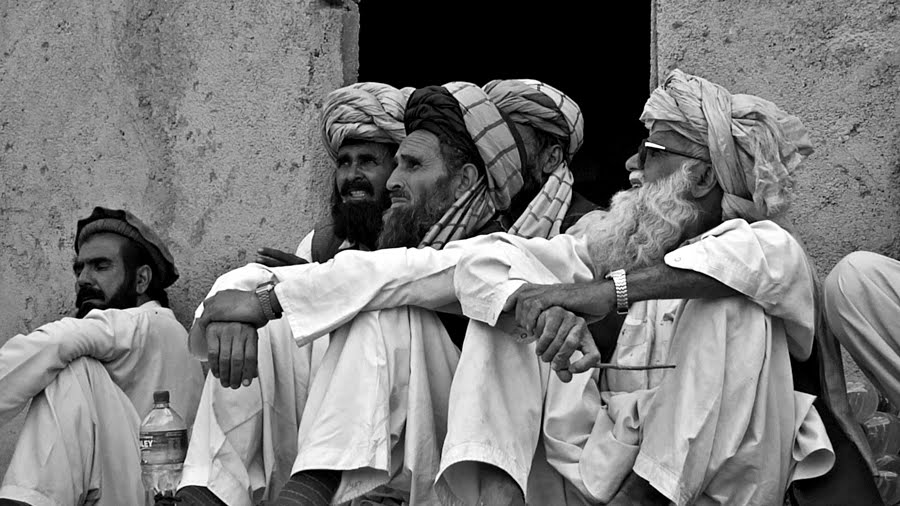
Afghan elders. Picture by Bill Putnam, used by permission.
Jehanne Dubrow’s volume of poems Stateside portrays a stressful period in the marriage of the poems’ speaker before, during, and after the deployment of her husband, a Navy enlisted sailor or officer. In so doing, it brings impressive skill and sensitivity to bear on the theme that war is also hell on the home front. Dubrow, who lives on Maryland’s Eastern Shore, sets Stateside‘s poems in nearby locales such as Washington DC, Virginia Beach, and Assateague Island. I know the Chesapeake Bay/mid-Atlantic region well and love it like crazy, but here it serves as the backdrop for pain and confusion. Home is where the hurt is, indeed.
Dubrow’s artistry shows in her ingenious adaptation of traditional verse forms and meters. Many of the poems in Stateside are sonnets, for instance, but Dubrow makes this stuffy form amenable to contemporary thought and speech by mixing up conventional rhyme and stanza schemes and relaxing the stately iambic pentameter rumble. Check the following, for an example:
     "The Rooted Bed"

     I’m stateside now, my husband six months gone.
       I think of another soldier and his wife
     they built their bedpost from an olive tree,
       roots spreading underfoot, gray branches splayed
     like fingers, floorboards grassy as a lawn.
       The tree grew through the center of their life.
     They slept beneath its living canopy.
       And once the wife was alone, its shade
     stroked darkened hands across her brow.
       I like to imagine that she often thought
     of chopping down the trunk, fed up with boughs
       which dropped their leaves, black fruit turning to rot.
     I can’t help asking if, when he came home,
       did they lie together there or sleep alone?
Reading Stateside the first time through, I did not notice how structured by meter and rhyme the poems were, but the clever stylistics fill the verse with an allure and power that kept drawing me back. I can also easily imagine them being very pleasant to hear read aloud, with the music of rhyme, half-rhyme, alliteration, and assonance swirling through the air enroute to the ear.
The passage in “The Rooted Bed” about boughs and leaves recalls Shakespeare’s great Sonnet 73, in which “yellow leaves, or none, or few” hang on the boughs of trees which are said to be “bare ruined choirs where late the sweet birds sang.” But the real precursor poem here is Homer’s The Odyssey, in which Odysseus and his wife Penelope have built a massive bed attached to a tree, alone in which Penelope sleeps for twenty years while Odysseus goes to war. A head note to “The Rooted Bed,” taken from The Odyssey, offers a direct clue to Dubrow’s thematic concerns: “One moment he seemed … Odysseus to the life– / the next, no, he was not the man she knew.” So too do the titles of the poems that follow “The Rooted Bed”: “Argos,” “Ithaca,” “Penelope, Stateside,” and so on. In Penelope, Dubrow finds an historical-literary ancestor who lends gravitas and imagination to her saga of contemporary marital angst.
“The Rooted Bed” and other poems titled “In Penelope’s Bedroom” and “On the Erotics of Deployment” suggest that Dubrow is not shy about exploring the carnal dimensions of modern military marriage. A great scene from Tennessee Williams’ Cat on a Hot Tin Roof where Big Mama berates Maggie the Cat by saying, “When a marriage goes on the rocks, the rocks are there, right there” while emphatically slapping Maggie’s bed seems to be the spirit of Stateside, too. Unhappiness in the bedroom begets unhappiness in life, or vice-versa, but in either case it’s not very fun to live through. Poem after poem in Stateside records a husband-wife relationship beset by chill—desire unrequited, communication balked, and passion a memory.
In Cat on a Hot Tin Roof, Maggie suspects her husband Brick desires his friend Skipper more than he does her, and she attempts to seduce Skipper to test her theory and spite her husband. Adultery and homosexuality don’t figure in Stateside, but the psycho-sexual circuitry of Cat crackles throughout the volume. Dubrow’s poetic speaker can’t help but feel disappointed by her husband, who is preoccupied by career, mission, and unit. She’s also stung by his obliviousness to her desire, and frankly, a little mystified herself at its persistent strong presence. The dream of a shared life—public, domestic, and intimate–trashed by the war, she now wonders about Penelope’s sterling rectitude in the face of her many suitors. Surely her thoughts and emotions must have been more complicated than Homer tells us. Suggesting how that might be so, she uses the tools of history and poetry to make what is nominally her husband’s war even more her own than it already is.
My favorite poem from Stateside:
     "Surface Warfare"

     Our arguments move
     across the surfaces
     of things, smooth

     flat areas where silence
     floats for weeks.
     The rule:  whoever speaks

     first loses.  If he patrols
     the living room,
     then I control

     our bed, an Atlantic
     filled with my insomnia,
     the quilts too thick

     to wade through.
     Some nights I think
     drowning would be easier

     and drink mouthfuls of salt.
     No shallows here,
     only the fathoms of marriage,

     and we are anchored side
     by side, the darkness wide,
     percussive as a mine.
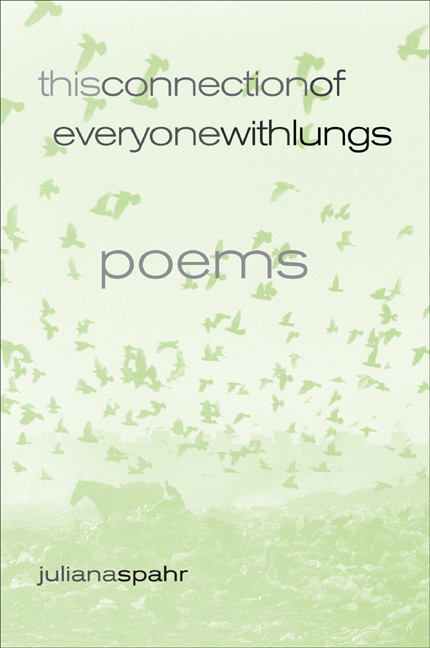
Stateside was published in 2010 by Triquarterly Books, an imprint of Northwestern University Press. It might be read usefully and pleasurably alongside Elyse Fenton’s Clamor, also published in 2010 and Juliana Spahr’s This Connection of Everyone with Lungs, published in 2005. All three use poetry to explore the war’s devastating impact on trust and intimacy from a woman’s point-of-view.
I spent the better part of Saturday with three talented authors of contemporary war fiction. In the afternoon, I viewed the War/Photography: Images of Armed Conflict and Its Aftermath at the Brooklyn Museum in the company of Roy Scranton and Phil Klay. Scranton, a US Army Iraq vet, is the editor of Fire and Forget, the landmark anthology of Iraq and Afghanistan war short fiction that I’ve written about several times in this blog. Scranton contributes a story to his own collection, and he’s working on a novel, but the drift of his thought goes well beyond war literature. Below are links to two wildly creative and intellectually provocative essays he’s recently published in the New York Times and on an online site called The Appendix:
Klay, a USMC Iraq vet, contributed a story to Fire and Forget and served as a guide (and perhaps an inspiration) to Roxana Robinson as she wrote Sparta. Klay’s collection of short stories Redeployment will be released next year by Penguin. I’ve read an advanced copy and greatly enjoyed it–if you are wondering what new subjects and perspectives are possible in war lit, you will, too.
Joining us later was Joydeep Roy-Bhattacharya, the author of The Watch, a novel about an Army unit on a small combat outpost in Afghanistan. I somehow overlooked The Watch upon its release last year, and subsequently experienced an “OMG-what-have-I-missed” moment when I finally read it a couple of weeks ago. I’ll have plenty to say about The Watch in future posts, but here will only report that it combines military realism with literary skill and imagination to a high degree.
Together, we talked into the night and made plans for a panel presentation Scranton has organized for the Association of Writers and Writing Programs conference in Seattle next February. Next spring, I’ll also be speaking on war literature at the American Comparative Literature Association conference in New York City in March and the Northeast Modern Language Association conference in Harrisburg, PA, in April. Join me at any of them if you can, and let all conversations continue.
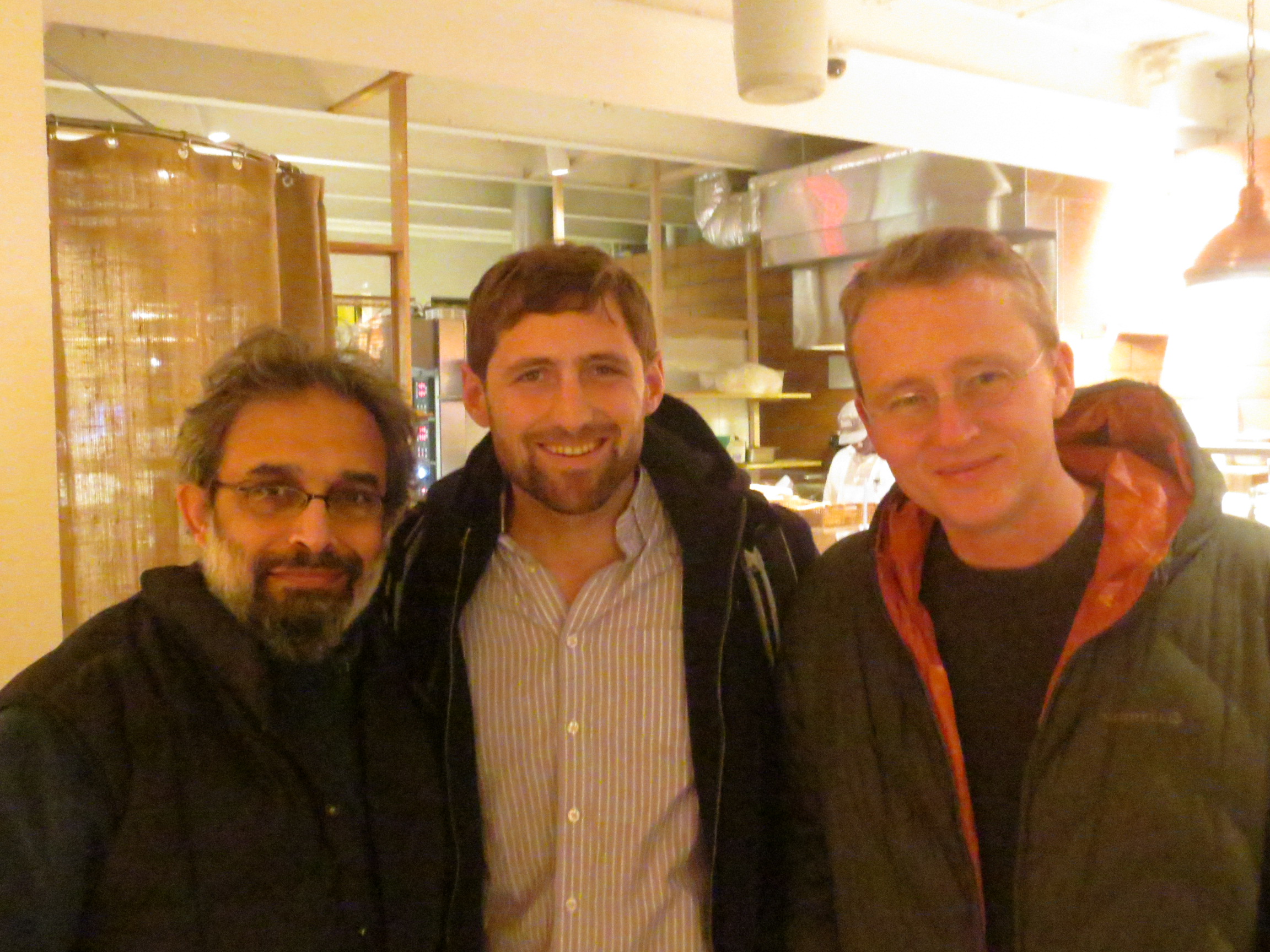
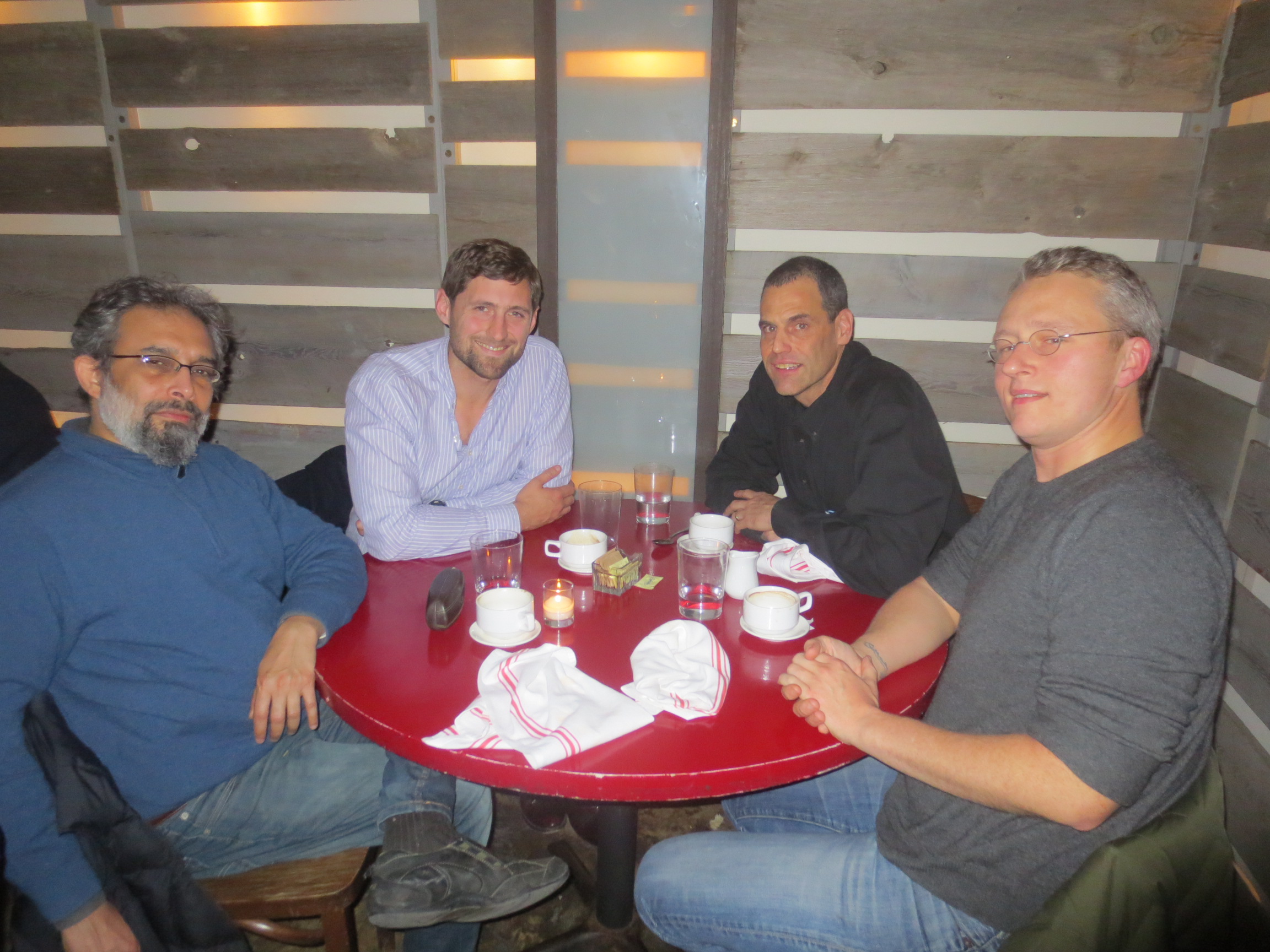
Joydeep Roy-Bhattacharya, Phil Klay, me, Roy Scranton
The recent American Literature Association War and Literature conference in New Orleans placed the contemporary war lit scene under sharp academic focus. On the fiction side, papers and panels addressed works such as Ben Fountain’s Billy Lynn’s Long Halftime Walk and Helen Benedict’s Sand Queen. Regarding poetry, Brian Turner as might be expected received a fair amount of scrutiny, but non-veteran Juliana Spahr’s 2005 collection This Connection of Everyone with Lungs seemed the most enticing object of attention among the assembled scholars.
Looking back, we might remember that the publication of This Connection of Everyone with Lungs in 2005 was a major event in the poetry world—an important statement on war by a poet who mattered. Spahr established herself as a talented, imaginative, and daring poet in the 90s, and her book of criticism, Everybody’s Autonomy: Connective Reading and Collective Identity (2001) had been well-received among the cutting-edge poetry crowd. The two long poems that make up This Connection of Everyone with Lungs, “Poem Written after September 11, 2001” and “Poem Written from November 30, 2002, to March 27, 2003,” were first published in a number of small print and online journals, and now, in 2005, their appearance in one volume asserted a formidable poetic way of understanding and dealing with the facts of national trauma and global war. Spahr’s credentials as a leftist-postmodernist-feminist artist and critic were impeccable, and now her poetry brought these cognitive, ethical, and political predilections to bear against the weightiest of game-changing world events.
The critical consensus in New Orleans was that This Connection of Everyone with Lungs expressed an impulse to escape the lyrical and the subjective and the humanistic to conceptualize a collective (if not a consensus and consensual) response to the fall of New York City’s Twin Towers and the wars in Iraq and Afghanistan. The idea here is that poetry’s association with the lyrical, the subjective, and the humanistic makes it complicit with the imperialistic and war-mongering forces that brought the nation to war. That’s a lot to unpack, but turning to the first poem in the volume, “Poem Written after September 11, 2001,” we see this communal sensibility reflected by a refrain repeated with very slight variations 13 times over eight pages:
      as everyone with lungs breathes the space between the hands
      the space around the hands and the space of the room in and out
The refrain introduces increasingly long stanzas portraying the spatial domains occupied by “everyone with lungs”: “the continents and islands and the space of the oceans,” for example. The poetic voice—there is no “I” and no story-line to speak of—explains, “How connected we are with everyone” before concluding “How lovely and how doomed this connection of everyone with lungs.”
Spahr tells us she wrote “Poem Written after September 11, 2001” in Brooklyn. Though we don’t know if Spahr was in New York on 9/11, we feel the force of the poet’s physical proximity to lower Manhattan urging her to connect her own feelings about the attacks, colored by her own national identity and anti-war politics, with a global consciousness in a relationship not permeated by fury, fear, and greed.
A short note before “Poem Written from November 30, 2002 to March 27, 2003,” reveals that Spahr’s physical place of writing—in this case, Hawaii—was also important to her while crafting this long poem. Reflecting her dismay at hearing the news of the invasions of Iraq and Afghanistan, she writes, “I felt I had to think about what I was connected with, and what I was complicit with, as I lived off the fat of the military-industrial complex on a small island.” She goes on to say that it was “[t]his feeling made lyric” that energize the long poem that follows, but warns, “I gained no sophisticated understanding as I wrote….” Instead, the poem evokes sensations, moods, and halting stabs at intuition and epiphany, with no real resolution at the end of 64 pages. Trying to figure out the war from news reports, the most she can conclude explicitly is that the war has been profoundly unsettling. Exactly how is one supposed to feel? Exactly what is the effect of the war on the national populace not charged with exactly fighting it? Eschewing grand conclusions, moral indignation, and political screeds, she tries to measure the impact in personal terms that are neither hyperbolic nor trivial and mundane.
“Oh this on the map, off the map feeling,” she writes. A fuller expression of the sentiment:
      During the bombing, beloveds, our life goes on as usual.

      Oh the gentle pressing of our bodies together upon waking.

      Oh the parrots and their squawking.

      Oh the soft breeze at five to ten miles per hour.

      Oh the harsh sun and the cool shade.

      Oh the papaya and yogurt with just a little salt for breakfast.

      Oh the cool shower that we take together.

      This makes us feel guiltier and more unsure of what to do than ever.

      We watch it all happen on television.

      We go to protests as they happen.
The odd “beloveds” illustrate how, befitting her interest in postmodern expression and the decentered subject, Spahr bends and twists conventional usage to fit her message. The most noticeable stylistic tic is her use of plural forms of address in places where convention would have her addressing a single listener. For example, the opening line of the poem is “Beloveds, we wake up in the morning to darkness and watch it / turn into lightness with hope.” Later, she writes, “Beloveds, yours skins is a boundary separating yous from the rest / of yous.” I’m not naïve enough not to recognize Spahr has little interest in placating readers’ conventional tastes, but I won’t kid you, either; this technique is distracting. A line such as, “We slept soundly during the night, beloveds, and when I woke / yous were wrapped around me….” is fine by me without the linguistic embellishment.
Make of that what you will, but Spahr gets full credit for being first into print with her abundant use of that modern magical military lingo that has saturated everyday speech and beguiled poets and writers who have written on war subjects since 2001. A (slightly edited) transcription of the poem’s last lines illustrates:
We get up in the morning and the words “Patriot missile systems,”
“the Avengers,” and “the US infantry weapons” tumble out of our
mouths before breakfast.
And it goes on and on all day long and then we go to bed.
In bed, when I stroke the down of yours cheeks, I stroke also the
carrier battle group ships, the guided missile cruisers, and the
guided missile destroyers.
When I wrap around yours bodies, I wrap around the USS AbrahamLincoln, unmanned aerial vehicles, and surveillance.
Fast combat support ships, landing crafts, air cushioned, all of us
with all of that.
The most certain thing we might be able to say is that after a decade of war “all of us” are with a lot more of “all of that”—a vastly expanded vocabulary of military technical and operational terms and soldier slang. But what else? We might contemplate Spahr’s need for connection as an impulse intensified by post-9/11 jittery-ness and exacerbated by millennial-age status anxiety and computerized possibilities for contact. Or, she might be pointing us to the collapse of older stances and perspectives viz-a-viz war, national militarism, and soldiers and soldiering. A redefining of the civil-military divide, if you will, that is true to her politics and yet in keeping with the times. Let’s acknowledge Spahr for being on to something–both in 2005 and now–and remain alert for future reports from the academic community as to how and why.
Juliana Spahr’s This Connection of Everyone with Lungs was published in 2005 by the University of California Press.
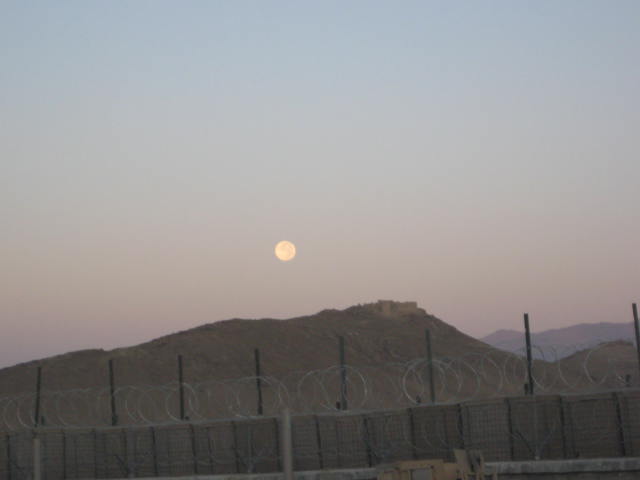
Beyond the walls of this Afghanistan FOB, a hilltop fortress reportedly built by Alexander the Great
Many contemporary war authors, artists, and thinkers have turned to classical Greece for subjects, themes, and inspiration. A quick catalog might begin with Sparta, the recent novel by Roxana Robinson. The protagonist of Robinson’s novel is a Marine, and I’ve heard Robinson speak about how pervasively awareness of Spartan culture and ethos runs in the Marines. “The History of the Peloponnesian Wars is practically required reading at Quantico,” she reports. Joydeep Roy-Bhattacharya’s novel The Watch recasts Sophocles’ Antigone by placing it in war-torn Kandahar. It begins with an Afghan woman’s entreaty to American soldiers on a combat outpost to release the body of her brother–an interesting storyline very much like Antigone‘s own. A fine collection of poems, Stateside by Jehanne Dubrow, draws on Homer’s Odyssey to explore the plight of the poetic speaker, a modern-day Penelope awaiting the return of her Odysseus. It’s hard not to imagine almost any of Siobhan Fallon’s tales of fraught return-from-deployment marriages in much the same light. But Sophocles’ Ajax might be the best Greek work in regard to the homecoming. Where The Odyssey portrays Penelope’s long nine-year wait for her man to return from war, Ajax portrays the even more tortured period AFTER the heroic Ajax returns from war to his war-trophy wife Tecmessa. Where Penelope barely gets to say a word in The Odyssey, Tecmessa’s anguished voice resounds throughout Ajax, as she wonders what the hell has happened to her husband. After Ajax slaughters a herd of sheep in a delusional rampage, Tecmessa screams:
During the night our wonderful Ajax Was hit with madness and went beserk You will see the proof of it in the tent: Holocausts dripping with gore by his hand
Ajax serves as the dramatic centerpiece for Theater of War, an acclaimed troupe who stage readings of the play to elicit discussion and activism on behalf of struggling veterans. If you have a chance to see a Theater of War performance, by all means do so. They also perform readings of another Sophocles play, Philoctetes, which like Ajax portrays the aftermath of war on a soldier wounded physically and emotionally by his experiences. Philosopher Nancy Sherman uses Philoctetes as the literary lens through which she explores issues of moral injury and repair in her recent work The Untold War.
I’m fine with all this Greek love, but it does make me appreciate all the more Brian Turner’s persistent effort to seed his poetry with references to Iraqi, Arabic, and Mesopotamian classic literature, folklore, and history. For my part, I turned first to ancient Rome when crafting the following short tale called “Cy and Ali.” It’s based on “Ceyx and Alceone,”a tale from Ovid’s Metamorphoses, a collection that itself draws on Greek antecedents for subjects, themes, and inspiration. Read on if you care to.
Cy busied himself with the by–now routine activities of a combat patrol: gathering his personal gear and stowing it in the truck, drawing the big .50 caliber machine gun and mounting it in the gun turret, setting the frequencies and security codes on the radio, helping out the other crew members and being helped by them in turn. As he waited for the mission commander to give the patrol brief, he thought about his wife for a few moments. Ali had not wanted him to go on this deployment; he had had options that would have kept him in the States, at least for a while longer, and she could not understand why he had been so eager to return to Afghanistan.
“I think you are crazy,” she had told him. Left unstated was the suspicion that he liked the idea of going to war more than he liked the idea of being with her. She loved him dearly, and though he professed his love for her, too, she couldn’t help but feel that he didn’t value their relationship as much as she did. Cy also wasn’t sure what to think, either then or now while he waited for the patrol brief to begin. Returning to Afghanistan had been very important to him, but beyond his claims about needing to be with his unit and doing his duty, he sensed that there was a cold hard nugget of selfishness about his willingness to jeopardize his marriage—not to mention his life—for the sake of the deployment.
Rather than give Ali an excuse or an explanation, he had offered a compensation. “When I get back, I promise I’ll make it up to you,” he had said, “I’ll go back to school, or find some job where I won’t have to deploy again anytime soon.”
The offer seemed lame, even to Cy, like he had thought about it for two seconds, but Ali acceded to it anyway. She loved Cy in part because he was a soldier, but some things about being a military wife were really bad. Now she busied herself with her own classes, her part-time job, and her friends and family. But she worried a lot, and had a premonition that things might not end well.
The day’s mission was nothing special: accompany an Afghan army unit while they resupplied three of their outlying outposts. The mission commander explained that the Americans’ role was to inspect the readiness of the Afghan outposts, and to provide artillery and medical support in case anything happened along the way. Cy’s job was gunner on the mission commander’s truck, which was to be third in the order of march behind two Afghan trucks. From the truck’s exposed turret he was to man the .50 cal while keeping an eye out for suicide bombers, IEDs, and ambushes. But nothing was expected to happen; “There has been no enemy activity on the planned route in the last 48 hours,” the mission commander informed them. They had traveled the day’s route many times before with nothing more serious occurring than a vehicle breakdown. Sure they planned well and rehearsed diligently, but that was all the more reason the actual mission was probably going to be not much.
Which is why what happened, at least at first, had an unreal feel. Three miles out, on Route Missouri, Cy saw the two lead Afghan trucks come to abrupt halts and their occupants pile out. The Afghan soldiers took up firing positions on the right side of the road and pointed their weapons back to the left side. Because he had headphones on and was chattering with the other truck occupants, Cy was unable to immediately distinguish the sound of gunshots, and it took him a moment to comprehend that the Afghans had stumbled into an ambush. Other Americans also soon gleaned what was going on and suddenly the intercom crackled with questions, reports, and commands.
“Action front…. Scan your sectors….. Anyone have positive ID?…. There they are…. 11:00 200 meters. Engage, engage!”
Cy identified three turbaned gunmen firing at the Afghan army trucks from behind a low wall. He charged his machine gun and began to shoot. He had fired the .50 cal dozens of times in training and thus was surprised by how far off target were his first two bursts. But very quickly he found the range, and was rewarded by seeing the big .50 caliber rounds chew up the wall behind which the insurgents were hiding. Dust and debris filled the air; Cy couldn’t tell if he had hit anyone, but surely the fire was effectively suppressing the enemy. By now, the other American trucks had identified the gunmen and were firing, too. Still, it was so hard to figure out exactly what was happening. That the three insurgents behind the wall were capable of resisting the torrent of fire unleashed on them by the American and Afghan soldiers seemed impossible, but no one could tell if there were other enemy shooting at them from somewhere else.
Soon, however, the sound of explosions began to fill the air. Again, it was not immediately clear that the Afghan army soldiers and the insurgents were now firing Rocket Propelled Grenades at each other. “What’s going on up there?” Cy heard the mission commander ask him through the intercom. Loud booms resounded everywhere from the impact of the rocket-fired grenades. Cy next heard “RPG! RPG!” echo through the intercom as the Americans understood that they too were now under attack. A round exploded against the truck to his left and Cy felt the blast wave wash over him. How could the enemy engage them so accurately?
As the battle unfolded, Cy realized the situation was serious, no joke. The rest of the crew was protected inside the armored truck, but he was partially exposed in the machine gun turret. He continued to fire the .50 cal, doing his best to punish the insurgents who were trying to kill them. The noise was deafening, but in the midst of the roar of his own weapon and the other American guns, as well as the cacophony of human voices on the intercom, he discerned that enemy fire was pinging around him and sizzling overhead. Though he was not scared, he thought about his wife.
Ali had felt uneasy throughout the day. She had not been able to communicate with Cy, which in itself was not so unusual. She understood that sometimes missions made it impossible for him to call or write. Still, she sent him emails and texts and the lack of a response for some reason felt ominous. That night, she had had a terrible dream. Cy appeared, looming over her, silent and reproachful, and Ali had awoken with a start. Nothing like this had ever happened before, not even close. She didn’t know what to do, so she watched TV for a while and then began surfing the Internet. She thought about calling her husband’s unit rear-detachment commander, but decided not to. There was no one she could talk to who wouldn’t think she was overreacting, so she didn’t do anything except continue to worry.
The next morning two officers appeared at Ali’s door. “The Secretary of Defense regrets to inform you that your husband has died as a result of enemy fire in eastern Afghanistan,” one of them intoned. It was all too true, but for Ali the reality of the situation dissolved in a swirl of chaotic thoughts and physical sickness.
Ali waited on the tarmac at Dover Air Force Base with Cy’s parents. An honor guard was also present, as well as a contingent from her husband’s unit, and a general whom she had never seen before and whose name she didn’t catch. Everyone was very nice to her, but Ali was confused. She didn’t know if she was supposed to be strong and dignified or to collapse in a pool of tears. She also didn’t know if she was angry with her husband, angry toward the Army, or just some strange combination of sad and proud. As her husband’s casket emerged from the plane, Ali felt herself drawn toward it. First she was taking small tentative steps, as if she were nervous about breaking some kind of rule or protocol. Then she was running, moving quickly toward the casket while the others in attendance waited behind. She was barely aware of what she was doing, but her feet seemed to no longer be touching the ground. It was as if she were floating or flying, and her arms were beating like wings of a giant bird. “O, Cy, is this the homecoming you promised me?” she thought, or maybe said aloud. Then she remembered throwing her arms around the casket, but at the same time she also felt herself rising into the air, in unison with her husband, who now was alive again and also seemed a magnificent, noble bird. Together, Cy and Ali soared upward, and the plane and the honor guard and the onlookers whirled beneath them as they circled in the sky.
Kevin E. Foley of Philipstown.info has written a thoughtful piece about Veterans Day that features Time Now and some of my own reflections on how the nation remembers its veterans. Thanks, Kevin, and let me know what you think, everybody.
Brian Turner at Custer’s grave, West Point Cemetery, New York.
Brian Turner’s great poem “Wading Out” speaks of a semi-private reunion of veterans long after the battle that united them in spirit forever. As I think about the flury of events that characterize Veterans’ Day this year, at least in my neck of the woods the New York City area, I actually sense a different mood afoot. The spirit of today’s veterans is communal, committed, and proactive. What is very cool about the New York City scene, and I hope it’s happening everywhere, is that Iraq and Afghanistan veterans are taking the national commemoration of military service in their own hands. This last week I’ve been privy to a number of vet art and author events that have a distinctly “do-it-yourself” feel, as if to say, “We, the ones who served most recently, will organize events by which we present ourselves to the nation for consideration. And as we do, we will never ever forget our kinship and debt to those who served before.” An example is the event I will be part of on Veterans Day. A group of us–men and women, Army and Marines–will be reading selections from our favorite World War I authors at the Old Stone House historical site in Brooklyn. Join us if you can.
I’ve carried this poem around in my mind since the first time I read it. It’s from Brian Turner’s 2010 collection Phantom Noise.
“Wading Out”
We’re crossing an open field, sweating in December’s heat,
with First Squad covering from the brush to our left;
and I could be shot dead by a sniper, easily, this
could be the ground where I bleed out in ninety seconds,
but it won’t be. There’s a patch of still water
I’m about to walk into as I always do,
with too much adrenaline and momentum in my stride,
as my boots sink ankle deep and still I slog forward,
M4 held up over my head, though Fiorillo
sinks up to his knees off to my right—he backs up,
makes it out of the septic runoff I’m up to my thighs in,
the stench filling my nostrils now, and it’s funny enough
to laugh at once the mission’s over, Turner running in to swim,
but no one’s laughing anymore and the months are turning
into years gone by and still I’m down there slogging
deeper into the shit, shoulder deep, my old platoon
with another year of bullets and mortars and missions
dragging them further in, my lieutenant so far down
I can’t reach him anymore, my squad leader hunting
for the souls that would mark him and drag him under
completely, better than any bottle of whiskey,
and I keep telling myself that if I walk far enough
or long enough someday I’ll walk out on the other side.
But will Jax and Bosch and my lieutenant make it out, too?
If one day we find ourselves poolside in California,
the day as bright as this one, how will we hose ourselves off
to remove the stench, standing around a barbecue
talking football—how will we do that?
after Bruce Weigl
Most of the time, veterans carefully negotiate the terms by which they talk about war, with whom they talk about their experiences, and how they talk about what they have seen and done. On Veterans Day, they, and the country, let their guard down a little. If the public celebrations veer toward an excess of patriotism and gratitude on the side of the citizenry, and of privilege and indulgence on the side of the vets, that’s OK. It’s way better than doing nothing, wouldn’t you agree, at least for a day?
Bruce Weigl, if you don’t know, is a Vietnam vet and poet whose work is well worth checking out. Turner’s Phantom Noise was published by Alice James Books.
Lieutenant General Robert Caslen, the Superintendent of West Point, shaking the hand of a veteran in the stands at the Army-Western Kentucky game, Saturday 9 November 2013.




 Time Now: The Wars in Iraq and Afghanistan in Art, Film, and Literature