The Iraq and Afghanistan Wars in Fiction, Poetry, Memoir, Film, and Photography: A Compendium

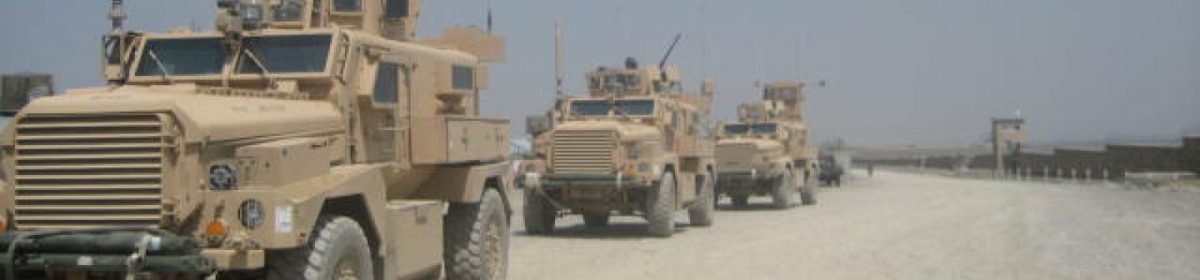
Intermediate Staging Base Headquarters, Alexandria/Fort Polk, LA. Photo by Bill Putnam, used by permission.

Below I’ve catalogued memoirs, imaginative literature, and big-budget films published or released through the end of 2014 that represent important and interesting takes on America’s twenty-first century wars in Iraq and Afghanistan. The lists are subjective and idiosyncratic, not complete or authoritative. Still, they might help all interested in the subject to more clearly and widely view the fields of contemporary war literature and film. I’ve arranged the lists chronologically and within each year alphabetically by author or director. If I’ve misspelled a name or title, gotten a date wrong, or omitted a work you think important, please let me know and we’ll make the list better.

If the author or director has served in the US military, or is the spouse of a veteran, I have annotated the branch of service in parentheses.

The lists of “Important Precursor” texts and films represent works that I think are well known and influential among today’s war artists.  A list of stage, dance, and performance war art is forthcoming.

Important Precursor Texts:

Michael Herr: Dispatches (1978)
Tim O’Brien (Army): The Things They Carried (1990)
Yusef Komunyakaa (Army): Neon Vernacular (1993)
Anthony Swofford (USMC): Jarhead (2003)

Important Precursor Films:

Oliver Stone (Army), director: Platoon (1986)
Stanley Kubrick, director: Full Metal Jacket (1987)
Ridley Scott, director: Blackhawk Down (2001)

Contemporary Fiction:

Siobhan Fallon (Army spouse): You Know When the Men Are Gone (2011)
Helen Benedict: Sand Queen (2011)
David Abrams (Army): Fobbit (2012)
Ben Fountain: Billy Lynn’s Long Halftime Walk (2012)
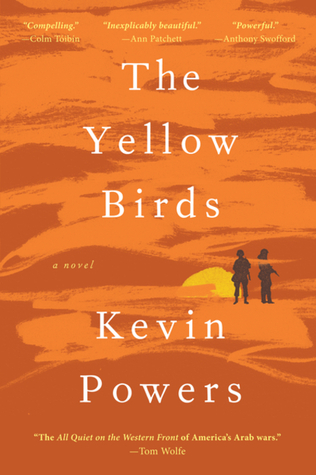
Kevin Powers (Army): The Yellow Birds (2012)
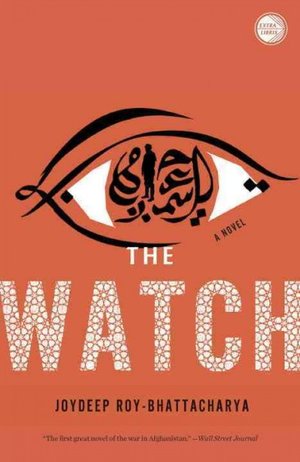
Joydeep Roy-Bhattacharya: The Watch (2012)
Nadeem Aslam: The Blind Man’s Garden (2013)
Lea Carpenter: Eleven Days (2013)
Masha Hamilton: What Changes Everything (2013)
Hilary Plum: They Dragged Them Through the Streets (2013)
Roxana Robinson: Sparta (2013)
J.K. Rowling (aka Robert Galbraith): The Cuckoo’s Calling (2013)
Katey Shultz: Flashes of War (2013)
Fire and Forget: Short Stories from the Long War, edited by Roy Scranton (Army) and Matt Gallagher (Army) (2013)
Greg Baxter: The Apartment (2014)
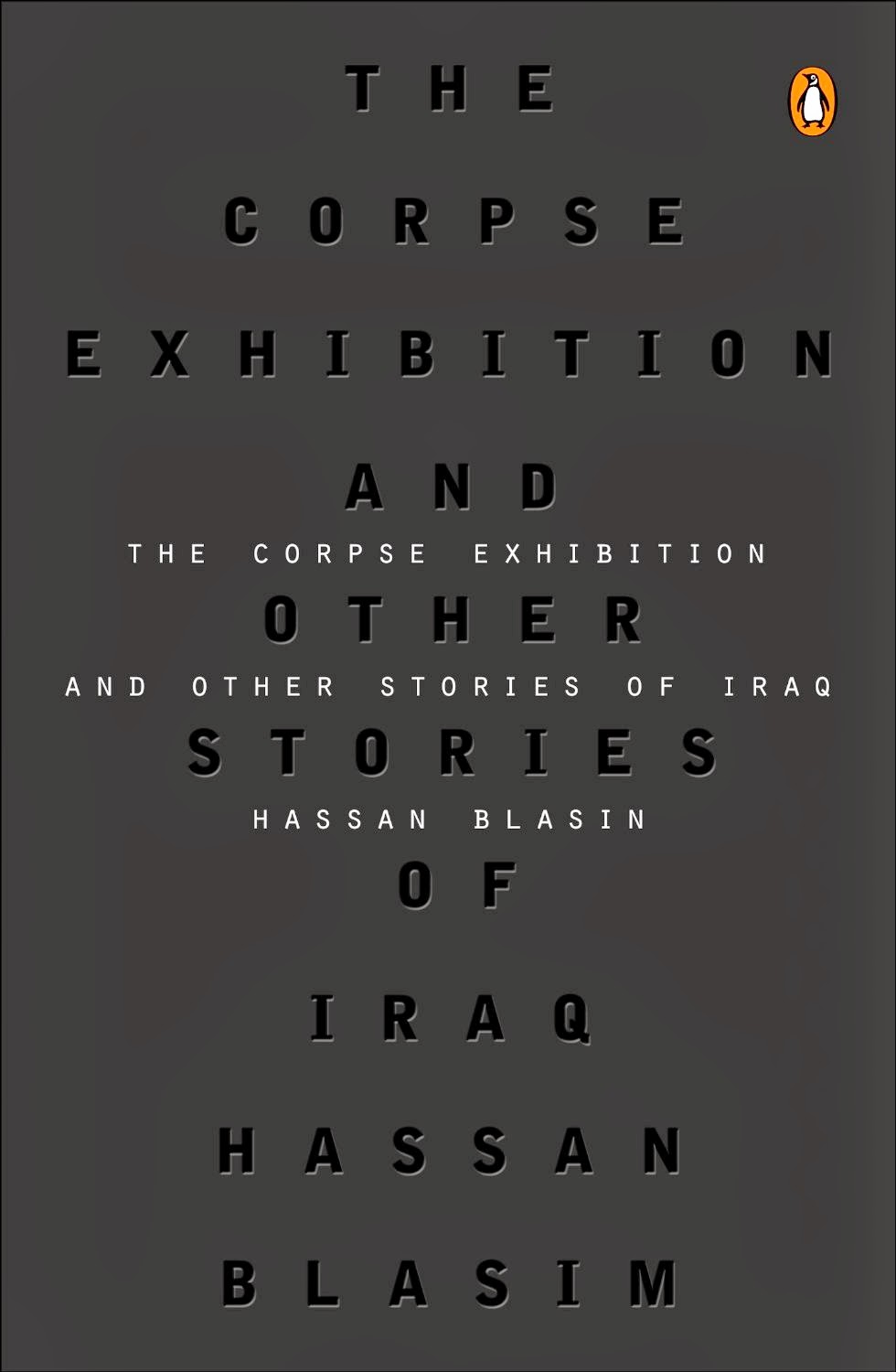
Hassan Blasim, The Corpse Exhibition (2014)
Aaron Gwyn: Wynne’s War (2014)
Kara Hoffman: Be Safe, I Love You (2014)
Atticus Lish (USMC): Preparation for the Next Life (2014)
Phil Klay (USMC): Redeployment (2014)
Michael Pitre (USMC): Fives and Twenty-Fives (2014)

Contemporary Poetry:

Juliana Spahr: This Connection of Everyone with Lungs (2005)
Brian Turner (Army): Here, Bullet (2005)
Walt Piatt (Army), Paktika (2006)
Jehanne Dubrow (Navy spouse): Stateside (2010)
Elyse Fenton (Army spouse): Clamor (2010)
Brian Turner (Army): Phantom Noise (2010)
Paul Wasserman (USAF): Say Again All (2012)
Colin Halloran (Army): Shortly Thereafter (2012)
Amalie Flynn (Navy spouse): Wife and War (2013)
Kevin Powers (Army): Letter Composed During a Lull in the Fighting (2014)

Contemporary Memoir, Blog-writing, and Reportage:

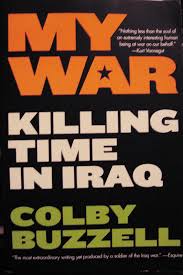
Colby Buzzell (Army): My War: Killing Time in Iraq (2005)
Kayla Williams (Army): Love My Rifle More Than I Love You: Young & Female in the U.S. Army (2006)
Nathaniel Fink (USMC): One Bullet Away (2006)
Marcus Luttrell (Navy) and Patrick Robinson: Lone Survivor (2007)
Peter Monsoor (Army): A Brigade Commander’s War in Iraq (2008)
Craig Mullaney (Army): The Unforgiving Minute (2009)
Matt Gallagher (Army): Kaboom: Embracing the Suck in a Savage Little War (2010)
Benjamin Tupper (Army): Greetings from Afghanistan: Send More Ammo (2011)
James Wilhite (Army): We Answered the Call: Building the Crown Jewel of Afghanistan (2010)
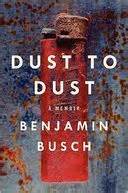
Benjamin Busch (USMC): Dust to Dust (2012)
Brian Castner (Air Force): The Long Walk: A Story of War and the Life that Follows (2012)
Sean Parnell (Army): Outlaw Platoon (2012)
Ron Capps (Army): Seriously Not All Right: Five Wars in Ten Years (2013)
Stanley McChrystal (Army): My Share of the Task (2013)
Adrian Bonenburger (Army): Afghan Post: One Soldier’s Correspondence from America’s Forgotten War (2014)
Jennifer Percy: Demon Camp (2014)
Brian Turner (Army): My Life as a Foreign Country (2014)

Photography:

Sebastian Junger: War (2010) and Tim Hetherington and Infidel (2010)
Benjamin Busch (USMC): The Art in War (2010)
Michael Kamber: Photojournalists on War: The Untold Stories from Iraq (2013)

Film:

Kathryn Bigelow, director: The Hurt Locker (2008)
Sebastian Junger, director: Restrepo (2009)
Oren Moverman, director: The Messenger (2009)
Kathryn Bigelow, director: Zero-Dark-Thirty (2012)
Peter Berg, director: Lone Survivor (2013)
Sebastian Junger, director: Korengal (2014)
Claudia Myers, director: Fort Bliss (2014)

Criticism:

Elizabeth Samet: Soldier’s Heart: Reading Literature Through Peace and War at West Point (2007)
Stacey Peebles: Welcome to the Suck: Narrating the American Soldier’s Experience in Iraq (2011)
Elizabeth Samet: No Man’s Land: Preparing for War and Peace in Post-9/11 America (2014)

A caveat up-front is that my lists do not reflect hundreds of stories, poems, and photographs published individually in anthologies, magazines, and on the web. Some of my favorite stories, by authors such as Mariette Kalinowski, Maurice Decaul, Will Mackin, and Brian Van Reet, and photographs, such as the one by Bill Putnam published here, thus do not appear above, though I hope to post more comprehensive lists in the future.

Another deficiency is the lack of works by international authors and filmmakers, particularly Iraqi and Afghan artists. Again, that project awaits completion.

My list of memoirs is probably the most subjective. The works I’ve listed are those I think important historically or interesting to me personally, with a small nod toward providing a variety of perspectives. The small number of photography texts I’ve listed combine evocative pictures taken at war and on the homefront with insightful commentary written by the photographers and collaborators themselves.
War Memoir/Poetry: Amalie Flynn’s Wife and War

I’m curious why there haven’t been more post-9/11 war novels written from the perspective of a wife and that portray marriage and family life in the period after redeployment. Have we seen any? Siobhan Fallon’s collection of short stories You Know When the Men are Gone, when it appeared in 2011, seemed to announce that marital tension wrought by war would be THE subject most attractive to talented war writers and alert readers. And yet, since then, not so much of anything, really. A story here and there. Some poetry. But no long fiction, from Fallon or anyone else.

Maybe the options for portraying martial domestic life are limited. A chirpy story of foibles on the family homefront while Daddy’s off killing Taliban and Al Qaeda bad guys followed by a happy family trip to Disneyland seems neither serious nor dramatic enough, you know what I mean? A failure of imagination might also be involved. Perhaps, though, it just takes guts to depict the guts of marital strain. The blogosphere is full of writing by savvy wives of deployed service members. Writers such as Andria Williams and Angie Ricketts I’m sure don’t miss much, and their posts give the impression that they could say a lot more even than they do about military married life. But as wives of officers, they, perhaps, are bound by the same chin-up, perpetually optimistic codes of propriety that bind their husbands, and that might be what keeps them from telling all the stories, even in fictional form, that they might. I know it’s true for me, still an active-duty officer, as I think about writing short stories and novels. A little too much interest in keeping up appearances, which sometimes earns officers the accusation that they “are not real people,” is even more toxic for a would-be writer of fiction. You’ve got to put it out there, and you can’t be afraid when it gets a little messy.

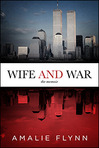
Wife and WarAn interesting twist on this line-of-inquiry is afforded by Amalie Flynn’s Wife and War. Subtitled “the memoir,” it more accurately is a memoir-in-verse, as Flynn has spaced out her sentences and paragraphs a few to a page in a way that resembles long-line poetry and mixed these passages with more conventional snippets of lyric verse. Most of the lyric passages refer to the fall of the Twin Towers on 9/11, which Flynn witnessed. An example reads:

But what I didn’t know then is what marriage is like, how it is a net,
like the tulle of my wedding dress. How it is.

The wire mesh, found inside a wall,

Found out on a street, after a building falls down.

How it entangles you, and how hard it is to walk away.

Flynn has lived through a lot more than just the horrifying experience of being present at Ground Zero. An equally traumatizing event from childhood, a miscarriage (or two?), and a rocky patch in her relationship with her Navy officer husband following his deployment all make their way into Wife and War’s 400+ pages. My interest here though is not Flynn’s life but her choice of poetry to tell her story. Long narrative poems haven’t been in literary fashion since the first half of the nineteenth century, but I can understand their appeal to contemporary writers looking for a means of expression more starkly stated than diffusely explained while still being more suggestive than explicit. The modus of Wife and War is to render a striking scene, event, or image minimalistically and then hint at rather than explore and analyze the cluster of emotions, perspectives, and implications that might accrue to it. For example, on one page:

I am still awake, in this new house, our bed, and my husband’s arm,
crossing over my chest, like a deadbolt.

[Next page]

And I think about the mechanism of a lock. The safety on the M4 my
husband carried for one year in Afghanistan,locked but ready.Or the way
we sleep, too often, now, now that he is home, how we sleep, together, in
our bed, but locked on opposite sides. Or our hearts, that organ we assign
too much to, or maybe, not enough, locked inside of our rib cages.

[Next page]

That’s good, plenty good enough as is for most. But there’s also a lot of white space left on the page that might be used to fill in details, provide context, sketch in character (and more characters), explain a little more, if not better, in either fact or fiction. Kudos to Flynn for thinking how the resources of literature might be brought to bear on one’s personal narrative, kudos to her for letting us see the shape that marriage to a service member might take. Wife and War’s amalgam of memoir and verse probably won’t inaugurate a new public affection for narrative poetry, but it does bravely beckon other war writers to give the spaces inside a military marriage–its guts–the attention they deserve.

Amalie Flynn’s Wife and War: The Memoir. 2013.

Requiem for Sergeant T: Brian Turner’s My Life as a Foreign Country

“I am a drone aircraft plying the darkness above my body, flying over my wife as she sleeps beside me, over the curvature of the earth, over the glens of Antrim and the Dalmation coastline, the shells of Dubrovnik and Brcko and Mosul arcing in the air beside me, projectiles filled with poems and death and love.”

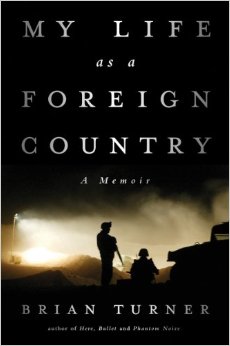
My LifeSo begins Brian Turner’s My Life as a Foreign Country, a start that just barely illuminates the the work’s enigmatic title and strange epigram taken from Eugenio Montale: “Too many lives go into the making of just one.” Half-memoir and half-rumination on the cosmology of soldiering and combat, My Life as a Foreign Country blends crystal-clear accounts of Turner’s upbringing in California and service in the Army with historical digressions, hallucinatory alterations of the here-and-now, and imagined vignettes describing the lives and thoughts of a cast of characters ranging from Iraqi bomb-makers to Japanese kamikaze pilots. It’s a lot to absorb, and matters are not helped by the subdivision of the book into 11 unnamed chapters further broken into 136 smaller sections, titled only by numbers, ranging in length from a sentence to a few pages. There’s kinda-sorta a logical narrative progression from chapter to chapter and within each chapter, but the trail is faint and easily lost, especially on the first reading. For sure there’s work to be done trying to explain the literal progression of Turner’s narrative, for those who like their readings literal, but clearly My Life as a Foreign Country is meant more to be experienced than explained. Even so, I’ll offer a few general comments about Turner’s methodology and vision.

Readers familiar with Turner’s poetry in Here, Bullet and Phantom Noise will recognize some subjects and themes treated in those volumes, such as car bombs, nighttime raids, soldier suicides, and life within a squad and on a FOB. The turn to prose sacrifices the preciseness, conciseness, and suggestiveness of the poetry in favor of a more expansive treatment of this familiar material that allows for more dialogue, description, characterization, and reflection. Turner can be as terse as Hemingway in parts, but his natural bent is to let his sentences flow with the momentousness of what they are describing. An example from one of the most moving chapters in the book, in my opinion, describes the thoughts of a young Iraqi male as he floats along the Tigris looking for a place to fire a mortar at American forces:

And Malik leans into the rowing, fascinated by the machine of his body, how the muscles of his arms take to the task of rowing so that the separation of body and oar become a fiction, Malik closing his eyes to subtract the night sounds of the world around him, until all that exists are the blades of their oars slipping into the water, two brothers in unison, propelling the boat forward with such ease he thinks they could just keep rowing, hour after hour, down through Baghdad and beyond, through sunrise and sunfall until they reached the wide mouth of the sea, the lights of Basra glowing behind them as they rowed into the crests and hollows of the Persian Gulf, Malik standing high at stern and calling out into the salt spray, calling to the adventurers who traveled these waters before him, the adventurers to come, saying, “’I’m here, world—Malik, as alive as anyone who has ever lived. Malik.’

The most stunning passage in the book, by far, is a reworking of a Rick Moody poem called “Boys.” Rendered in prose form by Turner and given the prosaic chapter title name of 49, we can do better by calling it by its first line: “The soldiers enter the house.” What follows is four pages of insanely intense and vivid and evocative description of the lives and thoughts of soldiers conducting a midnight raid on a compound belonging to a scared Iraqi family. A small quote won’t do it justice, but even a snippet such as, “The soldiers enter the house with only nine credits earned toward an associate’s degree in history from the University of Maryland. They kick in the door and enter the house with the memory of backyard barbecues on their minds” displays Turner’s gift with words and, even better, his ability to see poetic potential in mundane facts. The passage is incantatory even when read silently, and is even more so when read aloud, as I have heard Turner do so in performance.

My Life as a Foreign Country decidedly departs the time-space continuum in its later stages when Turner straight-facedly describes an RPG hit that kills him: “Sgt. Turner is dead,” he writes. The author-Turner is not dead, of course, but the imagined death, I’m thinking, bespeaks the author-Turner’s desire, at long last, to put his identity as a soldier behind him, a problematic venture given that it is his identity as a warrior that has inspired his poetry and gained him a paying audience. But noticeably absent in a memoir by an accomplished author are extended descriptions of Turner’s writerly development before joining the military, while in, and afterwards. To parse the book’s title, then, we can say that the “foreign country” he speaks of are the parts of his life—boyhood and a short period in adulthood—when he was consumed by soldiering, not art. The two clearly have never not been connected for Turner, but My Life as a Foreign Country foregrounds contemplation of the first, while leaving his literary life for another day.

Too bad, a little, because Turner fascinates in person when he speaks about the genesis of his poems and poetic craft. Those aren’t the fish he’s frying in My Life as a Foreign Country, but I’ve learned that Turner often bases poems on deep private allegiances to other poems he knows and loves, as the passage quoted above draws on Rick Moody’s “Boys.” I’ll go out on a limb here and say that the precursor text for My Life as a Foreign Country is Walt Whitman’s “Song of Myself.” We see the similarity in the unnumbered stanzas, we see it in the shared interest in cosmic connectivity, we see it in the brooding preoccupation with death and the swirls of mortality that buffet our lives. Whitman kills off his poetic persona, too, at the end of “Song of Myself,” only to promise the reader that he has been resurrected in different form: “I effuse my flesh in eddies and drift it in lacy jags / I bequeath myself to the dirt to grow from the grass I love / If you want me again look for me under your boot-soles.”

Whitman concludes, “Failing to fetch me at first keep up encouraged / Missing me one place search another / I stop somewhere waiting for you.” I can’t state exactly what Sergeant Turner is up to at the end of My Life as a Foreign Country, but since I know him not just as a gruff former NCO but also as a sweet soul who cares deeply, I’m not surprised to read very near the book’s conclusion that, “because Sgt. Turner is dead, he will remain at his post.” Like Whitman at the end of his own long poem, Turner is somewhere ahead looking out for us while we scramble to catch up.

Brian Turner, My Life as a Foreign Country. Norton, 2014. I read an early draft of My Life as a Foreign Country and am honored to be mentioned in the acknowledgements.

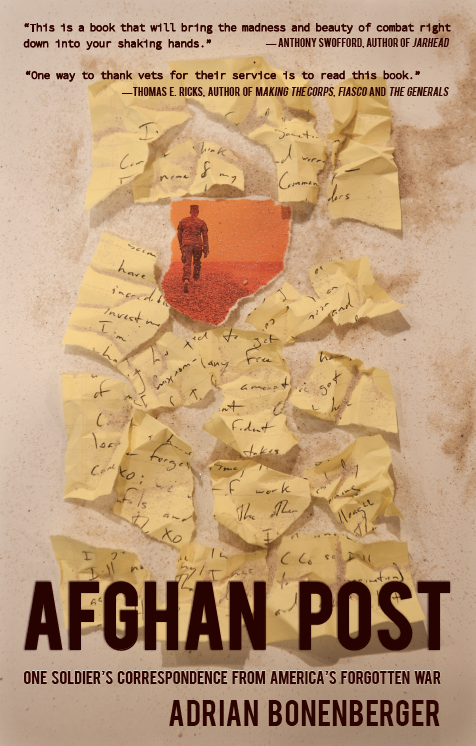
War Memoir: Adrian Bonenberger’s Afghan Post

Afghan PostI draw a line between remembrance and imagination, so I don’t review many memoirs on Time Now.  I’m interested in the artistic representation of war more than its factual rendition, and I don’t want to be lured into judging someone’s life or disputing a soldier’s understanding of what he or she lived through.  Plus, there’s just a whole heck of a lot of memoirs out there, and not so many stories, and I think writing a great story is more of an achievement than writing a great memoir. I make exceptions, though, when a memoir strives for interesting literary effect or manifests something I think important.  I was impressed by Colby Buzzell’s My War, for instance.  Not only did it begin life as an early-on warzone blog, Buzzell’s prose voice is exhilarating.  Matt Gallagher’s Kaboom:  Embracing the Suck in a Savage Little War likewise originated as Internet dispatches from the Iraq front and then played hide-and-seek with military authority before finding print upon Gallagher’s discharge from the Army.  Walt Piatt’s Paktika and Amalie Flynn’s Wife and War are memoirs in verse. Benjamin Busch’s Dust to Dust is by far the most highly wrought contemporary war memoir, as befits a book by the son of the fine novelist Frederick Busch.  In a New Yorker article titled “Home Fires,” George Packer writes that Dust to Dust is “organized not chronologically but around certain materials—metal, bone, blood, ash. Fragments are perhaps the most honest literary form available to writers who fought so recently.”

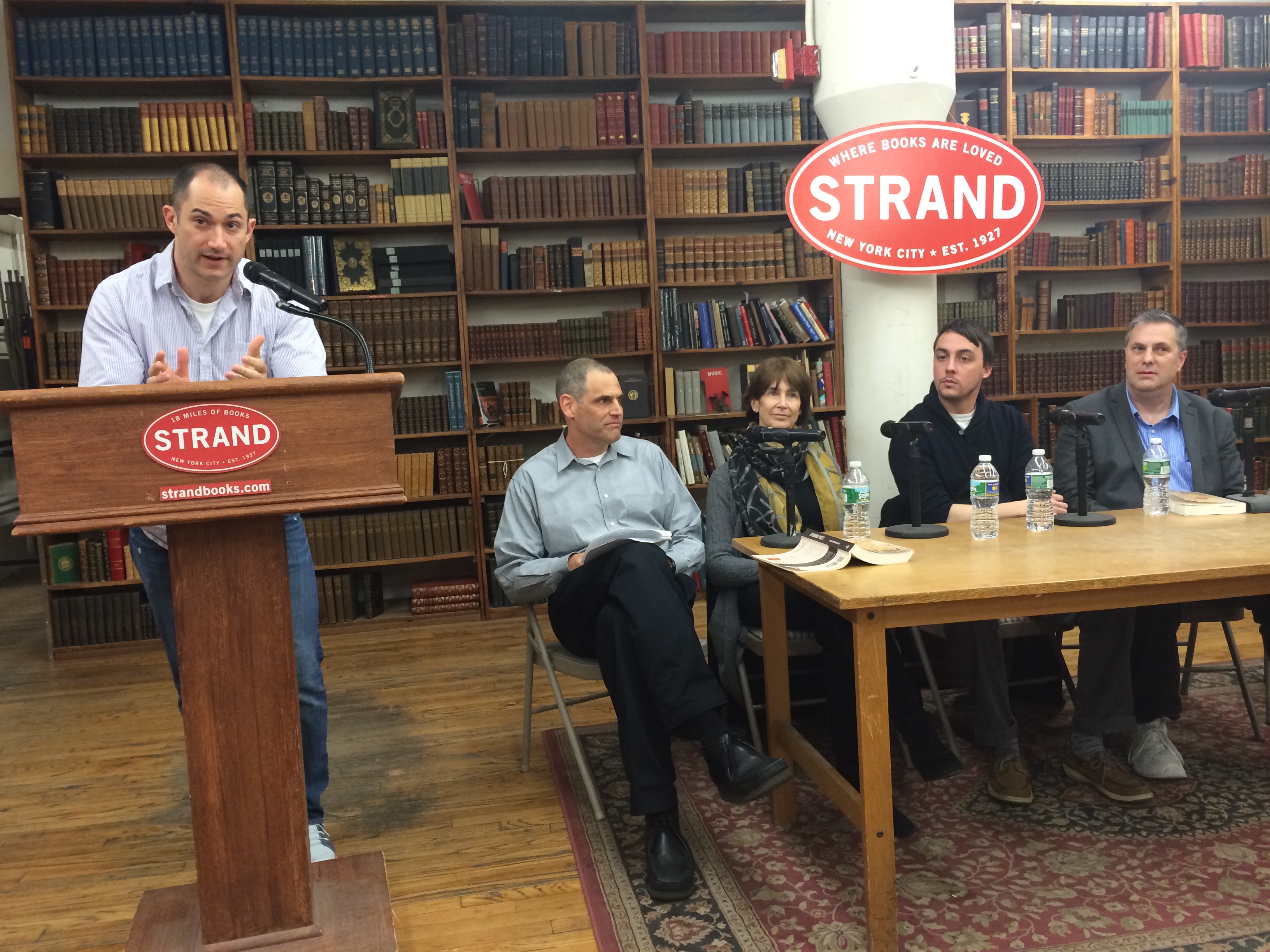
Last week I moderated a reading titled Writers on War at The Strand Bookstore in New York City.  The event honored the publication of Adrian Bonenberger’s Afghan Post, an epistolary memoir comprised of letters and journal entries Bonenberger mostly composed while undergoing infantry officer training at Fort Benning, Georgia, and on two tours in Afghanistan. Also on the panel were David Abrams, Roxana Robinson, the authors of the novels Fobbit and Sparta respectively, and the aforementioned Matt Gallagher.  Abrams has written entertainingly about the event on his blog The Quivering Pen and also linked to some funny cartoons of us drawn by a member of the audience named Jess Ruliffson.  I can’t top Abrams and Ruliffson, but will say just a few words about Afghan Post.

Left to right, Adrian Bonenberger, me, Roxana Robinson, Matt Gallagher, David Abrams

Bonenberger is a Yale graduate whose parents are members of the artistic intelligentsia, which makes his military service de facto interesting–one more data point in liberal, educated America’s sorting out of its relationship with a nation that is a lot more militaristic than it is.  That Bonenberger was a compulsive letter writer who somehow found the means to save or retrieve his correspondence is also intriguing.  The best things about Afghan Post, though, are the quality of Bonenberger’s writing and his observations, both those descriptive and those reflective. Describing the things he sees and does, ruminating about bigger pictures, and cogitating upon his performance as a platoon leader and company commander, Bonenberger makes new many already twice-told warfaring episodes while filling in cracks and margins untouched by other memoirs and histories.  An excerpt, for example, from a letter to his parents:

The Afghans live in unimaginable poverty; if you haven’t seen it, you can’t picture what it’s like.  Mom, I’m guessing it’s even worse than whatever you saw on the Navajo reservation in the ‘70s.  Except replace “alcoholism” with “the ever-present specter of warfare” as the proximate cause of said poverty (I’m trying to be generous and not suggest anything else could be responsible lest others accuse me of cultural imperialism).  Walking through the market recently with a dismounted patrol, we passed a butcher’s shop, where they had skinned goats hanging—you could see the cloud of flies around the meat—the butcher’s assistant slapped the corpse to keep the flies off when a customer walked in.  That afternoon I had kabob with the mayor—probably the same goat.  There’s a medicine here, Cipro, that I take like candy to keep the pathogens away.  God only knows what it’s doing to my insides.

Our anti-malarial medicine is Mefloquin, which is a weekly pill (we all take it on Monday, which is called “Mefloquin Monday” as a consequence) that causes some seriously weird, super-realistic dreams.  I look forward to taking it; the dreams fade in intensity as the week goes on, but Monday and Tuesday night are usually fun, almost spiritual journeys.  I had one dream that was so much like reality that when I woke up, I wondered if I’d been to sleep at all, or if I’d just remembered the day before and not dreamt at all—then I thought, “Ah, this what they mean when they say ‘having trouble distinguishing fantasy from reality.’”  Although when fantasy is exactly like reality, that’s not much of a problem.

The primary recipients of Bonenberger’s correspondence vary greatly—parents, girlfriends, old Yale friends, new Army buddies, etc.–so each is a separate exercise in rhetorical selection and emphasis.  Who needs to hear what and why?  As the letters accumulate, drama ensues as the author’s relationships torque under the pressure of change and need. The private side the letters reveal is often playful, open, and curious, but also prone to fits of brooding.  The dominant impression is that of a young man living through very challenging and exciting events who is both eager to explain it all and desperate for affirmation that family and old friends don’t disapprove of his decisions to join the Army.  The letters, it seems, allow Bonenberger, who never intended to stay in, to maintain distance from the all-consuming martial culture he has entered.  At the same time, they document the powerful imperatives that drive young officers to fanatically seek the respect of their soldiers, peers, and superiors.  The negotiation between distance and immersion imbues Afghan Post with personality and tension that other memoirs sometimes lack.

Afghan Post might be read usefully alongside Outlaw Platoon, Sean Parnell’s memoir of service as a platoon leader in Paktika province, Afghanistan, where much of Afghan Post also takes place.  Parnell’s memoir swaggers with portraits of soldiers, Afghans, tactics, fighting, and Parnell’s growing prowess as a combat leader; Afghan Post’s strengths are passages that depict honestly Bonenberger’s internal struggle with doubt and failure.  While we’re reading Parnell and Bonenberger we might also read Craig Mullaney’s The Unforgiving Minute, about the author’s own platoon leader experience in Paktika and Walt Piatt’s memoir-in-verse mentioned above, about his tenure as a battalion commander there.  Something about that wild, far-away battleground, full of mountains and angry Pashtuns, is inspiring America’s fighting men to write very well.

Adrian Bonenberger’s Afghan Post:  One Soldier’s Correspondence from America’s Forgotten War was published in 2014 by The Head and The Hand Press.

“Terps”: Afghan and Iraqi Interpreters in War Memoir and Fiction

One aspect of the wars in Iraq and Afghanistan not generally understood is how dependent were American and other Western forces on the services of native interpreters to mediate virtually every interaction with host-nation military personnel and civilians.  Given the lack of Arabic, Dari, and Pashto speakers actually in the military and the paucity of bilingual speakers in Iraq and Afghanistan, you can assume that anything you might have read about in the papers that involved on-the-ground operations, and the millions of missions and engagements you didn’t, took place with a native speaker translator at the side of the officer or NCO charged with carrying them out.  Though some interpreters in Iraq outlaw-platoonand Afghanistan were American citizens or residents recruited in America and then deployed back to their homelands, most were natives. The fullest portrait of a host-nation interpreter and a US military member I know of appears in Sean Parnell’s Outlaw Platoon (2012), a memoir about Parnell’s service as an infantry platoon leader in Paktika province, Afghanistan.  Parnell uses anecdotes about his interpreters, one, named Abdul, faithful and competent, the other, Yusef, untrustworthy and treacherous, to frame his account.  “A good ‘terp,’” writes Parnell, “could make a huge difference in daily operations.”

“Terp” was the commonly used shorthand to describe military linguists.  I never really liked the term, but it was ubiquitous and even I would use it to describe “Terp Village,” the humble compounds affixed to US bases in which a unit’s interpreters lived.  The term appears again in a passage found in journalist-historian Bing West’s The Wrong War (2011).  West, describing operations in southern Afghanistan, writes, “The interpreters were the funnel for all coalition interactions with Afghans at all levels.”  Then, describing an interpreter named Siad, West continues: “Siad was typical of the local The Wrong Warinterpreters.  They all tried hard, and most worshipped the grunts they served locally.  Their thirst for absorbing American culture never ceased…  Their skills were marginal, no matter how hard they tried.  Their hearts were huge.  Anyone who doubted the magical image of America in the minds of millions of Afghans had only to spend a day under fire with a U.S. squad and the local terp.”

Before examining fictional representations of interpreters, I’ll post a passage from a private document written by a former interpreter of mine who is now applying for admission to the US.  It offers insight into the lived life of the men described abstractly so far:

I am engaged now and my fiancé is from Ghazni province.  All her relatives know that I am working with Coalition Forces as a linguist.  For that reason, I cannot go to Ghazni province now to see her or relatives or take part in a condolence or happiness party.  Since I know that everybody knows that I am working with Coalition Forces I do not feel free and I am sure my life is at risk.  Even in Kabul City where I live, I cannot go out at night and visit other people because I am very afraid my life is at risk.

War fiction writers have begun to make something of the possibilities offered by these complex figures and intense soldier-local national relationships.  Their portraits do what fiction does:  combine artistic creativity with realistic verisimilitude to provide social, psychological, and emotional nuance.  They might be said, however, to focus on dramatic aspects where the day to day record is more placid or positive.  The first depiction of which I am aware is in a Siobhan Fallon short story “Camp Liberty,” from her collection You Know When the Men are Gone (2011).  In this story, Fallon tells of a soldier deployed to Iraq, named  David, whose romantic relationship with SF-PictureMarissa, his stateside fiancé, fades as the working one with Raneen, a female interpreter, intensifies.  David grows enamored of Raneen, but she disappears and is probably killed before he is able to speak to her in anything but an on-the-job context.  Her disappearance leaves him more adrift than he imagined possible, and perhaps now too estranged from Marissa for that to ever be right again.  Fallon puts a romantic spin on what was usually a close working relationship between two men, while characterizing David and Raneen’s relationship as at least reasonably compatible and effective, but other stories depict much more fraught relationships.

In Kevin Powers’ The Yellow Birds (2012), an Iraqi named Malik appears as a minor character early in The Yellow Birds Coverthe book.  Powers’ narrator John Bartle tells us that Malik’s “English was exceptional… He’d been a student at the university before the war, studying literature.”  He wears a hood and a mask because, he says, “’They’ll kill me for helping you.  They’ll kill my whole family.’”  A few pages Malik is killed by a sniper, and Bartle and his friend debate whether to include him in their morbid count toward 1000 Coalition Force casualties:

“Doesn’t count, does it?” Murph asked.

“No.  I don’t think so.”

Bartle reports, “I was not surprised by the cruelty of my ambivalence then.  Nothing seemed more natural than someone getting killed.”

Redeployment“Money is a Weapons System,” by Phil Klay, in his recently released collection Redeployment (2014) portrays “a short and pudgy Sunni Muslim” interpreter known as “the Professor.”  Sullen and contemptuous, the Professor is “rumored to have blood on his hands from the Saddam days,” but Klay’s narrator, says, “Whether that was true or not, he was our best interpreter.”  A short exchange reflects their tense relationship:

“Istalquaal,” I finally said, trying to draw him out.  “Does it mean freedom, or liberation?”

[The Professor] opened his eyes a crack and looked at me sidelong.  “Istalquaal?  Istiqlal means independence.  Istalquaal means nothing.  It means Americans can’t speak Arabic.”

The most extensive portrait of an interpreter and the only one I know of published first in English that attempts to portray the interpreter’s thoughts and point of view is Joydeep Roy-Bhattacharya’s The Watch (2012).  In this novel, The Watchwhich is set in the southern, Pashtun-region of Afghanistan, a young ethnic Tajik interpreter named Masood, loyal to the Americans and eager to do well, is dropped off at a remote combat outpost in the middle of the night after the big battle.  He doesn’t know about the battle, but expecting better he confronts hostility and mysterious behavior at every turn from his new American hosts and allies.  Roy-Bhattacharya gets right the incredibly uneven regard of young American soldiers for those outside the fraternal ranks of their unit.  Masood is mystified and hurt by the Americans’ baffling rudeness, and yet it is more complex than that—just when he is ready to write off the Americans as barbarians, he meets a medic who knows more about Afghan literature and history than he does, then the warm and wise COP first sergeant, and finally the outpost commander, whose fanatical adherence to mission and security coincides with a more than passing fluency in Pashto and Dari.

The dramatic focus on interpreters and the soldier-interpreter relationship, to my mind, suggests several points:

  1. The interpreter, not the host nation populace, was the “other” most often encountered by American soldiers, and the only one with whom he or she might bond.  With emotional investment, however, comes gratitude, guilt, and feelings of loss after the relationship ends.
  2. In life, the relationship between soldier and interpreter was often characterized by respect and mutual affection.  In fiction, however, the relationship is mined for tension and drama.  The interpreter, from the fiction author’s viewpoint, is part of the problem, and dysfunctional interpreter relationships symbolize the divide between Western military forces and the populaces they intend to help.
  3. The interpreter himself, or herself, is a complex, in-between figure who must manage a thicket of complicated personal histories and commitments.  In some ways they become “people without a country,” or a contemporary “tragic mulatto,” neither white nor dark and doomed to unhappiness and premature death.
  4. Contemplation of the interpreter’s role help us understand the basic unreality and unknowability of the wars:  mediated, filtered, coming to us second-hand via seriously invested witness-participants.  The general situation short of combat was always linguistically, rhetorically, and even artistically arranged for us by translators about whom we knew little and did little to comprehend.

The Corpse ExhibitionThe only fiction I know of written by an Iraqi or Afghan that portrays interpreters is Iraqi expatriate author Hassan Blasim’s story “The Nightmares of Carlos Fuentes,” from his recently published collection of translated short stories The Corpse Exhibition (2014).  It is also the only tale that imagines a future existence for interpreters post-war and measures the long-term consequences of their involvement with Americans.  Carlos Fuentes is the pseudonym of an Iraqi named Salim Abdul Husain who has emigrated to Holland; he has taken the name because he reports that his own name makes him a marked man in the eyes of those who won’t forgive him for working as a translator for American forces.  Carlos Fuentes has seen nothing but violence and injustice in Iraq, and in Holland he becomes a model citizen, fully embracing European values and habits while scorning immigrants who don’t.   Blasim’s narrator states:

“Why are the trees so green and beautiful, as though they are washed by water every day?  Why can’t we be peaceful like them?  We live in houses like pigsties while their houses are warm, safe, and colorful.  Why do they respect dogs as humans?  ….  How can we get a decent government like theirs?”  Everything Carlos Fuentes saw amazed him and humiliated him at the same time, from the softness of the toilet paper in Holland to the parliament building protected only by security cameras.

All goes well for Carlos Fuentes until he begins having nightmares about his past life.  He takes extremely fantastic measures to avoid the nightmares—“One night he painted his face like an American Indian, slept wearing diaphanous orange pajamas, and put under his pillow three feathers taken from various birds”–and yet nothing works.  At tale’s end he is confronted in a dream by Salim Abdul Husain, his old self:

Salim was standing naked next to the window holding a broom stained with blood…. Salim began to smile and repeated in derision, “Salim the Dutchman, Salim the Mexican, Salim the Iraqi, Salim the Frenchman, Salim the Indian, Salim the Pakistani, Salim the Nigerian….”

The Carlos Fuentes character takes aim at Salim with a rifle, Salim jumps out the window, and the narrator tells us that Carlos Fuentes’s wife finds him dead on the pavement below in the morning.  In a final indignity, Carlos Fuentes’ death is reported in the papers as that of an “Iraqi man” rather than a “Dutch national,” and his brothers have his body taken back to Iraq for burial.  No one it seems has been much convinced by his effort to renounce his past.

Interpreting the interpreter, we can surmise that Carlos Fuentes’ divided self and attempted cultural makeover does not hold.  The war has traumatized him beyond his knowing and his idealization of the West a dream not meant for him to possess.  But it’s not just about what happens to him while working alongside American and European forces in country, or that his attempt to adopt and internalize Western values and beliefs have instead generated pathological self-hatred and destructiveness.  It’s about the lived life of immigrants after the personal relationship ends, the Americans go home, and the rest of the interpreter’s life begins.  Blasim’s story, and all stories about interpreters, remind us that real linguists exist by the 1000s in both Iraq and Afghanistan or elsewhere, and letting them fend for themselves now that we are gone is one more of the ways we fought the wars very callously and in ways that kept us from being as successful as possible.

****

Most of this post was first presented at the recent American Comparative Literature Conference in New York City.  Thanks to panel organizer Susan Derwin for inviting me to speak.  Thanks to fellow panelist Brian Williams, who reminded me of the presence of the interpreter Malik in The Yellow Birds.  The paper as delivered at ACLA did not reference The Yellow Birds.  I am invested in this subject because of my own positive experience with two interpreters in Afghanistan who are now in the United States, enlisted in the US Army, and who hope to become US citizens.  I am actively engaged in trying to help a third trusted interpreter emigrate to the US.  Paul Solotaroff describes the difficulty interpreters have in obtaining visas in “The Interpreters We Left Behind,” published this week in Men’s Journal.

War Fact or Fiction: Brian Van Reet on the “Kill Memoir”

Aftermath of a suicide bombing, Khowst Province, Afghanistan, 12 May 2009.
Aftermath of a suicide bombing, Khowst Province, Afghanistan.

Iraq vet and author Brian Van Reet’s recent essay in the New York Times, called A Problematic Genre, the ‘Kill Memoir,'” lambastes memoirs written by veterans who take pride in the number of enemy they killed in combat. He mentions as an extreme example Carnivore, written by an Army vet whose publicist claimed the author had killed in combat 2,746 Iraqis. Van Reet likens the Carnivore author to a sergeant in his own unit who embarrassed everyone by bragging about the number of Iraqi casualties he tallied. That this sergeant intended to get a tattoo commemorating each of them amplified and clarified his foolishness. That his credibility was suspect made matters worse. Clearly, the guy was fighting the war according to a script of his own devising, one that had him not playing a dutiful soldier or conventional hero or leader, but a hardened bad-ass killer.

Truth to tell, though, such dreams lurked close to the surface in many of the infantrymen and special forces types I saw in Afghanistan, me included. A rational approach to war is expressed by an 82nd Airborne Division platoon leader speaking of his feelings prior to going into action in the Persian Gulf War: “You’re feeling really excited about going to play in the big game, and horrified and scared out of your mind that you have to play the big game at the same time.” Horrified of what? “That you could get killed. And you get asked to do things tha you really don’t want to do. I don’t know many serial killers in the Army. Most people just really prefer not to have to kill anyone if they don’t have to” (Quoted in Nancy Sherman’s Stoic Warriors).

But lots of new personnel and units arrive in theater infected by desire to see combat.  An infantry captain is quoted in the current issue of Army magazine: “Every blue-blooded infantryman who deploys wants to get into a fight.  We want to plan and execute offensive operations.  We want to close with and destroy the enemy.  We want to take charge and be in charge.” It was barely use talking to such soldiers of counterinsurgency and nation-building and key leader meetings and training and advising when they were out of their minds to see what it was like to shoot at someone and be shot at in return. Once they had seen combat (and survived) they might settle down and be good for more commonplace things. But often their initial survival, if not success, whetted their appetites, and now that they had “got some,” they desired even more. Like the author of Carnivore, they turned war into a competitive game of testosterone-fueled one-upsmanship, clothing their blood-lust and thrill-seeking in the justifications of duty and necessity. Such attitudes were unseemly and most did their best to keep them dampened down.  But not all felt this way. Some guys just seemed so determined to, as the saying goes, “get their war on.” And not all were ridiculed or scorned. In the hierarchy of soldiering, hardened killers could accrue enormous social capital. Where fear and confusion reigned, they offered toughness and purpose, of a kind. Operating insidiously within and sometimes overtly against the chain-of-command, they used their rank and stature to make the war all about kill-or-be-killed.

It’s no wonder such soldiers’ memoirs sell, as Van Reet realizes, but still he castigates a publishing industry that cravenly vends sensational war memoirs to a fawning reading public. Such fare glorifies the killing it describes, and thus perpetuates war rather than doing anything to end it. But even if kill memoir authors position themselves as self-effacing and introspective, their books are still shaky vehicles for the delivery of truth. The problem lies in the form as much as the sentiments. Memoir, Van Reet reminds us, is such a self-aggrandizing, unreliable, and stereotyped genre that it might be the last place, not the first, we would go to for factual detail or insight about what it means to kill in combat.

Van Reet instead touts the supremacy of fiction over “fact” and in particular literary novels such as David Abrams’ Fobbit and Kevin Powers’ The Yellow Birds. “Though they are fictional,” he writes, “they read in my mind, like more accurate depictions of the totality of what happened in Iraq than any of the supposedly factual accounts I have mentioned.” I’ll second that, and throw in, as does Van Reet later in the essay, Ben Fountain’s Billy Lynn’s Long Halftime Walk as a third novel that, taken with the other two, make 2012 the annus mirabilis of Iraq war fiction. Indeed, each of the novels, in its way, examine the relationship of a softer, more sensitive soldier who comes under the sway of a much more decisive, hardened, experienced soldier at home with the business and psychology of killing. Among the novels’ other achievements, they use the tools of fiction—perspective, irony, empathy, style, tone—to interrogate the attitudes toward combat and killing described above and presented naively and self-servingly in memoirs and histories. Usually, they find such pronouncements swaddled in layers of self-deception and self-justification, and they convey sympathy for characters who at least struggle toward awareness and growth.

But as impressive as Abrams’, Powers’, and Fountain’s novels may be, they are, as we speak, still a feeble countervailing force in a publishing environment characterized by what Van Reet calls “the triumph of the kill memoir.” Van Reet closes by issuing a challenge to veteran writers, other authors interested in war, the publishing industry, and by implication, reading audiences:  we can all do better. I’ll second that, too.

War Memoir: Benjamin Busch’s Dust to Dust

Benjamin Busch, Vassar fine arts major and two-time USMC Iraq vet, reminds me of an amalgam of my best friend and myself when we were eight years old.  Frank Hobbs lived two doors down in Lynchburg, Virginia.  Every day we would play army in the neighborhood and woods behind our houses.  When we weren’t outside we were drawing pictures of battleships, fighter plane dogfights, and football games.

Almost 50 years later, I’m in the Army and Frank is an artist and art teacher at Ohio Wesleyan University.  Not only does he paint like a dream, he writes like one, too.  I highly recommend checking out his blog and website, which feature plenty of his works and smart, interesting talk about art.  His paintings are landscapes, but they are as much about painting as they are of the objects and terrain they portray.  As naturalistic and realistic as the pictures appear, you never ever lose awareness of the artist’s mind at work and the evocative array of color, line, and texture created by the painted brushstrokes on canvas.

In Dust to Dust, Busch brings that same artist’s sensibility to his portrait of his service in Iraq. If Colby Buzzell’s My War is arranged episodically and chronologically, and features a haphazard pastiche of war-related documents, Dust to Dust is highly artificed, everywhere and all the time organized in unconventional ways by Busch’s controlling eye and hand.  In truth, only about a quarter of the book describes Busch’s life in uniform, as he places his desire to join the Marines and deployment experience in the context of his life and ruminations about the natural order of things.  The book is not organized chronologically; chapters are named after elemental entities—water, metal, soil, etc.—and within each chapter unfold biographical episodes that directly or tangentially exemplify how natural elements have structured Busch’s life. Think back, for example, in your own life, about ten episodes in which, say, water figured, and now write about them in sequence while probing their connected meaning.  As lived, the connections might have gone unnoticed, but in Dust to Dust they become manifest for Busch, thanks to his biographical-archaeological excavation work.   In James Joyce’s phrase, it’s a “retrospective rearrangement” of events that, to an artist and like-minded reader, makes more sense than a boring chronological recounting or focus on obvious “highlights.”

This is difficult to explain and perhaps confusing (or, if you are like me, delightful) to read. Fortunately, Busch is a fine writer and many of the events he describes are interesting in and of themselves.  In another post, I’ve mentioned the two most moving scenes in the book:  one where he describes telling his parents he has joined the Marine Corps and another in which he writes of his mother’s decline and death.  But Busch can be funny as well.  A great episode describes Busch trying to salvage an abandoned car that has been occupied by a hive of wasps:

“I went into my trailer and put on three layers of sweatshirts, jeans, two layers of sweatpants, two pairs of socks, boots, a scarf, an extreme sports bike helmet that I had found in a Salvation Army store, ski goggles, and winter gloves.  It was July and I boiled in the density of inappropriate clothing.  It was difficult to bend my arms and legs.  There were no brakes anyway, and I figured there to be an unlikely requirement for dramatic steering so my immobility was of little concern.  We looped the chain to the front, and I opened the door to an explosion of wasps.

“I sat on the seat and I could feel the hive crush and stir through my clothes.  The wasps hovered and dove at me, and the compartment filled with them.  It was like seeing molecules of gas heated.  I almost felt that I had changed scale, become smaller, the wasps larger at this distance than they should be.  I recall nothing of the short trip to the top of the hill except that I went there with every wasp on earth.”

Not to read too much into it, especially because the scene gets funnier, but it plays like an eerie comic foreshadowing of Iraq, where Busch would pile on body armor prior to driving down IED-strewn roads in military vehicles.

An IED strike indeed is the climax of Dust to Dust, where Busch describes the death of a fellow Marine officer and friend with whom he had patrolled side-by-side throughout a long day brightened only by their exchange of jokes.  “We had a similar sense of humor and were also like-minded about how to approach the embattled city,” Busch writes.  Unable to evacuate his now dead friend before the sun goes down, Busch must pull security around his friend’s burning truck through the night—life imitating the art of Walt Whitman’s great Civil War poem “Vigil Strange I Kept on the Field One Night.” Then, within a few years, first Busch’s father and next his mother died.  This nexus of death focalizes Dust to Dust; as the book nears its close we see that the point of Busch’s long meditations and idiosyncratic selection of anecdotes has been to plum his own preoccupation with mortality and sense that mortality was even more preoccupied with him.  Busch hints that his life-long desire to serve in the Marines and see combat, if not tantamount to a death wish, was a compulsive ride on a very unsafe roller coaster, sure to end badly for someone, if not him.  It can’t quite be nature’s plan, because war is a social act and the decision to join the military a personal one.  But the intricate organizational texture of Dust to Dust replicates the densely intertwined yarn of life’s discreet threads.

In the book’s closing pages, Busch describes finding a copy of John Milton’s epic poem Paradise Lost on the desk of his father—the novelist Frederick Busch—some years after his father had passed.  He reprints Milton’s famous final lines, which describe Adam and Eve making their way out of Eden “hand in hand, with wand’ring steps, and slow.”  Paradise Lost represents a heroic effort, perhaps man’s best, to impose artistic order on the revolt of Satan and man’s fall and eventual salvation through religious faith.  Milton aimed to “justify the ways of God to man.” But that formulation doesn’t work for Busch; in the philosophy of Dust to Dust art is the only stay against eternal oblivion:  “It is the living task of every artist to suffer the constant premonition of death while drawing plans for immortality.”  In my signed copy of Dust to Dust, Busch wrote, “We are stars and oceans and earth.  It will be language that survives.  Live forever.”

I’ll buy that.  I wonder if Frank Hobbs does?

Frank Hobbs, Frank Hobbs, “Winter–Athens, Ohio.” Athens, Ohio is my birthplace.

Benjamin Busch, Dust to Dust:  A Memoir.  Ecco, 2012.

War Memoir: Colby Buzzell’s My War

One reason I like Colby Buzzell’s My War:  Killing Time in Iraq is that I can relate to it.

Buzzell was 26 years old when he entered the Army.  In My War he writes, “my heart was dead set on being a trigger puller, and so I told [the recruiter], there’s nothing else that interests me in the Army besides the infantry.”  That was me, too, at age 26 fifteen years earlier.  Buzzell’s life up until he joined was scruffier than mine; he reports that his rap sheet consisted of “a couple of assault-and-battery charges, drunk in public, shoplifting, open containers, that kinda crap.”  When I joined I had two college degrees, a wife, and a kid on the way.  Buzzell’s aspiration in the Army was to work his way up from machine gun ammo bearer to assistant gunner to gunner while assigned to a unit deployed to Iraq.  I wanted to go to Officer Candidate School, Infantry Officer Basic Course, jump school, and Ranger school en route to becoming a platoon leader in Korea.

My past and ambitions were more respectable than Buzzell’s, but we had the same musical and literary heroes:  Black Flag, Social Distortion, Hunter Thompson, and Charles Bukowski. We both got what we wanted from the Army, too, which is cool.  I’m thinking that Buzzell, like me, appreciates that the Army never lied to him in the biggest way, a fact that made other indignities and hardships easier to bear.

In November 2003 Buzzell deployed to Iraq with a Stryker fighting vehicle-equipped brigade from the 2nd Infantry Division.  By December the unit had been blooded, and over the next 10 months, they experienced the highs and lows of infantry life in Baghdad and Mosul—heavy fighting, dull patrolling/observation post/traffic control checkpoint operations, and the mindless routine of FOB life.  In June 2004, Buzzell began a blog about his deployment, which he called My War in tribute to a ripping Black Flag song from the early 1980s.  Buzzell writes:

“I’d been in Iraq for a while now, and we were doing multiple combat missions per day, countless raids, countless missions, and being in an infantry platoon, we were spending most of our time outside the wire, thus I probably had a different perspective than someone who never left the base.

“Fuck it.

“Without even thinking twice about it, I decided right there and then to start up a blog.  Why not? If these soldiers and even officers were doing them and saying all sorts of moronic shit, and military was allowing it to go on, I might as well do one, too.”

In another place, Buzzell quotes Charles Bukowski:  “’These words I write keep me from total madness.’”

Buzzell’s memoir My War, published in 2005, records both his experience in combat and back on the FOB as his blog gained first popularity, then notoriety, and finally scrutiny from his chain-of-command.  Eventually he shut it down, but My War the memoir recoups many of the posts in addition to journal entries, commentary, autobiographical sketches, and a variety of other documents such as news reports and Army public affairs releases pertinent to Buzzell’s story.

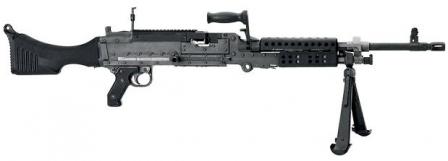
My War is excellent on many levels, but I’ll focus on a few that are most relevant to a blog on war and art.  Buzzell brings a sensitivity to art to his writing—not only are his blog and book named after a song, he nicknamed his machine gun “Rosebud” after the sled that plays so prominently in Citizen Kane, and his blog featured a picture of Picasso’s “Guernica.”  It also helps that Buzzell is a good writer, with his indebtedness to Hunter Thompson, Charles Bukowski, and (I’ll also throw in) Tom Wolfe energizing My War’s prose and elevating it above the plodding styles of other war memoirs. Buzzell’s projection of self—his voice—is also likable.  He comes off as open, honest, curious, funny, eager to explain, and fearless—the last thing anyone would accuse him of being is a stick-in-the-mud.  Despite an anti-authoritarian streak a mile wide, he finds plenty to like and respect about the Army.  One of the tidbits that endeared Buzzell to me was his account of reading cover-to-cover the Field Manuals and Technical Manuals governing the Army’s M240 Bravo machine gun.  That tells me right there that he wanted to be a good troop and probably was.  Even his saga of military transgressiveness keeps getting subverted by members of his chain-of-command who are remarkably understanding about his blog.  Not only are they in Buzzell’s eyes inspirational and competent combat leaders, their words and actions are stitched together by intelligence and fairness.

Looking back at the fuss raised by Buzzell’s blog, I’m actually kind of surprised the military didn’t outright ban blogging by deployed service members.  But I guess the 13,000 soldiers, Marines, sailors, and airmen (including me) who started blogs were too much to deal with.  It would have been like trying to ban tattoos or smoking.

Buzzell doesn’t miss much, and description of Army life turns into criticism when he confronts stupidity, hypocrisy, small-mindedness, and other forms of abject disconnect between the ideal and the actual.  The characteristic move in My War is for Buzzell to play off words spoken or written by others:  Someone said this, and it turned out to be true.  Another said this, but it was false.  The Army orders said we were going to do this, and instead we did that.  Hyper-alert to the way the war narrative is constructed by words, Buzzell’s most telling shots aim at disingenuousness propagated by military spokesmen.  His account of his participation in the assault of the Mohammed Al Noory mosque in Mosul, titled “Fuck You, Mosque,” will be studied forever by historians seeking to reconcile an infantryman’s view of battle with “official” versions disseminated in doctrine and press releases:

“…I then directed my M240 Bravo machine gun toward the tower and pulled the trigger completely back and didn’t let go until I was completely out of rounds.  Links and brass shells spitting out of the right side of my weapon, making a huge mess all over.  It was fucking beautiful. (Almost burned the barrel.) I sprayed all up and down the tower, which had four or five slim windows, until I expended my ammunition.  As I reloaded the 240 with another belt of 7.62, I was thinking to myself, “Jesus Christ, I can’t believe I’m actually shooting at a holy place of worship.’  I thought we weren’t allowed to do this kind of thing.”

He then quotes a member of his squad:  “’Man, this is collateral damage like a muthafucka’” and summarizes, “We both laughed, because one of the key mission tasks was to keep collateral damage to a bare minimum, but I guess that all goes out the window once you take fire from a mosque.”

Buzzell’s one for colorful detail, not piercing analysis.  My War paints a lively picture of life within an infantry squad, and it isn’t for the dainty.  Seemingly without a filter, Buzzell writes at length of the masturbation habits of deployed soldiers and of misogyny and homophobia run amuck—critics interested in exploring “homosociality” will find My War a happy hunting ground for evidence that masculinity is constructed upon ridicule of sexual difference.  Buzzell’s smart enough to know better than his crude squadmates, but his attitude seems to be that of Moby-Dick‘s Ishmael, who determines to be on the best of terms with whatever group of cannibals he finds himself among.  Buzzell is more in synch with his fellow soldiers in his attitude toward soldiering, where he toggles between two poles:  1. Desire to do as little as possible combined with scorn for the chain-of-command.  2.  Desire not to fuck-up mixed with eagerness to bask in the glow of higher-up approval.  In regard to violence, politics, and ethics, Buzzell feigns glee in regard to the first and indifference about the latter two, but over the course of My War piles up evidence that the war is badly fought and mostly pointless.

Vivid is a good word for My War. One of the first memoirs on the scene, it sets a high standard for memorable detail, episode, character, and language.  Mocking and euphoric rather than mopy, My War challenges readers to question whether mockery and euphoria are justifiable and sustainable responses to combat.  No book or movie interested in portraying the soldier’s perspective on the contemporary wars can safely ignore the question.

M240 Machine Gun
M240B Machine Gun

Colby Buzzell, My War:  Killing Time in Iraq.  Berkley-Penguin, 2005.

War Memoir: The Good, The Better, The Best

I read just about any war memoir that comes along, both for what it says and how it says it.  Books such as General Stanley McChrystal’s My Share of the Task (2013) and Colonel Peter R. Mansoor’s Baghdad at Sunrise (2008) provide high-level factual detail about command culture and decision-making that so far has eluded journalists and historians.  McChrystal’s memoir, for example, offers more insight into dark-side special operations and Ranger task force missions than anything I’ve read elsewhere.

Other memoirs—many of them, actually—document young officers’ journeys from battle-curious to battle-hardened.  I’m interested in this saga, too, and can relate to it, though the bullets didn’t start whizzing around my head until I was past 50.  Nathaniel Fink’s One Bullet Away (2006), Donovan Campbell’s Joker One (2010), and Craig Mullaney’s The Unforgiving Minute (2010) are of this type.  Reading them together, one is struck by how super-serious and self-absorbed their authors are, how burdened they have become by their West Point- and Marine Corps-honed codes of honor and responsibility.  Nothing wrong with that in the performance of duty, but it takes reading a more irreverent, wider-angled memoir such as Matt Gallagher’s Kaboom to realize how  Fink, Campbell, and Mullaney have internalized a military value system that seems as limiting as it does ennobling, at least when it comes to writing about war.  Where Gallagher brings analytical perspective and a sense of humor to his depiction of the soldiers he leads, the people in whose midst he fights, and the bigger national and cultural machinery he serves, the Fink, Campbell, and Mullaney memoirs offer a single-minded strategy for processing their experience:  how does what I saw live up to how I thought it would be?  The heroes of their own stories, the authors are eager to report they held up pretty well, if only now they are just a little sadder and wiser.  Though all contain episodes describing war’s awfulness and military absurdity, they say little that the big official Army and Marine Corps or a generous, uncritical reading public could not understand and forgive them for.

The memoirs that interest me most are those that move beyond experience and self to a keener rendering of a war made malleable through language and art.  Not surprisingly, such memoirs are decidedly unofficial, and the authors skeptical of anything that smells like cant or hypocrisy.  For me, so far, the two that do these things best are Army infantryman’s Colby Buzzell’s My War (2006) and Marine Corps officer Benjamin Busch’s Dust to Dust (2012).  I gather that in uniform both Buzzell and Busch served honorably and to the best of their abilities; they fought and fought hard when they had to and weren’t interested in making too much trouble for any leader who earned their respect.  But their anti-authoritarian and artistic streaks emerge in their literary endeavors.  The words and ideas given to them through military training and command channels to understand their service just don’t seem to have gone far enough for them.  Nor did the extant tradition of war literature, and so they were compelled to craft new, original, more creative and arguably more honest ways of writing about the war.  My War and Dust to Dust thus reflect an intensely aesthetic rendering of battle, in allegiance to a code of artistic values put first to the performance of military duty in combat and then to the writing about it.

In future posts, I’ll try to explain better and further.

My War   Dust to Dust

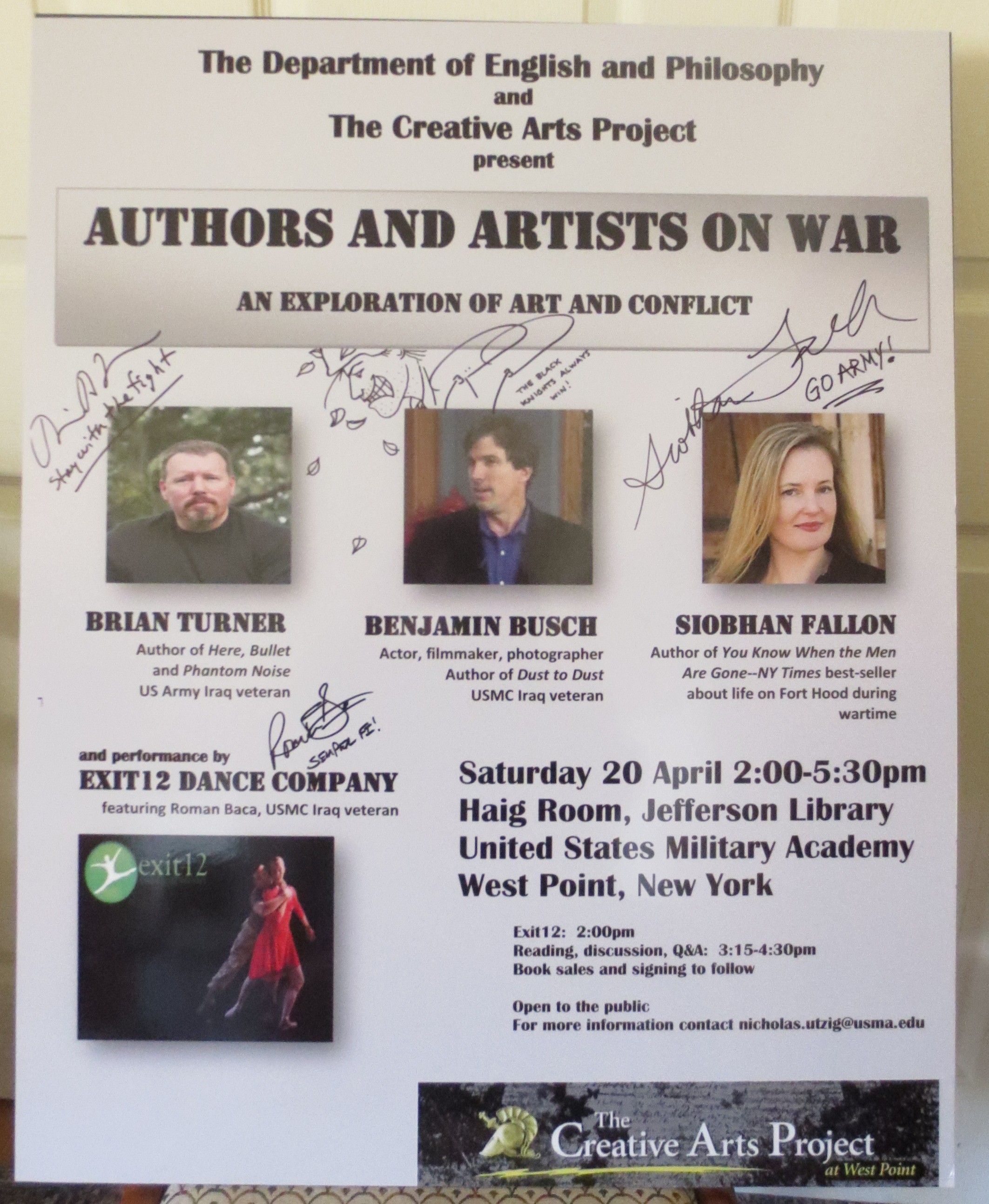
Brian Turner, Benjamin Busch, Siobhan Fallon, and Exit12 @ West Point

IMG_0818

This event brought together three great authors–Brian Turner,  Siobhan Fallon, and Benjamin Busch–to speak about their efforts to portray the turmoil of war.  As each of them had been profoundly affected by the war in Iraq, it seemed fitting a decade and a month after the invasion to ask about their whereabouts in March 2003 and then have them describe when the war became manifest in their art. The remarks subsequently ranged over many subjects, but focused most specifically on the damage enacted on individuals and relationships by deployment and exposure to death and killing.

Asked to read selections from their works that generated strong audience reactions, Turner read “At Lowe’s Home Improvement Center” from Phantom Noise, Fallon read from her story “Leave” from You Know When the Men Are Gone, and Busch read passages from Dust to Dust that described his decision to join the Marines and his first few days of training at Quantico.

Later, each of the authors read passages or poems that had been written pre-2001 that had influenced them then or seemed important now.  Siobhan Fallon read from Tim O’Brien’s “The Things They Carried.”  Benjamin Busch read Joe Haldeman’s Vietnam War poem “DX,” which he had copied into a green military-issue notebook and carried with him in Iraq.  Finally, Brian Turner recited from memory Israeli poet’s Yehuda Amachai’s “The Diameter of the Bomb”—an especially appropriate poem in light of last week’s Boston Marathon bombing:

      The diameter of the bomb was thirty centimeters
      and the diameter of its effective range about seven meters,
      with four dead and eleven wounded.
      And around these, in a larger circle
      of pain and time, two hospitals are scattered
      and one graveyard. But the young woman
      who was buried in the city she came from,
      at a distance of more than a hundred kilometers,
      enlarges the circle considerably,
      and the solitary man mourning her death
      at the distant shores of a country far across the sea
      includes the entire world in the circle.
      And I won’t even mention the crying of orphans
      that reaches up to the throne of God and
      beyond, making a circle with no end and no God..

Amazing.

Exit12 performed two dances:  “Aggressed/This is War” consisted of two solo pieces that together depicted the story of a returned vet struggling to reintegrate into peacetime life.  “Yarjuun,” which means “We hope” in Arabic, was a piece written by Exit12 director Roman Baca in Iraq in collaboration with an Iraqi dance troupe.  Both dances were in turn playful, sad, sexy, and politically-charged, with inspired music, props, and choreography that dramatized the effects of war without being either too obvious or too elusive.

I had a hand in organizing this affair so I definitely want to thank the artists, all those in the audience, and all those helped make it happen.  Wish everyone reading could have been there, too!

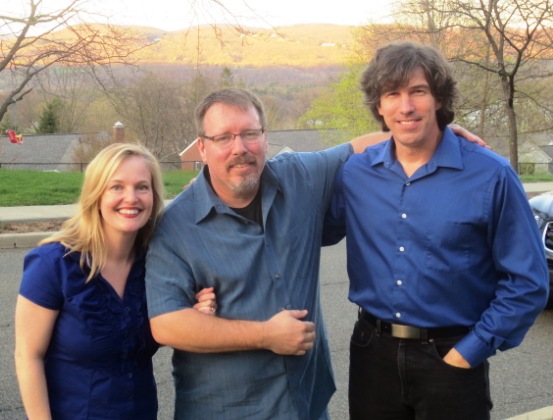
Below left to right:  Siobhan Fallon, Brian Turner, Benjamin Busch:

???????????????????????????????

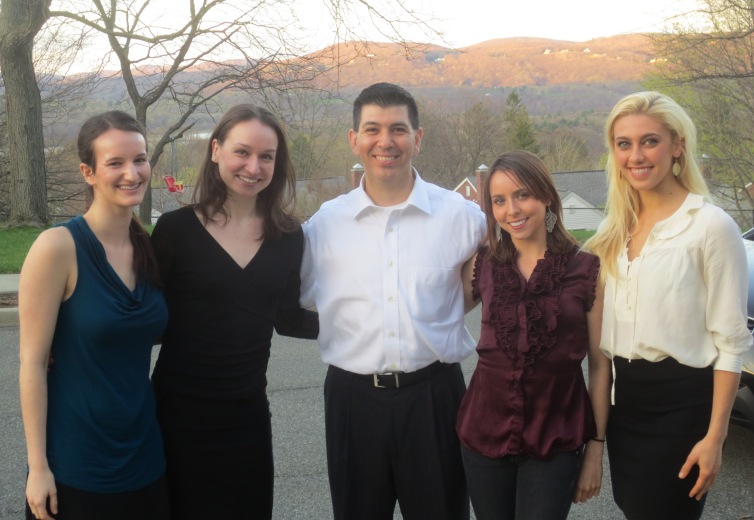
Exit12 below–Adrienne de la Fuente, Joanna Priwieziencew, Roman Baca, Chloe Slade, and Paige Grimard:

???????????????????????????????