War Writers and War Readers: More on John Renehan’s The Valley

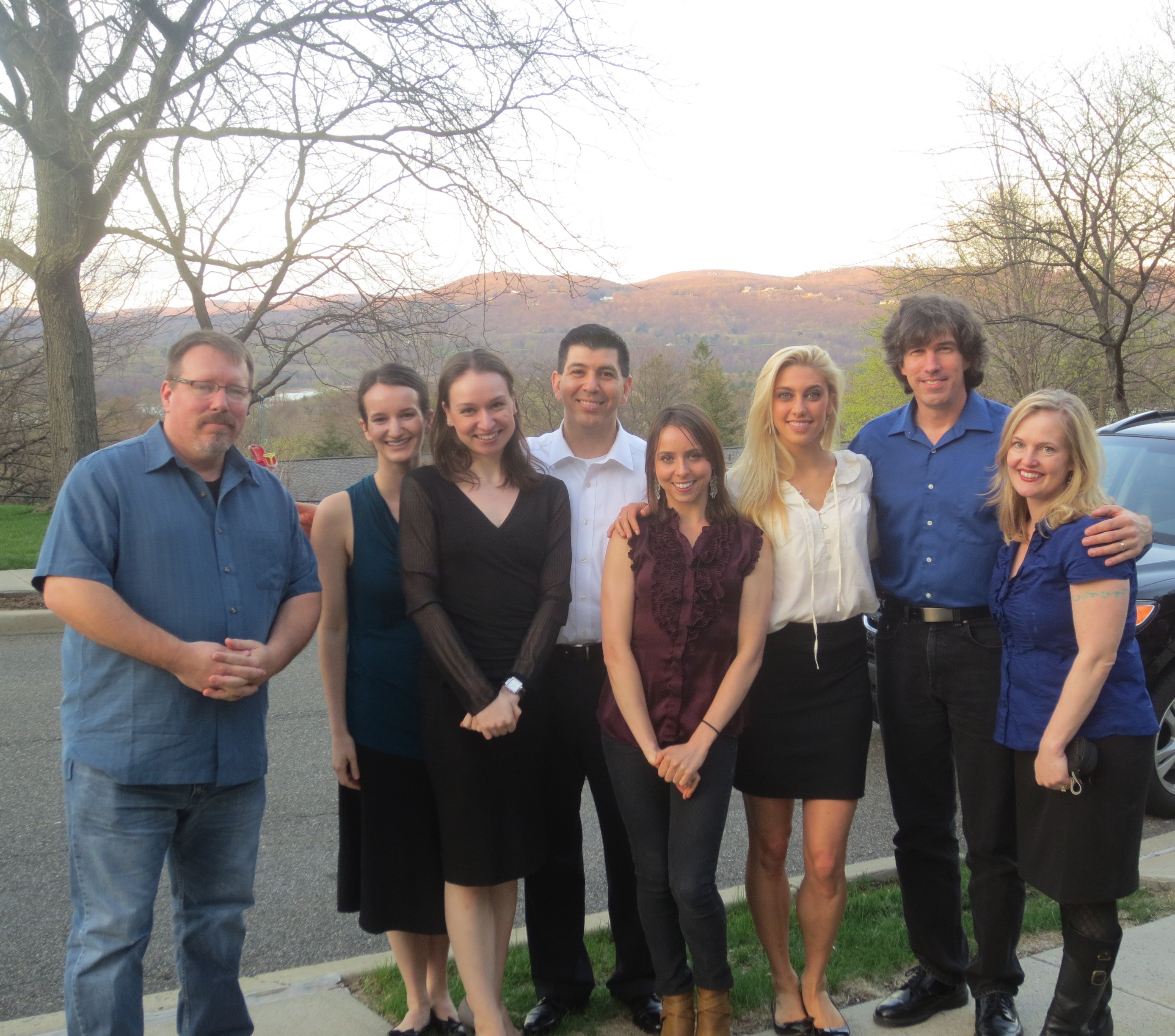
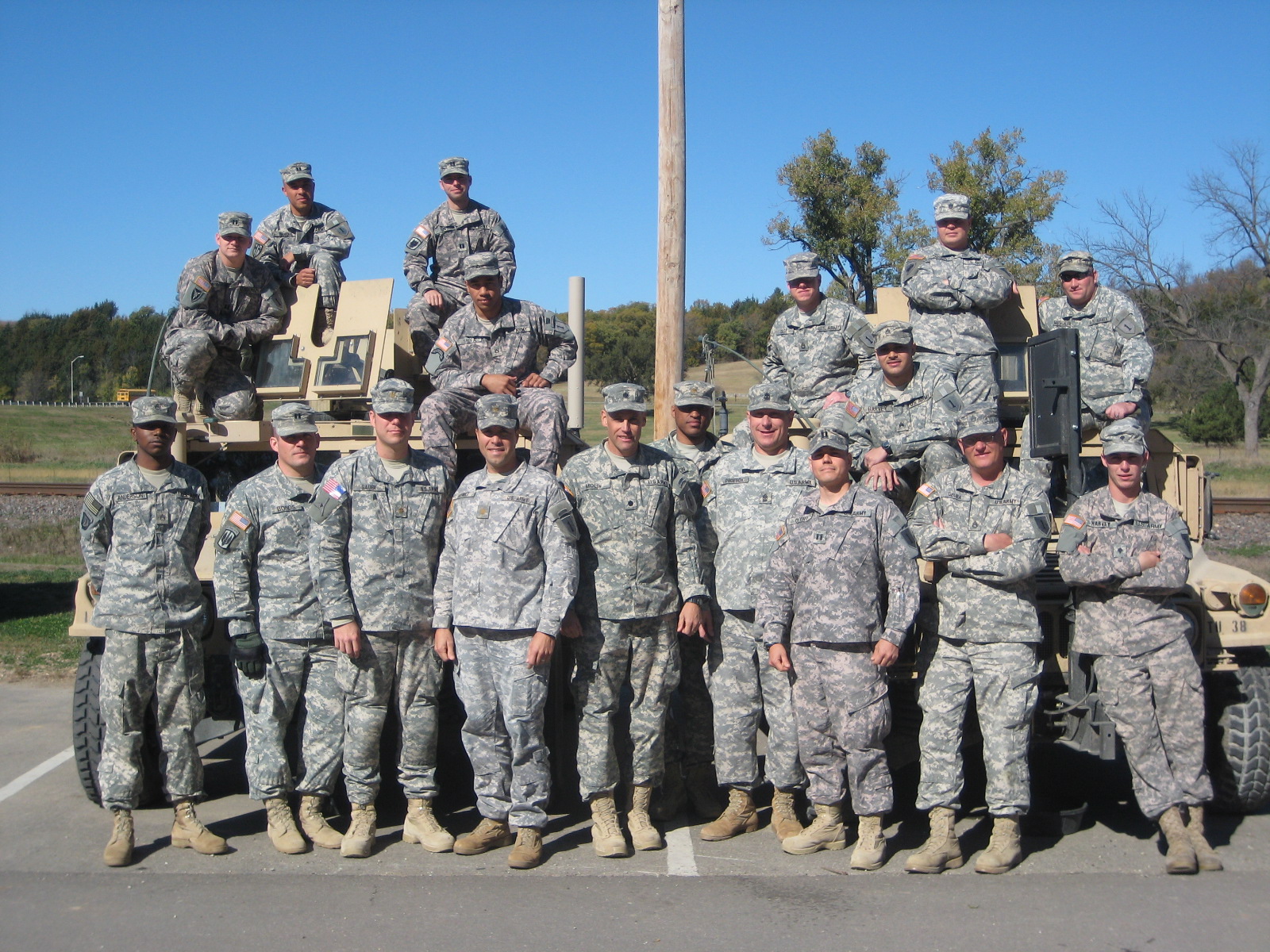
My advisor team, prior to deployment to Afghanistan. Fort Riley, KS, 2008

Asking whether writers who are not veterans can write credibly about war and the military is dumb, for writing about any subject succeeds to the extent it is well imagined and written, not because it emanates from the lived life of its author. Asking if readers who haven’t served in the military or seen war can accurately assess war writing is actually a more intriguing question. The answer’s “yes,” but there are also interpretive possibilities. Veterans lean into writing about war with an extra-level of attentiveness, while also being determined not to be impressed too easily. They are eager to see their own experiences reflected and critical of failed efforts to get the details right, so their enthusiastic sympathy for a book rises in proportion with which they can identify with characters, settings, and events portrayed on the page.

So it was for me on reading John Renehan’s novel The Valley. No fiction written so far about Iraq and Afghanistan has resonated so personally with my own experience and impressions. The physical geography of Army bases depicted in The Valley might well have been mine during my time in Khost, Afghanistan, with FOB Salerno, Spera Combat Outpost, and a tiny OP on the hill above Spera COP very nearly matching Renehan’s fictional equivalents. Scenes portraying long convoys to a remote outpost and a battle-as-it-was-fought-over-the-radio from an outpost Tactical Operations Center are also experiences I have lived through many times. Flashbacks in The Valley to episodes set at “land navigation” training sites at Fort Benning, Georgia, triggered recollections about my own formative experiences on the legendary Yankee Road North and South map-and-compass courses during Officer Candidate School, Infantry Officer Basic Course, and Ranger School. Even the novel’s central conceit—that of an officer assigned to conduct a meaningless Article 15-6 investigation in the midst of a warzone—reflected my own tour-of-duty. During my deployment, I spent three weeks conducting a senseless 15-6 investigation to determine the whereabouts of a unit’s lost property at a time–the 2009 national elections–in which the concentrated devotion of every American officer was required to make sure the mission went well. Finally, Renehan even uses the phrase “time now” multiple times–how could I not like that?

Novels are places where the nuances of social life are explored, and The Valley corroborates my experiences in this regard, too. Contemporary war fiction hasn’t spent much time portraying officers, but The Valley features a gamut of brass-wearing major and minor characters who conform to type while also displaying individuality. Most of the novel is focalized through the eyes of its protagonist, Lieutenant Black, and it seems clear enough that his views are also those of the author, who himself was a field artillery officer. Black reminds me of many disgruntled lieutenants I have known over the years, their Army hopes dashed and now seething with resentment and salivating to get out. Stuck behind a desk in the unit personnel office, Black burns with envy of a platoon leader still in command of his unit:

Derr spent most of his time outside the dreary midsize base where Black spent all of his time, stomping through the Afghan backhills with his platoon and shooting at people. It was precisely what Derr had imagined he would be doing when he set out to become an Army officer, and the universe had graciously given him no reason to question his assumptions…. When he had paper-type business he needed help with, he made his way to Black, to be found reliably behind his desk doing precisely the opposite of what he had imagined when he became an Army officer.

After travelling to COP Vega, Black observes a picture of Lieutenant Pistone, the COP’s officer-in-charge. It would take stones the size of the super-blood-moon for a fobbit such as Black to critique the leader of the most dangerous outpost in the battalion area of operations, but Black quickly sizes up Pistone as a lightweight:

Black was a quick study of the various sorts of people who are attracted to the military. There was a lot of different ones, but he felt he could peg Pistone pretty quickly. Geek made good.

He had known the type before. The brainy guy who was never good with the girls, never got picked for the team, spent an ineffectual childhood probably getting picked on a little bit, developed a nice put-upon complex. Then he discovered the military somehow and learned that even if you are all those things you can still get to do this. That your military life can stand as a triumphant ongoing Fuck You to all the guys who’d always been cooler.

He became your squared-away supersoldier, in his own way. Fastidiously organized, diligent about physical training. Not necessarily a good leader.

He walked around with the sound track of his freshly awesome life playing in his head. He tended to forget that succeeding in the military was not so much about his own cosmic journey to heroism as it was about how good he was at dealing with people, handling people, taking care of people. Sooner or later, the Army turned on him, left him friendless there as in life.

The Valley also features a nice portrait of Black’s battalion commander Lieutenant Colonel Gayley:

True, the beating bureaucratic heart of the Army had a slobbering crush on officers like Gayley. Somewhere in a lab at West Point his instructors had mixed him in a bowl, whipping into him the precise proportions of accountability, flawless attention to detail, chipper optimism, and bold cooperativeness, folding in a hardy tolerance for paperwork and a relentless professional ambition, with a dash of tanned physical perfection for flavor….

He was a little of everything and a little of nothing. He yelled at the right people, didn’t yell at the wrong people, didn’t fail in his duties, didn’t cause surprises or embarrassments. He was just so.

Black doesn’t hate Lieutenant Colonel Gayley exactly, or even think he’s incompetent, but the chin-up façade of perfection irritates him. It’s the kind of manicured remoteness that gets many officers branded “not real people.” Black, on the other hand, isn’t consumed with maintaining appearances at all costs and is shown bonding quickly with enlisted soldiers and standing up to NCOs used to steamrolling wishy-washy officers. It’s a fantasy image of being the lieutenant every young officer dreams of being, but few are consistently. In the context of The Valley, it’s proof that the overall Army mission is screwed because it doesn’t recognize the true leaders of combat soldiers in its midst. That’s not exactly my impression of how the Army recognized or didn’t recognize excellence, but it’s not entirely wrong either.
War Crime: John Renehan’s The Valley

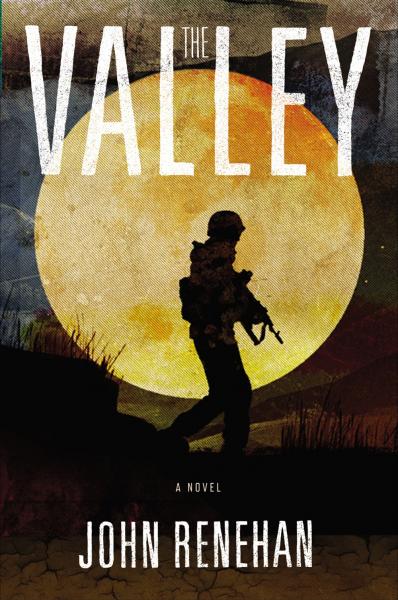
ValleyEx-US Army officer John Renehan’s novel The Valley surprises and pleases at many turns. The story of an Army infantry lieutenant assigned to conduct an official Article 15-6 investigation of a seemingly minor incident at a remote outpost in Nuristan province, Afghanistan, The Valley maps the highly structured form of a crime novel onto the equally structured form of a war novel. Rather than forced, the mash-up of genres in Renehan’s hands feels harmonious and productive. 15-6 investigations are a fact-of-life for Army officers—I did about ten of them while I was in—and so in The Valley the conceit serves plausibly to expose how awry might go a small, isolated unit, and the LT-as-private-dick motif breathes new life into the many-times-told tale of a junior officer’s disillusionment.

The Valley’s protagonist is Black, no first name given, who at novel’s opening is pushing paper at battalion headquarters after losing his position as a platoon leader. Black’s appointment to investigate a wayward weapons discharge by an American soldier outside Combat Outpost (COP) Vega, the most remote and dangerous outpost in the battalion’s area of operations, is just another indignity he must endure before he can quit the Army. After a long convoy up the rugged valley of the novel’s title, Black is met at COP Vega with hostility from the outpost’s soldiers. They clearly hold out on him, they clearly are wracked by internal strife, and they clearly are beholden to the charismatic sway of the outpost’s two senior sergeants, Sergeant First Class Merrick and Staff Sergeant Caine. COP Vega’s nominal officer-in-charge, Lieutenant Pistone, departs the outpost on the same convoy that brings Black to it, and in the week before the convoy returns to exfil him, Black learns that Lieutenant Pistone has been an ineffective, cowardly leader and yet also somehow connected to wrongdoing far more consequential than the weapons discharge that prompted official investigation.

Sensing the basic rottenness of COP Vega, Black begins kicking over rocks to discover what creepy-crawly things lie beneath. The unit’s manning roster doesn’t match up with the personnel actually on COP Vega, and its relationship with the town nearest the outpost is abysmal, even by Afghanistan standards. A second, smaller outpost, unknown to higher headquarters, exists on the heights above COP Vega, its raison-d’etre both tactical and things more nefarious. Most significantly, Black learns that Sergeant First Class Merrick and Staff Sergeant Caine hate each other, and one or the other or both has gone rogue and taken factions of the platoon with him. A mysterious “Other Governmental Agency” American comes and goes, leaving behind enigmatic hints about COP Vega’s dark mysteries. At stake, Black further discovers, are the valley’s poppy growing and heroin distribution networks, into which at least some of the Americans have enmeshed themselves both for personal profit and narcotic bliss. As Black strings together clues that threaten the prevailing balance-of-power, he places his own life and everyone else’s life on COP Vega, precarious to begin with, in even greater jeopardy.

Renehan narrates the story mostly through Black’s perspective, but withholds description of the key cognitive leaps made by the sleuthful lieutenant as he uncovers the extent of COP Vega illegality—we see him acting on his intuitions, but we are never sure what exactly he has perceived that propels the successive steps of his inquiry. The result is a thrilling speed-read to The Valley’s end as the reader, or this one anyway, goes near-crazy to learn precisely what evil has befallen COP Vega and who is responsible. There are red herrings galore, as well as some seemingly gratuitous and even goofy plot turns, but rather than quibble, I would love to meet someone else who has read The Valley so we can argue about its many what-the-hell-was-that-all-about moments.

Comparisons are said to be odious, but perhaps also apt in consideration of The Valley’s achievement. The novel reads as if Renehan had grafted JK Rowling’s (aka Robert Galbraith) The Cuckoo’s Calling onto Joydeep Roy-Bhattacharya’s The Watch, and then mixed in elements of Aaron Gwyn’s Wynne’s War. The fiercely independent Black bears much resemblance to Cormoran Strike, the gruff, no-nonsense veteran turned private eye driven by spite and ethics to uncover wrong-doing in The Cuckoo’s Calling. Like The Watch, The Valley plumbs the rank-based social dynamics of life on a middle-of-nowhere American outpost in Afghanistan, but where The Watch enfolds its storyline in the reassuring purview of its stalwart outpost commander and first sergeant, The Valley suggests power and authority invested in the chain-of-command corrupts rather than ennobles. Like Wynne’s War, The Valley contains brisk moments of action-adventure that begin on a remote Afghan outpost and then grow ever more exotic as its heroes journey outside the wire. But more so than Wynne’s War and The Watch, The Valley finds a compelling story through which to showcase its thematic interests. In Renehan’s view, poor leadership and poorly-defined missions unleash moral chaos and then evil among soldiers in small units left alone to fight the war as they can. Where Wynne’s War seems fanciful and The Watch pulls its punches, The Valley’s noir and police procedural elements convey a moral seriousness—a bigger message—that manages to implicate the entire US military mission in Afghanistan.

John Renehan’s The Valley. Dutton, 2015. This review by no means exhausts my interest in The Valley, so I hope to return to it in a future post.

War Film: Green Zone

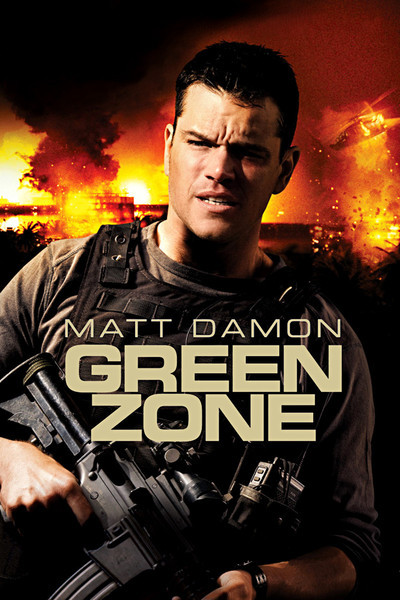
Green ZoneThe 2010 film Green Zone, directed by Paul Greengrass and starring Matt Damon, would seem to have admirably met demands that Iraq War art, film, and literature “be more political” while also taking care to “represent the war as it was experienced by Iraqi victims of the American invasion,” to paraphrase two recurrent lines of critique. Greengrass’s point-of-view is so stridently anti-war and anti-administration that no less a progressive figure than Michael Moore said of Green Zone “I can’t believe this film got made” by a major Hollywood studio. Dedicated to exposing the American pretext for the invasion of Iraq—the presence of Weapons of Mass Destruction—as a sham, the film’s evil villains are not Sunni or Shia Al Qaeda members, but a scheming, nefarious American bureaucrat based on Paul Bremer and a special operations meanie who didn’t get the memo that Green Berets, SEALs, and other darkside operators were to be the darlings of the war and all films made about it. A female journalist, played by Amy Ryan, is portrayed as the lapdog apologist for the occupation authority, obviously based on Judith Miller, the New York Times reporter whose articles in the run-up to the war seemed to shill for the Bush administration. Two supporting characters with major parts are Iraqis and they are both portrayed as doing the right thing, by their lights.

And yet, Green Zone failed to capture the zeitgeist of its moment, the hearts-and-minds of Bush-and-Cheney-haters (other than Michael Moore), or the ire of red-state flag wavers, a pretty remarkable trifecta of underwhelmingness. What might be the problem? Green Zone’s not a bad movie, all-in-all, in fact, it’s quite compellingly paced and features an excellent cast. Still, it is not as good as we might have hoped for from Greengrass and Damon, the director-actor power duo behind the ripping Bourne Supremacy and Bourne Ultimatum movies. Matt Damon looks terrific as Chief Warrant Officer Ray Miller, a dashing Nuclear, Biological, Chemical specialist—”dashing” and “NBC specialist” an oxymoronic pairing only Damon could pull off—on the hunt for WMDs in the early days of the occupation. Miller grows disillusioned and then goes rogue as he discovers the fraudulence of his mission, but the Damon-as-Miller characterization is undercut by the film’s effort to overlay a political thriller on a war flick in order to make official lying about WMDs appear suspenseful and exciting. Many reviewers before me have already quipped that Green Zone might be better titled Bourne Goes to Baghdad, as CWO Miller uncovers a government conspiracy and resists its perpetrators’ efforts to silence him. An issue here is that the lives of deployed service members are rarely dramatic enough for Hollywood portraiture, save for sensational scenes depicting them in combat. When not fighting, soldiers are apt to be docile creatures-of-habit, all too content to pump iron and watch videos in their down time, beholden to orders and their units and loathe to jeopardize their safety unnecessarily. Green Zone then, despite admirable production values, ultimately is unfaithful to the deeply social dimension of lived soldierly experience, as the multiple sub-plots depicting American soldiers and civilians at war with each other are just too much. “Don’t be naive” is one of the film’s refrains, but it is the film’s comic-book script that is naive about how political contrivance, military endeavor, and soldier psychology co-mingle in the battle of good and evil, right and wrong.

To accelerate CWO Miller into Bourne-like action, Green Zone takes many liberties with verisimilitude. Damon’s character is loosely based on US Army Chief Warrant Officer Richard “Monty” Gonzales, but Miller is more hard-charging and decisive than any Chemical officer ever–a swashbuckling dynamo of idealized combat manhood who wipes out enemy snipers before donning his protective suit to test suspected chemical weapons. Frankly, he seems kind of dumb; though right in the particulars, his self-righteous single-mindedness and lack of patience makes him more immature brat than “I’d follow him anywhere” leader. Barely tethered by a chain-of-command in the first place, he goes completely off the reservation–a phrase used twice in the movie to describe him–to begin pursuing independently leads and bad guys as if he were the second coming of John Rambo. As does The Hurt Locker, Green Zone contrives to shake its protagonist free of military strictures to operate solo, but let’s remember two actual cases of soldiers leaving the wire on their own–Bowe Berghdal, a dreamy goofball, and Robert Bales, a PTSD-and-steroid-addled psychopath—and then call the alternate reality portrayed by films such as The Hurt Locker and Green Zone what they are: wishful fantasies about American soldiers who see through military pretense to fight for truth, fairness, and goodness according to their individualized code of justice.

Never close to being wrong, the steely-eyed, flat-bellied, morally incorruptible Miller even passes up a chance to bed the reporter played by Amy Ryan when he meets her alone in her hotel room two-thirds of the way through the movie. Hey, good on them, but the movie leads us to believe they are made for each other, so from a viewer’s standpoint the scene’s a letdown that defies both a warzone erotic and a Hollywood movie logic that should have them clawing off each other’s clothes within seconds. Not only do the Damon and Ryan characters not hook-up, neither do they join forces in the movie’s home stretch run to jointly uncover US military and political duplicity–another failure of cinematic imagination. The off-key notes intensify in the movie’s climactic chase, when a portly middle-aged Iraqi Army general eludes Miller and his operator-as-fuck nemesis for over ten minutes of screen time. In real life, the two Americans, both built like CrossFit champions, would have run down the gasping general—who is not even the film’s villain–in a matter of steps. Honestly, considering such poor plot turns, I can only wonder if Damon wishes he had foregone Green Zone for the chance to play Chris Kyle in American Sniper a couple of years later. Say what you will about Clint Eastwood’s movie, the integrity of its narrative and its characterization of its main subject are much more consistent and coherent than what we are asked to consider in Green Zone.

For all my carping, though, I’m willing to consider that I might be entirely wrong. A movie that dares to flaunt its lefty politics and made by a director with the track record of Greengrass probably deserves more respect than I’ve given it here. Green Zone may age well in the coming decades and yet prove to be The Manchurian Candidate of the Iraq War. For now, however, for all its good intentions and latent possibilities, Green Zone is less than the sum of its parts—proof that superb cast + talented director + big budget + righteous politics + historical significance does not necessarily = great art.

2011: The Year Contemporary War Fiction Became a Thing

In a 2011 Atlantic magazine article titled “Where’s the Great Novel About the War on Terror?” Matt Gallagher, the author of the Iraq War memoir Kaboom, explores reasons why, as of the time he writes, so little fiction had appeared that addressed America’s wars in Iraq and Afghanistan. “Almost a decade after the first bombs were dropped in Afghanistan,” Gallagher writes, “even the most avid bookworm would be hard-pressed to identify a war novel that could be considered definitive of this new generation’s battles.” The title of Gallagher’s article bears an eery similarity to a question posed by German critic Walter Benjamin in a 1936 piece called “The Storyteller.” Looking back at World War I, Benjamin wrote, “Was it not noticeable at the end of the war that men returned from the battlefield grown silent–not richer, but poorer in communicable experience?”

Benjamin continues by suggesting that “the flood of war books”–particularly novels–that began appearing in Germany ten years after World War I’s end shortchanged “experience,” or wisdom, for what he derisively called “information.” Be that as it may, let’s keep our eye on Gallagher here, for he wasn’t wrong surveying America’s recent publishing past. In my search for war fiction published prior to 2011 I can find only a few short stories scattered here-and-there. Frederick Busch (Benjamin Busch’s father) published two short tales, “Good to Go” and “Patrols,” for examples, in small literary magazines before including them in his 2006 collection titled Rescue Missions. Annie Proulx’s “Tits-Up in a Ditch” about a woman who loses an arm to an IED in Iraq, appeared in the New Yorker in 2008, as well as in Proulx’s collection of short stories titled Fine Just the Way It Is: Wyoming Stories 3. Busch and Proulx were both established authors—each over 60 years old at the time they wrote their stories–with many published titles and critical laurels to their credit. I’m glad they turned their attention to the nation’s millennial wars, but not sure why a younger cohort of writers, to include veteran-authors, didn’t make Iraq and Afghanistan their subjects sooner than they did.

Gallagher notes the publication of Siobhan Fallon’s collection of tales about life at Fort Hood, Texas, You Know When The Men Are Gone, which appeared in January 2011. But he’s skeptical that more fiction might be forthcoming in the years to come. Iraq and Afghanistan, he suggests, just might go undocumented by authors of fiction, much like, say, the Filipino-American War (his example, not mine). Gallagher, bless him, wasn’t right in this case. 2011 would see the publication not only of You Know When The Men Are Gone, but Helen Benedict’s Sand Queen, and the years after 2011 would see much more fiction about the Iraq and Afghanistan wars, authored by veterans and civilians alike. Let’s give credit to Fallon and Benedict for initiating the contemporary war lit surge, and by no means should we succumb to Benjamin-like skepticism about their achievement. Benedict, an academic and activist writing as a critic-from-outside unimpressed by the military effort, and Fallon, an Army spouse writing as a military insider full of knowing sympathy, established twin poles of literary possibility that virtually every writer since has followed one-way-or-the-other. That You Know When the Men Are Gone and Sand Queen were authored by women and featured women protagonists is also important. The great wave of war novels that arrived in 2012–The Yellow Birds, Billy Lynn’s Long Halftime Walk, The Watch, and Fobbit–was “all dudes,” as the saying goes, but 2013 and onwards featured many war fiction titles by and about women.

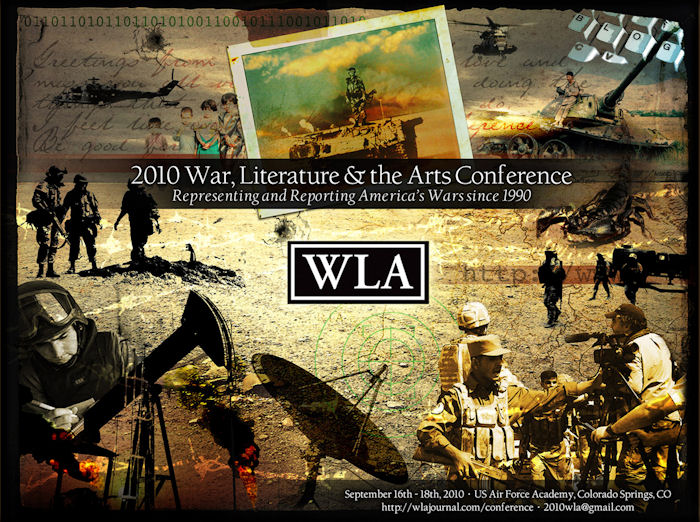
Let’s note also that Gallagher’s novel about Iraq, Youngblood, and Roy Scranton’s War Porn, which Gallagher mentions as an example of a war novel having trouble finding a publisher, will be out in 2016. Finally, Time Now, which I began in 2012, owes much to a comment by Gallagher I heard while in the audience for his presentation at the War, Literature, and the Arts conference at the United States Air Force Academy in 2010. Gallagher remarked that any war writer seeking to establish him or herself in our modern era had better have an online presence. I already kept a blog going about my Afghanistan deployment, so I wasn’t thunderstruck by Gallagher’s claim, but it occurred to me then that the art, film, and literature of the current wars might benefit from dedicated digital coverage and critique. Hence this blog, and hence, Matt Gallagher, thanks.

While we’re rendering thanks, let’s also commend the organizers of that 2010 War, Literature, and the Arts conference, which was so seminal in its recognition of contemporary war writing as a genre and so inspiring not just to me but to many others.  At the time, I was already aware of Brian Turner’s work, but the WLA conference was my initial exposure to writing by Fallon, Gallagher, Benjamin Busch, Jehanne Dubrow, Elyse Fenton, and quite a few others (though note Fallon as the only author of fiction). So here’s to WLA editor Donald Anderson and conference organizers Jesse Goolsby and Brandon Lingle. Excellent writers themselves, they nourish excellence in others, storytellers interested not in purveying information but communicating experience.

WLA-Poster

What is So “Timeless” about Modern War Writing?

“Hellenise it.”

“He’ll never capture the Attic note.”

-James Joyce’s Ulysses

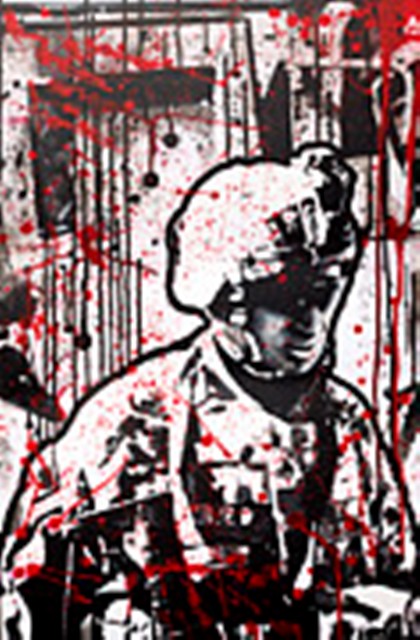
“No Slack” by Michael Figueroa. Used by permission.

Among many other sharp insights and well-turned phrases in his Harper’s essay “First-Person Shooters: What’s Missing in Contemporary War Fiction,” Sam Sacks writes, “Proclaiming that veteran authors have transformed war into Homeric masterpieces filled with timeless truths is a way of excusing our own indifference.” There’s a lot to unpack in that sentence, but I’m most interested in Sacks’ very true observation that modern war writers have frequently used classical Greece mythology and history to give form and meaning to their own stories. I’ve long observed this trend, too, and wondered where it comes from and what it gets us. By “timeless,” Sacks means that values, events, and themes first formulated by the ancient Greeks persist and operate in modern war experience much as they did for Homer, Sophocles, and the other classical authors of Greek myth and history. Sacks is suspicious of this tendency, and, as the title of my post suggests, so am I.

Even given the extremely convention-bound strictures of war writing, I’m far more interested in the particularity of modern war, as reflected for example in Maxwell Neely-Cohen‘s exploration of the role of video games in the lives of service members deployed to Iraq and Afghanistan, than I am in finding points of connection with, say, Herodotus. The Greek canon is above my carping pot-shots, I fully realize, and so too are excellent contemporary war works that draw deeply on Greek antecedents, such as Joydeep Roy-Bhattacharya’s The Watch and Roxana Robinson’s Sparta, among many others. A fine essay by veteran David James on the Wrath Bearing Tree website titled “Dispatch from Greece: Myth, Tragedy, Resistance, and Hope” reminds of how profound can still be the allure of classical Greece. As James reminds us, “The myths we choose to believe or not believe have real world consequences – they are of critical importance in shaping popular opinions and current events.” But even so, I’ll push on.

Two works by psychiatrist Jonathan Shay, Achilles in Vietnam: Combat Trauma and the Undoing of Character (1994) and Odysseus in America: Combat Trauma and the Trials of Homecoming (2002), seem to me most responsible for this contemporary literary and cultural compulsion to namecheck classic Greece. Shay uses the stories of Achilles and Odysseus to explain the experience of combat and redeployment in regard to Vietnam, but his works have been as prescriptive going forward as much they have been helpful looking back. The public discourse about traumatized veterans returning from Iraq and Afghanistan is so saturated—wittingly or unwittingly—by terms and concepts articulated first by Shay that contemporary writers, particularly those who reference the legends of ancient Greece, from here forward should subtitle their work “after Jonathan Shay.”

Shay’s work has been unquestioningly helpful in America’s effort to understand the plight of psychologically-troubled veterans and his use of the Achilles and Odysseus stories substantial and compelling. But there are other ways to think about the matter, too. My thoughts have been spurred this summer by reading Ovid’s The Metamorphoses. Ovid was a Roman who knew well how Rome saw itself as the inheritor of Greek greatness and The Metamorphoses is the only known source we have today for dozens of well-known Greek myths. But if you read The Metamorphoses entire, and make your way through the haze of translation, it’s hard not to conclude that Ovid didn’t think much of the Greek pantheon. His whole project, in my reading, was to undermine and ridicule the values and accomplishments of its heroes by gleefully reveling in their excesses.

That’s a lot to prove, and I’m not going to be able to do it all here, but I’ll quickly make a few claims about Ovid’s interpretation of classic Greek mythology. In The Metamorphoses, authority and power corrupt absolutely and are never to be trusted, especially when placed in the hands of men, and particularly fathers. Freedom from authority is the most enviable state to find oneself in, especially when it is coupled to the freedom of the imagination as demonstrated by artists, but artists too are subject to the same destructive personal characteristics that affect gods, warriors, and everyone else in the Greek mythos. Individual altruism in the world is almost non-existent, and so too is benevolent collective effort; greed, spite, revenge, and perverse desire drive human conduct. Relations between men and women are abysmal and generational conflict is endemic and both dynamics virtually guarantee endless social turbulence. There’s no heroic resistance or wiley subterfuge, either; both stoicism and activism in the face of injustice and hardship will accomplish nothing except getting one killed, or at best, turned into a tree or animal. Military valor is a farce and the resort to violence and deceit to solve problems and get what one wants is as lamentable as it is inevitable.

And all that’s not even the biggest problem, which is that the Greek mythos is so full of pompous grandiosity that it leaves no room for the qualities Ovid prizes most: alertness, agility, imagination, irreverence, and quickness. After reading Ovid, it’s hard to take the ancient Greeks as seriously as they took themselves. To invest in a heroic conception of Greek mythology, Ovid suggests, is to risk internalizing patterns of deference to and imitation of false gods that will cause us to act as badly as they do.

To test this conclusion, I’ve been rewriting some of the myths in The Metamorphoses and placing them in contemporary war contexts to better see their import. I’ve already published one, based on the myth “Cyex and Alceone,” which can be found here. Other myths I’ve adapted include “Daphne and Apollo,” “Jupiter and Io,” “Arachne and Athena,” and “Theseus, Ariadne, and the Minotaur.” Time will tell if I ever publish any of these, but the titles alone point to something vital: Ovid allows modern war authors interested in the classical mythos many opportunities to portray women in the military and in the lives of male soldiers beyond the reincarnations of Antigone, Tecmessa, and Penelope we have so far seen.

Anyone interested in pursuing this line of inquiry further would do well to read Yale English professor Wai Chee Dimock’s 2002 essay, “Non-Newtonian Time: Robert Lowell, Roman History, Vietnam War,” published in American Literature. Dimock is famous for her concept of “deep time,” in which she confounds simplistic understanding of American history as bound by things that happened only from the time of the Pilgrims and Virginia colonists onwards. In “Non-Newtonian Time,” Dimock explores American poet Robert Lowell’s poetic adaptations of Roman historical episodes, published in 1965 at a time when Lowell was organizing artists and authors to protest the Vietnam War. Rome of course was the original imperial empire, and Lowell, along with Dimock writing 35 years lately, was highly alert to the very complicated use of time and myth and history when brought forward centuries and put to the service of artistically describing war.

Finally, I recently reread Siobhan Fallon’s story “Leave,” from You Know When The Men Are Gone. You Know When The Men Are Gone practically inaugurated the current war-fiction boom when it was published in 2011, and its epigram is none other than a quotation from The Odyssey. All good, very good, but what intrigued me about “Leave” was the deft way Fallon interlaces the macabre story about a soldier stalking his unfaithful wife with references to Hans Christian Andersen children’s fables. And not the cutesy-wutesy Americanized smiley-face versions of Andersen’s bedtime stories, either, but the original, perverse nightmarish versions, which are undiluted by niceness. To me, that seemed a great repurposing of tales from our cultural archive, now blended organically into a modern story about war that defies upliftingness in every way except for the respect it generates for the quality of the author’s insight, imagination, and craft.

Michael Figueroa website.

“So Many Expectations”: Fort Bliss

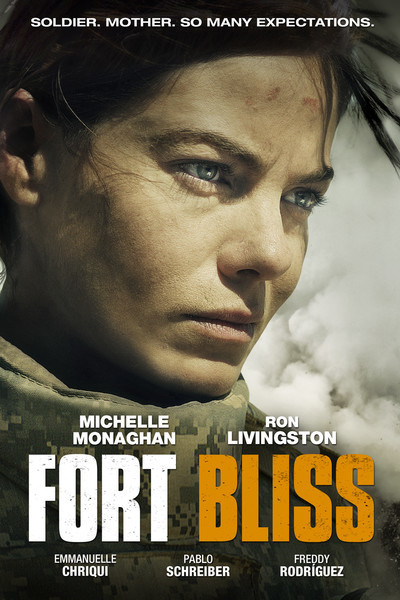
Fort BlissFort Bliss, a movie about the troubles faced by a female medic following redeployment to Fort Bliss, Texas, from a tough tour in Afghanistan, was released to little fanfare or popular success in late 2014. Directed by Claudia Meyers and starring Michelle Monaghan as US Army Staff Sergeant Maggie Swann, Fort Bliss might have constituted an attention-grabbing statement about women in the military. With the current media scrutiny on women trying to make it through Army Ranger School, getting fired as Marine Corps commanders for being too rigorous and straight-shooting, and trying to combine motherhood and careers, not to mention public skirmishes about whether women need to rid themselves of feminine speech patterns and “Resting Bitch Faces” to succeed in male-dominated fields, you would have thought Fort Bliss would have been the movie, not American Sniper, to stoke national conversations last year. And yet, Fort Bliss seems to have underwhelmed and underperformed, and consequently neglected and passed-by, in spite of the generally favorable reviews recorded on the Rotten Tomatoes website. That’s unfortunate, but upon watching Fort Bliss this week, I too was left wishing the movie was a little more than it was and suspicious that a better movie might have been made out of the film’s basic ingredients.

Before delving deep into critical wonderment, I’ll list several of Fort Bliss‘s clear virtues. Performances by Ron Livingston as Sergeant Swann’s ex-husband, Freddy Rodriguez as her company commander, and Oakes Fegley as her child are excellent. The military details, both in scenes set in Afghanistan and in garrison at Fort Bliss aren’t perfect, but their lapses from verisimilitude aren’t aggravating enough to make me want to throw a desert combat boot at the screen. An ambush set in Helmand province that opens the movie bore enough similarity to one I was fortunate to live through that I grew slightly rattled thinking about where else down memory lane the movie might take me. That feeling of dread didn’t last, fortunately, but scenes set in Fort Bliss and its El Paso environs featured enough Latino faces both in uniform and off-post that I was gratifyingly reminded of the many Mexican-American soldiers, Marines, airmen, and sailors with whom I served.

Returning to Sergeant Swann, Michelle Monaghan looks right for her role as the high-strung, emotionally uptight NCO. Sergeant Swann brought to mind several women (and men, too) I knew in the military who were almost scarily competent, but who masked their task-crunching proficiency beneath grim, seemingly humorless demeanors. “Do you like to boss people around?” Sergeant Swann is asked by her love interest. “No, I just like to get things done,” she replies. Her hair pulled back in a tight bun, she is all business on the job, and has trouble letting go when the day is done. A telling scene shows her knocking out sets of push-ups while downing cans of Budweiser in her apartment in the evening, her devotion to self-improvement matched by the need to self-medicate (been there and done that myself). A second telling scene comes when Sergeant Swann declines to attend the promotion party of one of her soldiers so she can complete supposedly-important paperwork–a big-time leadership fail. A war-hero whose life-saving exploits in Afghanistan should have made her a military rockstar, as well as imbued with her a charismatic swagger that would have her soldiers dying to please her, she is unfortunately haunted by other deployment experiences—to include fending off the unwelcome advances of a male soldier whose later death she feels culpable for. Now conflicted and made cautious, she resorts to a strict, by-the-books efficiency that is OK, kind of, but not really, in the eyes of both her troops and her boss, who practically plead with her to be more of a person. 

Meyers and Monaghan don’t portray Sergeant Swann’s behavior as that of a fiercely independent woman whom society (meaning, “the military, the men in her life, and male viewers, too”) will just have to get used to. Her speech doesn’t include uptalk or vocal fry or an excess of “so’s,” “like’s,” “just’s,” and “sorry’s,” but she’s got the RBF-thing down cold, with her face locked in a perpetual scowl born either of unhappiness or some idea that a frowny face represents toughness and determination. The movie suggests that she better lose the glower post-haste/most tic/stat if she ever wants to be happy or get anything she wants again, which is not a very feminist-friendly position, but seems like an obvious, common-sense solution to some of the problems she’s facing. Sergeant Swann kicks ass on the job, but outside the Fort Bliss gates, she makes mistakes left and right and they hurt her and those for whom she should care. She intimidates the hell out of everyone she meets, including her young son with whom she struggles to reconnect, as words and behavior that seem appropriate to her are perceived by others as way too strident and directive. Two of the best speeches in the movie come from men—one by Sergeant Swann’s ex-husband and and another by her company commander—who in gentle-but-firm terms tell her what a selfish, awful person—not a bitch, but an asshole—she has become, and Myers doesn’t suggest that they’re being misogynist pricks at all. And this being the movies, but also perhaps like real life, too, all that repressed humanity comes bubbling out in torrents when Sergeant Swann finds a sensitive roughneck below her station to fall in love with/screw furiously.

Fort Bliss’s portrait of Sergeant Swann reminds me of Cara Hoffman’s novel Be Safe, I Love You, in which Hoffman’s protagonist, another female NCO veteran, also seems so tightly wound that she becomes not just repellent to other characters but to the author who dreamed her into being. But where Hoffman keeps the pedal-to-the-metal to the end of her novel in order to illustrate how badly war and the military have damaged her hero, Fort Bliss pulls its punches. At movie’s close, Sergeant Swann comes to her senses, snaps back into line, makes nice with everyone, and is forgiven by everyone she has previously treated poorly—a happy resolution that is achieved by her decision to accept another deployment to Afghanistan. Well, that’s the Army for you, happens all the time, and Myers for all intents and purposes gives the military a pass for the atrocious life-choices it forces on its members. But where soldiers suck such things down either confusedly or as a matter-of course, Fort Bliss envelops its endgame in a Lifetime-esque golden glow of winsome acceptance accompanied by tinkly guitar and plaintive folksinging.

The softy-soft ending is only the culmination of a number of mushy defects that ultimately degrade Fort Bliss‘s excellent acting and interesting premises. I may have just made a ham-handed hash of Fort Bliss‘s feminist politics, but I’m surer of my ground when I say there aren’t enough striking lines of dialogue, compellingly staged scenes, and unexpected twists of plot to make Fort Bliss really good. Instead, the movie trundles along in a very predictable biopic gear, as if its good intentions were enough to earn it a pat-on-the-back. A reviewer named Carson Lund, writing for Slant magazine, noticed much the same thing and wrote of director Meyers, “It’s apparent … that her interest in the personal lives of those in the military is nothing less than genuine, but it’s also clear that the complicated psychological realities of army personnel require a tougher directorial treatment than the maudlin melodrama presented here.” That’s harsh, but not entirely wrong, and I wonder if Hollywood or financial pressure kept Myers from making a movie that burns hotter and hits harder.

Finally, scenes in Fort Bliss that demonstrate Sergeant Swann’s prowess as a combat medic are good, but not as good as the great concluding scene in Captain Phillips, in which real-life Navy Corpsman Danielle Albert treats the injured and traumatized character played by Tom Hanks. Captain Phillips is an important GWOT film for many reasons, but just in case I never get around to writing at length about it, let’s end today by admiring Corpsman Albert’s expertise. In my experience she illustrates how really good combat medics, whether man or woman, take control of the wounded and scared-beyond-belief casualties under their care:

A War Writer Portrait Gallery

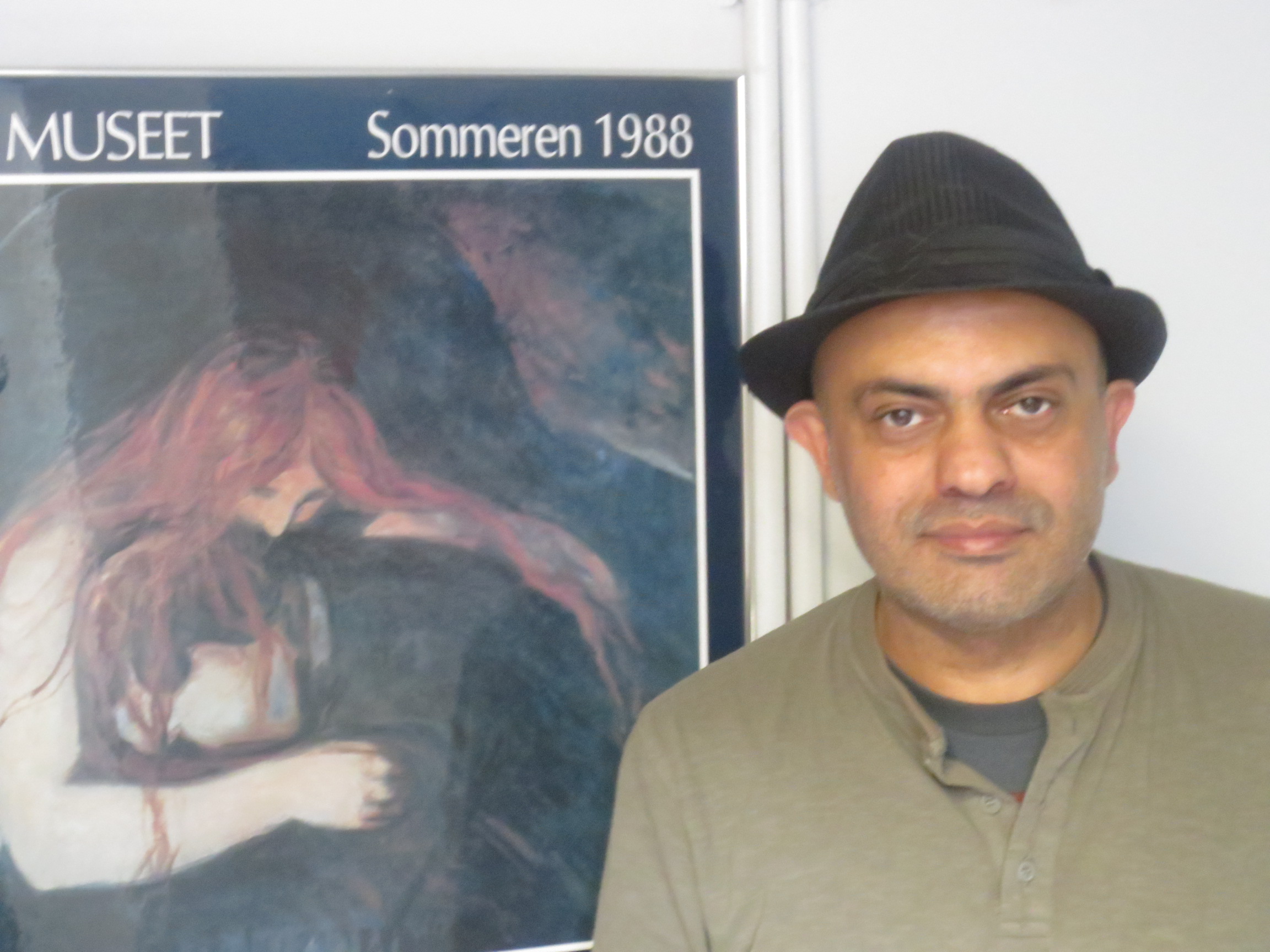
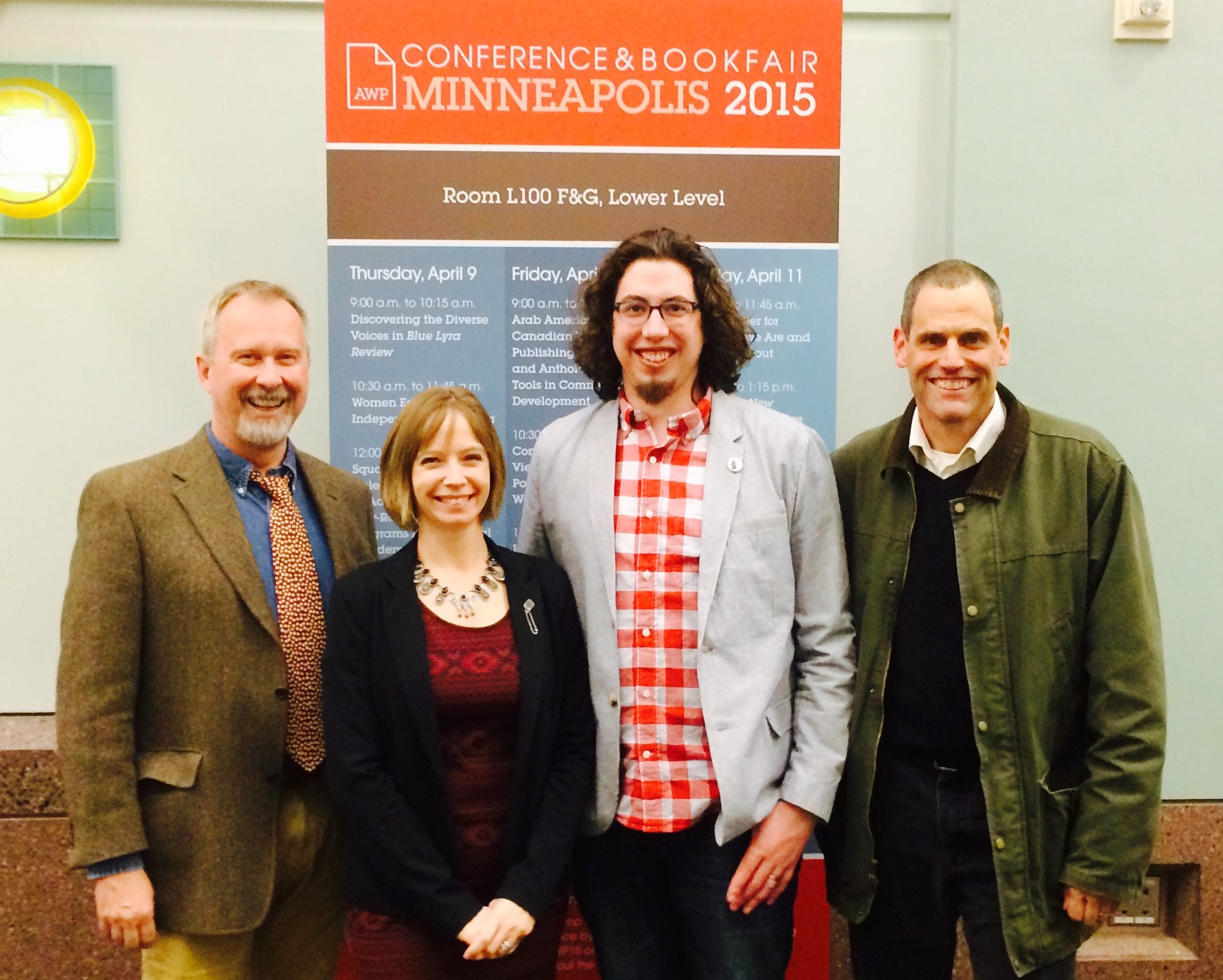
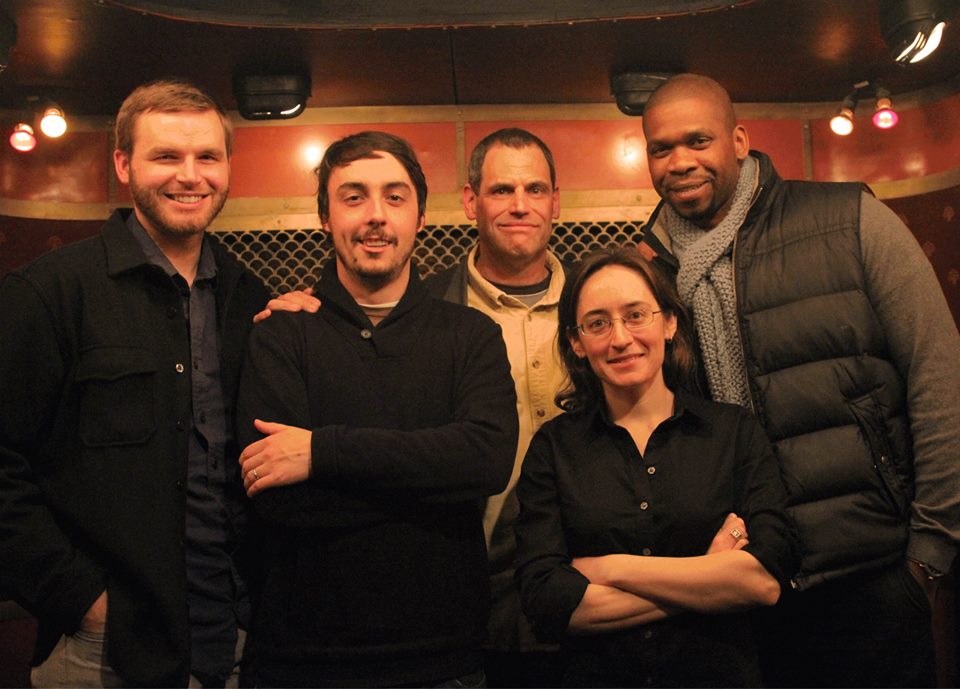
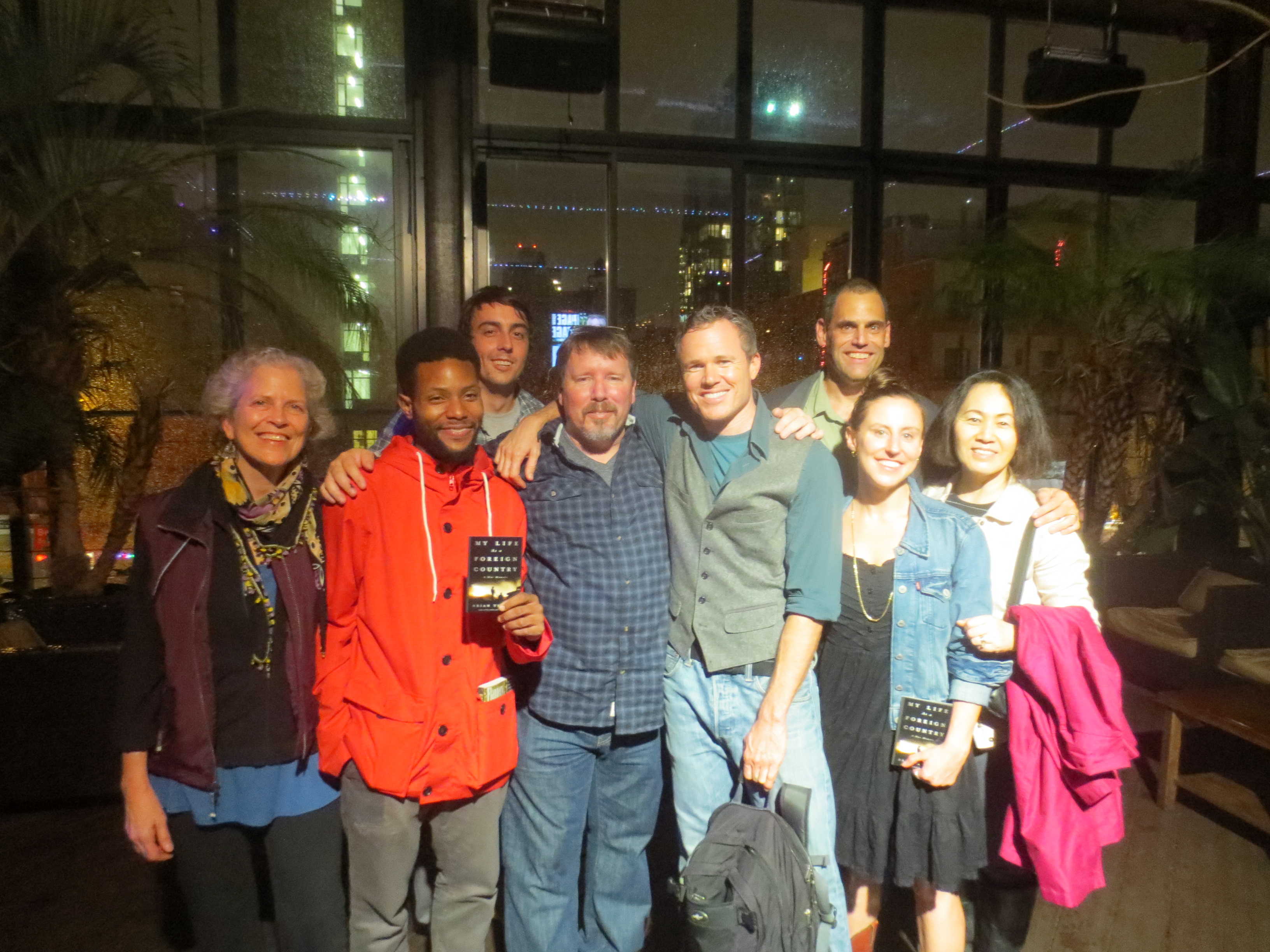
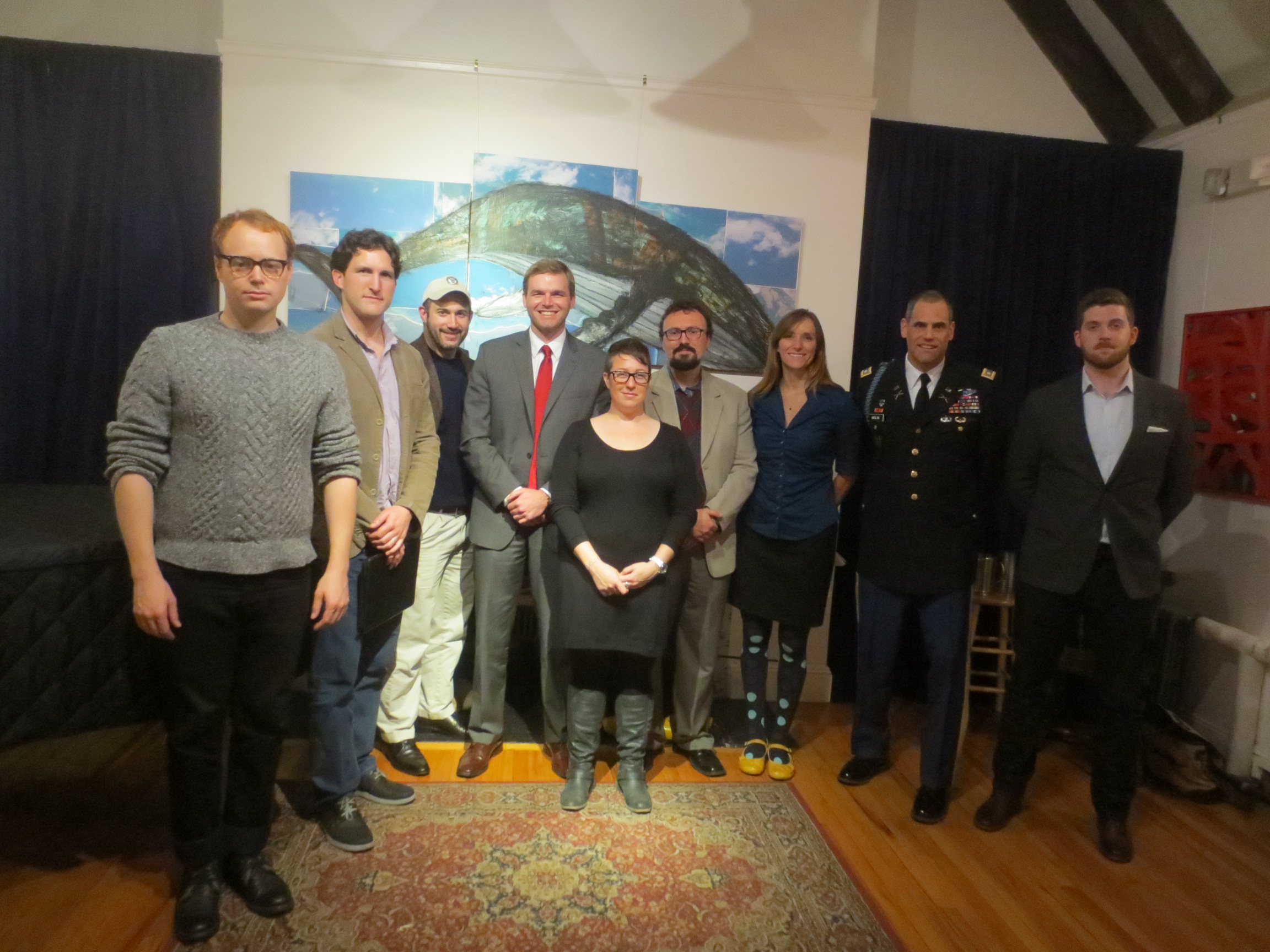
War is a grim subject, and war writing comes from painful and angry places, but all my opportunities to meet and converse with modern war writers in person have been fun, laugh-filled events that defy super-seriousness. Below is some of the “ocular proof,” as Othello put it. Only Hassan Blasim seems able to resist what must be an American impulse to smile for the camera, but I can attest that in conversation Blasim doesn’t miss many chances to put things in humorous perspective. Thanks for the good writing so far, everyone, and to more good times and more great writing to come.

Hassan Blasim
Hassan Blasim
Benjamin Busch
Benjamin Busch
Siobhan Fallon
Siobhan Fallon
Elyse Fenton
Elyse Fenton
Phil Klay
Brandon Willitts
Brandon Willitts
Maurice Decaul and Alex Mallory
Colin and Lauren Halloran
Mariette Kalinowski and Siobhan Fallon
Siobhan Fallon and Andria Williams
Phil Klay and Hassan Blasim
Brian Turner and Benjamin Busch
Joydeep Roy-Bhattacharya, Phil Klay, and Roy Scranton
Matt Gallagher, Andrew Slater, and Fred Marchant
Brian Turner, Elyse Fenton, and xxxx.
Brian Turner, Elyse Fenton, and Jeremy Stainthorp-Berggren
Adrian Bonenberger, Roxana Robinson, David Abrams, and Matt Gallagher
Matt Gallagher, Siobhan Fallon, Brandon Willitts, and Mariette Kalinowski
Ron Capps, Kayla Williams, Colin Halloran, me.
Ron Capps, Kayla Williams, Colin Halloran, me
Brandon Willitts, Masha Hamilton, Phil Klay, and Maxwell Neely-Cohen
Brandon Willitts, Matt Gallagher, me, Teresa Fazio,   and Paul Wolfe
Brandon Willitts, Matt Gallagher, me, Teresa Fazio, and Paul Wolfe. Photo by Kelly Shetron, used by permission of Words After War.
Matt Gallagher, Brian Turner, the performance poet Rives, and a few happy fans
Brian Turner, Matt Gallagher, the performance poet Rives, and a few of their fans
A whole bunch of us
Nathan Bethea, Eric Nelson, Adrian Bonenberger, Brandon Willitts, Mariette Kalinowski, Vic Zlatanovic, Lisbeth Prifogle, me, Jacob Sotak
Brian Turner, Benjamin Busch, Siobhan Fallon, and Adrienne de la Feunte, Joanna Priwieziencew, Roman Baca, Chloe Slade, and Paige Grimard of Exit 12 Dance Companyt 12
Brian Turner, Benjamin Busch, and Siobhan Fallon, along with Adrienne de la Feunte, Joanna Priwieziencew, Roman Baca, Chloe Slade, and Paige Grimard of Exit 12 dance company

All photos taken by me, my wife Sang Hui, or with our cameras, with one exception:  the picture of Brandon Willitts, Matt Gallagher, Teresa Fazio, and Paul Wolfe.  This picture I downloaded from the Words After War Facebook page and somehow filed in our personal gallery.  My intent was to use only pictures that we had taken, but it is too good not to include.

Video Game Day: Maxwell Neely-Cohen’s “War Without Tears”

call-of-duty-advanced-warfare-logo

Has anyone ever noticed that Time Now has never featured a post about video games and video game culture? Probably not, but the omission has long bothered me. “Video games” as a category may fit uneasily within this blog’s self-defined rubric of “art, film, and literature.” In my mind, though, the fantastically stylized, heavily aestheticized representational world of video games, especially first-person shooters (FPSs) and military role-playing games (RPGs), have much in common with the imaginary depictions of combat featured in traditional artistic-entertainment forms such as books, pictures, and movies about war. Both as an influence on real soldiers and as a commentary on modern warfaring, their importance is unquestionable. That I haven’t been able to articulate the linkage between video game popularity and a nation-at-war has seemed to me a huge shortcoming of Time Now. If there is anything that has made the blog stodgy and culturally out-of-touch, it is that.

This teeth-gnashing is linked to life, naturally, for I’ve never played so much as a second of a military-themed video game, even as my two sons have played many hours of Call of Duty under my own roof and many soldiers with whom I deployed played FPSs and RPGs whenever they could.

Given my near-neurotic diffidence to actually playing video games, I’ve done what I’ve always done in such cases: I turned to books for understanding of a phenomenon I was too hung up about to enjoy for myself. And yet, the pickings here so far have been slim. Until recently, the most substantial investigation of video games and modern war has been a great chapter in scholar Dora Appel’s War Culture and the Contest of Images that explores the popularity of America’s Army, a first-person shooter developed at West Point—get this—in the same building where I worked for ten years. I had never paid much attention to America’s Army before reading Appel and subsequently was driven to apoplectic wonder to learn that it was not just an effective recruiting tool (its intended use), but actually garnered respect from the hardcore gaming community. Fuck! What else has the Army done so well (and I have missed) in the last 15 years?

I say all the above to say this:

Last week, a New York City-based writer named Maxwell Neely-Cohen published on Boing Boing  and the Armchair Empire an essay on video games and contemporary militarism called “War Without Tears: The Relationship Between Video Games and Violence Is Healthier Than We Think.”  I knew the project was in the works, because I’ve met and chatted with Neely-Cohen at various war-lit events and surmised that if anyone could write a great essay on the connection between video game and martial culture, he could. Having worked as an intelligence analyst and the author of a cool coming-of-age novel called Echo of the Boom, Neely-Cohen combines writing chops with an ultra-alert mind thoroughly in tune with our generational moment. Himself a veteran gamer, he brings to the subject an insider’s savvy devoid of snoopy-pants suspicious judgmentalism many other writers, such as me, probably couldn’t avoid.

Neely-Cohen’s essay combines reportage, first-person experience, and the kind of speculative cultural commentary—pro-technology and progressively anti-authoritarian—you would expect from a website sponsored by anarcho-futurist-technophile author Cory Doctorow. Below are some snippets that set-up Neely-Cohen’s larger argument. I won’t explain or explore the full dimensions of his claims now—let’s just say they are bold and provocative, and I hope he’s right that video-game playing is “healthy”—but you can bet I’ll be thinking about them in the weeks to come.

Even with the success of movies like American Sniper and books like Phil Klay’s Redeployment, the most consumed artistic images of the past 14 years of American conflict lie in video games.

More people are pretending to fight wars than actually fighting them. What does this mean?

But in addition to these larger constructs, in some small cultural way, video games must have played at least some role in pushing the actual experience of warfighting further from the public mind.

At the same time, video games present a stark example of a civilian population increasingly disengaged from war and the military, a distraction from the violence which they portray.

Young people, particularly young men, can now fulfill that cultural and psychological obligation towards the experience of organized violence—without actually joining the military.

IMG_0051
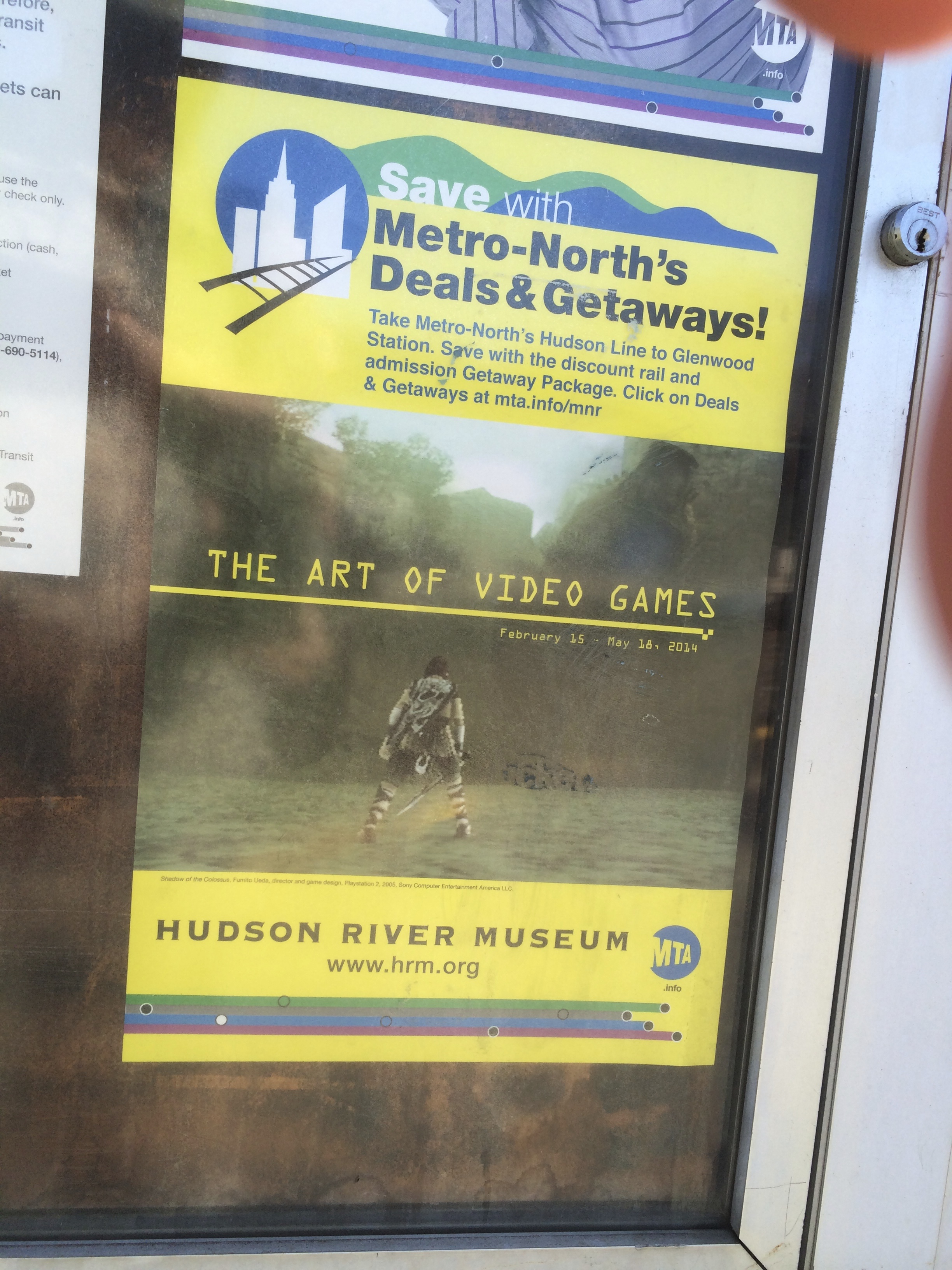
I didn’t make it to this exhibit from a year or so ago, but I’m glad to know someone was thinking along the same lines as me.

In Our Time

On the 116th anniversary of Ernest Hemingway’s birth, I’m republishing my tribute to him that I first posted on my old blog 15-Month Adventure. It recounts, in the style of Hemingway, a visit to the Conflict Zone war photography exhibit in New York City in 2012. The photo described in the story, taken by Jed Conklin, can be found in the gallery (#5 of 20, to be specific) at this New York Times story on the exhibition. Read my story, please, read the link, and then read today at least one story from In Our Time, Hemingway’s great collection of home-from-war fiction.

****

The veteran made his way across the first floor and took the elevator up to the third floor. There were so many people in the gallery that he could not see the photos on the walls. He had to squeeze people aside just to look at them.

The pictures were really good. Some were of soldiers in action, like one of a Marine pulling another Marine to safety. Another showed a soldier staring through the window of a Humvee that had just been attacked. The windshield was splattered with blood and gore, and an M4 rifle lies on the hood of the Humvee.

The picture was intense, but it was the rifle on the Humvee hood that got him. He remembered using that same space for quick meetings, and how soldiers would spread their weapons and gear across the flat surface to free their hands to take notes or look at their maps.

Now, in the picture, the M4 looked forlorn as it lay separated from the soldier inside the vehicle. But also sinister, the jet black weapon and its equally black sling sprawled on the yellow-brown Humvee hood like a nest of vipers on the desert floor.

Other pictures showed soldiers in calmer moments. Many were of Iraqis and Afghans. Some were taken during moments of fear, pain, and loss, others in the midst of daily life. These pictures were good, too.

The veteran looked at every picture twice. Then he stood outside on the sidewalk and thought about going back in to see them one more time. He watched the crowd come and go and decided to head home. The cab driver seemed willing to talk, but the veteran let the cab roll on quietly, up the Avenue of Americas and then Park Avenue to Grand Central.

Four Hispanic men were clowning around in the line at McDonald’s. One of the men began singing a song in English, “Open Arms” by Journey. The guy could really sing. He sounded just like Steve Perry. He was really good. But then he stopped, and he and his friends started cracking up again in Spanish.

On the train, the veteran read Hemingway’s In Our Time. The stories were good. The best was “The Battler,” but the one that made him wonder most was “Soldier Home.” The protagonist, a WWI vet back from the war, goes to see his sister play “indoor baseball.” What the hell was indoor baseball?

He was thinking about that when he noticed the woman across the aisle. She had been fiddling with her phone and computer and drinking a 24-oz. can of beer. Now, though, she was upset. At first he tried to ignore her, but it was impossible. She had a bloody nose that would not stop bleeding.

“Can you watch my stuff for a minute?” she asked.

She hurried to the bathroom. The veteran moved across the aisle to stake a better claim on her things. After a while, she returned, and he went back to his side of the train.

When the veteran’s train arrived at his station, he got off and he went home.

Conflict Zone

Contemporary War Fiction: Is The Best Yet to Come?

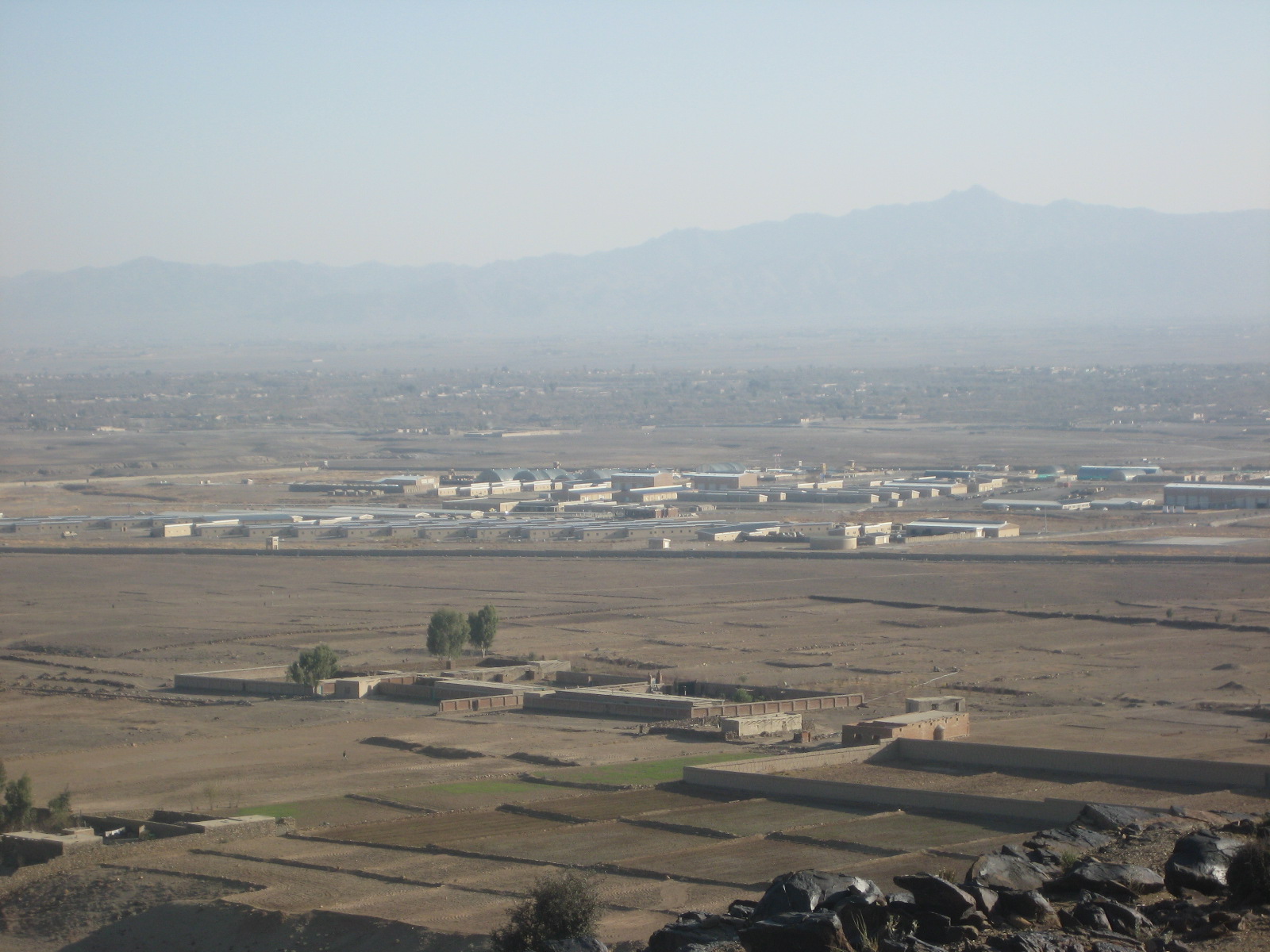
Camps Parsa and Clark, Khost Province, Afghanistan

In an essay published online in Harper’s this week titled “First-Person Shooters: What’s Missing in Contemporary War Fiction,” Sam Sacks takes millennial war authors to task for writing solipsistic stories that focus on the plight of woebegone individual soldiers traumatized by their deployments. Childlike innocents more than hardened warriors, the protagonists of war fiction bumble through their tours without doing any real fighting and then wallow in self-pity upon return. Their constant complaints that they don’t understand what they have experienced are matched only by their assertions that even if they could explain what happened on deployment, readers who hadn’t been there wouldn’t get it. The whole thing, Sacks asserts, is “pitiable,” coming from soldiers who were supposed to have fought competently and bravely, and made worse by MFA programs that have transformed veteran would-be writers into morose belly-button gazers too dull and chicken to address the moral and political implications of their service.

Thus Sacks seems not very impressed by the war lit he’s read so far, giving it what feels like a grade of C- or even D-  for its failure to achieve all that it might have. “One of the jobs of literature is to wake us from stupor,” he concludes, “and the best attempts of today’s veterans have done little to disturb it.” Though Sacks doesn’t mention American Sniper, the logic of his critique explains why the memoir and film were so popular. While fiction protagonists fret about buddies killed by random mortar rounds, Chris Kyle shot bad guys left and right, didn’t feel a lick of remorse, wrote about it candidly, and was subsequently rewarded with adoration and riches. Kyle’s claim that “For myself and the SEALs I was with, patriotism and getting into the heat of the battle were deeply connected” doesn’t reflect Sacks’ politics, but Sacks would probably find it a more profound and honorable statement about the larger dimensions of Iraq and Afghanistan than anything in name-your-favorite-novel by name-your-favorite-author-of-war-fiction.

Sacks is a lively writer, and he knows how to insert a knife and twist it so it really hurts. I don’t disagree with most of his observations, though, just the final assessment. The trends and patterns Sacks identifies are writ large in the pages of the stories he examines. But rather than taking the measure of contemporary war fiction in order to damn its authors, I value what the corpus of war fiction has accomplished so far and for what it promises in the future. Most soldiers were not heroes, the wars were damn confusing, and that confusion is clearly and smartly reflected in the writing about it so far. “Write-what-you-know,” an MFA precept that irritates Sacks to no end, seems prudent for vet novelists the first time out, even if it leads to the “the abyss of subjectivity,” as Sacks claims. Holding veteran authors responsible for exacerbating the civil-military divide also seems a little harsh, given what so far has been a better effort than anyone else has attempted to bridge that divide. Sacks thinks it is a problem that no veteran has yet written a work that combines the imaginative sweep of War and Peace with the cultural punch of Uncle Tom’s Cabin. But the issues he identifies as structural and endemic are better seen as challenges for the next round of war fiction writers to figure out and transcend—which I’m pretty sure they are already in the process of doing.