Life During Wartime: Hilary Plum’s They Dragged Them Through the Streets

They Dragged Them Through the StreetsOne reason I like books about war written by civilian authors is that I’m interested in what aspects of military experience and combat intrigue them most. Soldiers who write like to explore their reasons for joining, their initiation into the business of killing, their contemplation of mortality, their fraternal feelings with fellow soldiers, their contempt for the chain-of-command and its explanations for why they are fighting, and their alienation from the civilian world unto which they return. Pretty typical, when you think about it, right?

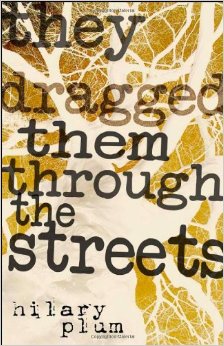
But different things catch the eye of civilian novelists. Hilary Plum, for example, in her 2013 novel They Dragged Them Through the Streets, describes the coping methods of a group of anti-war activists after their leader Zechariah Berkman blows himself up while making a bomb meant for a military recruiting station. The group’s radicalism has been catalyzed by the suicide of the brother of one of its members. Jay, an Iraq vet, has hung himself while struggling with PTSD and alcoholism, and his death inspires his brother Ford and friends Zechariah, Vivienne, Sara, and Ford’s girlfriend “A” to seek violent retribution against the war machinery and the duped public that supports it. The novel, told in alternating short chapters related from the point-of-view of each of the major characters, describes their efforts to understand the allure of revolutionary violence, Zechariah’s charismatic influence and tragic death, their fascination with a war most Americans think little about, and their own tangled feelings about Jay and each other.

Vivienne, the novelist, seems to express perspectives that most closely resemble Plum’s. Or, at least, she is the most articulate about what it means to try to write about war, as when she describes Zechariah:

Dangerous how Z lived, then, for he never slowed. Typing furiously, reading everything, his voice rising as he spoke on the phone. The war the war the war. He commissioned pieces for his magazine and was never satisfied with them. Just chatter, he’d say, waving a hand at the screen, slamming books closed. Waste of time.

Vivienne takes a more meditative approach, though she is also aware that the war saturates her thoughts and writing:

Now I have become a book myself, by which I mean, something whose choices have already been made. What I mean is—the past is lost to us. Its dreamed-up cities, its false trees of words. There’s no way to live among them; touch them and they crumple, or the hand just goes through. The sentences a web stretched over the paths I walked with A, the dew on its strands destroyed by our passing. I am not even that, not even a twist of silk stretching from twig to tree bark. I am a relic, the simple fact of the past…. This is why my novels are not novels of history: they loop and loop. In the end either the feet dangle or the whole slips away free.

While Zechariah’s and Vivienne’s relationship with war is cerebral and textual, the other characters’ ties are more visceral. Sara works as a nurse in a shelter for veterans and the homeless. A, Ford’s girlfriend, begins an affair with a journalist who has worked in Iraq. Ford, of course, bears the biggest burden, not so much A’s treachery, which doesn’t seem to bother him much, but the death of his beloved older brother. Plum’s greatest interest seems to be the collusion of forces that might drive a war opponent to political violence. In retrospect, such an investigation is mostly mute, because political opposition to the war, even in the early days when the invasions of Iraq and Afghanistan were presided over by the big-bad triumvirate of President Busch, Vice-President Cheney, and Secretary of Defense Rumsfeld, was feeble, and in the wars’ later stages, opposition was totally dissipated by feel-goodism for “the troops” and President Obama, as well as the blissed-out national mania for social media. In America, the revolution not only was not televised, it wasn’t even documented by status updates, because it didn’t come close to happening.
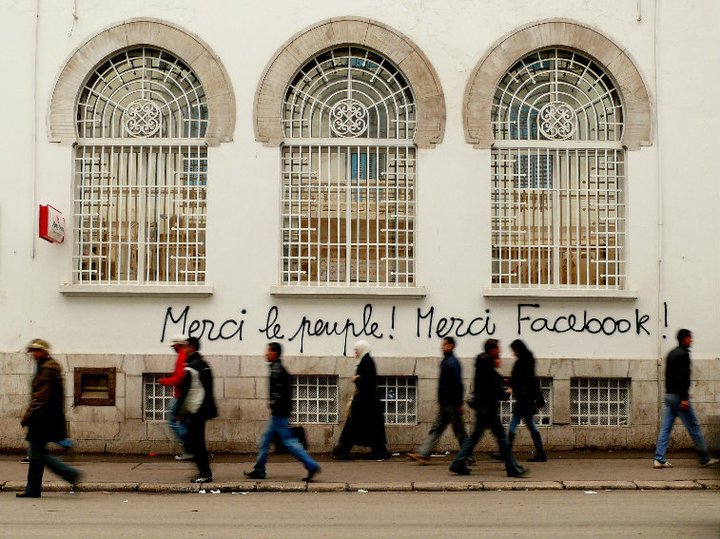
Arab Spring graffiti from Tunisia, 2011.
Arab Spring graffiti from Tunisia, 2011. There, but not here?

Well, better words than bombs, truly, though Zechariah’s belief in print-and-paper journalism seems a little quaint. Why doesn’t he get his thumbs flying on his smartphone?! But I salute Plum for exploring the conditions that might radicalize a dissatisfied citizenry to the point of violence. They Dragged Them Through the Streets resembles greatly Doris Lessing’s The Good Terrorist, a 1985 novel that portrays a similar assortment of privileged white bomb-makers struggling to reconcile murder in the name of politics with middle-class upbringings. As it happens, I read The Good Terrorist in my plywood bunk on FOB Lightning, Paktya province, Afghanistan, in what passed for my downtime during deployment. Grabbed at random from the book exchange in the Morale, Welfare, and Recreation Center, The Good Terrorist induced reveries that had me comparing the political docility—that is to say the civility—of the white West with the rage of our Afghan enemies, who rained rockets and mortars upon our camp and sprinkled the roads we traveled with IEDs. The comparison made me think that Lessing might have rendered her bourgeois revolutionaries in shades more comic or accusatory than respectful. The same charge could be levied against Plum, but that would be wrong. As her character Vivienne’s words remind us, imaginatively portraying a world that didn’t happen helps us understand better the one that did.

RIP Doris Lessing, 2007 Nobel Prize laureate, d. 2013.

Hilary Plum, They Dragged Them Through the Streets. The University of Alabama Press, 2013. 

Who’s Catching Who Coming Through the Rye? Cara Hoffman’s Be Safe I Love You

Be Safe I Love You

Cara Hoffman’s Be Safe I Love You reads much like Kevin Powers’ The Yellow Birds told from a woman veteran’s perspective. Like The Yellow Birds’ John Bartle, Be Safe I Love You protagonist Lauren Clay is a moody, out-of-sorts individual before enlisting in the Army, and like Bartle, traumatizing service in Iraq plunges her into madness upon return. To tell stories of lives ruined by war, Hoffman and Powers bend the language of narrative to stylistic extremes. Their prose is lyrical and suggestive, unafraid to leave the precincts of fact, logic, and linear chronology for both subtler and more sensational orders of meaning-making. Thematically, The Yellow Birds and Be Safe I Love You both assert that the aspect of war with the most potential to haunt veterans on return is failing to protect others for whom they felt responsible. John Bartle and Lauren Clay live through war, but soldiers very close to them do not.

But more than The Yellow Birds, the novel Be Safe I Love You really resembles is Catcher in the Rye, J.D. Salinger’s classic tale of youth angst. Holden Caulfield, the hero of Catcher in the Rye, is beset by a self-imposed obligation to save his sister Phoebe from the terrors and hypocrisies of adult life. In Be Safe I Love You, Lauren’s own overdeveloped sense of obligation extends not just to Army compadres, but to her younger brother Danny, who still resides at home with their dysfunctional father. In Catcher in the Rye, Holden dreams of running away to the west with Phoebe; in Be Safe I Love You, Lauren schemes to travel to the frozen Canadian north with Danny. Nerves jangled by the intensity of war, Lauren now thinks the journey will rescue Danny from the comfortably numb bliss of 24/7 online life. The plan is not just quixotic but crazy, and some of the most poignant parts of Be Safe I Love You reflect Danny’s growing realization that his beloved older sister is no longer the trustworthy guardian on whom he once depended. Lauren’s military service brought nothing but pain, guilt, shame, and madness, and her plan to save Danny is a self-destructive fantasy that may kill him, too. It’s Lauren who needs saving, not Danny.

Lauren’s case is extreme, but Hoffman’s onto something, and she proceeds as if determined to find the reasons why the hero of her own novel does not inspire more sympathy. Lauren was always the responsible one, but now, her take-charge tendencies swollen by promotion to sergeant in the Army, she just comes on too strong all the time. “I couldn’t afford to be fucking sensitive,” Lauren harrumphs, “I had to get things done.” Later, Hoffman writes of Lauren’s mindset:

She’d come home to a world of fragile baby animals. Soft inarticulate wide-eyed morons with know-nothing epiphanies and none of them—not one of them—did what she said, which was beginning to grate on her, cut to the heart of how wrong things were. Still she could accept that these people didn’t know how to lead or follow, but they could at least shut up. If anyone owed her anything for serving in Iraq it was to shut the fuck up.

Lauren’s soldierly discipline and odd sense of mission, along with her arrogance and irritability, dismay her friends and family, while making her extremely difficult to help. A second problem is Lauren’s lingering guilt about joining the Army. “Because deep down they knew you were doing something wrong in the first place,” Lauren thinks, “All that training was not for rescuing kittens from trees.” Later, Lauren screams at her father when he tries to compare her service to their friend PJ’s in Vietnam:

“I’m not PJ. Understand? I didn’t get drafted. I wasn’t some sitting-target chump with eight weeks of basic. I enlisted. I was educated. I had people under my command…. I am a beneficiary of this war… We got paid… If you never make another dime I’ve saved still saved enough to put Danny through state school and pay his rent until he graduates.”

The implication here is that post-traumatic stress and other forms of contemporary veteran dysfunction are exacerbated by their victims’ knowledge that at some level they volunteered for and were compensated for what they now suffer. Be Safe I Love You’s portrait of Lauren’s deterioration is as bleak and cold as the New York state hinterlands and the far reaches of northeast Canada in which the novel is set. It suggests not that America needs to understand what ails its troubled veterans, but that such veterans themselves should slow down, listen to what people are trying to tell them, and figure out how and why they are scaring the friends and family to whom they have returned.

Cara Hoffman, Be Safe I Love You. Simon and Schuster, 2014.

(Women’s) War Fiction: Katey Schultz’s Flashes of War

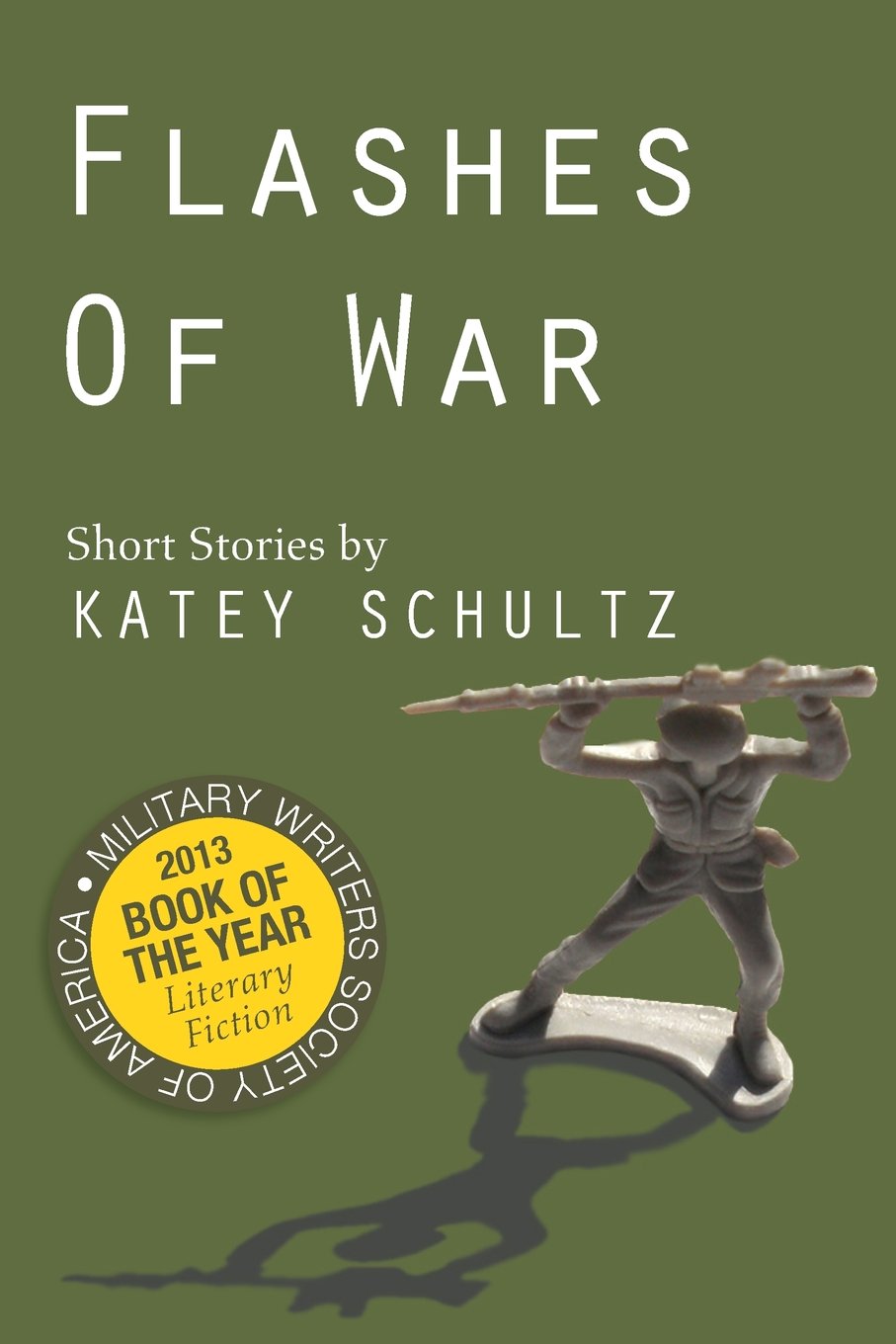
Flashes of WarThe wars in Iraq and Afghanistan placed large numbers of women in combat, arguably for the first time in history. The literature of the two wars features large numbers of women authors, again arguably the first time such a thing has happened. Searching for historical precedents, one might examine the work of British authors Virginia Woolf and Vera Brittain, whose novels in the 1920s and 1930s featured both scenes set during World War I and characters whose lives were affected by the war long after it was over. Each author had family members killed in World War I—Woolf a brother-in-law and Brittain a fiancé and a brother—oh my–and Brittain also worked as a nurse during the war, which might help explain why they made war central in their novels.

Woolf and Brittain established a promising precedent for future women war authors, but not much following World War II, Korea, Vietnam, and the twentieth century’s smaller wars capitalized on their strong examples. Beginning with the publication of Siobhan Fallon’s You Know When the Men Are Gone (2011), Helen Benedict’s Sand Queen (2011), Toni Morrison’s Home (2012), and Roxana Robinson’s Sparta (2013), however, we now find ourselves in the midst of a flourishing boom of fiction written by women about war. Other recent books such as Katey Schultz’s Flashes of War (2013), Hilary Plum’s They Dragged Them Through the Streets (2013), Masha Hamilton’s What Changes Everything (2013), Cara Hoffman’s Be Safe I Love You (2014), and let’s not forget J.K. Rowling’s detective novel The Cuckoo’s Calling (2013) signal the very serious intent of women authors to expand the male-drawn boundaries of war lit. To examine this body of work in detail, a good start point is Schultz’s Flashes of War. Containing thirty very short stories set in Iraq, Afghanistan, and back in America and an editorial postscript in which Schultz explains her rationale and process, Flashes of War bumps forward the possibilities inherent in war literature in several interesting ways.

In her “Epilogue,” Schultz, who is not a vet, describes fiction as a means of understanding two wars she knew little about. “As someone inclined to make sense of the world through story, I knew my window into these wars would have to be narrative,” she writes. Not interested in history or journalism, she found herself drawn “to intimate moments of a soldier’s or civilian’s life. Images, decisions, and thoughts so small and experienced under such strain that even an interview with the most forthcoming individual could not unearth them.” Inspired by YouTube videos and news snippets garnered on the Internet, Schultz explains, “Eventually, I filled myself with enough information to precisely imagine my way toward fiction I could believe in.” That’s smart stuff, I don’t care who you are—almost to the heart of what I most appreciate about fiction.

Turning to the stories themselves, Schultz relates them from the perspectives of civilians, soldiers, Iraqis, Afghans, and Americans. Sometimes, she groups them around a common subject to compare and contrast viewpoints. “Amputee” and “Permanent Wave, for example, feature a woman vet and a male vet dealing with amputated limbs, while “The Waiting: Part I” and “The Waiting: Part II” describe the tedious-yet-fraught endurance required of both soldiers on deployment and spouses at home. Schultz’s eye for subjects is curious, imaginative, and even idiosyncratic. “Poo Mission” is about a soldier who has to do just that in the middle of a patrol, while “Into Pure Bronze”’s subjects are a group of Afghan boys who play soccer on the same Kabul field that was formerly used by the Taliban to stage mass executions. A woman’s lot in war is featured prominently in many tales, as in one called “With the Burqa,” which is related by an Afghan woman.  It begins:

With the burqa, it was like this: the world came at me in apparitions, every figure textured by the mesh filter in front of my eyes. In a city with so much death, it was easy to believe half of the people I saw were ghosts. Women sat like forgotten boulders along the sidewalks in Kabul. We begged. We prayed.

But many or most Flashes of War stories feature American fighting men, of whom one is said, “Until joining the Army, he never realized that what a man believes could be so far from what a man does.” The two longest tales—and also my favorites—“Home on Leave” and “The Quiet Kind,” feature young men sorting through complicated emotions and life predicaments post-war. The protagonists are both junior enlisted soldiers without college degrees trying to plug back into life in the rural South, a perspective freshly different from the over-educated and overly analytical city-based heroes of many contemporary war stories. Schultz’s lean and clean prose style avoids literary mannerisms for the most part, but often drops into indirect free discourse (talk about being overly analytical!) to reflect the thought and language of her young, mostly blue-collar characters. A passage describing Bradley, the hero of “Home on Leave,” goes:

At the party—a welcome home thrown by his brother—he’d expected the backslapping and WMD jokes that came later that evening. Even the uncertain gazes from folks who probably thought he’d been killing Iraqi citizens. What he hadn’t expected was this: the soft-eyed looks all the girls gave him, the respectful nods from guys he didn’t even know. In the ten seconds it took Bradley to hop out of his truck and walk across Jared’s yard, the entire party’s eyes found him. He felt their attention like a shot of adrenaline. He’d been places since graduation. He must know things now; he might even be traumatized. And brave. Surely he was very, very brave.

The number and brevity of Flashes of War’s tales are two of its virtues. Schultz ingeniously injects enough detail, variety, characterization, and plot into each to make one wonder and, better, eager to see what comes next. Not every book needs to be War and Peace, and in an age of rapid-fire Internet reading habits, stories that hit quick and hard and get out fast definitely have their place. While the battle of words rages on about whether a non-veteran can write realistic and compelling war fiction, or even has the right to, with a snide side-skirmish that especially impugns a woman’s ability to do so, thank goodness authors such as Schultz aren’t waiting around for permission to tell their stories.

Katey Schultz, Flashes of War. Apprentice House-Loyola, 2013.

Something Wicked This Way Comes: The Future of War Literature

IMG_0211
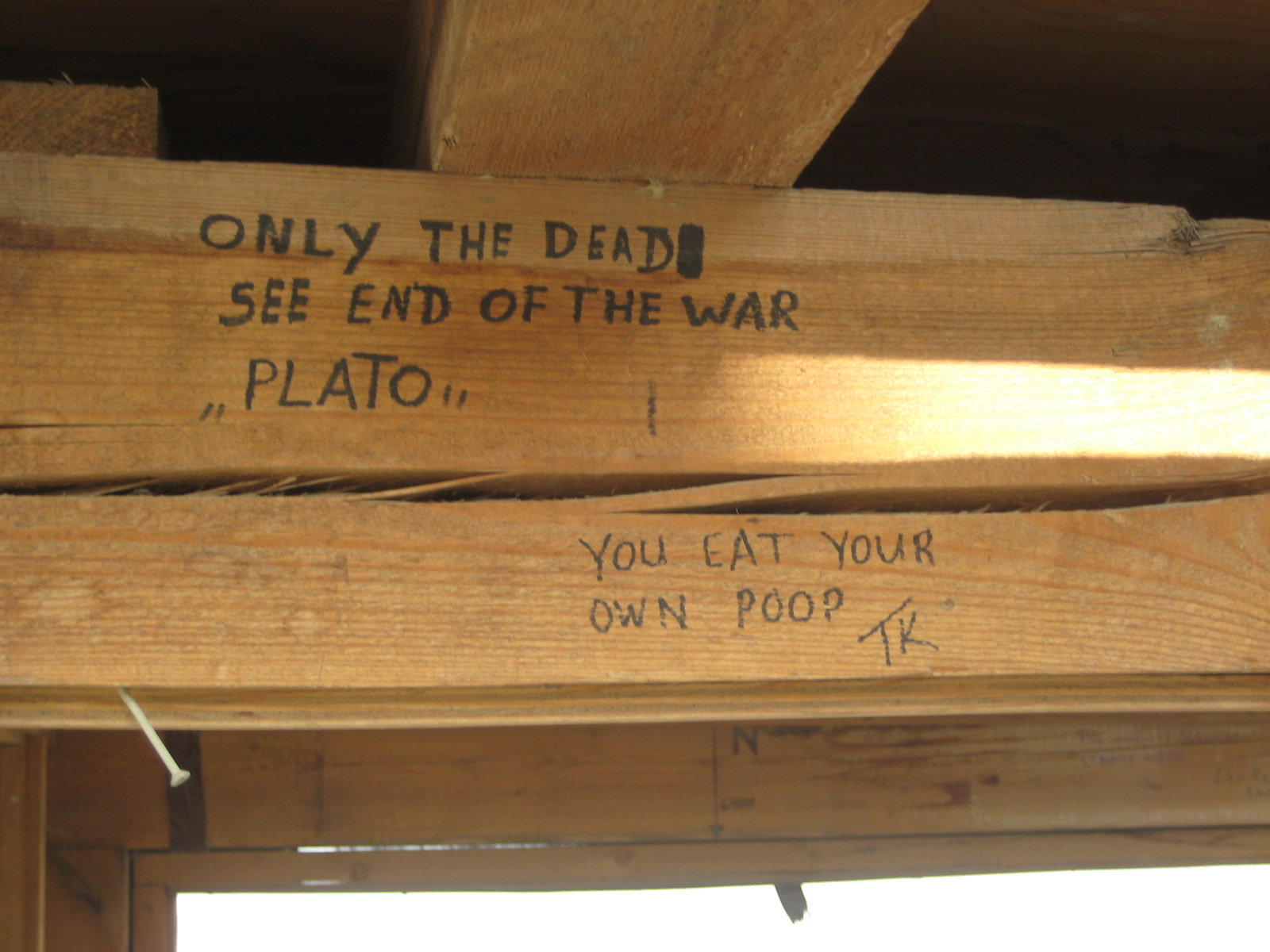
Graffiti at the ruined and abandoned Darul Aman Palace, Kabul, Afghanistan, 2008. “Darul Aman” means “Abode of Peace.”

“I have written a wicked book, and feel spotless as a lamb,” wrote Herman Melville to Nathaniel Hawthorne after completing Moby-Dick. I don’t know if Moby-Dick is exactly wicked, or about the “spotless as a lamb” business, but I am ready for a wicked book about American soldiers fighting in Iraq and Afghanistan. So far, stories and novels about the wars have been remarkably dainty about depicting American soldiers’ capacity for killing, torture, carnage, malevolence, and other forms of evil. At some level, it seems, they try to hold a kernel of life-affirming goodness at the center of the war experience, whether it be located in the characters, the narrators, or within themselves.

That’s a great strategy for real life. “Be kind, for everyone is fighting a great battle inside,” are words to live by. But it’s limited when it comes to fiction, a virtue of which is its ability to take readers to forbidden places. Another nineteenth-century author, John Neal, wrote that novels were places “where imaginary creatures, invested with all the attributes of humanity, agitated by the passions of our nature, are put to the task of entertaining or terrifying us.” The greatest characters, Neal continued, are “scoundrels,” while virtuous characters “are altogether subordinate and pitiably destitute of energy and wholly without character.” Edgar Allan Poe knew Neal’s work, it would seem, or at least felt the same. No one’s asking for a war story as related by the berserk narrator of “The Cask of Amontillado,” but would you agree that Poe’s narrator is more memorable than all the protagonists of contemporary war fiction put together? And his narrative voice even more so?

Poe and Melville are tough standards by which to judge, but great examples from which to learn. Iraqi author Hassan Blasim, in the tales that make up The Corpse Exhibition (2014), has crafted spell-binding tales that portray, not Americans, but his own countrymen as capable of any evil, first by nature and then made even more so by the pressure of war. Contemporary war literature written by Americans, on the other hand, has by-and-large shied away from depicting truly reprehensible–which is to say truly remarkable–characters in ways that are not mediated by other, more sympathetic voices. The only story I know by an American author that entertainingly plumbs depravity is Brian Van Reet’s “Big Two-Hearted Hunting Creek” from the Fire and Forget anthology (2013). Compared to the solemnity of most modern war stories, the vitality of “Big Two-Hearted Hunting Creek” is exceptional, and the story’s depiction of its charismatically ruined protagonists Sleed and Rooster startling. It’s a wicked tale indeed, and though I don’t know if Van Reet feels as spotless as a lamb, if it’s any solace I think more of him, not less, for writing it.

A spate of articles have appeared recently by civilian authors asserting their right to write about war and the military. A representative example is Sparta (2013) author Roxana Robinson’s essay “The Right to Write” that appeared in the New York Times. But Robinson, right as she is, and accomplished as she is, need not worry so much. I for one count on civilian authors to lead the way by demonstrating exactly how wide and deep are the boundaries of imaginative possibility, because, tales such as “Big Two-Hearted Hunting Creek” excepted, vet authors are not yet so skilled at getting beyond the basic first steps of realistic description and gussied-up reportage of their own experiences. Or, maybe the Iraq and Afghanistan wars are still too fresh and hot, and the most visionary writing about contemporary war can only be found displaced in stories about past wars. Karl Marlantes’ Matterhorn (2010), an opus about Marines in Vietnam, begs to be read as a commentary not just on Iraq and Afghanistan, but on Iraq and Afghanistan war literature. Pulitzer Prize winning author Toni Morrison’s novel Home (2012), for another example, depicts an African-American Korean War soldier’s sexual attraction to and subsequent murder of a young girl. An up-and-coming author, Julian Zabalbeascoa, published in Ploughshares a fantastic story called “498” (not currently available online, but hopefully will be again soon) that portrays a soldier in the Spanish Civil War who uses the pretext of war to become a mass murderer. Guess what the number in the title refers to?

Brian Van Reet’s article “A Problematic Genre: the ‘Kill Memoir'” exposes the limitations of first-person reminiscences by ex-snipers that jumble reflection and braggadocio about the military business of killing. In my mind, and I think Van Reet would agree, fiction such as Zabalbeascoa’s most compellingly explores the complicated emotions and social context that kill memoir authors struggle to explain. But so far, our authors of war fiction have written much about soldiers preoccupied by the way the big, bad wars have impinged on the sensibilities of those who fight, and little about soldiers who find themselves on other terms—if not delight, then an ambivalent complicity—with violence, force, hate, sadism, greed, ambition, selfishness, self-preservation, and killing. Let’s see what the future brings.

UPDATE, 3 August 2014.  In this post, I speculate that the darkest war fiction written about Iraq and Afghanistan might have to take as its setting another war.  In the Letters, I suggest that Hollywood might make a dark, bleak war film before our authors and publishers bring us such a book.  Now, two weeks later, comes notice of a new film called Fury, starring Brad Pitt and directed by David Ayers.  Read the New York Times review of Fury for what appears to be confirmations of my assertions.

Words After War: The NYC War Lit Machine-slash-Scene

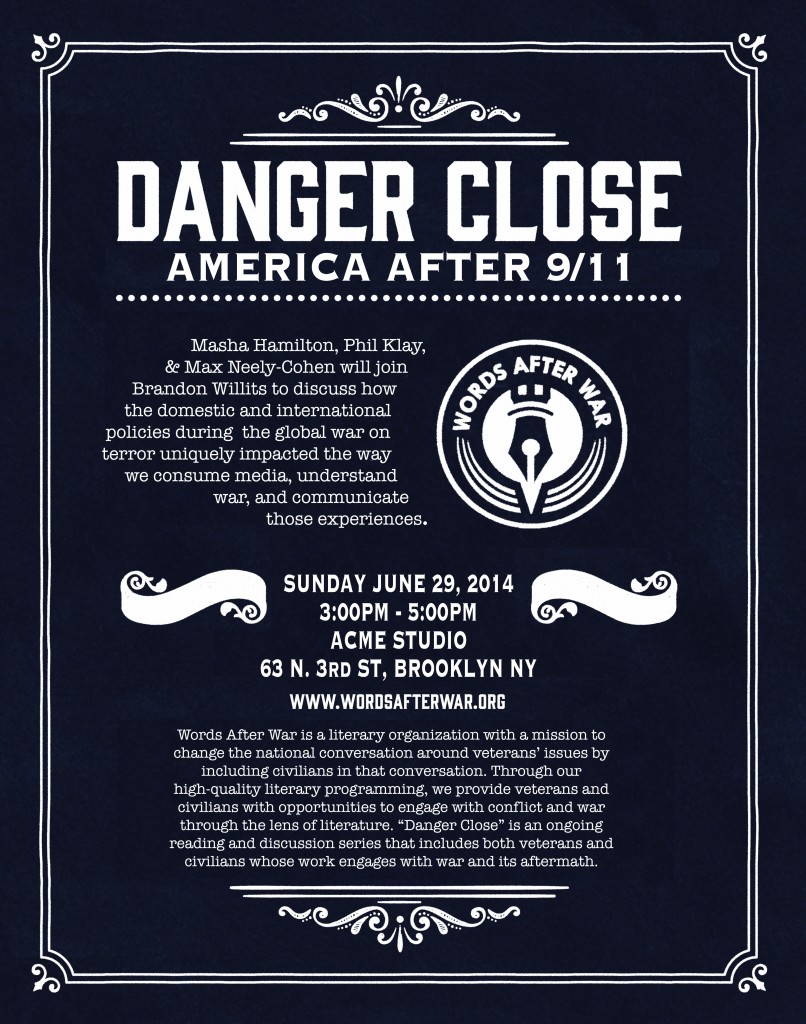
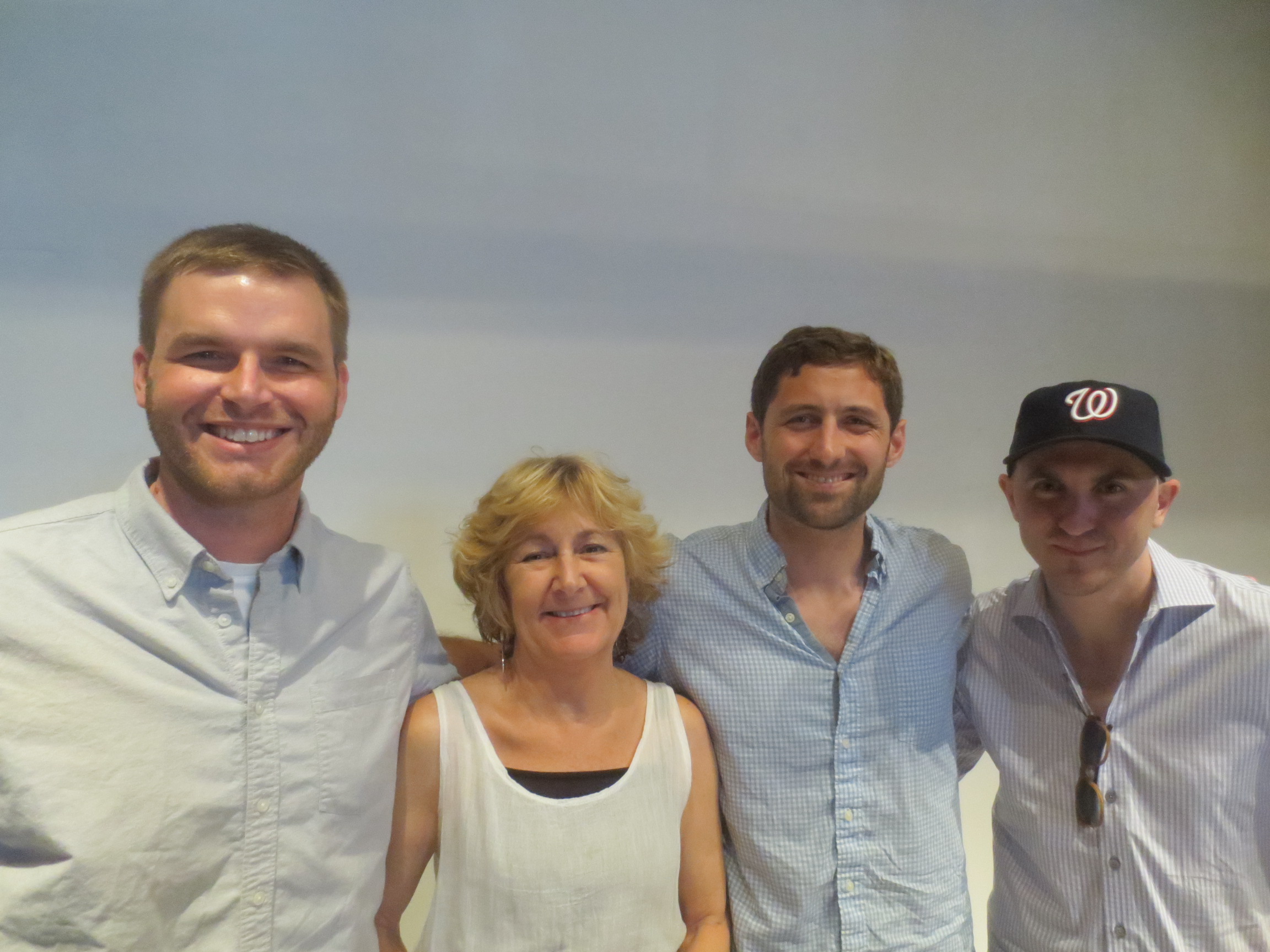
AMERICA-AFTER-9-11-flyer-806x1024This past Sunday I attended “Danger Close: America After 9/11,” an event hosted by Words After War, a New York City-based veterans writers collective I’ve had my eye on for some time. The event featured three authors of fiction who also served the government’s war apparatus in some capacity. Ex-Marine Phil Klay, the author of Redeployment, needs little introduction, but the other two authors brought not-so-obvious experiences and perspectives to bear on the discussion. Masha Hamilton is an author and journalist who also served as a civilian member of the Army command staff in Afghanistan specializing in public affairs and women’s advocacy. Her recent novel What Changes Everything features both American and Afghan characters whose lives have been ravaged by war. Maxwell Neely-Cohen is the author of Echo the Boom, a novel featuring young protagonists born “after the fall of the wall and before the fall of the towers.” Neely-Cohen could boast no military or in-theater experience, but he worked as a DOD-contracted intelligence analyst for a while after college, which is one of the more interesting perches within the military machinery I’ve come across lately. Moderating the panel was Words After War co-founder and executive director Brandon Willitts, a Navy vet of Afghanistan who has also spent a tour as an intelligence analyst working for the Joint Chief of Staffs.

Left to right, Brandon Willetts, Masha Hamilton, Phil Klay, and Maxwell Neely-Cohen

The authors all had interesting things to say about how their lives took shape after 9/11, though each was slow to emphasize the overarching importance of the day in their individual biographies. For Klay, Hamilton, and Neely-Cohen, 9/11 co-exists with a slew of other determinants that took them towards war. Hesitant to make grandiose pronouncements, the panelists instead offered anecdotes and observations that commented obliquely on global politics and history.

Klay: “On the day we celebrated the killing of Osama Bin Laden, I learned that one of my former NCO’s war injuries would leave him permanently blinded.”

Hamilton: “I had a desire to have an impact and help make a difference. I knew I had to be cautious, but not so cautious that I didn’t follow my dreams.”

Neely-Cohen: “I grew up obsessed by the Cold War and the chance of nuclear catastrophe. It always seemed odd that we would risk or even sacrifice millions then, while after the fall of the Twin Towers we measured the cost of war in the low thousands. But even as they fell, I spent the day skateboarding with my friends.”

Often the remarks segued from cultural critique to literary process and technique:

Klay: “I always pay attention my most ‘urgent memories,’ but the stories you tell about yourself are always self-serving and simplistic…”

Hamilton: “Writing in third person (about created characters) allows you to judge them much more harshly…. fiction allows you to ‘write into the gray.’”

Neely-Cohen: “As I created my characters I depended on empathy and imagination…. I did not want to belittle them.”

And so the conversation went on a Sunday afternoon in a Brooklyn, New York performance space transformed into laboratory for ideas and argument. While Klay’s work explains how war felt to those who fought, Hamilton and Neely-Cohen register its reverberations beyond the battlefield and across cultures and generations. The subject was a little large for resolution in the time provided, but the panelists’ offerings were suggestive. Collectively and individually, we all went crazy as if plagued by hornets after 9/11, even as we had to make huge decisions with gigantic costs, and we’re not through yet. Thanks as always to our writers and artists, who observe these things best and on whom we depend to help us understand better.

Thanks also to Words After War for infusing the New York City vet writing community with a collective, sociable, and supportive vibe. Impresario Willetts is passionate about helping vets and obsessed by the idea that literature matters, and he shines at staging events that showcase veteran and war-related writing. Also on the Words After War board of directors is Matt Gallagher, the author of the memoir Kaboom: Embracing the Suck in a Savage Little War. First published as blog postings from Iraq, where Gallagher served as an Army cavalry officer, Kaboom more than any other memoir I’ve read pays attention to the nuances of soldiers’ emotional lives, which bodes well for the fiction we are sure to see from Gallagher in the future. Gallagher’s writer and warrior cred nicely complement Willett’s vision and organizing ability, and so we look forward to what Words After War brings us next.

Phil Klay, Redeployment. Penguin, 2014.

Masha Hamilton, What Changes Everything. Unbridled Books, 2013.

Maxwell Neely-Cohen, Echo the Boom. Rare Bird Books, 2014.

Matt Gallagher, Kaboom: Embracing the Suck in a Savage Little War. Da Capo Press, 2011.

J.K. Rowling: Contemporary War Author

RowlingLast post, I offered the following summary of the plight of Iraq and Afghanistan veterans, drawn from my reading of Stacey Peebles’ critical study Welcome to the Suck (2011):

“Peebles’ thesis is that that memoirs, poetry, and movies by and about Iraq veterans document veteran struggles to reconcile military and civilian identities. The authors and artists she studies join the military willingly, but subsequently find themselves at odds with martial culture and ideals….. They enlist confident they can handle the worst they might see. But military life, and more specifically the experience of war, overwhelms them. Still proud of their service and eager to remember positive aspects of it, their nostalgic fondness rests uneasily alongside messed-up minds and damaged bodies.”

Today, while reading J.K. Rowling’s 2013 detective novel The Cuckoo’s Calling (published under the pseudonym Robert Galbraith), I came across a passage that reflects the same idea. The Cuckoo’s Calling protagonist is Cormoran Strike, a disable British Afghanistan vet now working as a detective in London. When asked why he left the army, he replies:

“’Got my leg blown off,’ said Strike, with an honesty that was not habitual.”

Rowling continues:

“It was only part of the truth, but the easiest part to communicate to a stranger. He could have stayed; they had been keen to keep him; but the loss of his calf and foot had merely precipitated a decision he felt stealing towards him the past couple of years. He knew that his personal tipping point was drawing nearer; that moment by which, unless he left, he would find it too onerous to go, to readjust to civilian life. The army shaped you, almost imperceptibly, with the years; wore you into a surface conformity that made it easier to be swept along by the tidal force of military life. Strike had never become entirely submerged, and had chosen to go before that happened. Even so, he remembered [the army] with a fondness that was unaffected by the loss of half a limb….”

I haven’t yet finished The Cuckoo’s Calling, so I don’t know in what other ways Rowling infuses Strike with the habits and perspectives of a contemporary war vet, but I find her choice to make military service an important facet of the novel significant. From where comes the interest? What is she trying to say? Is she cravenly capitalizing on a trendy motif, or is Strike an Ahab-like crusader for truth, justice, and vengeance? I’ve never read a Harry Potter novel, but I’m reminded of the several soldiers I knew who used their idle deployment time to read the entire series. And if there’s any author in common I’ll bet the majority of Iraq and Afghanistan veterans—to include the veteran writers–have read it would have to be Rowling. The series appeared almost simultaneously with the coming-of-age of those who fought the wars, and individual titles came out like tick-marks during the years the wars escalated and reached their fullest fury. Smarter minds than mine can make the connections that undoubtedly exist between the make-believe world of Hogwarts, the fantastical battle zones of the middle-East, and the psyches of soldiers. “Seek and ye shall find” the saying goes, and the following quotation from the Wikipedia entry on Harry Potter could be a good start point for the inquiry:

“According to Rowling, a major theme in the series is death: ‘My books are largely about death. They open with the death of Harry’s parents. There is Voldemort’s obsession with conquering death and his quest for immortality at any price, the goal of anyone with magic. I so understand why Voldemort wants to conquer death. We’re all frightened of it.'”

Kudos to Rowling for donating the proceeds from The Cuckoo’s Calling to The Soldier’s Charity, an organization that fro many years has rendered aid to British veterans. Finally, if anyone is aware of novels and poetry written by British contemporary war veterans, please let me know about them.

J.K. Rowling (aka Robert Galbraith), The Cuckoo’s Calling.  Mulholland Books, 2013.

The Civil-Military Divide Within: Going After Bergdahl

When Bowe Bergdahl disappeared from his small combat outpost in Paktika province in 2009, I was also in eastern Afghanistan. In the ensuing days I obtained a pretty solid first-hand understanding of the tumult the event caused. After a month the story faded from public view, but it lingered long in my mind as one of the most curious, unexplained, unfinished episodes of the war. What would have made Bergdahl do that? Why did so few other soldiers do the same thing? The furor after his release by the Taliban a couple of weeks ago confirmed my intuition that his story was captivating and important.

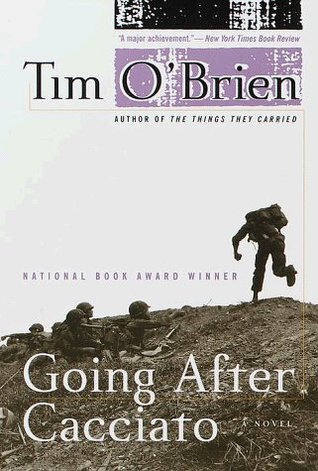
CacciatoEarlier this spring, I met a vet author who told me that he had written a draft of a novel based on the Bergdahl saga. For him, Bergdahl’s disappearance represented a contemporary version of Tim O’Brien’s 1978 Vietnam novel Going After Cacciato. In O’Brien’s novel, the title character slips away from his platoon while on patrol and tries to walk to Paris. It’s possible that Bergdahl, a reader and dreamy young man by all accounts, has read Going After Cacciato. But what is the larger import that accounts for the public fascination with his case? To me, Bergdahl enacted in real life a narrative that figures often in contemporary war lit, drama, and film—the dream of unofficial-but-honest unmediated contact between US service members and local national citizens. The movie The Hurt Locker provides the most available example—a soldier on his own slips the FOB perimeter to help a poor Iraqi family. I’ve seen two plays that also feature such scenarios, and I know there are others. Most portray such ad hoc interactions as kindly–soldiers now more human once free of military tyranny–but others show Americans acting evilly–enflamed by military dehumanization and now free of its discipline, they run wild.

I can surmise that such portraits represent efforts to illustrate the human side of war, but I doubt they ring true with many vets. Most I think would find them unrealistic if not downright dopey. In my experience soldiers didn’t care enough about Afghans or Iraqis to even think about risking their lives by leaving the safety of their units and their FOBs to be with them. Outside of our interpreters and military counterparts, we didn’t know Iraqis or Afghans or even really want to know them. The attitude of Rodriguez in Phil Klay’s “Prayer in the Furnace” is probably closer to the truth for many soldiers: “’The only thing I want to do is kill Iraqis,’” he says. That’s harsh, but the blighted relationships between Americans and Iraqis in Helen Benedict’s Sand Queen and Americans and Afghans in Joydeep Roy-Bhattacharya’s The Watch, marked by mutual hostility and distrust and played out within steps of FOB gates, also seem typical. To venture far outside the wire on one’s own was unfathomable.

But maybe Bergdhal was the exception that proves the rule. Maybe he really wanted to be among Afghans without the security of his weapon and squadmates, to see what happened for better or worse. Perhaps he thought there were good Afghans who would protect him or that the Taliban weren’t really interested or really so bad. Maybe his unit was just so screwed-up and unfriendly that he couldn’t stand it anymore. Or maybe he just got too much a snort of that wild Paktika air, which, as I’ve written about before, has turned other warriors into poets. Did he know Into the Wild, the story of a young man who assumes enormous risk by walking solo into the Alaskan outback? I wouldn’t be surprised.

PeeblesAs for me, I’m currently reading Stacey Peebles’ Welcome to the Suck: Narrating the American Soldier’s Experience in Iraq, a study of contemporary war lit written by veterans up to about 2010. I’m only about 30 pages in, but am already impressed by Peebles’ insights about modern soldiers and how they represent themselves in memoirs, stories, and poetry. Peebles claims that the dominant theme in contemporary war lit is the desire of veteran-authors to transcend their identities as soldiers. Raised in a culture that now values diversity above almost all else, military men and women resist homogenous absorption by the martial world they have entered. And yet, Peebles continues, the anguish that fills the best books stems from the military’s way of imposing itself comprehensively on people’s sense of themselves. If not the uniforms and regulations, then the culture and the unit, or the demands of accomplishing missions. If not the mission, then fear, pain, and death. If not fear, pain, and death, then responsibility for what one has witnessed and done. As military identities and mindsets harden, they blot out memories of past lives and other selves, delimit possibilities for relationships in the present, and extinguish potential future options. It then becomes a question not of “being all you can be,” as the Army slogan would have it, but the military becoming all that you can be. Forget the divide between those who have served and those who have not, Peebles says, the real civil-military divide is within the psyches of soldiers and veterans:

“As young people, these soldiers have been encouraged to revel in their individuality, challenge restrictive categories, and make ample use of technology to do so. Contemporary American culture traffics in identities that are cyborg, hybrid, avatar…. The media savvy and extensive knowledge of pop culture, however, is anything but a balm for the realities of war, and only exacerbates their sense of isolation and impotence.”

“Other soldiers express dissatisfaction with traditional gender roles, most notably the dictates of masculinity, but their attempts to construct a viable alternative fail. Some arrive in Iraq ready to reach across national and ethnic divides and make a difference, but the invasion’s execution prohibits them from doing so, reinforcing their sense of being strangers in a strange land. Finally, traumatized and injured veterans find that after such radical changes to the mind and body, the most sophisticated treatment and technology in the world can’t always make them whole again.”

“[In contrast to soldiers in Vietnam War fiction] soldiers in these new war stories also feel betrayed—not necessarily by their nation, which many already believe is on a fool’s errand in Iraq, but by the personal resources they expect to carry them through. They are politically cynical, but personally idealistic, believing themselves to be beyond the strict categories of race and gender, to be technologically and culturally savvy. But these resources fail them as well… In war, the realities of biology, physics, and psychology can hit home with a vengeance—and there’s no way to log off.”

Peebles’ body of evidence is slim: Jarhead, My War, Here, Bullet, The Hurt Locker, and a few others. But there wasn’t much to work with as she wrote, so I think she has done well mining what was there for exciting discoveries. An interesting project would be to size up her conclusions in regard to the many novels about Iraq and Afghanistan that have emerged since she completed her study. Do Peebles’ ideas hold true for The Yellow Birds’ John Bartle? Billy Lynn of Billy Lynn’s Long Halftime Walk? Fobbit’s Abe Shrinkle? Sparta’s Conrad Farrell? Or, turning back to real life, how about Bowe Bergdahl, who grew up a writer of metaphysical manifestos and fan of Ayn Rand, who then found himself a soldier soldiering not just at the front, but in front of the front on the Pakistan border. At some point he just didn’t want to do that, or be that, anymore.

Here’s to a full physical, mental, and emotional recovery for Bowe Bergdahl and to a successful reunion with his parents. We look forward to learning much more about the facts of his disappearance and captivity.

Paktika in the distance, picture taken from Spera Combat Outpost, Khost Province, 2009.
Paktika province, Afghanistan in the distance, picture taken from Spera Combat Outpost, Khost province, 2009.

Stacey Peebles’ Welcome to the Suck: Narrating the American Soldier’s Experience in Iraq. Cornell University Press, 2011.

Note:  An earlier version of this post linked to a blog post purporting to describe Bergdahl’s World of Warcraft fascination.  That post is in fact a fabrication, though a very inspired one at that. The influence of role-playing games in the lives of modern soldiers and the art that represents them is a subject for another day.

No Thank You For Your Service: Helen Benedict’s Sand Queen

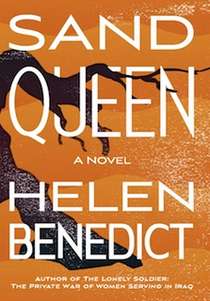
Sand Queen2012 was a great year for war fiction, what with the publication of The Yellow Birds, Billy Lynn’s Long Halftime Walk, Fobbit, and The Watch. For me, these novels marked the coming-of-age of the contemporary war novel, and I started Time Now in part to sing their praises. But under my radar and ahead of the pack in 2011 came Helen Benedict’s Sand Queen, a novel set in Iraq in the early days after the US invasion. Not only does Sand Queen get pride of place chronologically in the con-war-lit archive, it portrays women at war, unlike 2012’s bumper crop, all of which are sagas of male soldiers written by male authors. Since the most salient way the Iraq and Afghanistan wars will be remembered in 50 or 100 years is that for the first time the nation included large numbers of women in its fighting forces, Benedict’s achievement is prescient.  But what does she want us to understand?

The answer to that question is unmistakable:  Benedict castigates a misogynist military culture that ruins women’s chances of serving honorably and happily. The protagonist of Sand Queen is Kate, a junior enlisted member of a military police battalion charged with guarding prisoners at a detention facility in southern Iraq. The novel’s title refers to a slur leveled at military women who flaunt their sexual desirability during long deployments to our desert warzones. Kate is not a sand queen, but is perceived as one; the general misery of the mission is made far worse for her by the continuous stream of heinous remarks and acts aimed at her and her fellow women soldiers by the unit’s men. Though Kate is far more sinned against than sinning, Benedict suggests that Kate’s naivety and prickly personality make her difficult to deal with even for those who want to help her. Late in the novel, for example, she ends a budding romance with the fellow soldier who has been her truest friend in theater:

We stand silent for a moment, both of us staring at the shadowy ground. ‘Jimmy, please try to understand. I’m just so tired of screwing up people’s lives.’

‘Then why did you just do it again. Fuck.’ He turns away from me and leaves.

Frankly, Kate isn’t much of a soldier, and her unit isn’t much of a unit, and the whole thing’s a mess, not just in ways personally experienced but in the unit’s ability to execute their mission with any degree of professionalism, let alone sensitivity toward each other or Iraqis. Kate’s counterpart in the novel is Naema, a young Iraqi woman whose brother and father are prisoners at the detention facility. Naema pleads her family’s case with Kate daily; the two young women don’t really bond, but instead serve each other as very slight catalysts for empathy. Kate is badly educated and immature, while Naema is a medical student with a deep sense of the worthiness of an Iraqi culture hundreds of generations old. Kate and the Americans hold the cards, but Benedict doesn’t miss many chances to compare the shabbiness and thoughtlessness of the Americans with the badly-bruised dignity of the Iraqis. Naema despairs:

We are sliding backwards in my country. We are becoming narrower than we have been for decades…. Yes, we were confined and fearful under Saddam, and yes, I will never forgive what he did to Papa and so many others. But at least I was able to go to school and Medical College as boldly as any boy wearing jeans and a shirt. I was not forced to think about whether I was a Shiite or Sunni, or half and half, as I am, because among the people I knew it did not matter.

Benedict wrote Sand Queen after publishing a journalistic account of women in the military titled The Lonely Soldier: The Private War of Women Serving in Iraq (2009).  Early on, she sussed that the military’s equitable treatment of women left a lot to be desired. Though many, or some, served free of harassment or abuse, too many did not. Sand Queen furthers the cause of Benedict’s first book by using the tools and allure of fiction to dramatize ways our armed services struggle to live up to their democratic and meritocratic ideals and publicity campaigns. Clearly polemical in intent, Sand Queen‘s focus on detainee operations also helps us imagine conditions that led to Abu Ghraib.  An objection might be that Kate’s story is not representative, or is the product of her bad luck being assigned to a bad unit in the bad early days of the war. Kayla Williams, in a great blog post titled “Looking Back on My Military Career, I Most Regret…”, describes her own experience as a female soldier in Iraq. Portions of her deployment were free of sexual harassment, but other assignments and missions were full of it. Williams also rues some of her own acts and choices; like Kate it seems, she was young and not as wise as she might have been. That’s all well and good, but I don’t think Benedict sees it that way. She’s not thanking anyone for their service; for her the Iraq war and military service in general corrupts at every level—badly conceived and planned on high, Operation Iraqi Freedom in Sand Queen‘s view unleashed slaughter upon people who didn’t deserve it and caused nominally good Americans in the ranks to treat each other like animals.

If we take into account that Siobhan Fallon’s collection of short stories You Know When the Men Are Gone was also published in 2011, we can wonder why our contemporary war fiction tradition had to be inaugurated by women. I’ll be thinking further about this question this summer while reading Jen Percy’s Demon Camp, Cara Hoffman’s Be Safe I Love You, Hilary Plum’s They Dragged Them Through the Streets, and Katey Schultz’s Flashes of War.

Helen Benedict’s Sand Queen, Soho, 2011.

War Stories: Reading and Writing the Iraq and Afghanistan Wars

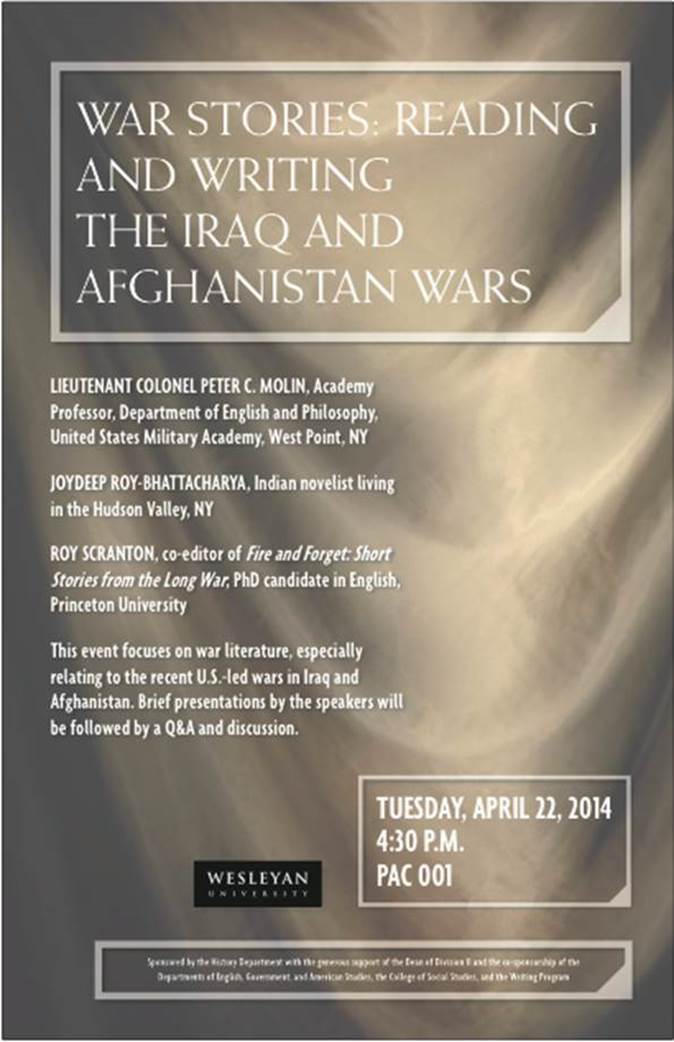
War-StoriesI was invited to speak at Wesleyan University with Roy Scranton and Joydeep Roy-Bhattacharya.  My comments mostly blended Time Now posts with others about Afghanistan from my old blog 15-Month Adventure. Scranton and Roy-Bhattacharya, on the other hand, offered up exciting new work. Scranton read “The Fall,” recently published in Prairie Schooner’s war issue and part of a novel he’s hoping to find a publisher for soon. Roy-Bhattacharya read from a novel in progress.  Both selections portray life in the early days of Operation Iraqi Freedom from the viewpoint of Iraqis, in Scranton’s case that of two women and in Roy-Bhattacharya’s that of the Baghdad Zoo caretakers.  We’ll have to wait for Roy-Bhattacharya’s novel, but here’s an excerpt from Scranton’s story:

Maha sat in her room listening to Britney Spears, wishing she was anywhere else.  The war was going to ruin her life, she knew it, it was going to ruin her chances for marriage, it was going to ruin everything.  Her skin was breaking out, her hair frizzing, ends splitting.  She stood at her window and looked through the split between two pieces of plywood nailed over the glass and watched smoke drift over her city, and the smoke was her future fading into haze.

And another, from near the end:

They quit going out.  They locked the gate.  They spoke to their neighbors through a crack in the second-story window. They didn’t go out onto the roof.  More explosions, more shooting.  One night they listened to a tank roll down their street.  They heard it stop.  They heard the grind of its turret and heard its gun fire, the sound of hell cracking open, then again, feeling it in their bellies, thumbs, and knees.  They looked at each other and prayed. Allahu akbar, la illaha ila Allah.  They heard a machine gun go tock-tock-tock and the tank rolled away.  An empty house down the block had been its target.  Two gaping holes like blank eye sockets watched the street.

That scene’s sensational, and Roy-Bhattacharya’s story, about the destruction of the Baghdad Zoo, even more so, but I like how they also explore with care the lived lives and and consciousness of Iraqis in that far-away, hard-to-remember time.  Each author was determined to bring the era back, to make it memorable again, reconfigured in ways that allow us to see it from other perspectives, and made vivid through the power of artistic description.

In the audience at the reading was Richard Slotkin, a Wesleyan professor famous for his works Regeneration Through Violence, Gunfighter Nation, and others.  The thesis of Regeneration Through Violence is easy to state: religious, peace-minded Americans learned to love, not hate, violence fighting Native Americans during the Puritan era. Think back to whatever you remember of the King Philip Wars, which were brutal and merciless.  Each subsequent generation of Americans then sought their own bloody encounter with a savage dark-skinned foe. For the next three centuries, Americans pushed westward, driven not by manifest destiny, but bloodlust.  In the 20th century, out of native land, the theory goes, generation by generation Americans created and battled enemies abroad.   Our wars thus have not been Clausewitzian, but Freudian.  Not politics by other means, but psychology at its most primeval.  In Gunfighter Nation, Slotkin examines the ideology of Westerns and war movies.  In the 19th century, print fed what Slotkin calls “the national imaginary” of what it means to fight, but in the 20th and 21st Slotkin argues that it is movies and TV that mold consciousness.  For Slotkin, they do political work preparing an always almost already populace to embrace war. Either they unwittingly rechannel conventions, or their makers do so cravenly and crassly.

Two days after Scranton, Roy-Bhattacharya, and I read, I returned to Wesleyan to hear Slotkin lecture on the 2001 movie adaptation of Mark Bowden’s Blackhawk Down.  Slotkin deplored its degradation of Bowden’s superior book.   He claimed the movie-makers made many artistic choices that reinforced the message that America was justified in heinous overseas adventurism and inculcated the idea that a “kill ‘em all” mentality was not only effective, but morally defensible.  In his lecture, Slotkin mentioned the War Stories reading three times, all favorably.  He asserted that contemporary war writers such as Scranton and Roy-Bhattacharya were working hard and generally succeeding in breaking the pernicious clichés and traps of popular American story-telling. Movies couldn’t do it, he implied; they were too bound by genre conventions and money-making imperatives.  Novelists aren’t free of such things, nor is the publishing industry, but they have a better chance of avoiding them. Staunchly individualist in outlook and solitary in method, writers thoughtfully pursue their visions of the truth free of cant and stereotypes. They tell the stories they want to tell or that they think the nation needs, not wants, to hear.

I was glad to hear that, because it’s what I think, too.  I just hope it’s true.  We’ll see when Hollywood turns Scranton’s and Roy-Bhattacharya’s novels into blockbusters, right?  But first they have to get published, which I hope is soon.

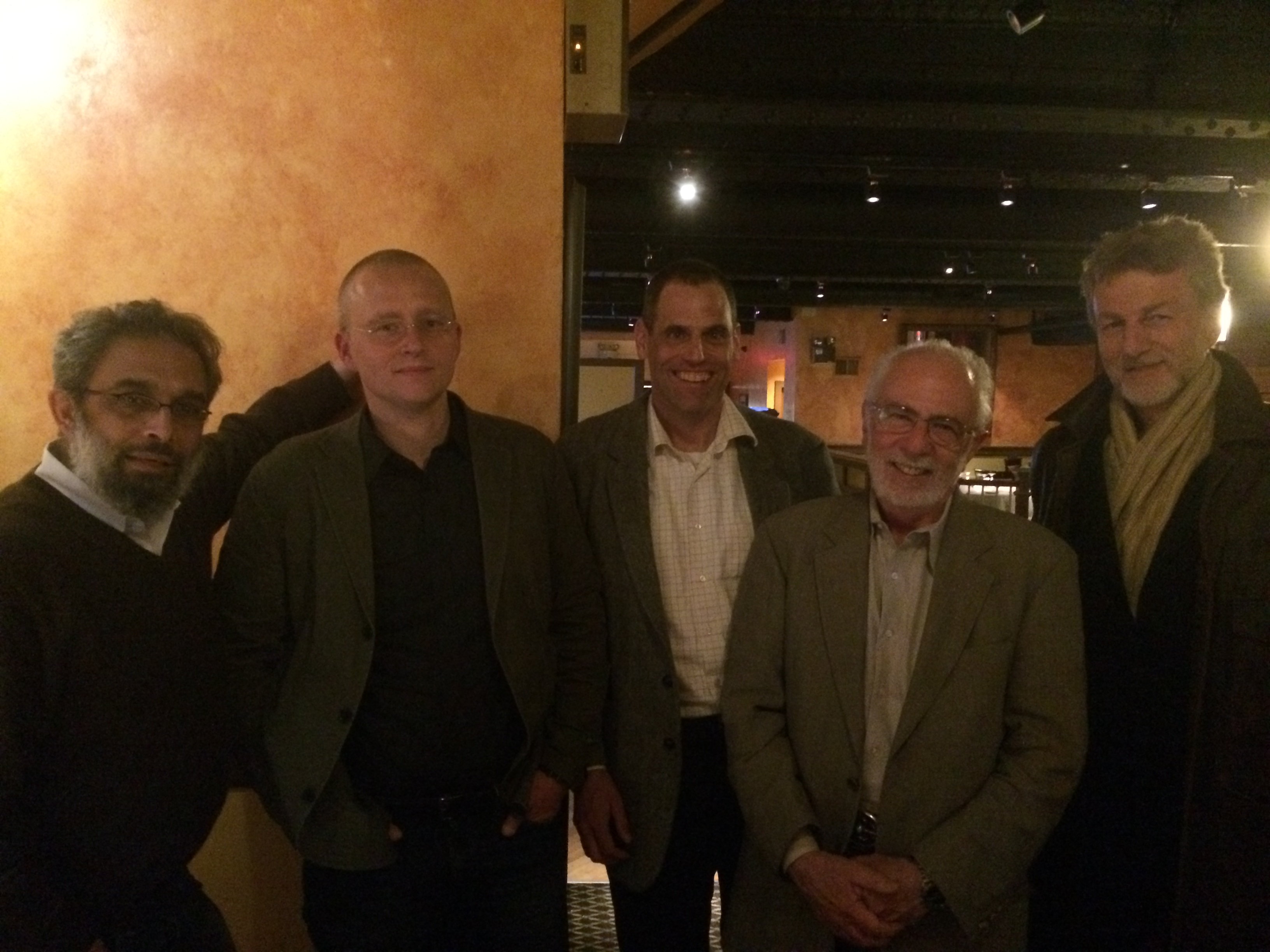
At Wesleyan, with, left to right, Joydeep Roy-Bhattacharya, Roy Scranton, me, Richard Slotkin, our host William Pinch of Wesleyan's History Department
Left to right, Joydeep Roy-Bhattacharya, Roy Scranton, me, Richard Slotkin, and our host William Pinch of Wesleyan’s History Department

Roy Scranton’s “The Fall” appears in the winter 2013 issue of Prairie Schooner, a special war edition guest edited by Brian Turner.  It is full of interesting stories and poems and fresh voices.

Richard Slotkin, Regeneration Through Violence:   The Mythology of the American Frontier, 1600-1860.  University of Oklahoma Press, 1975/2000.

Richard Slotkin, Gunfighter Nation:  Myth of the Frontier in Twentieth-Century America.  University of Oklahoma Press, 1998.

War of Words, Words of War

Last week I was fortunate to hear masterful short-story war authors Phil Klay and Hassan Blasim read in separate events to West Point cadets, faculty, and interested community members.  Both Klay and Blasim were eager to share their enthusiasm for literature and what they have learned about war for the benefit of future officers.  Both, I think, were pleased to find receptive audiences—Blasim, no fan of Saddam Hussein but equally appalled at the destruction of Iraqi civilized, artistic, and intellectual life in the wake of his displacement by American forces, and Klay, a Semper Fi Do or Die Marine in the heart of the belly of the Army beast.  Both read powerfully, both were charming raconteurs in informal discussion, and both were inspirational about the necessity of imagination and art to help people—future Army officers—understand the complexity of war and the human experience of it.  Hats off to my bosses and colleagues at West Point who have worked hard to make contemporary war artists and writers relevant to the education of cadets.

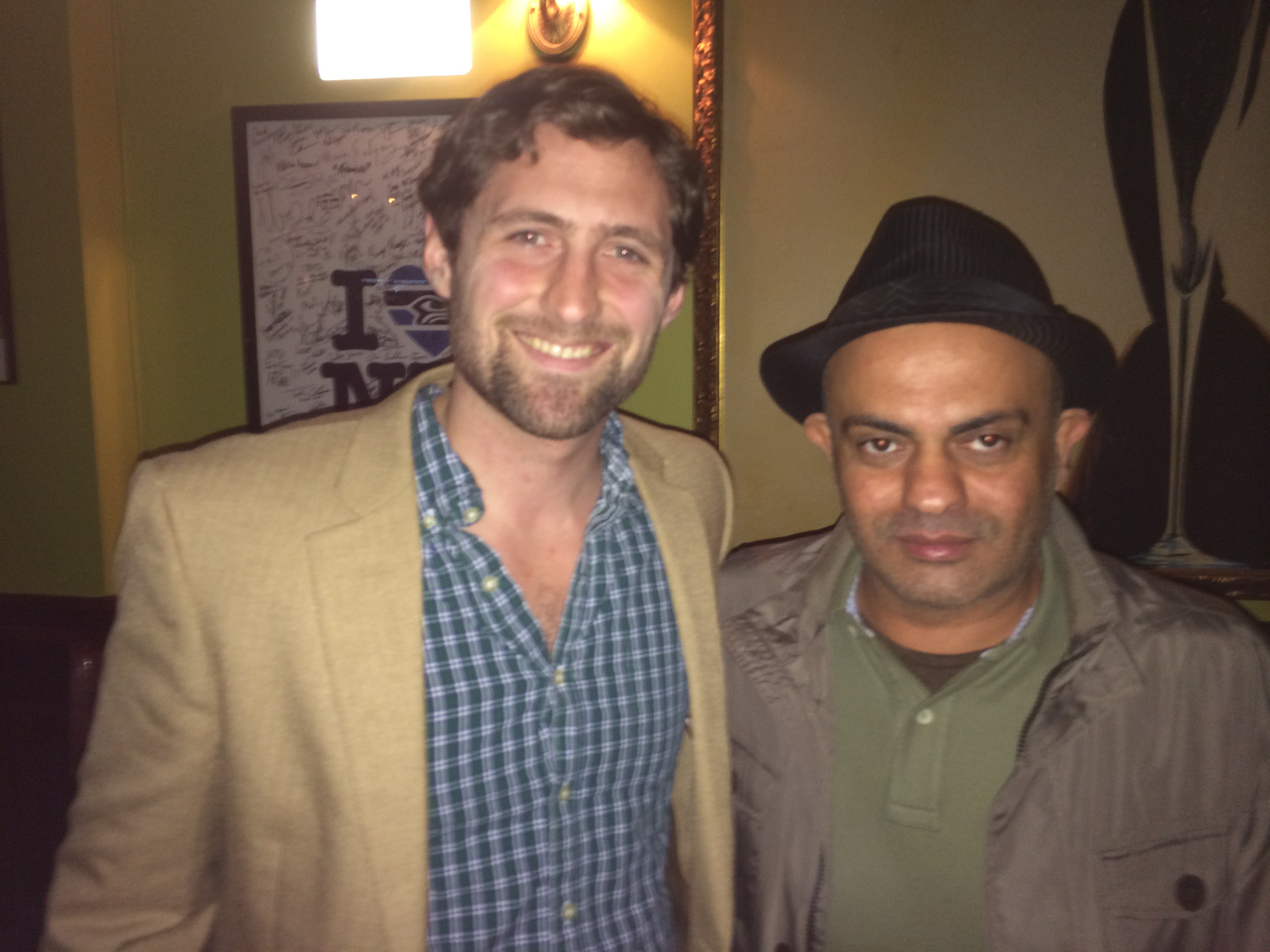
This week, Klay and Blasim read together in New York City, where I took this picture of them together:

Klay Blasim

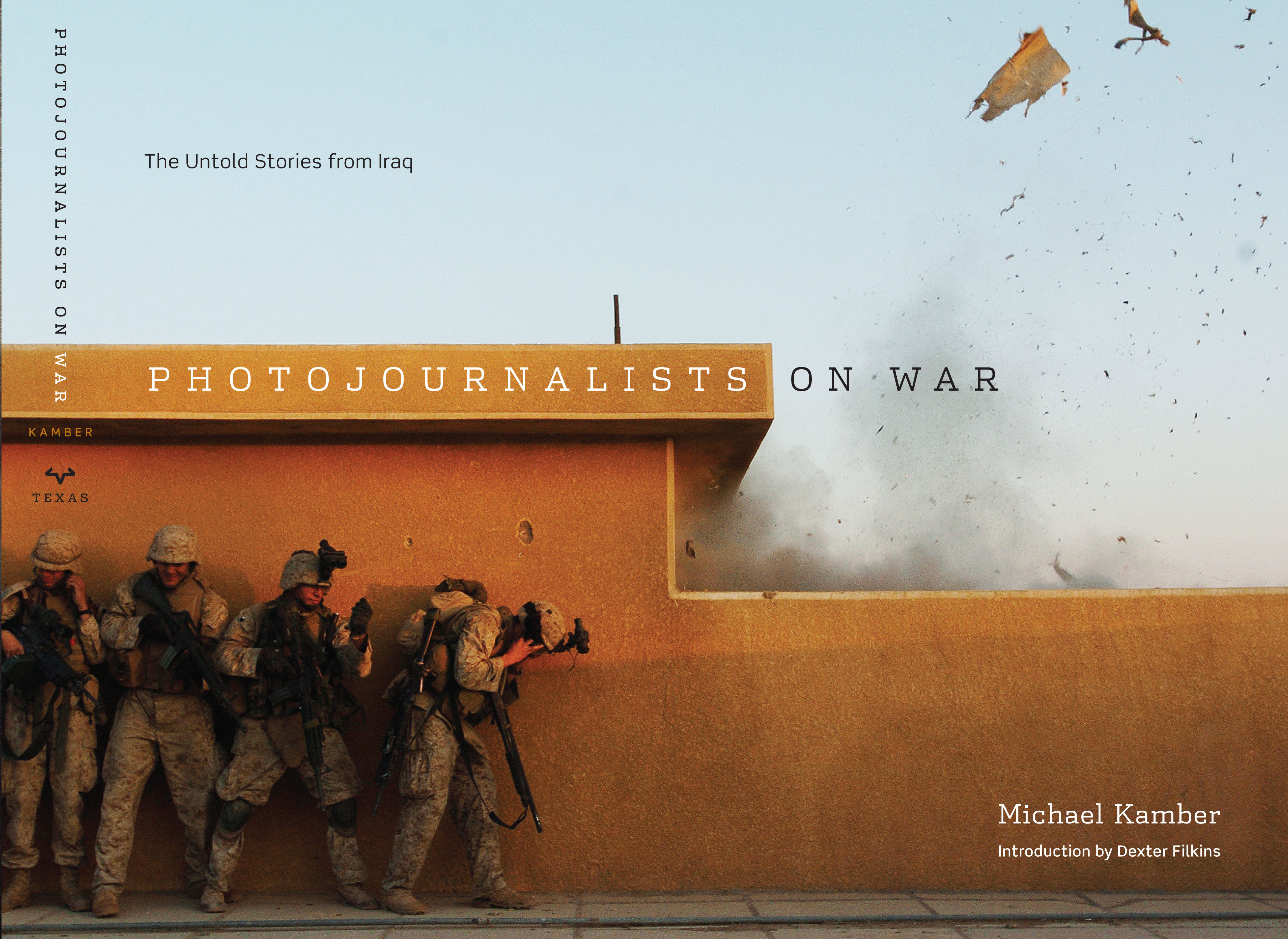
Also this week, I participated in two Vassar College classes that explored the Iraq War through fiction and photography.  The class had read David Abrams’ Fobbit, and now we were privileged to have Abrams join us by Skype—shades of deployment!—to discuss his black humor vision of Operation Iraqi Freedom.  Abrams has written about the experience in his blog The Quivering Pen and even included two wonderful student response papers to his novel.  The following class, the professor, Dr. Maria Hoehn of Vassar’s History Department, brought in Michael Kamber, a photographer who has covered both Iraq and Afghanistan for the New York Times.  Kamber has recently published an important and fascinating book called Photojournalists on War:  The Untold Stories from Iraq.  In it, Kamber compiles hundreds of photographs too graphic for military censors and media editors and published them along with their photographers’ accounts of their taking.  Kamber is adamant that photographs can shape consciousness and politics and he is vehement in his indictment of a military-media complex that has restricted, censored, and otherwise blocked distribution of the photographs that would truly inform the American public about the Iraq War.

photojournalists-on-war-michael-kamber-cover-hr

This swirl of words and impressions came as a series of publications and events brought veterans and veteran fiction into high relief.  George Packer’s glowing assessment of the contemporary war lit scene in the New Yorker was great, but its fulsome praise was undercut by Cara Hoffman’s  indictment in the New York Times that that same scene has been inhospitable to women’s first-person accounts of war.  Next came the news of yet another shooting rampage by a veteran.  One could sense public patience with vets draining away with each new article; we who were once heroes are in danger of morphing into monsters.  As if that wasn’t bad enough, the New York Times ran an opinion piece that confidently asserted a causal relationship between military service and membership in white supremacist groups and then an article that made the current generation of West Point cadets sound like bloodthirsty ingrates for their admission of regret that they would not probably not see combat in Iraq or Afghanistan.

In the midst of these gloomy accounts came a personal triumph, but one whose relevance to contemporary war literature I’m still trying to figure out. The current Maryland Historical Magazine features an article I wrote about early American novelist John Neal.  Neal is unknown to most, but he authored seven novels between 1817 and 1823–a time when very few other American writers took novels seriously.  Neal obviously did.  He called novels “the fireside biography of nations” and said, “People read novels who never go to plays or to church.  People read novels who never read plays, sermons, history, philosophy, nor indeed any thing else.”  Novels, for Neal, were places “where imaginary creatures, invested with all the attributes of humanity, agitated by the passions of our nature, are put to the task of entertaining or terrifying us.”  Ominously, he wrote that readers were excited by immoral and criminal characters more than virtuous ones.  Speaking of two popular authors of the time, Neal claimed that “all their great men are scoundrels….  their good men are altogether subordinate and pitiably destitute of energy and wholly without character.”  Be that as it may, Neal urged that all writers “write fiction–let them put out all their power upon a literature that all may read, century after century–I do not mean quote, and keep in their libraries, but read.”

Is any of this true, then or now?  Is any of it important?  Tomorrow I travel to Wesleyan University in Connecticut to participate in a “Writers on War” panel with Roy Scranton and Joydeep Roy-Bhattacharya.  I’m interested to hear what they and our audience have to say.  And what about David Abrams?  Michael Kamber?  Phil Klay?  Hassan Blasim?