Nadeem Aslam’s The Wasted Vigil

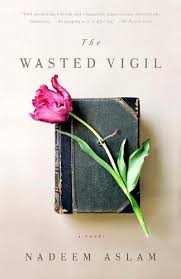
The Wasted VigilThe Wasted Vigil, Anglo-Pakistani author Nadeem Aslam’s ambitious novel about war in Afghanistan, did not arrive unheralded in 2008. Widely reviewed in major media outlets, it was pronounced the first important novel depicting contemporary war in Afghanistan, or, for that matter, Iraq. The Wasted Vigil‘s publication afterlife, however, has been curiously quiet—I’ve seen it referred to only here-and-there in writing about 21st century war fiction and it seems not to have been a significant influence on the rush of American-authored war novels that began appearing in 2011. Reviewing The Wasted Vigil in 2016, then, is a matter of restoring its pride-of-place in the annals of contemporary war literature, exploring the reasons for its semi-obscurity, and taking the measure of its interesting aspects.

The Wasted Vigil is both panoramic in scope and intensively focused in terms of time and place. Major characters include Marcus, a British expatriate entomologist who has lost a wife, a daughter, and a hand to the Taliban; David, an American ex-spy who has lost a brother to war; Lara, a Russian woman whose brother died in Afghanistan; and Casa, a young Taliban jihadist. The secondary cast numbers a variety of Afghan villagers and militia men, US special forces and contracted security operatives, and family members and friends of the American, British, and Russian major characters. The action takes place in and around Marcus’s house near Jalalabad, where Marcus has lived through decades of invasion, civil war, efforts to expel infidels, and the first years of Operation Enduring Freedom. The house, like the highly symbolic edifices found in the works of magical realists such as Gabriel Garcia-Marquez or Salmon Rushdie, to say nothing of Poe’s gothic House of Usher, features a number of fanciful embellishments. In the basement lies a giant Buddha-head and the remnants of a perfume factory—the Buddha-head, though not the perfume factory, has somehow survived the reign of the Taliban. Upstairs, Marcus’s Afghan wife in a fit of insanity has nailed the books in the library to the ceiling, while Marcus himself has lathered with mud the friezes painted on the interior walls to hide them from Taliban scrutiny. Outside, a nearby lake serves David’s Quixotic-Thoreauvian ambition to build by hand a birch-bark canoe, in the midst of the war, with, as it comes to pass, the help of Casa, who has disguised his identity as a Taliban. Aslam stirs this stew of schematic ingredients and serves them up in ways meant to be clearly representative of the failed aspirations of each character’s national and demographic origin. Over the course of a few days, described with frequent flashbacks and explanatory digressions, the hopes of each of the major characters, and in some cases their lives, are destroyed and the fragile polyglot, multinational dream of coexistence comes undone.

The Wasted Vigil reveals all its main characters to be unwitting or witting perpetrators of the fall of the house of Marcus, as well as its victims, but Aslam clearly designates Casa as the primary destroyer of the tenuous social harmony Marcus’s house represents. While other Afghans make decisions and act according to understandable mixtures of personalized desires and search for advantage, influenced by Islam and history but not predetermined by them, Casa is possessed of a diseased worldview that makes him impervious to reason, tolerance, gratitude, or kindness, while sharpening every impulse to wage war on infidels and generating heinous ideas about women. Aslam subtly portrays the thoughts of a young man infected by Talibanism as Casa is exposed to the sacrilegious ways of Marcus’s house and its residents. The end result, though, the default setting so to speak, is always a robotic return to form that drives him to destroy non-believers in the name of Allah. The depiction could not be bleaker; in comparison, Afghan insurgents portrayed in novels such as The Watch, Green on Blue, and The Valley are models of cosmopolitanism. To hope that it might be otherwise, The Wasted Vigil suggests, is foolishness—the unrewarded effort referred to in the novel’s title.

A critic blurbed on the paperback edition of the The Wasted Vigil praises the “sheer, astonishing loveliness” of Aslam’s prose, but a 2008 New York Times review takes Aslam to task for what it perceives as unnecessarily “florid” language in sentences such as, “The pomegranate was on a table close to the fireplace. She slit it open now. The outer layer of scarlet seeds had been warmed by the flames. The temperature of menstrual blood, of semen just emerged from a man’s body.” The reviewer comments: “Perhaps Afghanistan, a place of extremes, invites this overblown style. It certainly seduced Aslam, a writer of considerable talent, into thinking he could render its titanic tragedies by pushing his language into operatic effusion.” Hanging an author by the poor quality of his worst sentences might be churlish, but the critique invites consideration whether Aslam just tried too hard, too early on, to say too much about events unfolding in the “Graveyard of Empires,” as if the literary razzle-dazzle interfered with a more accessible story more simply told. The wave of contemporary war novels that began arriving in 2011—Sand Queen, Billy Lynn’s Long Halftime Walk, The Yellow Birds, The Watch, and Fobbit, for examples—revealed the inclination of American authors and readers for tales tightly focused on the experiences of young American fighting men and women. In other words, their characters, and by extension, their authors (Sand Queen author Helen Benedict and The Watch author Joydeep Roy-Bhattacharya are partial exceptions here) were not very interested in the historical and cultural dimensions of the wars in which the protagonists fought. It would take a few more years before authors of contemporary war fiction began to attempt the longer, wider, deeper, more comprehensive views that Aslam pioneered in 2008. Similarly, war lit readers initially put off by The Wasted Vigil’s grandiloquent style, overpopulated and exotic cast, somewhat preposterous setting, highly programmatic plot, and bleak theme might now reconsider whether it all really is too extravagant or not.

My review of Aslam’s 2013 novel The Blind Man’s Garden.

Nadeem Aslam, The Wasted Vigil. Vintage-Random House, 2008/2009.

Sinan Antoon’s The Corpse Washer

The Corpse Washer 2The subject of Iraqi-American author Sinan Antoon’s 2013 novel The Corpse Washer is the devastation wrought on an Iraqi family by the American occupation and subsequent sectarian violence. Antoon has lived in America since 1991, but The Corpse Washer reads as if it were a novel written from the Iraqi side, from the inside, with all the authority and righteousness of witness and victim that perspective entails. As such, it makes novels about the Iraq War depicted from American vantage points seem ethically unstable, as if spinning tales for publishing profit and reading pleasure about the petty dramas of American fighting men and women in a war that we started and in which everyone who fought volunteered was a problem. Was the waste of Iraq worth it if for no other reason than that it provided grist for the ambitions of a few dozen American literary aspirants? Does every page of contemporary war lit come at the expense of a dead Iraqi? Every dollar made?

Those are tough questions, even as they are willfully oblivious to the conscience and politics reflected in much contemporary war fiction, and in any case Antoon is not immune from their reach. But if we accept that The Corpse Washer reflects an authentic Iraqi sensibility, how does it differ from American war fiction? Originally published in Arabic in 2010 as The Pomegranate Alone and translated into English by Antoon himself, The Corpse Washer’s protagonist is Jawad Kazim, the scion of a Baghdad family whose livelihood for generations has been the preparation of the dead for Muslim burial. Secular, educated, and artistic, Kazim eschews the family profession, but the press of war drives business up while destroying the multifarious civil society that might nourish dreams of escape. As options disappear and his own family is touched by violence, Kazim, to his despair, inherits his father’s profession. At the level of message, then, The Corpse Washer is simple and clear: Kazim may not be interested in war, but war is interested in him, and if war hasn’t yet killed Kazim, at novel’s end he is fully imbricated in its harvest of dead bodies, as, the novel suggests, are all Iraqis.

Stylistically, The Corpse Washer’s prose texture is lyrical and figurative compared to the no-frills verisimilitude of most American war fiction. A passage such as the following is almost unimaginable coming from an American war author and would inspire suspicion in many readers:

Death is not content with what it takes from me in my waking hours, it insists on haunting me even in my sleep. Isn’t it enough that I toil all day tending to its eternal guests, preparing them to sleep in its lap? Is death punishing me because I thought I could escape its clutches? If my father were still alive he would mock my silly thoughts. He would dismiss all this as infantile, unbecoming to a man. Didn’t he spend a lifetime doing his job day after day, never complaining of death? But death back then was timid and more measured than today.

I can almost hear death saying: “I am what I am and haven’t changed at all. I am but a postman.”

If death is a postman, then I receive his letters every day. I am the one who opens carefully the bloodied and torn envelopes. I am the one who washes them, who removes the stamps of death and dries and perfumes them, mumbling what I don’t entirely believe in. Then I wrap them carefully in white so they may reach their final reader–the grave.

Judging by the worldviews described in The Corpse Washer and the Afghanistan war novels (The Wasted Vigil and The Blind Man’s Garden) by Pakistani-English author Nadeem Aslam, both authors and their characters view life much more grandiosely than do Americans. Nature, family, history, art, religion, and philosophical meditation on the cosmic swirl of good and evil appear to play bigger parts in the minds of Muslim citizens of the middle East and southwest Asia than they do in the minds of Americans soldiers and the authors who write about them. In the works of Antoon and Aslam, the events of the day are saturated with connections to larger frames-of-reference, in particular the crushing burden of Islamic faith, which the characters find simultaneously enriching and loathsome. Jesse Goolsby’s excellent novel I’d Walk With My Friends If I Could Find Them provides evidence for the comparison. The deepest conversation its three American soldier protagonists have while in Afghanistan concerns which Division I football teams don’t have the word “university” in their names. Goolsby damningly (though with love, too) portrays how obsession with trivia and nonsense betrays the protagonists’ lack of vocabulary and even inclination to think in larger terms before and after service, too. The banal quality of their talk and vacuous quality of their minds are the results of poor educations and weak American cultural- and family-based traditions of passing on wisdom. Ill-equipped to think well about the events of their lives, they eventually pay the cost in moral and mental distress they don’t understand and can’t describe.

Perhaps, though, little ultimately and practically differentiates banter about football and couching every utterance in high-flown language and baroque references to religion, art, and history, for all the good either does anybody. Perhaps Americans are blissfully lucky not to be haunted by larger structures of awareness, and our virtues, such as they are, may only be possible because of our defects. No one expects 20-year-olds to be as sensitive as older men trained to be artists and clerics and women informed by 2500-year-old traditions of family, anyway, and for all the cultural richness of Iraqi Islamic society the social-political pay-off seems to be slight, what with its horrible oppression of women and propensity to mutilate opponents, either before or after killing them, neither of which Antoon is shy about portraying. But whether writerly affectation or cultural truth, the literary consequences of the high-flown style are two: a far less inspired prose texture in works written by Americans about Americans, one, and, two, the rendering of the impression that a nation populated by deeply perceptive people was first liberated, if that’s the right word, and then ruined by another whose soldiers were astonishingly crude.

Sinan Antoon, The Corpse Washer. Yale University Press, 2013.

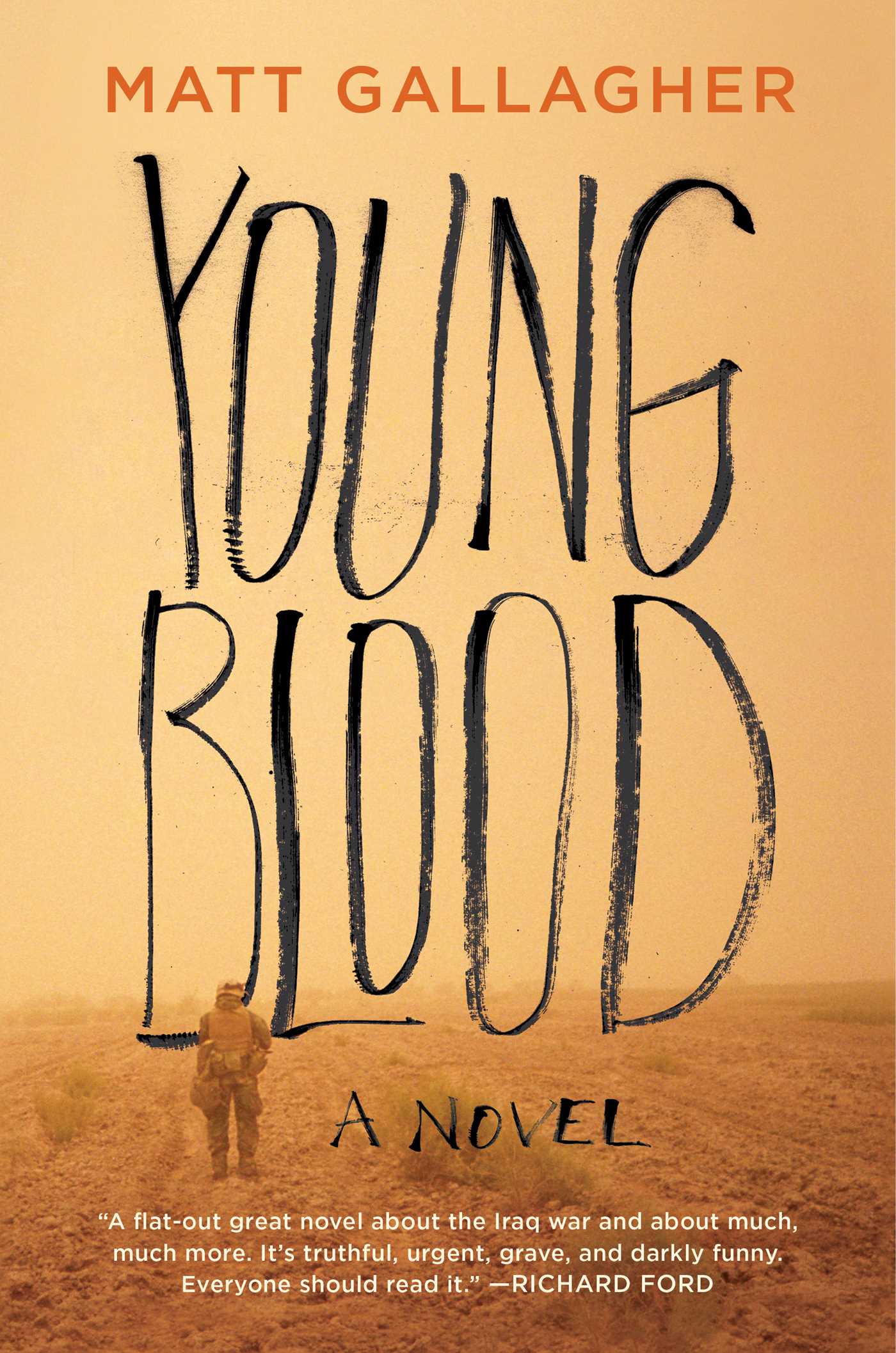
Matt Gallagher’s Youngblood

youngblood-9781501105746_hrMatt Gallagher’s novel Youngblood arrives this month to high praise. Michiko Kakutani in the New York Times writes, “With Youngblood, [Gallagher] has written an urgent and deeply moving novel.” Roxana Robinson, the author of Sparta, reports in the Washington Post that “…Matt Gallagher shows again how war works in the human heart — something we’ll need to know, as long as there is war.” Kakutani avoids grand pronouncements about the state of war writing today and Youngblood’s place in it, but Robinson notes that “War lit is now part of who we are, holding up a mirror, bearing witness to our culture” and that “Gallagher raises all these issues in smart, fierce, and important writing that plays a big part in our new genre.” Robinson implies that with Youngblood Gallagher has moved the needle, so to speak, in regard to war-writing and in so doing perhaps has moved to the head of the field in terms of achievement. Youngblood, in this view, capitalizes on possibilities hinted at by other contemporary war fiction, avoids pitfalls common to the genre, and pioneers new subjects, themes, styles, and manners of treatment.

I’m not quite prepared to say that all of this is true, though I’m leaning that way, or to explain how it all might be true, though I’m beginning to form ideas. In a dust-jacket blurb Kakutani writes of Gallagher’s “ability to move effortlessly between the earnest and the irreverent, the thoughtful and the comic.” In other words, Gallagher has a few more gears than most war-writers, especially veteran writers, and it shows in Youngblood’s deft rendering of scene, character, and context and the quality of individual sentences. In her Washington Post piece, Robinson states, “Everyone who reads war lit knows Matt Gallagher,” which speaks to Gallagher’s early prominence as the keeper of a war blog and author of a memoir both titled Kaboom, his editorship (with Roy Scranton) of the Fire and Forget anthology of short war fiction, his service as lead writing instructor with Words After War, and his many occasional pieces in print and around the web. Youngblood itself has existed in a state of revision metamorphosis for at least five years since Gallagher first hinted at its existence in 2011, and in an interview on the Bomb website Gallagher speaks about the hard work of transitioning from memoir to fiction. The years in the wood-shed now pay off triumphantly. In terms of thematic insight and narrative-stylistic texture, Youngblood is on another level completely from Kaboom and Gallagher’s Fire and Forget entry “And Bugs Don’t Bleed.”

Youngblood begins with a prologue by its first-person narrator Lieutenant Jack Porter that riffs on the difficulty of war-tale-telling in ways familiar from Tim O’Brien’s “How to Tell a True War Story”:

It’s strange, trying to remember it now. Not the war, that’s all tangled up, too. I mean the other parts….

A lot of people ask, “What was it like?” and once, I even tried to answer. I was home, with old friends. They meant well, and while they didn’t want a perfect story, they wanted a clean one. It’s what everyone wants, and I knew that. But it came out wrong….

What was it like? Hell if I know. But next time someone asks, I won’t answer straight and clean. I’ll answer crooked, and I’ll answer long. And when they get confused or angry, I’ll smile. Finally, I’ll think. Someone who understands.

The tone here is portentous, but Porter’s voice soon relaxes into a winning blend of snark, self-deprecation, sensibleness, and perception. On Youngblood’s first page, Porter reports that upon waking up one morning after several months in Iraq, “I shook out my boots to make sure a scorpion hadn’t crept into them during the night. It hadn’t happened to anyone yet, but still, there were stories.” The prologue and opening scene reflect the vexed nature of military wisdom, with stories—anecdotes, lore, and narratives—providing the best access to knowledge but also frustrating with their inadequacy, manipulativeness, and possible fraudulence. In novels, stories become plots—interwoven narratives that seem as dependent on character and context as they do on events—and Youngblood raises the war-writing bar in regard to complex, imaginative, and suspenseful story-lines. One thread has Porter struggling to solidify his command of his platoon as his leadership authority is challenged by the arrival of a much harder, more experienced NCO named Daniel Chambers. A second has Porter trying to solve a possible series of murders that took place several years earlier in Ashuriyah, the fictionalized neighborhood near Baghdad his men patrol daily, killings in which Chambers, on an earlier tour, may have been complicit. As these story-lines unfold a third develops: Porter’s growing affection for Rana, an Iraqi woman whose marriage to an American soldier early in the war appears to be connected with the unsolved deaths.

That the first years of Operation Iraqi Freedom were freewheeling enough to permit a soldier to venture solo outside the wire to court an Iraqi woman intrigues Porter, and me as well–I’m not sure I’ve ever heard of a soldier marrying an Iraqi who did not work as linguist, cultural analyst, or some other position on a FOB. Similarly, a second Iraqi woman character who supplements her duties as an outpost wash-woman by serving its soldiers sexually seems a stretch, but Gallagher’s certainly heard stories or seen things I haven’t been privy to. Youngblood uses the imaginative space of a novel to speculate that such things might have happened and how they might have happened, which probably means they did happen, in my reckoning, in some form or another, on the down-low. In the same vein, Porter’s company commander is a closeted homosexual, and Chambers is sleeping with the hot chick at battalion headquarters. A well-informed non-fiction account of the romantic and erotic lives of deployed soldiers remains to be written, but Youngblood uses fiction to plausibly frame many of the possibilities. And while no one would argue that a slew of GI marriages and an organized sex-for-pay system were just what OIF and OEF needed, the heated-up private lives of Youngblood characters reminds us that the official sexual sterility of our operations in Iraq and Afghanistan is connected, at some level, with the barren unfruitfulness of our political and military partnerships.

In any case, romance and marriage with an Iraqi national could only happen under conditions of extensive civ-mil engagement, and Youngblood tells a tale of American occupation and counterinsurgency, not combat. As Porter states early on, “We’d been in country five months, and hadn’t even been shot at yet.” The setting allows Gallagher to show American soldiers engaging Iraqis on terms other than at the point-of-a-gun and over a longer duration than a raid. To the soldiers in Youngblood, Ashuriyah residents are anything but a faceless blur of military-aged-males who need killing. Porter’s platoon is first slowly, then quickly drawn into a complicated swirl of sectarian feuding and side-taking, accompanied by careful withholding and dissemination of important information. The soldiers learn that the people of Ashuriyah have names and distinctive personalities, thoughts, and goals, along with complicated personal histories, family ties, and memories; they are met daily by the Americans and each inspires varying levels of trust, respect, and regard. Much contemporary war fiction—Sand Queen, The Watch, The Valley, and The Knife, for examples—portrays Iraqi and Afghan characters, and Green on Blue is wholly devoted to the view of an Afghan tribal militia-member—but among novels written by Americans, Youngblood by far particularizes the wide-ranging and diverse social world encountered by American soldiers.

Youngblood also possesses a sense of history that many other war novels lack, a deficiency shared by most soldiers deployed to Iraq and Afghanistan. Not history as in “Cradle of Civilization” or “Graveyard of Empires,” blah blah blah, but recent real history as towns, neighborhoods, and communities experienced successive waves of American occupation. American military planners pay lip service to what they call “situational awareness” and “institutional memory,” but most American soldiers on deployment were as oblivious about what happened in the preceding five years of the battle spaces they occupied as they were of the people who lived there. All who deployed know the saw about Iraq and Afghanistan wars being “fought one year at a time” and references to the daily grind of non-descript, unfocused missions as “Groundhog Day” were also common—a damning indictment of the sloppy and thoughtless new American way of war. In Youngblood, however, it matters that it is circa 2010 in Ashuriyah, not 2007, 2005, or 2003: because things change, truth and knowledge become moving targets. Consciousness of their late-stage participation in their generation’s war preoccupies Porter’s men. Though eager to test themselves under fire, none want to be killed in a war no one cares about anymore. But riding out their deployment doing nothing but vapid presence patrols and checkpoint operations proves impossible. Events that occurred early in the occupation have consequences that take time to develop, as memories linger and sometimes fester and opportunities for action arise. The lives of Porter and his men are jeopardized by things thought to be long past mattering, but which reverberate anew under the pressure of fresh circumstances. The longer view doesn’t win the war for Porter’s platoon, but it certainly gives Youngblood more moral heft than war fiction that renders Iraq and Afghanistan as generic post-2003 spaces or portray time rigidly from a purely American perspective—a year away from home, a few hours’ mission, a night spent waiting out rocket attacks.

Gallagher speaks openly in interviews of his love for David Simon’s television crime series The Wire, and it’s easy to see The Wire‘s Detective Jimmy McNulty in Porter’s raffish approach to duty. We might also see the rivalry between Porter and Chambers as a reworking of Stringer Bell and Avon Barksdale’s legendary brains-vs-brawn contestation for control of west Baltimore’s drug-dealing ring, and Youngblood definitely features a Bubbles-type informant. But the excellence of The Wire and Youngblood lies not in their ability to create memorable characters, as great as they are at that. Gallagher views Iraq as Simon did Baltimore: a never-ending saga of colliding social forces in which the actors might possess very distinctive personalities, but little real agency. Instead, their opportunities for action are defined by the cohorts in which they group themselves—police, drug-dealers, politicians, dock-workers, etc. in the case of The Wire—and they are destined to play parts scripted by circumstances beyond any one individual’s ability to control. Soldiers more than most people understand they are cogs in bigger systems and processes, but soldiers are also tantalized by dreams of heroic individualism and tend to think of their deployments as highly-personalized war dramas starring themselves. Novelists should know better, though, as should veterans five years removed from deployment. Youngblood’s The Wire-like alertness to social, cultural, and historical context demonstrates how it might be so.

Matt Gallagher, Youngblood. Atria, 2016.

Christopher Robinson and Gavin Kovite’s War of the Encyclopaedists

War of theA lieutenant’s story should always be interesting. Whether expressed in memoir, fiction, or poetry, tales of promising youth crashing against the chaos of battle and the colossus of military culture and tradition provide ample grounds for dramatic conflict and inward soul-searching. But when I got around to reading the first wave of lieutenant memoirs written by veterans of Iraq and Afghanistan, they struck me as off-key and dated. Not to name names, but the memoirs published in the 2000s seemed rooted in pre-9/11, pre-digital-age notions of how young officers might respond to their ordeals. The tone’s a little stiff, as if the authors were overly indebted to leadership homilies learned in officer training programs, from Hollywood movies such as Platoon, and from a heroic tradition of war literature rooted in ancient Greece and culminating in Tim O’Brien’s “The Things They Carried.” The authors seemed preoccupied with testing themselves as leaders of men in battle, and oblivious to other dimensions of the wars they were fighting, such as actual Iraqis and Afghans and the complicated mission of occupation. The authors, too full of respect for a military that was seriously struggling, didn’t much resemble the young officers I met during deployment to Afghanistan in 2008-2009 or knew generally.

By 2010, a generational divide between junior officers—lieutenants and captains—and field grade officers—majors and up—divided the officer corps in ways unforeseen in 2005. According to the field grades, junior officers were undisciplined and disrespectful, even as senior officers acknowledged that lieutenants and captains were combat-experienced and deployment-tested like they themselves never had been. The view from below was even more antagonistic: to the juniors, anyone commissioned before 2001 was apt to be a dinosaur, or a blustering paper-maché tiger, oddly-motivated by concern for career and appearances and devoid of practical wisdom. Army captain Matt Gallagher’s 2010 Kaboom was first officer’s memoir in which something resembling this modern voice and mentality—way less self-serious and very ambivalent about the bigger military being served—appeared. Elizabeth Samet’s 2014 No Man’s Land, based on her friendship with dozens of West Point-educated young officers, also sympathetically catalogued this perspectival divide between young and old. Contemporary war fiction was slower to channel such up-to-the-moment sentiments, but recently has begun to catch up. Novels such as Michael Pitre’s Fives and Twenty-Fives, John Renehen’s The Valley, Christopher Robinson and Gavin Kovite’s War of the Encyclopaedists, and now Gallagher’s own Youngblood portray lieutenants at war in ways that seem very aware of how 25-year-olds actually are these days, especially those in uniform and wearing brass.

By some rights, I’m the ideal reader for Robinson and Kovite’s War of the Encyclopaedists. The novel’s two subjects—friends Halifax Corderoy, a neurotic English grad student, and Mickey Montauk, a second lieutenant in charge of an infantry platoon in Iraq—reflect components of my own young adulthood as an MA English student who left grad school to join the infantry,–and indeed I related to much that each respectively undergoes in grad school and the Army. A central conceit of the novel—that Corderoy and Montauk are co-authors of a clandestine Wikipedia page called “The Encylopaedists” in which they imaginatively refract the major events of their friendship—reminds me of my own experiments in Wiki-writing in its early days. My grad school and lieutenant days were some thirty years ago, however, and War of the Encyclopeadists’ jacket cover resolutely announces itself as “one of the most revealing novels yet about the millennial generation.” The “m-word,” dare I speak its name? Writers under 30, I’ve noticed, are suspicious that boomers and Gen Xers have anything meaningful to say to them or about them, and they aggressively patrol the boundaries of who can speak for their generation. The “m-word” is related to the equally fraught “h-word”—hipster—and Corderoy and Montauk, who at novel’s opening are throwing art-themed parties in Seattle’s groovy Capital Hill district, are clearly members of the intellectual and military wings of the cool crowd. These factors made my retired-lieutenant-colonel-self a little hesitant about testing Robinson and Kovite’s waters.

But fools rush in, as they say, as they also say no fool like an old fool, so here goes. I quite enjoyed the worlds and worldviews of Corderoy and Montauk, as well as those of the women in their lives, Mani Saheli and Tricia Burnham, and am glad Robinson and Kovite have generously allowed me, and all of us, to peep, eavesdrop, and lurk in their presence. I found their life stories interesting, laughed at their observations, sympathized with their mishaps and lows, and celebrated their triumphs, such as they were. Which is good, because if I didn’t have such a fine time reading War of the Encylopeadists, prolonged exposure to Corderoy’s, Montauk’s, Mani’s, and Tricia’s 20-something effervescence would have been depressing and their antagonism to age painful. Young as I no longer am, they reminded me at every turn what a blessing youth is, even when defined by anxiety, doubt, setbacks, and missed opportunities. The characters themselves wouldn’t see it this way, but from the vantage point of age they are clearly in the middle of the most exciting time of their lives, which the authors make palpable on the page.

So if Corderoy and Montauk are millennials, what’s so millenial about them? The most prominent trait I noticed is their ruthless tendency to “judge the living shit” (to use a phrase offered by Robinson and Kovite) out of people who strike them as douchebags, bores, or representative of authority, which is almost everyone. To the extreme, they prefer their own company, and the company of like-minded women such as Mina and Tricia, and though in-your-face-rudeness is not their style, they are miserable when forced to spend time with people who don’t please them. The second thing I noticed is their emotional armor, suspicious of sentimentalism and lacking vocabulary, know-how, and courage to express feelings. Their reserve and ironic attitudes makes them, well, cool, especially Mina and Tricia, who are so emotionally tough as to be practically bullet-proof, but it also causes problems: their friendships grow distorted, their romantic relationships contorted, drugging and drinking (“partying”!) consume them, they have definite purpose and commitment issues, and the fanciful Wikipedia page Corderoy and Montauk devise soon becomes the sincerest means by which the two friends communicate with each other. Perhaps youth was ever so, but the tendencies seem decidedly pronounced in this “millennial” novel. The good news is that none of this precludes Montauk from being a pretty fair lieutenant once he swings into action. While Corderoy drifts and wilts in graduate school, the demands of Army missions and the needs of his soldiers draw Montauk out of himself and show him to be both a reasonably competent leader and damn decent person, too. It’s pretty clear, though, that he would not be happy in the slow-moving, tradition-bound Army should he survive combat and try to make it a career.

Montauk reminds me of many lieutenants I knew who weren’t hung up on proving themselves hard at every opportunity. Free of ridiculous self-identification as a “warrior,” he executes missions, takes care of soldiers, and confronts problems sensibly and independently. His platoon’s mission to man a Green Zone checkpoint is not a high-speed one, but it’s intriguing and dangerous enough to keep Montauk and his platoon on their toes. Robinson and Kovite to their credit never once have Montauk complain about boredom or the heat—two duller-than-dirt sentiments that should be banished from future writing about Iraq. Montauk makes a few mistakes, chief among them a crack-pot idea to offer a bounty for information about the murder of one of his interpreter, but that’s the nature of being a second lieutenant. A very interesting scene portrays Montauk being rebuked by his company commander, Captain Byrd. Field grade officers in War of the Encyclopaedists offer Montauk nothing, but Byrd sympathetically details Montauk’s good qualities and his limitations:

“Montauk, let me tell you what your mission is. Your mission is to secure the southern entrance into the Green Zone. It’s to ensure that the Green Zone doesn’t get blown up by anything coming through your checkpoint. It’s also to accomplish that while taking care of the troops in your platoon and following my orders. Which, by the way, means informing when you intend to something novel like post personal rewards for information leading to the death or capture of a terrorist.”

“Yes, sir.”

“I don’t want to stifle your initiative. You’re all about finding ways to accomplish the mission, and that’s good. You’ll be a good company commander someday. But this reward shit is dumb. It’s just going to lead to a bunch of Iraqis coming up to try to your cash.” He spat in the bottle again. “But maybe the real issue is that it makes you look like a weirdo in front of your platoon. You know what most guys read around here? Maxim.”

“Uh, hooah?”

“You’ve got a bunch of highbrow shit coming in, like your book review newspapers. And a big old copy of The Canterbury Tales. It’s good that your troops think you’re a smart guy. That’s going to give them confidence. But you need to understand how you come off to your platoon. They need to know that you’re not making decisions affecting their personal health and safety based on some criteria from some cuckoo-cloud Montauk-land. And what I this is that your reward scheme comes across to your guys as a weirdo obsession. That you’re thinking about revenge rather than your mission, or that you’re somehow more attached to your translator than your men. Understand what I’m saying?

“Roger, sir.”

“So, with that in mind, shit-can the reward. Any questions?”

“No, sir.”

“All right. Dismissed.”

Montauk slung Molly [his weapon] over his shoulder and headed out the door.

“And go read a copy of Men’s Health or Low Rider or something,” Byrd said.

Montauk resents authority figures and hates speechifying, as I suspect do Robinson and Kovite, but Byrd isn’t wrong and Montauk needs to hear what he has to say. The talk is not meant by the authors to be a beat-down, and Montauk doesn’t take it that way. His relationship with his platoon is actually fine, but not all his ideas are good ones. Being a second lieutenant is a constant, very intense, often painful process of matching one’s own thoughts about matters against real possibility, and good company commanders such as Byrd serve as reality-principle agents aiding the learning process. That’s the kind of stuff that makes lieutenants’ stories memorable, and War of the Encylopaedists commendably gives this ages-old tale modern expression.

Christopher Robinson and Gavin Kovite, War of the Encyclopaedists. Scribner, 2015.

The Military Spouse’s Book Reviewed: Andria Williams’ The Longest Night

The Longest NightCongratulations to Andria Williams on the release of her novel The Longest Night this week. A domestic drama cum technological thriller about a military family during the Cold War, The Longest Night displays the same lively, curious, and generous spirit of Williams’ The Military Spouse Book Review, Time Now’s compadre in martial-themed literary blogging. Williams is an alert and appreciative reader of Time Now, thankfully, so my fear upon reading The Longest Night was not that I would dislike it, but that I wouldn’t be able to find ways to write about it in the context of my interest in Iraq and Afghanistan. Broadly considered, however, every novel published after 9/11 reflects and refracts the tension of contemporary war. Those recent novels that make their subjects past conflicts—Toni Morrison’s Home, Karl Marlantes’ Matterhorn, Denis Johnson’s Tree of Smoke, Sara Novic’s Girl at War, for examples—even more directly proffer ways to better understand what it means to be at war now by reminding us of antecedents. Without pushing the point too far or too hard, in The Longest Night, historical displacement—Idaho, 1961—might be said to allow Williams to obliquely address aspects of 21st-century military service, deployment, and war she has observed as a close reader of contemporary war literature and the wife of a several times deployed Navy officer.

The protagonists of The Longest Night are Paul and Natalie Collier, an Army couple with kids who are assigned to an Idaho Falls, Idaho, base dedicated to testing portable military nuclear reactors. Paul is part of a small team of enlisted soldiers responsible for the military’s smallest reactor, a temperamental prototype known as the CR-1. Paul is by-the-book and devoted to duty, which causes him to quickly run afoul of his boss, Master Sergeant Richards, a bitter, semi-functional alcoholic who resents Paul because he is young, hopeful, and dedicated. Paul is all that, but unfortunately, he’s also a bit rigid and unimaginative, which makes things hard for his wife Natalie, a freer-spirit who can accept the strictures of military life and marriage to Paul as long as she’s not reminded, that is to say tempted, by more exciting possibilities. But just as Paul fails to get along with his boss, Natalie’s relationship with Master Sergeant Richards’ wife Jeannie flounders. The social strain grows even more complicated when Master Sergeant Richards connives to have Paul re-assigned temporarily to another nuke site in far-away Greenland; in his absence, Natalie befriends and then loses her heart to Esrom, a dreamy Idaho cowboy-mechanic much more her type in spirit and outlook. To this saga of marital drama, Williams adds the danger of techno-catastrophe: upon Paul’s return to Idaho, the CR-1 undergoes a meltdown, which may or may not be a result of human error. Based on a true event in 1961 in which three men died, Williams’ dramatized version of the incident forces Paul and Master Sergeant Richards, as well as Natalie and Jeanne, to confront their animosity, and Natalie to come to terms with her feelings for Esrom, in the midst of calamity.

The Longest Night reminds us that at the tail-end of the Eisenhower era and the dawn of Kennedy’s New Frontier a small sliver of the populace actively faced the international threat-of-the-day while the vast majority of Americans got on with their lives as obliviously as possible. Even in a nation far more militarized than it is now, Paul and Natalie’s status as an Army family isolates them from native small-town Idaho residents resistant to outsiders and change. Paul’s nuclear silo, located 50 miles from town, resembles the combat outposts oft-portrayed in contemporary war-writing, and Williams better-than-most describes fraught soldierly human interaction in dangerous, isolated conditions. Startling descriptions of enlisted soldiers left responsible for highly-complex nuclear reactors—true historically—reminded me of contemporary military scenarios that have the officer corps preoccupied with strategy and careers while neglecting the worker-bees—to include the Chelsea Mannings, Edward Snowdens, and drone-operators—who actually have their hands on the cyber weaponry and killing machines of our day (though neither treason nor combat are issues in The Longest Night, I should say). Paul’s return home from work every day is certainly not reflective of Iraq and Afghanistan, though the close intertwining of warzone and homefront experiences made possible by today’s modern media makes an analogy conceivable. More saliently, Paul’s short-term deployment to Greenland allows The Longest Night to portray the experience of family separation entirely characteristic of contemporary war. Williams is everywhere all-the-time alert to the difficulty military service places on marriage: Paul does not plan to be a distant, neglectful husband and Natalie has no intention of being tempted by another man, but so it happens in the novel and so it still happens to military couples.

1961 was a time of social conformity, while 2016 prizes individuality, so it’s tricky business retroactively creating characters who inhabit that distant age without being either stereotypes or looking like aliens imported from the future. For me, Paul and Natalie are true to their period: intelligent processors of their perceptions and experiences, but still beholden to the cultural possibilities available to them. They are far more conventional and purposeful than the often reckless and hedonistic enlisted couples I knew while in, but I’ll buy that their propriety–as well as their own form of recklessness–was characteristic of the era. Williams notices what her characters notice, but also much that they don’t understand or only half-intuit; this close attention to their interiority as much as the period detail makes The Longest Night come alive. In many ways, though, the strictures of military service and culture portrayed in The Longest Night might be said to be timeless, for Williams casts a net around military families and military duty and pulls in many fine fish in the way of still relevant insights about life in uniform. Readers who never served or veterans who served only a tour or two can make of Williams’ portrait of military domesticity what they will, but readers who have tried to keep a marriage together over the long haul of a military career will marvel at her acuity at describing the rewards and pleasures, such as they are, while also conveying a more pervasive feeling of disappointment and perhaps even of life wasted. That’s almost too tough a sentiment to contemplate in the present, frankly, so it helps that Williams has framed the possibility in a long ago, far-away place.

Some readers, I suppose, will have trouble with Williams’ kluging of domestic drama and techno-action storylines, but The Longest Night’s suspense-and-surprise-laden plot elevates it above the faux-biography and mundane reportage of much war fiction. Keeping together the complicated mix of ingredients—family drama, military dysfunction, nuclear meltdown, Cold War America, the civil-military divide—is Williams’ power of language. The Longest Night sentences bounce with unexpected word choices, turns-of-phrase, figures-of-speech, and images. Exciting use of free indirect discourse generates finely-shaded judgments in those novelistic spaces between the characters’ thoughts and Williams’ own. Descriptions of nuclear reactor technology never bog down the narrative, and dialogue meant to be charming or funny actually is—tonally, The Longest Night is winsome, but it’s easy to imagine Williams writing comedy. Imagination, insight, and craft are all in fine order, so the saddest thing to report here is that we won’t have the pleasure of reading a review of The Longest Night on The Military Spouse Book Review.

Andria Williams, The Longest Night. Random House, 2016.

Ikram Masmoudi’s War and Occupation in Iraqi Fiction

Ikram MasmoudiIkram Masmoudi’s most welcome War and Occupation in Iraqi Fiction surveys a remarkable body of fiction that portrays from the inside Iraq’s 30+ year history of war, oppression, invasion, occupation, and sectarian violence beginning with the Iran-Iraq War in 1980. According to Masmoudi, novels authored prior to Saddam Hussein’s overthrow by US forces in 2003 were marked by the Ba’athist regime’s censoring practices, but immediately following 2003 Iraqi authors in numbers uninhibitedly began writing novels that portrayed with critical urgency and imagination both the Iran-Iraq War and the 1991 Gulf War. Very soon, they also began to write novels that depicted the horrendous social turmoil unleashed by American occupation and subsequent sectarian violence. American readers might be somewhat aware of fiction by Hassan Blasim and Sinan Antoon, two expatriate Iraqi authors in the tradition of which Masmoudi writes. Masmoudi touches on both Blasim and Antoon, but the primary focus of her study is a series of mostly-untranslated novels written by authors unable to flee tyrannical power, foreign occupation, and sectarian conflict. Based on Masmoudi’s accounts of these works, one can only hope they are quickly brought into English, for they appear to combine compelling storylines, perceptive insights, and literary craft to a high degree.

War and Occupation in Iraqi Fiction chapters on the novels of the Iran-Iraq War and the Gulf War are full of interest, but of most concern here are two chapters devoted to works set in post-2003 Iraq. In Chapter Three, titled, “Bare Life in ‘New Iraq,’” Masmoudi examines three novels whose protagonists are interpreters working for Americans. The protagonist of each novel begins as a hopeful idealist, mostly secular and not ideologically motivated, and each is brought to ruin by the experience of trying to assist Americans. The protagonist of Shakir Nuri’s The Green Zone (2009) translates for a high-ranking officer in the Coalition Provincial Authority. Appalled by the ignorance and brutality of his American bosses and driven to seek vengeance against them for the death of his wife, Nuri’s protagonist detonates a suicide vest at a Green Zone gathering of CPA and Iraqi leaders. Inaam Kachachi’s The American Granddaughter (2008, with an English translation in 2012) features an Iraqi-American heroine who returns to Iraq to serve as a translator for American forces. Naïve and unassuming at first, she soon realizes that rather than aiding Iraq’s transition to democracy, she is participating in its subjugation to the extent of accompanying US soldiers on raids on the homes of innocent non-combatants. In Baghdad Marlboro (2012), by Najm Wali, an American Gulf War veteran returns to Iraq to seek forgiveness and reconciliation with the families of soldiers he helped kill in 1991. The goodwill quest immediately goes awry; the American is quickly kidnapped and killed and the translator he has retained to help him must flee for his own life from the perpetrators of the murder.

The novels described in Chapter Three of War and Occupation in Iraqi Fiction describe the occupation and individual Americans unflatteringly enough, but do so in the context of a more general Iraqi social deterioration plagued by problems more of Iraq’s own making (though of course connected to the occupation). Fundamentalist, sectarian, and Iraqi criminal violence arguably equal the horrors of American imposition of force for the protagonists of The Green Zone, The American Granddaughter, and Baghdad Marlboro. The novel Masmoudi explores in Chapter Four, however, is much more uncompromising in its indictment of Americans. The chapter, titled “Bare Life in the Camp,” examines at length Shakir Nuri’s The Madmen of Camp Bucca (2012). Nuri here is unsparing in his portrait of the atrocious carceral conditions of the American prison camp named in its title, which housed upwards of 20,000 prisoners in makeshift conditions in a remote desert corner of Iraq. The horrors of Camp Bucca have been amply described in Helen Benedict’s novel Sand Queen (2011), but based on the quotations from The Madmen of Camp Bucca provided by Masmoudi, Benedict didn’t know the half of it. Masmoudi doesn’t offer biographies of the authors she studies, so it’s not clear if Nuri was incarcerated at Camp Bucca (or if he and the other Chapter Three authors worked as interpreters themselves) and thus speaks from first-hand experience. In any case, though, the quoted passages from The Madmen of Camp Bucca are full of damning detail and overlaid with a sense of dismay that the American occupiers are not just brutal, but inept and thoughtless. One passage from Nuri’s novel, for example, takes aim at the ignominy of Camp Bucca being named after a New York City firefighter who gave his life trying to save others at the fall of the Twin Towers:

Oh you, the firefighter whom America committed a crime against, you sacrificed your life to save innocent Americans; America did nothing more than humiliate you by naming after you the worst prison ever in the history of humanity…. Oh my God, does this man deserve to be insulted every day while his soul still hovers above the place of the crime? And to make matters worse, America invited the daughter of this man to visit the camp to bless this quagmire that bears the name of her father.

Camp Bucca has its defenders and apologists–its Wikipedia entry, for example, appears to have been written by a US military public relations team–but those trying to put a shiny face on whatever happened there will be arguing uphill in wake of Nuri’s (and Benedict’s) depiction. But Nuri suggests that a shiny face was never the point of Camp Bucca anyway, as its whole purpose was to inflict humiliation on Muslims equal to the anger felt by Americans about 9/11.  The narrator of The Madmen of Camp Bucca reports:

Every time the guards look at the banner with the name “Bucca” on it, they show their teeth and become even more violent towards us, as if we had exploded the World Trade Center. Cursed is New York who is sending us such people.

Masmoudi resurfaces an interesting statement in this regard by Henry Kissinger found in Bob Woodward’s State of Denial (2006). Woodward writes, “Asked why he had supported the Iraq War, Kissinger replied”:

“Because Afghanistan wasn’t enough” … In the conflict with radical Islam, [Kissinger] said they want to humiliate us. “And we need to humiliate them.” The American response to 9/11 had essentially to be more than proportionate–on a larger scale than simply invading Afghanistan and overthrowing the Taliban. Something else was essential. The Iraq War was essential to send a larger message, “in order to make the point that we are not going to live in the world that they want for us.”

The fiction Masmoudi studies seems perplexed that Iraq’s and America’s national histories have had to have been so intertwined in the first place; from Kissinger’s statement it appears that it was Iraq’s bad luck to be in the way of an angry nation eager to take a swing at it-didn’t-care-who-or-what. Iraqi war fiction takes the measure of individual American soldiers often–many novelists describe their first encounter with actual Americans, as in a passage from The Green Zone: “I did not expect to see them except on a TV screen, and here they were, flesh and blood before my eyes; they never tired of searching us.” Clearly enough the American occupiers are found wanting in most cases, though exceptions occur. Five enlisted Marines in The Green Zone, for example, are portrayed as individuals roughly no worse and no better than one might expect. The dominant response, however, is disappointment: narrators and characters repeatedly report their shock on learning that the military forces that deposed Saddam were not just ignorant of Iraq’s rich history and treacherous social dynamics, not just disdainful of its Islamic religion and culture, and not just arrogant in their belief in their own superiority.

Their biggest problem, one gleans, is that Americans were just lousy at doing what they thought needed doing: untrained, unresourced, without a plan, their on-ground performance wildly out of whack with their vaunted goals, ideals, and standards of competence. To Iraqis, then, the humiliation of being subjugated by boobs adds stinging insult to real injury and abuse. Generous amounts of self-loathing on this count permeate Iraqi war fiction, along with many other forms of guilt and internalized hatred brought about by a sense of ineptitude and helplessness. Iraqi authors use fiction to portray injustice wrought by foreign occupiers, but also to come to terms with their own complicity—both personal and collective—in allowing a proud nation to precipitate its own destruction over the course of thirty torturous years. This complex attitude, sad as it is, enriches and elevates the fiction that documents it and might even be said to account for the body of work. Deprived of all other forms of productive, legitimate, and non-violent citizenship, the authors and characters of Iraqi war fiction resort out of necessity to story-telling to bear witness, call for change, and assert their agency.

Iraq’s post-2003 war fiction, in Masmoudi’s reading of it, privileges the point-of-view of dissidents, deserters, prisoners, suicide bombers, and other marginal figures, to include lowly soldiers given little choice but to obey orders and kill or be killed. Masmoudi sees the Iraqi war fiction corpus as exemplifying the ideas of influential Italian political theorist Giorgio Agamben’s Homo Sacer: Sovereign Power and Bare Life (1998); Agamben terminology such as “homo sacer,” “bare life,” “state of exception,” and “the camp” organizes and deepens Masmoudi’s analysis at many points. Agamben is generally thought to critique Western modes of thought and political organization, so Masmoudi cinches his relevance to the Islamic Middle East milieu of Iraq by linking Agambian notions to post-colonial scholar Achille Mbembe’s concept of “necropolitics”—a social order predicated on technological means of killing—and Frantz Fanon’s analysis of the devastating psychological effects of colonialism on both colonizer and colonized. Lurking behind Agamben, Mdbeme, and Fanon is Michel Foucault’s “biopower”: the exertion of political power through control of the body politic.

These heavy-hitter theorists are handled accessibly and sensibly by Masmoudi; Iraq war fiction titles such as Freedom of the Bagged Heads (Jasim al-Rasif, 2007), The Dead of Baghdad (Jamal Husaya Ali, 2008), Killers (Diya Ali-Khalidi, 2012), The Morgue of Baghdad (Burhan Shawi, 2012), The Corpse Washer (Sinan Antoon, 2010, translated into English in 2013), The Corpse Exhibition (Hassan Blasim, 2013), and Frankenstein in Baghdad (Ahmad Al-Sadawi, 2013) suggest how Mbembe for one is on to something. In any case, Masmoudi’s approach is more thematic than theoretical. We might hope for even more historical and biographical context than she offers. Who are the authors she studies, and are they representative of a large segment of Iraq citizenry or a particularized class of intellectual-artistic dissidents? Were ideologically-motivated Shias and Sunnis publishing fiction? What were the conditions of publication in Iraq during the American years—who was reading, who was publishing, how popular were the works, and what was their influence? What control over media, print, and culture did Americans try to exert (probably none, through either benign or sloppy neglect, but still worth exploring)? Inaam Kachachi, the author of The American Granddaughter, is a woman, but the other authors under examination are men; what else might we learn from fiction written by Iraqi women? Everything Masmoudi offers for consideration is excellent, but leaves me, and hopefully others, wanting more. A logical first step will be the translation into English of all the novels of which she writes.

Ikram Masmoudi is an assistant professor of Arabic Studies at the University of Delaware. War and Occupation in Iraqi Fiction was published in 2015 by Edinburgh University Press as part of its Studies in Modern Arabic Literature series. The translations provided in the passages quoted above are Masmoudi’s.

Special Ops Bro-Hymn: Ross Ritchell’s The Knife

The KnifeUS special operations in Iraq and Afghanistan have been given fictional portraiture in Lea Carpenter’s Eleven Days and Aaron Gwyn’s Wynne’s War, but Ross Ritchell’s novel The Knife is the first to depict in detail the nighttime raids that have emerged as the signature American military tactic of the wars. Ritchell, a US Army 75th Ranger Regiment veteran, has placed his story about a special operations squadron in a mythical War on Terror battlespace called “Afghanipakiraqistan”—the scenes set in urban areas recall Iraq, while those set in desert mountains evoke Afghanistan. The unit—also vaguely described, but by some clues perhaps a US Army Special Forces “Green Beret” team–deploy on a moment’s notice to avenge the massacre of a sister unit. Immediately upon arrival in theater they are propelled into action to kill-or-capture the leaders of a terrorist enemy cell called al-Ayeelaa. Most of the narrative is told through the perspective of an operator named Shaw, but the thoughts and actions of several other members of Shaw’s unit as well as a variety of local Afghanipakiraqistan minor characters are also portrayed independently. Shaw and his team are full of swagger, confident and righteous in their certainty that they are just the men to eliminate the “[b]ad fuckers” of al-Ayeelaa. “Well, now they’re fucked,” Shaw’s commander briefs the men, speaking of their insurgent foe, but as events play out the special operators underestimate al-Ayeelaa, and Shaw’s faith that he is mentally tough enough to withstand the vicissitudes of the warrior “way of the knife” is undermined.

Many aspects of The Knife caught my eye in regard to my own experience in Afghanistan’s Khost and Paktya provinces. There, at least three Special Forces “Operational Detachment Alphas,” a Ranger regiment task force, a CIA-sponsored Afghan militia, and who-the-hell-knows how many other operator-as-fuck contingents vastly complicated my life as an advisor to the Afghan National Army. Explaining to my ANA counterpart why a mullah had been snatched in the middle of the night or the cousin of an ANA officer had been killed on a raid on a suspected bomb factory were several-times-a-week occurrences. The conversations were never pleasant and rarely did I have enough information to be convincing. I was high enough up the chain-of-command to gain some insight on the missions of the special operators in sector, but definitely not on the inside of their decision-making processes. The little I saw, unfortunately, convinced me that their actions were not very integrated in a comprehensive and united effort to support the legitimate government of Afghanistan and defeat its enemies in my area of operations. But I knew far more about their screw-ups—and I was privy to a few doozies—than I did their successes–they may well have saved my life many times over–so I was and remain relatively sanguine about the fact that the dark-side half of the wars has emerged as their most compelling storyline. It’s not as if the efforts of those of us who rambled around Khost and Paktya in the daylight trying to do good—Embedded Transition Teams, Provincial Reconstruction Teams, Agribusiness Development Teams, Brigade Combat Teams, battalion battle-space-owners, and the like—amounted to much, right? So why not give props to those who attacked very directly men-and-women in possession of guns and bombs and with malice toward Americans on their minds?

The Knife confirms the methodology of the midnight raiders: Pass the day pumping iron, shooting at the range, and watching videos while waiting for higher headquarters to send down cell-phone intercepts that confirm the location of evil-doers. Raids based on tips by so-called reliable, friendly informants could easily go awry, but phone intercepts were very precise. When one suspected insurgent called another to say, “Bring the cabbages and the carrots to my house now,” you knew they were talking about bombs and rifles, not produce. The operators would get the word at 0-dark-thirty, jump on helicopters, fly into the night, and execute a raid to kill-or-capture “high value targets” and grab all the weapons, cell phones, and hard-drives they could find: “Jackpot!” and “Touchdown!” in military code word terminology. Then back to base in time for omelets-to-order breakfasts at the team house or camp dining facility.

One scene in The Knife makes a pointed statement about the new way of special operator war. An old-school mission that has Shaw’s team walk dozens of miles through the mountains by night and sleep in their own piss and shit in hide positions by day in order to recon a remote village is a fiasco. On the infil Shaw kills a young boy who compromises the team’s hide position, and when they get to the village they find it abandoned. The boy’s death and the fruitless mission stand in contrast to the less wasteful, less complicated economy of midnight ops. Raids demand little preparation—actions on the objective are by SOP or improvised—and the teams themselves do little to collect, collate, or disseminate intel that contributes to a clearer picture of the enemy situation in sector. The operator way-of-war also requires no engagement with local populaces other than at the point-of-a-gun and little interaction with host-nation military forces save for token efforts to put a “local face” on missions by bringing along a few host-nation soldiers given limited roles. It is waging war reduced to simplicity, and as I’ve suggested above, possibly its most effective, nervous-nelly fretting about “collateral damage” aside.

No wonder men love it so. The last fifth of Ritchell’s novel casts a gloomy pallor on the first four-fifths, but for the most part The Knife is a big, fat wet kiss celebrating special operator culture and tactics. The operators seem enormously pleased with their self-images as swashbuckling rogues who have killed many times with impunity. Huge quantities of dip—the American soldier’s khat—and whatever meds the team doctor supplies keep them completely jacked or pleasantly buzzed or sedated, as needed. Freedom from equal opportunity briefing political correctness, reflective safety belt idiocy, guard duty boredom, and other regular Army horseshit allows Shaw and his team plenty of time for uninhibited sexist banter and horseplay, as well as weight-lifting and target shooting, which is a good thing, because those pastimes are part-and-parcel of the special operations way-of-the-knife. Ritchell’s narrative implies that all the conventional Army soul-of-the-warrior-killing-stuff is directly related to the tactical feebleness of conventional unit presence patrols, key leader engagements, and host-nation development missions: a military and a means of waging war for women and sissies and a waste of time. If an operator momentarily succumbs to thoughts of home or misgivings about shooting a child, there’s always another team member with whom he can exchange a few platitudes such as “I’m getting too old for this shit” and then bro-hug it out. A riotous squad-bay practical joke and another big chaw later, the warrior is right as rain and back in the fight. In this light, the death of friends and remorse about killing are not brutal consequences, but as beloved an element of the way-of-the-knife as dip, night vision devices, and bushy beards.

Ritchell tells his story briskly. Early scene efforts to paint Shaw’s team as colorful raconteurs and masters of insult stumble, but Ritchell’s ear improves noticeably as the novel progresses. A line delivered by an operator before the final mission, “Well. This’ll be an interesting night. I’m gonna go take a shit,” seems to channel the right measure of soldier linguistic flair—it made me laugh, anyway. Descriptions of team work-and-living spaces are detailed and interesting, and descriptions of combat are page-turners. The Knife is narrated in that terse, just-the-facts style that gets the job done of writing a novel from start to finish without being absolutely horrible, if falling far short of the highest levels of imagination and insight the novel also makes possible. Note the short sentences and extremely basic sentence patterns of the following passage:

Shaw shot out of bed, rattled. He hadn’t even felt the beeper vibrate in his pocket. It glowed with a 1 and headlamps started popping off in the tent. They hadn’t been in bed for more than a few hours. Shaw looked at his watch. Not even 0900 hours yet. He still hadn’t brushed his teeth from the long walk. He could taste too many days of chaw and dirt and Skittles and filth. His breath smelled like something had died in his gut.

Ritchell either idolizes Hemingway, or his prose has been hammered into lean, mean fighting shape by his MFA instructors and publishing house editors. Not that that’s a bad thing; it stands a better chance of being popular than any prose style I would favor more. My thoughts about The Knife—subject, theme, and style—it seems clear, then, are as ambivalent and conflicted as my thoughts about the real-life special operators I met in Khost and Paktya. Honestly, however, in the new world of war, anything’s better than asking conventional line units to battle highly motivated irregular enemy forces while simultaneously trying to prop up feeble nation-states, and the only other option, short of not fighting, is to bequeath the effort to those who believe whole-heartedly in the idea that they are “special.” The Knife offers a pretty clear picture of what we’re going to get when we do.

Ross Ritchell, The Knife. Blue Rider Press-Penguin, 2015.

The War on Drugs: Brandon Caro’s Old Silk Road

Old Silk RoadThe narrator of Brandon Caro’s novel Old Silk Road is a junior enlisted Army medic named Norman “Doc” Rogers. Assigned to an Afghan National Army advisor team in Nangarhar Province, near Jalalabad, Doc is a competent medic—someone you want nearby in combat. When it comes to soldiering, that’s the quality that matters most, which is fortunate because Doc’s other human virtues are questionable. He’s irritable, arrogant, impatient, selfish, scornful, lazy, emotional, and contemptuous of authority, and none of these defects come close to being the main problem. Addicted to the opiates in his aid bag and those he can wangle from Afghans in exchange for downloaded pornography, Doc surreptitiously shoots-up on the FOB and while on mission. When not nodding out, he hallucinates wildly. Visions of the ghost of Pat Tillman and a cast of doomed Afghanistan invaders dating back to Genghis Khan’s Mongol warriors remind him of his own mortality, but Doc’s over-stimulated imagination, it turns out, is no match for the incredible reality he encounters in Afghanistan: evidence that his military chain-of-command is massively involved in an opium-and-heroin cultivation and smuggling operation.

Or maybe not, for Doc’s story is so enveloped in dream, vision, flashback, flashforward, and other narrative trickery that exactly what’s real and what’s not is often hard to determine. Clearly and defiantly, though, Old Silk Road places soldier drug use on the Iraq and Afghanistan war-writing table, much as Jesse Goolsby’s I’d Walk With My Friends If I Could Find Them asks us to think about male-on-male rape in the military. American soldiers, or at least some of them, smoked hashish in Afghanistan when they had a chance, and the few stories I’ve read about American military complicity in Afghanistan drug smuggling rings makes me think we’ve only yet heard about the culprits who have been caught. Caro writes in detail of the mechanics of shooting up and the allure of druggy bliss. I don’t know if the authority comes from experience or not, but it wouldn’t surprise me if the contemporary national issues of traumatized veterans and record levels of white middle-and-upper-class heroin addiction are more tightly entwined than we have so far considered. Old Silk Road gives these possibilities imaginative portraiture, and I for one am inclined to believe that if an author can envision something, it’s probably already happening.

True to its title, the plot of Old Silk Road is that of the picaresque travel narrative. Doc Rogers’ Embedded Training Team has decided to convoy from FOB Mehtar Lam near Jalalabad to Camp Cobra near Kabul to partake of the Camp Cobra dining facility’s awesome Thursday night Mongolian barbecue. The advisors know the “Con-Op” is a boondoggle that might get them killed, but they are infected by a screw-it-all attitude generated by boredom and contempt for their fruitless mission trying to train the hapless Afghan army. Adventures ensue along the way; Doc has in mind a quick fling on Camp Cobra with a fellow medic named Gomez, but a suicide bomber attack kills a team member named Mortin and forestalls the hook-up. Worse, or almost as bad, Doc believes the Afghan army is complicit in his friend’s death. Doc is not the most reflective of young men, as illustrated by the following passage describing his thoughts as he mans the gun on his Humvee while spaced out on morphine:

Doing my best to keep an eye on potential troublemakers, I allowed my mind to drift carelessly into the abstract. I thought about Gomez. It was just as well we were foregoing our visit to Cobra. No need to encounter the legion of Joes she was probably sucking off in the aid station after dark.

And as much as I tried to avoid thinking about it, my thoughts inevitably wandered back to Mortin. He was so young. And why had it been him up in the turret and not me? Dumb luck, I suppose.

And I thought once again about the Embedded Training Team’s advisory mission and how futile it had become, if ever it had been a justifiable use of resources. It was hard enough to get the ANA soldiers to form a line for chow or sick call or God forbid clean their weapons, let alone execute complex tactical maneuvers or practice battlefield medicine. We couldn’t even count on them to show up on time for our convoy from Cobra to Bagram some two weeks earlier. And now we couldn’t trust them not to turn their weapons on us.

Doc, and maybe Caro, too, is also not much of a literary stylist. Passages careen between overwrought and under-nourished emotional responses to events, Doc never misses a chance to write “imbibe” for “drink” and “procure” for “take,” and he lards his narrative with chunks of insider technical explanation. It’d be interesting to compare the passage above with John Bartle’s similar portrait of an aid-station cutie and a dead soldier-friend in Kevin Powers’ The Yellow Birds–the last thing Doc’s interested in or capable of is Bartle’s melancholy lyricism. As for the ANA, Doc’s opinion is lower-than-low. If only those lazy, lousy ingrates were more like their heroin-addicted and joyriding American mentors they might actually defeat the Taliban! The Taliban in fact hardly figure in Old Silk Road—who needs them when the Afghan army is treacherous enough? Doc reports a troubled relation with his father, but the Oedipal juices have not stewed long enough to transform him from angry to thoughtful, let alone allow him to see his story as comic farce. For all that, Doc is perhaps representative of many male junior enlisted soldiers, if they were permitted to openly voice their thoughts. Chris Kyle somewhere said that the ghostwriters and lawyers who helped him write American Sniper made him look not too crude, but too nice. Left to his own authorial devices he might have sounded much like Doc Rogers: the kind of guy who figures if you don’t like him it’s your problem, not his. That sentiment may be close to the true spirit of American soldiers, no better and no worse than they should be. But Doc also reminds me of the apocryphal veteran described by Karl Marlantes in What It is Like to Go to War. Ask a young vet how hard it was to kill in combat, Marlantes writes, and he’ll probably tell you it was easy. Ask him again when he’s 60, and if he’s sober enough to answer….

Kudos to Caro for replacing one traditional soldier obsession—alcohol—with a fresher, more modern, equally depressing one–drugs. Also for giving his contemporary story an historical consciousness that includes the Russian, British, and Mongol failed takeovers of Afghanistan. I also like how Caro incorporates Pat Tillman—the doomed patron saint of our collective mishap in Afghanistan—into a personalized story of deployment tragedy. As an ex-Afghanistan ETT myself, I enjoyed Caro’s descriptions of places and events I too have experienced. My regard for the mission was far higher than Doc Rogers’, who hates it and thinks it is stupid. I was an old officer, though, and so were most of the other advisors on my team. I’m sure the mission baffled and the Afghans rankled our junior enlisted members just as much as they do Doc.

My real point of connection with Old Silk Road, however, is literary, not military. A few years back, I wrote a PhD dissertation on pre-Civil War popular fiction, the stuff everyone was enjoying except for the few who actually read Melville and Hawthorne in their time. Reading Old Silk Road brought back in spades styles, themes, and characters I encountered in early American stories. The hyper-skittishness about honor and slights exemplified by the berserk protagonists of novels by Charles Brockden Brown and John Neal. The picaresque road trip of Hugh Henry Brackenridge’s Modern Chivalry. The odd ruptures of the time-space-body continuum and racial paranoia of Robert Montgomery Bird’s Sheppard Lee. The sensational booze-induced hallucinations of temperance author T.S. Arthur’s Six Nights with the Washingtonians and Ten Nights in a Bar-Room. The exposé of extravagantly sinister and corrupt power à la George Lippard’s The Quaker City. Read Old Silk Road alongside Paul Gutjahr’s anthology Popular American Literature of the 19th Century and David Reynolds’ Beneath the American Renaissance if you don’t believe me. Judging by the fiction, people circa 1835 walked around half-addled by bad water or bad whiskey. Old Silk Road has the same manic, crazy-quilt energy. It’s not interested in propriety or what’s come before and it’s capable of anything. Alarming as it is to think of the drugs that are doing the damage today, especially against the backdrop of military duty, in the great war-writing game Old Silk Road asserts the value of raw idiosyncrasy in the face of more mannered and nuanced approaches.

Brandon Caro, Old Silk Road. Post Hill Press, 2015.

2015: An Updated War Literature and Art Compendium

Soldier with mine detector, Iraq, 2005, by Bill Putnam.
Soldier with mine detector, Iraq, 2005, by Bill Putnam. Used with permission.

I’ve updated the list of fiction, poetry, memoir, criticism, photography, and film I compiled last year about this time–new entries are bolded. 2015 was a busy year for contemporary war literature, with at least six novels published and four volumes of poetry. Also notable were new books by Colby Buzzell and Roy Scranton, two veterans who made their names as war writers but who are now expanding their reach to subjects far beyond their experiences as junior enlisted soldiers in Iraq.

Not many Iraq and Afghanistan titles are making year-end “best of” lists in major media venues so far in 2015, I’m sorry to observe. Critics–the “beadles of literature,” as they were called by early American novelist John Neal–apparently are not as impressed by this year’s offerings as they have been in past years by war-writers such as Phil Klay, Ben Fountain, and Kevin Powers. Or, perhaps they’ve decided “Mission Accomplished” in terms of what needs to be said artistically about fighting in Iraq or Afghanistan. Let’s hope that novels by Roy Scranton, Matt Gallagher, and others to be published next year reverse the trend. Movies about Iraq and Afghanistan also seemed scant in 2015—what am I forgetting?—but in 2016 film versions of Billy Lynn’s Long Halftime Walk and The Yellow Birds will be released.

I’ve added a list of major theatrical, dance, and operatic performances that address war in Iraq or Afghanistan.

If you think I’ve missed an important or interesting work, please let me know.

Iraq and Afghanistan War Fiction:

Nadeem Aslam: The Wasted Vigil (2008)
Siobhan Fallon (Army spouse): You Know When the Men Are Gone (2011)
Helen Benedict: Sand Queen (2011)
David Abrams (Army): Fobbit (2012)
Ben Fountain: Billy Lynn’s Long Halftime Walk (2012)
Kevin Powers (Army): The Yellow Birds (2012)
Joydeep Roy-Bhattacharya: The Watch (2012)
Sinan Antoon, The Corpse Washer (2013)
Nadeem Aslam: The Blind Man’s Garden (2013)
Lea Carpenter: Eleven Days (2013)
Masha Hamilton: What Changes Everything (2013)
Hilary Plum: They Dragged Them Through the Streets (2013)
Roxana Robinson: Sparta (2013)
J.K. Rowling (aka Robert Galbraith): The Cuckoo’s Calling (2013)
Katey Shultz: Flashes of War (2013)
Fire and Forget: Short Stories from the Long War, edited by Roy Scranton (Army) and Matt Gallagher (Army) (2013)
Paul Avallone: Tattoo Zoo (2014)
Greg Baxter: The Apartment (2014)
Hassan Blasim, The Corpse Exhibition (2014)
Aaron Gwyn: Wynne’s War (2014)
Kara Hoffman: Be Safe, I Love You (2014)
Atticus Lish (USMC): Preparation for the Next Life (2014)
Phil Klay (USMC): Redeployment (2014)
Michael Pitre (USMC): Fives and Twenty-Fives (2014)
Eliot Ackerman (USMC): Green on Blue (2015) 
Eric Bennett, A Big Enough Lie (2015)
Brandon Caro (Navy): Old Silk Road (2015)
Jesse Goolsby (USAF): I’d Walk With My Friends If I Could Find Them (2015)
Carrie Morgan, The Road Back from Broken (2015)
John Renehan (Army): The Valley (2015)
Ross Ritchell (Army): The Knife (2015)
Christopher Robinson and Gavin Kovite (Army): War of the Encylopaedists (2015)
Matt Gallagher, Youngblood (2016)
Matthew Hefti, A Hard and Heavy Thing (2016)

Iraq and Afghanistan War Poetry:

Juliana Spahr: This Connection of Everyone with Lungs (2005)
Brian Turner (Army): Here, Bullet (2005)
Walt Piatt (Army), Paktika (2006)
Sinan Antoon, The Baghdad Blues (2008)
Jehanne Dubrow (Navy spouse): Stateside (2010)
Elyse Fenton (Army spouse): Clamor (2010)
Brian Turner (Army): Phantom Noise (2010)
Paul Wasserman (USAF): Say Again All (2012)
Colin Halloran (Army): Shortly Thereafter (2012)
Amalie Flynn (Navy spouse): Wife and War (2013)
Kevin Powers (Army): Letter Composed During a Lull in the Fighting (2014)
Sylvia Bowersox (Army):  Triggers (2015)
Randy Brown, aka “Charlie Sherpa” (Army): Welcome to FOB Haiku (2015)
Colin Halloran (Army): Icarian Flux (2015)
Philip Metres: Sand Opera (2015)
Washing the Dust from Our Hearts: Poetry and Prose from the Afghan Women Writing Project (2015)

Iraq and Afghanistan Memoir and Reportage (selected). I’ve greatly reduced this list from last year—I’m only including works that seem supremely artistic, imaginative, conceptual, or literary in their approach. Or, those that seem uniquely alert to new possibilities for publication, such as Colby Buzzell’s and Matt Gallagher’s memoirs, which originated in blogs begun in Iraq.

Colby Buzzell (Army): My War: Killing Time in Iraq (2005)
Sebastian Junger: War (2010)
Matt Gallagher (Army): Kaboom: Embracing the Suck in a Savage Little War (2010)
Benjamin Busch (USMC): Dust to Dust (2012)
Brian Castner (Air Force): The Long Walk: A Story of War and the Life that Follows (2012)
Adrian Bonenburger (Army): Afghan Post: One Soldier’s Correspondence from America’s Forgotten War (2014)
Jennifer Percy: Demon Camp (2014)
Brian Turner (Army): My Life as a Foreign Country (2014)
Colby Buzzell (Army): Thank You For Being Expendable (2015)
Roy Scranton (Army): Learning to Die in the Anthropocene (2015)

Iraq and Afghanistan War Photography:

Sebastian Junger and Tim Hetherington: Infidel (2010)
Benjamin Busch (USMC): The Art in War (2010)
Michael Kamber: Photojournalists on War: The Untold Stories from Iraq (2013)

Iraq and Afghanistan War Film:

In the Valley of Elah, Paul Haggis, director (2007)
Lions for Lambs, Robert Redford, director (2007)
The Hurt Locker, Kathryn Bigelow, director (2008)
Standard Operating Procedures, Errol Morris, director (2008)
Stop-Loss, Kimberly Pierce, director (2008)
Generation Kill, David Simon and Ed Burns, executive producers (2008)
Brothers, Jim Sheridan, director (2009)
Restrepo, Sebastian Junger, director (2009)
The Messenger, Oren Moverman, director (2009)
Green Zone, Paul Greengrass, director (2010)
Return, Liza Johnson, director (2011)
Zero-Dark-Thirty, Kathryn Bigelow, director (2012)
Lone Survivor, Peter Berg, director (2013)
American Sniper, Clint Eastwood, director (2014)
Korengal, Sebastian Junger, director (2014)
The Last Patrol, Sebastian Junger, director (2014)
Fort Bliss, Claudia Myers, director (2014)

Iraq and Afghanistan War Theater, Opera, and Dance 

Exit 12 Dance Company, directed by Roman Baca (USMC), New York City (2007)
Duty, Honor, Profit:  One Man’s Struggle with the War in Iraq, written and directed by D. Richard Tucker/ACT Theater, Seattle (2008)
The Telling Project (participatory staged readings), founded by Jonathan Wei (2008)
Theater of War (staged reading of Greek drama and interactive cast-and-audience discussion), directed by Brian Doerries (2008)
The Great Game: Afghanistan (drama), directed by Nicolas Kent and Indhu Rubasingham, New York City (2009)
Bengal Tiger at the Baghdad Zoo (drama), written by Rajiv Joseph, directed by Moises Kaufman, starring Robin Williams, New York City (2011)
Home of the Soldier (musical drama), written by Ben Cunis, directed by Paata Tsikurishvili/Synthetic Theater, Arlington, VA (2012)
You Know When the Men Are Gone (drama), based on stories by Siobhan Fallon, directed by Joel Mullennix and Amy Kossow/Word for Word Performing Arts Company, San Francisco (2013)
Goliath (drama), written by Takeo Rivera, directed by Alex Mallory/Poetic Theater, New York City (2014)
Dijla Wal Forat: Between the Tigris and the Euphrates (drama), written by Maurice Decaul (USMC), directed by Alex Mallory/Poetic Theater, New York City (2015)
The Lonely Soldier Monologues, based on Helen Benedict’s The Lonely Soldier: The Private War of Women Serving in Iraq, Concept Theater, London (2015)
The Long Walk (opera), based on Brian Castner’s memoir of the same name, music by Jeremy Howard Beck, libretto by Stephanie Fleischmann/American Lyric Theater, Saratoga, NY (2015)

Iraq and Afghanistan War Criticism:

Elizabeth Samet: Soldier’s Heart: Reading Literature Through Peace and War at West Point (2007)
Stacey Peebles: Welcome to the Suck: Narrating the American Soldier’s Experience in Iraq (2011)
Elizabeth Samet: No Man’s Land: Preparing for War and Peace in Post-9/11 America (2014)
Brian Doerries: The Theater of War: What Ancient Greek Tragedies Can Teach Us Today (2015)
Ikram Masmoudi: War and Occupation in Iraqi Fiction (2015)

The lists are subjective and idiosyncratic, neither complete nor authoritative. Still, they might help those interested more clearly and broadly view the fields of contemporary war literature and film. My lists do not reflect hundreds of stories, poems, and photographs published individually in anthologies, magazines, and on the web. Some of my favorite stories, by authors such as Mariette Kalinowski, Maurice Decaul, Will Mackin, and Brian Van Reet, and photographs, such as the one by Bill Putnam published here, thus do not appear. Another deficiency is the lack of works by international authors and filmmakers, particularly Iraqi and Afghan artists. That project awaits completion.

Vets Not Rising: Atticus Lish’s Preparation for the Next Life

Prep for the Next LifeNew York City in the last week featured more veterans and veteran-writing events than three of me could attend. Every day and night brought a reading, a show, a ceremony, or a celebration of some sort, with all happenings accompanied by the parallel-world hoopla of Facebook posts and Tweets. This year, many Veterans Day events specifically honored Iraq and Afghanistan veterans; no longer ancillary to the veterans of Vietnam, Korea, and WWII, vets of more recent vintage now occupy the spotlight of public acclaim. Indeed, many of the events were organized or sponsored or publicly supported by the many new veterans groups dedicated to public service, civic engagement, and mutual uplift. The tone of such organizations is relentlessly cheerful, energetic, and team-and-goal-oriented. Some evidence awareness that many veterans are struggling and that the wars in which we fought didn’t go so well, but others suppress such negativity in favor of a continuously upbeat vet-positive message and image. And, then, at the end of the week, with the terrorist attacks in Paris, recent-war veterans by the score held forth in public forums with all the confidence of men and women who, based on their own martial experience, expected to be listened to.

All good, I guess, but it was my lot last week to read Atticus Lish’s novel Preparation for the Next Life, about the catastrophic dissolution of an Iraq veteran and everyone with whom he comes in contact. It was a dour, doleful counterpoint to the triumphalist roar of the Veterans Day festivity and the pontification of vet-experts on Paris and ISIS. Not to say Preparation for the Next Life is a bad book, though its solemn pace, spread out over 400 pages of very small print, makes it anything but a quick, lively read. The fear is that it might be too good, and that through the force of its literary punch it re-instantiates the public image of the traumatized, alienated, and violent veteran that the vet-positive organizations are trying their hardest to overturn. And its sad-sack hero, who had his ass handed to him in Iraq, might undercut faith that veterans have something meaningful to say now about winning a war against almost the same enemy we fought from 2003-2011.

Lish’s protagonist is Brad Skinner, an Army infantry veteran of three Iraq tours, each of which successively contributed to his ruination. On his last tour, which only happens because he had been “stop-lossed” (remember when that was an issue?) from leaving the service at the end of his enlistment, he is badly injured in a battle that takes the life of his best friend. Once physically recovered and out-of-the-service, but still psychologically troubled, Skinner makes his way to New York City. Estranged from his family and not interested in socializing with other veterans, enrolling in college, or signing up for a Wall Street vet-hiring initiative, Skinner drifts from one beat-down neighborhood to another and drinks: “…if he partied hard enough, he’d eventually succeed in having a good time and would start wanting to live again.”

Skinner’s the kind of vet who wears his desert combat boots with American Eagle jeans, who chain-smokes while being devoted to pumping iron, who carries his assault pack and poncho-liner into civilian life like badges of honor; in other words a galoot who doesn’t realize what a poor impression he makes. Eventually he finds himself in Queens where against-the-odds he strikes up a romance with a young Chinese woman named Zou Lei. A non-observant Muslim from a remote far-western province and ethnically distinct from most other New York City Chinese, Zou Lei is in the US illegally and as without protective family or group affiliation as Skinner. It’s hard to see what she likes about Skinner, who is obviously troubled and without prospects, but like him she does, and he likes her too in return.

As the two begin to scrape out a fragile life together, hope flickers that they might actually be good for each other and they just might make it. But both encounter life-and-work-related challenges that lead to the novel’s grimmer-than-grim resolution. For Zou Lei, trouble comes in the form of a boss whose antipathy toward her makes it impossible to keep her job. For Skinner, it’s a pure evil piece-of-work named Jimmy, the adult son of the woman from whom he rents a room. Jimmy’s malice toward both Skinner and Zou Lei is breathtakingly destructive and jaw-droppingly portrayed. Skinner’s not such a nice guy himself, but the venom with which Jimmy perpetrates the final ruin of Skinner and Zou Lei’s life together seems both the cruelest twist-of-fate and their inevitable punishment for daring to think they might prosper while actually being so isolated and vulnerable. It’s as though Lish has reworked Roxana Robinson’s Sparta and Cara Hoffman’s Be Safe, I Love You to tell the story of a veteran’s demise as brutally as possible, all the while insisting that brutality is a literary virtue.

Lish narrates Preparation for the Next Life through the tightly-focused perspectives of his main characters, as if Go-Pro cameras were affixed to their foreheads documenting their lives as they unfold in front of them. Exposition, context, and internal thoughts are minimized, so we learn little about Skinner’s life before the Army, why he likes Zou Lei, or what he’s thinking as his life spirals downward. Battle scenes in Iraq are set in flashback, the style-du-jour in war fiction, as is the tight highly-restricted focus. The story in truth is as much Zou Lei’s as it is Skinner’s, with long passages at both the beginning and end of the novel devoted to her life pre- and post-New York. We learn, for example, far more about her life before coming to America than we do of Skinner’s growing up in his home nation. The story is also of New York City, but not the genteel-bohemian vet world of Columbia and NYU grad school and the Village and Brooklyn–to say nothing of the cheering masses who line 5th Avenue for the annual parade–but the deeply unknown and neglected worlds of Chinatown and white lower-middle-class enclaves in Queens. In Lish’s telling, these places are desperate dog-eat-dog realms where nobody treats anybody nicely or fairly–they’re stinking repositories of misery, poverty, misogyny, violence, criminality, racism, and drug dealing and drug abuse, left far behind by the let’s-all-be-media-savvy millenium America.

Many war writers are earnestly trying to find new ways to imagine the 21st century wars that evade the traps of outmoded or unwelcome storylines, but Preparation for the Next Life double-downs on the traumatized vet motif as if it were still 2010. I can’t imagine it’s the new novel about Iraq and Afghanistan that many people wanted, but it’s here now among us like a party-crasher at the vet feel-good banquet. Go ahead and try to ignore Preparation for the Next Life, but Lish’s vital imaginative vision, though unfashionably deployed, will make it hard to do so.

Atticus Lish, Preparation for the Next Life, Tyrant Books, 2014.

****

Thanks to the Rutgers University Veterans House for inviting me on Veterans Day to tape my memories of advisor service in Afghanistan for a Library of Congress oral history project. Thanks to Professor Maria Hoehn of Vassar College, who invited me the day after Veterans Day to speak to her class on “The American Military at Home and Abroad.” To be sandwiched between Michael Kamber the week before and David Abrams next week is an honor indeed. Also, I greatly enjoyed the Veterans Artist Program day-after-Veterans Day livestream broadcast from the Lincoln Center in New York City, especially the readings by Roy Scranton and Elliot Ackerman. Finally, thanks to Applebee’s for the free Veterans Day meal; the food and service were great and so was the company of veterans (from various wars) and their families.