Those Lazy, Hazy Days of War Writing Summer…

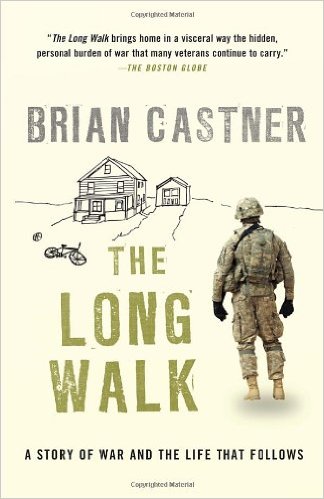
The Long Walk…aren’t so lazy and hazy if you live in the New York City area, where the artistic and intellectual processing of the wars in Iraq and Afghanistan affords almost too many events to absorb. The highlight of the summer is the staging in Saratoga Springs (180 miles up the Hudson River from Manhattan) of an opera based on Brian Castner’s memoir The Long Walk. Castner probably didn’t see it coming, but in retrospect it’s not hard to recognize his memoir’s operatic potential. Castner’s record of his tours in Iraq as the head of an Air Force Explosives Ordnance Disposal detachment and his troubles readjusting to civilian life afterwards is fine in its particulars—in a perfect world it would be more popular than American Sniper. It’s got more harrowing combat scenes, for instance, as well as better descriptions of specialized military training and more honest, reflective, and generous portraits of how difficult redeployment can be. But what really elevates The Long Walk is Castner’s imagining of his life in terms of darker, larger, may I say mythic forces that imbue existence with cosmic significance. In particular, Castner describes what it means to be overcome by “The Crazy”—those oh-fuck moments after war when you realize just how screwed over combat and danger have made you, no matter how normal you appear or try to be. Castner’s richly-situated exploration of the larger-than-life forces that envelop him are I’m sure what inspired the opera producers Jeremy Beck and Stephanie Fleischmann.

The Long Walk Opera

More prosaic, but still exciting, war-lit readings are taking place within the city itself. Words After War impresarios Brandon Willitts and Matt Gallagher are sponsoring not one, but two series of readings. Monthly events at The Folly, a Greenwich Village bar partly owned by Gallagher, have featured local veteran and military-themed writers, such as Mariette Kalinowski, Kristin Rouse, and Jake Siegel, as well as civilian authors, reading unpublished and recently published work in an intimate setting. Words After War also co-sponsors a second set of readings, called Danger Close, in conjunction with New York University English professor Patrick Deer. Deer is part an academic consortium named the Cultures of War and Postwar Research Group and the author of Culture in Camouflage, a study of literature written in Britain during World War II, so it’s great that he has now turned his attention to contemporary American war writing while helping showcase its authors in intriguing pairings with compelling moderators. One Danger Close event featured Phil Zabriskie and Jesse Goolsby in conversation with Lea Carpenter, and a second had Myra Jacob hosting authorial collaborators Gavin Kovite and Christopher Robinson along with August Cole and P.W. Singer. And as if that weren’t enough, the energetic and innovative Willitts and Gallagher have announced a third event, a one-off called Writing War, to take place July 30 at the Brooklyn Historical Society and featuring Phil Klay, Matt Gallagher, Sara Novic, and Maurice Decaul.

Words After War is by far not the only game in New York town, either. War author and Restrepo filmmaker Sebastian Junger, for example, has been hosting readings featuring veteran authors and war journalists at HIS bar-restaurant the Half-King and elsewhere in the city. Earlier in the summer, Arts in the Armed Forces, a vet-friendly organization founded by actor and ex-Marine Adam Driver, helped promote an off-Broadway play by Daniel Talbott titled Afghanistan, Zimbabwe, America, Kuwait. Alex Mallory, who has staged at least two plays about war in Iraq with her troupe Poetic Theater, is back July 27 with a staged reading of her work There Are No Camels in Beirut, about conflict in that strife-torn city in 2006. Invitations to events and announcement of new programs by writing collectives such as Voices From War and the NYU Veterans Writing Workshop arrive weekly if not daily. And in the most out-of-the-blue way possible, I’ve been consulted by the event-designers of Gigantic Mechanic, a Brooklyn arts initiative currently developing an interactive theater experience called Hearts and Minds, which will allow audience members to role-play members of an infantry squad on patrol in Iraq. That’s not quite as cool as having an opera made of your life, but I’m flattered to have been asked for input.

So that’s New York for you, creatively and endlessly engaged and productive. I hope things are as busy and interesting as you want them to be wherever you are this summer.

The American Sniper Situation: The Not-So-Secret Inclinations of Popular Taste

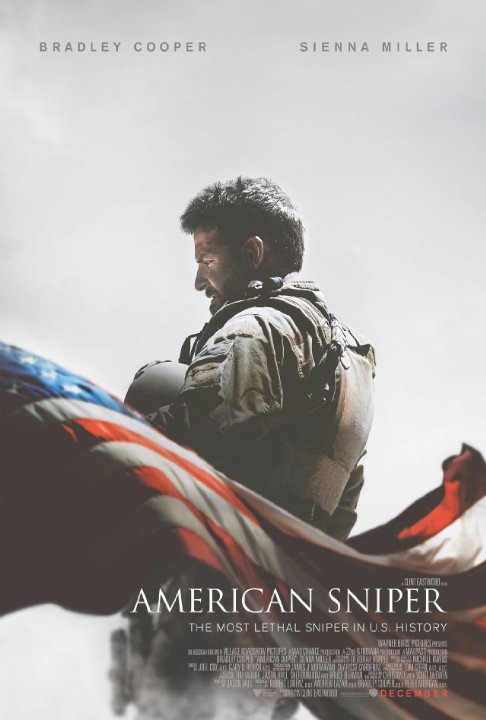
American SniperI’ve been asked to contribute to an anthology of essays on American Sniper and have been working on my contribution the past few weeks. The project’s given me a chance to reread many of the reviews published upon the memoir’s and then the movie’s releases, and below I offer a list of some of the most pertinent ones. One subject of discussion has been whether Clint Eastwood’s movie version of American Sniper is faithful to Kyle’s memoir and if either the movie or the book fully and accurately relate the totality of Kyle’s life and service. Other reviews ask what is so “American” about Kyle and his brand of sniper-heroics. Still others question whether the movie glamorizes war generally or justifies specifically war in Iraq and glorifies the contributions of Navy SEALs to the American military effort. Some reviews take issue with the movie’s portrait of Iraqi civilians and combatants, while a final set discusses the memoir’s and film’s depiction of the potentially traumatic effects of combat and deployment.

Taken together, the memoir, the film, the reviews, and everything and everyone pertaining to their production and distribution, to include the thoughts of the real-life men and women portrayed, to include Kyle’s victims, constitute what Israeli photography critic Ariella Azoulay would call an interpretive “situation”: analysis of an artistically- and technologically-shaped representation of a real-world person or event that incorporates everything that has been said and could be said about both, in order to elicit the most detailed and just understanding of the moral, political, and aesthetic stakes involved. A tall order indeed–too tall for me here, but no doubt the American Sniper situation allows us to gain traction on at least two pertinent questions about the millennial wars:

What does it take for young Americans to kill in combat, what is it like to kill in combat, and what is it like to live afterwards?

What stories about war connect with audiences and why?

I’m writing my anthology contribution on the first question, so will hold my thoughts here, but am happy to take a swing at the question about American Sniper‘s astounding popularity. I think a lot of something Edgar Allan Poe wrote about Nathaniel Hawthorne in 1848. Speaking of Hawthorne’s short story collections in the years prior to writing The Scarlett Letter, Poe wrote, “But the simple truth is, that a writer who aims at impressing the people is always wrong when he fails in forcing that people to receive the impression. How far Mr. Hawthorne has addressed the people at all is, of course, not a question for me to decide. His books afford strong internal evidence of having been written to himself and his particular friends alone.”

That’s a fascinating statement. It suggests that if writers (and moviemakers) want to be popular, they have only themselves to blame if they aren’t. The subjects, themes, and styles that people like, Poe implies, are right there for the taking for he or she who will. I wonder how true that is? And if American Sniper‘s success means that contemporary war-story-tellers have finally hit the sweet spot of war-story popularity, I wonder what that bodes for war writing and war movie-making to come? As another critic of Poe’s time, Alexis de Tocqueville, put it when writing about American theater in Democracy in America (1835), “Authors soon discover the secret inclinations of public taste,” which suggests that the public’s inclinations don’t remain secret for very long. Chris Kyle’s co-authors were lawyer Scott McEwan and veteran writer of military thrillers Jim DeFelice, so we know he had experienced help shaping the material of his life so that it resonated with audiences. An even more telling statement comes from one of Kyle’s editors, Peter Hubbard, who is described in a New York Times article by Julie Bosman as saying that “he was determined to publish [American Sniper] for a general-interest reader, the kind of person who would pick up a big blockbuster thriller. ‘I didn’t want it to be characterized as a genre military book,’ he said. ‘It functions as a great action and adventure story.’” As is well-documted in many reviews below, Clint Eastwood and his screenwriter Jason Hall substantially altered Kyle’s memoir in ways that clearly tapped “the secret inclinations of public taste.” From an ethical-aesthetic perspective, the question is whether they did so according to their own sense of artistic integrity, cravenly, or both. You know what would be interesting? Another movie version of American Sniper, made by a filmmaker/screenwriter team with radically different ideas about Kyle and his memoir than had Eastwood and Hall. If that happened, we would definitely have a “situation” to consider.

****

An American Sniper Critical Compendium

Julie Bosman. “A Wave of Military Memoirs With You-Are-There Appeal.”  New York Times 18 March 2012.

Nicholas Schmidle. “In the Crosshairs.” The New Yorker 3 June 2013.

Brian Van Reet.  “A Problematic Genre: ‘The Kill Memoir.'” New York Times 16 July 2013.

David James. American Sniper and the Hero Myth.”  Wrath Bearing Tree 17 December 2014.

David Denby. “Living History: Selma and American Sniper.”  The New Yorker 22 December 2014.

Alex Horton. American Sniper Feeds America’s Hero Compex, and It Isn’t the Truth About War.” The Guardian 24 December 2014.

Michael Cummings and Erin Cummings. “The Surprising History of American Sniper‘s ‘Wolves, Sheep, and Sheepdogs’ Speech.” Slate 21 January 2015.

Dana Stevens. “The Battle Over American Sniper.” Slate 21 January 2015.

“Confused About How You Are Supposed to Think About American Sniper? Here Are Twenty Thinkpieces That Can Help You Put Things in Perspective.” Clickhole 22 January 2015.

Brian Turner. “I Served in Iraq and American Sniper Gets It Right. But It’s Still Not the War Film We Need.” The Vulture 22 January 2015.

Adrian Bonenburger. “There Are No War Heroes: A Veteran’s Review of American Sniper.”  The Concourse 23 January 2015.

Colby Buzzell. Chris Kyle and the Iraq War Are More Complex than American Sniper–or Criticism of It.” The Guardian 23 January 2015.

Courtney Duckworth. “How Accurate is American Sniper?” Slate 23 January 2015.

Roy Scranton. “The Trauma Hero: From Wilfred Owen to Redeployment and American Sniper.” Los Angeles Review of Books 25 January 2015.

Cara Buckley. American Sniper Fuels a War on the Homefront.” New York Times 28 January 2015.

Susannah George. “Here’s What Moviegoers in Baghdad Think About American Sniper.” Global Post 28 January 2015.

Joe Davis. “A Former Marine’s Review of American Sniper.” Time 9 February 2015.

If you have suggestions for additions to this list, please let me know.

War Poetry: Philip Metres’ Sand Opera

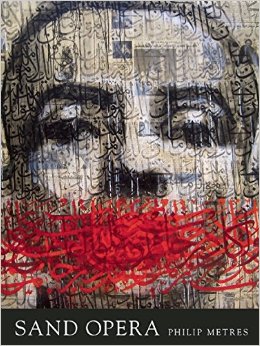
Sand OperaCompared to the generous amount of contemporary war fiction published in the last few years, volumes of war poetry have been sparse. The fact’s lamentable, because war poetry, it seems to me, possesses vast potential to surprise and intrigue due to the malleability of form and the license granted the imagination. Philip Metres’ Sand Opera is a case in point. A rumination on our millennial wars, particularly Iraq and especially the brutality of Abu Ghraib, told from a a variety of American and Iraqi perspectives, Sand Opera doesn’t disappoint at any level—line, stanza, individual poem, or as a comprehensive whole. The poetry world agrees, for Metres has just been honored as the inaugural winner of the Hunt Prize, a new poetry award sponsored by Yale University that comes with a $25,000 prize. The striking cover of Sand Opera prepares the reader well for what’s inside: Metres has created a “terrible beauty,” to use Yeats’ phrase, out of the grimmest of grim subject matter.

Abu Ghraib, what a horrible and embarrassing memory. Like the worst mistake we ever made, could we please pretend it never happened, never speak its name again, and pray like hell it never ever reoccurs? That’s not going to happen, nor should it, much as we might desire it, but writing about Abu Ghraib artistically in ways that aren’t crudely didactic and sputtering with obvious outrage would seem equally impossible.

The poetic imagination goes where it goes, though, and thankfully finds ways to solve problems encountered along the way. As the title of Sand Opera implies, Metres draws on the idiom of music to recoup one of the nation’s most cringe-inducing moments ever aesthetically while retaining the sting of indictment. Sub-sections within the work are named “arias,” “lyres,” and “recitatives,” and individual poems “blues,” as in “The Blues of Charles Graner” and “The Blues of Lynddie England.” Collectively the assembled voices and musical motifs function as a libretto of horror and anguish—when read cover-to-cover in one sitting Sand Opera easily renders the impression that it would work impressively as a script for a staged performance blending multiple voices, sound, light, movement, and props.

Metres has more than musical motifs at his disposal, too. About half of Sand Opera’s poems are lyrics—expressions of thought emanating from the perspective of discrete poetic personas and employing traditional line and stanza forms. But others are full of postmodern linguistic and typographic trickery. One poem, for example, of a series with the same title—“(echo / ex/)”—consists of nothing but punctuation marks. Other poems draw on “Standard Operating Procedures” (get it?), official chunks of text and diagrams drawn from government documents pertaining to Abu Ghraib (and Guantanamo) that Metres rearranges spatially on the page and then edits, if that is the right word, by redacting words and phrases with the use of black bars—a reenactment of militaristic truth-suppression put to the use of art. Poetry lives and dies on its ability to keep the reader snared in the ongoing thought-image-story web it spins word-by-word and line-by-line, and I for one enjoyed Sand Opera’s showy effects. Postmodern textual experiments generally work as highly self-conscious permutations of what might be called “standard language operating procedures”; poets also employ them to complicate conventional notions of distinctive personas and chronological narrative. But that’s too theoretical and not really even true to my sense of what Metres is doing with language in Sand Opera. For me, the flamboyant page-faces function theatrically or, dare I say it, operatically, to infuse the ideas and words floating therein with the magic of performance.

The limitations of my webpage make it hard to reproduce Sand Opera poems here, but examples can be found at the following poetry websites:

Connotation Press

Diode

Elective Affinities

Matter

To what end does Metres go to such lengths? What does he want us to think about Iraq, Abu Ghraib, and Guantanamo? Individual poems are related from the point-of-view of Iraqi prisoners and American guards with empathy, plausibility, and dramatic intensity. The perspectives of Iraqis are represented more cogently and compellingly than in any other contemporary war imaginative work I’ve yet read, while the poem-portraits of Graner, England, and their fellow military policemen manage the difficult feat of holding them accountable without bludgeoning them as sadistically as they tortured their prisoners or turning them into cartoons. Another set of poems report Metres’ own wrestle with the war from his perspective as an Arab-American whose father served in Vietnam. The last poem in Sand Opera, titled “Compline,” suggests that we are living in dark times, God-forsaken in ways that go past religious platitude, and the only thing worse than being God-forsaken will be to suffer God’s wrath if or when God returns. That idea, like Abu Ghraib, is so painful to contemplate that it can’t be done directly or for long, because it is like staring into a black burning sun. The only way to apprehend the horror is through artistic creations that leaven human and existential despair with as much imagination and love as can be mustered.

Los Angeles Review of Books interview with Phil Metres here.

Philip Metres, Sand Opera.  Alice James Books, 2015.  Cover art: “I am Baghdad II” by Ayad Alkadhi, Leila Heller Gallery, New York.

Thanks to Roy Scranton for recommending Sand Opera to me.

Special Operations Old and New: Lea Carpenter’s Eleven Days

Eleven DaysLea Carpenter’s novel Eleven Days presents a different portrait of United States special operations capability than does Masha Hamilton’s What Changes Everything, which I reviewed two posts ago. In What Changes Everything, the wife of an American civilian kidnapped in Afghanistan refuses entreaties by US officials to deploy military forces—we can presume unconventional operators—to rescue him. She doesn’t trust the military; their track record of success is poor and they’re as likely to get her husband killed as save him. In Eleven Days, the mother of a Navy SEAL who has disappeared in Afghanistan places her hopes in his recovery in the hands of high-level Washington insiders deeply instantiated in the world of clandestine operations. Where What Changes Everything is skeptical of American military might, Eleven Days is admiring, especially of elite formations of those termed “special,” “unconventional,” “black ops,” or “members of the intelligence community.”

The polarized perspectives of the two novels reflect a deep military debate about the role of special operations in the wars in Iraq and Afghanistan that now is also playing itself out in the homefront cultural domains of art, entertainment, and the courting of public opinion.

In military terms, the question is to what extent did special operations save American lives in Iraq and Afghanistan, vanquish our enemies, and help achieve our nation’s greater war aims, primarily that of forestalling further 9/11-style attacks on American soil, but also those related to nation-building overseas. In the art, entertainment, and public opinion domains, the question is whether the glamor of special operations will make any sort of reasoned consideration of the military issue possible.

The military question is explored at some length in this recent New York Times article titled SEAL Team 6: A Secret History of Quiet Killers and Blurred Lines” and in even greater detail in Dirty Wars, Jeremy Scahill’s account of the rise of the military’s umbrella organization for unconventional and elite forces, Joint Special Operations Command. The Times report is ambivalent, while Scahill is scathingly critical about the now unquestionable prominence of special operations as a strategic and tactical capability within our military-defense apparatus.

The cultural question is reflected in the public’s fascination with films such as American Sniper and Captain Phillips, as well as the dozen or so books written by ex-operators, many of them Navy SEALs who seemingly have little regard for the dark-side credo of “silent professionalism.” That clear thinking about the military question has been complicated by the Hollywood glitz machine and the self-promotion of those involved is unfortunate.

It is unfair to hold Eleven Days’ feet to the fire regarding these ginormous questions, though. Carpenter’s admiration for SEALs is writ large on every page of Eleven Days, but the novel’s unique and valuable aspects are other than descriptions of SEAL training, equipment, culture, and history, of which there are many. Its most obvious interest is the mother-son bond that joins Sara, and Jason, the Navy SEAL lieutenant who goes missing while on an operation in Afghanistan. Actions in-country are barely described; the emphasis is on Sara’s turbulent emotions as she is subjected to prying media inquiry and intense deliberations with highly-placed government officials trying to secure Jason’s release. As Sara endures these extremely unwelcome intrusions on her privacy, her mind and the book’s narration ruminate on things past, especially Jason’s childhood love for all things military that led him as a young adult first to Annapolis, then the SEALs, and finally to combat in Afghanistan. As it happens, Jason’s father David was a decorated operator himself in Vietnam and remains deeply connected to the SpecOps and DC intelligence worlds. Though long out of Sara’s and Jason’s life after the brief affair that brought Jason into the world, he now returns to help facilitate Jason’s return.  In conjunction with another DC insider known as “the godfather,” Dave arranges for a private jet to bring Sara and him to Afghanistan in hopes of reuniting with their son. The plot seems to stretch a bit thin in these parts, but who am I to say whether things like that happen or not? In any case, Carpenter’s imagining of Sara and Jason’s lived lives, their thoughts about things, their love for each other, and especially Sara’s distress when Jason goes missing, is moving and rich.

Eleven Days’ greatest interest for me, however, lies in its portrait of how our millennial wars are perceived and engaged in by upper-tier inside-the-Beltway older men such as David and the godfather. David especially has spent his long life matching his militaristic inclinations with the militaristic opportunities of the moment in ways that accord with his wealth, his educational pedigree, his social standing, his breeding and culture, his notion of public service, and most of all, his sense of belonging to a fraternity of manly men of adventure and accomplishment. Sara no longer lives in proximity to such men, but her dalliance with David as a young woman gives her permanent re-entry rights into their milieu of richy-rich-rich swashbucklers, men whose early CIA, SEAL, and Green Beret years are only the beginning of many decades spent doing clandestine things in exotic locales. This elite faction of the war machine is more James Bond than John Rambo, as reflected in a passage about David narrated through the perspective of Sara:

He is in his mid-seventies now, he has a beard, and he is thinner, but it is him. He is wearing a beautiful suit, his blue collar (always a blue collar) open at the neck just enough that she sees a glint of gold. A necklace. He always liked nice things, an air of disrepair shattered by the presence of a Rolex submariner or a double-stitched Charvat tie.

If one matches this description against any of number of passages from American Sniper, such as one in which Chris Kyle reports spending off-duty time in Iraq “watching porn, playing video games, and lifting weights,” we have the beginnings of a pretty good social analysis of an older and newer style of special operations culture. Jason, twixt the two eras, affects the tattooed, bearded, and iron-pumping mode of the modern-man-of-special-operations-war, while retaining a few traits of the gentleman-warrior, such as packing Seven Pillars of Wisdom in his rucksack when he heads off to fight, that are characteristic of David’s generation. We might usefully also compare David and Jason to men such as Blackwater founder and war profiteer Erik Prince—an ex-Navy SEAL who seems very much a man of our modern times, though one whose ties to the first wave of sea-air-land operatives who came-of-age in the Kennedy administration seem more superficial than profound.

I suppose there must be somewhere between 500 and 5,000 men like David in real life. Too old to be on the front lines, but still in the game at some rarified level of governance, industry, and social connection. As eager to get their war on as anybody else, how do they remain relevant? At what level do they still influence the things that matter? Are they vestiges of an aristocratic older style, unaccounted for contemporary power-brokers, or models for what may come as the dark-side operators of Iraq and Afghanistan themselves grow too old for ground combat and find new modes of serving the nation militaristically and fresh outlets for their thrill-seeking spirits? Eleven Days has piqued my interest in warrior greybeards such as David as much as it has in young operator-bucks like Jason and proud-but-worried moms such as Sara. That’s probably a reflection on my own long-in-the-tooth, white male, now-firmly-on-the-outside-looking-in subject position, but so it is. I invite you to read Eleven Days and consider for yourself.

Lea Carpenter, Eleven Days. Vintage, 2013.

Been There, Done That: Contemporary War Writing Stock Scenes

Afghanistan 013

For all those contemplating or currently writing memoir, fiction, or poetry about war in Iraq or Afghanistan and its aftermath, I’ve listed twenty events or ways of describing events that I’ve encountered at least twice in published contemporary war writing. Not to say new writers should avoid writing about these subjects, too, but some very good authors have already done so, so the onus is now on newcomers to make their depictions fresh and vivid.

1. Deciding whether to shoot or not shoot while serving as a vehicle gunner or on checkpoint duty. This excruciating experience is the centerpiece of many Iraq and Afghanistan stories, such as Mariette Kalinowski’s “The Train” from the Fire and Forget anthology, Jesse Goolsby’s novel I’d Walk With My Friends If I Could Find Them, and, of course, many scenes in the movie version of American Sniper.

2. Claim that a soldier doesn’t care about politics or grand strategy, because all that is important is survival and the good regard of one’s fellow soldiers. No doubt true, but neither a brilliant nor original insight at this point.

3. The first US casualty or the death or injury of a child that “brings home the reality of war.” It’s actually hard to find a war story that doesn’t contain some version of these two signature events, so the problem becomes discovering new language and perspectives with which to relate them.

4. Death or injury to an important character by a stray mortar round that hits inside FOB walls. See Helen Benedict’s Sand Queen, David Abrams’ Fobbit, and Kevin Powers’ The Yellow Birds.  Brian Van Reet’s “Big Two-Hearted Hunting Creek” (in the Fire and Forget anthology) has an interesting variation on the theme–a suicide bomber infiltrates a FOB and blows himself up in the presence of the story’s main characters.

5. Military funeral services, with first sergeant calling the roll, salute battery firing, the playing of taps, etc. The best fictional portrait of these moving ceremonies is David Abrams’ “Roll Call,” which can be found in Fire and Forget. Brian Castner describes an interesting variation on the ceremony in his memoir The Long Walk. The most moving description I’ve read of a “hero flight” processional—the movement of a dead soldier’s remains from FOB mortuary to a waiting aircraft—is in Afghan-American interpreter Saima Wahib’s memoir In My Father’s Country.

6. A charismatic-but-(possibly)-Satanic sergeant who dominates the life of a junior enlisted soldier. See Kevin Powers’ The Yellow Birds and Ben Fountain’s Billy Lynn’s Long Halftime Walk for examples par excellence. See also Philip Metres’ poem “The Blues of Lynndie England” in Sand Opera and check out Michael Pitre’s Fives and Twenty-Fives for a portrait of a charismatic female sergeant and Cara Hoffman’s Be Safe, I Love You for a kick-ass female NCO in theater whose life goes off the rails back in the States.

7. Describing poverty and squalor in Iraq and Afghanistan as “unlike anything we can imagine in the United States.” Subset: calling conditions in Afghanistan “medieval.” OK, got it, now tell us something we don’t know using language we haven’t heard before. Related: Describing combat as like being in a slow-motion and long-lasting car accident. Two great writers, Ben Fountain in Billy Lynn’ Long Halftime Walk and Kevin Powers in The Yellow Birds have already used this figure-of-speech, so the rest of us should “steer” clear, to make a pun.

8. Enlisted soldier tough talk with lots of cursing, sexual reference, slang, and military lingo. To show a grunt’s apprehension of the futility of war and the rough love with which male soldiers treat other, while certifying the author’s credibility as a military insider, while also trying to inject color and humor into the story being told: almost every war story ever written by a man. When directed by male soldiers at female soldiers or a foreign citizen to show the callousness of macho military culture: Joydeep Roy-Battacharya’s The Watch and Helen Benedict’s Sand Queen.

9. Stories and poems that depend almost entirely on punch-drunk reveries and litanies of military jargon and nomenclature. Paul Wasserman’s poem “Fifteen Months, Twenty-two Days” and Phil Klay’s story “OIF” have covered this ground quite nicely already.

10. Communication from the front with loved ones at home through Skype, email, or satellite phones, particularly when the call is interrupted by incoming mortar rounds or rockets or revolve around missing birthdays, graduations, and anniversaries. After American Sniper, the movie, in which the Chris Kyle character makes sat calls to his wife in between sniper shots, no more please.

11. Contempt for a stupid order, pointless mission, or idiotic member of the chain-of-command. This dynamic drives almost every war story and memoir ever written, but it’s more interesting when the antagonism is understated or couched in terms that aren’t so self-righteously vindictive.

12. Homely scenes of soldiers opening “any soldier” care packages, as well as those showing soldiers trading MRE components and devising new recipes out of curious combinations of ingredients. David Abrams’ Fobbit takes the cake for portraying care package soldier folkways, while scenes that portray the repurposing and individualizing of MREs are too many to count.

13. Shooting stray dogs in theater, or being forced by a by-the-book first sergeant or company commander to give up a pet dog adopted by a unit or individual. In regard to the first, Phil Klay’s “Redeployment” does as much with this common experience as could possibly be done, thank you very much. Joydeep Roy-Bhattacharya’s The Watch contains an interesting turn on the scenario, in which US soldiers almost shoot their pet when it interferes with a mission. Saima Wahab’s anecdote in her memoir In My Father’s Country about the pet dog she kept while stationed in Jalalabad is stranger than anything I’ve encountered in fiction.

14. Malaria pill dreams. See several great poems in Brian Turner’s Here, Bullet and passages in Adrian Bonenburger’s memoir Afghan Post.

15. References to high-brow literature that a soldier reads while at war. These pop up all the time, as if to signify the modern warrior-author is no common, under-educated grunt, but an intrepid reader whose search for wisdom equals his or her thirst to live intensely. Lea Carpenter’s description of Navy SEAL reading habits in Eleven Days is a pretty good example of the motif. Roy Scranton, in his story in Fire and Forget titled “Red Steel India,” has a soldier on a FOB reading Noam Chomsky, so if I read now about characters who have only brought Shakespeare or Tolstoy to war with them, I’m not so impressed.

16. Analogies to classical Greek literature, history, and myth. Can we give Sparta, Achilles, Odysseus, Penelope, Ajax, Philoctetes, Antigone, Homer, Thucydides, and Sophocles a rest? Or, here’s a different idea: We bland, reason-bound Americans, who hate history and whose imaginations are fired mostly by Hollywood, aren’t anything like the passionate, excitable, mystically-minded characters, bound by family pride and tribal allegiances and historical remembrance, and intense codes of honor, reward, punishment, feud, and vengeance, and possessed by strange attitudes about violence and lust and cosmic connection, who populate Homer and the Greek roster of gods. I can’t speak about Iraq, but it seems to me that if we want to bring the literature and myth of classical Greece forward 2500 years, the best use of it would be to help us understand the exotic worldview of Afghanistan Pashtuns.

17. The long plane ride home from theater, with a sadder-but-wiser veteran contemplating all that’s happened and what might take place in the future. Brian Turner’s “Night in Blue” from Here, Bullet and Roxana Robinson’s Sparta have already set high standards depicting this veteran rite-of-passage.

18. Homecoming ceremony on the airfield tarmac or unit parade ground reuniting returning veterans with loved ones. It’s hard to top Siobhan Fallon’s depiction in the title story of You Know When the Men Are Gone or Phil Klay’s in the title story of Redeployment, but the best extended description, in my opinion, appears in Roxana Robinson’s Sparta.

19. Descriptions of how a veteran upon return home reaches for the weapon he or she carried throughout deployment. I’ve lost track of how many times I’ve read this. Also, veterans who jump when a car backfires or insist on facing the door of a restaurant or bar or who succumb easily to road rage. No mas, por favor–do cars even backfire any more?

20. Veterans who just don’t want to talk about it (but who often do anyway): Every story so far about redeployment.

I personally experienced 19 of the 20 events I’ve listed above, or variations on them, during my deployment and upon return (no malaria pill dreams for me), so I’m not insensitive or naïve about what they mean in the lives of real soldiers, sailors, Marines, and airmen. But lived life and writing about war are two different things, and in writing the imperative is to “make it new.” Some might disagree—a smart young writer-buck might pack all 20 of the motifs I’ve named into one super-story that then becomes more popular than American Sniper:

Specialist Jones, from his position as rear gunner in the last vehicle in an American army convoy in Iraq, saw a white Toyota rushing toward him and now had to decide whether to shoot or not. A common grunt, Specialist Jones didn’t care about politics or strategy, all he cared about was surviving the war and not letting down the guys in his unit. The deployment had been an easy one until Sergeant Smith had been killed when a lucky mortar round fired by insurgents impacted inside the FOB. Sergeant Smith’s death had brought the reality of the war home to Specialist Jones and the memorial service for him—especially when first sergeant had called the roll and taps were played–was the most emotional event Specialist Jones had ever experienced. If it hadn’t been for his platoon sergeant, Sergeant First Class Williams, kicking his ass, Specialist Jones didn’t think he would have made it. The squalor in Iraq was unlike anything he could have imagined in the States and combat like a succession of slow-moving car crashes.

“Screw that frickin’ Hadji,” Specialist Jones cursed under his breath, “He picked the wrong mofo to mess with.” High up in the gunner’s turret of his MRAP, he charged his M2 .50cal, cycled through the ROE in his mind, and considered whether the Toyota was on the BOLO list, the driver a MAM or not, and whether the car might be an SVBIED.

When the mortar round that killed Sergeant Smith had exploded, Specialist Jones had been talking on the phone to his wife and he had had to quickly make an excuse there was construction going on outside his tent. Now they were on another stupid mission that would accomplish nothing except make the idiot lieutenant look good in the eyes of the motherhumpin’ captain. Specialist Jones took one more bite of MRE spaghetti-and-meatballs mixed with M&Ms and spiced up with Texas Pete Hot Sauce he had found in an any-soldier care package and took aim at the onrushing Toyota. The thing that really had pissed him off most, frankly, more than even Sergeant Smith’s death and the speeding Toyota, was that the by-the-book sergeant major had shot his pet mutt Screwball in the name of unit discipline and camp hygiene. In Specialist Jones’ last malaria pill dream, Screwball had appeared as Argos, the dog who guarded the Greek warrior Ulysses’ home for nine years while Ulysses was at war, which Specialist Jones had read about in the copy of The Odyssey stored under his bunk.

Later, on the long plane ride home, Specialist Jones stared out the window and wondered whether destroying the Toyota had been the right thing to do and whether it would affect him for the rest of his life. Standing on the tarmac in the unit’s homecoming ceremony, he scanned the crowd for his wife and when the ceremony was over he ran to hug her. Later, he turned in the M4 that he had carried for a year in Iraq; for days afterward he would find himself reaching for his rifle and feeling a moment of panic that he had lost it, until he remembered it was secured in the unit arms room. He noticed other things, too, such as how he jumped when he heard a car backfire or how irritated he became when a car came too close to him on the highway. Relaxing was impossible–when he went out to dinner, for example, he insisted on facing the door of the restaurant and scanned the room for threats when he should have been paying attention to his wife. She asked him about things that happened in Iraq, but at first he didn’t want to talk about it. Later, though, he opened up.

For me, though, the most interesting war writers are those who say new things, or old things in new ways. Part of what makes Brian Turner great is that he was the first to portray artistically many of what have become the commonplace scenes and images of war literature, and how he now seems determined to push beyond them as far as he possibly can. Benjamin Busch’s memoir Dust-to-Dust takes the prize for the most determined effort to write about war without succumbing to subjects, ideas, and mannerisms that have been used before. One thing I appreciate greatly about Katey Schultz’s Flashes of War is how, fluidly Schultz, who never served, finds so many ways to tell war stories that avoid regurgitating obvious subjects and scenes. The beauty of Phil Klay’s Redeployment lies in how Klay takes popular war writing tropes and repackages them using irony, perspective, and humor—Klay’s not an unwitting user of tried-and-somewhat-true war story motifs, but a self-aware deployer and interrogator of them.
Masha Hamilton’s What Changes Everything

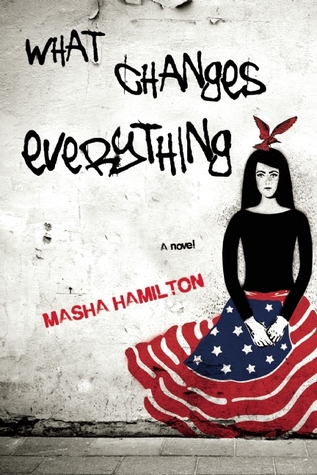
HamiltonThe plot of Masha Hamilton’s novel What Changes Everything contains many threads, the most important being the kidnapping of Todd Barbery, the head of a refugee relief organization in Afghanistan, by Afghan opportunists seeking to barter his life with whoever might pay the most for it. Todd’s wife Clarissa, a New York City college professor, refuses requests by the US government intermediaries to use force to rescue Todd and instead relies on Todd’s Afghan assistant Amin to obtain her husband’s relief. As Clarissa waits, she meets Danil, a Brooklyn graffiti artist whose brother has been killed in a friendly-fire incident while serving as a soldier in Afghanistan that the military tries to efface. Danil commiserates with Clarissa and advises her to retain faith in Amin, who eventually succeeds in effecting Todd’s release through his cultural and negotiating savvy.

In telling this story What Changes Everything begins to complicate understanding of what war in Afghanistan and novels about war in Afghanistan entail. Hamilton, who has served in Afghanistan as a cultural advisor to the US high command, eschews portraits of troops and battle and instead offers a compelling story about how war ensnares a wide range of characters other than those in uniform. These include Afghan noncombatants, American aid officials, and American family members touched by the war’s destruction. Besides Todd, Clarissa, Amin, and Danil, major characters include Danil’s mother Stela, who writes grief-stricken letters to politicians and celebrities seeking understanding of her son’s death and others to Danil that Danil refuses to even open, and Mandy, the mother of a young soldier injured in Afghanistan, who flies to Kabul in a Quixotic effort to lend her training as a nurse to war-stricken Afghans. Though the novel is short, several minor characters also figure so prominently that they might well be considered major: Todd’s daughter Ruby disagrees with her stepmother Clarissa’s decision to trust Amin, and Mandy encounters first a mercenary operator who knew her son well and then Zashfelt, a mysterious Afghan woman implicated first in Todd’s capture and then his release.

As if that all weren’t enough, Hamilton also includes imaginary letters written by Afghanistan’s last pre-Taliban president, Mohammad Najibullah, to his daughters in the days just prior to his murder at the hands of the Taliban in 1996. The imagined letters serve the plot in that they tell us that Amin as a young man had missed a chance to save Najibullah’s life, which now makes him determined to save Todd’s. But they also remind us of Afghanistan’s history, good and bad, pre-2001. Najibullah was not a saint—he was head of Afghanistan’s secret police under the Russians—but he comes across beautifully in the letters. In contrast to the spasmodic pleas for help written by Stela and the cluttered and confused thoughts of the other American characters, Najibullah’s letters portray a man who is absolutely composed, intelligent, cultured, full of affection for his daughters, gifted with words, and proud of his achievements as head of a country he loves.

Hamilton keeps all of this together very well. Clarissa’s skeptical resistance to military action pays off and in so doing dramatizes What Changes Everything’s most trenchant theme: the US military, addicted to violence and incapable of subtlety, would do well to pay more attention to what vastly more experienced and wiser Afghans try to tell them. I didn’t like the novel’s early scenes that show Mandy arriving on her solo mission to Kabul without sponsorship or much preparation at all, but subsequent events confirm that Hamilton intends to portray her as a bit of a self-important fool. Todd Barbery is even more of a self-important fool, and he has only himself to blame for the trouble he gets into. Hamilton’s point seems to be that Americans, even or especially those eager to help Afghanistan, tend to be both oblivious and arrogant. Among many other problems, they are bad listeners and poor communicators, qualities at which Afghans such as Amin excel, their skills honed by endless struggle for survival. But Amin is not perfect, either, and the novel’s story of trial and growth is his, too, as we see him desperately trying to reap the lessons wrought by past failure to successfully negotiate Todd’s release.

Early in the book a scene in which Stela’s friend Yvette admonishes her, “You’ll do what you want in the end. But don’t do anything before tomorrow, Stela, promise me that much. We need to talk more, after you’ve found your tongue again.” Stela’s not ready to listen to Yvette, to Stela’s detriment, but later she will recognize the truth of her friend’s advice that communication is essential. Her plight is that of all What Changes Everything’s characters, and tips Hamilton’s hand. Obtaining freedom from murderous kidnappers is one thing, but learning to listen and trust, while slowing down enough to nourish family-and-friendship is what really matters, to answer the question implied by the novel’s title, when it comes to escaping the prison-house of self-absorption. And in contrast to stories about Afghanistan that portray American special operations daring-do or castigate a seemingly incorrigibly corrupt and backward Afghan society, What Changes Everything asks us to think that it is not like that at all.

Masha Hamilton, What Changes Everything. Unbridled Books, 2013.

Colby Buzzell’s Thank You For Being Expendable

TYFBEMy review of Colby Buzzell’s latest essay and magazine article collection Thank You for Being Expendable is up at The Bridge, a website dedicated to “Policy, Strategy, National Security, and Military Affairs,” as their Medium site explains. The Bridge has actually run three reviews of Buzzell’s latest, so let me salute my co-reviewers, a US Army officer who goes by the nom-de-plume Angry Staff Officer and a US Air Force officer named Blair Shaefer, both of whom turn many nice phrases. The ASO, for example, writing of the senior junior enlisted faction of the military known as “E4s,” who tend to be the most reliable indicator of unit morale, writes, “if there actually was an E-4 Mafia, Colby Buzzell would be the godfather.” Shaefer describes Thank You For Being Expendable the “punk rock alternative to Service Academy and/or Ivy League-educated military officer GWOT memoirs.” Like!

I connected with The Bridge managing editor Nathan K. Finney through my involvement with the Military Writer’s Guild. MWG has been around for a while as an organization comprised (mostly) of serving and veteran writers of the serious policy and strategy analysis persuasion, but it has lately reinvigorated its recruiting efforts and extended its reach to a few of us on the artistic side of things. I’m glad to be part of MWG and eager to see where it goes. Publishing on Medium and using Slack to handle internal business has already made me feel a good twenty years younger, so things are off to an excellent start, as I see them.

Colby Buzzell, Thank You for Being Expendable, and Other Experiences. Byliner, 2015.

A Golden Age of War Writing? A Critical Companion to Contemporary War Lit

Afghanistan 109

Below are ten articles on contemporary war literature published in reputable mainstream press venues in the last two years. Some are by veterans, one is by a non-veteran author of fiction, and the rest are by critics and in-house book-reviewers, but all in my mind are major statements in regard to the imaginative literature written by Americans about the wars in Iraq and Afghanistan. I’ve listed them in chronological order, added a few notes and a quotation from each, and offered a few overarching comments at the end.

1. Brian Van Reet, “A Problematic Genre: The Kill Memoir,” New York Times. Van Reet asserts the superiority of war fiction over the glut of memoirs by service members a little too proud of the lives they took in Iraq and Afghanistan. Specifically praising David Abrams’ Fobbit and Kevin Powers’ The Yellow Birds, Van Reet writes, “Though they are fictional, they read, in my mind, like more accurate depictions of the totality of what happened in Iraq than any of the supposedly factual accounts I have mentioned.” July 16, 2013.

2. Ryan Bubalo, “Danger Close: The Iraq War in American Fiction,” Los Angeles Review of Books. Bubalo calls Billy Lynn’s Long Halftime Walk “the best of them,” and proposes a means of understanding the genre’s achievement as a whole: “In fact, the most striking similarity of these fictions is their overarching orientation toward the war. These are writers of different backgrounds and abilities, writing different types of war tales that independently confirm our national sense of the Iraq War as a great folly.” December 25, 2013.

3. Phil Klay, “After War, a Failure of Imagination,” New York Times. Klay asserts that it is an ethical imperative for both veteran authors and civilian audiences to understand war imaginatively. “To enter into that commonality of consciousness, though, veterans need an audience that is both receptive and critical,” Klay writes, “Believing war is beyond words is an abrogation of responsibility — it lets civilians off the hook from trying to understand, and veterans off the hook from needing to explain.” February 8, 2014.

4. George Packer, “Home Fires: How Soldiers Write Their Wars,” The New Yorker. Packer surveys fiction, poetry, and memoir written by veteran and offers the following categorical assessment: “Their work lacks context, but it gets closer to the lived experience of war than almost any journalism. It deals in particulars, which is where the heightened alertness of combatants has to remain, and it’s more likely to notice things.” Packer singles out Brian Turner’s poem “Al-A’imaa Bridge” and Phil Klay’s Redeployment, especially the story “Prayer in the Furnace,” for praise. April 7, 2014.

5. Roxana Robinson, “The Right to Write,” New York Times. Robinson argues that non-veteran voices should be welcomed in the war literature conversation. She reminds us that “Some of the greatest war writers were not soldiers: Ernest Hemingway, Stephen Crane, the blind Homer. They entered the world of war through compassion, not combat. We judge them by their work, not their military service. And we benefit from that work; they have widened our understanding of war.” June 28, 2014.

6. Jeff Turrentine, “Review: Fives and Twenty-Fives, by Michael Pitre, a Tale of Dangerous Duty in Iraq,” Washington Post. In the course of his review, Turrentine calls the recent boom in war literature “a Golden Age,” and offers examples of excellence and a reason for the boom: “Although we’re still a few years away from being able to view the wars in Iraq and Afghanistan through the clarifying lens of closure, a number of writers have taken it upon themselves to put together the beginnings of a canon. The best of them, like the short-story writer Phil Klay (Redeployment) and the novelists David Abrams (Fobbit) and Ben Fountain (Billy Lynn’s Long Halftime Walk), seem to understand that the protracted nature of modern war … can easily lead to chronic moral fatigue. That’s a highly troubling state for our fighting men and women to find themselves in. But for a fiction writer who’s striving to create believably complex characters, there’s no better place to start.” August 25, 2014.

7. Brian Castner, “Afghanistan: A Stage Without a Play,” Los Angeles Review of Books. Castner explores why so much fiction has been written about war in Iraq and so little about Afghanistan. After surveying a number of authors, veterans, and critics (including me), he writes, “All agreed on this: there is something different about Afghanistan, and it has affected our nascent literature on the war. Consider three factors: the United States’ relationship with the conflict, the type of soldier who served each theater, and the topography — cultural, historic, geographic — of Afghanistan itself.” October 2, 2014.

8. Michiko Kakutani, “Human Costs of the Forever Wars, Enough to Fill a Bookshelf,” New York Times. Kakutani writes, “So far, fiction about the Iraq and Afghanistan wars has tended to have a chamber music quality, using short stories, fable-like allegories or keyhole views (from individuals and platoons) to open small windows on those conflicts. Why has there been no big, symphonic Iraq or Afghanistan novel?” Kakutani praises Ben Fountain’s Billy Lynn’s Long Halftime Walk, Kevin Powers’ The Yellow Birds, and Brian Castner’s and Kayla Williams’ memoirs, among others, but saves her highest plaudits for Dexter Filkins’ journalistic The Forever War for how it combines “micro” and “macro” level reportage of damage done in Iraq. December 25, 2014.

9. Michiko Kakutani, “A Reading List of Modern War Stories,” New York Times. In a companion piece to the critical survey published on the same day, Kakutani names 39 memoirs, novels, and non-fiction accounts that, presumably, constitute the works about war in Iraq and Afghanistan to which we should pay attention to first. The list is idiosyncratic–why 39 titles?–and subjective—no Brian Turner Here, Bullet, for example, yet three novels unpublished at the time the article appeared—but conversation-starting, at least, if not canon-forming. December 25, 2014.

10. Roy Scranton, The Trauma Hero: From Wilfred Owen to Redeployment and American Sniper, Los Angeles Review of Books. Scranton traces a war literature genealogy centered on what he calls the “trauma hero”—soldiers pained by their participation in war who then need therapeutic recoupment to become whole again upon return home. “By focusing so insistently on the psychological trauma American soldiers have had to endure, we allow ourselves to forget the death and destruction those very soldiers are responsible for,” Scranton writes. January 25, 2015.

And so we can see the outlines of a general angle of critique and praise: The wars as folly, though experienced painfully by participants. An interest in the homefront and the aftermath of war. The short story as the form best suited to wars that have resisted closure and were experienced fragmentally. A sense that what counts most are soldiers’ accounts—not civilians’–written by those with some reflective purchase on their experience and who question their choices, wrangle with their responsibility and complicity, and come to understanding of the immense wrongness of war and militaristic thinking. One subject our intellectual tastemakers don’t yet seem interested in is the new, substantial, and important presence of women in the ranks of war authors, which is curious, nor have we seen much effort to assay new war literature written by non-Americans.

We might add a few other features that are touched on only here-and-there by the critics: The corpus’s affinities and deviations from the writing inspired by other wars, especially that of Vietnam, World War I, and—going way back—the Homeric wars of ancient Greece. The quickness with which highly literary works began appearing so soon after the cessation of combat. In contrast to what the critics have noticed, the field’s inclusiveness of non-veteran authors eager to write about military and war-related subjects and themes. An interest, manifested fitfully, in depicting Iraqi and Afghan characters, and perspectives on war from those on the homefront or soldiers and Marines other than combat infantrymen. The implications of a small all-volunteer force that experiences war first-hand while the nation-at-large pays attention or not, as it will. Wars newly-defined by reliance on strategies and techniques—torture, drones, Special Operation raids, cross-international-boundary strikes never officially acknowledged, counterinsurgency and nation-building operations—ethically frowned upon or considered unimportant previously. A national war rhetoric characterized by respect for individual soldier service but ambivalent about war aims articulated by first President Bush and then President Obama. A war carried out by a citizenry and fighting force completely immersed in a new communicative realm made possible by technology. The difficulty of finding equitable ground for dialogue between veterans and civilians.

The critical evaluations so far have been complimentary, by-and-large, which is cool, but sharper-edged critique by sterner critics is sure to come. Speaking of which, Stacey Peebles’ Welcome to the Suck: Narrating the American Soldier’s Experience in Iraq (2011) aside, we also await the academic community’s assessment of contemporary war literature using the current methodologies of literary analysis. In fact, we will soon have a survey of war literature written by Iraqis—Ikram Masmoudi’s War and Occupation in Iraq War Fiction (2015)—before we have one written about contemporary American war novels–another curious state of affairs. For any interested academics, Peebles and Aaron DeRosa are co-editing an upcoming issue of Modern Fiction Studies devoted to contemporary war literature, a welcome effort that will greatly accelerate the critical evaluation of our “Golden Age” of war literature.

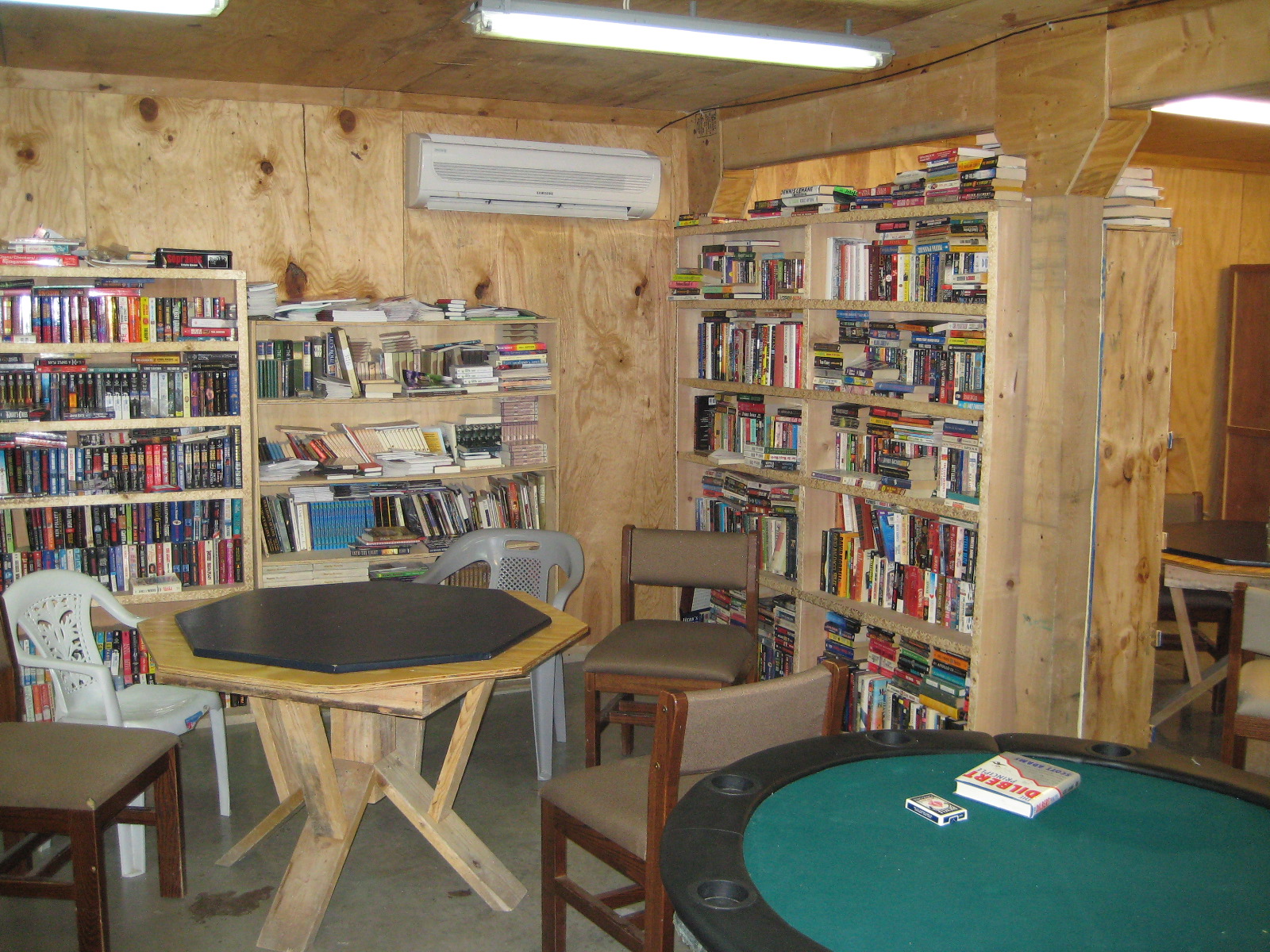
The Morale, Welfare, and Recreation bookshelf, Camp Clark, Afghanistan
The “take-one/leave-one” bookshelf, Camp Clark, Afghanistan

Memorial Day 2015

Photograph by Bill Putnam
Photograph by Bill Putnam–please click to enlarge.

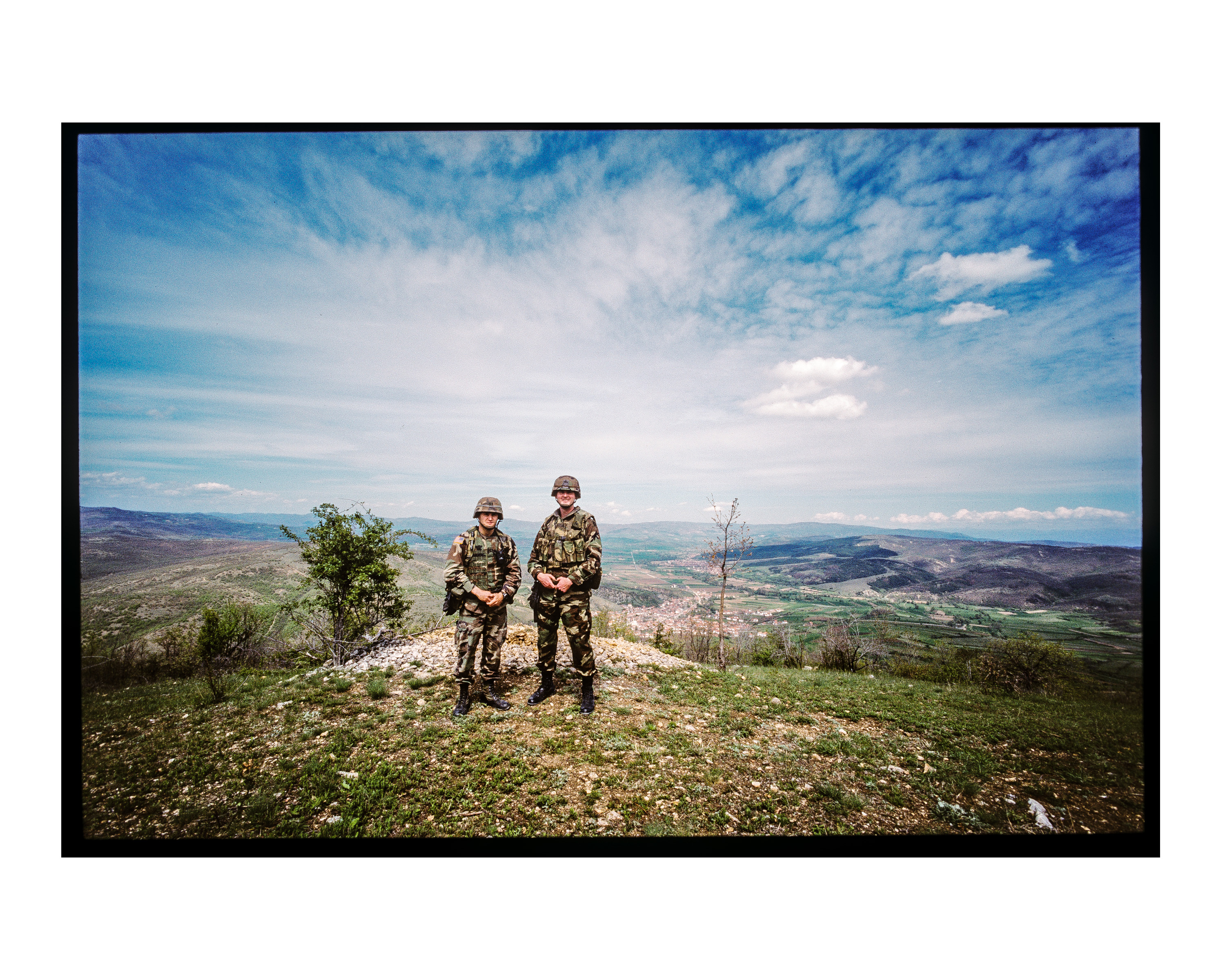
Memorial Day is the quietest of national holidays and probably should be even quieter still. It’s hard to say anything in honor of fallen soldiers, Marines, airmen, and sailors that isn’t inadequate to their loss and thus seems fraudulent and self-serving. Even so, it’s hard to resist saying something, and perhaps even necessary. Below are the names of soldiers killed in Iraq and Afghanistan with whom I served, taught, or knew well. All were good men, and their memory informs my sense of what war writing—to include Time Now—can do and be. Here’s to all the good men and women who died in Iraq and Afghanistan, and all those who died in our previous wars, too.

On the right in the photograph above is Captain David Taylor, one of my lieutenants when I commanded a company in the 82nd Airborne Division. In the picture, taken in 2001, he’s standing on a hill outside Gnjilane, Kosovo, where he served as a company commander in a task force of which I was the executive officer. In 2006, Major Taylor was killed in an IED attack in Baghdad.

I’m also thinking about First Sergeant John Blair, Sergeant First Class Kevin Dupont, and Staff Sergeant Alex French, all US Army advisor team members who died in action in Khost or Paktya province, Afghanistan, while I was there. Also, Specialist Peter Courcy and Private First Class Jason Watson, who were assigned to Camp Clark, as was I, when they died in an IED blast just outside Khost city. Colonel Ted Westhusing and Lieutenant Colonel Joe Fenty, friends who died in Iraq and Afghanistan respectively, and former students Captain Dennis Pintor, killed in Iraq, and First Lieutenant Todd Lambka, killed in Afghanistan. Finally, Major Bill Hecker, whom I knew only through email, but who before dying in Iraq in 2006, published a book on Edgar Allan Poe, an achievement that impressed me enormously.

In my thoughts, I also remember the deaths of allies who fought on our side in Iraq, Afghanistan, and all the wars before.

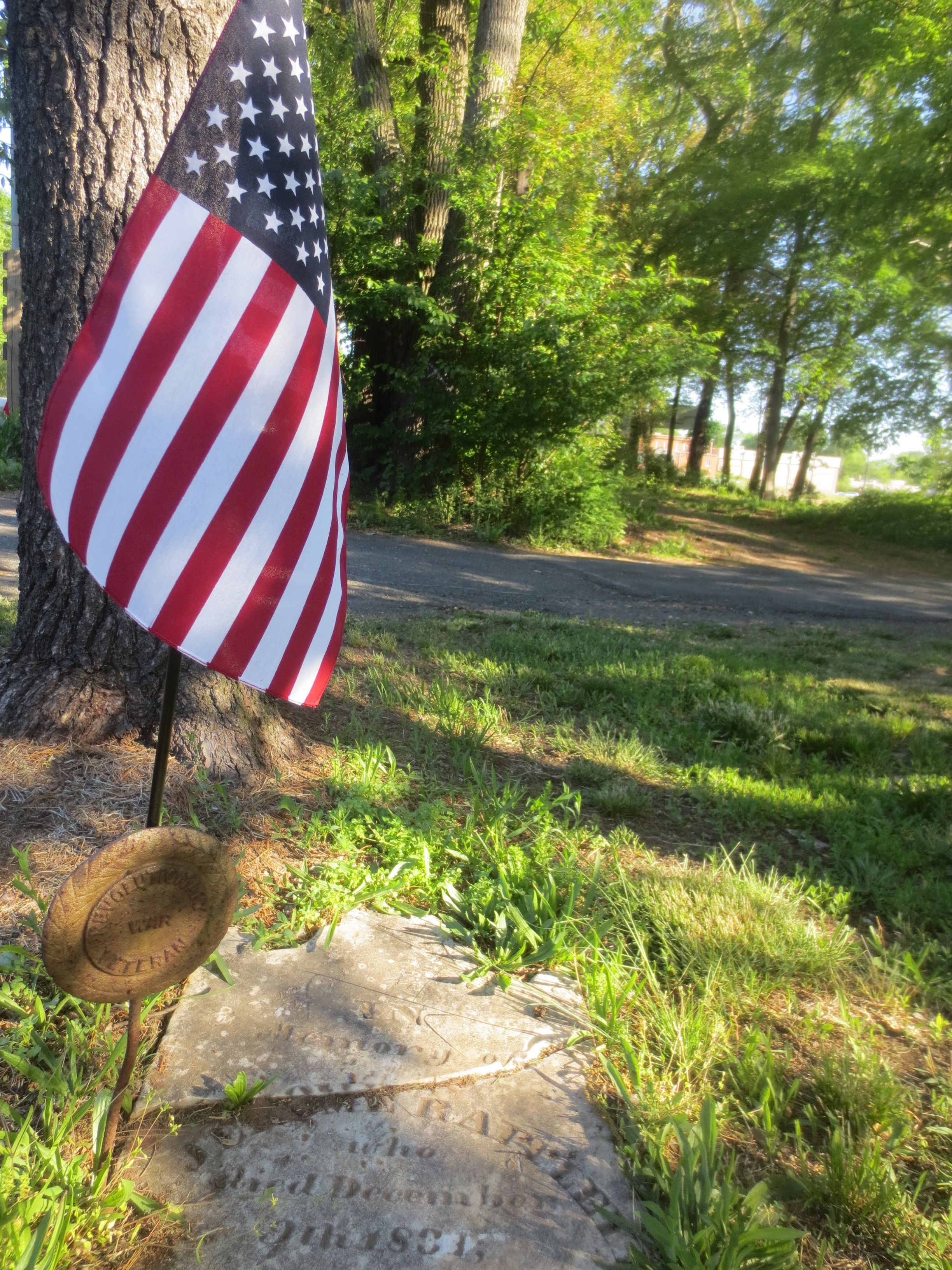
Below is a photograph I took today in a small cemetery in Franklin Township, New Jersey, of a flag placed on the gravestone of a Revolutionary War veteran. I’m glad he is remembered and now add my measure of tribute.

IMG_1744

Iraq and Afghan Women in War and War Fiction

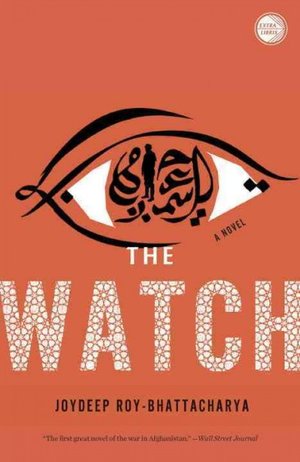
Sand QueenMy post last week about poetry written by Afghan women prompted one reader to ask me about fictional portraits of Afghan and Iraqi women and another to ask me about my own experiences with Afghan women during my deployment to Khost and Paktya provinces in 2008-2009. The first query can be answered quickly, for there aren’t many. In Sand Queen (2011) Helen Benedict features a young Iraqi woman named Naema. In The Watch (2012) Joydeep Roy-Bhattacharya portrays a young Afghan woman named Nizam. In both novels, the women narrate their stories in first person in chapters that alternate with others that relate events from American point-of-views. In both novels, the young women have come to American bases or outposts to plead the case of relatives killed or captured by Americans. In Sand Queen, Naema wants to know what’s become of her father and brother, who have been imprisoned in Camp Bucca. In The Watch, Nizam wants the Americans to return the body of her The Watchbrother, a vaunted Pashtun jihadist, who has been killed in an attack on their compound. The Americans intend to evacuate Nizam’s brother’s corpse to Kabul to verify his identity and publicize his death.

Naema and Nizam are more intelligent, more mature, and more articulate than the Americans with whom they interact. Their integrity and sense of ethics are also superior. Through them, Benedict and Roy-Bhattacharya suggest how ill-equipped most American soldiers were for dealing with Iraq and Afghan nationals, especially women, with anything approaching subtlety and sensitivity. Stupidity and brutality more accurately describe things.

Short story authors Katey Schultz and Siobhan Fallon also occasionally portray “local national” women in their fiction. Benedict, Roy-Bhattacharya, Schultz, and Fallon are all civilians who never served in the military. In the fiction about Iraq and Afghanistan written by veterans, Iraq and Afghan women barely appear. Survey The Yellow Birds, Fobbit, Redeployment, and the Fire and Forget anthology and tell me what you find. Of recently published fiction by veterans, Elliot Ackerman’s Green on Blue includes a young Afghan woman as a secondary character, but not so much Jesse Goolsby’s I’d Walk With My Friends I Could Find Them and Michael Pitre’s Fives and Twenty-Fives. Benedict, Schultz, and Fallon are all women, but not all women authors are given to portraying “host nation” women. None appear in Sparta, They Dragged Them Through the Streets, Be Safe I Love You, or Eleven Days, all written by women. Male civilian authors are more of the same: no Iraq or Afghan women in the male-authored Billy Lynn’s Long Halftime Walk, Wynne’s War, or The Apartment.

So that’s an interesting but not very impressive record. I salute the civilian authors who have made the imaginative stretch to portray war from the viewpoints of Iraqi and Afghan women. The veterans, I’m thinking, just don’t have much real-world experience to draw on, for most of us spent our year or years overseas without any meaningful contact with local women. Here’s the sum total of my experiences, and I went “outside the wire” four or five days a week, at least in the first eight months of my deployment, to interact with Afghan civilians in one capacity or another.

Every woman we saw on the roads of Khost province wore blue burqas that covered them from head-to-toe. When we passed them in our trucks, they would turn away from us and hunch down in a ball until we passed. This behavior outraged our interpreters. “Do you know why they are doing that?” they would ask, “It is because the Taliban is making them.” But the times we saw women on the street were few. On most missions, we only saw men. Stopping to speak with the women we did see was unimaginable.

We hosted a shura on our camp and one of the speakers was a woman politician of some fame in Afghanistan. I wish I remembered her name, because I wonder how she came to prominence and what’s become of her.  After the public shura, I was privy to an hour-long private meeting in which the woman-politician was the only female in a group of twelve (and I the only American). Her veil came off and she bantered back-and-forth, seemingly at ease, with the men, who also seemed to enjoy the occasion immensely.

A package bounced out of one of our trailers on a bumpy patch of road and was immediately picked up by a young Afghan male who carried it into a kalat. We stopped and sent our interpreter to retrieve the package. I watched as he was met at the door by a woman who vehemently denied that anything had happened. She and our interpreter jabbered back and forth for a few minutes and then the interpreter pushed past her into an interior room, retrieved the package and returned to our trucks.

Adolescent girls before maturity played on the streets without restraint, and it was heart-breaking to think about those obviously within a few months of disappearing behind the veil and kalat walls for the rest of their lives. We hosted weekly medical clinics on our camp and saw a steady stream of young girls there, but all were escorted to us by their fathers and older brothers, never their mothers and older sisters. My Afghan counterpart sometimes was visited by his seven-year-old daughter, who scampered about the office as a young girl would anywhere, alternately snuggling up to her father and then dancing across the room in peels of laughter. For a while, a young Afghan-American woman worked as an interpreter on our camp. We all liked her fine, but she had trouble relating to the Afghan officers. I think the problem was more that her command of Dari and Pashto were not great and also that she was demure by nature—a huge handicap in a nation made up of emotional and outspoken verbal combatants.

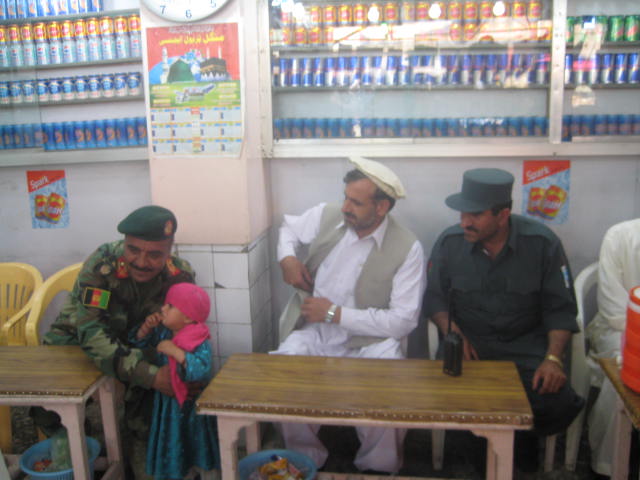
An ANA brigade commander, the governor of Khost, and the Khost police chief with a young girl in a downtown Khost ice cream shop.

So that was it—pretty slim pickings, all-in-all, and though I’m sure we could have done better, the pickings were certainly even slimmer for rank-and-file soldiers. The men and women who served on Provincial Reconstruction Teams, which were charged with nation-building and humanitarian missions, had more significant interactions, but their numbers were few. NGOs had developed a network of women’s schools, clinics, and centers in they years after 9/11, but by the time I arrived most had closed, if not been blown up. Maybe more was happening in Kabul and inside the Green Zone in Iraq, but I wouldn’t know. Much has been made lately of the Cultural Support Teams made up of women who passed rigorous qualification tests to work with Special Operations units to facilitate their interactions with women. I don’t want to gainsay anything the women on these teams accomplished, and I look forward to finding out more about them, but accompanying Green Berets, SEALs, and Rangers on midnight missions to seize High Value Targets in my mind unfortunately doesn’t qualify as a significant and sustained engagement with the women of Afghanistan, and in any case the whole effort came at least five years too late. If there were feminine hearts-and-minds to be won, or important intelligence to be gained from the distaff side of Afghan and Iraq society, we didn’t do much to glean them. That’s good news for military wives worried about their husbands misbehaving downrange or falling in love with an Afghan or Iraqi beauty, but bad news for war writers interested in portraying the full range of citizenry in the lands in which we fought.

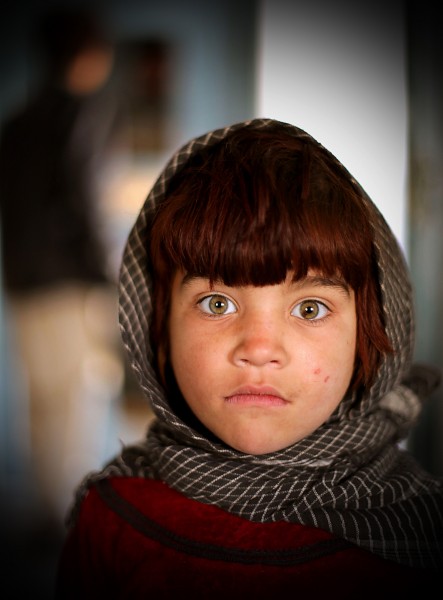
A girl at the Camp Clark clinic, 2009.  Picture by an International Security Force and Assistance Force photographer.
A girl at the Camp Clark clinic, 2009. Picture by an International Security Force and Assistance Force photographer.