War Memoir: Adrian Bonenberger’s Afghan Post

Afghan PostI draw a line between remembrance and imagination, so I don’t review many memoirs on Time Now.  I’m interested in the artistic representation of war more than its factual rendition, and I don’t want to be lured into judging someone’s life or disputing a soldier’s understanding of what he or she lived through.  Plus, there’s just a whole heck of a lot of memoirs out there, and not so many stories, and I think writing a great story is more of an achievement than writing a great memoir. I make exceptions, though, when a memoir strives for interesting literary effect or manifests something I think important.  I was impressed by Colby Buzzell’s My War, for instance.  Not only did it begin life as an early-on warzone blog, Buzzell’s prose voice is exhilarating.  Matt Gallagher’s Kaboom:  Embracing the Suck in a Savage Little War likewise originated as Internet dispatches from the Iraq front and then played hide-and-seek with military authority before finding print upon Gallagher’s discharge from the Army.  Walt Piatt’s Paktika and Amalie Flynn’s Wife and War are memoirs in verse. Benjamin Busch’s Dust to Dust is by far the most highly wrought contemporary war memoir, as befits a book by the son of the fine novelist Frederick Busch.  In a New Yorker article titled “Home Fires,” George Packer writes that Dust to Dust is “organized not chronologically but around certain materials—metal, bone, blood, ash. Fragments are perhaps the most honest literary form available to writers who fought so recently.”

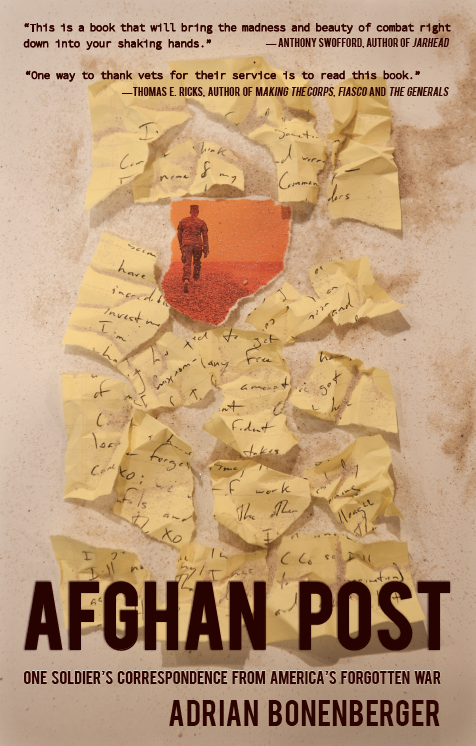
Last week I moderated a reading titled Writers on War at The Strand Bookstore in New York City.  The event honored the publication of Adrian Bonenberger’s Afghan Post, an epistolary memoir comprised of letters and journal entries Bonenberger mostly composed while undergoing infantry officer training at Fort Benning, Georgia, and on two tours in Afghanistan. Also on the panel were David Abrams, Roxana Robinson, the authors of the novels Fobbit and Sparta respectively, and the aforementioned Matt Gallagher.  Abrams has written entertainingly about the event on his blog The Quivering Pen and also linked to some funny cartoons of us drawn by a member of the audience named Jess Ruliffson.  I can’t top Abrams and Ruliffson, but will say just a few words about Afghan Post.
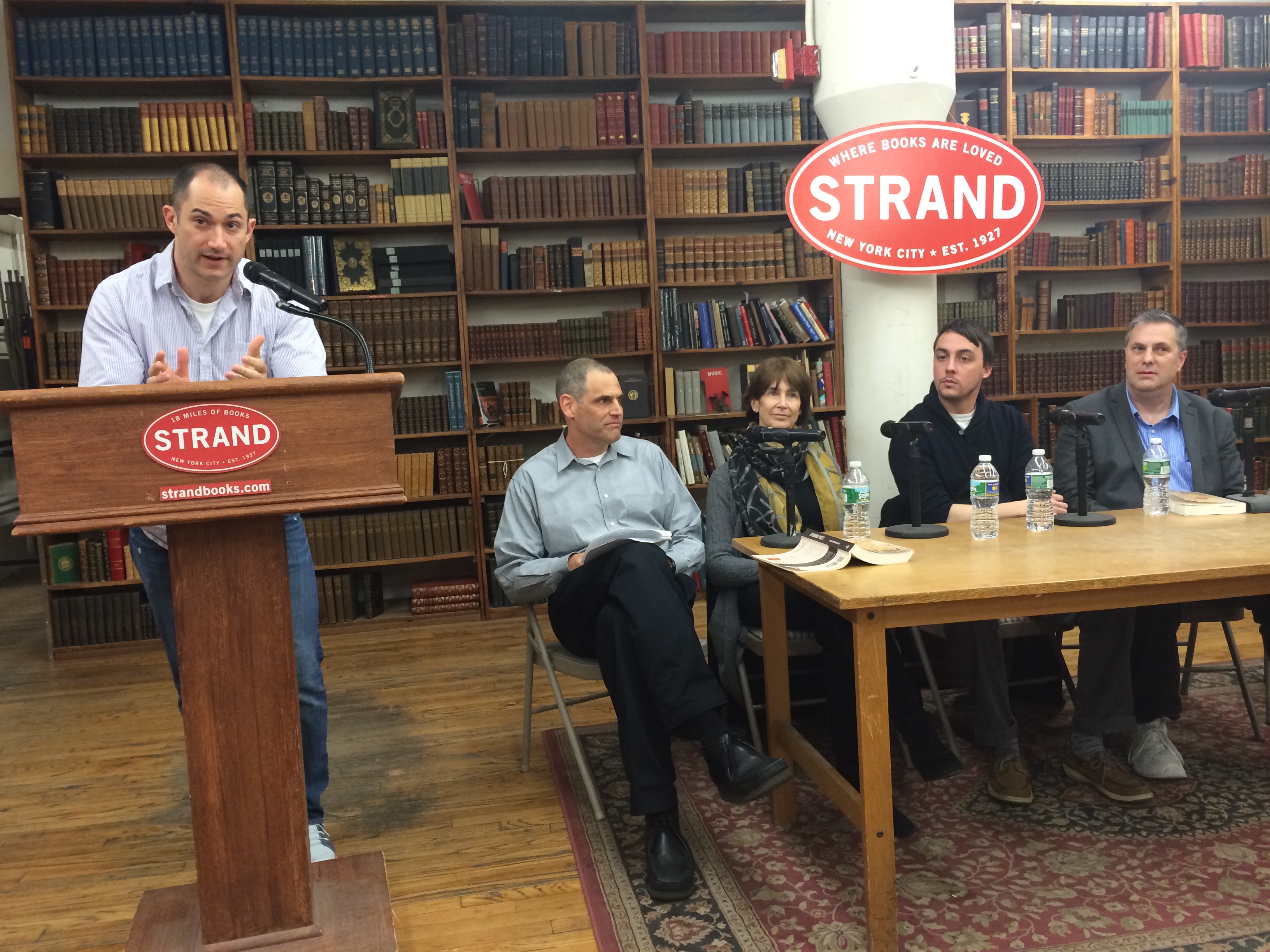
Left to right, Adrian Bonenberger, me, Roxana Robinson, Matt Gallagher, David Abrams

Bonenberger is a Yale graduate whose parents are members of the artistic intelligentsia, which makes his military service de facto interesting–one more data point in liberal, educated America’s sorting out of its relationship with a nation that is a lot more militaristic than it is.  That Bonenberger was a compulsive letter writer who somehow found the means to save or retrieve his correspondence is also intriguing.  The best things about Afghan Post, though, are the quality of Bonenberger’s writing and his observations, both those descriptive and those reflective. Describing the things he sees and does, ruminating about bigger pictures, and cogitating upon his performance as a platoon leader and company commander, Bonenberger makes new many already twice-told warfaring episodes while filling in cracks and margins untouched by other memoirs and histories.  An excerpt, for example, from a letter to his parents:

The Afghans live in unimaginable poverty; if you haven’t seen it, you can’t picture what it’s like.  Mom, I’m guessing it’s even worse than whatever you saw on the Navajo reservation in the ‘70s.  Except replace “alcoholism” with “the ever-present specter of warfare” as the proximate cause of said poverty (I’m trying to be generous and not suggest anything else could be responsible lest others accuse me of cultural imperialism).  Walking through the market recently with a dismounted patrol, we passed a butcher’s shop, where they had skinned goats hanging—you could see the cloud of flies around the meat—the butcher’s assistant slapped the corpse to keep the flies off when a customer walked in.  That afternoon I had kabob with the mayor—probably the same goat.  There’s a medicine here, Cipro, that I take like candy to keep the pathogens away.  God only knows what it’s doing to my insides.

Our anti-malarial medicine is Mefloquin, which is a weekly pill (we all take it on Monday, which is called “Mefloquin Monday” as a consequence) that causes some seriously weird, super-realistic dreams.  I look forward to taking it; the dreams fade in intensity as the week goes on, but Monday and Tuesday night are usually fun, almost spiritual journeys.  I had one dream that was so much like reality that when I woke up, I wondered if I’d been to sleep at all, or if I’d just remembered the day before and not dreamt at all—then I thought, “Ah, this what they mean when they say ‘having trouble distinguishing fantasy from reality.’”  Although when fantasy is exactly like reality, that’s not much of a problem.

The primary recipients of Bonenberger’s correspondence vary greatly—parents, girlfriends, old Yale friends, new Army buddies, etc.–so each is a separate exercise in rhetorical selection and emphasis.  Who needs to hear what and why?  As the letters accumulate, drama ensues as the author’s relationships torque under the pressure of change and need. The private side the letters reveal is often playful, open, and curious, but also prone to fits of brooding.  The dominant impression is that of a young man living through very challenging and exciting events who is both eager to explain it all and desperate for affirmation that family and old friends don’t disapprove of his decisions to join the Army.  The letters, it seems, allow Bonenberger, who never intended to stay in, to maintain distance from the all-consuming martial culture he has entered.  At the same time, they document the powerful imperatives that drive young officers to fanatically seek the respect of their soldiers, peers, and superiors.  The negotiation between distance and immersion imbues Afghan Post with personality and tension that other memoirs sometimes lack.

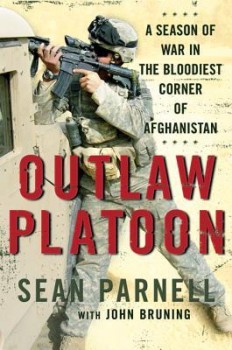
Afghan Post might be read usefully alongside Outlaw Platoon, Sean Parnell’s memoir of service as a platoon leader in Paktika province, Afghanistan, where much of Afghan Post also takes place.  Parnell’s memoir swaggers with portraits of soldiers, Afghans, tactics, fighting, and Parnell’s growing prowess as a combat leader; Afghan Post’s strengths are passages that depict honestly Bonenberger’s internal struggle with doubt and failure.  While we’re reading Parnell and Bonenberger we might also read Craig Mullaney’s The Unforgiving Minute, about the author’s own platoon leader experience in Paktika and Walt Piatt’s memoir-in-verse mentioned above, about his tenure as a battalion commander there.  Something about that wild, far-away battleground, full of mountains and angry Pashtuns, is inspiring America’s fighting men to write very well.

Adrian Bonenberger’s Afghan Post:  One Soldier’s Correspondence from America’s Forgotten War was published in 2014 by The Head and The Hand Press.
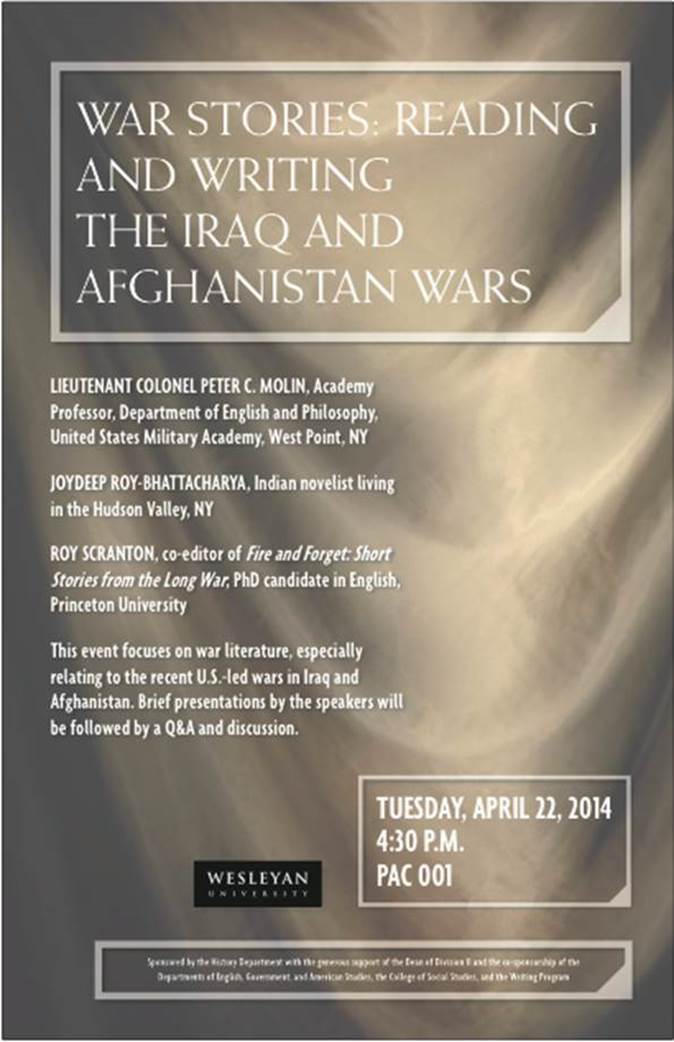
War Stories: Reading and Writing the Iraq and Afghanistan Wars

War-StoriesI was invited to speak at Wesleyan University with Roy Scranton and Joydeep Roy-Bhattacharya.  My comments mostly blended Time Now posts with others about Afghanistan from my old blog 15-Month Adventure. Scranton and Roy-Bhattacharya, on the other hand, offered up exciting new work. Scranton read “The Fall,” recently published in Prairie Schooner’s war issue and part of a novel he’s hoping to find a publisher for soon. Roy-Bhattacharya read from a novel in progress.  Both selections portray life in the early days of Operation Iraqi Freedom from the viewpoint of Iraqis, in Scranton’s case that of two women and in Roy-Bhattacharya’s that of the Baghdad Zoo caretakers.  We’ll have to wait for Roy-Bhattacharya’s novel, but here’s an excerpt from Scranton’s story:

Maha sat in her room listening to Britney Spears, wishing she was anywhere else.  The war was going to ruin her life, she knew it, it was going to ruin her chances for marriage, it was going to ruin everything.  Her skin was breaking out, her hair frizzing, ends splitting.  She stood at her window and looked through the split between two pieces of plywood nailed over the glass and watched smoke drift over her city, and the smoke was her future fading into haze.

And another, from near the end:

They quit going out.  They locked the gate.  They spoke to their neighbors through a crack in the second-story window. They didn’t go out onto the roof.  More explosions, more shooting.  One night they listened to a tank roll down their street.  They heard it stop.  They heard the grind of its turret and heard its gun fire, the sound of hell cracking open, then again, feeling it in their bellies, thumbs, and knees.  They looked at each other and prayed. Allahu akbar, la illaha ila Allah.  They heard a machine gun go tock-tock-tock and the tank rolled away.  An empty house down the block had been its target.  Two gaping holes like blank eye sockets watched the street.

That scene’s sensational, and Roy-Bhattacharya’s story, about the destruction of the Baghdad Zoo, even more so, but I like how they also explore with care the lived lives and and consciousness of Iraqis in that far-away, hard-to-remember time.  Each author was determined to bring the era back, to make it memorable again, reconfigured in ways that allow us to see it from other perspectives, and made vivid through the power of artistic description.

In the audience at the reading was Richard Slotkin, a Wesleyan professor famous for his works Regeneration Through Violence, Gunfighter Nation, and others.  The thesis of Regeneration Through Violence is easy to state: religious, peace-minded Americans learned to love, not hate, violence fighting Native Americans during the Puritan era. Think back to whatever you remember of the King Philip Wars, which were brutal and merciless.  Each subsequent generation of Americans then sought their own bloody encounter with a savage dark-skinned foe. For the next three centuries, Americans pushed westward, driven not by manifest destiny, but bloodlust.  In the 20th century, out of native land, the theory goes, generation by generation Americans created and battled enemies abroad.   Our wars thus have not been Clausewitzian, but Freudian.  Not politics by other means, but psychology at its most primeval.  In Gunfighter Nation, Slotkin examines the ideology of Westerns and war movies.  In the 19th century, print fed what Slotkin calls “the national imaginary” of what it means to fight, but in the 20th and 21st Slotkin argues that it is movies and TV that mold consciousness.  For Slotkin, they do political work preparing an always almost already populace to embrace war. Either they unwittingly rechannel conventions, or their makers do so cravenly and crassly.

Two days after Scranton, Roy-Bhattacharya, and I read, I returned to Wesleyan to hear Slotkin lecture on the 2001 movie adaptation of Mark Bowden’s Blackhawk Down.  Slotkin deplored its degradation of Bowden’s superior book.   He claimed the movie-makers made many artistic choices that reinforced the message that America was justified in heinous overseas adventurism and inculcated the idea that a “kill ‘em all” mentality was not only effective, but morally defensible.  In his lecture, Slotkin mentioned the War Stories reading three times, all favorably.  He asserted that contemporary war writers such as Scranton and Roy-Bhattacharya were working hard and generally succeeding in breaking the pernicious clichés and traps of popular American story-telling. Movies couldn’t do it, he implied; they were too bound by genre conventions and money-making imperatives.  Novelists aren’t free of such things, nor is the publishing industry, but they have a better chance of avoiding them. Staunchly individualist in outlook and solitary in method, writers thoughtfully pursue their visions of the truth free of cant and stereotypes. They tell the stories they want to tell or that they think the nation needs, not wants, to hear.

I was glad to hear that, because it’s what I think, too.  I just hope it’s true.  We’ll see when Hollywood turns Scranton’s and Roy-Bhattacharya’s novels into blockbusters, right?  But first they have to get published, which I hope is soon.

At Wesleyan, with, left to right, Joydeep Roy-Bhattacharya, Roy Scranton, me, Richard Slotkin, our host William Pinch of Wesleyan's History Department
Left to right, Joydeep Roy-Bhattacharya, Roy Scranton, me, Richard Slotkin, and our host William Pinch of Wesleyan’s History Department

Roy Scranton’s “The Fall” appears in the winter 2013 issue of Prairie Schooner, a special war edition guest edited by Brian Turner.  It is full of interesting stories and poems and fresh voices.

Richard Slotkin, Regeneration Through Violence:   The Mythology of the American Frontier, 1600-1860.  University of Oklahoma Press, 1975/2000.

Richard Slotkin, Gunfighter Nation:  Myth of the Frontier in Twentieth-Century America.  University of Oklahoma Press, 1998.

War of Words, Words of War

Last week I was fortunate to hear masterful short-story war authors Phil Klay and Hassan Blasim read in separate events to West Point cadets, faculty, and interested community members.  Both Klay and Blasim were eager to share their enthusiasm for literature and what they have learned about war for the benefit of future officers.  Both, I think, were pleased to find receptive audiences—Blasim, no fan of Saddam Hussein but equally appalled at the destruction of Iraqi civilized, artistic, and intellectual life in the wake of his displacement by American forces, and Klay, a Semper Fi Do or Die Marine in the heart of the belly of the Army beast.  Both read powerfully, both were charming raconteurs in informal discussion, and both were inspirational about the necessity of imagination and art to help people—future Army officers—understand the complexity of war and the human experience of it.  Hats off to my bosses and colleagues at West Point who have worked hard to make contemporary war artists and writers relevant to the education of cadets.

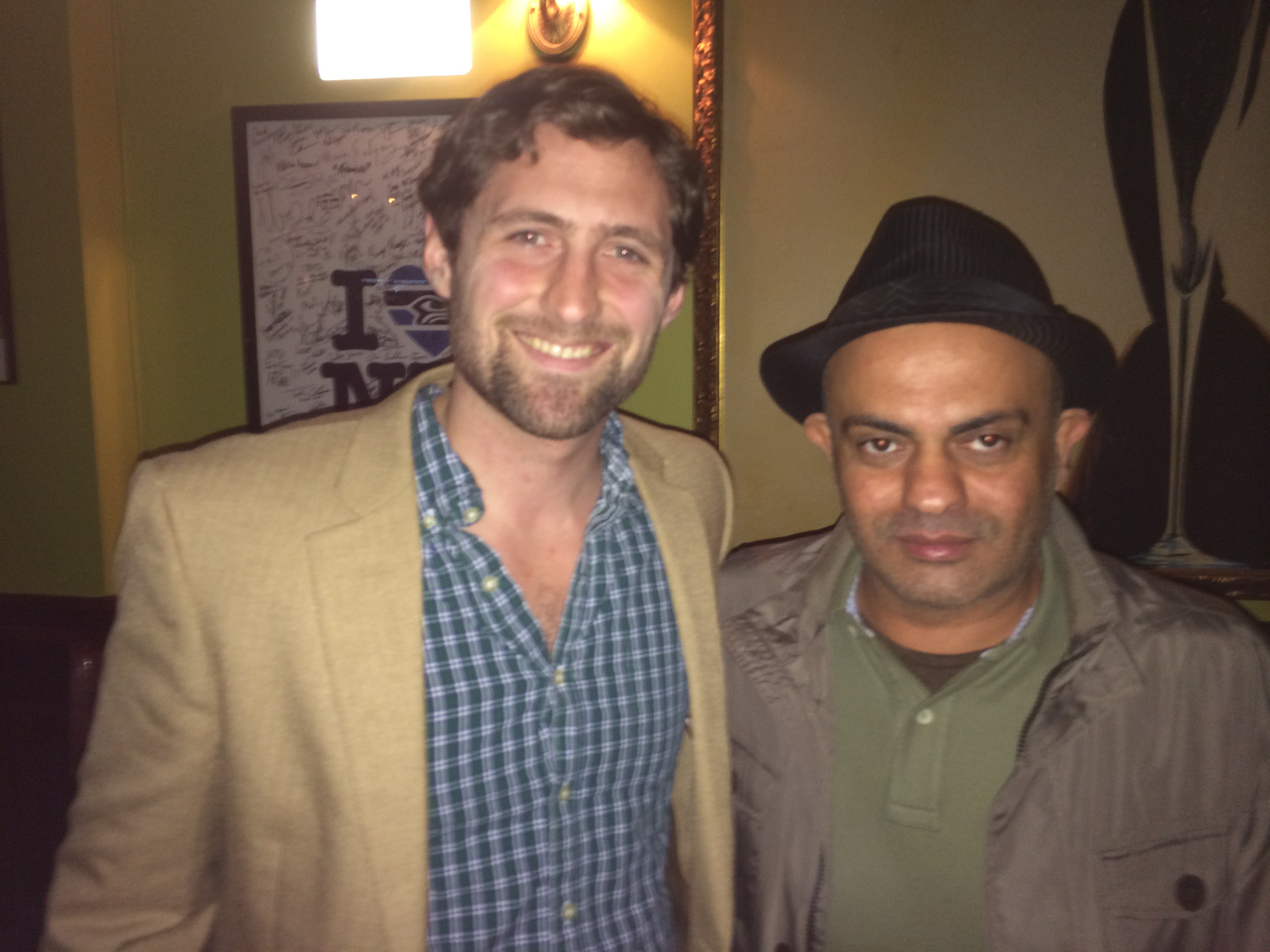
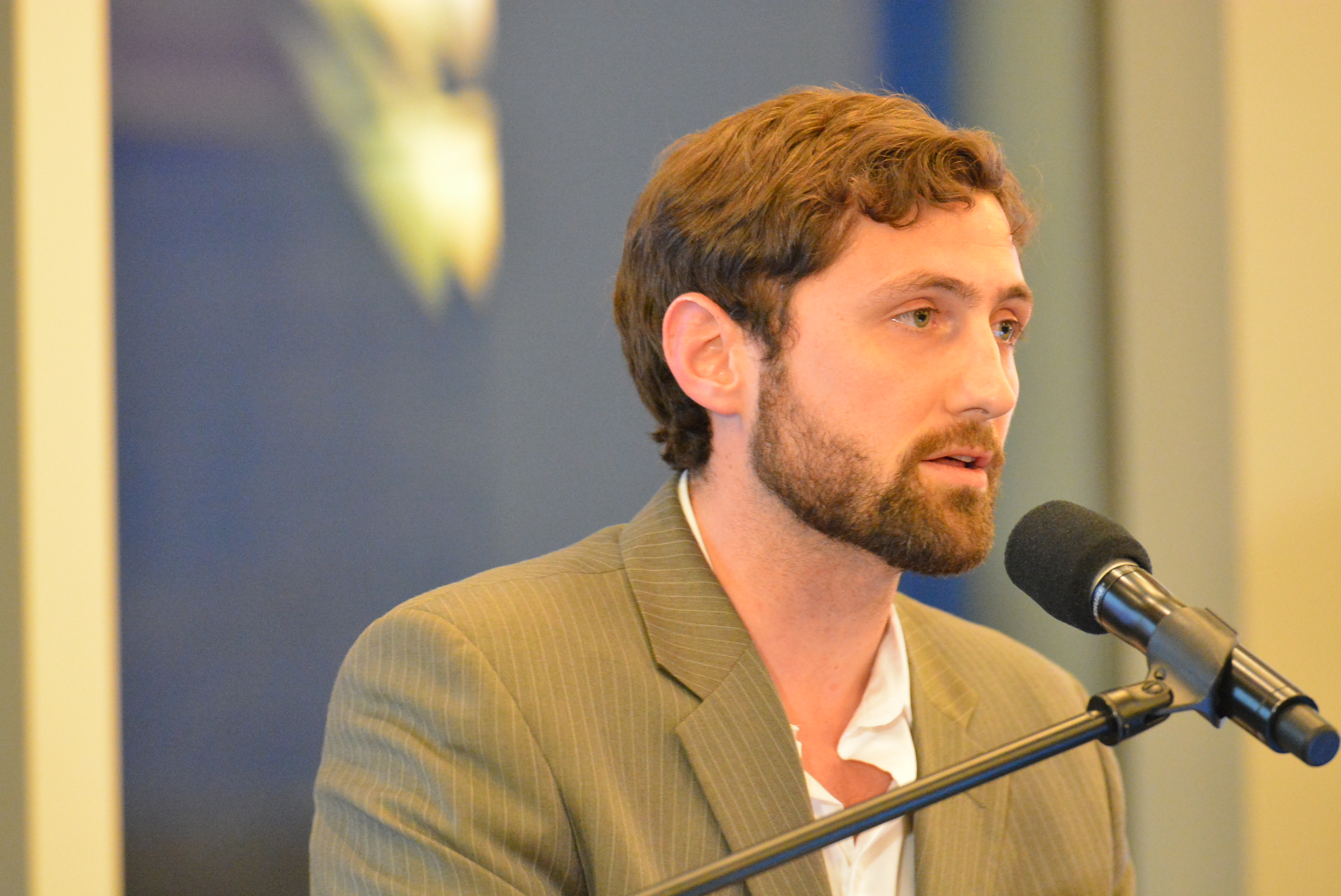
This week, Klay and Blasim read together in New York City, where I took this picture of them together:

Klay Blasim

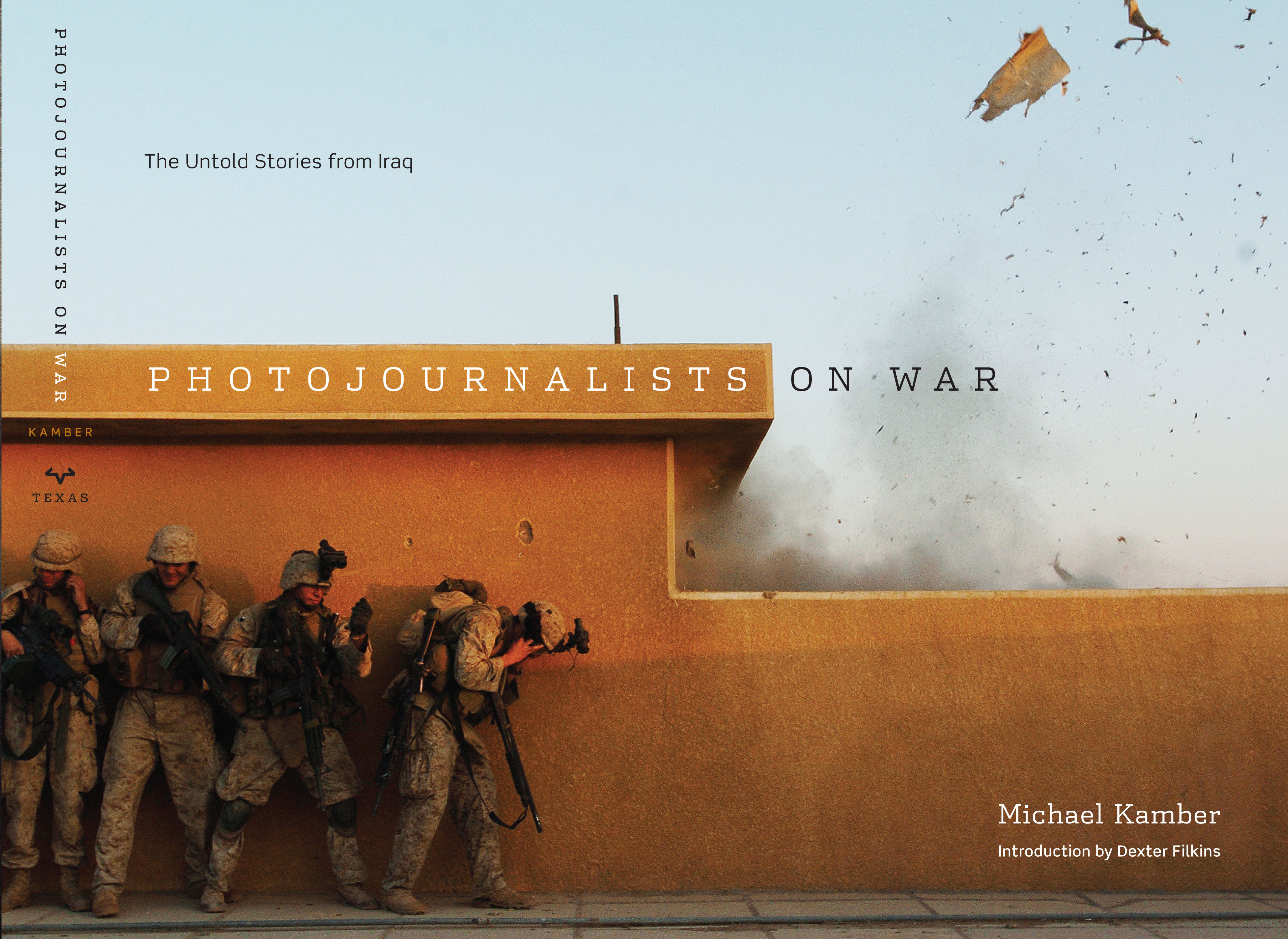
Also this week, I participated in two Vassar College classes that explored the Iraq War through fiction and photography.  The class had read David Abrams’ Fobbit, and now we were privileged to have Abrams join us by Skype—shades of deployment!—to discuss his black humor vision of Operation Iraqi Freedom.  Abrams has written about the experience in his blog The Quivering Pen and even included two wonderful student response papers to his novel.  The following class, the professor, Dr. Maria Hoehn of Vassar’s History Department, brought in Michael Kamber, a photographer who has covered both Iraq and Afghanistan for the New York Times.  Kamber has recently published an important and fascinating book called Photojournalists on War:  The Untold Stories from Iraq.  In it, Kamber compiles hundreds of photographs too graphic for military censors and media editors and published them along with their photographers’ accounts of their taking.  Kamber is adamant that photographs can shape consciousness and politics and he is vehement in his indictment of a military-media complex that has restricted, censored, and otherwise blocked distribution of the photographs that would truly inform the American public about the Iraq War.

photojournalists-on-war-michael-kamber-cover-hr

This swirl of words and impressions came as a series of publications and events brought veterans and veteran fiction into high relief.  George Packer’s glowing assessment of the contemporary war lit scene in the New Yorker was great, but its fulsome praise was undercut by Cara Hoffman’s  indictment in the New York Times that that same scene has been inhospitable to women’s first-person accounts of war.  Next came the news of yet another shooting rampage by a veteran.  One could sense public patience with vets draining away with each new article; we who were once heroes are in danger of morphing into monsters.  As if that wasn’t bad enough, the New York Times ran an opinion piece that confidently asserted a causal relationship between military service and membership in white supremacist groups and then an article that made the current generation of West Point cadets sound like bloodthirsty ingrates for their admission of regret that they would not probably not see combat in Iraq or Afghanistan.

In the midst of these gloomy accounts came a personal triumph, but one whose relevance to contemporary war literature I’m still trying to figure out. The current Maryland Historical Magazine features an article I wrote about early American novelist John Neal.  Neal is unknown to most, but he authored seven novels between 1817 and 1823–a time when very few other American writers took novels seriously.  Neal obviously did.  He called novels “the fireside biography of nations” and said, “People read novels who never go to plays or to church.  People read novels who never read plays, sermons, history, philosophy, nor indeed any thing else.”  Novels, for Neal, were places “where imaginary creatures, invested with all the attributes of humanity, agitated by the passions of our nature, are put to the task of entertaining or terrifying us.”  Ominously, he wrote that readers were excited by immoral and criminal characters more than virtuous ones.  Speaking of two popular authors of the time, Neal claimed that “all their great men are scoundrels….  their good men are altogether subordinate and pitiably destitute of energy and wholly without character.”  Be that as it may, Neal urged that all writers “write fiction–let them put out all their power upon a literature that all may read, century after century–I do not mean quote, and keep in their libraries, but read.”

Is any of this true, then or now?  Is any of it important?  Tomorrow I travel to Wesleyan University in Connecticut to participate in a “Writers on War” panel with Roy Scranton and Joydeep Roy-Bhattacharya.  I’m interested to hear what they and our audience have to say.  And what about David Abrams?  Michael Kamber?  Phil Klay?  Hassan Blasim?

War Film: GI Film Festival

Ex-US Army officer Laura Law-Millet started the GI Film Festival to showcase films about war and the military by independent movie-makers.  There’s definitely a disconnect between Hollywood and the military, and we wanted to show the real experiences of being in the military,” she says in a West Point Pointer View article about GIFF’s recent visit to the United States Military Academy.  GIFF aired films on two nights, one evening dedicated to a series of shorts and the other to the premier of a feature-length film about Nazi resistance in WWII Hungary called Walking with the Enemy.  All were good, but the film that moved me most was “Prayers for Peace” by Brooklyn-based animation artist Dustin Grella.  A tribute to a brother who was killed in Iraq in 2004, the film ends with harrowing audiotape of Grella’s brother speaking from Iraq while gunfire rattles and pounds in the background.  Those who’ve been in similar situations will remember how easy it was to seem blasé about the the noise of battle when it seemed not immediately threatening.  

GIFF’s major annual event is a weeklong festival that takes place each spring in-and-around Washington, DC.  GIFF14 dates this year are May 19-25 with most of the showings at the Old Town Theater in Alexandria, Virginia.  I’ve looked at many of the trailers on the GIFF website, and the one that catches my eye is Fort Bliss.  About a woman soldier who tries to reconnect with her son after deployment, it is directed by Claudia Myers and stars Michelle Monaghan.  Monaghan has big-time credentials. She currently stars in the HBO series True Detective and in 2005 she played the female lead in Kiss Kiss Bang Bang opposite Robert Downey, Jr. and Val Vilmer and opposite Tom Cruise in 2006’s Mission Impossible III.  I’m sure Fort Bliss will be interesting, but I’m also eager to see if it avoids the traps of Hollywood showbiz filmmaking that GIFF nominally opposes.

Graffiti of War: FOB Art, from the Heart

IMG_1324

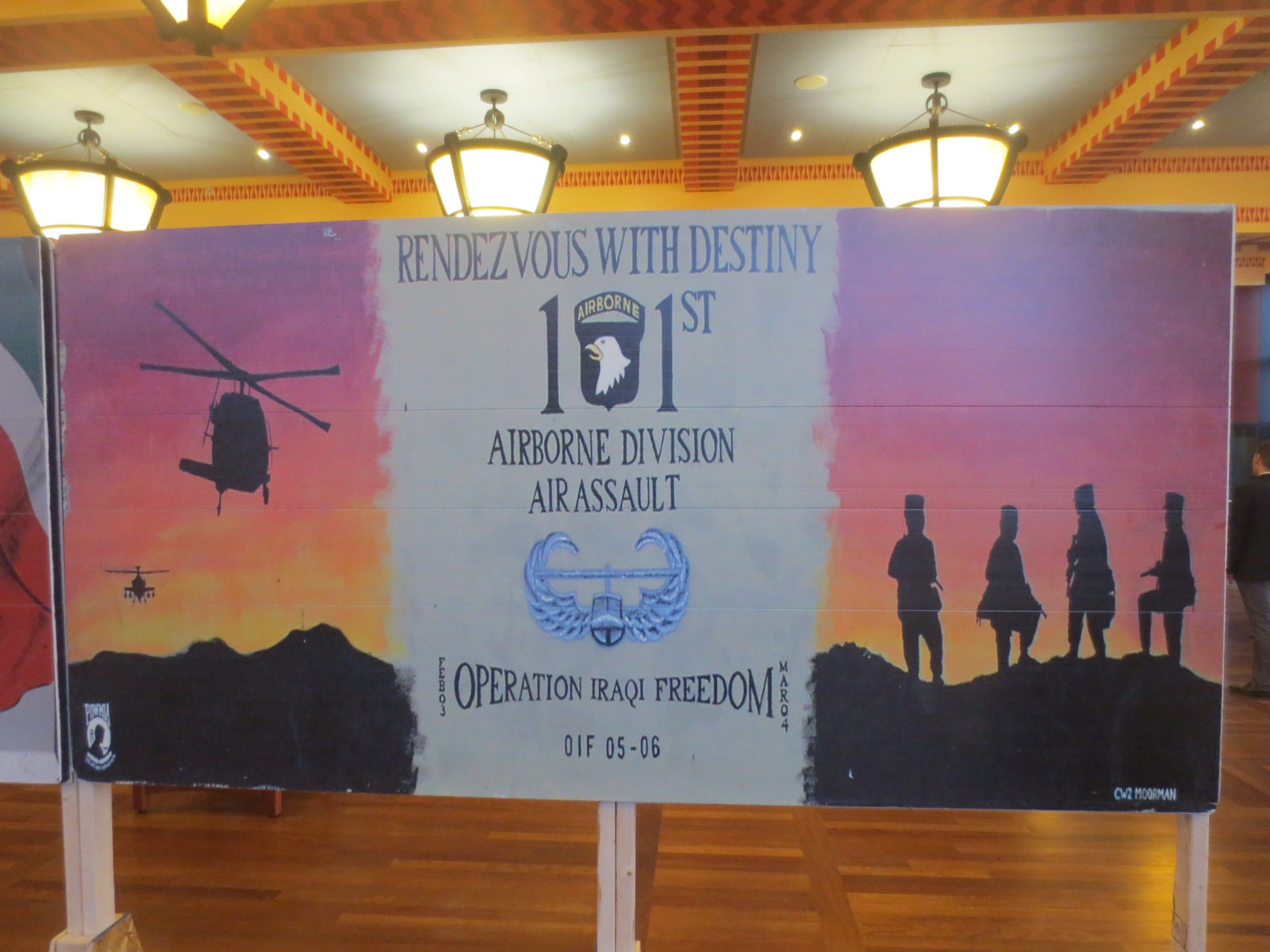
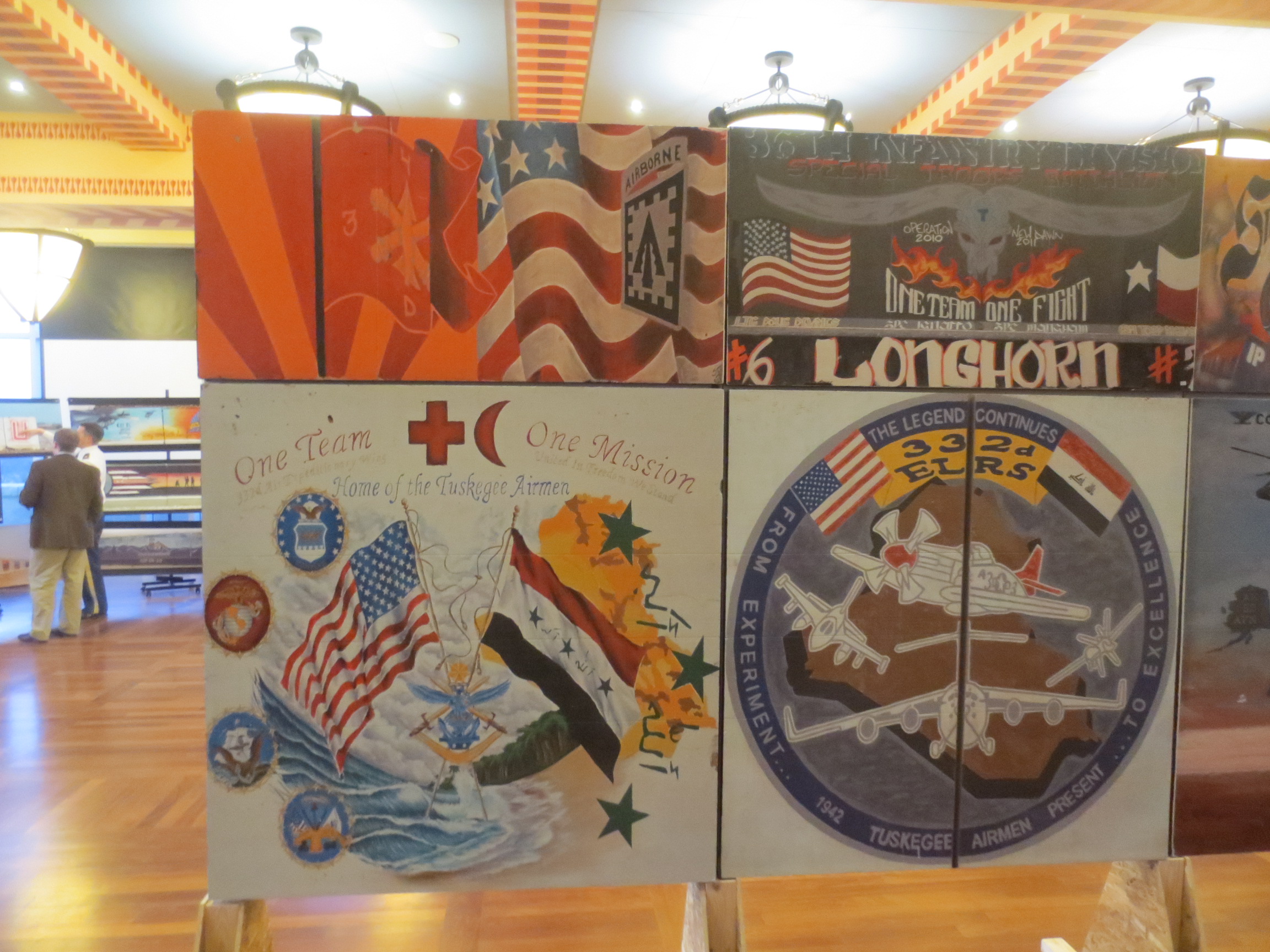
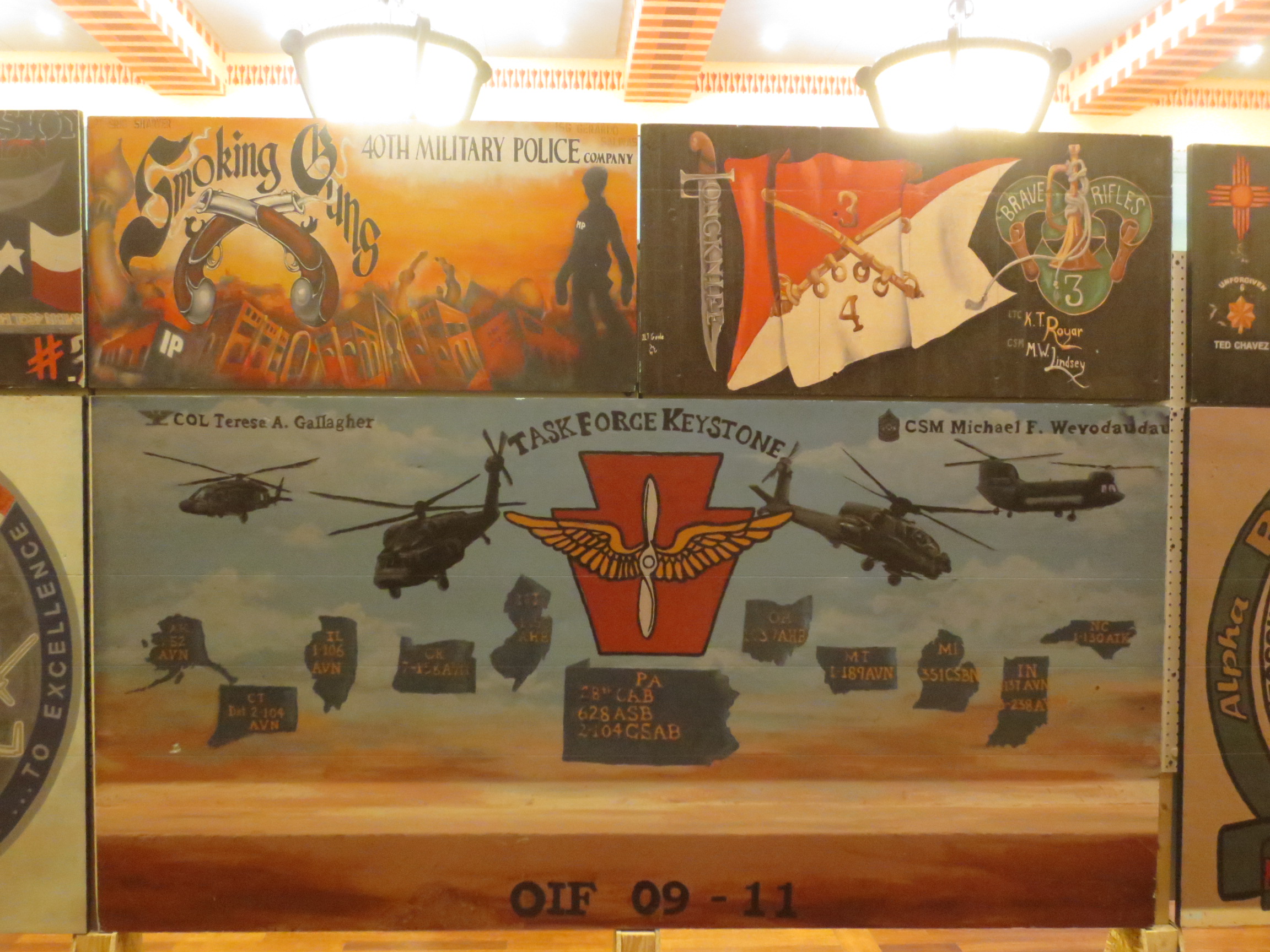
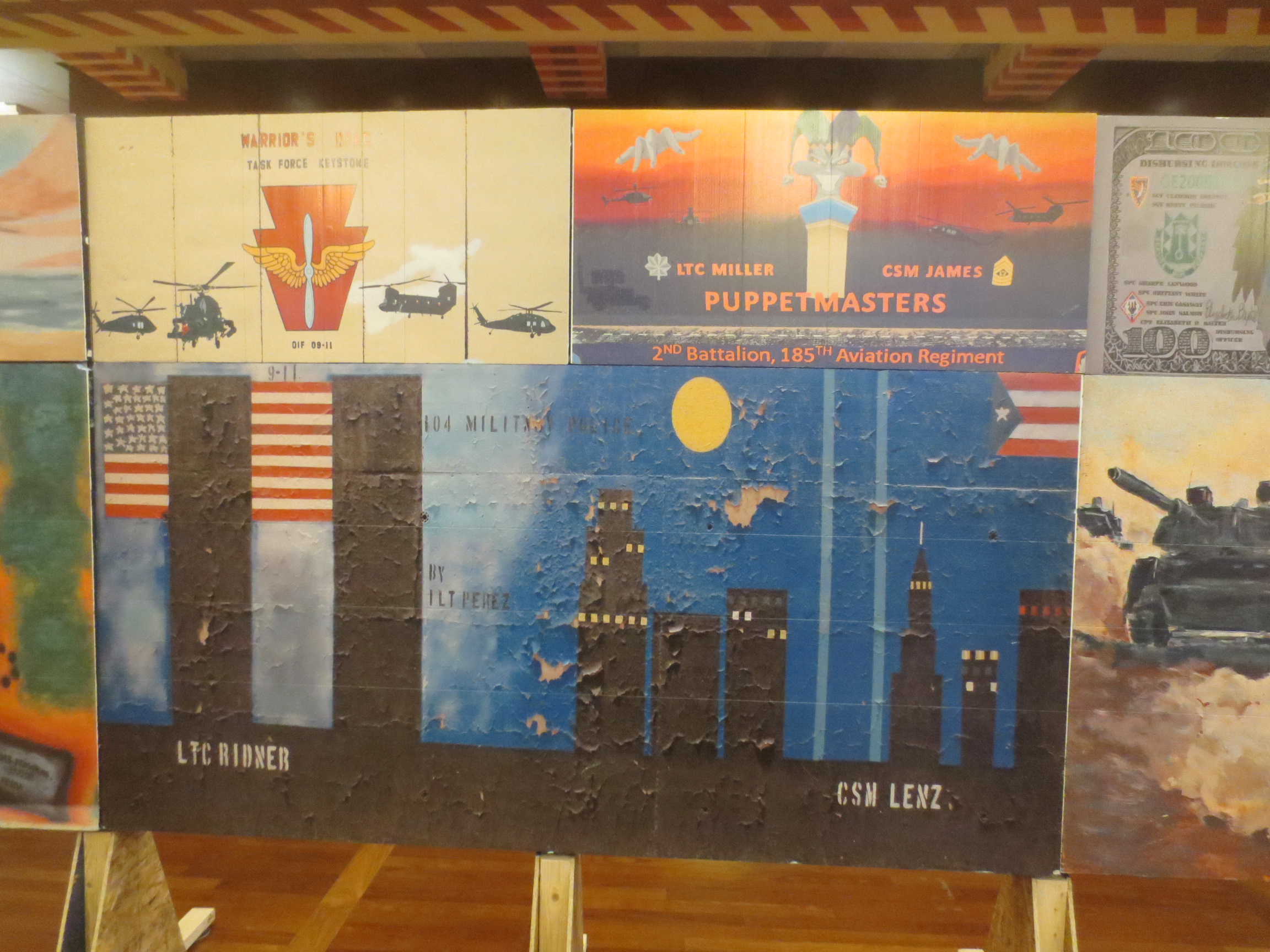
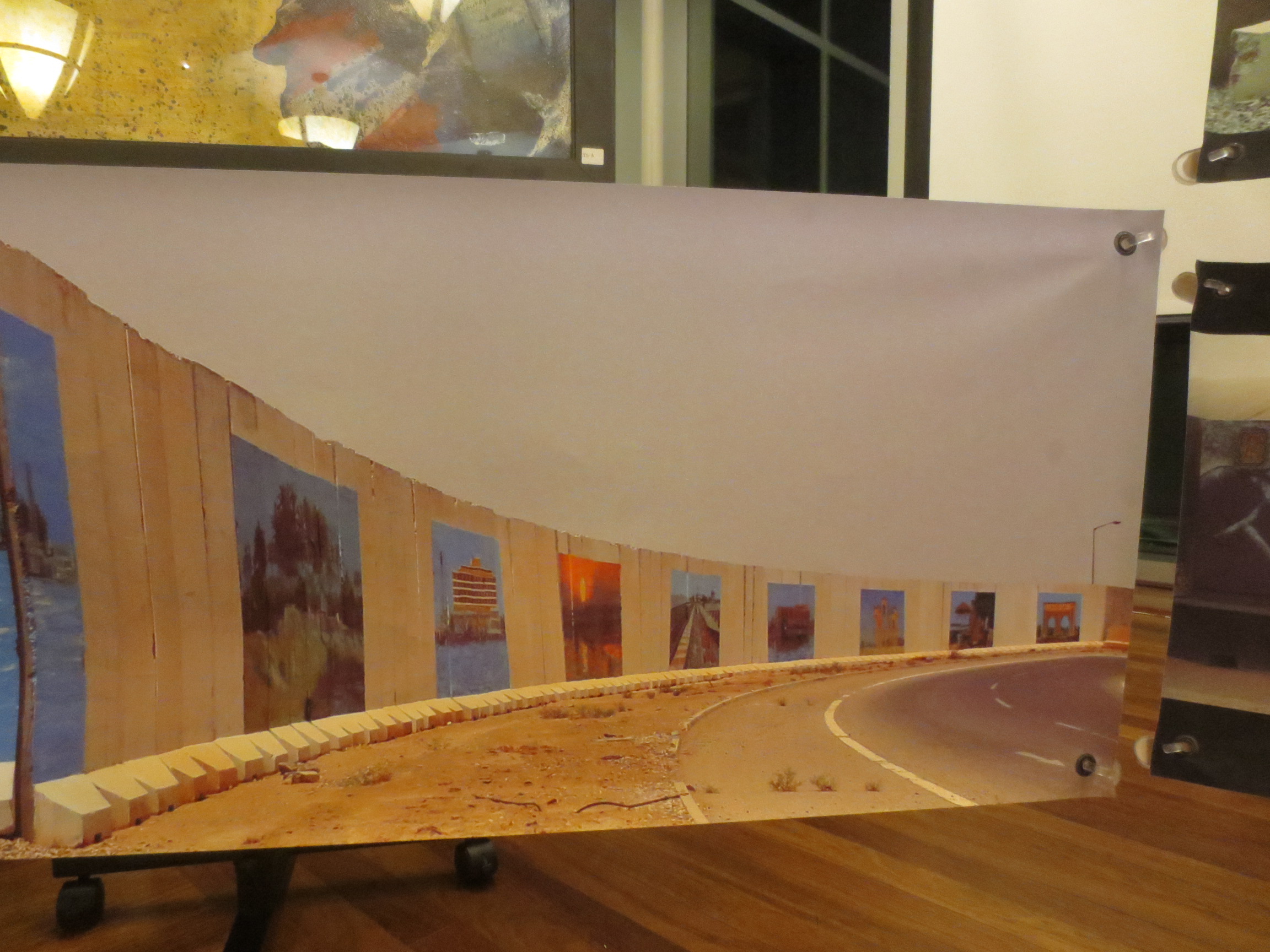
All vets of the contemporary wars have seen unit esprit-de-corps murals painted by service members on the large concrete “T-wall” blast barriers that protect barracks, offices, and sensitive equipment on Iraq and Afghanistan FOBs.  Just about the only splash of color in the waterless surroundings, the murals could be huge—up to 12 feet high and maybe 30 feet wide.  Their messages were never subversive, though as public artworks they straddled the line between unofficial and official.  Representing talent and inspiration bubbling up from artists-in-the-ranks, they were permitted by the chain-of-command only if they glorified unit prowess and pride or honored fallen comrades.  Within that stricture and a fairly limited iconographic range—think flags, screaming eagles, and thunderbolts—the murals demonstrated a remarkable competence, color palette, and imaginative variety.

US Army veteran Jaeson “Doc” Parsons’ idea of a good idea was to take pictures of the murals he saw overseas and mount them on oversize foamboard panels for exhibition to curious American viewers.  Called Graffiti of War, Doc’s project aims to showcase the artistry inherent in soldiering while publicizing concerns about “the invisible wounds of war” and helping connect civilian audiences with the military experience.  GoW features soldier and veteran personal art in addition to the unit murals I write of here, but, for me, it’s the murals that are most eye-catching.  I recently had a chance to view a GoW exhibit and thoroughly enjoyed it.  I asked Doc if I could write about him and GoW and thankfully he agreed, so here I salute his honoring of the artistic impulse as it flickered in the maelstrom of war.

IMG_1338


IMG_1358


IMG_1342

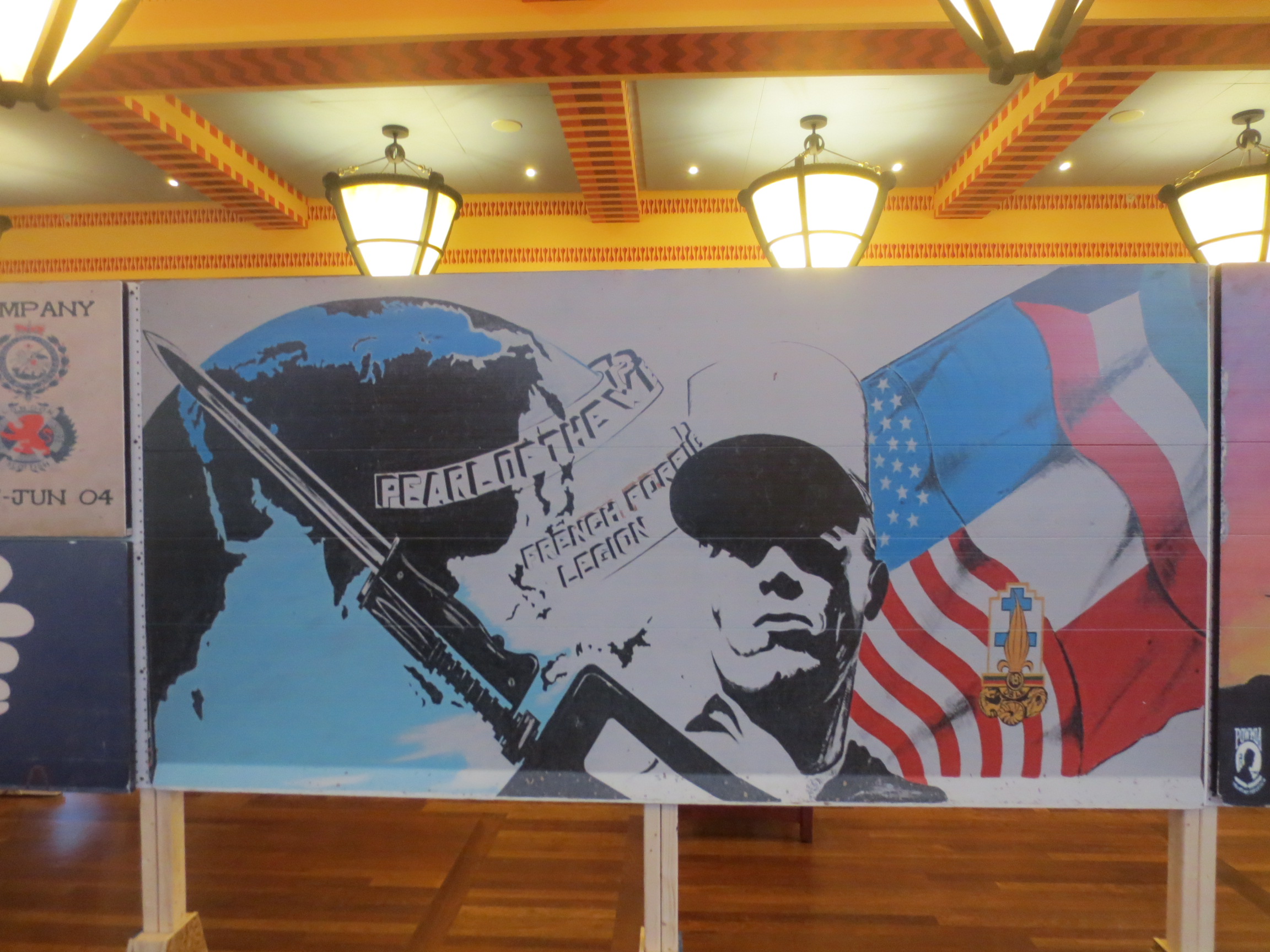
Graffiti of War features artwork from Coalition partners, too, such as this French Foreign Legion mural:

IMG_1325

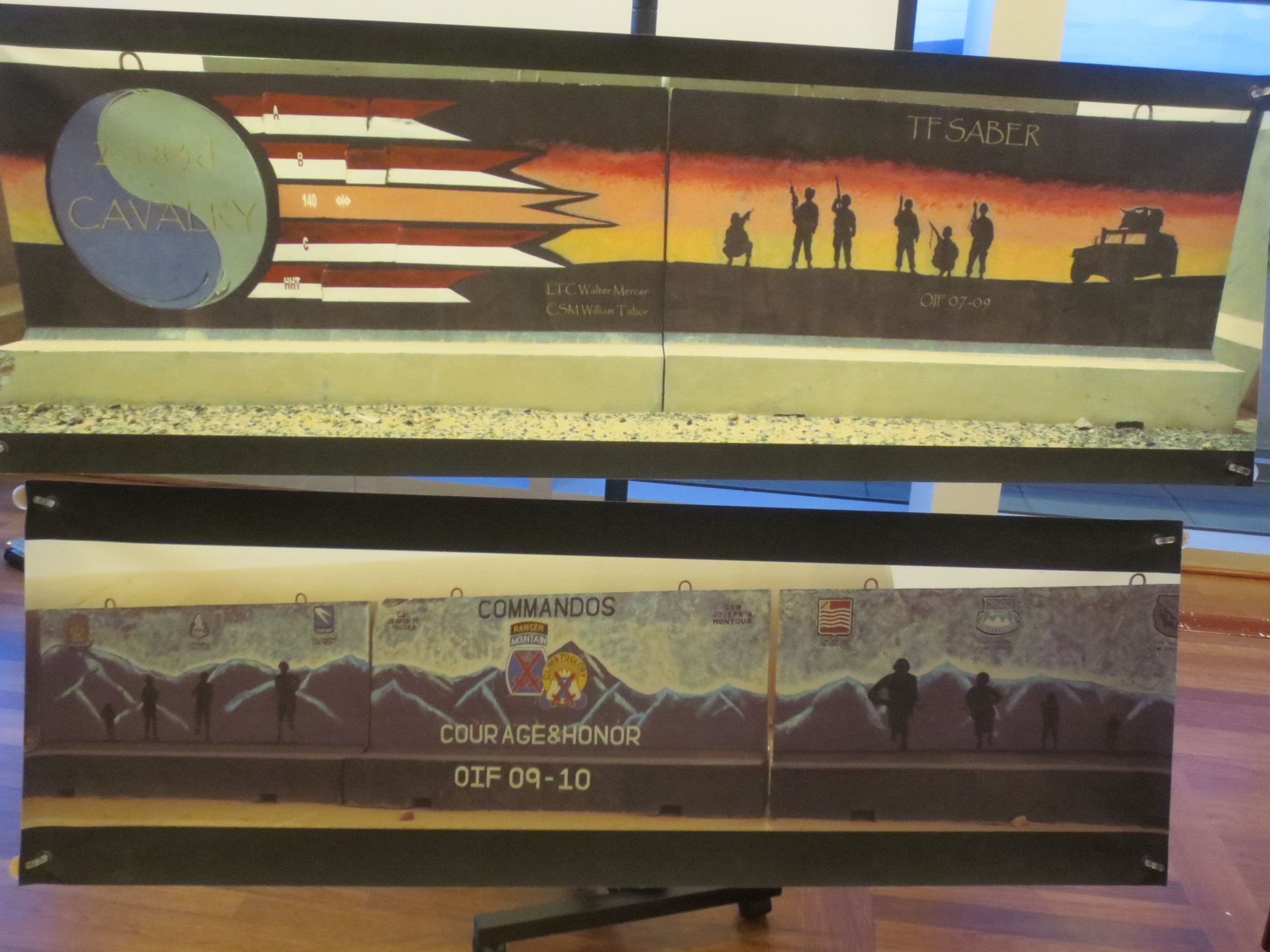
The two stretched canvasses below show unit murals as they appeared on the ground in Iraq.  Note the rebar hoops protruding from the top of the concrete barriers–they allow cranes to lift and emplace the giant T-walls. The things are enormous; the figures in the actual two murals below are darn-near life size.

IMG_1343

Doc kept an eye out for striking murals painted by Iraqis, too. The first one below shows murals painted on the outside of a US airbase blast wall. The second is a close-up of one of the murals.

IMG_1363

IMG_1410

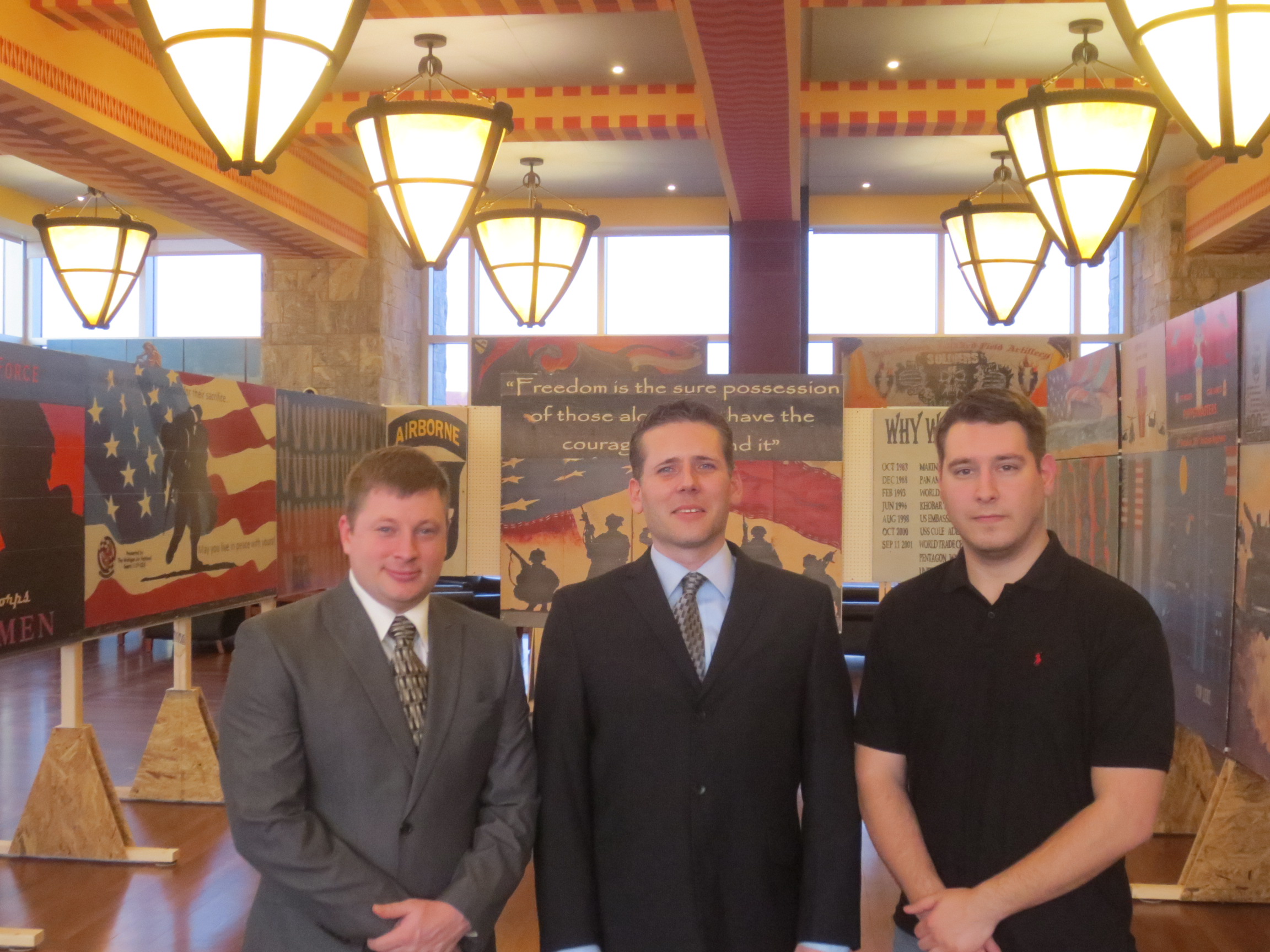
The picture below features Doc flanked by his two assistants, Jeremy Mull (ex-USMC) and Rob Craven (US Army, ex-active duty, now in the National Guard).  Thank you, gentlemen, for what you are doing and good luck in all future endeavors!

IMG_1323

The Graffiti of War exhibition I saw appeared at West Point, where I serve, courtesy of its Creative Arts Project, which is dedicated to showcasing art inspired by the contemporary wars created by service members, veterans, and civilian artists.  A West Point Pointer View online article about Graffiti of War and this year’s “CAP” is here.

Death in Tani: RIP Photojournalist Anja Niedringhaus

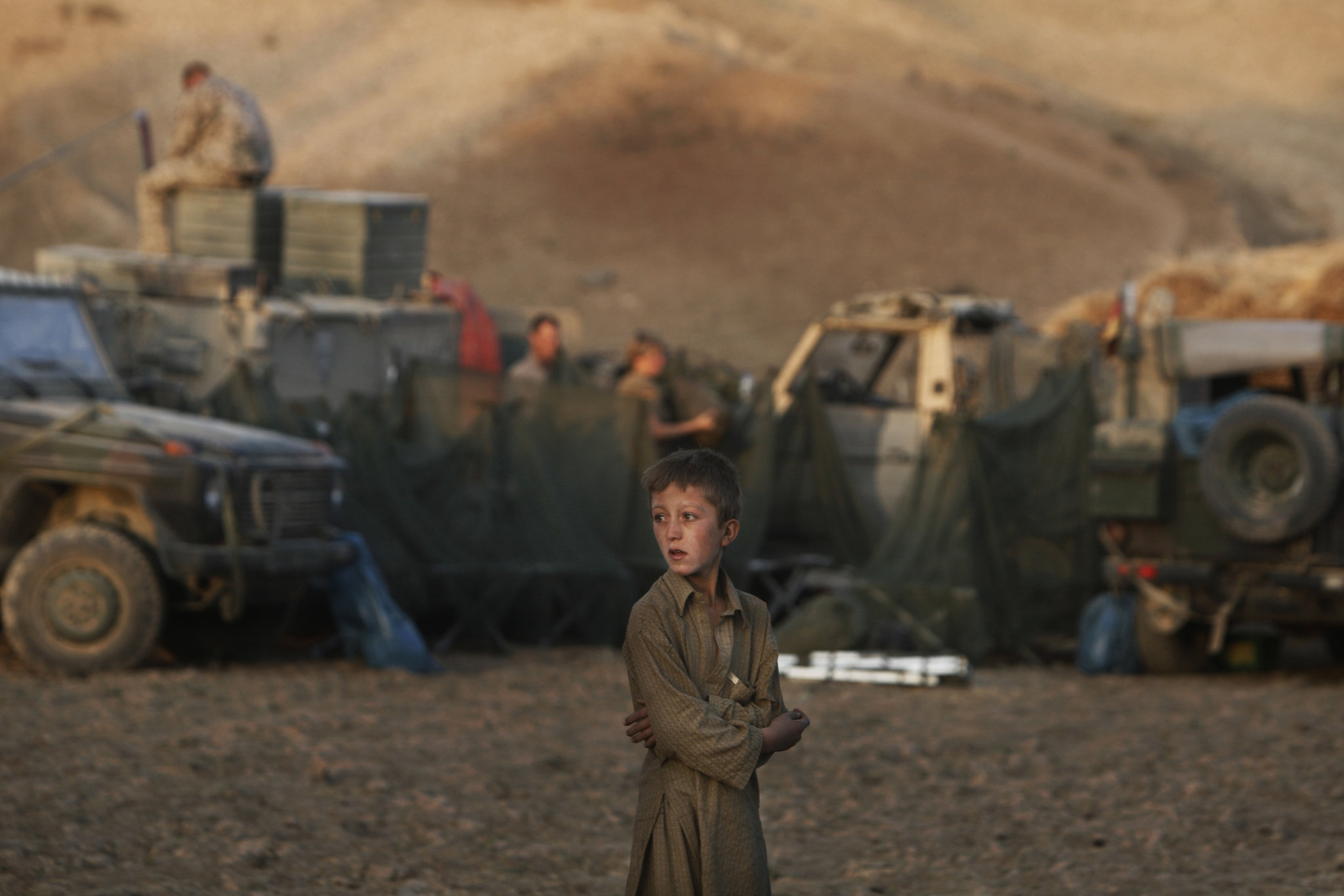
Anja Niedringhaus, An Afghan Boy with German troops, near Kunduz, September 2009
Photograph by Anja Niedringhaus: An Afghan Boy with German troops, near Kunduz, Afghanistan, September 2009

The death last week in Afghanistan of Associated Press photojournalist Anja Niedringhaus came as I was preparing a series of posts on contemporary war photography.  I read about Niedringhaus’s killing by an Afghan National Policeman on the very day I was presenting on war imagery at an academic conference.  Her death at the hands of our nominal allies saddened me and cast a blight on what otherwise seems to have been a successful election in Afghanistan.  Niedringhaus and fellow AP journalist Kathy Gannon, who was wounded in the same shooting that killed Niedringhaus, were in Khowst Province, on the eastern border with Pakistan, precisely to cover the elections.  Khowst interested me, for as most of my readers know that is where I served the majority of my tour in Afghanistan.  Curious where the shooting had taken place, I read farther into the obituaries to learn that Niedringhaus had died while sitting in a parked car outside the police station in a nominally friendly and peaceful district just south of Khowst City.  The district’s name was Tani.

I have been to Tani many times and even wrote about it in a post by the same name in my old blog 15-Month Adventure.  Here’s an excerpt:

“The most evocative of all [local place names] was Tani.  It was just such a pretty name and all our visits there were so pleasant.  As you drove out, on a paved hardball road past some of the more interesting houses in Khowst, the children waved.  Nothing bad ever happened there, or could happen there, it seemed.  The locals were friendly and helpful. The police were orderly and efficient.  Beyond Tani, the hardball gave out, and the IED-infested gravel road rose up toward the deadly mountain passes on the Pakistan border.  But nothing bad could happen in Tani itself.”

Niedringhaus’s killing makes those words foolish, further proof of war’s ability to ruin that which it has touched in ways obvious and in ways we could never anticipate.  RIP Anja Niedringhaus and thank you for your great photographs of Afghanistan and elsewhere.  The upcoming series on war imagery is dedicated to you.  AP’s own obituary, with more photographs of and by Niedringhaus, is here.

Below is a picture of me at the police station in Tani alongside a young ANA lieutenant, an ANA senior officer, and the Afghan National Police station commandant.  I wrote about this photograph in another 15-Month Adventure post called “Orientalism,” where I first conceived of the idea of starting a blog dedicated to war art and literature.

IMG_0765


“Terps”: Afghan and Iraqi Interpreters in War Memoir and Fiction

One aspect of the wars in Iraq and Afghanistan not generally understood is how dependent were American and other Western forces on the services of native interpreters to mediate virtually every interaction with host-nation military personnel and civilians.  Given the lack of Arabic, Dari, and Pashto speakers actually in the military and the paucity of bilingual speakers in Iraq and Afghanistan, you can assume that anything you might have read about in the papers that involved on-the-ground operations, and the millions of missions and engagements you didn’t, took place with a native speaker translator at the side of the officer or NCO charged with carrying them out.  Though some interpreters in Iraq outlaw-platoonand Afghanistan were American citizens or residents recruited in America and then deployed back to their homelands, most were natives. The fullest portrait of a host-nation interpreter and a US military member I know of appears in Sean Parnell’s Outlaw Platoon (2012), a memoir about Parnell’s service as an infantry platoon leader in Paktika province, Afghanistan.  Parnell uses anecdotes about his interpreters, one, named Abdul, faithful and competent, the other, Yusef, untrustworthy and treacherous, to frame his account.  “A good ‘terp,’” writes Parnell, “could make a huge difference in daily operations.”

“Terp” was the commonly used shorthand to describe military linguists.  I never really liked the term, but it was ubiquitous and even I would use it to describe “Terp Village,” the humble compounds affixed to US bases in which a unit’s interpreters lived.  The term appears again in a passage found in journalist-historian Bing West’s The Wrong War (2011).  West, describing operations in southern Afghanistan, writes, “The interpreters were the funnel for all coalition interactions with Afghans at all levels.”  Then, describing an interpreter named Siad, West continues: “Siad was typical of the local The Wrong Warinterpreters.  They all tried hard, and most worshipped the grunts they served locally.  Their thirst for absorbing American culture never ceased…  Their skills were marginal, no matter how hard they tried.  Their hearts were huge.  Anyone who doubted the magical image of America in the minds of millions of Afghans had only to spend a day under fire with a U.S. squad and the local terp.”

Before examining fictional representations of interpreters, I’ll post a passage from a private document written by a former interpreter of mine who is now applying for admission to the US.  It offers insight into the lived life of the men described abstractly so far:

I am engaged now and my fiancé is from Ghazni province.  All her relatives know that I am working with Coalition Forces as a linguist.  For that reason, I cannot go to Ghazni province now to see her or relatives or take part in a condolence or happiness party.  Since I know that everybody knows that I am working with Coalition Forces I do not feel free and I am sure my life is at risk.  Even in Kabul City where I live, I cannot go out at night and visit other people because I am very afraid my life is at risk.

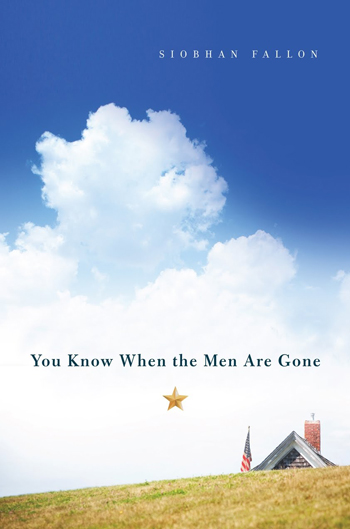
War fiction writers have begun to make something of the possibilities offered by these complex figures and intense soldier-local national relationships.  Their portraits do what fiction does:  combine artistic creativity with realistic verisimilitude to provide social, psychological, and emotional nuance.  They might be said, however, to focus on dramatic aspects where the day to day record is more placid or positive.  The first depiction of which I am aware is in a Siobhan Fallon short story “Camp Liberty,” from her collection You Know When the Men are Gone (2011).  In this story, Fallon tells of a soldier deployed to Iraq, named  David, whose romantic relationship with SF-PictureMarissa, his stateside fiancé, fades as the working one with Raneen, a female interpreter, intensifies.  David grows enamored of Raneen, but she disappears and is probably killed before he is able to speak to her in anything but an on-the-job context.  Her disappearance leaves him more adrift than he imagined possible, and perhaps now too estranged from Marissa for that to ever be right again.  Fallon puts a romantic spin on what was usually a close working relationship between two men, while characterizing David and Raneen’s relationship as at least reasonably compatible and effective, but other stories depict much more fraught relationships.

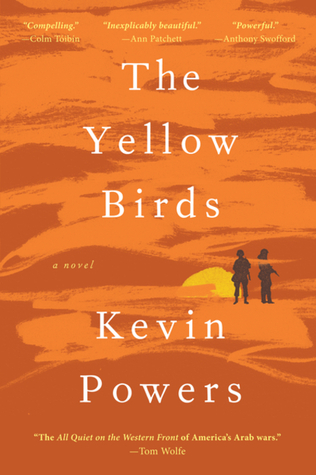
In Kevin Powers’ The Yellow Birds (2012), an Iraqi named Malik appears as a minor character early in The Yellow Birds Coverthe book.  Powers’ narrator John Bartle tells us that Malik’s “English was exceptional… He’d been a student at the university before the war, studying literature.”  He wears a hood and a mask because, he says, “’They’ll kill me for helping you.  They’ll kill my whole family.’”  A few pages Malik is killed by a sniper, and Bartle and his friend debate whether to include him in their morbid count toward 1000 Coalition Force casualties:

“Doesn’t count, does it?” Murph asked.

“No.  I don’t think so.”

Bartle reports, “I was not surprised by the cruelty of my ambivalence then.  Nothing seemed more natural than someone getting killed.”

Redeployment“Money is a Weapons System,” by Phil Klay, in his recently released collection Redeployment (2014) portrays “a short and pudgy Sunni Muslim” interpreter known as “the Professor.”  Sullen and contemptuous, the Professor is “rumored to have blood on his hands from the Saddam days,” but Klay’s narrator, says, “Whether that was true or not, he was our best interpreter.”  A short exchange reflects their tense relationship:

“Istalquaal,” I finally said, trying to draw him out.  “Does it mean freedom, or liberation?”

[The Professor] opened his eyes a crack and looked at me sidelong.  “Istalquaal?  Istiqlal means independence.  Istalquaal means nothing.  It means Americans can’t speak Arabic.”

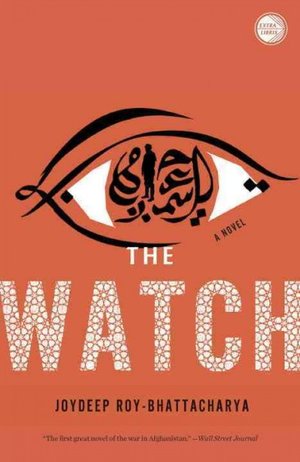
The most extensive portrait of an interpreter and the only one I know of published first in English that attempts to portray the interpreter’s thoughts and point of view is Joydeep Roy-Bhattacharya’s The Watch (2012).  In this novel, The Watchwhich is set in the southern, Pashtun-region of Afghanistan, a young ethnic Tajik interpreter named Masood, loyal to the Americans and eager to do well, is dropped off at a remote combat outpost in the middle of the night after the big battle.  He doesn’t know about the battle, but expecting better he confronts hostility and mysterious behavior at every turn from his new American hosts and allies.  Roy-Bhattacharya gets right the incredibly uneven regard of young American soldiers for those outside the fraternal ranks of their unit.  Masood is mystified and hurt by the Americans’ baffling rudeness, and yet it is more complex than that—just when he is ready to write off the Americans as barbarians, he meets a medic who knows more about Afghan literature and history than he does, then the warm and wise COP first sergeant, and finally the outpost commander, whose fanatical adherence to mission and security coincides with a more than passing fluency in Pashto and Dari.

The dramatic focus on interpreters and the soldier-interpreter relationship, to my mind, suggests several points:

  1. The interpreter, not the host nation populace, was the “other” most often encountered by American soldiers, and the only one with whom he or she might bond.  With emotional investment, however, comes gratitude, guilt, and feelings of loss after the relationship ends.
  2. In life, the relationship between soldier and interpreter was often characterized by respect and mutual affection.  In fiction, however, the relationship is mined for tension and drama.  The interpreter, from the fiction author’s viewpoint, is part of the problem, and dysfunctional interpreter relationships symbolize the divide between Western military forces and the populaces they intend to help.
  3. The interpreter himself, or herself, is a complex, in-between figure who must manage a thicket of complicated personal histories and commitments.  In some ways they become “people without a country,” or a contemporary “tragic mulatto,” neither white nor dark and doomed to unhappiness and premature death.
  4. Contemplation of the interpreter’s role help us understand the basic unreality and unknowability of the wars:  mediated, filtered, coming to us second-hand via seriously invested witness-participants.  The general situation short of combat was always linguistically, rhetorically, and even artistically arranged for us by translators about whom we knew little and did little to comprehend.

The Corpse ExhibitionThe only fiction I know of written by an Iraqi or Afghan that portrays interpreters is Iraqi expatriate author Hassan Blasim’s story “The Nightmares of Carlos Fuentes,” from his recently published collection of translated short stories The Corpse Exhibition (2014).  It is also the only tale that imagines a future existence for interpreters post-war and measures the long-term consequences of their involvement with Americans.  Carlos Fuentes is the pseudonym of an Iraqi named Salim Abdul Husain who has emigrated to Holland; he has taken the name because he reports that his own name makes him a marked man in the eyes of those who won’t forgive him for working as a translator for American forces.  Carlos Fuentes has seen nothing but violence and injustice in Iraq, and in Holland he becomes a model citizen, fully embracing European values and habits while scorning immigrants who don’t.   Blasim’s narrator states:

“Why are the trees so green and beautiful, as though they are washed by water every day?  Why can’t we be peaceful like them?  We live in houses like pigsties while their houses are warm, safe, and colorful.  Why do they respect dogs as humans?  ….  How can we get a decent government like theirs?”  Everything Carlos Fuentes saw amazed him and humiliated him at the same time, from the softness of the toilet paper in Holland to the parliament building protected only by security cameras.

All goes well for Carlos Fuentes until he begins having nightmares about his past life.  He takes extremely fantastic measures to avoid the nightmares—“One night he painted his face like an American Indian, slept wearing diaphanous orange pajamas, and put under his pillow three feathers taken from various birds”–and yet nothing works.  At tale’s end he is confronted in a dream by Salim Abdul Husain, his old self:

Salim was standing naked next to the window holding a broom stained with blood…. Salim began to smile and repeated in derision, “Salim the Dutchman, Salim the Mexican, Salim the Iraqi, Salim the Frenchman, Salim the Indian, Salim the Pakistani, Salim the Nigerian….”

The Carlos Fuentes character takes aim at Salim with a rifle, Salim jumps out the window, and the narrator tells us that Carlos Fuentes’s wife finds him dead on the pavement below in the morning.  In a final indignity, Carlos Fuentes’ death is reported in the papers as that of an “Iraqi man” rather than a “Dutch national,” and his brothers have his body taken back to Iraq for burial.  No one it seems has been much convinced by his effort to renounce his past.

Interpreting the interpreter, we can surmise that Carlos Fuentes’ divided self and attempted cultural makeover does not hold.  The war has traumatized him beyond his knowing and his idealization of the West a dream not meant for him to possess.  But it’s not just about what happens to him while working alongside American and European forces in country, or that his attempt to adopt and internalize Western values and beliefs have instead generated pathological self-hatred and destructiveness.  It’s about the lived life of immigrants after the personal relationship ends, the Americans go home, and the rest of the interpreter’s life begins.  Blasim’s story, and all stories about interpreters, remind us that real linguists exist by the 1000s in both Iraq and Afghanistan or elsewhere, and letting them fend for themselves now that we are gone is one more of the ways we fought the wars very callously and in ways that kept us from being as successful as possible.

****

Most of this post was first presented at the recent American Comparative Literature Conference in New York City.  Thanks to panel organizer Susan Derwin for inviting me to speak.  Thanks to fellow panelist Brian Williams, who reminded me of the presence of the interpreter Malik in The Yellow Birds.  The paper as delivered at ACLA did not reference The Yellow Birds.  I am invested in this subject because of my own positive experience with two interpreters in Afghanistan who are now in the United States, enlisted in the US Army, and who hope to become US citizens.  I am actively engaged in trying to help a third trusted interpreter emigrate to the US.  Paul Solotaroff describes the difficulty interpreters have in obtaining visas in “The Interpreters We Left Behind,” published this week in Men’s Journal.

A Place Belongs Forever to Whoever Claims It Hardest: Phil Klay’s Redeployment

Congratulations Phil Klay on winning the 2014 National Book Award for fiction for Redeployment!  Below is a repost of my review from earlier this year.

Phil Klay reading at West Point, April 2014.

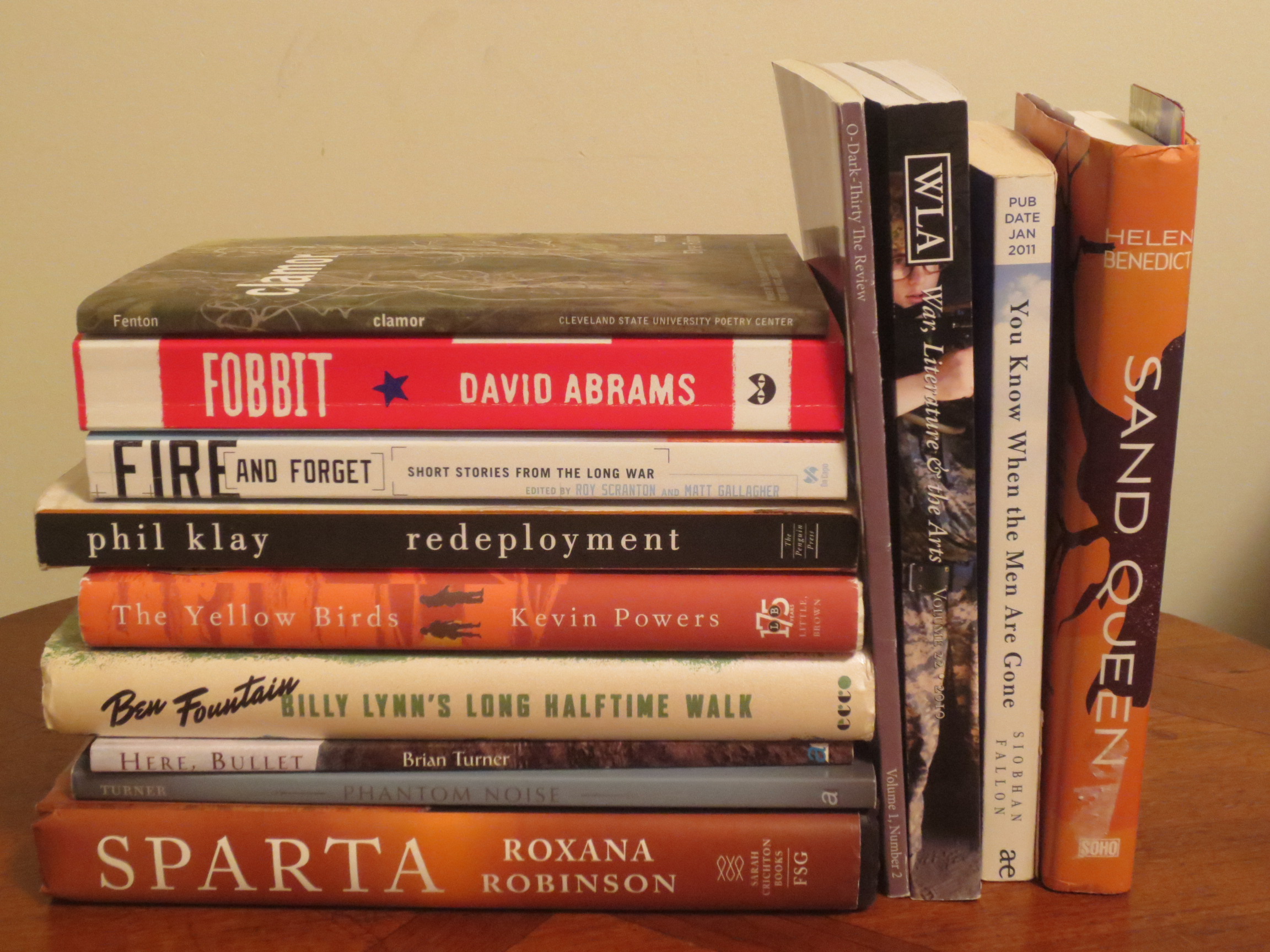
Redeployment2012 was as good a year for contemporary war fiction as we’re probably going to get, what with the publication of The Yellow Birds, Billy Lynn’s Long Halftime Walk, The Watch, and Fobbit.  2013, by comparison, saw only Roxana Robinson’s Sparta make anything close to the splash of the previous year’s bumper crop of war novels. Now, early in 2014, comes Phil Klay (the last name rhymes with “sky”) and his collection of short stories Redeployment.  Riding a perfect wave of full-tilt advertising push from publishing giant Penguin, Redeployment has garnered glowing reviews from the New York Times, the Times Sunday Book Review, the Washington Post, the Daily Beast, the Wall Street Journal and the Internet media sphere.  While not a novel, Redeployment lights up the contemporary war fiction scene while readers wait for the next great novel to come along.

And why not?  A Dartmouth grad and former Marine who spent a year in Iraq as a personnel officer, Klay brings a lot to the table.  He has an impeccable ear for soldierly speech and while in was obviously on high alert for the nuances of military life.  He observed, for example, the differences in the deployment experiences and outlook of a wide variety of service members, ranging from infantrymen, artillerymen, and military police to chaplains and civil affairs officers.  One story in Redeployment, “Psychological Operations,” is narrated by an ex-enlisted Army soldier, an African-American Coptic Christian who studies at Amherst, a narrative persona that pretty much takes the cake for imagination.  But Klay’s characters are always believable and distinctive; as the reviewing cliché goes, they are “fully realized”:  round not flat, capable of change, growth, and surprise.  Even better, Redeployment‘s tales are, as another cliché has it, “fully imagined.”  Obviously not all autobiographical, they appear to be artistically rendered amalgams of overheard war stories that Klay twists, turns, and combines in unexpected ways.  Chuck Palahniuk writes in the forward to Fight Club that “To make the [original] short story into a book, I added every story my friends could tell.  Every party I attended gave me more material.”  Palahniuk’s tactic seems to have been Klay’s; my only wish, actually, is that Redeployment were also a novel–so many of its discrete chapters are ripe for expansion or linking with others to create a more comprehensive and blended long narrative.

And what are Klay’s well-crafted characters and storylines all about?  In public remarks, Klay discusses a question he’s asked often:  “Had I killed anyone in Iraq?”  Klay’s answer is no, but the question informs so many Redeployment stories that it clearly has become a preoccupation.  In “After Action Report,” for example, one Marine takes claim for his buddy’s kill, and then tries to figure out how to live with the aftermath.  In “Ten Kliks South,” an artilleryman ponders his responsibility for the deaths of civilians killed downrange by rounds he has helped launch. But in “Prayer in the Furnace,” an angry Marine infantryman cares not a whit about the deaths of Iraqis—he flat-out hates them.  Instead, his question is whether he had done anything that had gotten fellow Marines killed. The point is also made by the narrator of “Unless It’s a Sucking Chest Wound” who states, “I’d never had a personal relationship with any of the five fallen Marines, so I tended to think of their deaths with a solemn, patriotic pride rather than the self-loathing and self-doubt so clearly tearing [my friend] to shreds.”

Returning to “Prayer in the Furnace,” when the tale’s protagonist, a chaplain attempting to minister the angry infantryman, discusses the grunt’s gung-ho, bone-dumb Charlie Company commander with the battalion operations officer, the ops officer compares Charlie’s mission with Bravo Company’s:

“Bravo’s got good leaders and a calmer AO [Area of Operations],” he said. “They trained their Marines right.  Captain Seiris is good.  First Sergeant Nolan’s a rock star.  Their company gunny is retarded, but all of their lieutenants are good to go except maybe one, and he’s got a stellar platoon sergeant.  But not everybody can be competent.  It’s too late for Charlie to be anything other than what it is.  Our Kill Company. But this is a war. A Kill Company’s not the worst thing to have.”

A whole lot of knowingness goes into the composition of a paragraph like that.  As units, each with their own personality and level of competence, and compromised of individuals equally distinctive, pitched into their missions in Iraq and Afghanistan, what happened next was idiosyncratic, variable, and contingent.  “You go to war with the military you have,” Donald Rumsfeld was widely derided for saying, but he wasn’t wrong at the level of the individual–you go to war with who you are, constrained by the limits of the unit of which you are a part.  Every soldier up to his or her ears in the messiness of combat knows this in ways hard to fathom by those who might be tempted to think that decisions and choices were easier than they were. Redeployment doesn’t portray the military as screwed up beyond repair or chance of victory, but Klay does suggest that the Marines he was with were overmatched by the demands of the mission and loftiness of the Corps’ ideals and publicity. “Iraq,” the narrator of “Unless It’s a Sucking Chest Wound” asks, “What do you think?  Did we win?”  “Uhh… we did OK” is the response from a warrior said to have earned a Bronze Star with a V device for valor.

“Prayer in the Furnace” burns as hot as its title implies, but Klay works in registers other than the grim and deadly.  “Money as a Weapons System” is not exactly bloodless, but it humorously exposes the fraudulence and ineptitude of military nation-building endeavors. Having wondered at the failure of my own unit’s humanitarian assistance missions, Commander’s Emergency Response Program projects, Provincial Reconstruction Team efforts, and NGO programs in Afghanistan, where shot-up and abandoned clinics, schools, irrigation systems, and women’s centers littered the land, I was half-horrified, half-pleased to see something so similar vividly recreated in Redeployment.  The story soars on the strength of its skewering of absurd and hopeless “non-kinetic” civil affairs missions and the liveliness of the characters who try their best, or at least reasonably hard, to execute them.  Klay’s gift for character shines in his portrayal of Major Zima, an overweight civil affairs officer who is consistently underestimated by the leaner, meaner, and supposedly swifter narrator.  Part Falstaff, part Machiavelli, Major Zima is the only character in Redeployment who renders the slightest modicum of aid to the Iraqis outside the FOB while not being brutalized by the military bureaucracy within it.

My favorite review of Repeployment is by Sam Sacks for the Wall Street Journal.  Sacks places Klay in the context of big-time war fiction authors such as Tim O’Brien and Ernest Hemingway.  He also notes the basic “talkiness” of Redeployment:  many of its stories are about soldiers, Marines, and veterans explaining to interlocutors what they did and felt, rather than authorial descriptions of actions they performed.  That’s OK, most of what we talk about in our day-to-day lives is likewise about what other people have said.  Life exists in a blur of words about words, and our whole understanding of the Iraq war especially drifts in an inchoate haze of competing narratives.  How easy or hard is it to remember just how bad it was in 2004, 2005, 2006, and 2007?  So let’s give Mr. Klay his due–well done, sir–and close with words from essayist Joan Didion’s The White Album:

“Certain places seem to exist because someone has written about them….  A place belongs forever to whoever claims it hardest, remembers it most obsessively, wrenches it from itself, shapes it, renders it, loves it so radically that he remakes it in his image.”

Certain places.  Iraq.  Home again.

The Roots of Contemporary War Literature in James Joyce’s Ulysses

At AWP14, I had lunch with a hail-fellow-well-met merry band of war writers.  At the far end of the table were Roy Scranton, Benjamin Busch, Phil Klay, and Christine Leche.  At our end were Brian Castner, Mariette Kalinowski, Colin Halloran, and Lauren Kay Johnson.  Katey Schultz was supposed to be with us, but peeled off enroute to our Seattle waterfront restaurant destination.  About two beers in, I announced that I was reading James Joyce’s Ulysses as part of a nationally-dispersed, Internet-connected reading group.  I was about 99% prepared for that conversational gambit to fall flat.

Boy was I wrong.

Our end of the table erupted in an explosion of comments, questions, and exclamations.  Mariette Kalinowski had read Joyce’s modernist masterpiece in the not so distant past.  So had Colin Halloran.  Not sure about Lauren Johnson, but because we were happy she let us rave on.  Brian Castner, it turned out, was auditing a class on Joyce at Niagara University in Buffalo.  He didn’t like Ulysses as much as the rest of us, but that made for good conversation.  He told us that his prof at Niagara had studied under an Irishman named Declan Kiberd. I liked that, because I think the world of Kiberd’s Ulysses and Us: The Art of Everyday Life in Joyce’s Masterpiece.  Here’s what Kiberd writes about Ulysses as a World War I novel:

“The world war raging as Joyce wrote had been made possible by a narrow-mindedness among nations, whose leaders often failed to see the larger context of their actions.  The openness of form and the multiplicity of viewpoints in a book like Ulysses implicitly challenges the sort of zealotry which led to the carnage.

“After the war, many soldiers were so traumatized by their suffering in the trenches they could no longer tell stories which carried the pressure of felt experiences.  Many also simply fell silent, lapsing into neurasthenia.  Even among those who remained eloquent on the topic, there was a sense of the ‘unreality’ of civilian life, of everyday living.  Ulysses, though begun around the same time as war itself, tried to restore the possibility that ‘good counsel’ might come from a story.  Young men who had gone to war in search of stimuli were now in search of a consciousness which would teach them how to protect themselves from over-stimulation….

“…..While Joyce wrote Ulysses, sovereigns fell, empires toppled, a world system collapsed:  but he knew he was writing a book for the future community which might take their place.  In that book he would explore modes of teaching and learning which answer the emotional and intellectual needs of ordinary people in search of a wiser way of life.”

Kiberd thinks Ulysses protagonist Leopold Bloom is a calm, wise, curious, warm soul who should be admired for his lack of militarism and nationalism.  The point is well-taken by my late-middle-age sensibility, though maybe not so accessible to those whose spirit burns younger and hotter.  Still, here’s to Joyce, to Ireland and the Irish, and to the “future community” of which Kiberd writes.  Tomorrow I’m entered for better or worse in a local St. Patrick’s Day 5K, so let’s see how that goes.  Below is a picture of the St. Patrick’s Day race we ran at Camp Clark, Khowst Province, Afghanistan, in 2009:

IMG_0496

Roy Scranton is the editor of Fire and Forget, an anthology of war fiction. Benjamin Busch’s memoir of USMC service in Iraq is titled Dust to Dust. Phil Klay’s collection of Iraq stories Redeployment is just out.  Christine Leche edited Outside the Wire, a collection of stories written by soldiers in classes she taught on bases in Afghanistan.  Katey Schultz’s short story collection Flashes of War appeared in 2013.  Brian Castner is the author of The Long Walk, a memoir of service as an Explosive Ordnance Disposal officer in Iraq.  Mariette Kalinowski, a USMC Iraq veteran, contributed to Fire and Forget.  Colin Halloran served in the Army in Afghanistan and has written a book of poetry titled Shortly Thereafter. Lauren Kay Johnson also served in Afghanistan as member of the Air Force. An essay by her titled “Home from War, But Not at Peace” can be found here.  

The War Writing Scene at AWP14: Wolves Keep in Touch by Howling…

… and writers do so by drinking coffee and beer and eating meals and trading stories into the night.  Thanks to all who attended or presented at the war lit and veteran writers panels at the Association of Writers and Writing Programs conference in Seattle this past weekend.  On the war lit side, I enjoyed meeting and chatting with Brian Turner, Benjamin Busch, Elyse Fenton, Brian Castner, Mariette Kalinowski, Katey Schultz, and Colin and Lauren Halloran.  On the academic side, kudos to Ron Capps and Alexis Hart’s presentation “Lead from the Front: Best Practices for Working with Veterans in the Writing Classroom” and everyone on Kathryn Trueblood’s panel “The Soldier’s Perspective:  How Creative Writing Serves Vets and They Serve Each Other”:  Shawn Wong, Christine Leche, Will Borego, and Clayton Swanson.

IMG_1289

I presented with Phil Klay and Hilary Plum on a panel organized by Roy Scranton.  Judging by the size of the crowd and the number and quality of questions we received, we did a pretty good job, but if you need more proof, read about Klay’s presentation in this NewYorker.com/online blog posting about “AWP14.”

Or, consult Boston-area author Julian Zabalbeascoa, who flagged me down the day after we presented to tell me how much he enjoyed our panel.  AWP being what it is–a writers’ convention–Zabalbeascoa let slip that he was near completion of a novel about the Spanish Civil War, a portion of which appears in the latest Ploughshares.  I read his story “498” on the flight home and was so blown away I immediately read it a second time.  It’s available online here, so please check it out.  In my mind “498” is an excellent example of war fiction that comments on our contemporary wars and war literature obliquely by nominally addressing other wars.  Other examples of the form include Karl Marlantes’ Matterhorn, about Vietnam, and Toni Morrison’s Home, about the Korean War, and I’ll have more to say about them in posts to come.

Finally, the talk of the conference was a recent N+1 essay titled MFA vs NYC by Chad Harbach.  The jist of Harbach’s argument is that the creative writing scene is divided.  One camp, so to speak, is spread across the country and aligns itself with the burgeoning and welcoming MFA program and literary magazine market.  The other is centered in New York City, Brooklyn specifically, and fights for upward mobility in the ferociously competitive publishing industry there.  Ye war writers out there, does this formulation make sense to you???

“Wolves Keep in Touch by Howling” is a poem by Martha Silano that appears in the winter 2013-2014 Ploughshares.  Not a war poem, but I like it and the title’s too good to pass up.

A transcript of my presentation, titled “War, Stories:  Fact or Fiction”: Molin Seattle AWP.  Overlook all typos, please, but comments welcome.  Yea, that should be Donovan Campbell, not Donovan Fink, who wrote Joker One, as opposed to Nathaniel Fink, who wrote One Bullet Away.

Business cards were mission essential equipment at AWP14

UPDATE:  This essay on AWP14 by Aaron Gilbreath, titled “My Fictional Fantasy: Finally a World Where Writers Matter,” appeared recently on Salon.  I think it nicely captures the spirit of the conference from the perspective of one who was skeptical going in, as was I, but found a lot to like about it, as did I.