Iraq and Afghanistan War Fiction, Poetry, and Movies 2019

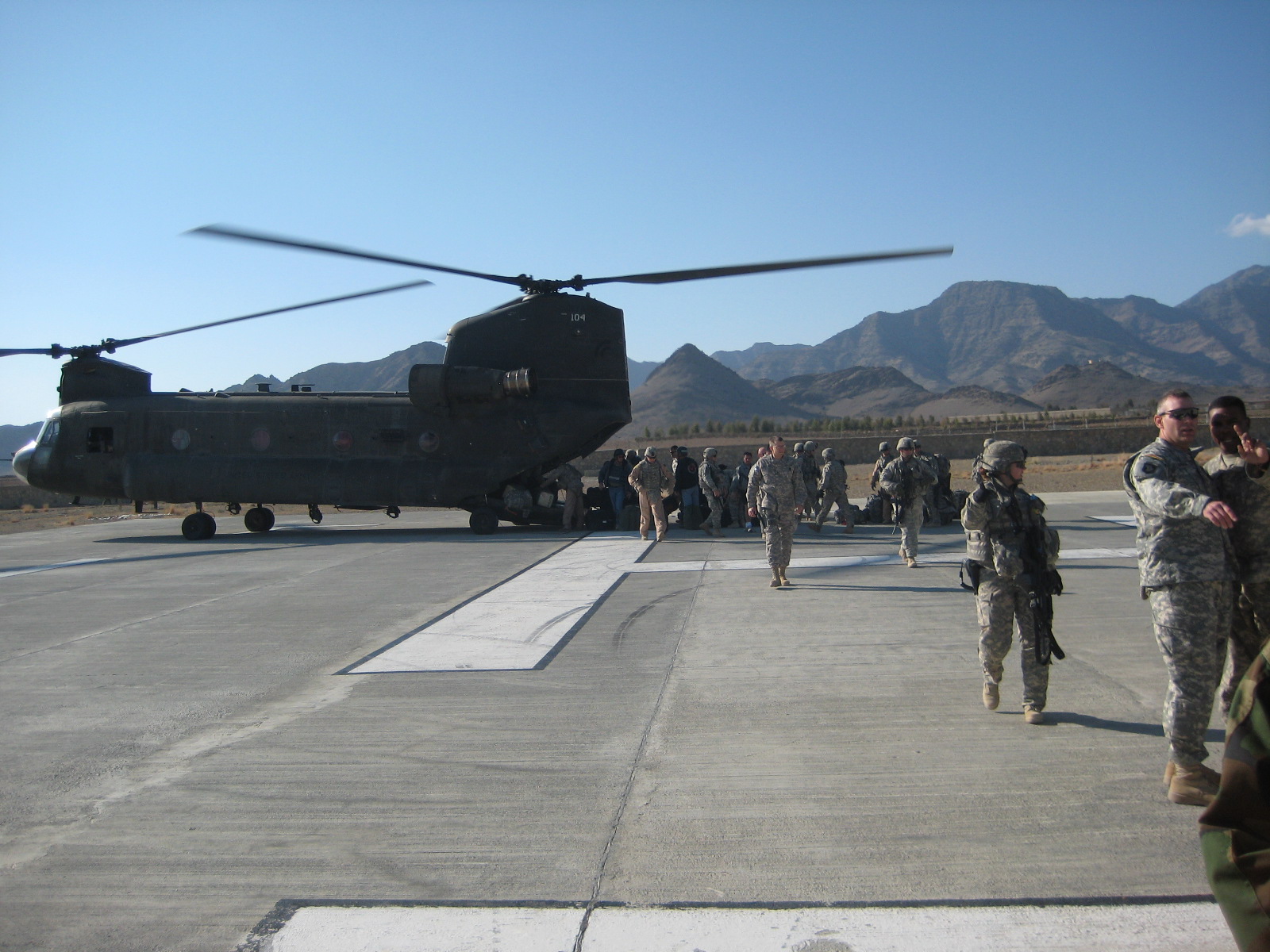
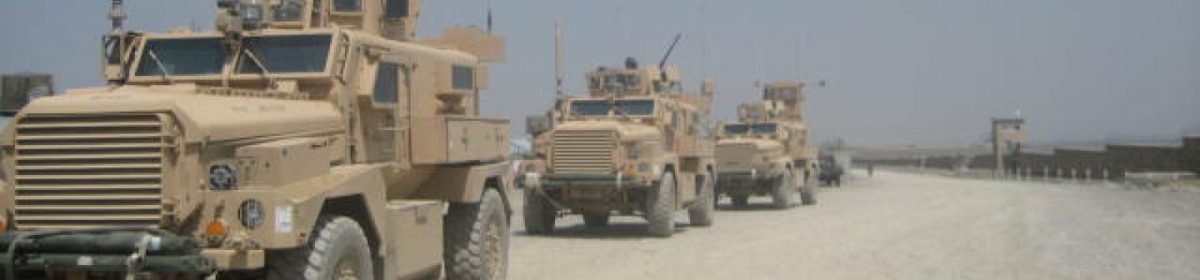
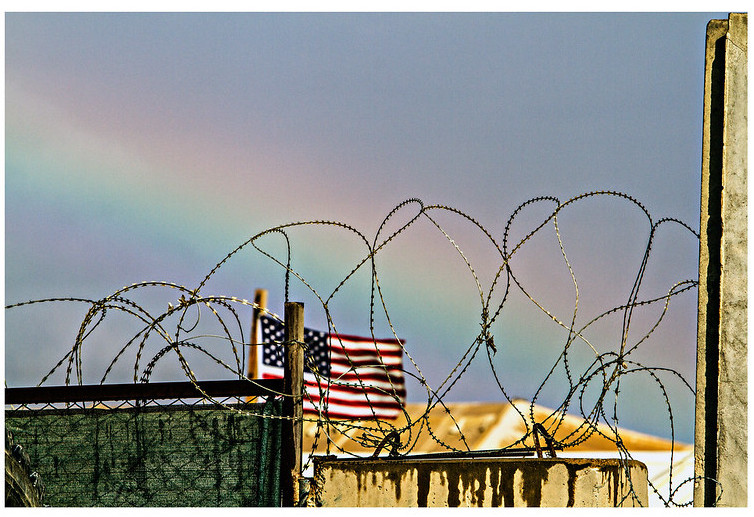
Camp Leatherneck, Afghanistan. Photo by Bill Putnam, used by permission.

2019 was not a bounteous year for new Iraq and Afghanistan war fiction, with only three new titles appearing by my count. Adam Kovac’s The Surge and Katey Schultz’s Still Come Home each describe Army National Guard units struggling to make the best of things in Iraq and Afghanistan, respectively, while Amy Waldman’s A Door in the Earth features an American NGO trying to make sense of war’s effects in rural Afghanistan. I’m also counting three full-length poetry collections appearing in 2019: Army vet Graham Barnhart’s The War Makes Everyone Lonely, cultural anthropologist and DOD-contractor Nomi Stone’s Kill Class, and Army spouse’s Abby E. Murray’s Hail and Farewell. Movies included The Kill Team, starring Alexander Skarsgard, about US Army soldiers in Afghanistan; Official Secrets, starring Keira Knightly, about perfidy in the British government in the build-up to war in Iraq, and The Report, starring former Marine Adam Driver, about perfidy in the American government regarding its “enhanced interrogation” program.

I’m sure I’m missing titles, so let me hear about them and I’ll consider, but not promise, to add them. The list is a “living document,” but it’s more idiosyncratic than authoritative. For example, the decision to list independently published titles can be subjective, based on my estimation of the work’s importance, value, and interest. Also subjective is the definition of what is and what isn’t an Iraq or Afghanistan work; i.e., why is Siobhan Fallon’s novel The Confusion of Languages (set in Jordan) included, but not the movies Captain Phillips (set off the coast of Somalia) and 13 Hours (Libya), despite their obvious relevance to the Global War on Terror? I’ve also resisted including genre works, such as sci-fi, romance, thriller/adventure, young adult, and graphic narratives, and the number of titles originally published in languages other than English is thin. There are also books and movies out there not set in Iraq or Afghanistan or even featuring American soldiers at war, but which have fans and critics who claim that they are “really” about Iraq and Afghanistan. Finally, many writers who depicted war in Iraq or Afghanistan in early works have “moved on” and are now publishing works that do not directly address Iraq or Afghanistan. In my mind I can often see linkages between previous and recent work, but they may not be strong enough to merit inclusion here.

So, please consider the lists conversation starters—not definitive, but great to discuss over a beer or in the comments section.

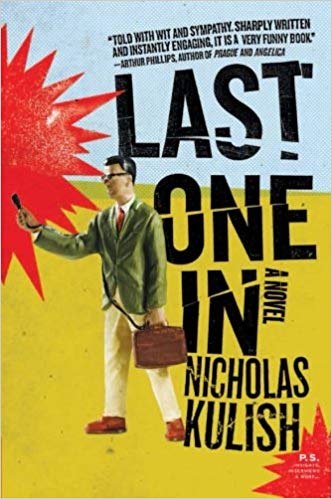
Titles new to the list are in bold. Many thanks to David Eisler for directing me to two early-on novels, Nicholas Kulish’s Last One In (2007) and Benjamin Buchholz’s One Hundred and One Nights (2011) that are set in Iraq near the beginning of Operation Iraqi Freedom. Much love also to Bill Putnam for the great pictures that accompany my year-end lists. Be sure to check out Bill’s body-of-work at his website here, and also on Facebook, Flickr, and Instagram.

Iraq and Afghanistan War Fiction

Bob Kornheiser, Crossing the Wire (2004)
Nicholas Kulish, Last One In (2007)
Nadeem Aslam, The Wasted Vigil (2008)
David Zimmerman, The Sandbox (2010)
Helen Benedict, Sand Queen (2011)
Benjamin Buchholz (Army), One Hundred and One Nights (2011)
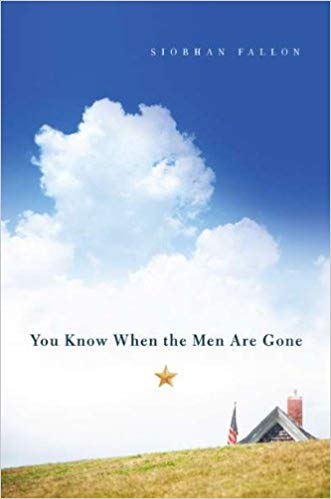
Siobhan Fallon (Army spouse), You Know When the Men Are Gone (2011)
David Abrams (Army), Fobbit (2012)
Ben Fountain, Billy Lynn’s Long Halftime Walk (2012)
Kevin Powers (Army), The Yellow Birds (2012)
Joydeep Roy-Bhattacharya, The Watch (2012)
Sinan Antoon, The Corpse Washer (2013)
Nadeem Aslam, The Blind Man’s Garden (2013)
Lea Carpenter, Eleven Days (2013)
Masha Hamilton, What Changes Everything (2013)
Hilary Plum, They Dragged Them Through the Streets (2013)
Roxana Robinson, Sparta (2013)
J.K. Rowling (aka Robert Galbraith), The Cuckoo’s Calling (2013)
Katey Schultz, Flashes of War (2013)
Fire and Forget: Short Stories from the Long War, edited by Roy Scranton (Army) and Matt Gallagher (Army) (2013)
Paul Avallone, Tattoo Zoo (2014)
Greg Baxter, The Apartment (2014)
Hassan Blasim, The Corpse Exhibition (2014)
Aaron Gwyn, Wynne’s War (2014)
Cara Hoffman, Be Safe, I Love You (2014)
Atticus Lish (USMC), Preparation for the Next Life (2014)
Phil Klay (USMC), Redeployment (2014)
Michael Pitre (USMC), Fives and Twenty-Fives (2014)
Elliot Ackerman (USMC), Green on Blue (2015)
Eric Bennett, A Big Enough Lie (2015)
Brandon Caro (Navy), Old Silk Road (2015)
Mary “M.L.” Doyle, The Bonding Spell (2015)
Jesse Goolsby (USAF), I’d Walk With My Friends If I Could Find Them (2015)
Carrie Morgan, The Road Back from Broken (2015)
Jonathan Raab (Army), Flight of the Blue Falcon (2015)
John Renehan (Army), The Valley (2015)
Ross Ritchell (Army), The Knife (2015)
Christopher Robinson and Gavin Kovite (Army), War of the Encylopaedists (2015)
Susan Aspley, Granola, MN: Love and War in a Nutty Little Town (2016)
The Road Ahead, Adrian Bonenberger (Army) and Brian Castner (Air Force), eds. (2016)
Matt Gallagher (Army), Youngblood (2016)
Matthew Hefti (Air Force), A Hard and Heavy Thing (2016)
Tom King and Mitch Gervais, The Sheriff of Babylon, vol 1: Bang. Bang. Bang.(2016).
Odie Lindsey (Army), We Come to Our Senses (2016)
Elizabeth Marro, Casualties (2016)
Luke Mogelson, These Heroic, Happy Dead (2016)
Harry Parker, Anatomy of a Soldier (2016)
Scott Pomfret, You Are the One (2016)
Roy Scranton (Army), War Porn (2016)
Whitney Terrell, The Good Lieutenant (2016)
Maximilian Uriarte (USMC), The White Donkey (2016)
David Abrams (Army), Brave Deeds (2017)
Elliot Ackerman (USMC), Dark at the Crossing (2017)
Helen Benedict, Wolf Season (2017)
Caleb Cage (Army), Desert Mementos: Stories of Iraq and Nevada (2017)
Siobhan Fallon (Army spouse), The Confusion of Languages (2017)
Tom King (CIA) and Mitch Gervais, The Sheriff of Babylon, vol. 2: Pow. Pow. Pow. (2017)
Christopher Meeks and Samuel Gonzalez, Jr. (Army), The Chords of War (2017)
Brian Van Reet (Army), Spoils (2017)
Elliot Ackerman (USMC), Waiting for Eden (2018)
Jon Chopan, Veterans Crisis Hotline (2018)
Raymond Hutson, Finding Sergeant Kent (2018)
Kathleen J. McInnis, The Heart of War: Misadventures in the Pentagon (2018)
Will Mackin (Navy), Bring Out the Dog (2018)
Stephen Markley, Ohio (2018)
Ray McPadden (Army), And the Whole Mountain Burned (2018)
Hilary Plum, Strawberry Fields (2018)
Ahmed Saadawi, Frankenstein in Baghdad (2018)
Nico Walker (Army), Cherry (2018)
Adam Kovac (Army), The Surge (2019)
Katey Schultz, Still Come Home (2019)
Amy Waldman, A Door in the Earth (2019)

Iraq and Afghanistan War Poetry

Juliana Spahr, This Connection of Everyone with Lungs (2005)
Brian Turner (Army), Here, Bullet (2005)
Walt Piatt (Army), Paktika (2006)
Sinan Antoon, The Baghdad Blues (2008)
Frances Richey (Army mother), The Warrior: A Mother’s Story of a Son at War (2008)
Jehanne Dubrow (Navy spouse), Stateside (2010)
Elyse Fenton (Army spouse), Clamor (2010)
Frances Richey (Army mother), Voices of the Guard (2010)
Brian Turner (Army), Phantom Noise (2010)
Allan Gray (Army), Overwatch (2011)
Tom Sleigh, Army Cats (2011)
Colin Halloran (Army), Shortly Thereafter (2012)
Abby E. Murray, Quick Draw: Poems from a Soldier’s Wife (2012)
Jason Poudrier (Army), Red Fields (2012)
Seth Brady Tucker (Army), Mormon Boy (2012)
Paul Wasserman (USAF), Say Again All (2012)
Charles Bondhus, All the Heat We Could Carry (2013)
Stanton S. Coerr (USMC), Rubicon (2013)
Kerry James Evans (Army), Bangalore (2013)
Amalie Flynn (Navy spouse), Wife and War (2013)
Hugh Martin, The Stick Soldiers (2013)
Chuck Rybak, War (2013)
David R. Dixon (USMC), Call in the Air (2014)
Frederick Foote (Navy), Medic Against Bomb: A Doctor’s Poetry of War (2014)
Gerardo Mena (Navy), The Shape of Our Faces No Longer Matters (2014)
Seth Brady Tucker (Army), We Deserve the Gods We Ask For (2014)
Kevin Powers (Army), Letter Composed During a Lull in the Fighting (2014)
Sylvia Bowersox (Army), Triggers (2015)
Randy Brown, aka “Charlie Sherpa” (Army), Welcome to FOB Haiku (2015)
Colin Halloran (Army), Icarian Flux (2015)
Victoria Kelly (spouse), When the Men Go Off to War (2015)
Philip Metres, Sand Opera (2015)
Tom Sleigh, Station Zed (2015)
Washing the Dust from Our Hearts: Poetry and Prose from the Afghan Women Writing Project (2015)
Paul David Adkins (Army), Flying Over Baghdad with Sylvia Plath (2016)
Jonathan Baxter (Army), The Ghosts of Babylon (2016)
Lance B. Brender (Army) and C. Rodney Pattan (Army), In Cadence (2016)
Brock Jones (Army), Cenotaph (2016)
Kim Garcia, Drone (2016)
Nicole Goodwin (Army), Warcries (2016)
Karen Skolfield (Army), Frost in the Low Areas (2016)
Lisa Stice (USMC spouse), Uniform (2016)
Home Front: Jehanne Dubrow’s Stateside, Elyse Fenton’s Clamor, Bryony Doran’s Bulletproof, and Isabel Palmer’s Atmospherics (2016, UK only)
Paul David Adkins (Army), FM 101-5-1 MCRP 5-2A: Operational Terms and Graphics (2017)
Eric Chandler (USAF), Hugging This Rock (2017)
Jehanne Dubrow (Navy spouse), Dots & Dashes (2017)
Elyse Fenton (Army spouse), Sweet Insurgent (2017)
Pamela Hart (Army mother), Mothers Over Nangarhar (2018)
Benjamin Hertwig (Canadian Army), Slow War (2017)
Lynn Marie Houston, Unguarded (2017)
Hugh Martin (Army), In Country (2018)
Shara Lessley (DOD civilian spouse), The Explosive Expert’s Wife (2018)
Abby Murray (Army spouse), How To Be Married After Iraq (2018)
Lisa Stice (USMC spouse), Permanent Change of Station (2018)
Graham Barnhart (Army), The War Makes Everyone Lonely (2019)
Abby E. Murray (Army spouse), Hail and Farewell (2019)
Nomi Stone, Kill Class (2019)

Iraq and Afghanistan War Film

In the Valley of Elah, Paul Haggis, director (2007)
Lions for Lambs, Robert Redford, director (2007)
Battle for Haditha, Nick Broomfield, director (2007)
Body of War, Ellen Spiro and Phil Donahue, directors (2008)
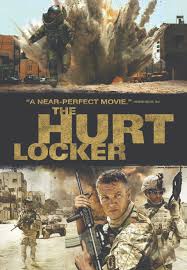
The Hurt Locker, Kathryn Bigelow, director (2008)
Standard Operating Procedures, Errol Morris, director (2008)
Stop-Loss, Kimberly Pierce, director (2008)
Generation Kill, David Simon and Ed Burns, executive producers (HBO) (2008)
The Objective, Daniel Myrick, director (2008)
Brothers, Jim Sheridan, director (2009)
Restrepo, Sebastian Junger, director (2009)
The Messenger, Oren Moverman, director (2009)
Green Zone, Paul Greengrass, director (2010)
Return, Liza Johnson, director (2011)
Zero-Dark-Thirty, Kathryn Bigelow, director (2012)
Lone Survivor, Peter Berg, director (2013)
American Sniper, Clint Eastwood, director (2014)
Korengal, Sebastian Junger, director (2014)
The Last Patrol, Sebastian Junger, director (2014)
Fort Bliss, Claudia Myers, director (2014)
Man Down, Dito Monteil, director (2015)
A War, Tobias Lindholm, director (2015)
Hyena Road, Paul Gross, director (2015)
Billy Lynn’s Long Halftime Walk, Ang Lee, director (2016)
Blood Stripe, Remy Auberjonois, director (2016)
Mine, Fabio Guaglione and Fabio Resinaro, directors (2016)
Neither Heaven Nor Earth, Clement Cogitore, director (2016)
Nobel, Per-Olav Sorensen, director (Netflix) (2016)
War Dogs, Todd Phillips, director (2016)
Whiskey Tango Foxtrot, Glenn Ficarra and John Reque, directors (2016)
Last Flag Flying, Richard Linklater, director (2017)
Megan Leavey, Gabriela Cowperthwaite, director (2017)
Sand Castle, Fernando Coimbra, director (Netflix) (2017)
Thank You For Your Service, Jason Hall, director (2017)
The Wall, Doug Liman, director (2017)
War Machine, David Michod, director (Netflix) (2017)
The Yellow Birds, Alexandre Moors, director (2017)
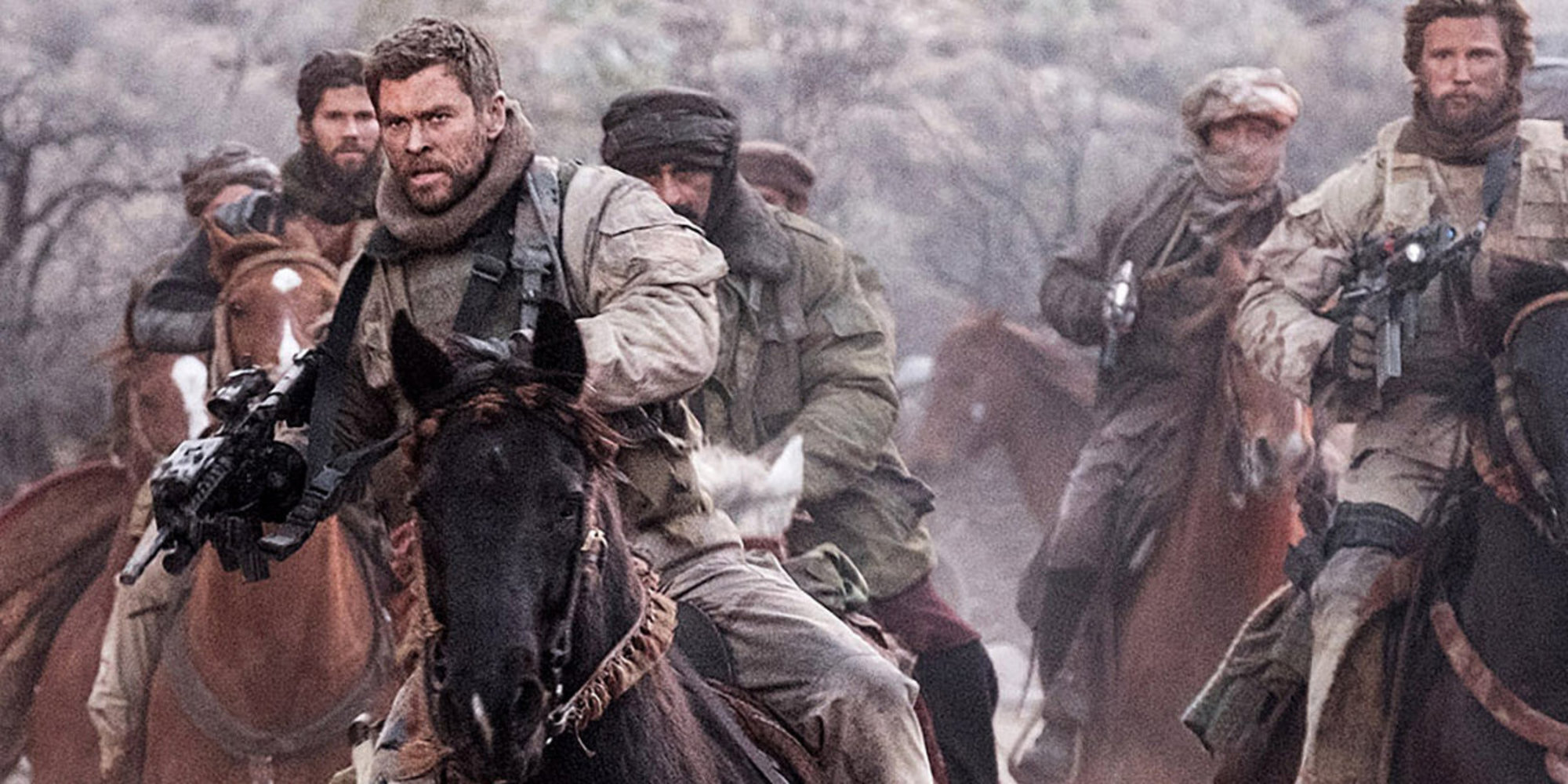
12 Strong, Nicolai Fuglsig, director (2018)
The Kill Team, Dan Krauss, director (2019)
Official Secrets, Gavin Hood, director (2019)
The Report, Scott C. Burns, director (2019)

On Larry Heinemann

The name Larry Heinemann meant little to me when I was asked to write his entry for the Dictionary of Literary Biography, a prestigious scholarly reference series available in university libraries. Heinemann, who died last week at age 75, was a Vietnam veteran best known for the controversial selection of his novel Paco’s Story as the National Book Award winner in 1987, where it won out, most notably, over Toni Morrison’s Beloved, and also Philip Roth’s The Counterlife. At the time the DLB contacted me, I hadn’t read Paco’s Story or Heinemann’s other Vietnam War novel Close Quarters (1977). To the extent I knew anything about Heinemann, I vaguely held what seems to have been a general sentiment: the selection of Paco’s Story as National Book Award winner constituted a great wrong to Morrison, and that Heinemann’s novel had been selected for reasons related not just to literary achievement, but race, and for which Heinemann was somehow implicated.

Still, I took the DLB assignment, because I sensed that contemporary war-writing, the subject of Time Now, might be better understood by a deep dive in a body of writing—Vietnam War literature—that preceded it. I was also curious about Heinemann, and how his name somehow had not achieved the stature of other Vietnam War writers such as Michael Herr and Tim O’Brien. Mostly though, I wanted to explore how a National Book Award winning vet-author had not just been overlooked by history, but dismissed by it.

Subsequently, I read all of Heinemann’s books: Close Quarters, Paco’s Story, a third novel titled Cooler by the Lake (1992), and his memoir Black Virgin Mountain (2005). I also read his introductions to a coffee-table book titled Changing Chicago: A Photodocumentary (1989) and Svetlana Alexievich’s Zinky Boys: Soviet Voices from the Afghanistan War (1992), and a 1997 short story published in Atlantic titled “A Fragging.” Finally, I read as much scholarship on Heinemann as I could find, and then got to work. 5,000 words later, I submitted my entry, which eventually appeared in volume 382 of the DLB, alongside entries on Michael Chabon, Don DeLillo, E.L. Doctorow, Louise Erdrich, Jonathan Franzen, Elmore Leonard, Cormac McCarthy, Walter Mosley, Thomas Pynchon, Philip Roth, Richard Russo, Donna Tartt, John Updike, and Colson Whitehead.

I invite you too to read Heinemann’s work and also my DLB entry, if you have access to a university library. Be warned, though, by the standards of post-9/11 war-writing, Close Quarters and Paco’s Story are brutal in terms of depicting war violence and atrocity. Dosier, the protagonist of Close Quarters, and Paco, the titular hero of Paco’s Story, are soldiers in Vietnam who do monstrous things, and the novels suggest they become monsters as a result. The problem is compounded by the fact that Close Quarters is based closely on Heinemann’s own tour; he later called it “straight-up fictionalized memoir.” If we take that statement as true, it makes it unavoidable to contemplate that the author himself has done the monstrous things he describes and has become a monster himself, much like his character Dosier. I’m not joking. Imagine if recently-pardoned war criminals such as Clint Lorance, Mathew Golsteyn, and Edward Gallagher and the things they did were featured characters and events in novels written by themselves. Now multiply that by ten and suggest their criminal acts were an everyday feature of a year’s tour in a combat zone. Add in explicit racism and extreme misogyny. Take it even further: Close Quarters features a scene in which a Vietnamese camp-follower is coerced into fucking and giving head to an entire platoon. A similar scene reappears in Paco’s Story; in this case an underage Vietnamese girl is gang-raped by an Army platoon and then shot in the face.

These scenes are shocking, but Heinemann’s tone and point don’t seem sensational, or defensive or confessional or even accusatory. Instead, the scenes and the novels constitute a serious representation of a soldier’s capacity for evil as he is caught up by the forces of war. It’s almost certain that Lorance, Golsteyn, and Gallagher don’t have the inclination, talent, or perseverance to write novels, or at least good ones, but try to imagine your reaction if talented Iraq War veteran-authors Matt Gallagher, Phil Klay, or Elliot Ackerman wrote novels about their platoons gang-raping an Iraqi girl and then shooting her. What is the worst thing they saw or did? What are they not proud of in the least? That’s where Heinemann takes it. Or, try to imagine Chris Kyle writing American Sniper after reading Melville and Tolstoy, authors Heinemann studied upon return from Vietnam. It’s like that, and somehow compelling instead of off-putting. An early review of Close Quarters captures some of the effect: “Dosier elicits the reader’s empathy throughout this extremely unpleasant, but somehow touching novel. Intense is the author’s (a Vietnam veteran’s)style/approach.” That intensity manifests itself by a hostility and anger that emanates from the pages of Close Quarters and Paco’s Story so vividly it makes them both hard to read and hard to put down.

What to make of it all? A quote from Pulitzer Prize-winning author Viet Thanh Nguyen offers a possible response:

Larry Heinemann’s Close Quarters was a novel I read when I was very young, 12-years old, it was a horrible experience. I wasn’t emotionally or literarily equipped to deal with it. So for a long time I really hated that book. But I think Heinemann actually did the right thing by unrelentingly focusing on atrocity without editorializing that these things are wrong.

Nguyen’s forgiving sentiment—one talented author to another—opens up complicated avenues for contemplation. In his memoir Black Virgin Mountain, Heinemann writes about Close Quarters and Paco’s Story:

“I wrote those two books in an attempt to make clear that this is what awaits you—or something like—the work of the war will transform you into something you don’t recognize; that the inevitable reverberations of the war are irresistible and virtually irremediable; that this is what you make when you make war.”

In Heinemann’s quote, what produces “this” is total war, fought for politically and morally suspect reasons, and badly-led by the officers responsible. Heinemann suggests that the unavoidable result of sending men to fight in such wars is barbarity on the battlefield and forever ruination of the men involved. In contrast, Iraq and Afghanistan were not total wars, but limited wars, which is important. If a cultural and military logic drove men to become monsters in Vietnam, restraints were in place in Afghanistan and Iraq to forestall that transformation. Lorance, Golsteyn, and Edward Gallagher knew what those restraints were, as did all soldiers deployed to Iraq or Afghanistan and sent outside the wire with guns in their hands. They knew them in Vietnam, too, but a general reckoning prevailed that found breaches of them forgivable. A little. Sometimes. Depending on the circumstances. And how you felt about things.

In my DLB entry, I reconcile the conflux of ideas by writing:

Without validating [combat soldiers’] actions and ideas, Heinemann refuses to condemn them, either; while their brutality, racism, and sexism cannot be denied, he shows that their contempt for authority, pretense, and ignorance is estimable and their feral instincts for self-preservation justifiable. In Heinemann’s final accounting, far more reprehensible than the barbaric combat grunt and the disturbed and disturbing veteran are the people, circumstances, and events that make young men do monstrous deeds.

That certainly doesn’t close out the conversation on the subject or Heinemann. For now though, I’ll end with a brief exploration of Heinemann’s life after Paco’s Story. Though he seems to have preferred the company of fellow soldiers who had seen and done the kinds of things in Vietnam as he had, Heinemann never deified soldiering or glorified the supposed wisdom and camaraderie of the soldier brotherhood. He never lost his hatred of war and the military, while, interestingly, finding purpose and perhaps atonement through repeated return visits to Vietnam, where he came to appreciate the beauty of the land and the people and the sagacity of their military men. He also taught for many years at Texas A&M and elsewhere, pouring himself into encouraging fledgling writers of all stripes.

Heinemann seems not to have spoken out or written on Iraq and Afghanistan, but he was active on social media and occasionally I would see comments by him on the feeds of friends. One in particular I remember. On a thread about PTSD and how to help veterans post-war, he commented to the effect that the best thing any troubled vet could do to regain equilibrium was to “find something to do with your hands that helps people.” That seems common sensible and practical: boiled-down wisdom from a life spent thinking about the matter. For Heinemann, what he did with his hands that helped people was write and comment on his students’ writing. That application of his own advice probably entailed a little bit too much time alone with bad memories and worst fears, but still I like it very much, even as it suggests that the person Heinemann was really trying to help was himself. RIP.

****

I have written at more length about the 1987 National Book Award controversy here. In it I suggest that Toni Morrison’s last novel Home represented a late-life response to Paco’s Story (Morrison also died in 2019). The academic scholarship on Heinemann is trenchant. If so inclined, seek out Susan Jefford’s “Tattoos, Scars, Diaries, and Writing Masculinity”; Stacey Peebles’ “The Ghost That Won’t Be Exorcised: Larry Heinemann’s Paco Story”; and Joseph Darda’s “The Ethnicization of Veteran America: Larry Heinemann, Toni Morrison, and Military Whiteness after Vietnam.”

Afghanistan Signature Shot

Personal picture, Afghanistan 2009.

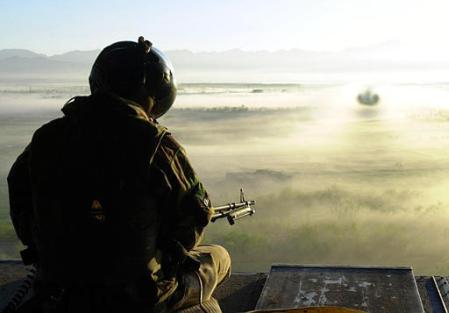
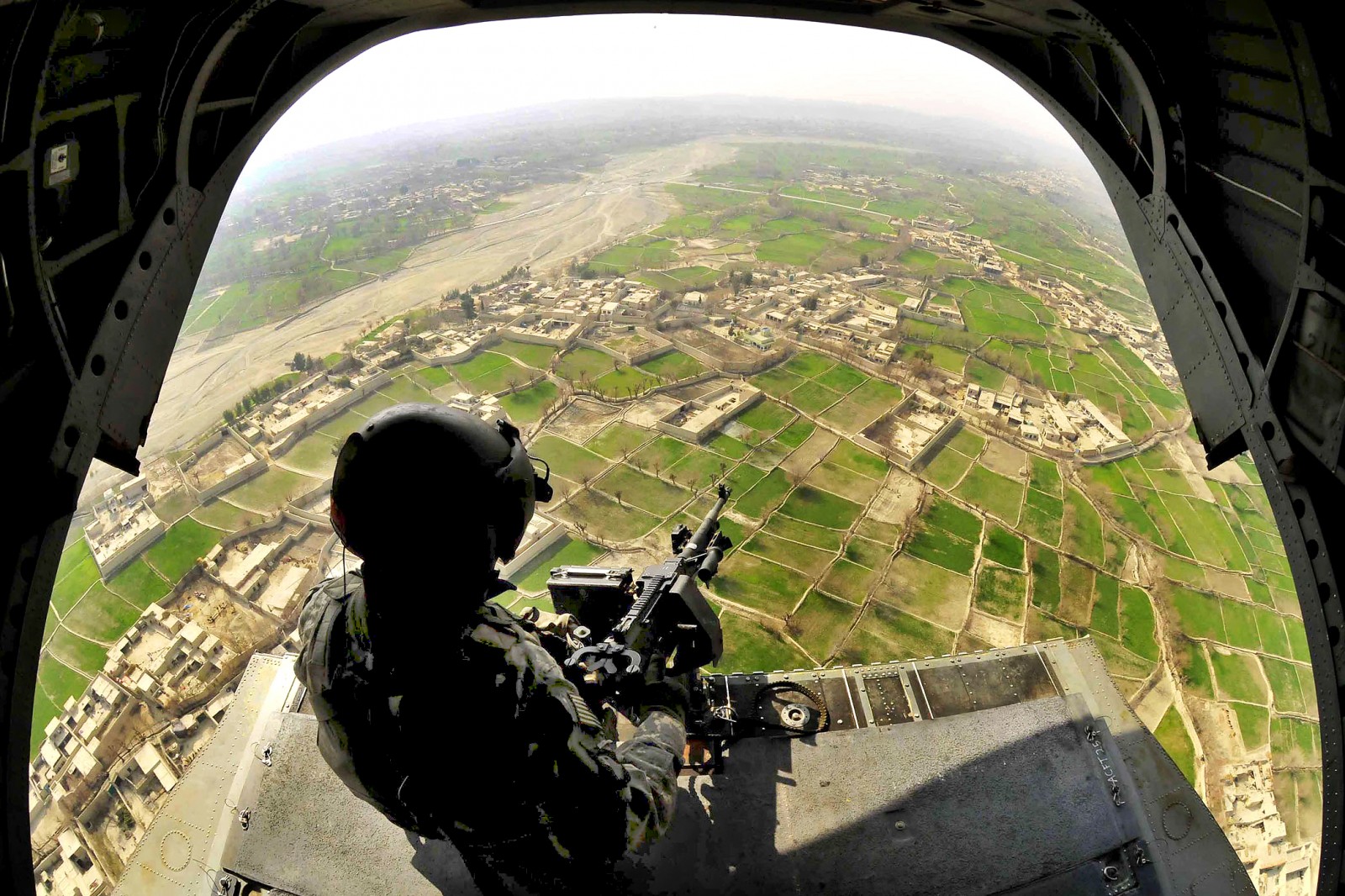
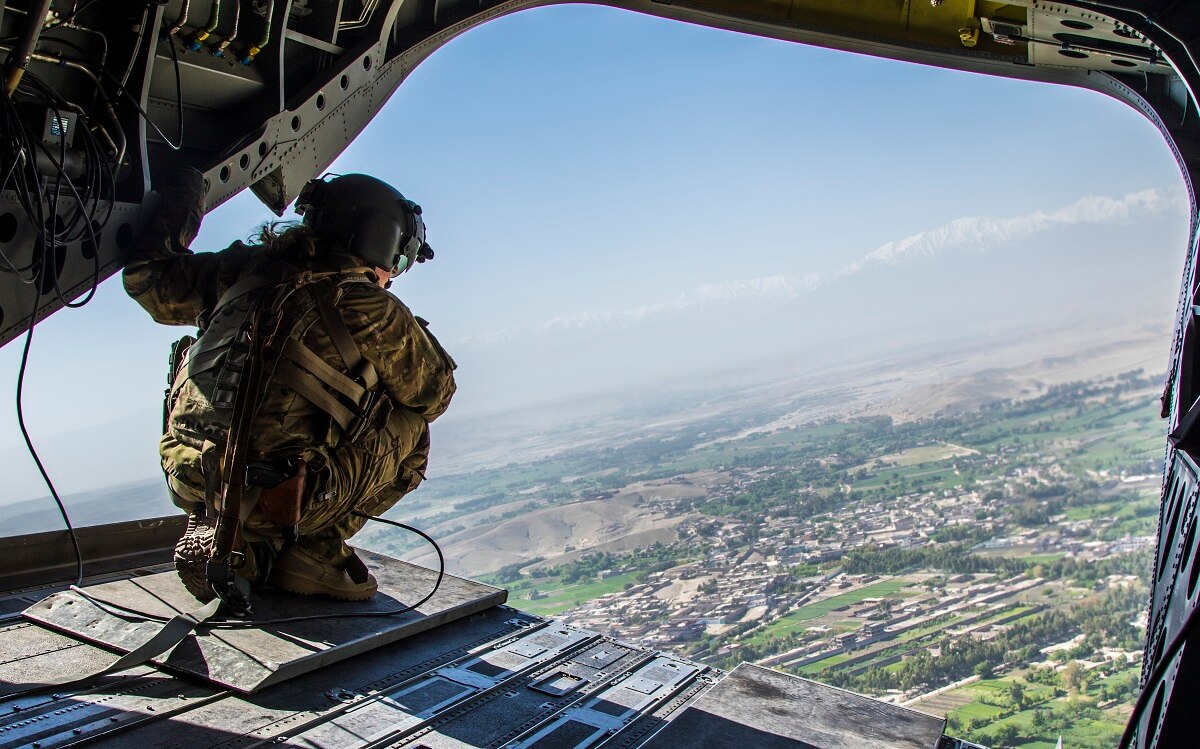
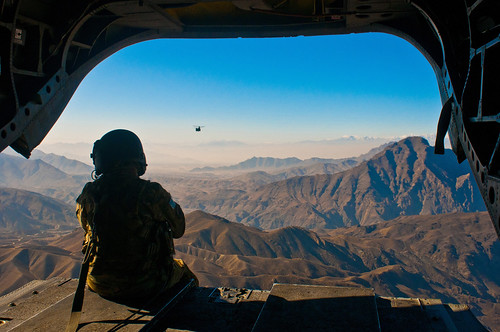
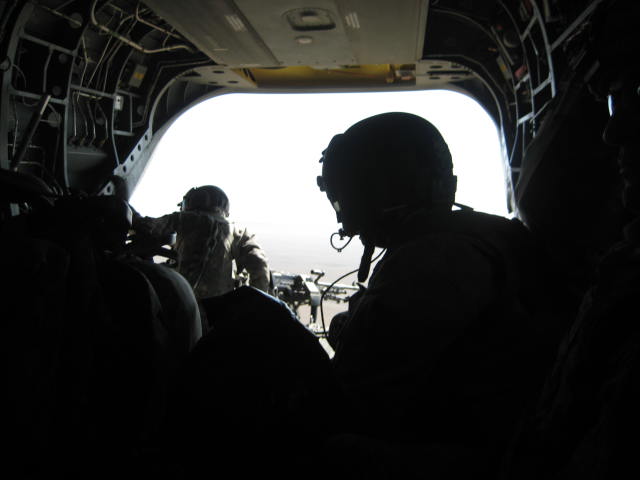
When the Washington Post began running The Afghanistan Papers, its recent series on the ineptitude of the US military mission in Afghanistan, I was sure that one of the articles would feature a photograph of a US soldier perched on the opened back ramp of a Boeing CH47 Chinook looking out over an Afghanistan landscape. Such photos are ubiquitous in articles about the Afghanistan War, and it’s easy to see why. The image of the solitary soldier looking backward and downward at the “Graveyard of Empires” seems to be an apt visual symbol for how Americans can only know Afghanistan from a distance, if at all, and understand their deployments only in hindsight.

In a sense I’m suggesting that the pictures have become a generic Afghanistan motif, but, still, the photos are always striking, what with the bulb-headed helmeted soldier, framed in the door hatch, hanging precariously off the back lip of an aircraft flying over a scenic Afghanistan rural or urban locale. The pictures evoke equal amounts of tension, serenity, wonder, thoughtfulness, and thrill, which in my experience are the same emotions that come with actually flying in a Chinook while looking backward over an open ramp.

The only fictional representation of the Chinook back-ramp scene that I can remember comes in the first chapter of Kathleen J. McInnis’s war-romance The Heart of War: Misadventures in the Pentagon (2018). The opening episode of McInnis’s novel has her first-person protagonist, a civilian Pentagon analyst, being treated to a ride on the opened ramp of a Chinook as she flies into Kabul. The narrator is tethered in, as are the aircraft crew members, but the feeling is still precarious. Here’s how McInnis’s character describes it:

“Are you sure this is safe?” I screamed over the noise of the whirling blades to the sergeant to my left. His machine gun points outward into the dusty, blue beyond, looking for anyone–or anything–that might use our helicopter for target practice….

…I peered down between my boots at the brown baked mountains of the Hindu Kush which were peppered with dried scrub brush and the occasional cluster of homes. The villages grew more frequent, eventually merging together as we flew and forming the outskirts of the city of Kabul. And although the mountains themselves looked like they were made of dust as fine as powdered sugar, somehow the houses clung halfway up the slopes and squeezed themselves into narrow valleys before spreading open into the city itself.

I couldn’t help but reflect on the fact that hundreds of feet of air were all that was separating me from the streets below. Or that hunks of metal weighing forty tons shouldn’t be airborne.

…I looked off into the distance and saw a black speck floating behind us.  I could just make out another helicopter’s long barrel shape and dual rotors. Looking down from the city below to the hills in the distance, now partially shrouded in late afternoon haze, I remembered [an] interpreter talking about his homeland in lightly-broken English. “We could make it beautiful again,” he said, “if only there were peace.”

To return to the Washington Post series, sure enough, within a couple of days a backshot of a helicopter gunner looking out at Afghanistan accompanied the story here. To be exact, it’s of a gunner keeping watch out of the side door of a Chinook, but you get the idea. A quick search of the Internet found thirty or forty photographs shot looking out over the back ramp. Most of them are copyright protected, but I’m posting a few from public domain websites and DOD sites that will illustrate. You can also find a number of short videos depicting ramp-down Chinook rides on YouTube.

Department of Defense, May 8, 2015. Virin.
Chinook Helicopter, December 23, 2016. Co H, 4th Bn, 7th Aviation Brigade. Photographer unknown.
Stars and Stripes, June 11, 2014. Josh Smith/Stars and Stripes.
Stars and Stripes, March 17, 2015. Vernon Young/United States Air Force.
Wallhere, October 31, 2017. Photographer unknown.
Military Times, May 10, 2018. Sergeant First Class Randall Pike/US Army.
PhotoPin/US Army. Date and photographer unknown

In regard to The Afghanistan Papers, I’m following the series closely and reading as well the follow-on commentaries and social-media responses to them (many written by friends). Most of the problems described in the articles I have addressed in my two blogs, and were apparent to all of us while we were in-country. The articles mostly address “big picture” issues of national and command policy and strategy, but the problems were felt with force at our level.

Corruption, rules-of-engagement, conflicting chains-of-command, stupid reporting and briefing requirements, Pakistan aiding and abetting the insurgents (and sometimes helping fight them), green-on-blue incidents, friendly fire incidents, dealing with special operators, balancing military ops with nation-building programs, trying to figure out who was enemy and who wasn’t.… It was all part of the operating environment, and that was before the bullets, mortar rounds, and missiles started flying and the IEDs began exploding. You had to be pretty nimble to deal with it all and keep going. If you let things overwhelm you, you weren’t going to be of much use to anyone, though you could certainly use your dismay and anger to build a righteous argument that it was all stupid and worthless.

Strategically and structurally, my biggest gripe were the unit rotation policies and practices, which never kept units and key leaders in place long enough to become truly effective. My advisor team, for example, was rotated out of Khost Province at the seven-month mark of our deployment, just when we were really beginning to build trust with our Afghan counterparts and understand the lay-of-the land. Also, during my time I served under nine different chains-of-command due to constant task organization changes. Though it was kind of neat to be have been able to wear any one of nine “combat patches” representing the different units I belonged to over the course of a year, the problems with so much change are obvious.

To have complained about it at the time would to have been labeled a whiner, a naysayer, and a foot-dragger. It would have meant being fired immediately, as (among other things) it would be insubordinate to the chain-of-command, and ruinous for troop morale and unit cohesion, which was high at the time and by all accounts remains high. Besides, we were all volunteers, right? and no one told us it was going to be easy. We did the best the we could, and though our best really wasn’t all that good, we kept trying and hoped for a very limited and temporary effectiveness.

However small our results may have been, I’ve always held that advisors at least felt like we were doing the most good, compared to other Americans. I also felt like we had the highest regard for Afghans and had mostly funny or warm-hearted stories about working with them. That’s not saying much, because the soldiers in the line-force units in our area-of-operations distrusted Afghans and wanted to spend as little time around them as possible. The articles and the Special Inspector General for Afghanistan Reconstruction (SIGAR) reports on which they are based also seem hostile to Afghans as people. Continually dwelling on corruption and making blanket statements and assumptions about incompetent, unreliable Afghans is definitely off-putting to me. In my experience, if that was your attitude going in, or a “fact” “proven” to you by your suspicions and initial encounters with Afghans, well then everything that followed was going to confirm that. The Afghans we worked with made distinctions, and they sensed quickly if an American was predisposed to be snoopy and judgmental about them. If so, they pretty much acted to type. If the opposite, then they were great partners, eager to please and amenable to suggestions and direction. The negative comments about Afghans in the Post articles and the SIGAR reports seem to have been written by people who may have worked or fought side-by-side with Afghans once or twice, but never day-in, day-out for seven months in Khost and five months in Paktya.

Not entirely reassuring, I’m sure, or beyond critique, or free of self-justification, but those were my thoughts then and they mostly remain the same now.


Inside the Puzzle Palace: Kathleen J. McInnis’s The Heart of War

The first and last chapters of the 2018 romance novel The Heart of War: Misadventures in the Pentagon are set in Afghanistan, but the intervening scenes depict policy, strategy, and operational planning at the highest levels of US military command, primarily at the Pentagon, but also in adjoining locales around Washington, DC, and on a diplomatic mission to London. Mostly fanciful, but containing elements of critique and satire, The Heart of War is by turns entertaining, insightful, and troubling. Drawing on author Kathleen J. McInnis’s own tour-of-duty as a Pentagon analyst, the novel is narrated in first-person by Dr. Heather Reilly, a newly-minted PhD hired by the Department of Defense for her Afghanistan expertise to work as an “action officer,” as wonky plans-and-policy staffers are known in the military bureaucracy. In the first “misadventure” that besets Reilly, she is transferred from her initial assignment to an obscure office led by a civilian woman known as “The Wicked Witch of the Pentagon.” True to her nickname, the Wicked Witch terrorizes Reilly while also relying on her to advance a quirky project to make Moldova the centerpiece of DOD efforts to counter Russian expansionism.

Many more misadventures ensue, but ultimately The Heart of War tells the tale of Reilly’s triumph. On the strength of two memos she authors, one addressing Moldova and the other Afghanistan, she comes first to the attention of the Secretary of Defense and then to the head of the Senate Armed Services Committee. Rewarded with promotion to an executive-level position on the Joint Chiefs of Staff, Reilly at novel’s end is diverted from the Moldova project and deployed to Afghanistan, where she is to lead a peace-making initiative in consort with her new-found romantic interest: a hot-shot Army colonel who, as it happens had fought alongside her brother John on a previous tour in Afghanistan. Then and there, as it further happens, John had earned a posthumously-awarded Medal of Honor for saving the Army colonel’s life, so for Reilly to now be united in common cause with a man inextricably linked with her brother represents a fortuitous culmination of family destiny and personal accomplishment. But not one undeserved, the novel explains. As romance blossoms, Reilly’s new beaux tells Reilly her rise-in-the-world has occurred because she has “consistently proven [her]self the best analyst in the room” and because she “cares… in a way that most people can’t even comprehend.”

That’s a lot for the first six weeks on the job, no doubt, and I’ve just scratched the surface of Reilly’s “misadventures,” which are presented as zany mishaps on the way to final glory. Most of them are of the type that feature prominently in “rom-com” movies and “chick-lit” stories, as I understand those genres. While some of them are pretty fantastical (let’s just say that a couple of episodes put the “action” in “action officer”), analysis of Reilly’s mishaps might serve as the basis for an astute assessment of the workplace environment for women at the Pentagon. I’m not the target audience for rom-com and chick-lit, so I’ll pass on mansplaining The Heart of War’s breezy critique of military patriarchy and the contortions it forces upon the woman who work within it. Before moving on, however, let the record show that McInnis’s novel, for all its fantastical elements, is a hundred times more realistic than the contemporary-war fantasies authored by male Army vets such as Brad Thor, Sean Parnell, and Dalton Fury I review here. And I haven’t yet gotten to the parts about The Heart of War I like best. Or which trouble me most.

What really intrigues me about The Heart of War, and what I think McInnis gets mostly right, is the portrait of the extremely competitive work culture within the Pentagon and the entire government apparatus. It’s never just about doing what’s best for the country, or for the soldiers fighting downrange. Instead, it’s about ruthless jockeying for status and position within the bureaucratic hierarchy. It’s about striking hard when the time is right to advance one’s position, which may or not be best for the nation or fighting force, and may or may not be fervently believed in ideologically and politically, but certainly is designed to enhance one’s prestige and career. The Moldova project, at first laughable in Reilly’s estimation, attracts attention as it is bandied about among various Pentagon agencies, the Department of State, the Executive Branch, and foreign allies. While processing through the inside-the-Beltway sausage-making machinery, it accrues a certain amount of possibility as a legitimate way to counter Russian aggression—a real concern—and it most definitely accrues value as a (mixed metaphor alert!) high-stakes poker chip among very talented, hard-driving Pentagon players who are carefully counting cards and reading the tells of their opponents. Not so much the art of compromise, successful fruition of a program, policy, or action depends on careful coalition-building and savvy grooming of highly-placed patrons. In the Pentagon, then, no good idea wins the day on its own merits alone; instead, it must find powerful advocates to battle with powerful adversaries, as in battles between dueling wolf-packs.

Also intriguing about The Heart of War is McInnis/Reilly’s take on all this. In the opening scenes, Reilly expresses stock skepticism at Pentagon foibles. The drab physical lay-out is often described as “underwhelming.” The Pentagon’s mania for Power Point and acronyms is ridiculed. We are told that at the Pentagon “colonels pour coffee.” Reilly gets in trouble for going to the bathroom unescorted and later she screws up and sits in the wrong place at a meeting, ha-ha. Many of the men and women she meets are weirdly-behaved and seemingly selfishly-motivated, at least at first. Eventually, though, Reilly comes around—the system that aids and abets her rise in the world is revealed—mutatis mutandis—to be one that actually makes sense, or at least as much sense as possible. The brutal hazing turns out to be a necessary toughening regimen. The Byzantine bureaucracy turns out to be an ingeniously designed system of checks-and-balances that rewards survival-of-the-fittest perseverance and creative maneuvering. Most of all, the players, or at least the ones Reilly likes best, are not scheming self-promotors or brain-dead dullards, but “the best and the brightest” (hard to believe those words are actually used unironically). They’re super-smart, wickedly funny (in private), highly dedicated and patriotic public servants, and most of the men are decorated combat veterans, as well. They adopt personas as either ruthless ball-busters or cynical black-humorists not just to play the game, but win it.

That’s OK, if a little pie-eyed, offered to us for consideration from the perspective of a woman (the Reilly character, not McInnis) who has implausibly cut to very nearly the top of the Pentagon heap in half-a-year. I never served at the Pentagon during my Army career, but the mortar platoon-leader of my first infantry battalion later became an Assistant Secretary of the Army. Another lieutenant in that unit is now a three-star on the Army staff, and so is a captain with whom I also once served. A fourth officer I knew had come from a position on the Joint Chiefs of Staff and liked to proclaim he had once “deployed a brigade to Africa on a buck-slip”; in other words, he had circumvented laborious staffing procedures. That’s a pretty good anecdote, but it’s countered by the one told to me by the Assistant Secretary of the Army, who related that a typical Pentagon scene is four full-bird colonels and three senior level civilians huddled around a computer parsing a word on a briefing slide. I haven’t seen any of those men in years, but they were all great officers when I served alongside them, and I trust and pray they were or are much the same in their Pentagon billets. The Heart of War skillfully portrays some of their world, but an even richer, deeper, more textured look awaits writing by someone who can describe them (and women like them, too), their careers, their decisions, and their concerns in fuller scope.

To close with a consideration of larger imports, The Heart of War sends mixed or confusing messages, sometimes clear, precise, and astute, and other times understated or implied. For example, the novel has little to say about Presidential politics. White House directives barely factor into the decision-making process the novel describes and notions of servitude are expressed in terms of obligation to fighting men-and-women and to the American public, but not as a response to Presidential fiat, welcome or unwelcome. Reilly’s transformation from skeptic to true-believer, academic-peacenik outsider to boots-on-the-ground woman-of-war insider, suggests a rebuke to liberal pieties about national defense and the military. On the other hand, her basic affirmation of Pentagon processes and the valor, integrity, and competence of the career military men and women who execute them contravenes anyone who believes that the modern military is comprised of mealy-mouthed bureaucrats who couldn’t fight their way out of a paper bag. McInnis’s description of Pentagon culture and some of the modern-day Machiavellis who work there offers plenty of ammo to those concerned about government inefficiency—in this view, the Pentagon is a self-licking ice cream cone as interested in perpetuating the forever wars as ending them. Even more so, however, critics of the Washington “swamp” and “deep state,” if they were smart enough to think beyond Pizza Gate and Benghazi conspiracy theories, might use The Heart of War as evidence for their distrust of a slick DC insider culture whose actions are opaque to the larger world. That’s not at all what McInnis intends, but a sharp critic of the contemporary “administrative state” would deem all she describes as major problems, not virtues or necessary evils. For those of that persuasion, that so much energy and brainpower is devoted to constraining Russia, not buddying up to them, would be another problem.

Kathleen E. McInnis, The Heart of War: Misadventures in the Pentagon. Post Hill Press, 2018.

War Fiction: Nicholas Kulish’s Last One In

Nicholas Kulish’s 2007 novel Last One In, about an unlikely war correspondent embedded with US Marines during the 2003 invasion of Iraq, didn’t pass unnoticed upon release. A New York Times review, for example, called it “funny, harrowing, and sympathetic,” as well as a “worthy addition to the curious but indispensable shelf of war satires.” Last One In seems not to have made much of a lasting impact, however. The contemporary war-writing fiction scene didn’t get rolling for another few years, and when it did, “war satire” never established itself as a dominant mode for depicting war in Iraq and Afghanistan, David Abrams’ great Fobbit the exception that proves the rule. Instead, a downbeat dwelling on the traumatizing costs of war as experienced by the individual soldier prevailed as the dominant subject and tone, reflected starkly in works such as Kevin Powers’ The Yellow Birds, Phil Klay’s Redeployment, and the stories in the seminal anthology Fire and Forget. Last One In’s focus on Operation Iraqi Freedom’s opening act also seemed to have missed the mark of the nation’s interest, as an onslaught of later books—the ones I’ve mentioned above and many many more–about the difficulties veterans face after coming home came to define publishing and popular thinking about what it meant to write about war in Iraq and Afghanistan. Another factor that helped relegate Last One In to obscurity was a national literary sentiment that privileged narratives about contemporary war authored by soldier-veterans above those written by anyone else. The veteran’s voice, polished by tutelage in MFA programs and veterans’ writing workshops, exuded an authoritative credibility that has left civilian authors of war-and-mil novels, even superb ones such as Ben Fountain and Roxana Robinson, constantly having to explain themselves, perpetually fighting uphill for respect and readers. Journalists especially seem to have collectively decided not to even try to write novels about the modern wars; off the top of my head I can’t name another fictional work about war in Iraq or Afghanistan by an author who identified primarily as a reporter.

Reading Last One In recently (I had never of it before this year, and I make it my business to know about these things), Kulish’s novel struck me as of a piece with Evan Wright’s much more well-known Generation Kill (2004), and the 2008 HBO television series of the same name based on Wright’s book. Both Last One In and Generation Kill feature inside looks at Marine units as they alternatingly charge and creep from Kuwait to Baghdad in the opening days of Operation Iraqi Freedom. Both works are focalized through the eyes of embedded journalists stuffed into the back of Humvees manned by Marine enlisted soldiers. In each case, the Marines swap endless insults and complaints, both to entertain each other and burn off anxiety in-between occasional moments of action. Neither Wright nor Kulish have much to say about tactics, strategy, or actual fighting, but then neither do the Marines with whom they ride. For both authors, the really interesting subject is the very masculine Marine culture they’ve been given access to, as it is for the Marines themselves, whose chatter revolves endlessly around how it is to see the world through the eyes of a Marine. The peep into Marine culture both fascinates and repulses Wright and Kulish. In the television series version of Generation Kill, for example, close-ups of the Wright character predominate as he responds silently-but-bug-eyed to the foul-mouthed, insubordinate, and politically incorrect tirades of the driver of the vehicle in which he rides. In Last One In, one suspects Kulish relied on good notes to craft lines such as:

…they talked their way through the celebrity spectrum, about who was uglier in real life, who had gained weight recently, and who was gay. Speculating on male homosexuality was the most popular subject. The only actors they didn’t seem to consider closet cases were Mel Gibson, Bruce Willis and Harrison Ford. Han Solo could not be gay, the majority ruled. Brad Pitt and Ben Affleck, on the other hand, were two candelabra shy of Liberace.

Trying to determine the reporter-character/journalist-authors’ takes on the homophobia, misogyny, and racism they witness, as well as the Marines’ blatant lack of respect for many members of their chains-of-command and general disdain for Iraqis, is one of the more interesting deliberations that come with watching Generation Kill and reading Last One In. Is the casual crudeness part of the Marines’ charm, an integral verbal and mental aspect of hardened fighting men? Or is it a cringe-worthy social corollary to the surprisingly inept military proficiency and general thoughtlessness the reporter-observers often note? The decade-plus since Generation Kill and Last One In have intensified the questions, not answered them. The dominant sentiment, which I hold, is that such “toxic military masculinity” is neither charming nor necessary, and should be censored and policed by official chains-of-command and stigmatized by the media and the populace. To a certain extent, the needle has shifted within the military itself and such attitudes no longer are tolerated or even hold sway. But they are not gone, by any means, nor is there consensus that they should be. For some, the censoring and policing and stigmatizing are worse than the problem itself, if they even see it as a problem.

****

Last One In’s many scenes set among Marines in the close confines of their vehicles and squad bays reflect Kulish’s journalistic eye for detail. They also give me a chance to expound briefly on sociologist Pierre Bourdieu’s concept of habitus. It’s a concept that especially interests me as I read and watch stories about contemporary war and how they depict the microcosmic world of soldiers living among other soldiers. To quote from a reputable website, habitus “refers to the physical embodiment … of deeply ingrained habits, skills, and dispositions that we possess due to our life experiences.” To quote from Bourdieu himself, habitus is “a subjective but not individual system of internalised structures, schemes of perception, conception, and action common to all members of the same group or class.” (The Wikipedia entry on habitus is not bad in translating those ideas into plainer English).

Habitus is related to the concept of mise-en-scène, a film and stage term, but has a more literary and critical bent. Besides, one French aesthetic idea is enough to deal with in a single blog post. For me, an author’s or artist’s representation of military habitus is always the most interesting thing. I especially like thinking about habitus in relation to scenes set inside vehicles, where soldiers act and interact in ways that are learned, stylized, and performative, but also highly naturalized (or, “internalized”). When such scenes are done well, they not only make me nostalgic for my own time spent cooped up in military vehicles on long movements, but render the impression that the author or artist is highly alert to the essence of what it is like psychologically and sociologically to be a soldier. Bourdieu was a sociologist, and so for him an accurate account of a particular habitus depended on “objective,” nominally value-neutral “thick description” (another lit-crit term) depiction of observed habits and speech patterns, which are then ascribed to the holding of specific worldviews and attitudes. That’s also close to the credo of journalists and anthropologists as they observe cultures and sub-cultures and try to describe them as fairly and accurately as possible. Novelists and artists, for their part, value thick description, too, but also everywhere they constantly inflect their depictions with irony, ambiguity, and shades of perspective. They’re also aware that the very act of observation induces an “observer effect,” whereby the actions of the observed change under the act of observation. That is certainly a factor afoot in Generation Kill and Last One In, where the embedded journalist protagonists surveil with pen-and-pad in-hand the Marines with whom they pass hours, days, and weeks.

To put a point on this esoteric discussion, here’s a long passage from Last One In set in a Humvee during the slow grind to Baghdad. The embedded journalist is Jimmy, the Marines are Privates Ramos (also known as “little Macho”) and Martinez, and their squad leader Sergeant Harper.

The gaps in conversation were torture, since there was no dearth of terrible scenarios the imagination could conjure. After several minutes of miserable silence, Jimmy announced, “You know, I’ve been here for a week, and I haven’t seen one camel.”

“Oh, who fucking cares?” Martinez said.

“Yeah, fuck your camel,” Ramos added….

[Jimmy exploded:] “Every minute since you’ve met me, I’ve had one thing on my mind. Thinking, ‘I’m going to fucking die. I’m going to fucking die.’ But do I whine about it? No. Because—because it’d get pretty boring to have me screaming about dying in the backseat all the way to Baghdad. Don’t you think?” Harper didn’t answer. “Don’t you think? So maybe I fucking want to talk about camels instead.”

“Jimmy,” Martinez said at last, very gingerly, “You haven’t seen one camel?”

“No, man,” Jimmy said with a laugh for the preposterously camel-free desert. “Not a goddamned one.”

“I’ve seen a couple,” Harper said.

“Me too,” Martinez said. They were using the indulgent tones of orderlies in an asylum.

“One hump or two?” Jimmy asked.

“One, I think,” Martinez said.

“Yeah, I think they were one,” Harper said.

“Cool,” Jimmy answered.

“Motherfucker,” Ramos said.

“What now?” Harper responded.

“How come I’m the only Marine who hasn’t seen a camel?”

“Everybody shut the fuck up,” Harper said. “That’s an order.” The talking ban was surprisingly effective, lasting a full hour, probably because each was a little pissed off at the others. Harper kept leaning back like he was trying to sleep, but Jimmy found it impossible to get any rest with the fear, the bouncing of the jeep, and the sand caked against teeth, tongue, and nostrils. He took notes instead. When no one spoke, all they could hear was the groaning of the vehicle on its shocks and the static of tiny grains of sand pelting the canvas top. The sandstorm lasted longer than they could stand to listen to those sounds. It was Ramos who cracked.

“What you writing?” he asked Jimmy. “Saying we’re lost? Don’t write that shit.”

“Not saying anything. And you can’t tell me what to write anyway.”

“C’mon, Jimmy,” Martinez said. “Step up.”

“Quit censoring the civilian, Private,” Harper said.

“You saying we fucked up?” Ramos asked.

“I’m writing a letter to my mom,” Jimmy said.

“What’s it say?” the private continued to pry.

“You know what?” Jimmy told him. “It says we’re lost. Says you fucked up. What do you think now?”

“You…” Ramos began. “You tell her a real Marine says hello.”

“Yea. And tell her little Macho said hi, too,” Martinez added. Jimmy looked down at his paper and finished writing, blessedly undisturbed.

Nicholas Kulish, Last One In. Harper-Perennial, 2007.

War Songs: Time Now Greatest Hits

Hard to believe I’ve only written about music nine times since starting Time Now, but so it is the case. Honestly, there just doesn’t seem that many songs about Iraq and Afghanistan out there, although the list here names a few of which I wasn’t previously aware, and I’m sure there are others. Whatever, I enjoy writing about music and several of the posts below rank among my favorites. Some of them speak more personally of my own deployment than the typical Time Now post. The songs I loved were vitally important to me while I was in Afghanistan. I’m sure it was the same for most of the soldiers, sailors, airmen, and Marines with whom I deployed, and remained so in the jangled-up years after return.

Can You Take a Five Finger Death Punch? November 26, 2018. Artist featured: Five Finger Death Punch.

Two Songs, Ten Years: Music, Memories, and Going to War, October 6, 2018. Artists featured: Thao Nguyen, The Walkmen.

Khost, Afghanistan in the Western Musical Imagination, July 10, 2016. Artists featured: Three bands, each named “Khost.”

Where Have All the War Songs Gone? February 7, 2015. Artists featured: Old Crow Medicine Show, Jason Isbell, The Offspring, Josh Ritter.

Newsted’s Heavy Metal Tribute to Pat Tillman, January 3, 2014. Artist featured: Jason Newsted.

A War Music Sampler: Country, Folk, Hip-Hop, July 11, 2013. Artists featured: Jimmy Rose, Zac Charles, Jason Moon, Emily Yates, Chamillionaire, Soldier Hard.

Jason Everman, July 4, 2013. Artist featured: Jason Everman.

Daniel Somers, June 29, 2013. Artist featured: Daniel Somers.

Mike Doughty, June 22, 2013. Artists featured: Mike Doughty, Linkin Park, Adele.

Veterans Day Iraq and Afghanistan War Movie Guide

A still from 2018’s 12 Strong: The Declassified Story of the Horse Soldiers.

UPDATED and REVISED in 2022! Just in time for Veterans Day weekend binge-watching, or binge-reading, here are links to all Time Now posts that review movies about America’s twenty-first century wars in Iraq and Afghanistan. No In the Valley of Elah yet, but I’ve made lots of additions since I first compiled the list in 2017 and then again in 2019.  I also add a link to my post on Adam Driver. No Captain Phillips, Act of Valor, or 13 Hours, because they’re not set in Iraq or Afghanistan or concerned with the aftermath of war upon redeployment. I do include a review of Mine, though, whose location is vaguely middle-Eastern or north-African, so I may rethink Captain Phillips, Acts of Valor, and 13 Hours in the future. No Jarhead, since it’s about the Gulf War, nor the Jarhead sequels, because either their location is indeterminate or I haven’t watched them yet. Still, there’s plenty more to keep you entertained. What will I be watching this Veterans Day weekend? May be time for Mosul or Nobel again.

Purple Hearts (2022): an opposites-attract romance about a Marine trying to put a disreputable past behind him and an aspiring rock-singer who find love after wedding each other for the financial benefits marriage brings military couples. Starring Sofia Carson as Cassie Salazar and Nick Galatzine as Lance Corporal Luke Morrow.

The Outpost (2020). US Army soldiers fight a big battle at COP Keating in Afghanistan in 2009 in which two of them earn Medals of Honor. Featuring a large-cast that includes Scott Eastwood as Staff Sergeant Clint Romesha and Orlando Bloom as Captain Ben Keating.

Mosul (2019). Kurdish militiamen undertake an action-filled rescued mission.  Written and directed by American Matthew Michael Carnahan and featuring an excellent cast of Arab actors in the principal roles, including Suhail Dabbach as Commander Major Jasem of the Nineveh SWAT Team.

12 Strong (2018). A rogue-ish Special Forces operative joins Afghan warlord Abdul Rashid Dostum to lead a horse-mounted cavalry charge early in the war in Afghanistan. Based on true events, starring Chris Hemsworth as Captain Mitch Nelson and Navid Negahban as Dostum.

Megan Leavey (2017). A biopic about a female Marine who bonds with her working-dog, an explosive-sniffing, life-saving German Shepard named Rex. Starring Kate Mara in the title role, with a great performance in a minor role from rapper Common as Gunny Sergeant Martin.

Mine (2017). A Marine sniper steps on an undetonated mine, upon which his foot must remain for 52 hours until rescue. Virtually a one-man show, with Armie Hammer as Sergeant Mike Stevens never off-screen for long.

Sand Castle (2017). US Army soldiers struggle to complete a civil affairs project in Iraq. Starring Nicholas Hoult as Private Matt Ocre.

Thank You for Your Service (2017). US Army Iraq veterans cope with PTSD after leaving the service. Starring Miles Teller as Staff Sergeant Adam Schumann.

War Machine (2017). An idiosyncratic US Army general takes charge of the war in Afghanistan. Starring Brad Pitt as General Glen McMahon.

The Yellow Birds (2017). Two US Army soldiers are tormented by the death of a third in Iraq. Starring Alden Ehrenreich as Private John Bartle. Also discussed at length here.

Billy Lynn’s Long Halftime Walk (2016). An unlikely Iraq War hero is feted by the American public. Starring Joe Alwyn as US Army Specialist Billy Lynn.

Nobel (2016). The long reach of war in Afghanistan follows Norwegian soldiers home after deployment. Starring Aksel Hennie as Lieutenant Erling Riiser.

War Dogs (2016). Two in-over-their-heads arms entrepreneurs try to make it big selling ammo to the Afghan National Army. Starring Jonah Hill as Efraim Diveroli and Miles Teller as David Packouz.

Whiskey Tango Foxtrot (2016). A female journalist parties hard while exposing problems with the US military effort in Afghanistan. Starring Tina Fey as Kim Barker.

Hyena Road (2015). Canadian soldiers debate whether counterinsurgency operations or combat action is the path to victory in Afghanistan. Starring Paul Goss as Captain Pete Mitchell and Rossif Sutherland as Warrant Officer Ryan Sanders.

A War (2016). The long reach of war in Afghanistan follows Danish soldiers home after deployment. Starring Pilou Asbaek as Commander Michael Pedersen.

American Sniper (1) (2014). A Navy SEAL at first excels in battle in Iraq but eventually cracks under the stress of repeated tours. Starring Bradley Cooper as Chief Petty Officer Chris Kyle. American Sniper (2)

Fort Bliss (2014). A female US Army sergeant, a battlefield hero in Afghanistan, fights for respect on return to the States. Starring Michelle Monaghan as Staff Sergeant Maggie Swann.

Lone Survivor (2013). A Navy SEAL mission in Afghanistan goes awry. Starring Mark Wahlberg as Petty Officer First Class Marcus Luttrell.

Zero Dark Thirty (1) (2012). A bold female CIA agent leads the hunt for Osama Bin Laden. Starring Jessica Chastain as “Maya.” Zero Dark Thirty (2)

Green Zone (2010). A swashbuckling US Army officer fights not just insurgents in Iraq, but enemies within his own ranks. Starring Matt Damon as Chief Warrant Officer Roy Miller.

Brothers (2009). There’s turmoil on the home-front upon a scarred veterans’ redeployment from war. Strong performances from Tobey Maguire as Captain Sam Cahill, Jake Gyllenhaal as Tommy Cahill, Nicole Kidman as Grace Cahill, and in a small role, Sam Shepard as Hank Cahill.

The Messenger (2009). Two US Army soldiers notify next-of-kin of loved ones’ deaths in Iraq and Afghanistan. Starring Woody Harrelson as Captain Tony Stone and Ben Fisher as Sergeant Will Montgomery.

Generation Kill (2008). Not a movie, but an HBO mini-series about a Marine unit during the initial invasion of Iraq in 2003. Starring Alexander Skarsgaard as Sergeant Brad “Iceman” Colbert and a large and talented supporting cast.

The Hurt Locker (2008). A cocky US Army bomb disposal expert wages war in Iraq on his own terms. Starring Jeremy Renner as Sergeant First Class William James.

Lions for Lambs (2007). A charismatic university professor, an agenda-driven US Senator, and a seasoned investigative reporter opine about war in Afghanistan, while two young men go off to fight. Starring Robert Redford as Professor Steven Malley, Tom Cruise as Senator Jasper Irving, and Meryl Streep as reporter Janine Roth.

Finally, Adam Driver.. Not a film, but a post that covers many of the war-and-vet-centric films starring Driver, a former Marine.

****

Postscript: After publishing the post above, I read the following in Nicholas Kulish’s Last One In, a 2007 novel narrated by an embedded journalist assigned to a Marine unit at the beginning of Operation Iraqi Freedom. A Marine named Martinez opines on whether reporters should carry and fire weapons when attached to a unit going into combat:

“I’ve seen We Were Soldiers, with Mel Gibson,” Martinez continued. “That reporter said the same thing. When the time came, he started popping like his name was Dirty Harry.” A civilian stateside might feel inadequate for imagining war in terms of movies. After he lived with a Marine rifle company, that feeling would vanish. Everything was related in terms of movies, Braveheart and Gladiator, Saving Private Ryan and Full Metal Jacket, and with the reverence reserved for canonical texts, Black Hawk Down. It said a lot for the movie that Marines would hold a film about Army Rangers in such high regard. If a reporter had shot people in We Were Soldiers, by the Marine logic, it must be so.

War Fiction: Benjamin Buchholz’s One Hundred and One Nights

US Army veteran Benjamin Buchholz’s 2011 novel One Hundred and One Nights’ first-person narrator is an unlikely Iraqi participant in the war against America in the early years of Operation Iraqi Freedom. Abu Saheeh (his name a pseudonym meaning “Father Truth” in Arabic) is a middle-aged doctor from a prominent Baghdad family who, after studying and practicing medicine in Chicago for thirteen years, returns to Iraq to assist the transition to post-Ba’athist rule. An unwelcome reunion with a hated older brother, however, leads to the death of Abu Saheeh’s daughter and sends him on a downward spiral fueled by remorse, anger, and alcohol that eventually result in psychosis and extreme narrator unreliability. The narrative proper of One Hundred and One Nights takes place in a small town on the Iraq-Kuwait border named Sufwan, where at the novel’s opening we find Abu Saheeh running a small shop selling mobile phones by the side of the main road from Kuwait to Baghdad. The business, however, is only a cover: Abu Saheeh’s real purpose in Sufwan is to monitor American military convoys in preparation for emplacing a roadside bomb that, as events transpire, will not only kill American soldiers but allow him to enact revenge on his brother. Abu Saheeh’s sense-of-mission in Sufwan, however, is troubled mightily by the intrusion into his life of an apparently homeless and orphaned preadolescent girl named Layla, a “market urchin” who uncannily complicates Abu Saheeh’s plans and thoughts.

That’s an intriguing set-up, and as One Hundred and One Nights is fairly unknown, I’ve already given away too much, for Buchholz skillfully hides much of Abu Saheeh’s backstory until the novel’s closing pages, even as his reliability as a narrator becomes increasingly shaky. The author’s handling of chronologically complicated narrative threads is not the only accomplished aspect of One Hundred and One Nights, for the novel excels in many other ways, too. Buchholz has done very well to create complex, memorable characters—not only Abu Saheeh, but a host of other central and minor figures–devise a plot that captivates and surprises, and situate his story in a densely-rendered culture milieu that seems not just accurate but knowing. The prose is neither gutbucket simplistic nor highly stylized, but serves nicely for explorations of mental landscapes and invocations of a ghost-land spaces where reality, image, and fantasy blur:

In my home I sit completely naked at my kitchen table for a long while. In front of me I have placed my whiskey bottle. It is empty. Behind the whiskey bottle, I have placed the bomb, the next bomb, the second and, I hope, last of those bombs bought with Sheikh Seyed Abdullah’s money, smuggled across the border in pieces behind the disguise of the whiskey bottles. The thick and rounded bottle distorts the shape of the bomb. The facets of the bottle reflect the image of my haggard face, superimposed on the curving shape of the detonation charge, so that the bomb seems to have my rough whiskers, my black tumble of hair, my untrimmed mustache, my depthless, reddened eyes.

Before writing One Hundred and One Nights, Buchholz published a memoir titled Private Soldiers (2007) about his National Guard unit deployment to southern Iraq. In Iraq, Buchholz served as a civil affairs officer in and around Sufwan. Apparently the genesis of One Hundred and One Nights were the death of a local girl and the bombing of one of his unit’s vehicles, but rather than focusing on the victims of war, especially the American victims, or on the experience of American fighting men, Buchholz has used his first novel to dramatize the events through the eyes of their killer. Buchholz’s tour in Iraq, he explains in an addendum to One Hundred and One Nights, instilled in him a desire “to understand and empathize with the types of personalized hatred and personalized loss and personalized dementia that I believe to be at the core of the mind-set required to perpetrate a bombing or kill another human being.” When asked why he chose to write from an Iraqi perspective, Buchholz writes, “I think it is an issue of empathy, of trying to understand other people,” but also, “Writing from my own point of view of someone culturally similar to me would have been boring.” Fiction rather than non-fiction, according to Buchholz, offers an “outlet for hypothesizing, a place that allows me to give structure to ideas and concepts that seem in the real world important but also ephemeral, shifty, unquantifiable, nonlinear.”

Those explanations are insightful, if more turgidly expressed than the more fluid and supple prose of One Hundred and One Nights would suggest. One Hundred and One Nights probes the limits of empathy through sympathetic character creation, at a time when issues of cultural appropriation and Orientalism are real concerns. Buchholz appears to have damned the critical torpedoes by creating a story around one of the mysterious, anonymous residents of Iraq he must have observed by the thousands during his tour. Given its subject, One Hundred and One Nights was probably not destined to ever be popular among American readers more interested in the experience of American soldiers than those whom they fought. The book’s title, which plays a little too obviously on the ur-text of Arabian literature, One Thousand and One Nights, and the book’s jacket, which features a fetching young Arab woman peaking out from under a hijab, also bespeak an uneasiness which someone, either Buchholz himself or his publishers, must have felt about bringing a book told by a radicalized middle-aged male Iraqi insurgent before American reading audiences. That the novel succeeds as well as it does is a testament not so much to Buchholz’s cultural acuity but his literary skill. Its interrogation of the limits of empathy is excellent, but its exploration of the possibilities of artful tale-telling even better.

As far as I can tell, One Hundred and One Nights is the first novel about war in Iraq written by a US military veteran and one of the first novels about the war written by any American. As such, it’s a fantastic first effort right out of the chute at the head of the tradition it helps inaugurate. As of 2019, One Hundred and One Nights and Private Soldiers remain Buchholz’s only published books, but just this year he snagged a spot as a featured columnist for the online journal The Writer, and there he announces that he has contracts for two more books forthcoming in 2020. I’m glad to hear it and I look forward to learning what they are all about.

Thanks to David Eisler for the tip on One Hundred and One Nights and another early-on novel set at least partially in Iraq, Nicholas Kulish’s 2007 Last One In, which I’m reading now and will be writing about soon.

Benjamin Buchholz, One Hundred and One Nights. Back Bay-Little Brown, 2011

Firstest With the Mostest: Turner, Bigelow, Fallon

Brian Turner’s poetry volume Here, Bullet, director Kathryn Bigelow’s movie The Hurt Locker, and Siobhan Fallon’s short-story collection You Know When the Men Are Gone stand at the beginning of the modern war literature, art, and film tradition Time Now documents, but I’ve never written stand-alone posts dedicated to them. One reason for the oversight is chronological: all three appeared before I began Time Now in 2012. Retrospective looks have always been possible, but I’ve never slowed down enough to write them. An independent entry on each of these pioneering and accomplished works probably isn’t going to happen now, but here I’ll offer a few comments that try to capture their essence.

Here, Bullet dazzled soldier-readers, poetry lovers, and book critics alike upon its release in 2005. There was some quibbling about whether Turner’s poems were based on real events experienced by Turner himself or imaginative dramatizations, but there was little disagreement about the book’s arresting blend of nitty-gritty soldier detail, formal excellence, and gruff emotionalism. Readers were astonished that poems such as the title poem, “The Hurt Locker,” and “Eulogy” were so fully realized, rather than primitive first-stabs at establishing tones, themes, and subjects that would define post-9/11 American soldier-writing. And who was this 21st-century American man-of-war? Judging from the verse, a sensitive observer of war brutality and military dehumanization, clinging determinedly, or even desperately, to civilian values of curiosity, kindness, and empathy among the rough company of infantrymen, while doing the things that infantrymen at war must do. And yet, far more than most infantrymen, to say nothing of most Americans, Turner’s awareness of culture, history, and noncombatants caught up in the wash of war animates the solipsistic self-focus of so much veteran writing to follow.

New York Times review pull-quote: “Turner has sent back a dispatch from a place arguably more incomprehensible than the moon — the war in Iraq — and deserves our thanks for delivering in these earnest and proficient poems the kinds of observations we would never find in a Pentagon press release…. Turner’s most consistent mode is one of brisk, precise — and nonpartisan — attention to both the terrors and the beauty he found among Iraq’s ruins.”

The Hurt Locker, released in America in 2009, garnered near universal praise from critics and was nominated for nine Academy Awards, winning six, including Best Picture, Best Director, and Best Original Screenplay. About the exploits of a bomb disposal team driven near-mad by their death-defying duties on the streets of Baghdad, The Hurt Locker wasn’t as well-regarded by Iraq War veterans, who were quick to pounce on the film for its lapses from military verisimilitude, which many saw as reasons to damn the film entire. Re-watching The Hurt Locker today makes such carping seem even more short-sighted now than it was at the time, for the movie retains a stunning power to grip: not just the harrowing scenes depicting the soldiers defusing bombs, but the equally harrowing scenes of the soldiers at each other’s throats as they try to remain there for each other under the pressure of their job. Director Bigelow and screenwriter Mark Boal deserve huge kudos for creating a movie that so skillfully ratchets up tension while allowing its mostly unknown cast to shine. Jeremy Renner is fantastic as an oddly-motivated bomb disposal artiste whose skill and swagger speak to the film’s epigraph: “The rush of battle is often a potent and lethal addiction, for war is a drug.” Anthony Mackie, Brian Geraghty, Ralph Fiennes, Guy Pierce, and Suhail Aldabbach in supporting roles and cameos are nearly as good.

New York Times review pull-quote: “If The Hurt Locker is not the best action movie of the summer, I’ll blow up my car. The movie is a viscerally exciting, adrenaline-soaked tour de force of suspense and surprise, full of explosions and hectic scenes of combat, but it blows a hole in the condescending assumption that such effects are just empty spectacle or mindless noise…. Ms. Bigelow, practicing a kind of hyperbolic realism, distills the psychological essence and moral complications of modern warfare into a series of brilliant, agonizing set pieces.”

You Know When the Men Are Gone also arrived to critical acclaim and, as book sales go, commercial popularity. In 2011, “thanking soldiers for their service” mania was at its peak, and Fallon’s stories reminded readers that the families of fighting men deserved thanking, too, while clarifying that all concerned deserved gratitude not for their accomplishments, but for enduring so much. Fallon’s evocation of Fort Hood base life touched a nerve among readers curious about the lived-lives of the small numbers of Americans—the fighting force and their families—actually making sacrifices in the Global War on Terror. Marvelously breaking down binary distinctions between combat zone and home-front, You Know When the Men Are Gone dramatized war’s long reach and wide embrace, and it’s not bullets (though Fallon’s rendering of combat death and injury are superb), but infidelity, absence, loss, and betrayal that wreak the most havoc on the lives of soldiers and those close to them. Stories such as “Leave” might read more sensational in another author’s hands, and “Gold Star” more melodramatic, but Fallon’s touch is remarkably tender and non-histrionic. Her “worried imagination” (to use an apt phrase penned by Benjamin Busch about Fallon) rests mostly on spouses and partners fending for themselves while the husbands and boyfriends deploy, but her portraits of male soldiers are as striking and as affecting—as memorable—as those of the women in their lives.

New York Times review pull-quote: “Siobhan Fallon tells gripping, straight-up, no-nonsense stories about American soldiers and their families…. there’s not a loser in the bunch…. Ms. Fallon’s emphasis is not on the negative. It’s just that life is tough at Fort Hood. Fears tend to be justified.”

A knock on the works is that they could have been more explicit, even strident, in connecting the human travails they document to a political critique of the war. That just wasn’t to be, however; in Turner’s and Fallon’s cases I’m thinking because an essential loyalty to the people who populate their poems and stories, respectively, underwrites their art, as well as a certain unwillingness to be too hard on themselves for the life choices that brought them into war’s maw (related to the notion that they were part of an extended-family of military volunteers). For Bigelow, who was neither a vet like Turner nor a military spouse like Fallon, the loyalty is more toward an artistic vision that resists overt politicizing on the terms art often, or usually, does, by letting unstated political interpretations emerge implicitly from the story being told. This sentiment, too, would prove prescient. Neither apologism nor glorification, but a knowing quietism–sometimes maddeningly so–about the war’s larger dimensions would come to define war-writing in the wake of Turner and Fallon, and, somewhat less so, movies about Iraq and Afghanistan after The Hurt Locker.

The works’ focus on white male combat-arms soldiers and their families would eventually be viewed by some as problematic, but that two of the creative artists responsible were women heralded the expansion of male-centric war-writing parameters in the decade following. Taken together, the three works zeroed in on the difficulty of balancing dual identity as soldier and civilian in a military culture far removed from the ken of the majority of Americans–a central concern in an era of a small volunteer military charged with fighting impossible-to-win wars. One way this theme continues to resonate in works afterwards is the near-constant preoccupation with redeployment and reintegration of the soldier into civilian life following deployment and service. Another theme staked out by Turner, Bigelow, and, to a lesser extent, Fallon, is balancing one’s duties as a soldier with one’s concern for Iraqi civilians. Finally, the full extent of the physical, psychological, and emotional damage suffered by many veterans is a theme hinted at but not foregrounded in Here, Bullet, The Hurt Locker, and You Know When the Men Are Gone, in part because the works arrived so early it was impossible to yet measure war’s impact over time and changing life circumstances. In the years to come, the subject would become an all-consuming one of war-writing and art, and loom large in greater cultural conversations, as well.

Long Wars, Short Stories

Helicopter Landing Zone, Camp Clark/Camp Parsa, Afghanistan

I own eleven short-story collections about war in Afghanistan and Iraq published by major publishing houses in the last decade. Eleven such books seems like a lot–not to own so many, though there’s that, but to have been published. What accounts for the form’s popularity? Most of the collection are written by veterans who are first-time authors, so maybe short fiction provides a more accessible start point in the writing game for young authors than, say, a novel. But perhaps we shouldn’t underestimate the plain difficulty of writing a novel about soldiers at war. Crafting a 200 or 400 page story focused through the eyes of a teenager or young adult can’t be easy. Creating a fictional military microcosm rich and textured enough to sustain a novel must also be tough for authors whose vista of military life and culture was that of a Joe in a rifle squad. Conjuring a suspenseful plot out of a deployment year characterized by Groundhog Day routine has got to be hard, too. Not impossible, but I’d say something about going to war presents itself as a collection of experiences to be related in the form of an event or a poignant moment, rather than as a long narrative journey with a destination firmly in mind.

In any case, here’s a list of the eleven short-story collections I own. I like them and think about them in much the same way I do favorite records and songs. I’ve read each of the collections at least twice, and some more times than that. It’s a rare week that I don’t pull one of them off the shelf and reacquaint myself with a favorite story.

Siobhan Fallon, You Know When the Men Are Gone. Amy Einhorn, 2011. Favorite story: “The Last Stand.” Second favorite: “Leave.” I write about You Know When the Men Are Gone here.

Hassan Blasim, The Corpse Exhibition and Other Stories of Iraq. Penguin, 2013. My favorite story is “The Green Zone Rabbit.” Second favorite: “An Army Newspaper.” I write about The Corpse Exhibition here.

Roy Scranton and Matt Gallagher, eds., Fire and Forget: Short Stories from the Long War. Da Capo, 2013. I highly recommend all the stories in Fire and Forget; my two favorites are Brian Van Reet’s “Big Two-Hearted Hunting Creek” and Siobhan Fallon’s “Tips for a Smooth Transition.” I write about Fire and Forget here and here and here.

Katey Schultz, Flashes of War. Apprentice House-Loyola, 2013. Favorite story: “The Ghost of Sanchez.” Second favorite: “Home on Leave.” I write about Flashes of War here.

Phil Klay, Redeployment. Penguin, 2014. My favorite story is “Prayer in the Furnace.” Second favorite: “Money as a Weapons System.” I write about Redeployment here.

Luke Mogelson, These Heroic, Happy Dead. Tim Duggan Books, 2016. Favorite story: “To the Lake.” Second favorite: “New Guidance.” I write about These Heroic, Happy Dead here.

Odie Lindsey, We Come to Our Senses. Norton, 2016. My favorite story is “So Bored in Nashville.” Second favorite: “Chicks.” I write about We Come to Our Senses here.

Adrian Bonenberger and Brian Castner, eds. The Road Ahead. Pegasus, 2017. I highly recommend all the stories in The Road Ahead, but if I had to name two I like most they’d be Benjamin Busch’s “Into the Land of Dogs” and Kristen L. Rouse’s “Pawns.” I write about The Road Ahead here.

Caleb S. Cage, Desert Mementos: Stories of Iraq and Nevada. University of Nevada, 2017. My favorite story is “This Is Not Burning Man.” Second favorite: “Operation Battle Mountain.” I write about Desert Mementos here.

Jon Chopan, Veterans Crisis Hotline. University of Massachusetts, 2018. Favorite story: “Crisis Hotline.” Second favorite: “Rules of Engagement.” I write about Veterans Crisis Hotline  here.

Will Mackin, Bring Out the Dog. Random House, 2018. My favorite story is “Crossing the River No Name.” Second favorite: “Welcome Man Will Never Fly.” I write about Bring Out the Dog here.

Finally, I’ll plug my four short-stories about post-9//11 war that I’ve posted on Time Now:

“Cy and Ali”

“Junior and Io: A Guard-Tower Reverie”

Sergeant Arrack and Captain Athens”

“Ari and Theodopulous”