This week brought a CNN news report, hosted by Anderson Cooper, about two US Army veterans and one USMC veteran who traveled to Ukraine on their own dime to train Ukrainian home defense forces in basic infantry tactics. This training, of course, was meant to provide Ukrainians without military experience a modicum of self-defense and offensive prowess in anticipation of fighting off Russian invasion of their hometown, which, also of course, seems inevitable at this point.
The veterans featured in the report are well-known in vet-writing circles: Adrian Bonenberger, Benjamin Busch, and Matt Gallagher. Each is featured prominently in the Cooper report and the reasons they offer to explain themselves are heartfelt, eloquent, and inspirational. Even more than their words, their actions speak loud and strong. In support of a cause that is just, they are contributing their talents as best they can.
I have written often about Bonenberger, Gallagher, and Busch on Time Now over the years. Below are links to many of the posts. Within the posts, I think my regard for the men’s writing and art shines clear, as well as my regard for the men themselves. My posts may provide insight or at least some of the backstory as to how Bonenberger, Busch, and Gallagher connect their own war experiences in Iraq and Afghanistan with their sense of what the current moment demands. In a nutshell, I would say their infantryman’s instinct to “move to the sound of the guns” is married to their ethical and political sensibilities and principles to a very high degree.
Below are links to Time Now posts that engage with literary theory and academic scholarship. It’s primarily for those working on academic studies of contemporary war literature, but it aims also to be accessible for any reader who might be interested. Over the years, Time Now has been cited approvingly in many scholarly articles, books, and dissertations, for which I’m flattered and grateful. But that’s also part of the design: I wrote my own dissertation on the emergence of a literary scene in antebellum-era Baltimore, and many of the ideas and precepts undergirding that project have informed my approach to contemporary war-writing, which I sensed around 2012 beginning to coalesce not just as a genre, but as a “scene,” whatever that word means to you. Also, as I wrote my own dissertation, I depended heavily on obscure chronicles that noted and described the salient publications, authors, and literary and cultural events as they occurred in Baltimore 200 years ago. I doubt Time Now is destined to survive so long, but I still hope to do some of the same work for those interested in art, film, and literature about war in Iraq and Afghanistan that the chroniclers of yore did for me as I wrote my dissertation.
The list is roughly in the order that the posts were written.
The Imagined Wars. Alice Fahs’ The Imagined Civil War: Popular Literature of the North and South, 1861-1865 reveals many parallels with the contemporary war-writing scene.
The Civil-Military Divide Within: Going After Bergdahl. Stacey Peebles’ Welcome to the Suck: Narrating the American Soldier’s Experience in Iraq packs a potent 1-2 punch: the central themes of vet fiction-and-memoir are 1) the effort of soldiers to hold onto civilian identities as they serve and as afterwards, and 2) the realization by soldiers that they are not prepared for the horror of war by their education, training, and upbringing.
The War-Writing Rhetorical Triangle.Seymour Chatman’s rhetorical-triangle formulation, important in rhetoric-and-composition and narratology studies, can be applied to war-writing as well.
On Larry Heinemann.I was asked to write the Dictionary of Literary Biography entry on Vietnam War writer Larry Heinemann.
Ariella Azoulay and The Photographic Situation. Azoulay’s theory of “the photographic situation” makes sense in regard to war photography and provides a foundational premise for Time Now’s own methodology.
Women at War. Mary Douglas Favrus’ Post-Feminist War: Women in the Media-Military-Industrial Complex analyzes the vexed conceptual underpinnings and practical difficulties regarding women’s service in the military.
Black Voices in Contemporary War-Writing. My survey of writing by black American veterans was inspired by African-American historian Saidiya Hartman’s Wayward Lives, Beautiful Experiments.
Hi everyone, I have a chance to revise and expand this post for print publication, so I’ve taken the original down while I work on it. Let’s see what happens, and when circumstances permit I’ll repost the original or the expanded version.
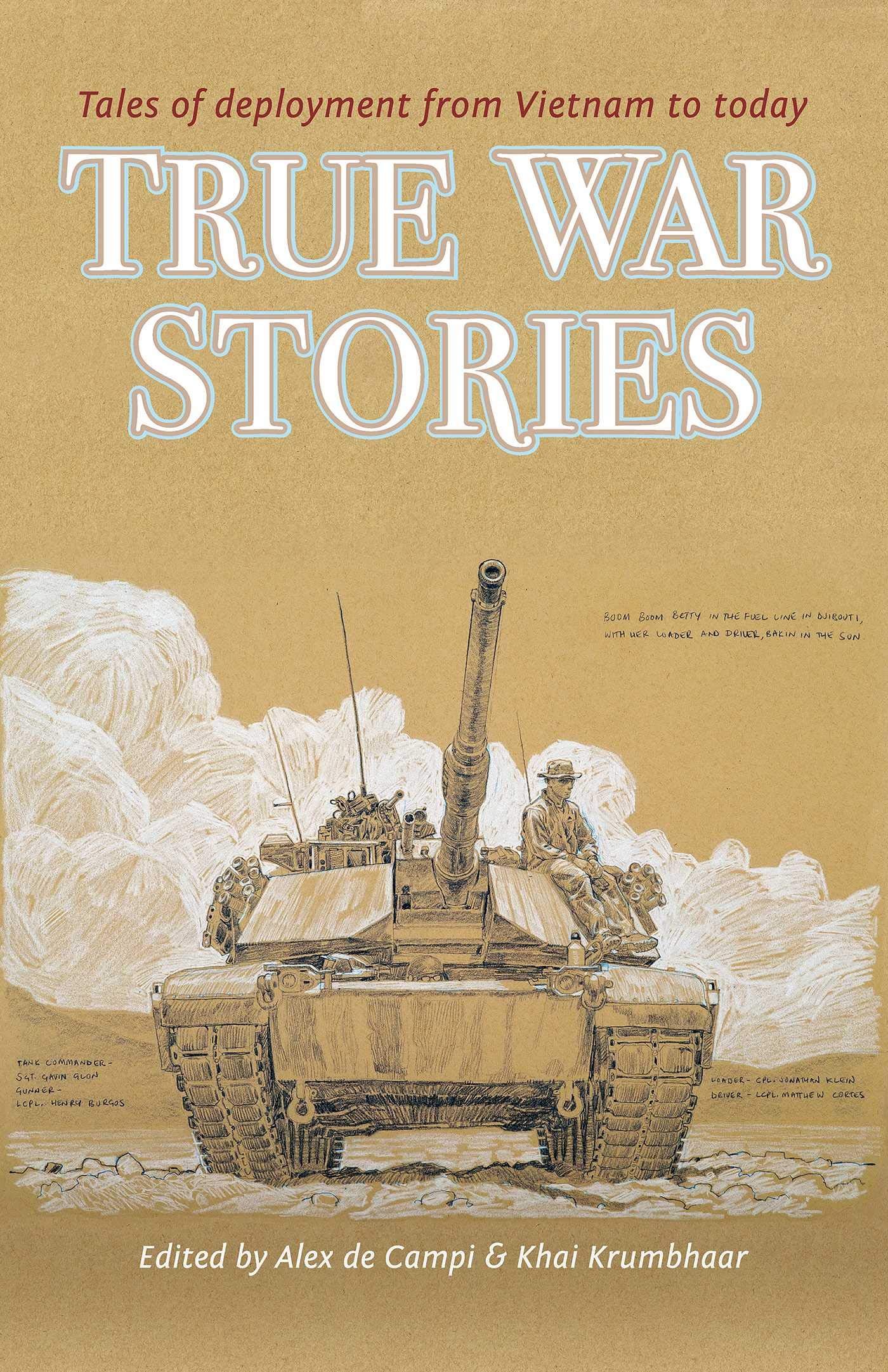
By all means though, check out the graphic-memoir first-person stories recounted in the excellent True War Stories: Tales of Deployment from Vietnam to Today, edited by Alex de Campi and Khai Krumbhaar.
True War Stories: Tales of Deployment from Vietnam to Today. Edited by Alex de Campi and Khai Krumbhaar. Z2 Comics, 2020.
Michel Foucault, “Of Other Spaces: Utopias and Heterotopias.” 1967. PDF
Interviews with prominent authors in the war-mil-vet-conflict scene are always a treat, even when the subjects go to dark places. Below are links to and excerpts from five such interviews I’ve been fortunate to conduct, in one case for the Veterans Writing Project‘s literary journal 0-Dark-Thirty and in the others for The Wrath-Bearing Tree.
Mary Doyle interview for 0-Dark-Thiry, Fall 2016 (begins on page 67). Doyle, a former Army NCO, is the author of The Bonding Spell, a speculative fiction novel, and The Peacekeeper’s Photograph, a military-detective novel featuring Master Sergeant Lauren Harper. Excerpt:
Molin: Master Sergeant Harper’s sense of what’s important about her identity is intriguing—it blends and balances her awareness of her status as a woman, a senior Army NCO, an African American, and the unique circumstances of her family history and her personal outlook on life. Is that how you see her too, and what more would you like us to understand about her?
Doyle: Harper is like so many black women soldiers I know. She joined the military with the hope of improving her lot in life. She comes from a loving family but one that had its challenges. Her upbringing is in a single parent household with a matriarchal example that she strives to emulate. She is an older sister to a sibling that she ends up having primary responsibility for. And as her career develops, she is surprised to discover that the job she took as a means to an end, ends up being a life she loves.
What she struggles with, and what so many dedicated female service members struggle with, is her love life. How does a woman soldier balance her dedication to a job that has 24/7 demands, with a courtship? When you are in a career that can call on you to drop everything, pack a bag and be gone for long lengths of time, how to you maintain a love life through demands like that? And what about children?
Will Mackin interview for The Wrath-Bearing Tree, April 2018. Mackin, a career Navy officer, served alongside Navy SEALs in Iraq and Afghanistan coordinating air-and-artillery support. He is the author of the short-story collection Bring Out the Dog. Excerpt:
Molin: From “Kattekoppen”: “The variety of ideas among soldiers developed into a variety of ideas among units, which necessitated an operational priority scheme. As SEAL Team Six, we were at the top of that scheme. Our ideas about the war were the war.” How are SEALs different from soldiers in line-units? What motivates them and what’s important to them? What were you surprised to learnabout the SEALs, as individuals and as a collective fighting force?
Mackin: The main thing that differentiated our unit from “straightleg” units was our budget. We had a lot of money to throw around. There was also a genuine desire on the part of the operators to fight, kill, and vanquish, and absolutely zero tolerance for administrative bullshit. This would sometimes bite us in the ass because no one ever wanted to plan. What we lost in lack of planning, however, was often made up for in execution. As individuals I was surprised to find those who I wouldn’t have expected to be SEALs. In other words, guys who didn’t fit the mold of the tattooed, bearded, Harley-riding Alpha male. They were just normal dudes with this ridiculous and well-disguised drive…. Most SEALs were personable one-on-one, but I found them to be very insular as a group. I never felt like I truly belonged.
Roy Scranton interview for The Wrath-Bearing Tree, August 2019. Scranton deployed to Iraq with the US Army in the early years of Operation Iraqi Freedom. His published books include the novel War Porn and the scholarly study Total Mobilization: World War II and American Literature. Excerpt:
Molin: In practical terms, how can understanding the trauma hero as a literary trope and cultural myth help us think better, more clearly, about actual veterans psychologically damaged and emotionally troubled by war? What might the nation, or its military-medical apparatus, do to help them?
Scranton: Well, I’ve written a work of literary and cultural history, not a practical guide to coping with trauma. I would say, though, that the entire way that we understand “actual veterans psychologically damaged and emotionally troubled by war” must be understood as process of collective meaning-making. The psychologically damaged veteran is certainly suffering, but that suffering takes shape in performing a specific social role, which is the “traumatized veteran.” As long as we stay within the bounds of the discourse, there’s no way to “help” such a person by pointing out that their genuine suffering is culturally produced. I suppose we might tell them “trauma isn’t real,” but then what? They have to make sense of their experience somehow, and the best that could come from delegitimating a culturally dominant way of making sense of experience would be the emergence of a new way of making sense of experience. Are there better and worse ways of making meaning? I think so. But that’s another discussion. The only practical help my project might offer is, I would hope, some understanding of the ways that the “actual veteran” exists in relation to the “nation.”
I’m a Spinozist at heart, which means I’m a materialist, but it also means that I believe freedom comes first of all from understanding. Until you understand what compels you to understand your experience through certain roles, frameworks, and practices, you’ll be stuck performing those roles, seeing through those frameworks, and acting out those practices. Understanding may never provide physical or social liberation, but it can at least open a space for some freedom of thought and movement, and the possibility of equanimity toward the world as it exists, which is to say a sense of peace.
Matt Gallagher interview/podcast for The Wrath-Bearing Tree, April 2021 (via SoundCloud). Gallagher, a US Army Iraq vet is the author of the memoir Kaboom: Embracing the Suck in a Dirty Little War and the novels Youngblood and Empire City. Excerpt:
Molin: You’ve been on the veterans writing scene for a long time. When did you get a sense that a common standpoint or viewpoint among veterans was starting to diverge so drastically, so politically, and so heatedly? What were the significant events or touchstones for you?
Gallagher: A lot of the seeds for Empire City happened during the years I worked as a speechwriter for the veterans non-profit Iraq and Afghanistan Veterans of America in 2011-2013…. At the time I was writing Youngblood, so my professional headspace was in the veterans’ world while my writing head was still in Iraq….. At IAVA I saw how just how personally our members took the policy issues we were fighting for, both on the legislative side and also on the street-level, with the everyday members who weren’t necessarily going down to DC to meet with congressmen and senators to advocate for position-x or position-y, and how quickly issues that should be apolitical, like the GI Bill, become a left-or-right issue, and how thing worked for the organization when Don’t Ask Don’t Tell ended or the Bowe Bergdahl situation broke. All these things became instantly political and polarized, in a way that was disheartening for a young veteran, but were fantastic fodder for future writing.
Hassan Blasim interview for The Wrath-Bearing Tree (July 2021). Blasim, an Iraqi expatriate now living in Finland, is the author of the short-story collection The Corpse Exhibition and the novel God 99. Excerpt:
Molin: What about fiction attracts you?
Blasim: It’s important for English and American readers to know that I don’t only write fiction, I write poetry, criticism, plays, and essays, too, that haven’t yet been translated into English. I also write a lot in support of refugees, gay rights, and Iraq and the Middle East. But as for fiction, it’s what I have loved most all my life, from the time I was a boy. I always liked the way stories could contain extremes and opposites, such as how a story could be both a love story and a horror story, a funny story and a sad story, both tender and violent. Fiction is serious for me, but it’s also play and pleasure. In my writing, I enjoy trying to make all these parts come together. A lot of my sense of how to write fiction comes from my love of movies, from which early on I was impressed by how easily they switched between different types of scenes and moods. In my stories I want that same effect, something unexpected happening, something changing all the time. That’s how I try to write, too, I don’t plan anything ahead of time, I just enjoy the rhythm of writing and the chance to play. I open my laptop and I type….
Thank you Mary Doyle, Will Mackin, Roy Scranton, Matt Gallagher, and Hassan Blasim for being so generous with your time and your thoughts.
In “Chapter Five: The Craft of Counterinsurgent Whiteness” of Empire of Defense: Race and the Cultural Politics of Permanent War Joseph Darda places the literary-fiction titans of contemporary veterans-writing—Matt Gallagher, Phil Klay, Kevin Powers—under the microscope of scholarly analysis.
In the larger argument of Empire of Defense, Darda offers a theory for how race and racism factor in the endless warfaring and escalating militarism of everyday life in America. He pinpoints the National Security Act of 1947 and the creation of the Secretary of Defense in 1949 as pivotal historical moments, arguing that the renaming and reorganization of our national security apparatus were attempts to mitigate the excesses of old-style colonialism and racism while allowing the prerogatives of national authority to remain in the hands of the powers-that-be, who, it goes almost without saying, were white males. Post WWII, legal racial oppression and global empire building were no longer tenable, but a new liberal humanism organized around “defense” allowed for a modicum of progressive social change, while insidiously normalizing a new regime of white values and outlooks, both at home and abroad. The name-change from “Secretary of War” to “Secretary of Defense,” for example, diminished awareness of imperialistic projections of power and uses of violence that usually involved killing or subordinating people-of-color. Instead, in a semantic sleight-of-hand, our military would now “defend” America against various “isms” and causes that obscure racialized motives. So, instead of fighting yellow-skinned people in Korea and Vietnam, we fight “communism.” Instead of fighting Mexicans, we fight a “war on drugs.” And instead of fighting Arabs and Muslims, we fight “terrorism.” The linguistic trickery pays lip service to notions of respect, diversity, equity, inclusion, and equality when convenient, and it has been very convenient to do so in order to recruit African-Americans into the military. It has also been convenient to preserve reputation in the eyes of liberal voters, intellectuals, and journalists—at least those who were not, per Darda, in on the treachery.
In Darda’s account, war fiction participates in anti-racist/racist duplicity by consistently creating heroes out of a few “good white men” who embody liberal values without giving up the actual perks of whiteness, and in fact instantiate the notion that ideas held by white men constitute foundational moral values. He writes, “The sensitive white soldier, from Hemingway’s Frederic Henry to Joseph Heller’s John Yossarian and O’Brien’s Paul Berlin, though celebrated for shaking off ideological constraints, defends, above all else, himself and his own liberal consciousness.” So, too, per Darda, for the white heroes of post-9/11 war fiction, and so too for their authors:
Although veteran-writers [Matt] Gallagher, Kevin Powers, and Phil Klay have been critical of the wars in which they fought, their fiction aligns with the state’s militarization of cultural knowledge.
“Chapter Five: The Craft of Counterinsurgent Whiteness” begins with two passages that set-up analysis of Powers’ novelThe Yellow Birds, Klay’s story “Psychological Operations,” and Gallagher’s novelYoungblood. The first passage, unfortunately for fans of contemporary war-fiction, excoriates Gallagher’s 2011Atlanticmagazine article “Where’s the Great Novel About the War on Terror?”, Gallagher himself, and the contemporary veteran fiction-writing scene. We’ll hurry past that section to summarize more fully the chapter’s second preamble, which explores the writing and rhetoric ofUS Army Field Manual 3-24 Counterinsurgency, published in 2006 at the behest of General David Petraeus. Darda focuses his attention on the third chapter, “Intelligence in Counterinsurgency,” which (theFM 3-24chapter) was mostly authored by “Yale University-trained cultural anthropologist” Montgomery McFate. Darda explains how in the chapter McFate promulgates the idea that modern war requires “cultural awareness” to craft compelling “narratives” to shape understanding and achieve objectives. Darda offers a good line re McFate: “Her chapter reads like critical theory that has been reverse engineered to reinforce rather than challenge hegemony.”
TheFM 3-24discussion leads to a damning argument about contemporary war fiction: “The thesis of the McFate-authored chapter ofField Manual 3-24—a thesis that resurfaces in American veteran fiction—is that successful counterinsurgency necessitates the militarization of cultural narrative.” A little later: “Some of the most acclaimed new veteran-writers—Gallagher, Klay, Powers—served in counterinsurgent forces, and their writing reflects the doctrine’s utilitarian understanding of cultural narrative.” This seems on-to-something, asThe Yellow Birds, “Psychological Operations,” andYoungblood are indeed written by soldiers who fought in Iraq according to counterinsurgency principles while more-or-less believing that they were trying to fight more humanely and also more smartly. They dramatize that struggle in their works, and their first-person narrators speak directly about the difficulty of constructing coherent narratives of their deployments.
Darda could have done even more with this line-of-analysis, but he’s after bigger fish than narrative meta-anxiety. About the authors’ investments in whiteness and the cultural work done by their stories, he writes:
…and the first, foremost, and only thing that happens when a white male author picks up a pen to write a story is validation of himself and his white characters.
That these writers are all white men is not a coincidence, because whiteness has continued to be a condition for conducting defense (counterinsurgency), as a means of dictating the uneven distribution of life chances (racialization) in the counterterror era.
The statements seem remarkably unsubtle and hostile literary analysis, especially coming from an English professor, while containing seriously ad hominem charges about war-fiction authors’ thoughts, motives, and actions. Unfortunately for Darda, the examination of the aspects of The Yellow Birds, “Psychological Operations,” and Youngblood that he argues perpetuate racist ideology and practice aren’t as persuasive as the passages that explore narrative angst and instability. I won’t say much here except that his argument doesn’t make much allowance for the idea that art and fiction can critique politics, ideology, official discourse, and popular opinion rather than merely reflect and instantiate them, especially deliberately so on the part of artists and writers. I also note two factual errors in Darda’s recounting of character-and-plot details of Youngblood–not confidence-inspiring given how the novel and its author figure so prominently in Darda’s argument. Fans of contemporary war-writing probably won’t like or agree with what Darda has to say, but students of the intersection of 20th and 21st-century race, culture, politics, war, and war-literature might consider checking out Empire of Defense for themselves.
Joseph Darda, Empire of Defense: Race and the Cultural Politics of Permanent War. University of Chicago Press, 2019.
War-writers’ social, AWP17 in DC: Matthew Hefti, Ben Busch, and Mary Doyle in the background, Whitney Terrell in the foreground. A sliver of Teresa Fazio can also be seen. Photo by Bill Putnam.
In late 2013 I received an email from Roy Scranton, whom I didn’t know at the time, inviting me to join him on a vet-writing panel at the 2014 Association of Writers and Writing Program conference in Seattle. I had never heard of “AWP,” as it’s called, but I soon learned it was one of the biggest, if not the biggest, conferences in America for authors of creative literature—memoir, fiction, and poetry. I did not think of myself as a writer in that way, but I also didn’t say no to Scranton.
That began a streak of five years where I attended AWP, each after the first in the capacity as organizer of panels dedicated to giving voice to war-and-mil writers. Each conference brought a slew of memories and new friendships, acquaintances, and contacts, as well a handful of titles purchased from the tables at AWP’s mammoth book-fair. Also, beginning with Minneapolis, and continuing with LA, DC, and Tampa, I organized a war-writers’ social so we could all meet and have a few, which was fun for me and seemed to be appreciated by others.
A reflection-essay about the highlights and the connective strands awaits, while here I only list the writers with whom I presented and repost my Time Now write-ups of each event.
Seattle 2014: Phil Klay, Hillary Plum, Roy Scranton
LA 2016: #1: Matt Gallagher, Jessie Goolsby, Andria Williams (Elliot Ackerman unfortunately had to cancel); #2: Ron Capps, Kayla Williams, Colby Buzzell, Maurice Decaul
I wasn’t able to attend AWP 2019 in Portland or AWP 2020 in San Antonio, and now I won’t be attending the online AWP 2021. I understand AWP 2022 will be in Philadelphia, which is an easy drive for me and hopefully will be in-person. Maybe time for a return?
Time Now’s pace-of-production has slowed down recently, no doubt. Part of it’s that I’m busy, part of it’s that I’m moving on personally, part of it’s because it doesn’t seem as urgent now to document and catalog works about war in Iraq and Afghanistan as it did in, say, 2014. Frankly, there’s not as much to report on, though recent movies such as The Outpost suggest that the wars have not completely lost the interest of audiences and artists. Still, for the most part I’ve written on the novels, short-story collections, poetry volumes, movies, and art about the wars that I know of and which engage me, so I’m not even sure what more there’s to say until a second wave of titles comes along.
Time Now dates back to 2011, but only last night did I figure out how to search for a list of the most popular posts. The top post, “39 American Iraq and Afghanistan War Poets,” didn’t surprise me, since it’s perennially affixed at the top of my publicly-visible recently-viewed feature. The next nine for the most part did surprise me, and so too did the absence of some posts that I thought had made more of an impression, but which didn’t crack the Top 10. Below’s the list of the Top 10 with capsule reflections on each:
1. “39 American Iraq and Afghanistan War Poets.” This post has been viewed nearly three times more than the runner-up in popularity. All good; all power to the poets and the online sites that publish them. I don’t know why someone doesn’t publish a print anthology along these lines—I’m sure it would sell as much as any poetry volume sells, and even better it would stand a chance of being a lasting historical document.
2. “Tim O’Brien’s ‘Story Truth’ and ‘Happening Truth’ in the Contemporary War Novel.”Go figure one of the top posts on a blog about Iraq and Afghanistan war lit features the dean of Vietnam War novelists, Tim O’Brien, but whatever—O’Brien’s influence indeed looms large over the contemporary scene. I’m happy as well to shine light on Michael Pitre’s very interesting Fives and Twenty-Fives (and when will we see more from Pitre?).
3. “Iraqi Iraq War Short Fiction: Hassan Blasim’s ‘The Green Zone Rabbit.'”I’ve tried to pay attention to literature about the wars in Iraq and Afghanistan written by Iraqis and Afghans, and no one represents that cohort of writers better than Blasim. Funny though, I’ve never written a dedicated post on Blasim’s superb short-story collection The Corpse Exhibition, even as arranging a reading by Blasim at West Point in 2014 remains a literary-life highlight.
4. “War Poetry: Brian Turner’s ‘A Soldier’s Arabic.'” A short post about one of Turner’s most beautiful poems, featuring a wonderful pictorial representation by Giulia Alvarez, a student at Horace Mann Prep school in NYC I met while visiting a class there.
6. “Fire and Forget III: Mariette Kalinowski’s ‘The Train.'”Works by women veterans have been a salient feature of post-9/11 war-writing, but they’ve been concentrated in the forms of memoir and verse. Kalinowski’s great story makes me wish we had more fiction titles by her and other women vets.
7. “Paul Wasserman, Say Again All.” USAF vet Paul Wasserman read at a war-writing-and-art event I organized at West Point, self-published this hard-to-find chapbook, and since seems to have not published anything else and dropped out of the writing game altogether. Say Again All is excellent, though, and I’m happy that readers continue to make their way to this tribute to it.
8. “Fire and Forget: Short Stories.” Should probably be first on this list, judging by achievement and importance. What a talented and ambitious group of young vet-writers (plus Siobhan Fallon, no slouch herself) brought together between the two covers! The story of how the Fire and Forget authors joined forces and their divergent career paths afterwards is THE story waiting to be written about the Iraq and Afghanistan war-writing scene.
9. “Toni Morrison’s Home: The Africanist Presence in War Literature.” Morrison wrote no fiction about Iraq or Afghanistan, but in this post and others on her I’ve tried to explain that her mammoth presence in modern American letters constituted a force to be reckoned with by contemporary war-writers and readers of all races.
10. “A Contemporary War Short Fiction Listicle.” Honestly, this post was pretty-much a throwaway, done quickly to fill a gap between more trenchant ones. Also honestly: it holds-up, or at least the stories to which I point to do, and I’m not so sure how I would write it differently today.
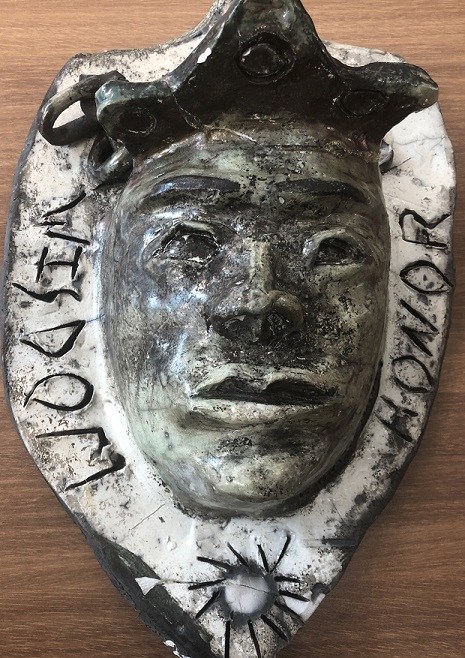
“Warrior,” by Donna Zephrine, used with permission of the artist. Originally published by Military Experience & the Arts.
What does military service and veteran status mean to black American veterans? Few full-length novels, short-story collections, plays, poetry volumes, memoirs, or non-fiction studies by or about black American soldiers in the 21st-century have been published to help us answer the question. Off the top of my head, the only biographies I can think of are two co-authored by M.L. Doyle, herself a black veteran. One is I’m Still Standing, by Shoshana Johnson, the Army soldier who was wounded and captured in the same convoy ambush as Jessica Lynch in Iraq in 2003. I’m Still Standing is one of my favorite memoirs of the GWOT-era: The opposite of “kill-memoirs” such as American Sniper in every way, it portrays life in uniform and going to war from the perspective of a lower-enlisted “low-density MOS” soldier (Johnson’s “Military Occupational Specialty” was 92G, Military Culinary Specialist—i.e., a cook) and person-of-color. The other, which I have not yet read, is titled A Promise Fulfilled. It’s a biography of Brigadier General Julia Jeter Cleckley, who before retiring in 2002 was the first African-American woman to attain the rank of general in the Army.
We should also note that Doyle also writes genre fiction, published independently. One of her novels, called The Bonding Spell, is a work of speculative fiction set in the States, but its plot is set in motion by events that occur in Iraq. The Bonding Spell is good, and even better is Doyle’s detective novel about US Army soldiers on a peacekeeping mission in Bosnia-Herzegovina titled The Peacekeeper’s Photograph. The protagonists of both stories are savvy black military women who have navigated patriarchal and white-dominated military culture without being broken by it. Thus does genre fiction—speculative and detective, respectively, in the case of Doyle–fulfill its potential to create delightfully-inspired imagined worlds rooted in real possibilities.
The only other full-length work by a black vet on my bookshelf is Nicole S. Goodwin’s poetry volume Warcries. Goodwin served in the Army in Iraq and writes searingly about the deployment and the return home; her themes and tones are more bitter than Doyle’s. In “Unsaid (Confession)”, for example, Goodwin describes watching white fellow soldiers berate and humiliate Iraqi prisoners. It puts into play a number of troubling ideas about what it means to be a black soldier or veteran, especially as that experience is shaped in relation to white fellow soldiers.
The other soldiers—female guarded duty. Boy, how could those white girls powertrip….
Hearing those noises, compulsed inward cringes….
I and the other black girls. Never did that. Never lost cool. Not on my watch. Not once.
Maybe ‘cause we knew….
But as the poem proceeds, Goodwin recounts her shame at watching a black NCO forcefully restrain a screaming prisoner:
And when the Sergeant First Class’ hands reached over and put the ziptie on to Muzzle the howler I was pinched by the irony.
Of one black man enslaving another. Of this sin I have barely spoken. Confession—I became accomplice to this action.
This deed inhumane.
The sequence of events triggers remorse and guilt:
Replays. Over. My head…
The tape records. Rewinds. Focus. I am volcanic with fear.
Didn’t rock the boat. Stayed in my hole.
I lied.
The publishing industry record regarding African-American veteran-authors does not impress, but the vibrant vet-writing/spoken-word and performance/theatrical scenes in New York City and Philadelphia, in which Goodwin participates, offers access to many black voices and perspectives. I first became aware of the multi-racial East Coast vet-writing realm when I attended a reading at Pete’s Candy Shop, a bar in Brooklyn, in 2014. There I was struck by the poetry of former-Marine Johnson Wiley, and I obtained Wiley’s permission to publish two of his poems, “Shooting Stars of Kuwait” and “A Mother’s Son Returned,” on Time Now here.
Wiley seems to no longer be writing, but many other black NYC, Philly, and Jersey-based writers and artists dazzle with the range of their talents and interests. The first impression rendered by this plentitude of creativity is that artistic expression emerges out of the imagination of artists as it will, unbound by rules or expectation. Sometimes the stories told by black veterans foreground race consciousness and racial politics, and sometimes they don’t. It’s not always clear whether they do or not. The sculpture-photograph titled “Warrior” at the top of the page by black Army vet Donna Zephrine, for example, portrays a woman’s face, but the facial features and skin color are indeterminate–is she definitely black, or could it be a white face smeared with the grime of war? Zephrine’s vignette “The Gas Chamber,” about one of the most common-but-memorable experiences of all who have served, seems universal in its viewpoint and outreach, but does it pack a little more punch knowing it was written by a black woman? A poem by Zephrine, “War Sees No Color,” explicitly posits that a close-knit, functioning military unit under the duress of war goes a long way to suppressing racial divisiveness, thus echoing the commonly-heard maxim that in the Army “everyone is green.” If only it were so, all the time! And why does it take war to take us to state of unity we long to be peaceably? Be those questions as they may, Zephrine’s artwork to my mind does not convey outrage or pain associated with black skin and white racism, though I also little doubt that they do not reflect the totality and complexity of Zephrine’s thoughts about the matters.
In contrast, outrage and pain are on full display in former Marine Chantelle Bateman’s poem “PTSD”and even more so in her poems “Someday I’ll Love Chantelle” and “Thank You for Calling,” which can be found in the anthology Holding It Down Philadelphia: A Collection of Writing by Veterans. But Bateman’s verse, which is also raucously funny, does not foreground race so much as sexual assault and male misogyny as the forces that ruin honorable and rewarding military service for her and often enough for women generally. As such, it speaks to the intersectional truth that vet identity reflects overlapping strains of race, gender, class, and sexuality, blended by particular military experiences and life choices.
In the same vein, most of the multi-talented Maurice Decaul’s work seems not directly concerned with racial identity or racial tension, either in the Marines in which he served or in America at large. His great poem “Shush,”for example, is about PTSD. His play Dijla Wal Furat: Between the Tigris and the Euphrates explores the cultural conflict between American Marines and Iraqi insurgents in the early days of Operation Iraqi Freedom. His story “Death of Time” (published in the anthology The Road Ahead) portrays the sexual subjugation of a young woman by a Taliban-like militia in a mythologized space that reads much like Afghanistan. Several opinion pieces for the New York Times speak of his deep desire as a young man to be a Marine and how it was to serve with them in combat. In a long presentation titled “War and Poetry,”available on YouTube, Decaul describes how he became a writer, but racial identity doesn’t seem to be the issue or even an issue, even as he cites the mentorship of the great Vietnam War poet Yusef Komunyakaa. And yet, enough is enough, and poems Decaul published on The Wrath-Bearing Treeabout a 2017 trip to Virginia in the wake of the Charlottesville protests record not just fear, but despair at how unsafe he feels in his own country. In one, titled “Blue Ridges,” he asks:
When is a plantation no longer a plantation? On the lake shore, with nutria, turtles, brown recluse & copperheads, I know, I know these waters. The small voice in my head says leap it says, these waters will mask your smell. How will I live here, in the south? When my belly warns me, be home by dark.
That spirit of a long life’s journey to explicit engagement with race informs the work of another New York City African-American vet-writer, Christopher Paul Wolfe. In a personal essay titled “‘Sir, I Never Thought I’d See the Day I’d Be Working for a Colored Officer,'”published in the New York Times, Wolfe writes of the influence of his father, a career Army officer, as Wolfe first attends West Point and then serves in Iraq. Anguish and regret for having tried so hard to serve a system and a country that doesn’t have his best interests at heart emerge full-force:
As a black veteran, I find it hard to reconcile my pride in my service with a sense of complicity in upholding my country’s legacy of white supremacy while deployed. I still remember the black and brown faces of Iraqis that I helped to round up, zip-tie and detain using tactics similar to stop and frisk, the use of which some courts in America have found to be unconstitutional. These experiences created a moral chasm with which I continue to grapple.
Wolfe’s contribution to the vet-fiction anthology The Road Ahead stunningly portrays that torment. Called “Another Brother’s Conviction,” it is set years after the first-person narrator completes service in the Army, to include a tour in Iraq. The narrator enters a Brooklyn bodega and in short-order undergoes charged interactions with the Iranian-born owner, a white woman customer, and finally a Dominican customer accompanied by a black man just released from prison. The narrator is desperate to avoid being sucked into conversation with the other customers, in part because he knows what will well up within him if he does: “Son of a bitch… the ripple. I just want an egg-and-cheese… on wheat toast… with one slice of cheese; not whatever-the-fuck this is going to be.” The word “conviction” carries weight in the story, as the narrator reflects on his participation in acts he’d rather not remember in Iraq: “I’d […] played my part in something I’d come to regret, I had no conviction. There was no conviction. There still is no conviction…” The story concludes enigmatically but presciently, in a way that speaks to the impasse America has found itself in in 2020:
There’s just Akh and the Dominican, the ex-con and his five years, and me and my egg and cheese. And somewhere, out there, in the streets of Bedstuy, there’s a missing white girl.
There are several ways to interpret the story, but to me the last line suggests that the “missing white girl” should have stayed in the bodega rather than exiting as quickly as she could. She, like the narrator, wanted to avoid being drawn into the maelstrom of emotions connecting the other characters, male and dark-skinned as they are. Her departure, however, speaks to a lost opportunity to learn, connect, and grow. And the loss is not just hers, but theirs, and theirs together, as they try to figure out, as the anthology title pronounces, “the road ahead.”
The vibrant northeast vet writing-and-arts scene seems to repopulate yearly, bringing forth new voices and talents. In the months just before the pandemic shutdown, for example, I became acquainted with the work of Air Force Iraq-vet Omar Columbus, who is active in writing, theatrical, and performance circles in New York. A man after my own heart, Columbus not only contributes his own excellent writing to these circles, he seems to have a natural bent for organizing events and bringing people together. If it’s not unseemly to close on a ray-of-light, however thin, successful negotiation of the road ahead may depend on vet artists and impresarios such as Columbus. Cooling the hot-house tension of the bodega, to use Wolfe’s term, will be tough business. If anything can bring us closer to a peaceful and equitable resolution, it is the generative spirit of men and women such as Columbus.
In closing, hats off to the many admirable vet-writing and vet-theater collectives of New York, New Jersey, and Philadelphia: Words After War; Voices from War; Combat Paper; the vet war-writing seminars at NYU, Columbia, and elsewhere; Poetic Theater; Aquila Theater; Theater of War; and Warrior Writers chapters in all three states, with apologies to any I have forgotten to mention. These organizations and programs carry far more than their fair share of the load fostering veteran artistic expression equal to the diversity of the uniformed services themselves. On the other hand, the mainstream publishing industry based in New York City could do much more to promote minority writers, and we look for more white authors to address race-related subjects and themes, too (works already out there that do some of that are Phil Klay’s short-story “Psychological Operations” and Eric Bennett’s novel A Big Enough Lie ((with the caveat that Bennett is not a veteran))). Critics and scholars can also continue interrogating war-writing, mine included, for witting or unwitting signs of bias.
Without claiming too much on behalf of white vet-writers, I’ll praise those who have succeeded in the literary publishing biz and have also made it a point to promote upcoming vet-writers of color. Roy Scranton, for instance, introduced me to Johnson Wiley. Matt Gallagher did the same for me with Christopher Paul Wolfe, and together Gallagher and I once shared a fun reading stage with Chantelle Bateman (and Mariette Kalinowski, too). The editors of The Road Ahead, Adrian Bonenberger and Brian Caster, opened their anthology to black voices such as Decaul’s and Wolfe’s, as well as those of an impressive cohort of underrepresented women vet-writers. Individual isolated good works, we understand, do little by themselves to resolve centuries of systemic wrong-doing. But steps in the right direction still count for something and I hope are appreciated.
To bring this post to an end, let’s salute once more the work already published by M.L. Doyle, Nicole Goodwin, Johnson Wiley, Donna Zephrine, Chantelle Bateman, Maurice Decaul, and Christopher Paul Wolfe, and here’s to much more writing by them in the future, along with more writing by other black veterans.
For Mother’s Day 2020, a post from my old blog 15-Month Adventure:
To the Moms, the Whole Love
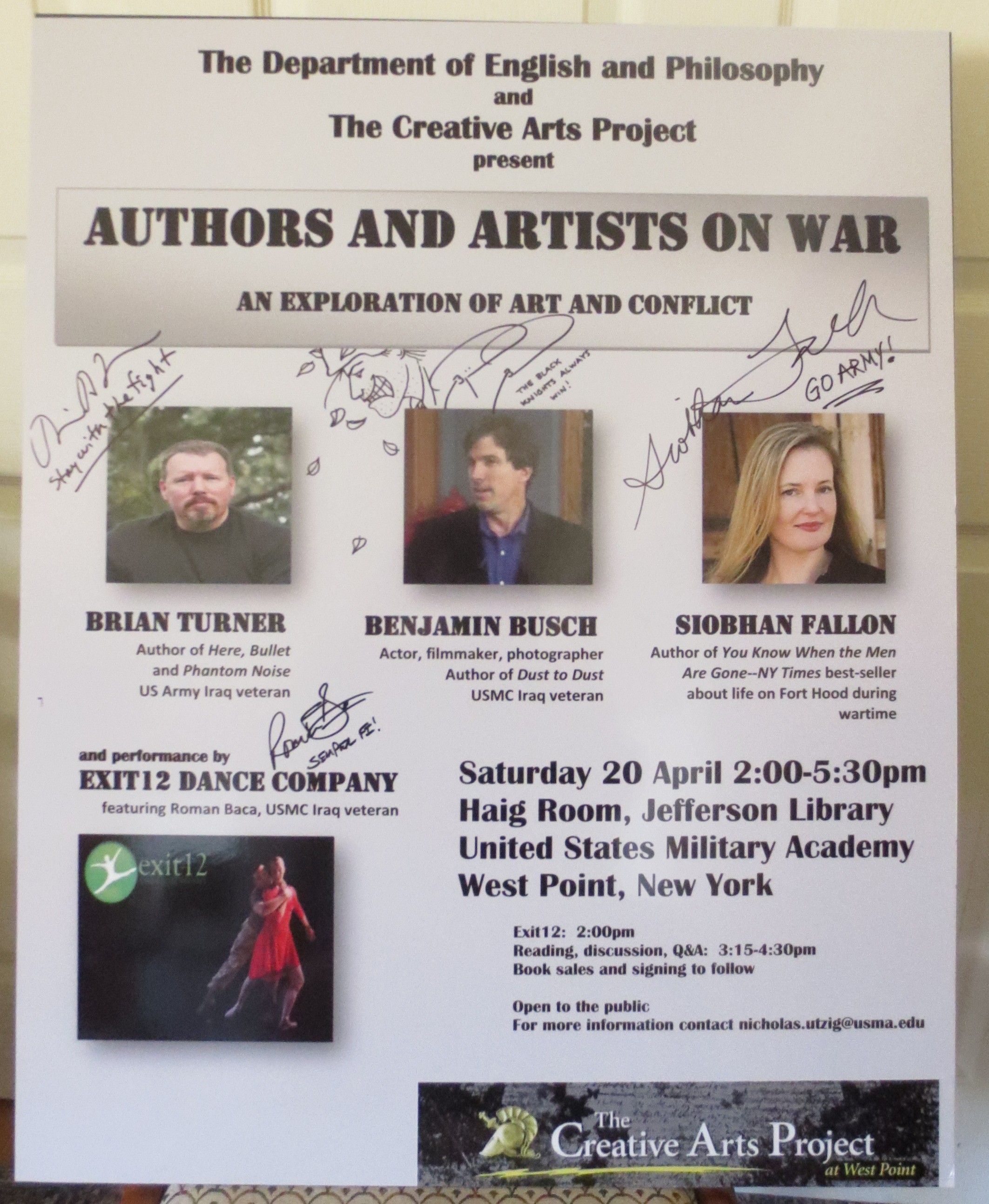
Happy mother’s day, also my birthday this year. Moms come up quite a bit in writings about the war, I’ve discovered. Not surprisingly, authors are sensitive to how military service touches those whose children do the fighting. For example, here’s how Benjamin Busch, author of Dust to Dust, describes his mother’s reaction to the announcement that he has joined the Marine Corps:
My mother took a deep breath, her hands clamped to the edge of the table as if she were watching an accident happen in the street. Her father had been a Marine, had gone to war and almost not come back.
“I will be stalwart,” I had said to myself on the drive home from the airport the morning I said goodbye to him. “I will be steadfast. I will read and listen to the reputable war reporters, and I will write my senators and congressmen, but I will not lose faith in my country. I will concentrate on sustaining my son rather than myself, and I will not confuse self-pity with legitimate worry and concern over him and his men. I will be proud, justifiably proud, but I will not be vainglorious! And I will never, never, never let him know how frightened I am for him.”
But, within moments of returning home, I had broken all but one of these promises to myself. I was doing laundry and, as I measured detergent into the washer, the Christmas carol CD I was playing turned to Kate Smith’s magnificent contralto, singing, “I Heard the Bells on Christmas Day.”
“And in despair, I bowed my head,” she sang. “There is no peace on earth, I said. For hate is strong and mocks the song of peace on earth, good will to men.”
And, at that moment, for only the third time in my adult life, I began to sob — not cry, not weep — but sob uncontrollably, sitting on the floor of my laundry room, surrounded by sorted piles of bed linens and dirty clothes.
And if the child comes back wounded? Siobhan Fallon, author of the short-story collection You Know When The Men Are Gone, describes here a trip to Walter Reed to meet injured soldiers and their families:
And there were mothers. Unlike the military members and their spouses, who somehow all seemed in great and hopeful spirits, the mothers looked stunned. They seemed to be trying to grip their emotions tightly, but their faces hid nothing. Their faces said: “Why did this happen to my beautiful boy?”
And how does a veteran describe his mother, a lover of language and books and authors and ideas, as he watches her fade late in life? Benjamin Busch again:
She had been a librarian. All of the books and conversations about the importance of written words swelling inside her head like a star undergoing gravitational collapse into a black mass, its light still traveling out into space but its fires already burned out. Nothing left but ash.
Then he recounts her last words: “‘Oh my baby boy.'”
So much hurt. So much damage. So many memories. So much love.
Mothers, sons, daughters, fathers, everyone, make much of time.
Purnima Bose’s scholarly study Intervention Narratives: Afghanistan, the United States, and the Global War on Terror nicely complements Caleb Cage’s War Narratives: Shaping Beliefs, Blurring Truths in the Middle East, which I reviewe here. Much as Cage’s book does for Iraq, Intervention Narratives locates dominant themes in Afghan war-writing and film that reflect and shape American attitudes about the Afghanistan War held by war-participants, the populace, the media, and government officials. Even more so than Cage does in War Narratives, Intervention Narratives provides theoretical underpinning to explicate the narratives Bose analyzes, and Bose also offers a comprehensive thesis about what makes them persuasive, compulsively repeated, and ultimately harmful.
By “intervention narratives,” Bose directs attention to the stories told by Americans about individual endeavors within the larger historical sweep of American engagement with Afghanistan dating back to the Cold War (a few Indian and Pakistani books and films are also analyzed for contrast). The focus, then, is primarily on memoirs and movies that tell stories of highly-individualized personal efforts by Americans in Afghanistan to influence the war. Bose suggests that however grander narratives about the war might have it, the personal sagas she examines better or best reveal the cultural dreams that prohibit honest reckoning with the catastrophic failure of the Afghanistan mission over forty years. The particular target of Intervention Narratives are “feel good” books and movies that attempt to justify their subjects’ Afghanistan endeavors and try to foster sentiment that American mission in Afghanistan has been anything other than a debacle. From the Introduction:
I have argued that the ideological work of these four intervention narratives is reparative and aimed at generating positive feelings about the Afghan war. Telling ourselves that we supported ‘the good guys’ against evil communists, we inspired Afghan women to become entrepreneurs, we rescued adorable dogs, and we eliminated the ‘bad guys’ contributes to the fantasy that we are on the right side of history.
In Chapter One, Bose examines what she calls “The Premature Withdrawal Narrative,” which locates blame for the Taliban takeover of Afghanistan in the 1990s on the abandonment of the Afghan mujahedeen to the Taliban after the expulsion of the Soviet Union. Key to the idea of “premature withdrawal” are movies such as Charlie Wilson’s War, to use one of Bose’s examples, that glorify heroic individuals who aid the mujahedeen only to have their accomplishments undercut by the government they serve. The problem, Bose asserts, is that these stories come at the expense of truth, such as that Charlie Wilson wasn’t nearly as effective as the movie about him would have it, and to the extent that he was successful, he exacerbated patterns of violence within Afghanistan that tore the country apart in the 1980s and from which it still suffers. But belief that America, or at least one American, accomplished something significant long afterwards fueled foolish optimism that later efforts to intervene in Afghan political, cultural, and tribal dynamics might prove effective, while obscuring long-lasting, endlessly repeated mischief (read, “carnage”) generated by America’s initial support for the mujahedeen.
The next two chapters describe quirky but seemingly well-meaning non-military Afghanistan interventions by Americans in the years after 9/11. Chapter Two, titled “The Capitalist-Rescue Narrative—Afghan Women and Micro-Entrepreneurship,” examines two memoirs by American women that describe the author’s effort to help Afghan women start small businesses centered around beauty and fashion. Chapter Three, “The Canine-Rescue Narrative and Post-Humanist Humanitarianism,” identifies a corpus of stories and movies about elaborate and expensive efforts to bring military working dogs and soldier FOB pets to America from Afghanistan. Bose, however, is not impressed by these type of endeavors, finding them ineffective, misguided, and/or oblivious to the real conditions of war and culture in Afghanistan, and the books and movies written about them unfortunately more self-promotional than caring or wise.
As evidence that American ideas about helping Afghanistan could be quite loopy, beauty-and-fashion and dog-rescue sagas are damning, but not exactly consequential. In Chapter Four “The Retributive-Justice Narrative—Osama bin Laden as Simulacra” Intervention Narratives takes a much more trenchant bite into the cultural and psychological fantasies that fueled American military endeavor in Afghanistan. Bose calls SEAL memoir No Easy Day: The First-hand Account of the Mission that Killed Osama bin Laden by Mark Owen (a pseudonym for ex-SEAL Matt Bissonnette) an example of self-justifying “life-writing” by an elite-warrior who claims he can’t be held accountable for “minor” transgressions of just-war law, policy, and ethics because his commitment to “retributive justice”—killing bin Laden—supersedes all other considerations. The eight-to-ten pages in which Bose interrogates No Easy Day, and by extension the mythos and self-conception of all SEAL memoirs and special operations generally, is the most exciting part of Intervention Narratives, for my money:
Structured as a teleology that culminates in bin Laden’s execution, Owen’s narrative is centrally about the production of techno-military masculinity that finds its legitimization and actualization in retributive justice. No Easy Day reveals how this particular gendered and racialized subjectivity is dependent on surveillance technology and sophisticated weapons that render Owen into a quasi-cyborg. Read against the grain, the memoir discloses the fragile nature of life under the US rule of law, more often represented by Owen as burdensome bureaucracy, which can be jettisoned at will by agents of the state.
Bose continues by defining four attributes of “techno-military masculinity”: “extreme physical fitness, dependency on technological prosthetics, Euro-American male superiority, and disdain for civilian authorities.” In Bose’s view, the cultivation of techno-military masculinity has become an end in itself, an intoxicating preoccupation and identity for white males made available by contemporary war, quite independent of and even antagonistic to older conceptions of soldiering and soldierly obligation to higher authority and ethical precepts.
Hey, if the desert combat boots fit, American military war-farers will just have to wear them, and I’ve got blood on my size-12s, too. Still, one might point out that Matt Bissonnette’s ideas about the war aren’t every soldier’s ideas, and one wonders how a film such as Zero Dark Thirty, in which the female agent played by Jessica Chastain out-machos her male CIA colleagues and SEAL partners in pursuit of bin Laden, fits the “techno-military masculinity” formula. But lest I’ve given the impression that Intervention Narratives is unfair to true-blue American heroes who have done the best they can under difficult circumstances, Bose ends by asserting that responsibility for the graves we have spent forty years digging in Afghanistan starts on-high and transcends partisan politics. Finding more similarity than discontinuity in presidential policies toward Afghanistan from Bush to Obama to Trump, in spite of their differences in style (great line: “Bush’s blandness, Obama’s urbanity, and Trump’s vulgarity”), in the conclusion Bose proposes that stories centered on somewhat quixotic minor figures in the long war also help define and explain the larger perspectives and actions of its major players, complete with characteristic mistakes, blind-spots, lapses in logic and judgment, and self-serving machinations.
Intervention Narratives is one of number of scholarly studies in a welcome new series titled War Culture, published by Rutgers University Press. Many books in the War Culture series focus on 21st-century war, which is even more welcome, and I look forward to reading and thinking about them.
Purnima Bose, Intervention Narratives: Afghanistan, the United States, and the Global War on Terror. Rutgers UP, 2020.



 Time Now: The Wars in Iraq and Afghanistan in Art, Film, and Literature